
#FurnitureQuality

Verified, Genuine and Useful: What Should a Furniture Review Actually Tell Buyers?
What makes a furniture review genuinely useful? This guide explores the information buyers need—from quality and communication to delivery, durability, after-sales support and problem resolution—and why furniture reviews should provide meaningful context beyond star ratings.
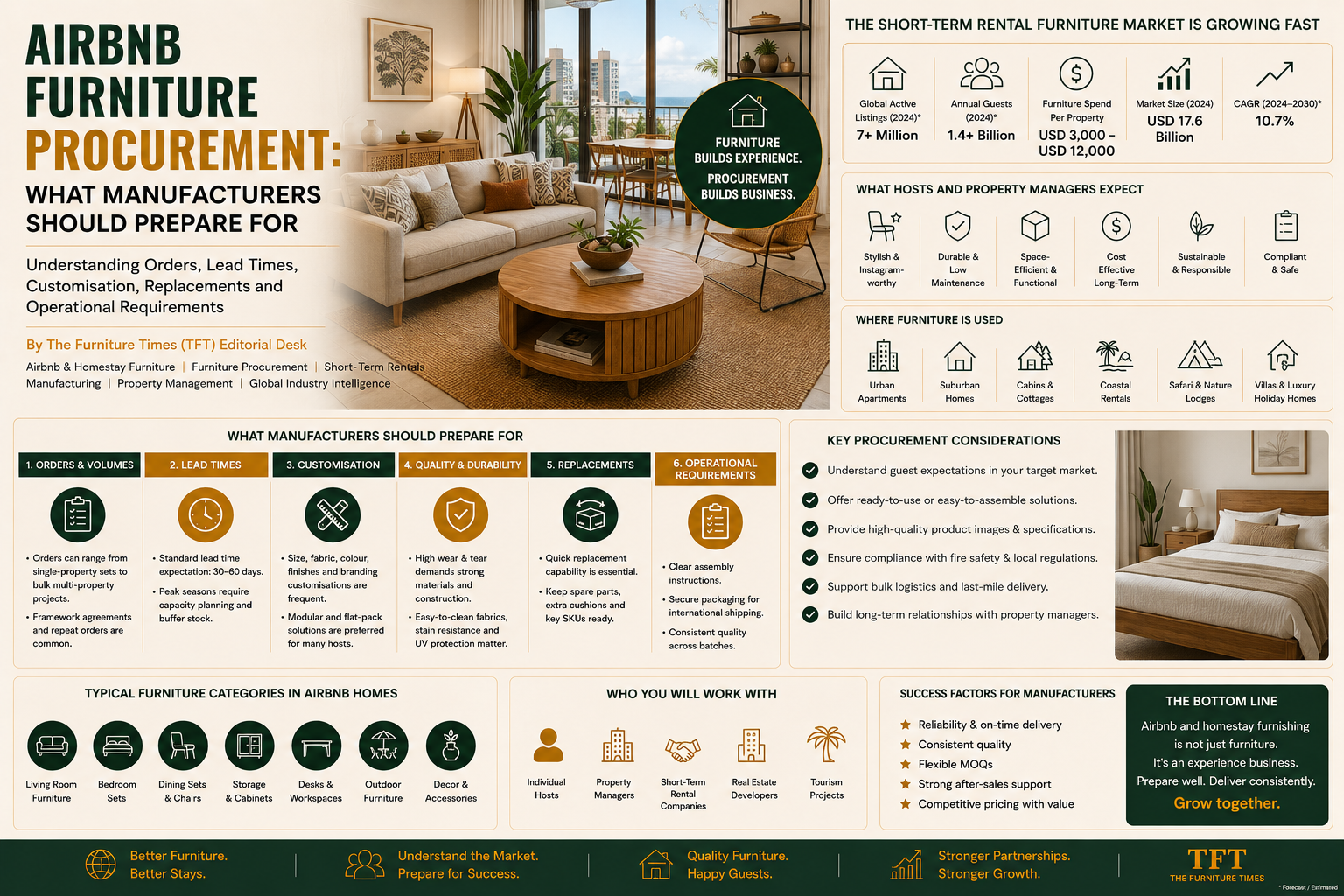
Airbnb Furniture Procurement: What Manufacturers Should Prepare For
Short-term-rental furniture orders often fall between residential retail and large hotel contracts. Manufacturers that offer complete property packages, flexible minimums, realistic lead times, spare parts, product continuity and rapid replacement can build recurring relationships with hosts, developers and professional property managers.
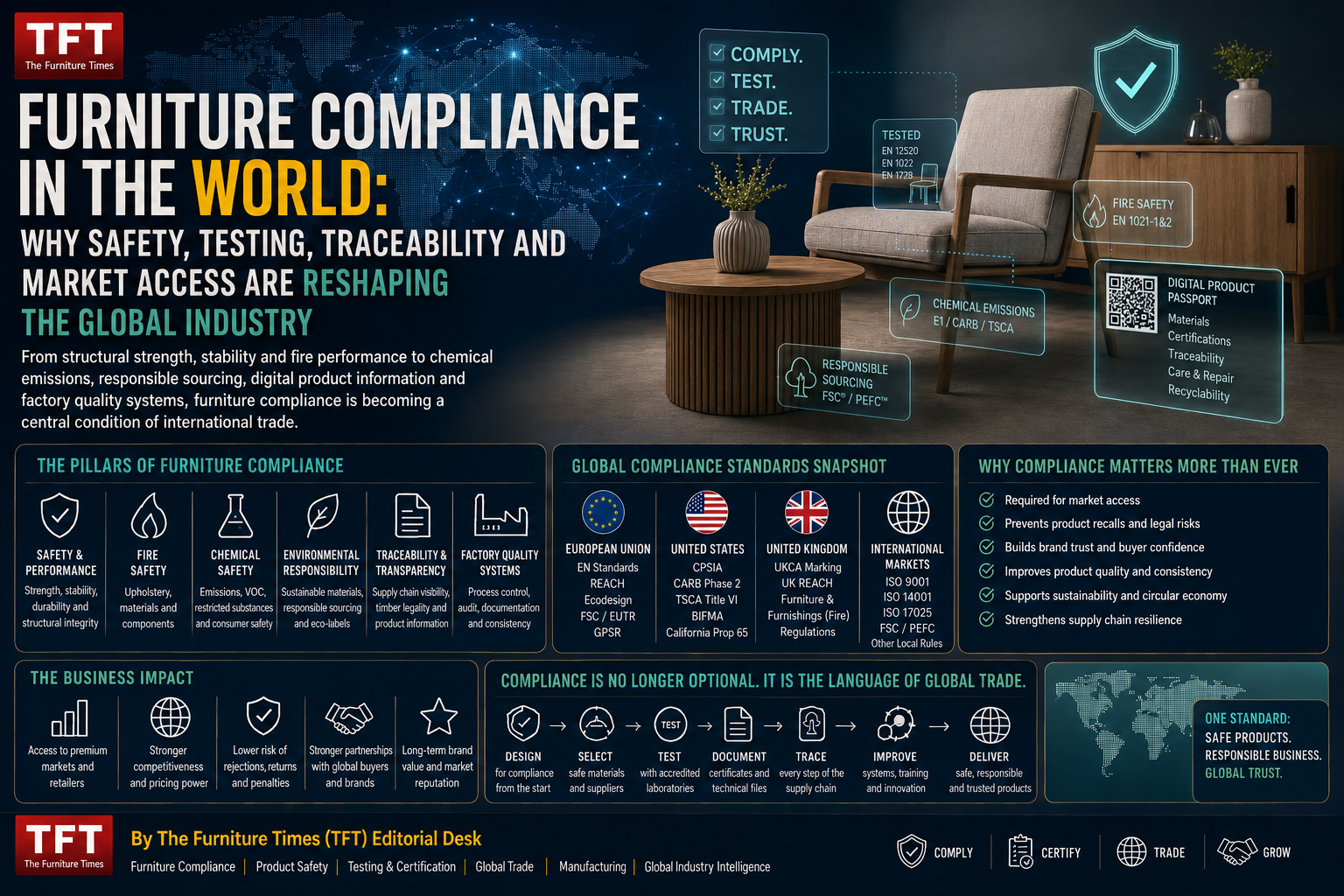
Furniture Compliance in the World
Furniture manufacturers can no longer rely on one certificate for every market. This global report examines how compliance requirements are changing across Europe, the United Kingdom, the United States, India, Australia, Canada, Asia and the Middle East—and why system readiness is becoming essential for market access.
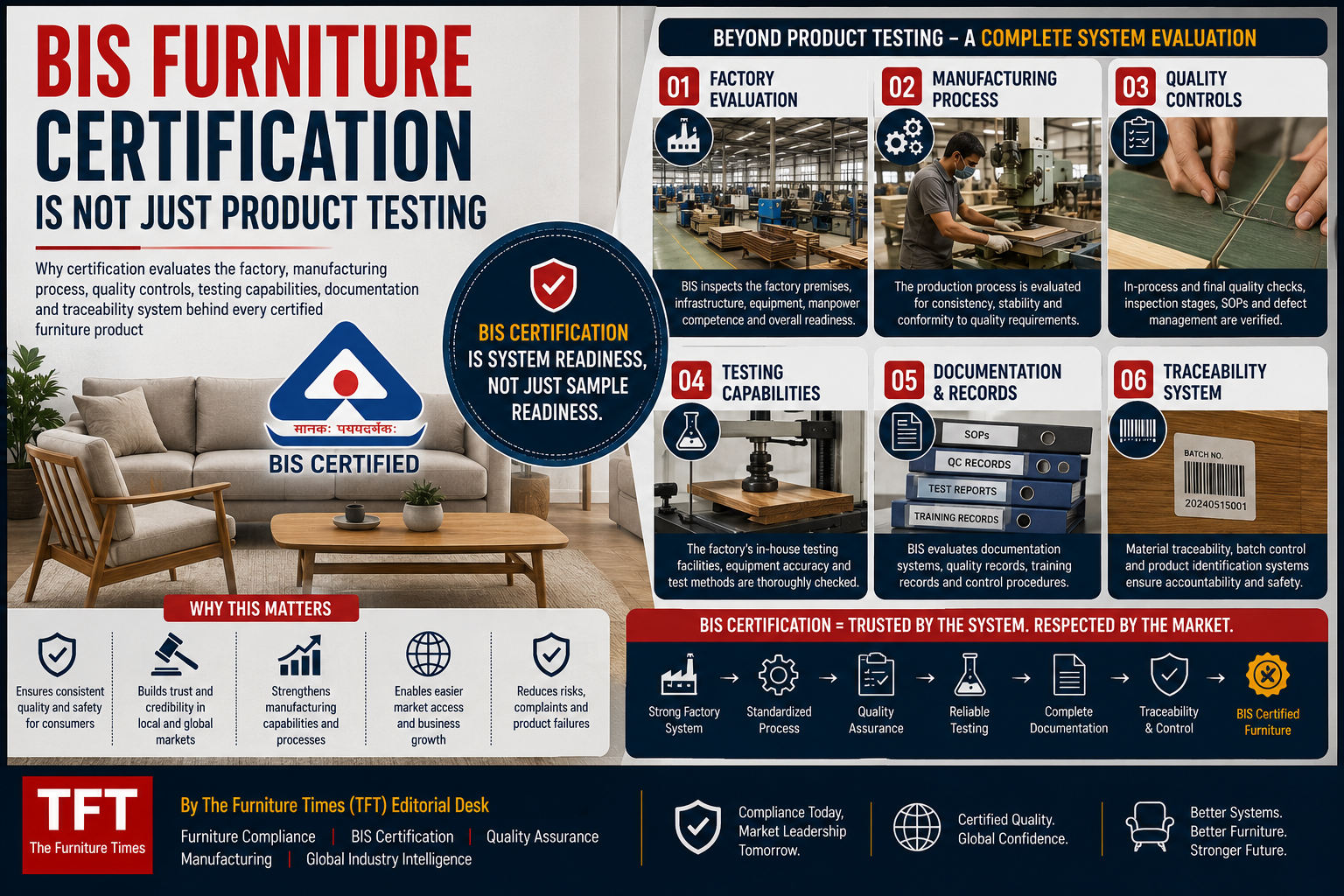
BIS Furniture Certification Is Not Just Product Testing
A furniture product can pass a laboratory test while the certification application still faces delays or rejection. BIS certification evaluates the manufacturing system behind the sample—including factory infrastructure, process controls, model scope, testing capability, calibration, records, marking and traceability.
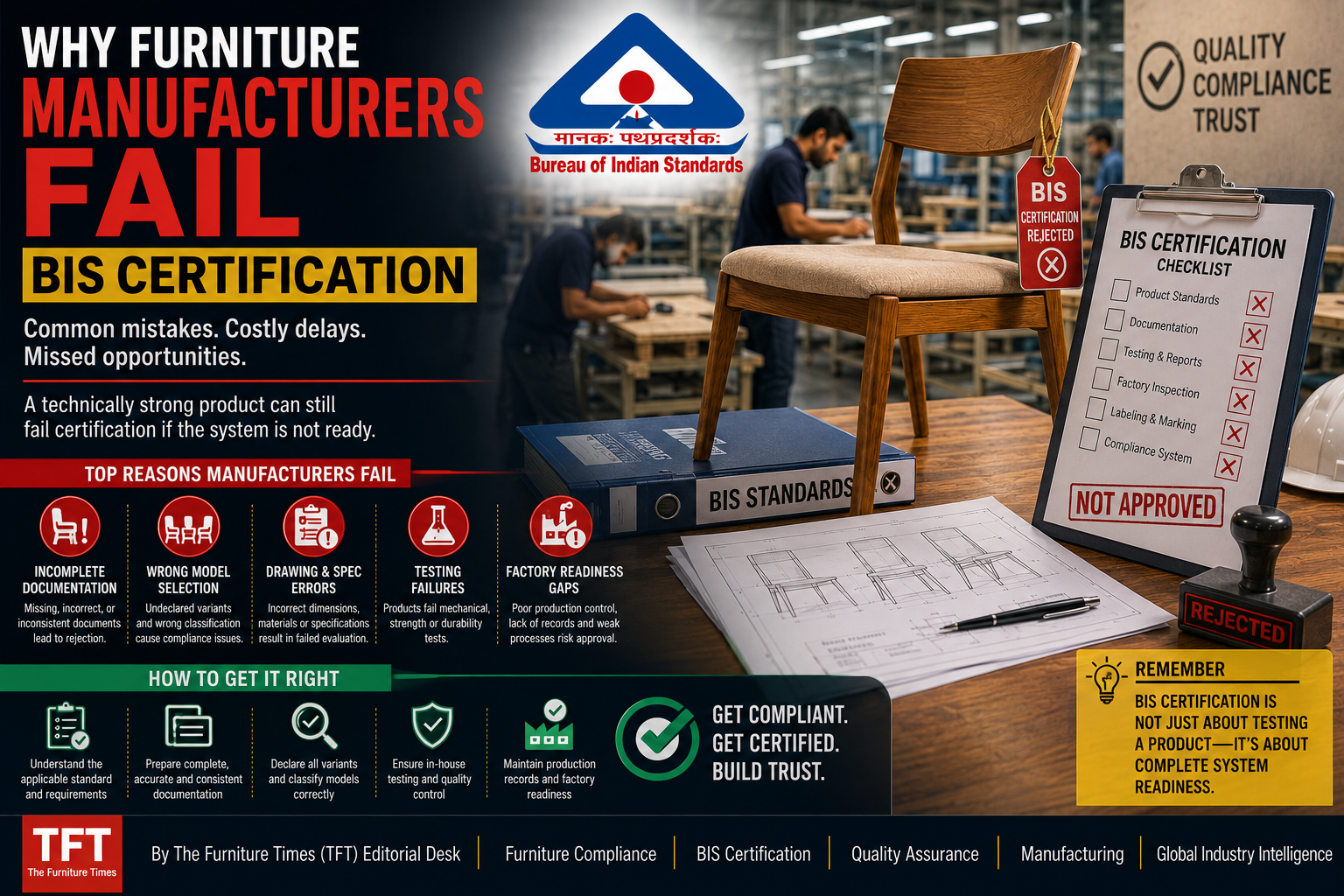
Why Furniture Manufacturers Fail BIS Certification,How incomplete preparation,
Why do technically strong furniture products still face BIS certification delays or failure? This detailed analysis examines incorrect classification, undeclared variants, unrepresentative samples, documentation inconsistencies, mechanical testing, factory readiness, marking errors and uncontrolled post-certification changes.
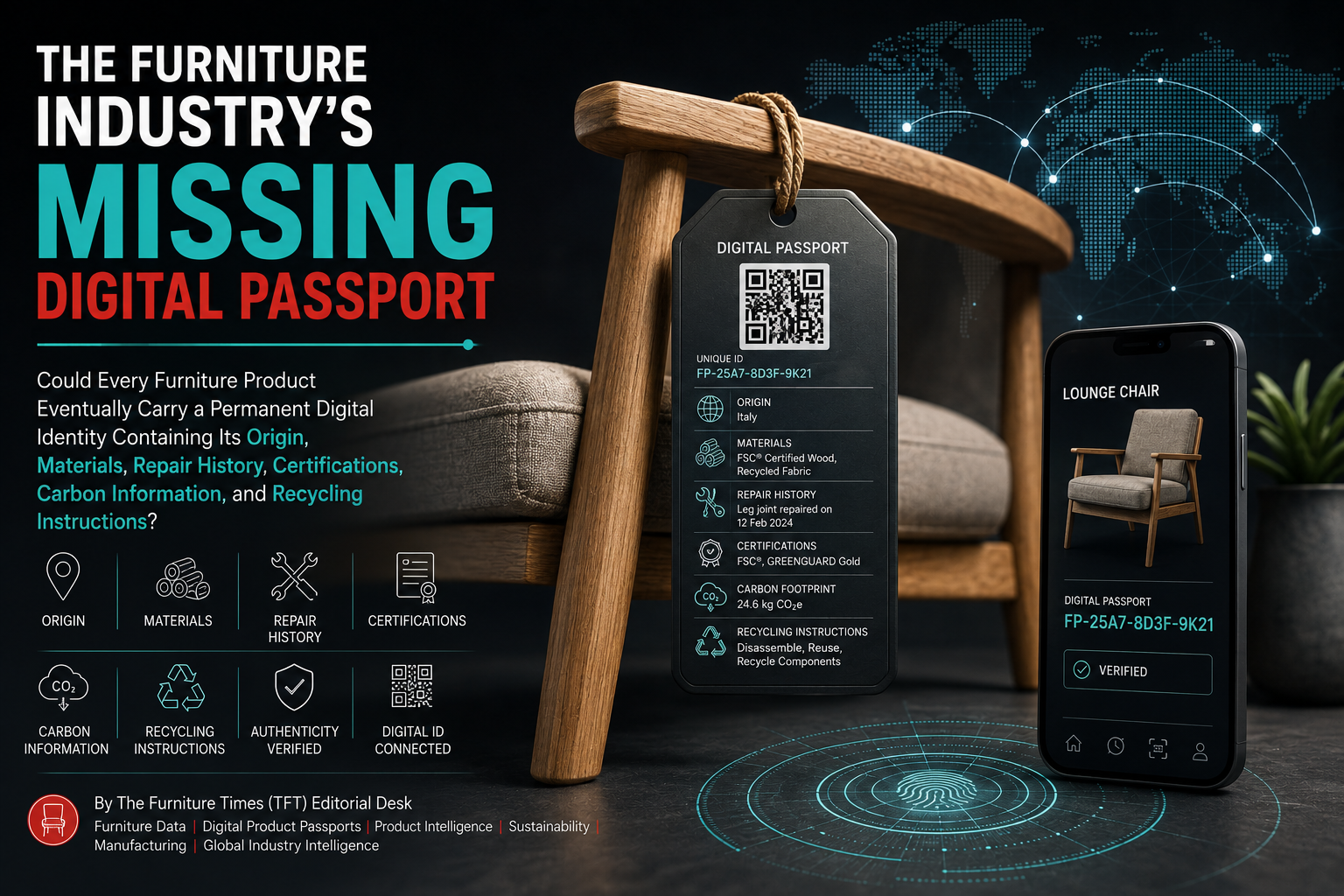
The Furniture Industry’s Missing Digital Passport
The furniture industry is moving toward a future where every product may need a permanent digital identity. The Furniture Times explores how digital product passports could transform furniture traceability, repairability, sustainability, resale, recalls, AI discovery and circularity.

Why Furniture Manufacturers Fail BIS Certification
Many furniture manufacturers encounter BIS certification delays not because their products are inherently weak, but because their applications, variants, drawings, test samples and factory systems are not fully aligned. This detailed report explains the Normal and Simplified Procedures, common reasons for nonconformity and the practical steps manufacturers can take to reduce retesting, delays and rejection risks.

The Furniture Industry Needs a Failure Database
Furniture companies collect enormous quantities of information after products are sold, but much of it remains trapped inside warranty departments, service tickets, repair records and return systems. The Furniture Times examines why the industry needs structured failure intelligence—and how it could transform product quality, sourcing, insurance, repairability and AI-driven furniture discovery.

The Furniture Insurance Economy: Who Pays When Furniture Fails?
The furniture industry talks constantly about design, manufacturing, materials, retail and market growth—but rarely about who pays when something goes wrong. The Furniture Times examines the hidden furniture insurance economy and the complex network of manufacturers, suppliers, logistics companies, installers, retailers, insurers and customers sharing billions of dollars in potential risk.
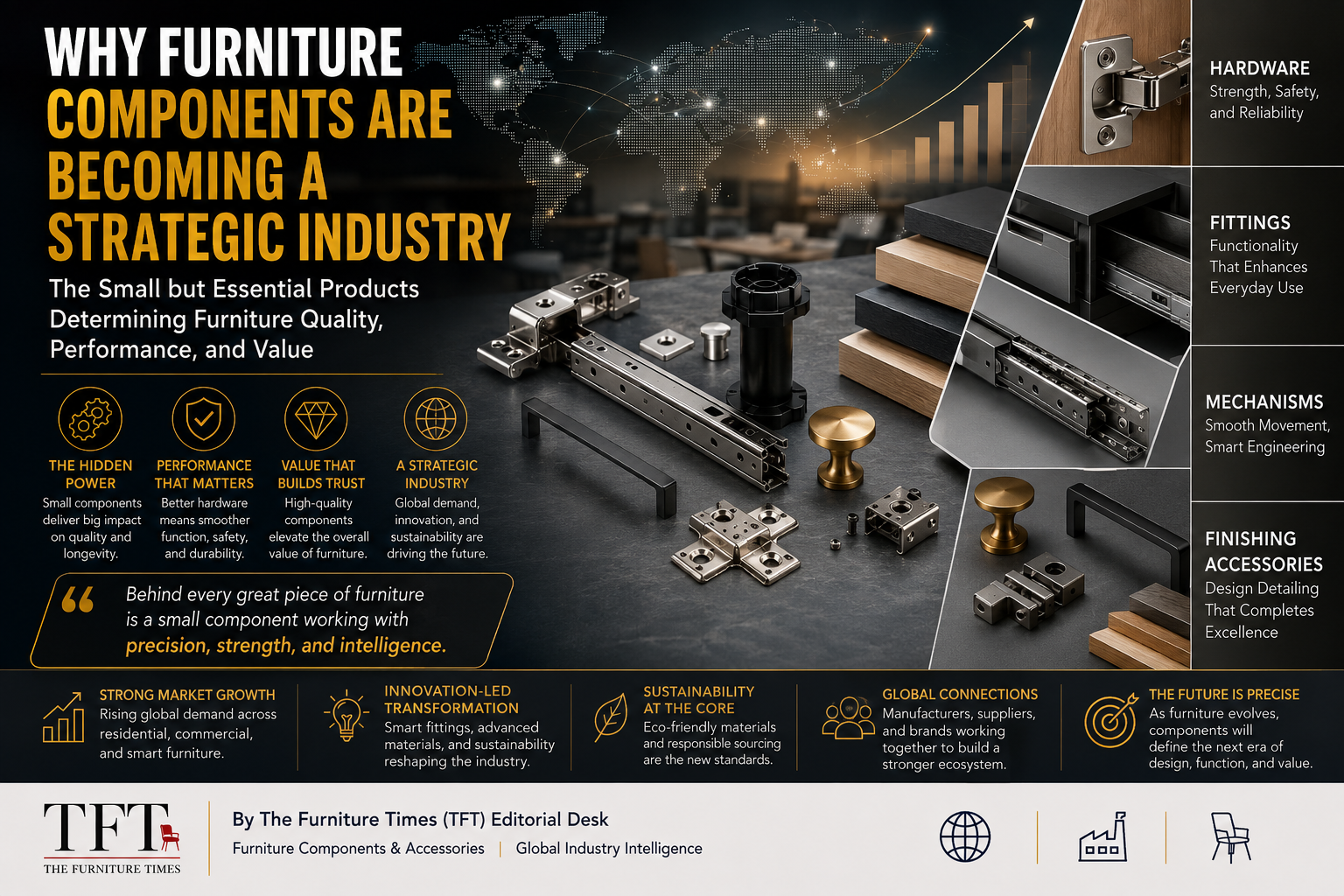
Why Furniture Components Are Becoming a Strategic Industry
Furniture components and accessories are evolving from basic purchasing items into a strategic global industry. These small but essential products influence manufacturing efficiency, product quality, smart functionality, sustainability, supply-chain resilience, repairability, customer satisfaction, and long-term brand value.