
#FurnitureIntelligence
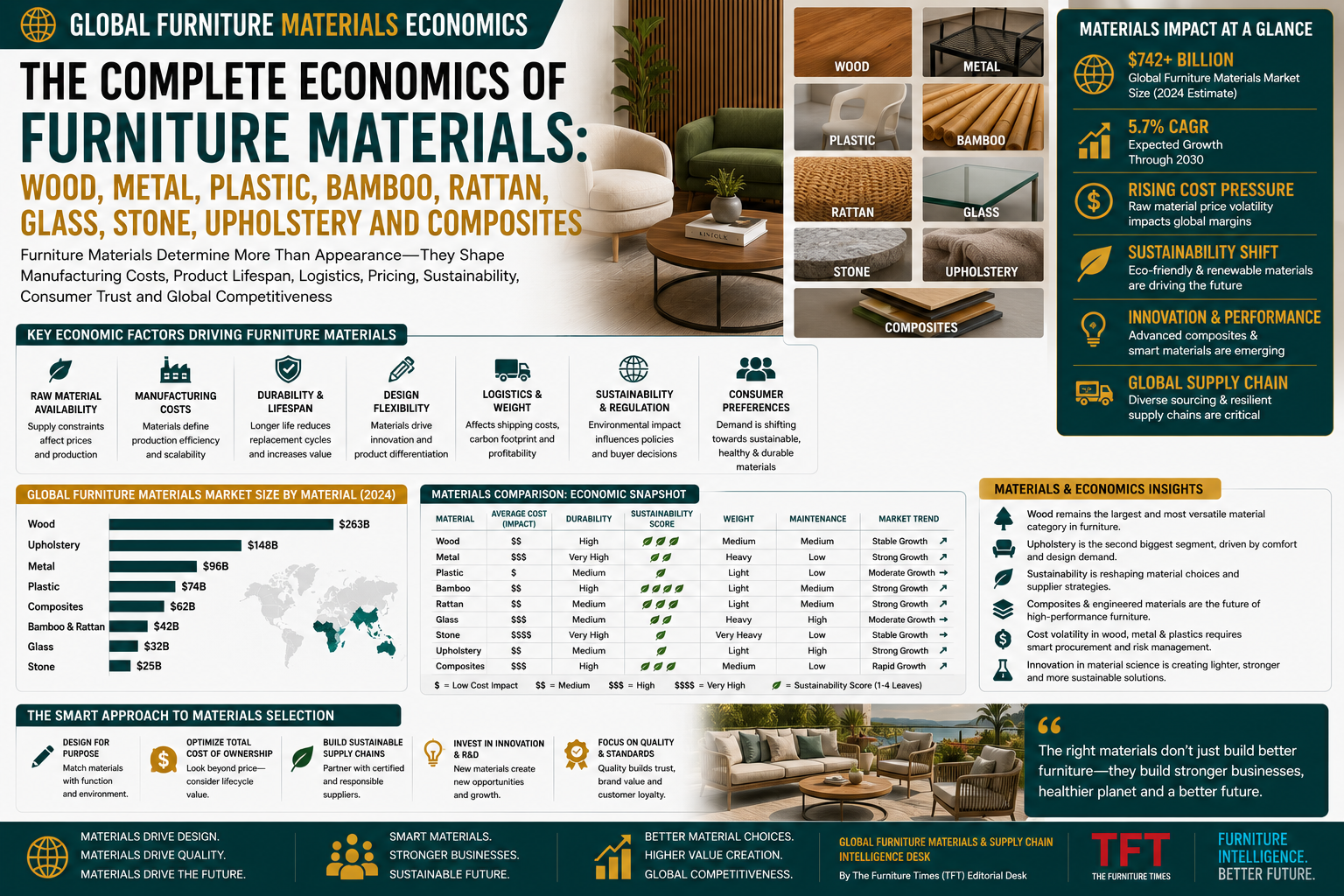
The Complete Economics of Furniture Materials: Wood, Metal, Plastic, Bamboo, Rattan, Glass, Stone, Upholstery and Composites
Furniture material choices determine far more than appearance. This comprehensive global report compares the economics of wood, metal, plastic, bamboo, rattan, glass, stone, upholstery and composite materials across sourcing, manufacturing, labour, logistics, durability, repairability and future circular-economy requirements.
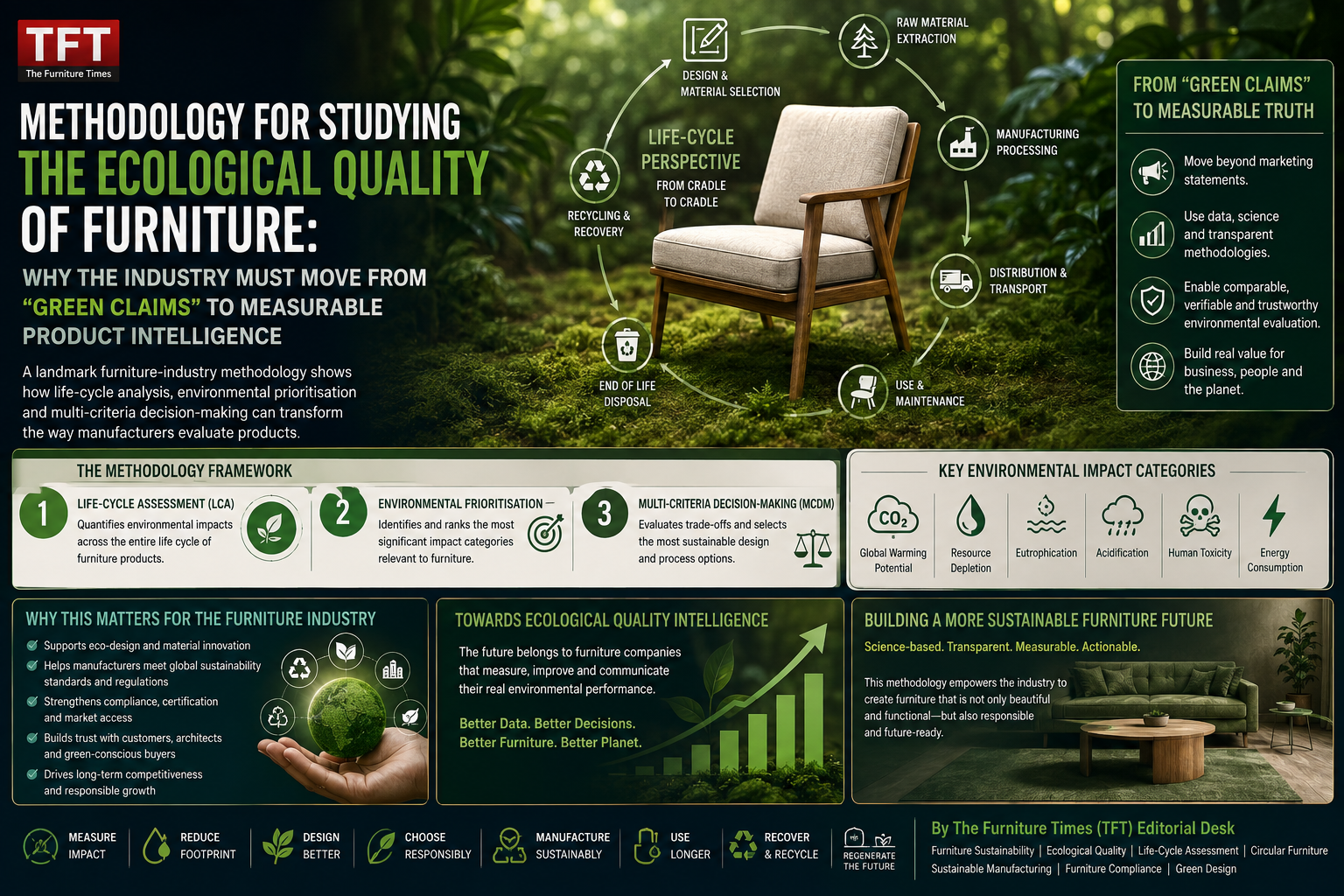
Methodology for Studying the Ecological Quality of Furniture
A 2011 research study on the ecological quality of furniture offers an increasingly relevant framework for today’s sustainability-driven industry. By combining life-cycle analysis, environmental ABC prioritisation and multi-criteria decision-making, the methodology demonstrated that products from the same furniture manufacturer can have significantly different environmental impacts. As global regulation moves toward durability, repairability, circularity and product-level information, furniture companies need to move from broad “green” claims toward measurable, traceable and verifiable ecological quality.
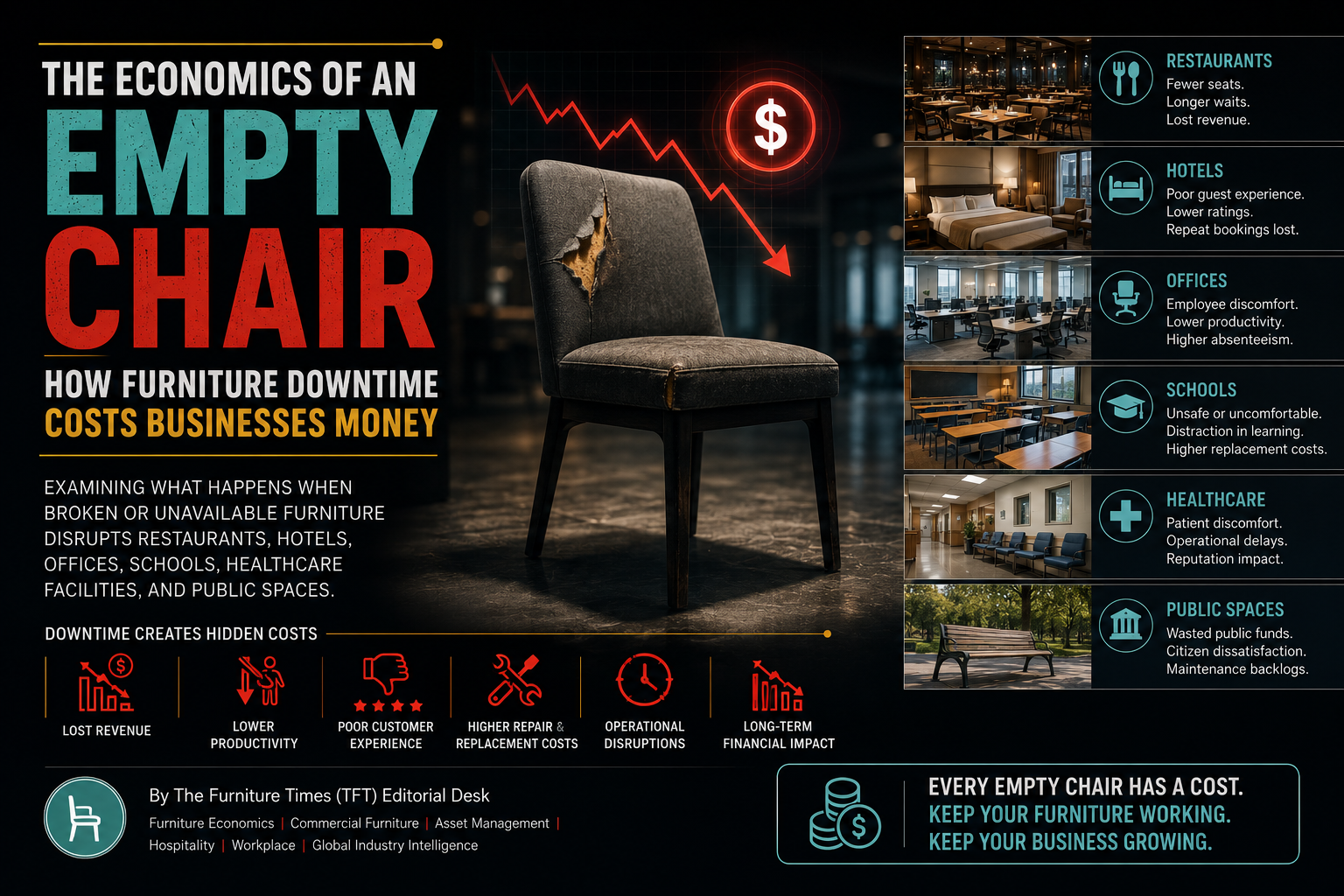
The Economics of an Empty Chair: How Furniture Downtime Costs Businesses Money
Commercial furniture is usually treated as a purchasing expense, but unusable furniture can create substantial hidden operational costs. The Furniture Times examines the economics of furniture downtime and why businesses should begin measuring uptime, repair speed, spare-parts availability and the real cost of lost usable capacity.
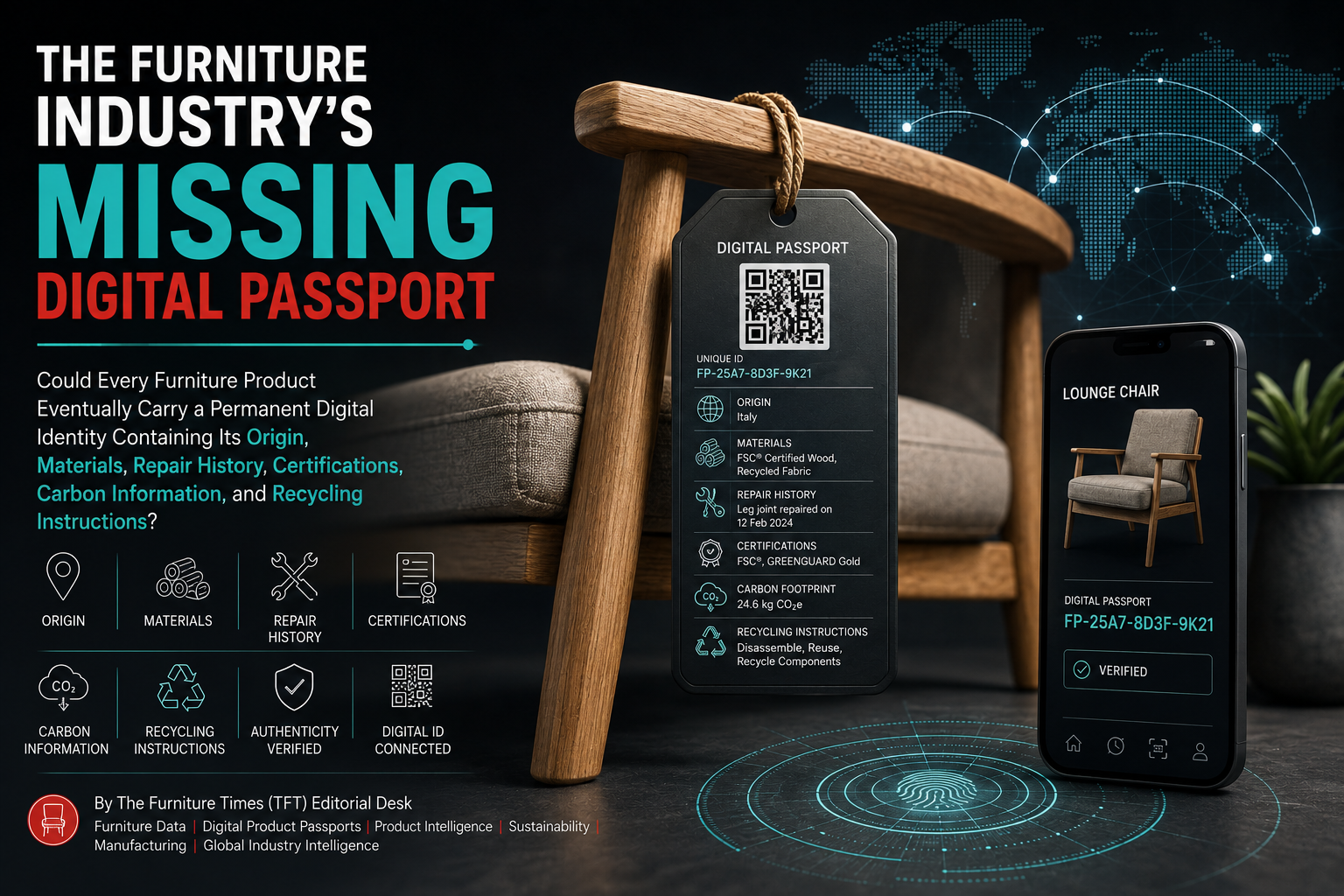
The Furniture Industry’s Missing Digital Passport
The furniture industry is moving toward a future where every product may need a permanent digital identity. The Furniture Times explores how digital product passports could transform furniture traceability, repairability, sustainability, resale, recalls, AI discovery and circularity.

The Furniture Industry Needs a Failure Database
Furniture companies collect enormous quantities of information after products are sold, but much of it remains trapped inside warranty departments, service tickets, repair records and return systems. The Furniture Times examines why the industry needs structured failure intelligence—and how it could transform product quality, sourcing, insurance, repairability and AI-driven furniture discovery.

The Furniture Insurance Economy: Who Pays When Furniture Fails?
The furniture industry talks constantly about design, manufacturing, materials, retail and market growth—but rarely about who pays when something goes wrong. The Furniture Times examines the hidden furniture insurance economy and the complex network of manufacturers, suppliers, logistics companies, installers, retailers, insurers and customers sharing billions of dollars in potential risk.
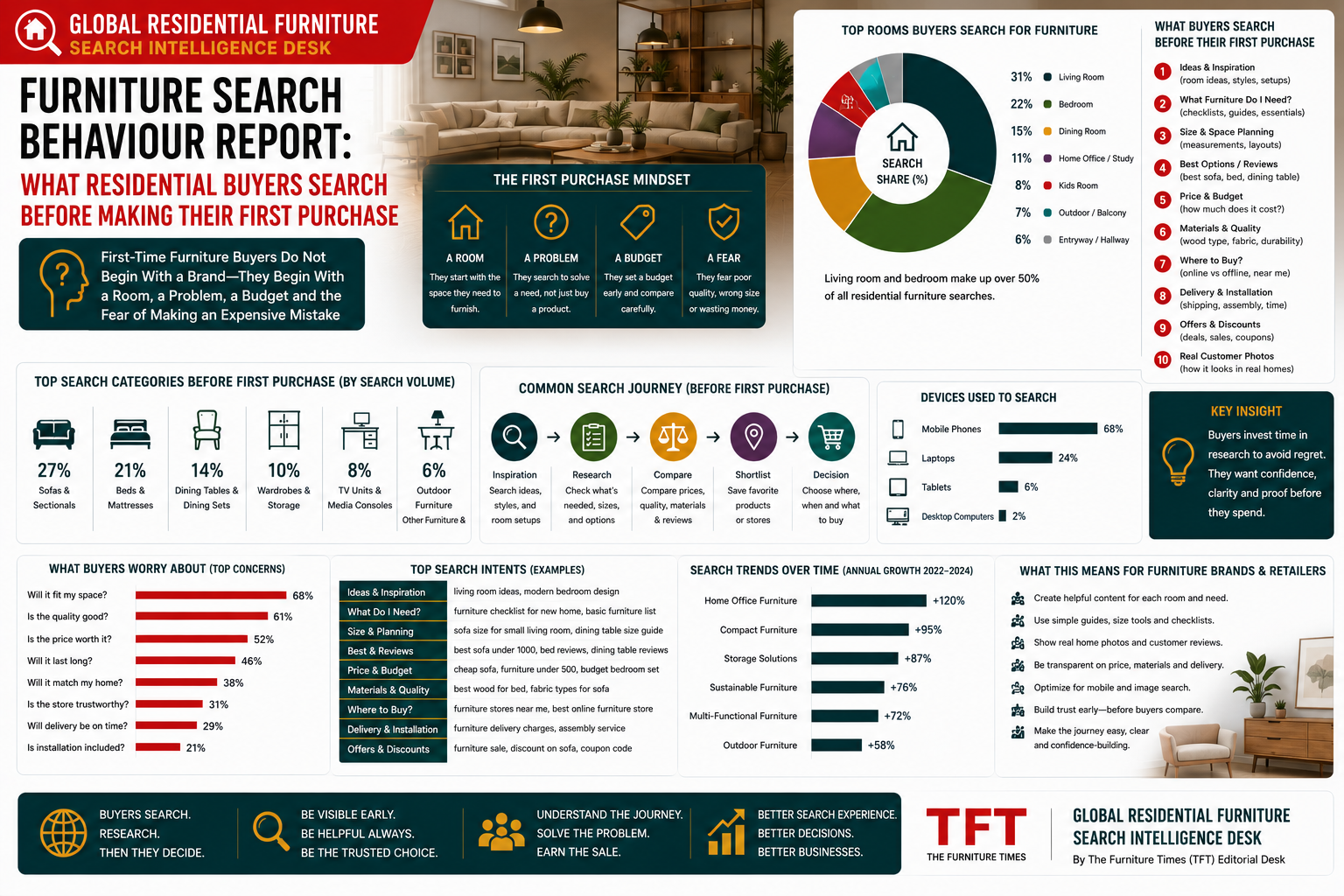
Furniture Search Behaviour Report: What Residential Buyers Search Before Making Their First Purchase
First-time furniture buyers begin with an empty room, limited budget and uncertainty about dimensions, materials and quality. This report maps the residential search journey from initial planning and price comparison to reviews, showroom visits, delivery checks and final purchase.

The Silent Furniture of Humanity
It was about the dining tables where families gathered, the chairs where ideas were born, the beds where workers found rest, and the workspaces where innovation took shape.
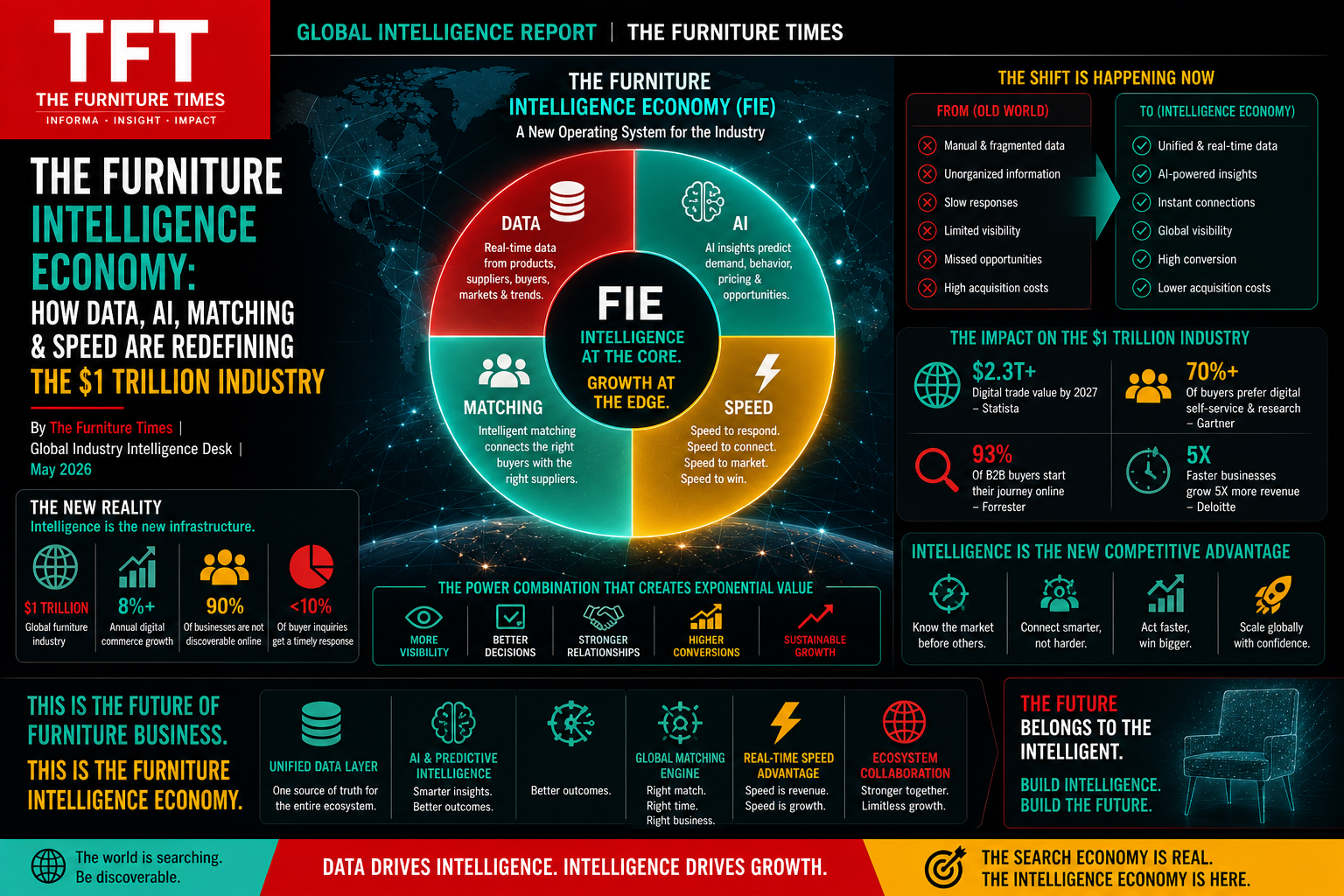
The Furniture Intelligence Economy: How Data, AI, Matching & Speed Are Redefining the $1 Trillion Industry
From manual sourcing to AI-driven matching, the furniture intelligence economy is transforming the global industry into a faster, smarter, and more connected ecosystem.
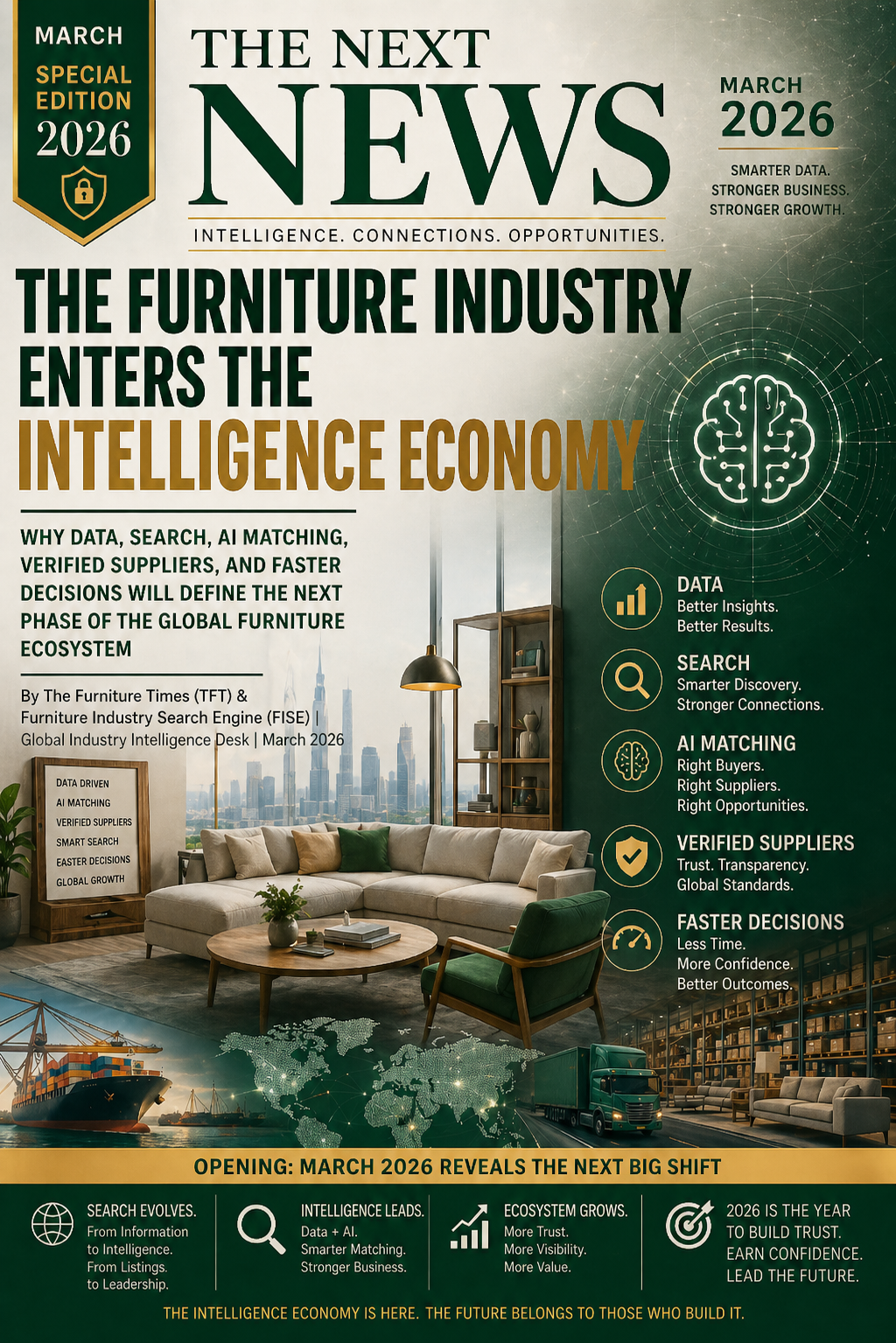
The Next News: The Furniture Industry Enters the Intelligence Economy
The global furniture industry is growing but under pressure. Flat orders, declining shipments, inventory pressure, tariff risk, and fragmented discovery reveal the urgent need for a furniture intelligence layer led by FISE.