
#FurnitureEconomy
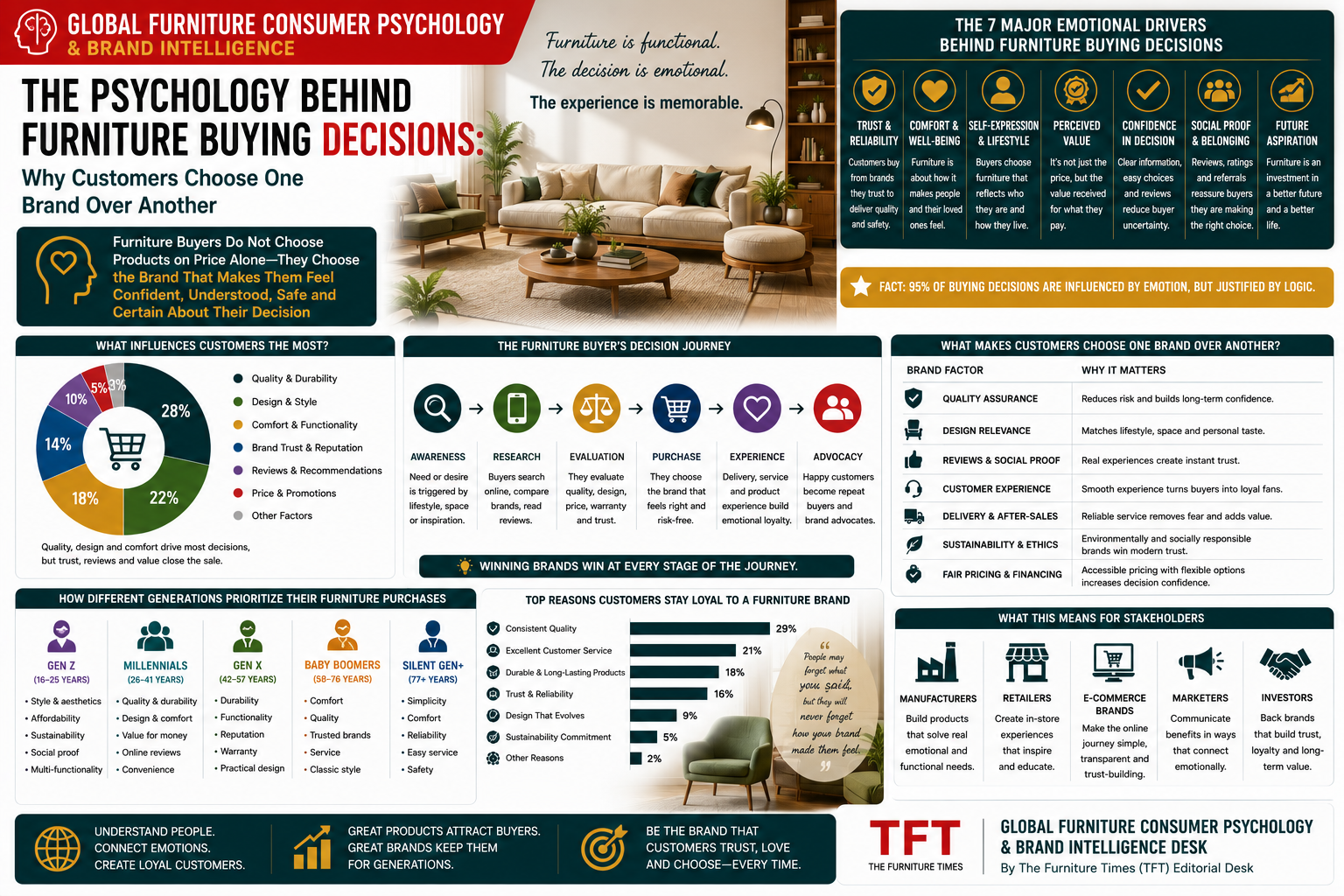
The Psychology Behind Furniture Buying Decisions: Why Customers Choose One Brand Over Another
Furniture buying is both emotional and practical. Customers choose brands that reduce uncertainty, communicate value, prove quality and make the desired home or commercial environment feel achievable. Discover the psychology behind furniture purchasing, brand trust, pricing, social proof and loyalty.
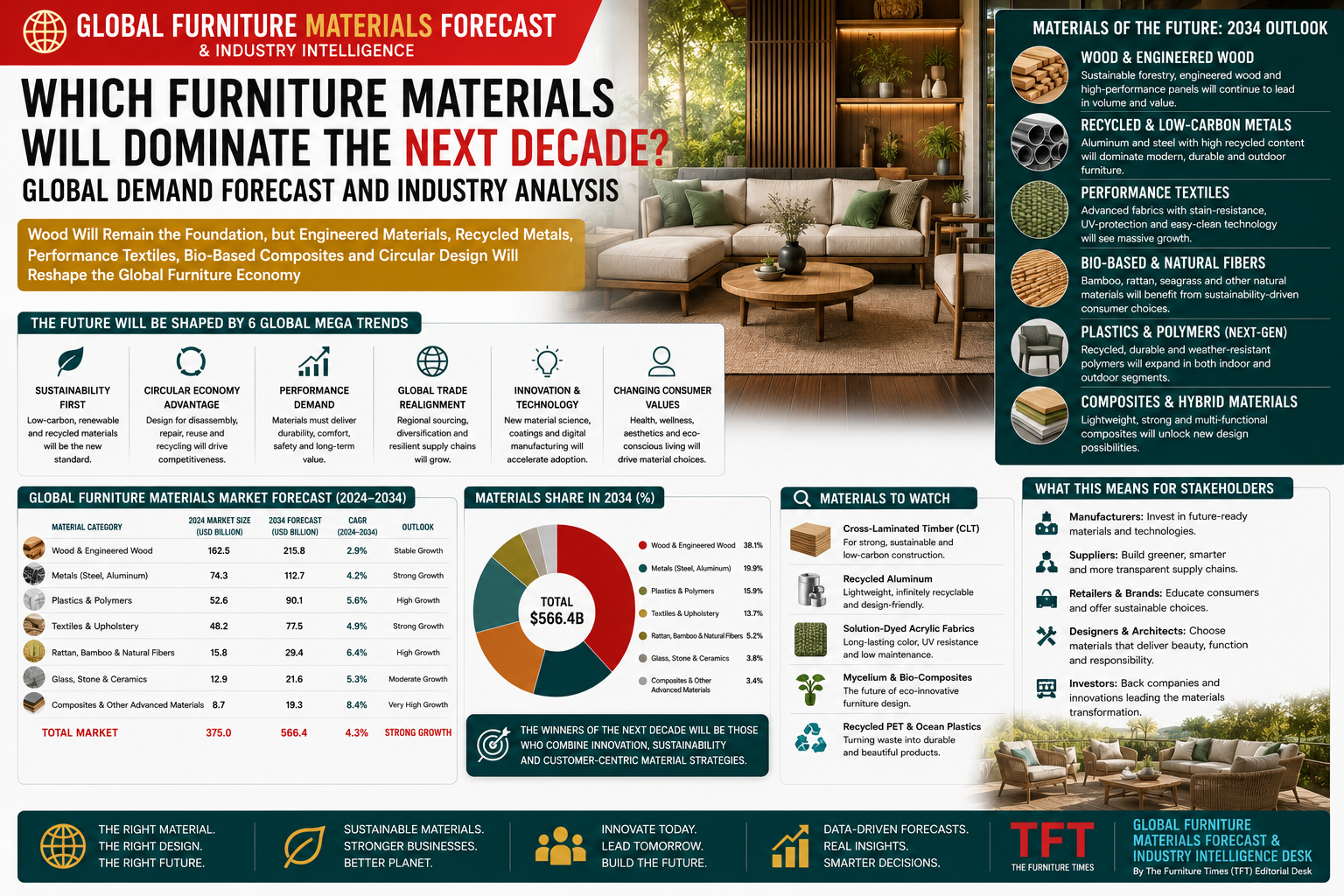
Which Furniture Materials Will Dominate the Next Decade? Global Demand Forecast and Industry Analysis
Wood will remain the foundation of the global furniture industry, but the next decade will bring rapid growth in aluminium, recycled polymers, performance textiles, bamboo, circular components and agricultural-waste composites. This report forecasts material demand by application, region and economic potential through 2035.
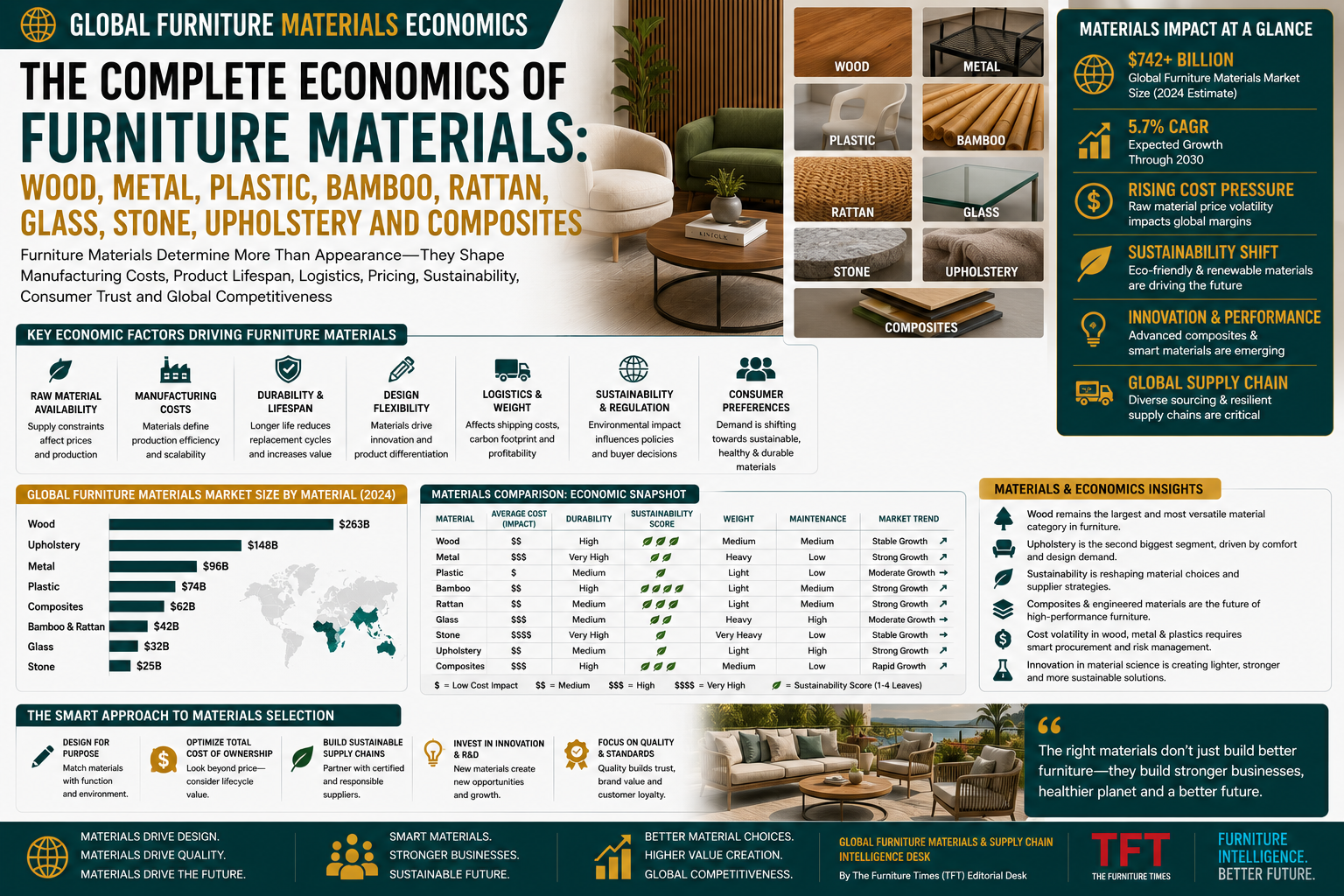
The Complete Economics of Furniture Materials: Wood, Metal, Plastic, Bamboo, Rattan, Glass, Stone, Upholstery and Composites
Furniture material choices determine far more than appearance. This comprehensive global report compares the economics of wood, metal, plastic, bamboo, rattan, glass, stone, upholstery and composite materials across sourcing, manufacturing, labour, logistics, durability, repairability and future circular-economy requirements.
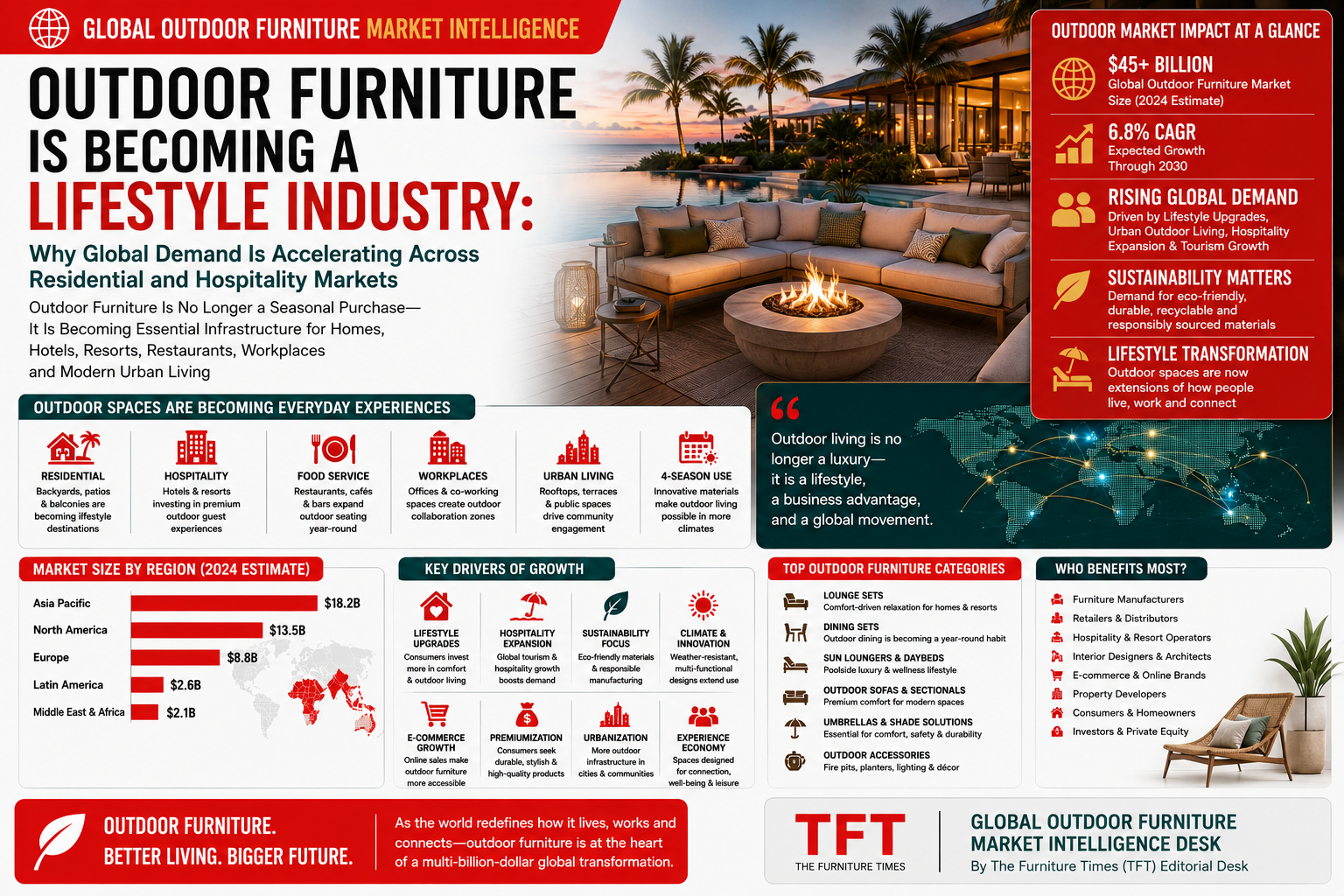
Outdoor Furniture Is Becoming a Lifestyle Industry: Why Global Demand Is Accelerating Across Residential and Hospitality Markets
The global outdoor furniture economy is expanding as homes, hotels, resorts, restaurants and commercial properties turn balconies, gardens, rooftops, terraces and pool areas into functional lifestyle environments. This report examines market size, materials, regional demand, customer age groups, hospitality procurement, search behaviour and future growth opportunities.
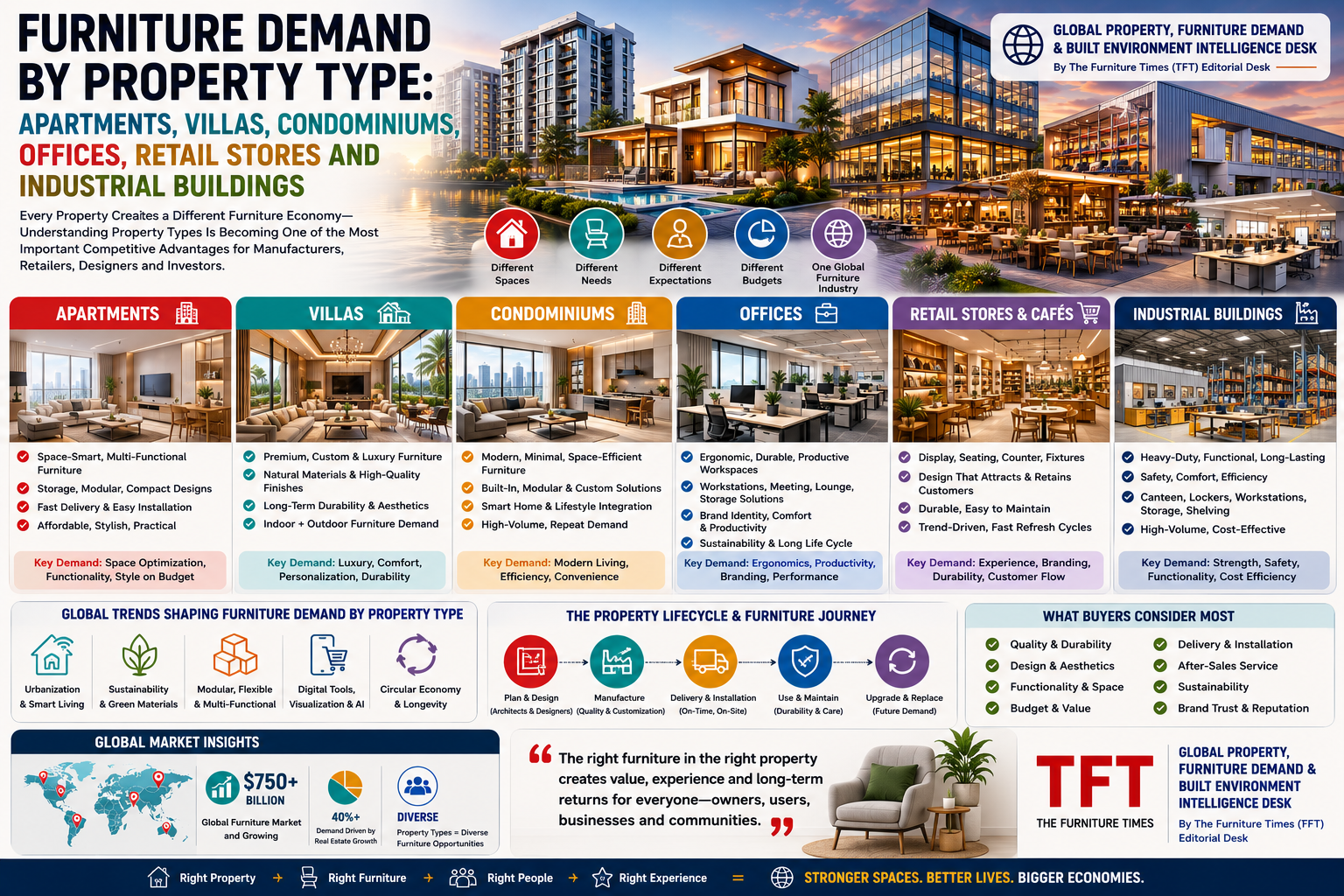
Furniture Demand by Property Type: Apartments, Villas, Condominiums, Offices, Retail Stores and Industrial Buildings
From compact apartments to luxury villas, hybrid offices, retail stores and industrial facilities, every building generates unique furniture requirements. This report explores how property development drives manufacturing, design, procurement and long-term replacement demand.
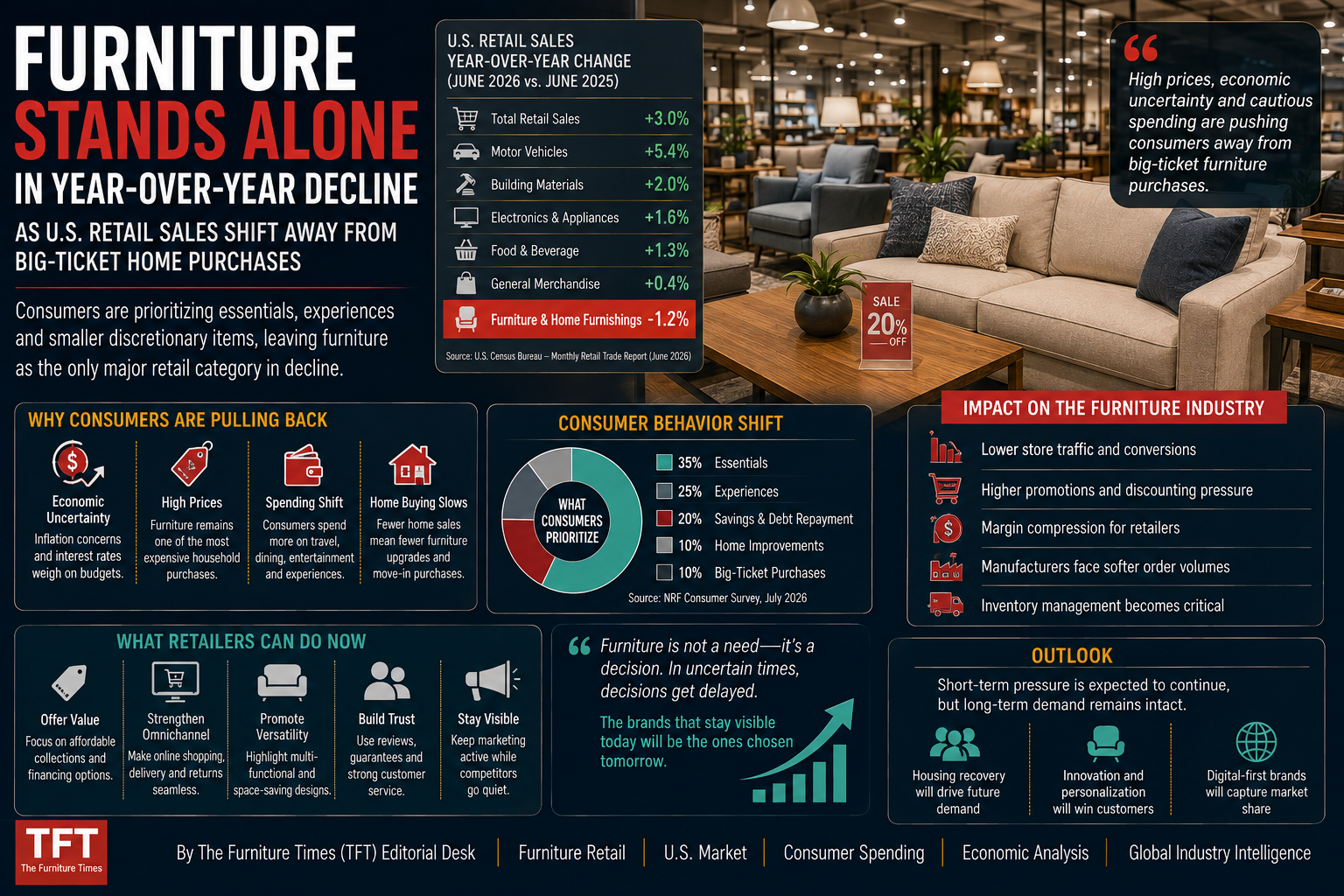
Furniture Stands Alone in Year-over-Year Decline as U.S. Retail Sales Shift Away From Big-Ticket Home Purchases
Furniture was reportedly the only major U.S. retail category to post a year-over-year decline in July 2026. Although store sales increased 0.3% from June, they remained approximately 2.7% below last year, highlighting continuing pressure from cautious consumers, weak housing-related demand and changing retail channels.
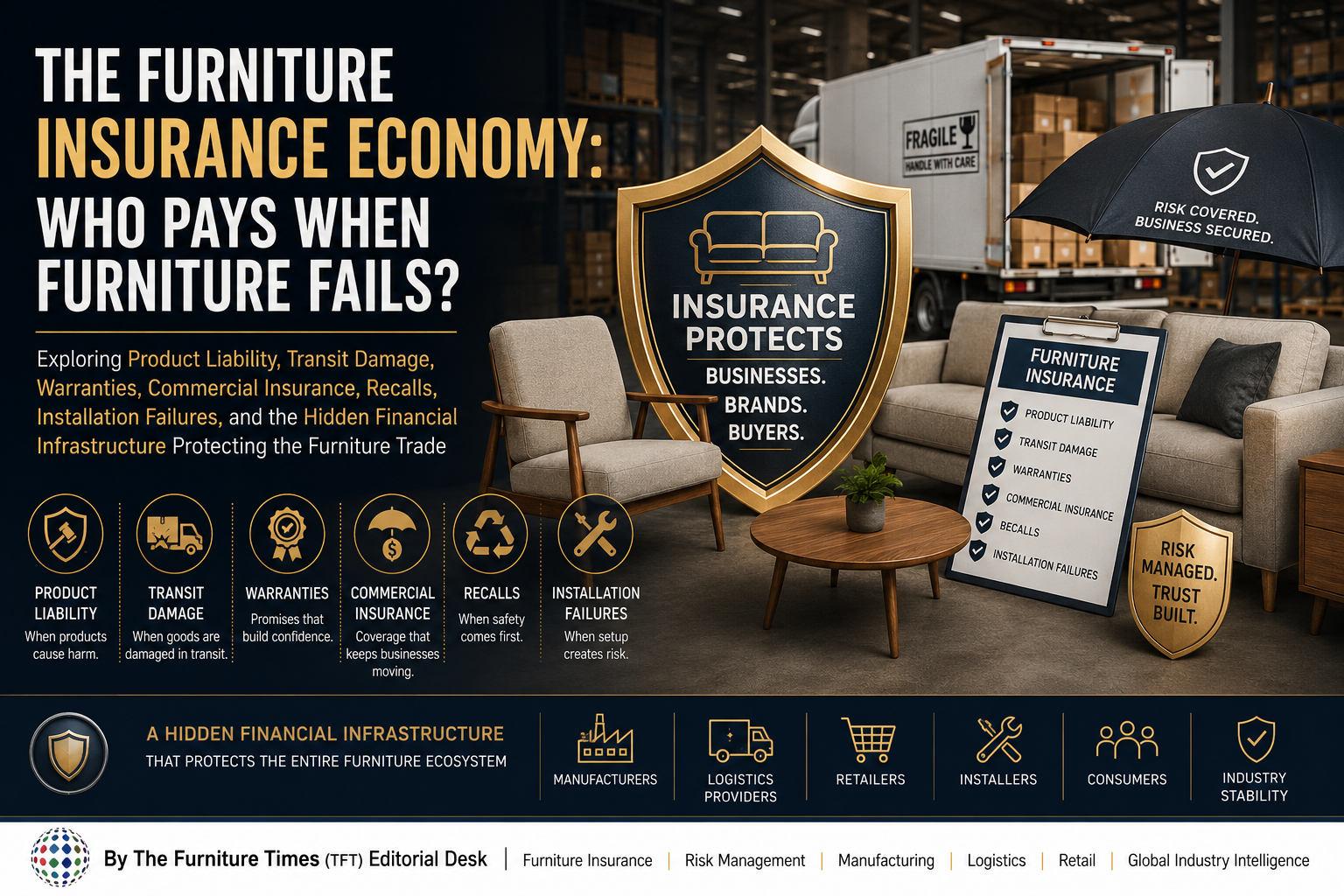
The Furniture Insurance Economy: Who Pays When Furniture Fails?
The furniture industry talks constantly about design, manufacturing, materials, retail and market growth—but rarely about who pays when something goes wrong. The Furniture Times examines the hidden furniture insurance economy and the complex network of manufacturers, suppliers, logistics companies, installers, retailers, insurers and customers sharing billions of dollars in potential risk.
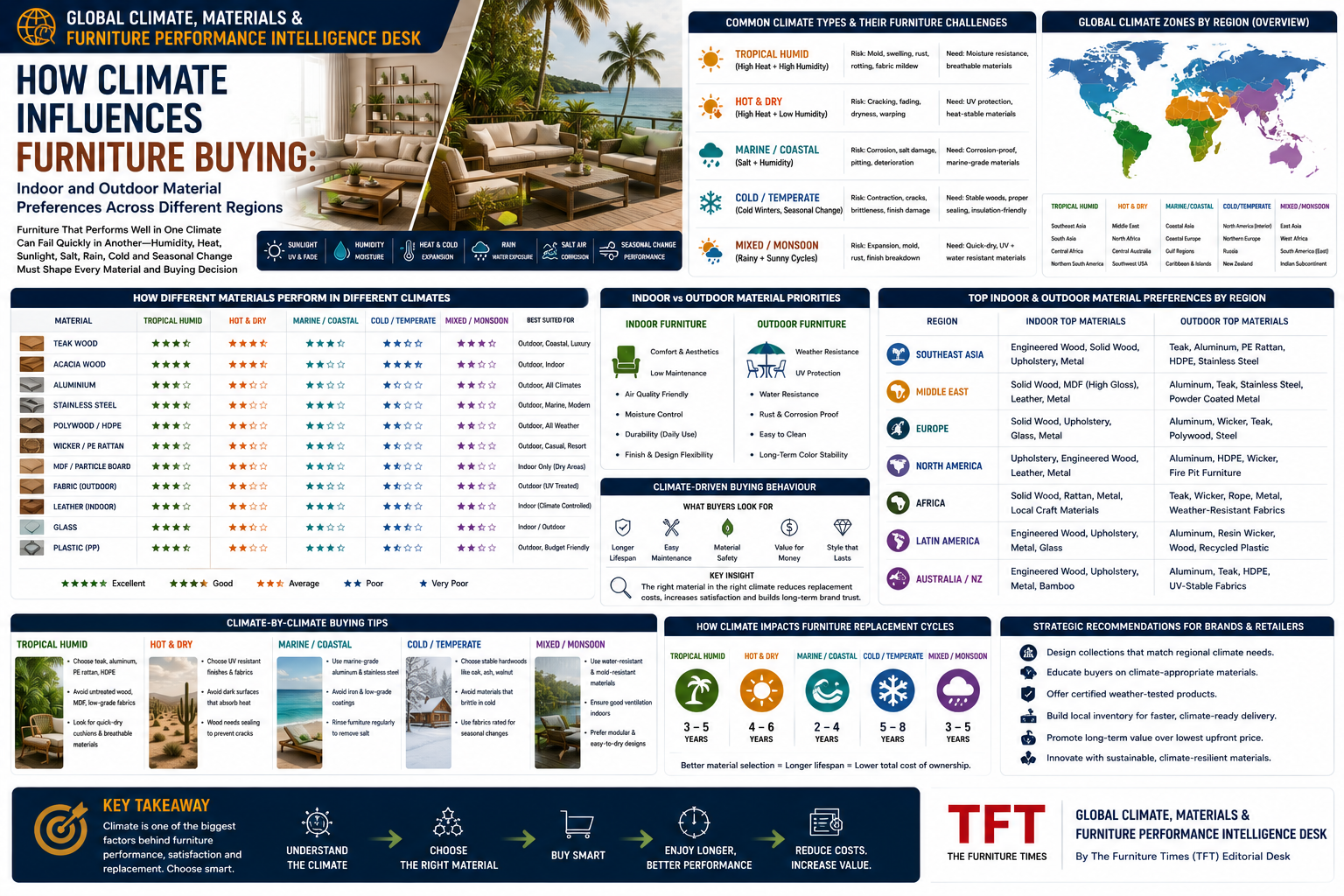
How Climate Influences Furniture Buying: Indoor and Outdoor Material Preferences Across Different Regions
Furniture that performs well in one climate may fail quickly in another. Discover how regional humidity, temperature, sunlight, salt exposure, rainfall and seasonal change influence consumer choices across wood, metal, panels, upholstery, rattan, plastics and outdoor materials.
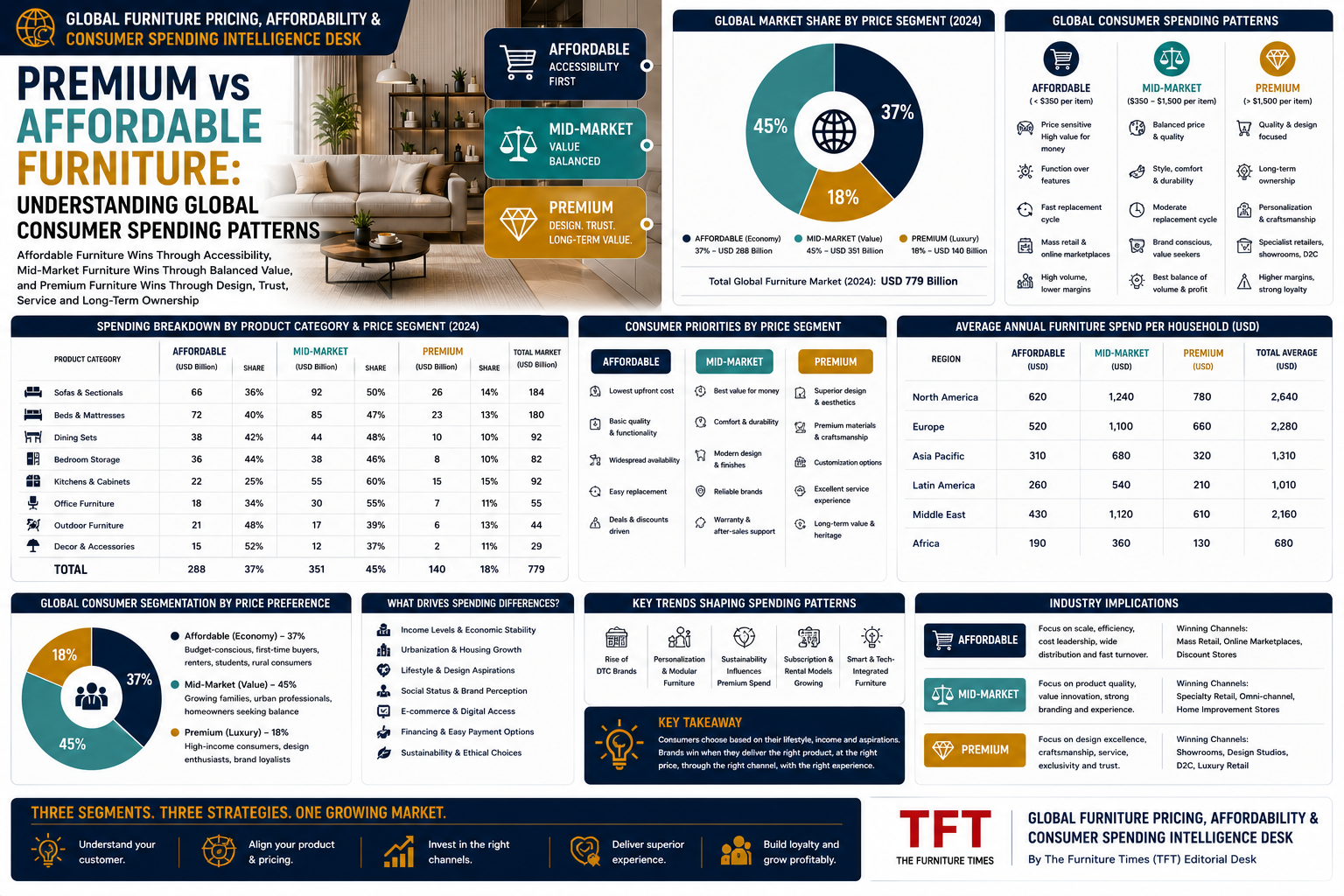
Premium vs Affordable Furniture: Understanding Global Consumer Spending Patterns
Affordable furniture drives global volume, premium furniture commands higher transaction values, and the mid-market remains the industry’s largest competitive battlefield. Discover how household income, housing costs, product lifespan, materials, services and regional buying power shape furniture spending.
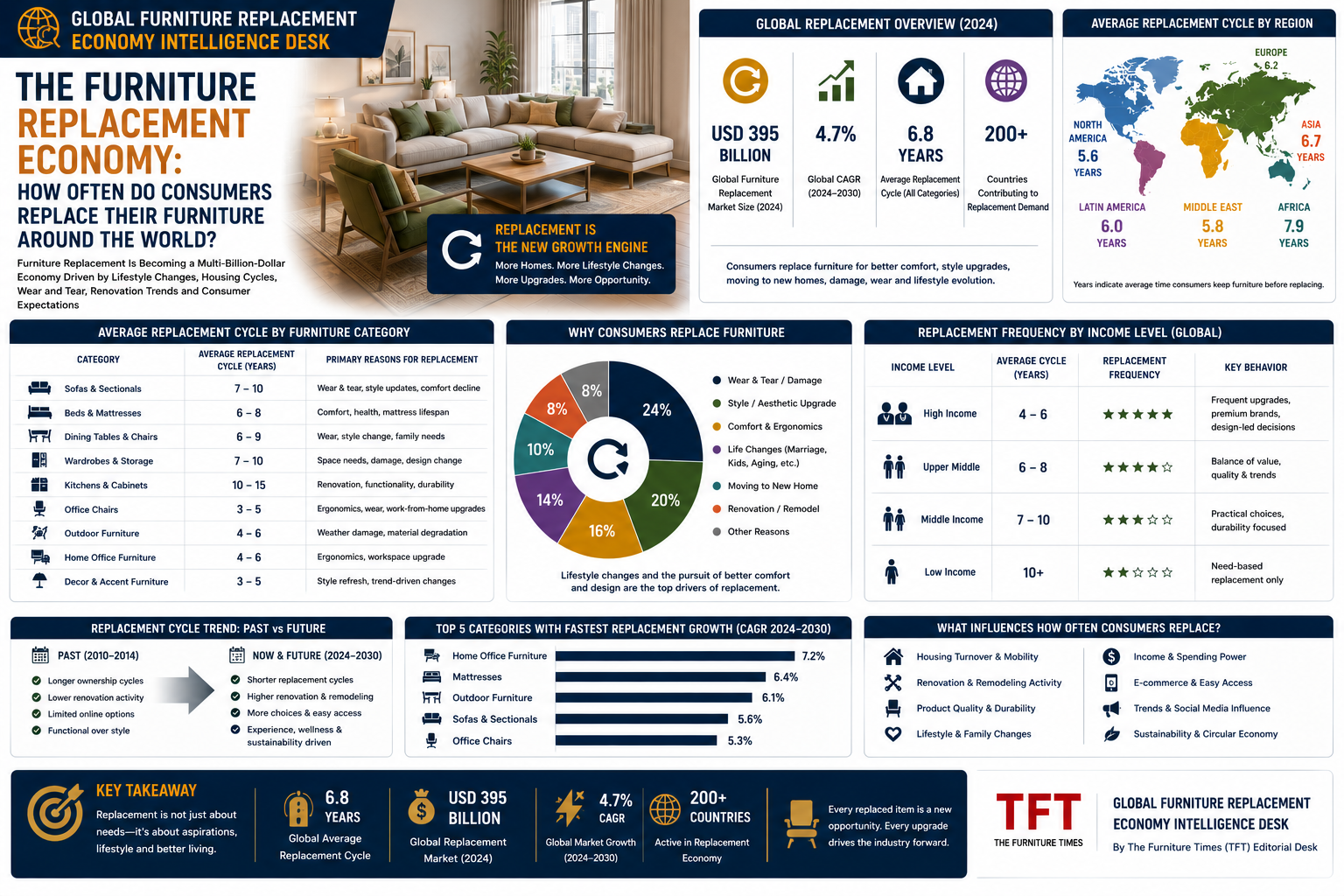
The Furniture Replacement Economy: How Often Do Consumers Replace Their Furniture Around the World?
The global furniture replacement economy is reshaping demand. Learn how replacement cycles, renovation trends, lifestyle changes, sustainability and commercial refurbishment are creating long-term opportunities for manufacturers and retailers.