
Furniture Compliance
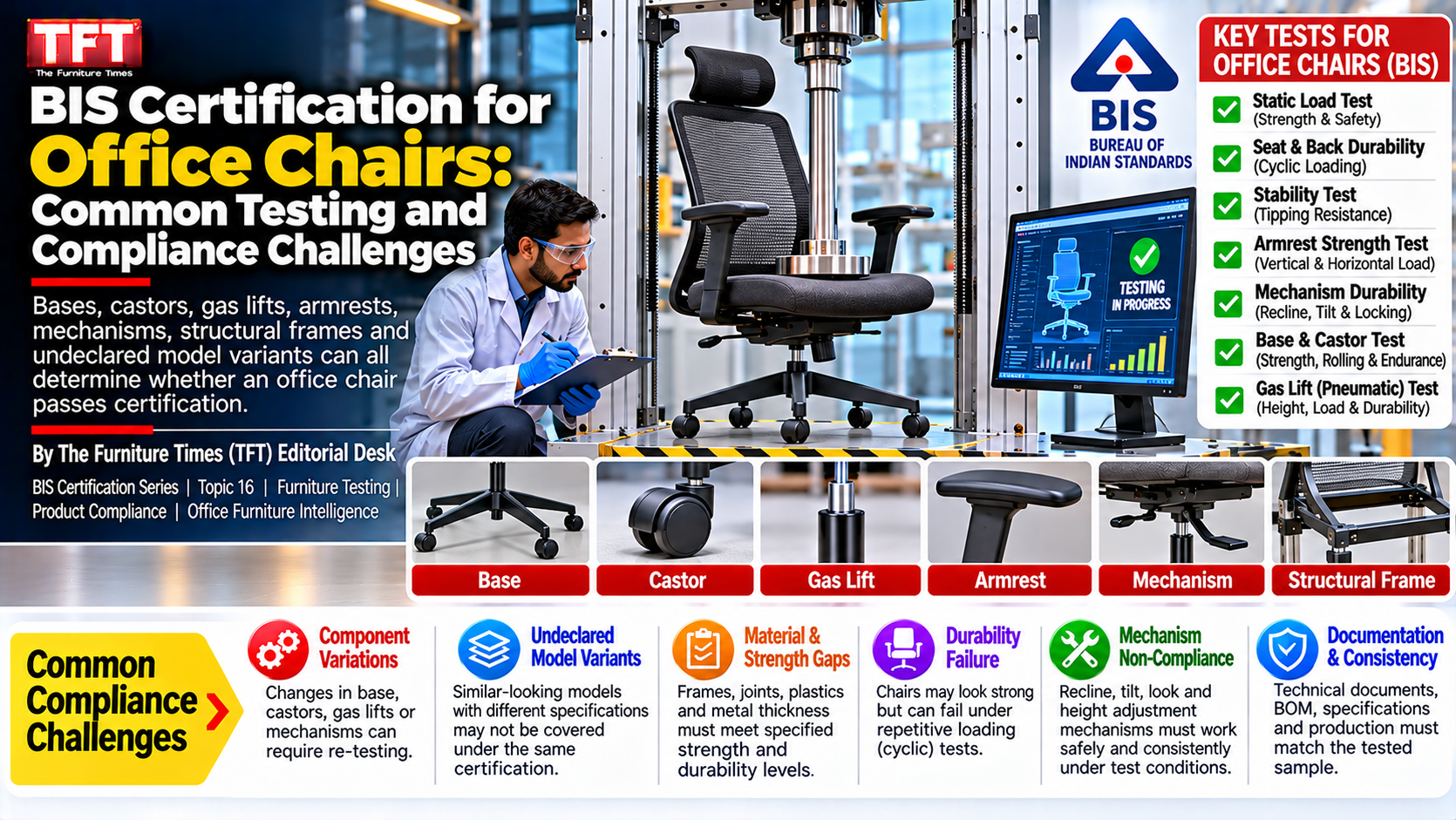
BIS Certification for Office Chairs: Common Testing and Compliance Challenges
A detailed examination of the common BIS testing and compliance challenges facing office-chair manufacturers, including stability, static strength, durability, castor-and-base performance, gas lifts, armrests, mechanisms, documentation and variant control.
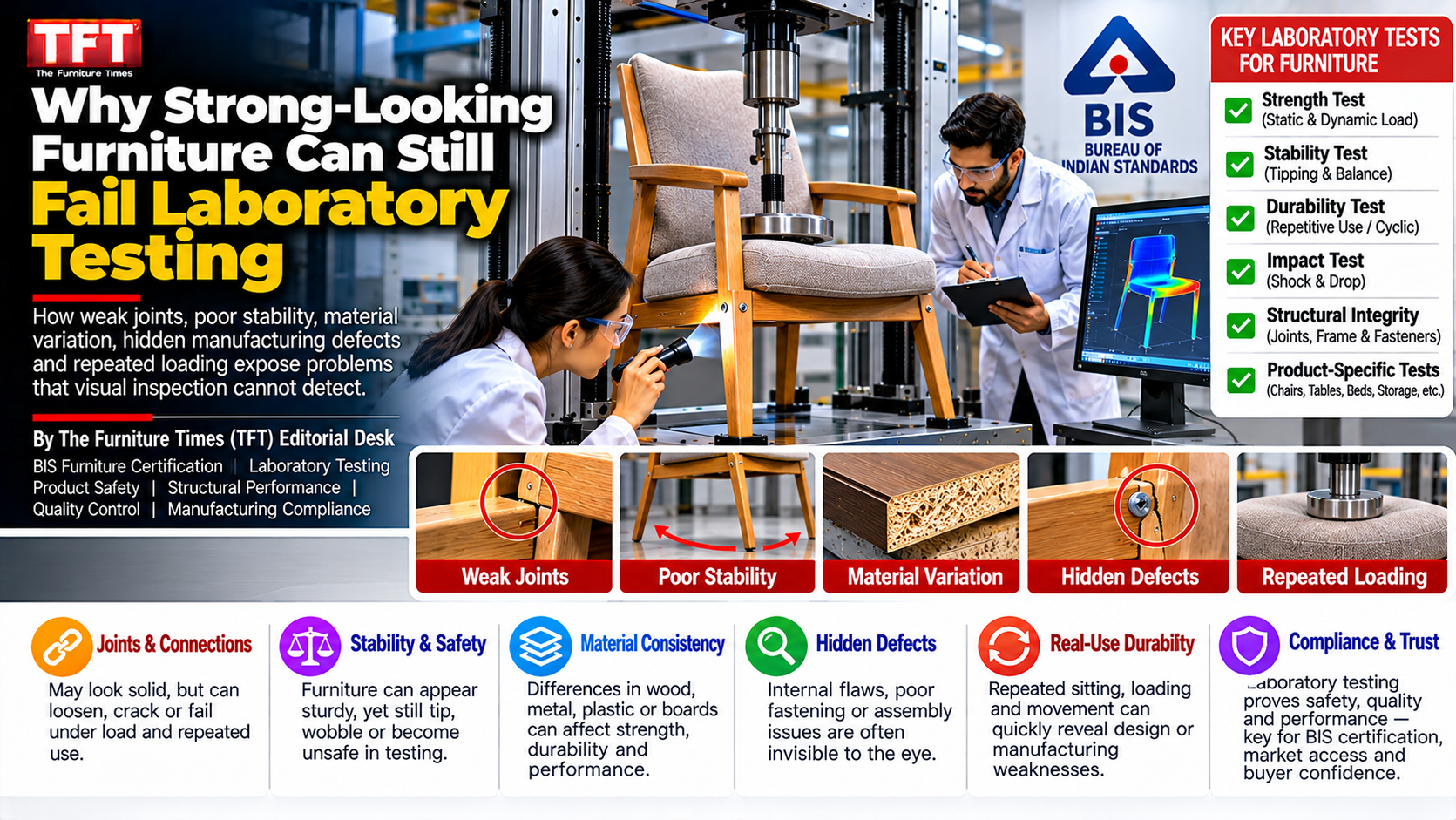
Why Strong-Looking Furniture Can Still Fail Laboratory Testing
Visual inspection cannot reveal every structural weakness. This manufacturer-focused report explains why apparently strong chairs, tables, storage units, beds and bunk beds may fail BIS laboratory testing.
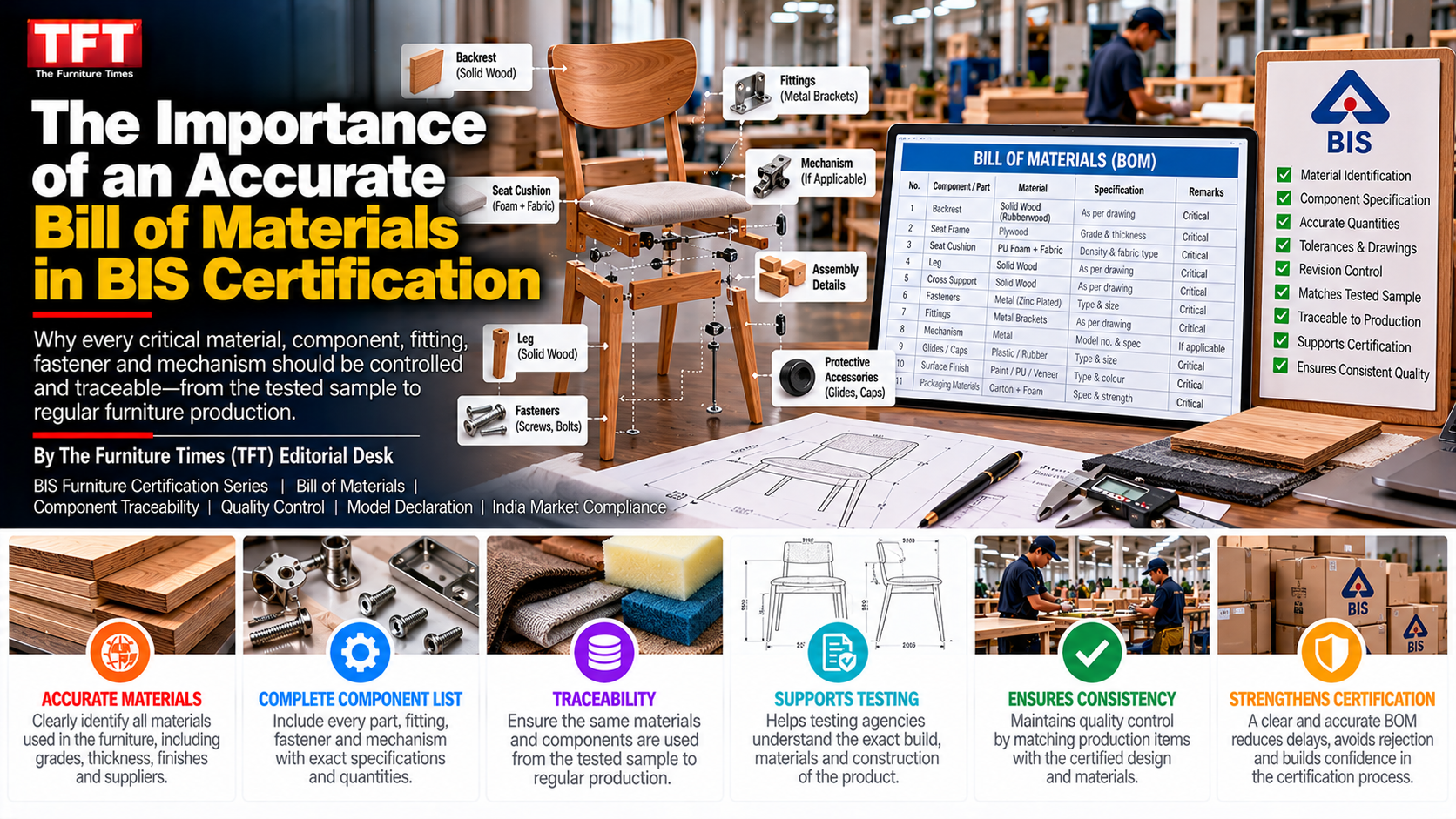
The Importance of an Accurate Bill of Materials in BIS Certification
A passing furniture test report is meaningful only when the tested construction can be identified and reproduced. This TFT guide explains how an accurate BOM strengthens BIS certification through component control, traceability, supplier approval, incoming inspection and revision management.

Why Undeclared Furniture Variants Can Put BIS Certification at Risk
An undeclared furniture variant can create a mismatch between the BIS application, laboratory report and product sold in the market. This report explains how structural and functional changes affect certification scope—and how manufacturers can control them.
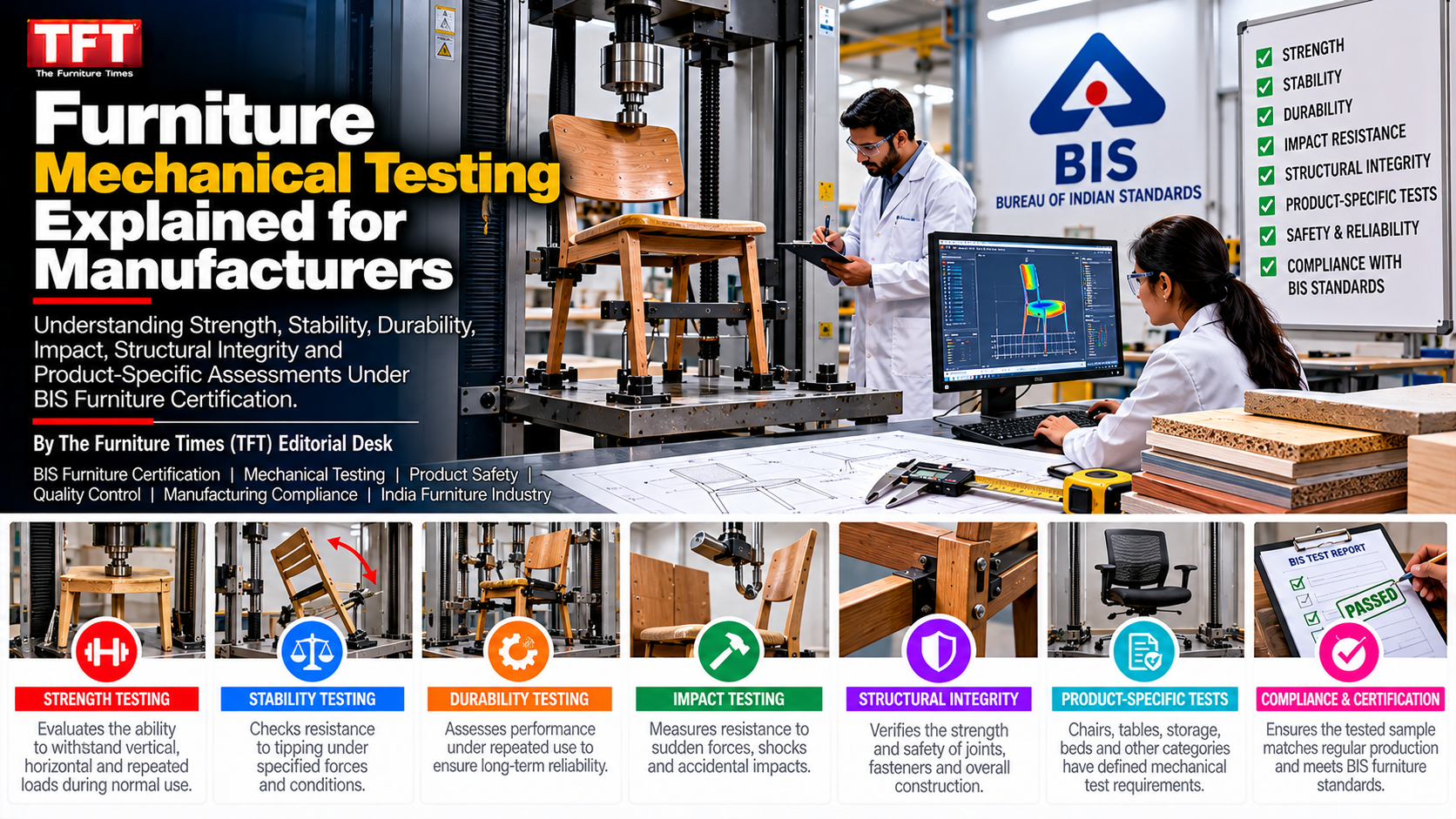
Furniture Mechanical Testing Explained for Manufacturers
Mechanical testing is more than placing weight on furniture. This manufacturer-focused report explains strength, stability, durability, impact, deflection, structural integrity, representative sampling and production control under the BIS furniture-certification framework.
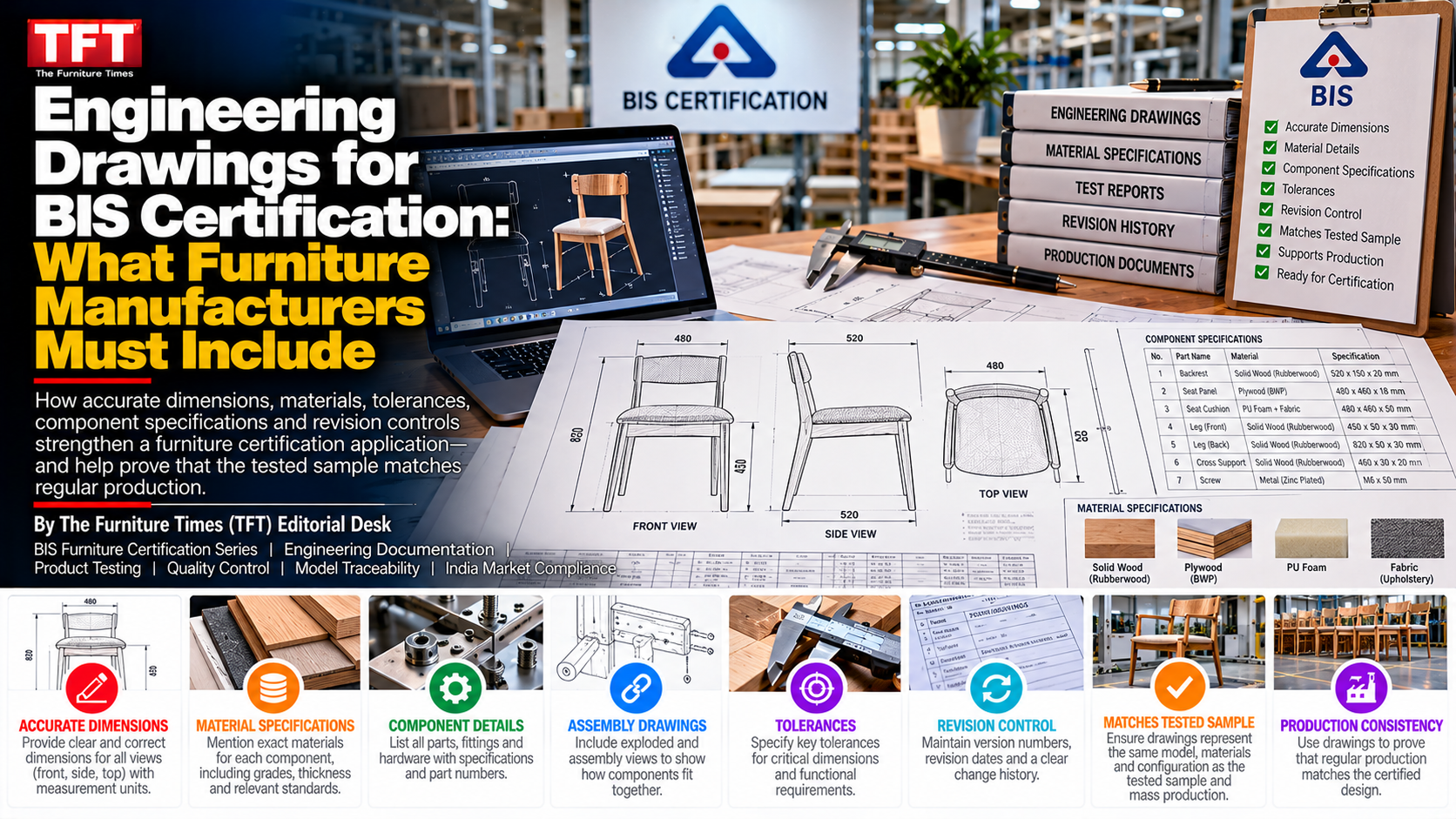
Engineering Drawings for BIS Certification
Engineering drawings are more than application attachments. This detailed guide explains how dimensions, materials, tolerances, joints, components, model comparisons and revision controls can strengthen furniture BIS certification and prevent ambiguity between declared, tested and manufactured products.
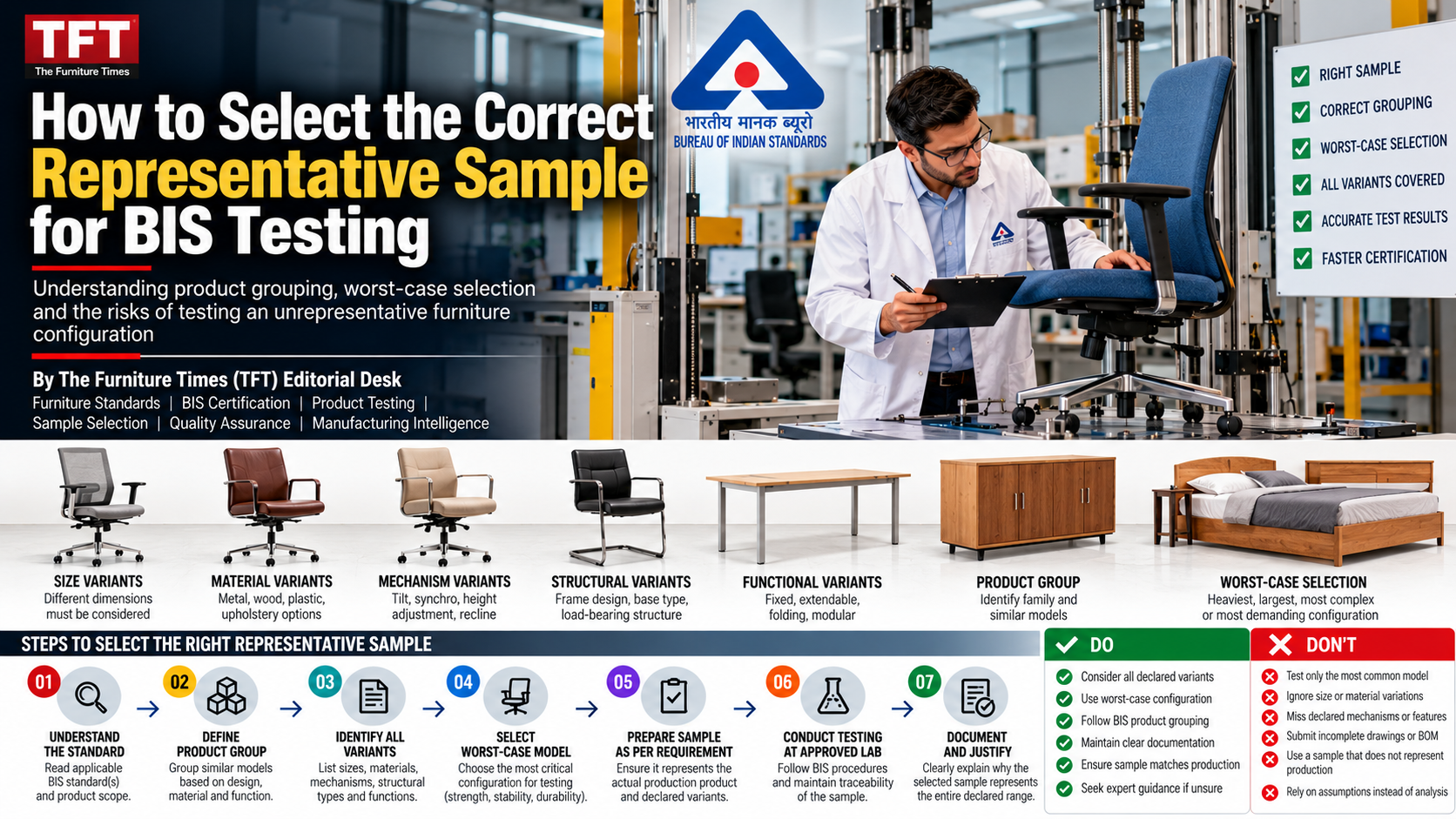
How to Select the Correct Representative Sample for BIS Testing
Passing one furniture model does not automatically provide certification evidence for every size or variant. This detailed TFT guide explains product grouping, worst-case selection, boundary sampling, sample traceability and the risks of submitting an unrepresentative product for BIS testing.
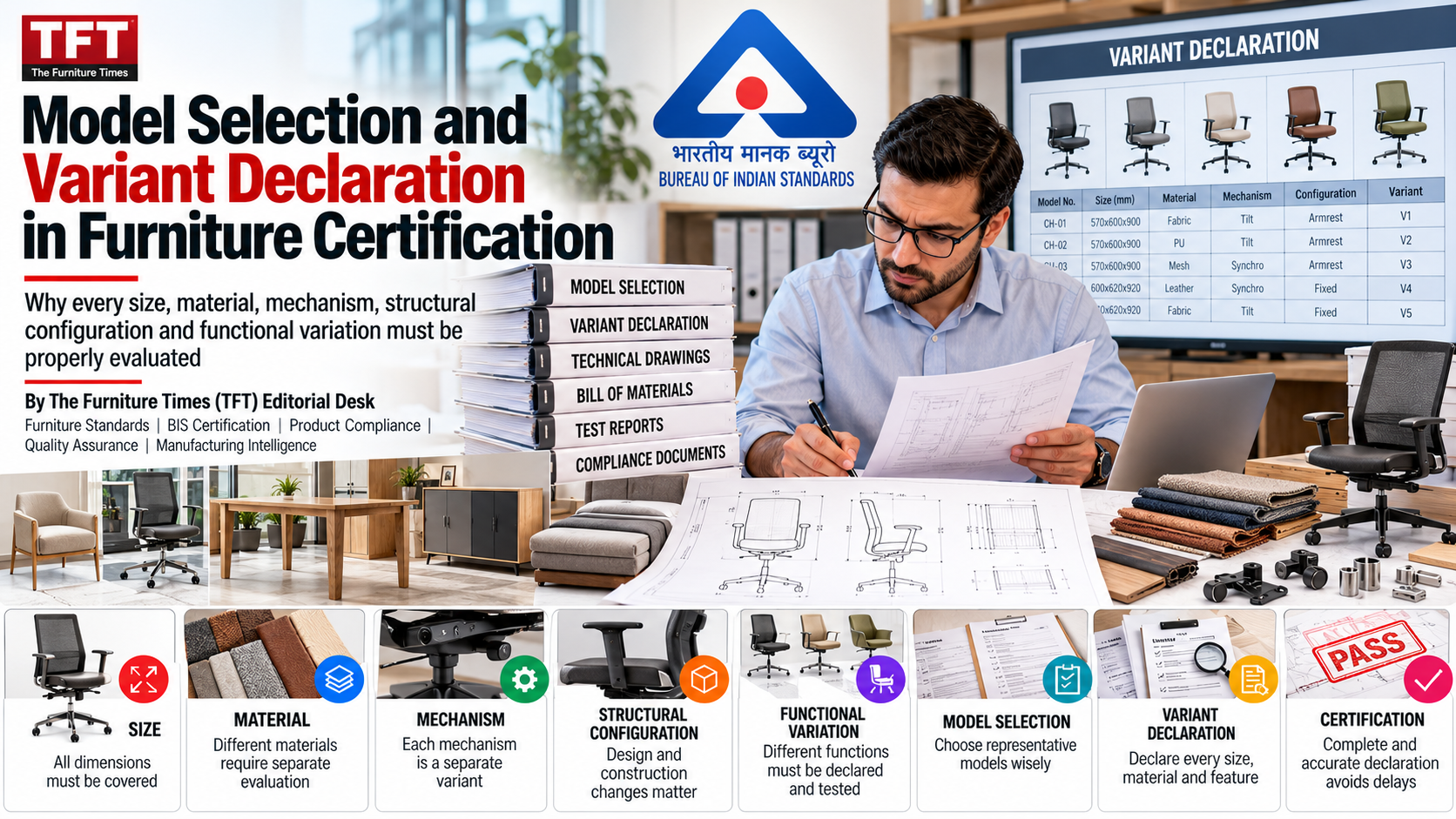
Model Selection and Variant Declaration in Furniture Certification
Model selection is one of the most important stages in furniture certification. This report explains why manufacturers must declare every relevant variant, identify technically representative samples and maintain alignment between models, drawings, bills of materials, laboratory reports and actual production.
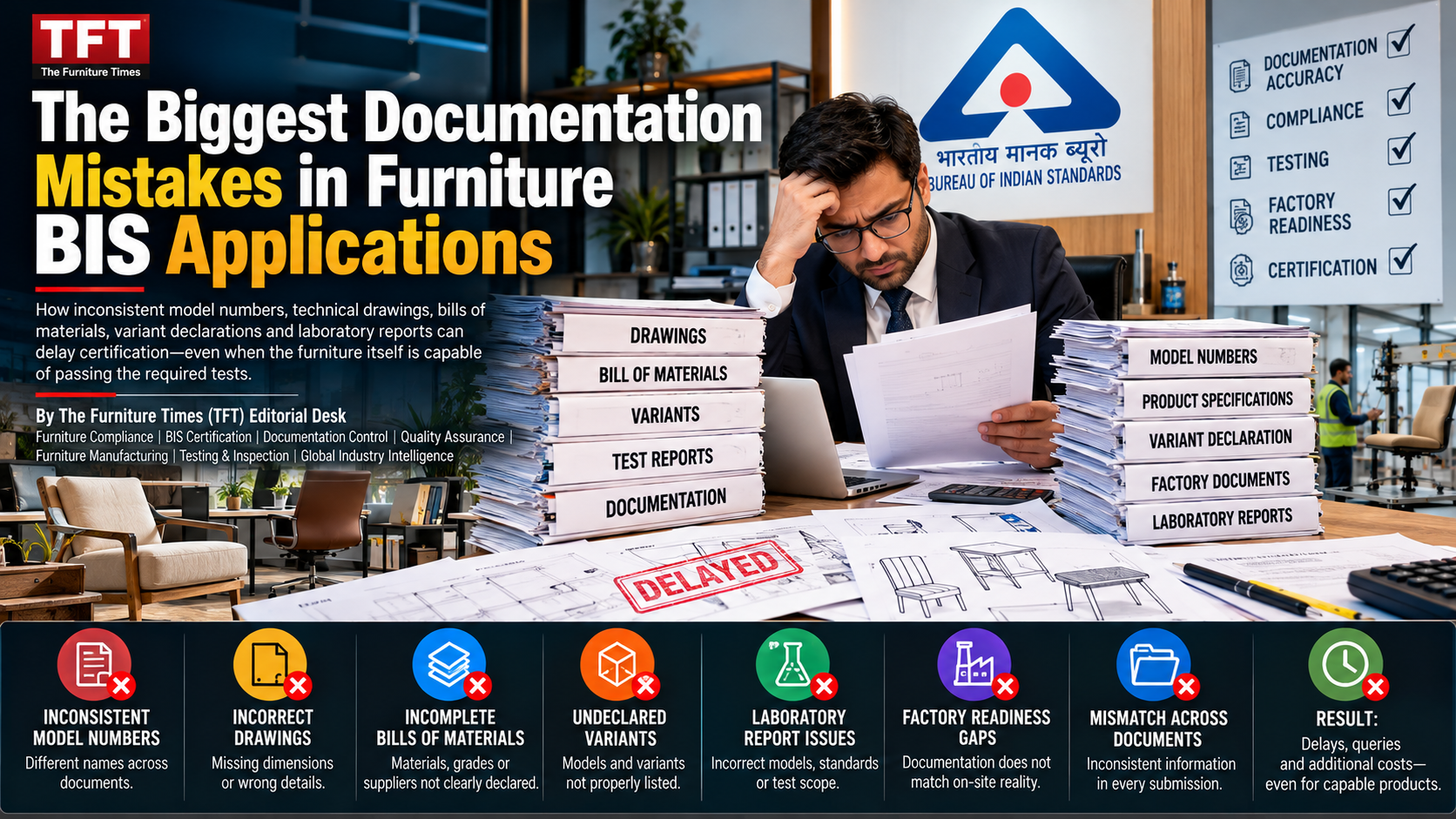
The Biggest Documentation Mistakes in Furniture BIS Applications
Furniture BIS certification depends on a traceable evidence chain connecting the declared model, approved drawing, bill of materials, physical sample, laboratory report and routine factory production. This report explains the most common documentation failures and provides practical controls for manufacturers preparing applications, testing and factory inspections.
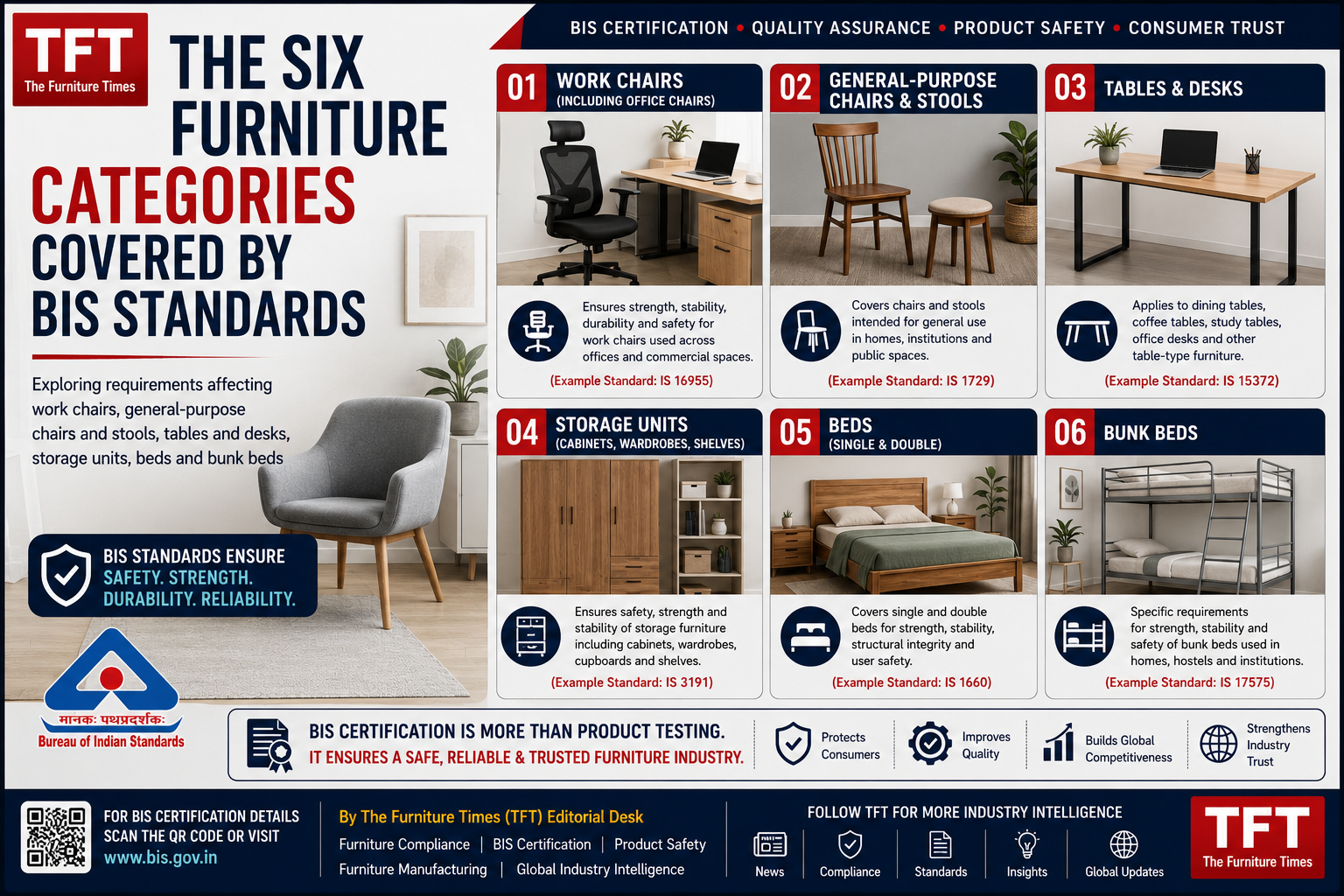
The Six Furniture Categories Covered by BIS Standards
A category-by-category guide to the six furniture groups covered by India’s Furniture Quality Control Order, explaining applicable BIS standards, product risks, classification issues, testing considerations and manufacturer responsibilities.