
#IndianStandards

The Biggest Documentation Mistakes in Furniture BIS Applications
Furniture BIS certification depends on a traceable evidence chain connecting the declared model, approved drawing, bill of materials, physical sample, laboratory report and routine factory production. This report explains the most common documentation failures and provides practical controls for manufacturers preparing applications, testing and factory inspections.
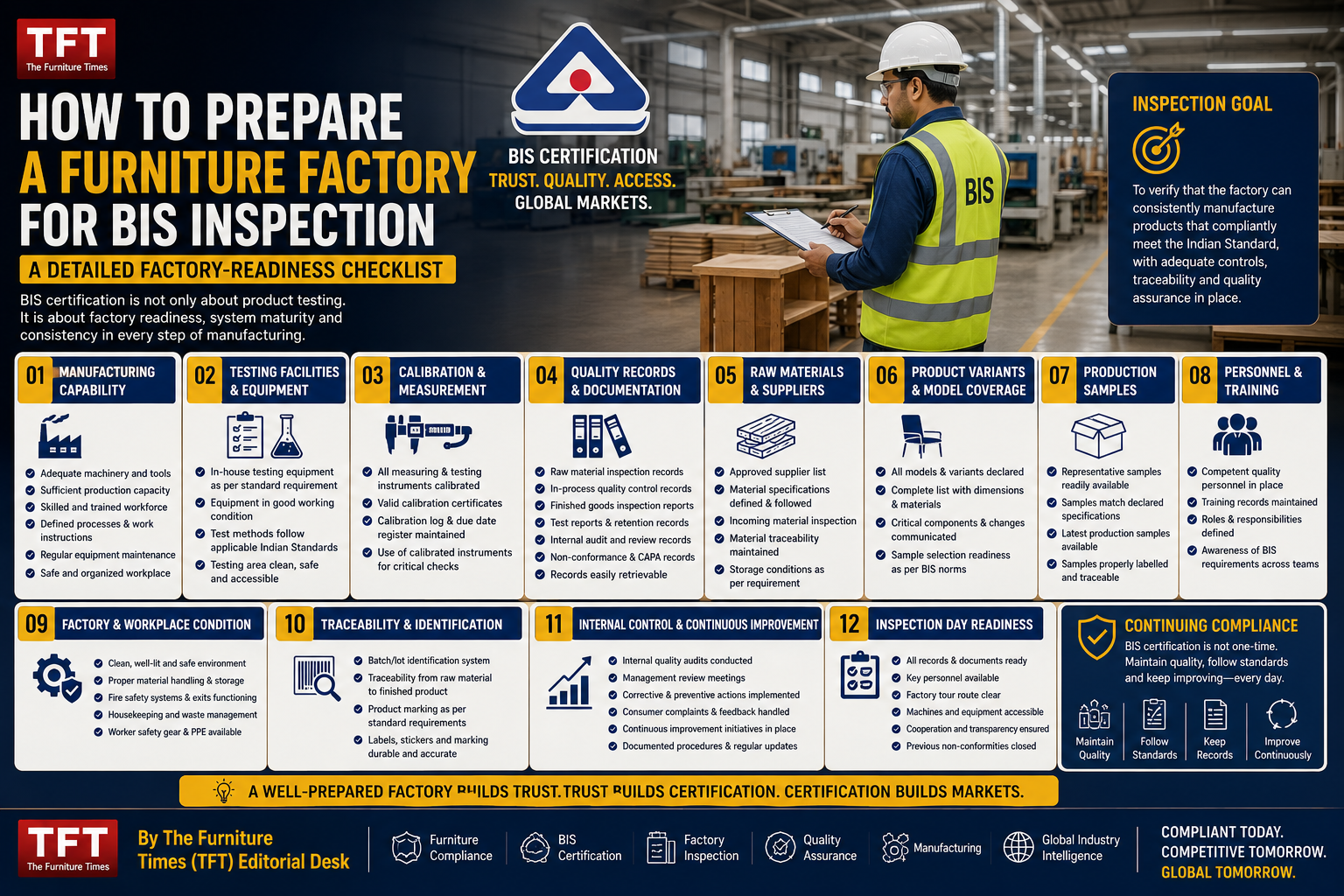
How to Prepare a Furniture Factory for BIS Inspection
Passing furniture testing is only one part of BIS certification. This factory-readiness guide explains how manufacturers should prepare machinery, laboratories, calibration, drawings, materials, personnel, records and representative production samples before BIS inspection.
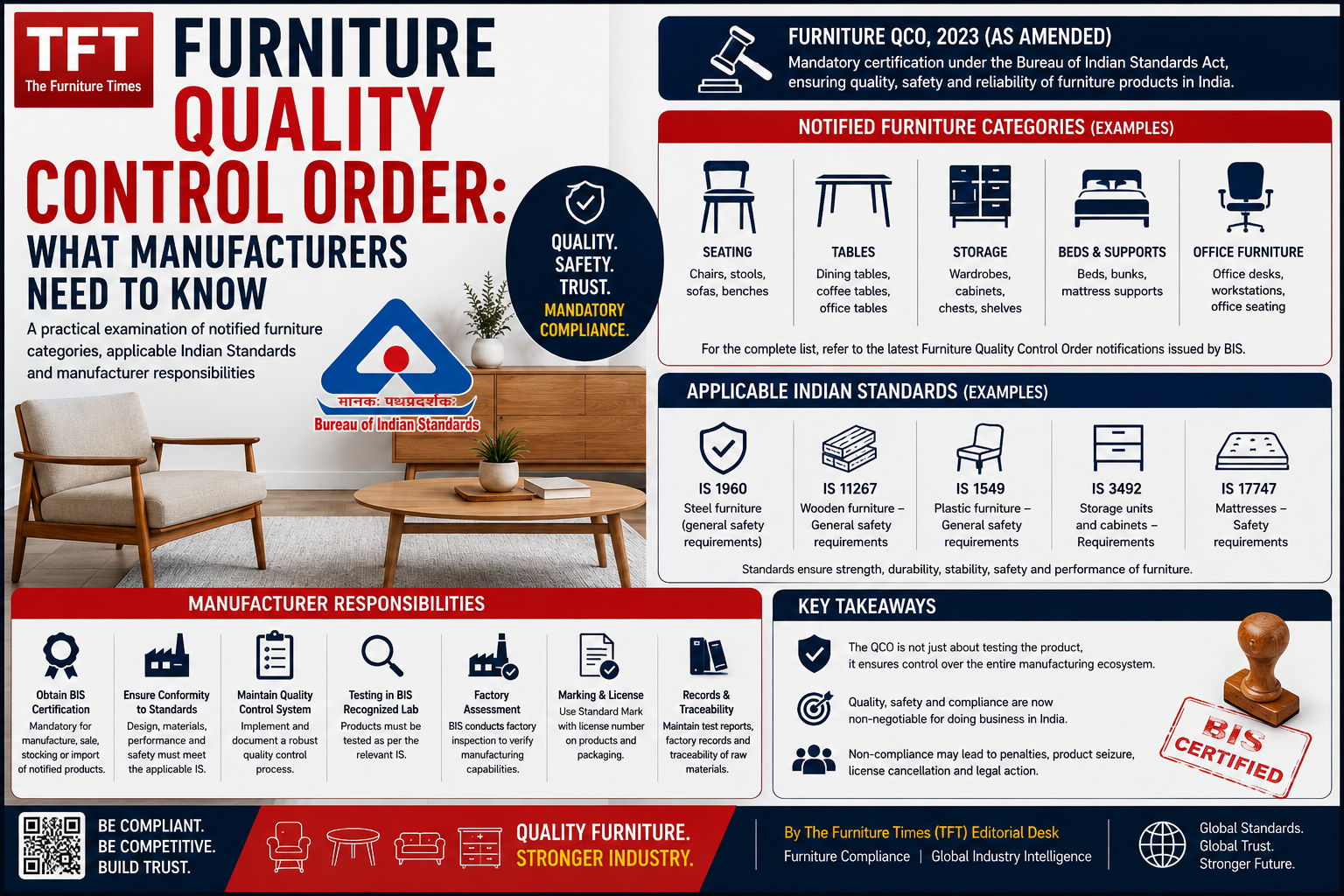
Furniture Quality Control Order: What Manufacturers Need to Know
A detailed examination of India’s Furniture Quality Control Order, covering notified furniture categories, applicable BIS standards, implementation provisions, exemptions and the continuing responsibilities of manufacturers, importers and furniture brands.
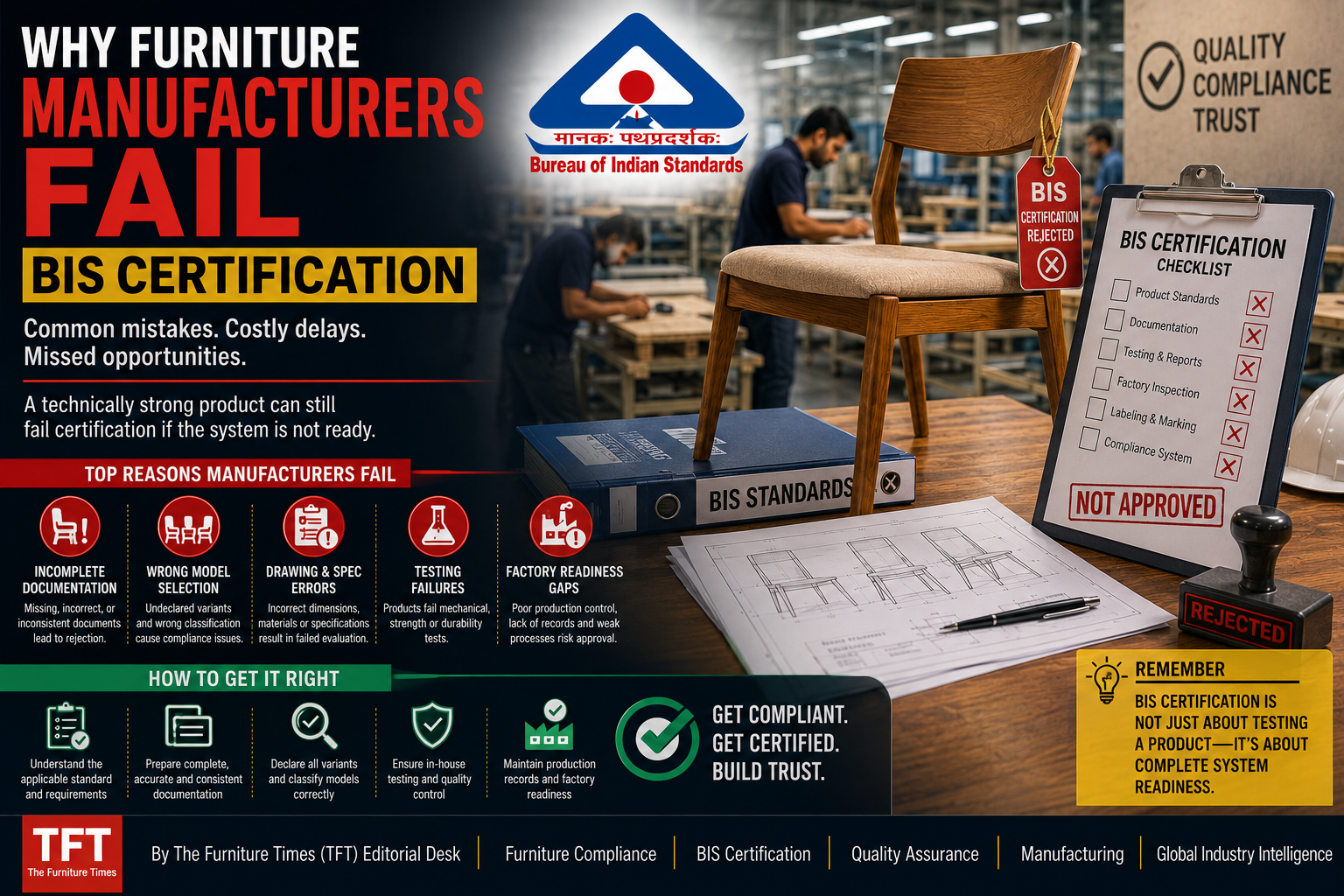
Why Furniture Manufacturers Fail BIS Certification,How incomplete preparation,
Why do technically strong furniture products still face BIS certification delays or failure? This detailed analysis examines incorrect classification, undeclared variants, unrepresentative samples, documentation inconsistencies, mechanical testing, factory readiness, marking errors and uncontrolled post-certification changes.
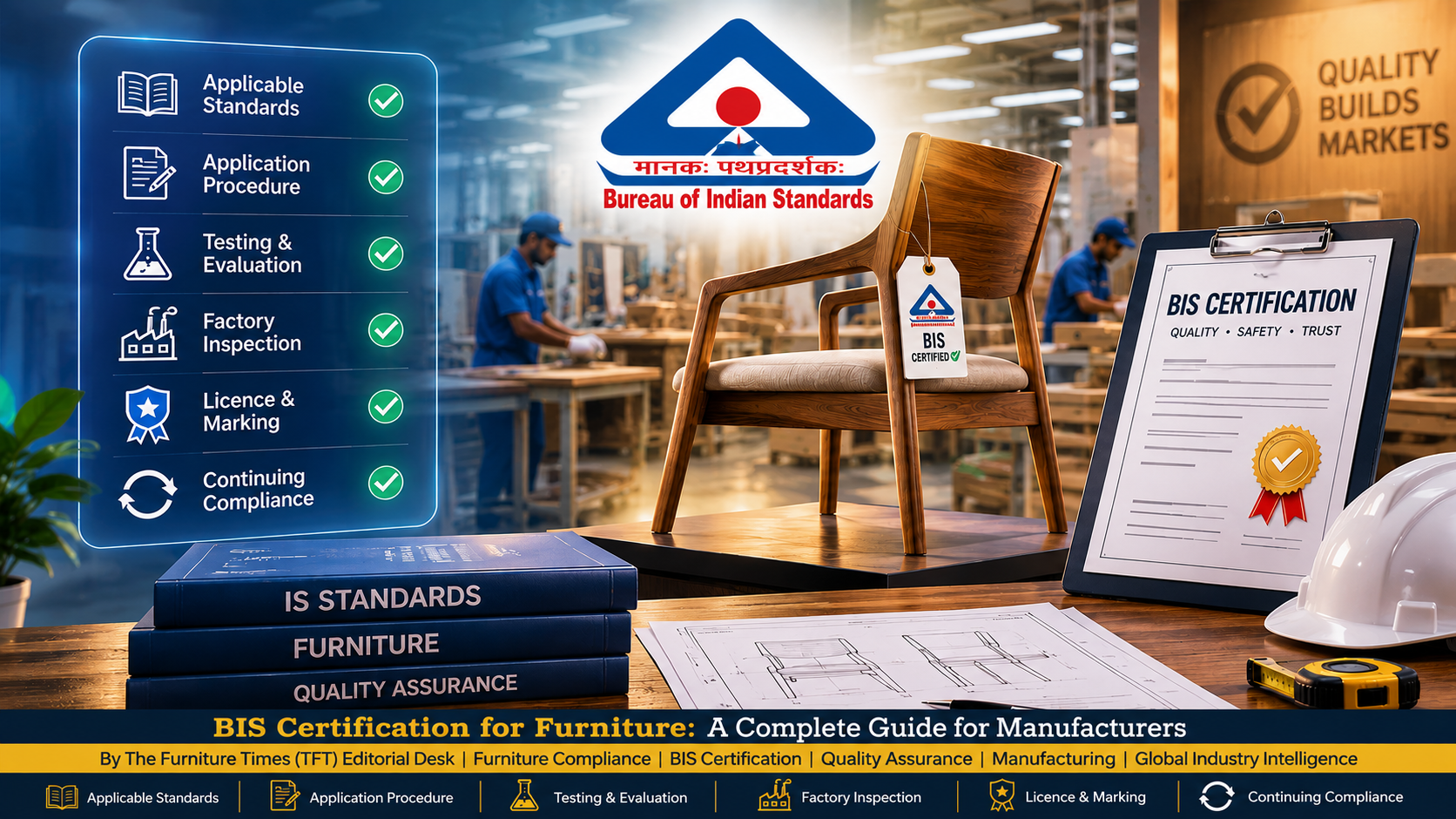
BIS Certification for Furniture: A Complete Guide for Manufacturers
This complete guide explains BIS certification for furniture manufacturers, including the six notified furniture standards, product classification, model grouping, testing, application procedures, factory inspection, licensing, Standard Mark usage, surveillance and continuing compliance.
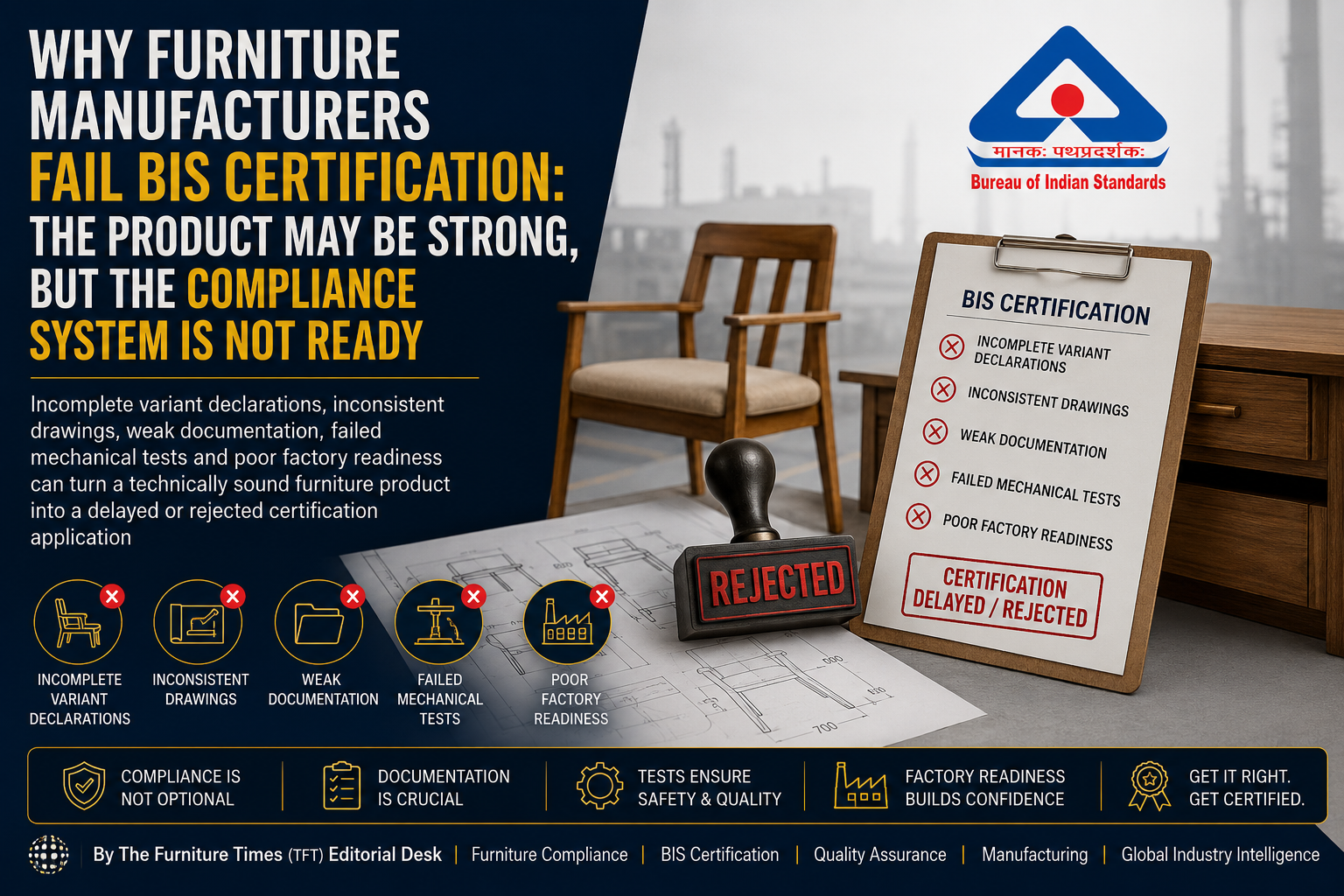
Why Furniture Manufacturers Fail BIS Certification
Many furniture manufacturers encounter BIS certification delays not because their products are inherently weak, but because their applications, variants, drawings, test samples and factory systems are not fully aligned. This detailed report explains the Normal and Simplified Procedures, common reasons for nonconformity and the practical steps manufacturers can take to reduce retesting, delays and rejection risks.