Italian Lighting Design Excellence
By The Furniture Times (TFT) | Indoor & Outdoor Lighting | Design & Architecture
Where Art Meets Illumination: How Italian Lighting Design Excellence Continues to Shape Luxury Interiors, Global Architecture, and the Future of the Furniture Industry
When people think of Italy, they often picture timeless fashion, Renaissance art, world-famous architecture, handcrafted furniture, and exceptional craftsmanship. Yet another Italian legacy quietly illuminates homes, hotels, museums, restaurants, corporate headquarters, and iconic buildings across the globe—its extraordinary lighting design.
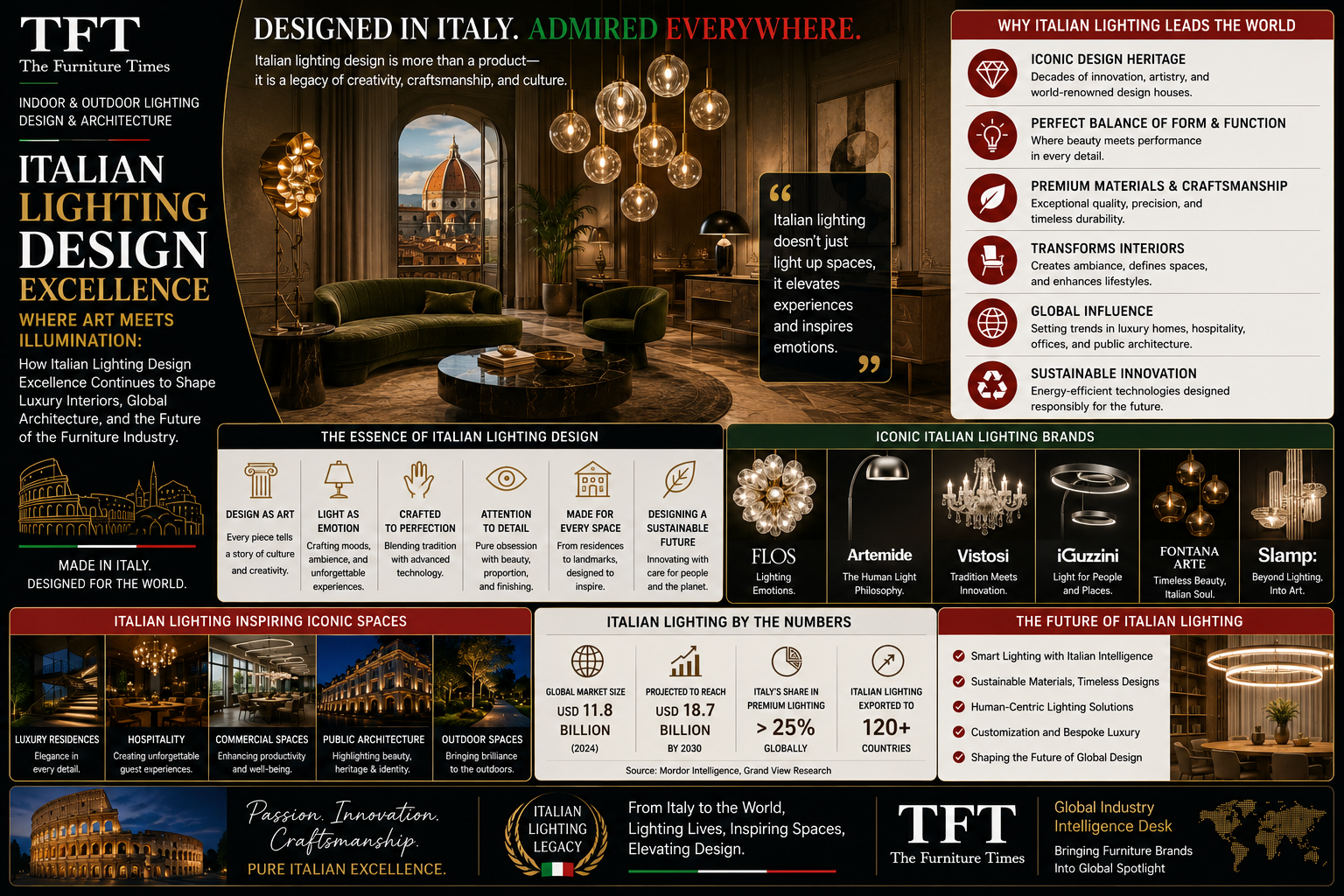
Italy has long been recognised as one of the world’s leading centres for luxury lighting innovation. More than simply manufacturing lamps and chandeliers, Italian designers have elevated lighting into an art form that combines creativity, engineering, culture, craftsmanship, and technology.
For generations, Italian lighting has represented elegance, precision, and individuality. From the glassmaking traditions of Murano to contemporary architectural lighting studios in Milan, Florence, Turin, and Venice, Italy has consistently demonstrated that light can do far more than illuminate a room—it can define an entire architectural experience.
Today, Italian lighting design continues to influence projects across luxury residences, hospitality developments, retail spaces, cultural institutions, airports, offices, healthcare facilities, and smart cities. Its design philosophy is increasingly merging with Artificial Intelligence (AI), sustainable manufacturing, smart controls, energy-efficient LEDs, and human-centric lighting systems.
For the global furniture industry ecosystem, Italian lighting excellence offers more than inspiration. It provides a blueprint for how craftsmanship, innovation, technology, and design can work together to create products that are admired worldwide.
The future of premium interiors will not simply be furnished beautifully.
They will be illuminated with purpose, artistry, and intelligence.
Italy Built a Legacy of Design Excellence
Italy’s reputation in lighting did not emerge overnight.
It evolved through centuries of artistic tradition, architectural innovation, and master craftsmanship.
Italian lighting reflects influences from:
- Renaissance art.
- Classical architecture.
- Venetian glassmaking.
- Industrial innovation.
- Contemporary sculpture.
- Interior architecture.
- Furniture craftsmanship.
- Luxury hospitality.
- Fine materials.
- Engineering precision.
This heritage continues to distinguish Italian lighting in global markets.
Lighting Is Considered Functional Art
Italian designers rarely see lighting fixtures as simple household products.
Instead, they approach every fixture as a work of art.
Each design balances:
- Form.
- Function.
- Beauty.
- Engineering.
- Proportion.
- Material quality.
- Emotional expression.
- Architectural harmony.
- Innovation.
- Longevity.
The result is lighting that remains relevant for decades rather than seasons.
Murano Glass Continues to Inspire the World
One of Italy’s greatest contributions to lighting design is the centuries-old tradition of Murano glass craftsmanship.
Handcrafted glass continues to define luxury through:
- Chandeliers.
- Pendant lighting.
- Sculptural installations.
- Decorative wall lighting.
- Luxury hospitality projects.
- Residential interiors.
- Boutique retail spaces.
- Museums.
- Cultural buildings.
- Bespoke commissions.
Every handcrafted piece demonstrates exceptional artistry and individuality.
Furniture and Lighting Reflect One Design Vision
Italian interiors rarely separate furniture from lighting.
Designers develop complete environments where every element complements the others.
Integrated concepts include:
- Dining spaces with statement pendants.
- Luxury wardrobes featuring concealed illumination.
- Kitchen islands with architectural lighting.
- Executive offices with elegant task lighting.
- Hotel suites with layered illumination.
- Living rooms featuring sculptural floor lamps.
- Retail environments with feature lighting.
- Reception areas with bespoke installations.
- Walk-in closets with integrated LEDs.
- Contemporary shelving systems with adaptive lighting.
Furniture and lighting are conceived together rather than independently.
Material Innovation Defines Italian Luxury
Italian manufacturers constantly experiment with materials that combine beauty and durability.
Premium lighting collections frequently incorporate:
- Murano glass.
- Marble.
- Brass.
- Bronze.
- Stainless steel.
- Natural stone.
- Timber.
- Leather accents.
- Ceramic.
- Sustainable composite materials.
Material selection is never accidental—it becomes part of the overall design story.
Architectural Lighting Extends Beyond Interiors
Italian expertise also influences large-scale architectural projects.
Applications include:
- Luxury hotels.
- Airports.
- Museums.
- Art galleries.
- Corporate headquarters.
- Shopping centres.
- Public squares.
- Historic buildings.
- Residential developments.
- Cultural landmarks.
Lighting enhances architectural identity while respecting historical and contemporary design.
Artificial Intelligence Is Enhancing Italian Craftsmanship
Italy’s design heritage continues to embrace technological innovation.
Modern lighting increasingly incorporates:
- AI-powered lighting control.
- Human-centric illumination.
- Adaptive brightness.
- Voice control.
- Smart home integration.
- Daylight harvesting.
- Cloud-based management.
- Occupancy sensing.
- Predictive maintenance.
- Personalised lighting experiences.
Technology quietly enhances luxury without compromising craftsmanship.
Sustainability Has Become a Design Priority
Today’s Italian lighting industry increasingly combines luxury with environmental responsibility.
Manufacturers prioritise:
- High-efficiency LEDs.
- Low-energy production.
- Sustainable sourcing.
- Long product lifecycles.
- Modular construction.
- Repairability.
- Circular manufacturing.
- Recyclable materials.
- Renewable energy integration.
- Responsible packaging.
Sustainability is now recognised as an essential component of premium design.
Hospitality Continues to Set Global Trends
Many of the world’s finest hotels use Italian lighting to create memorable guest experiences.
Luxury lighting enhances:
- Hotel entrances.
- Grand lobbies.
- Presidential suites.
- Fine dining restaurants.
- Spa facilities.
- Rooftop lounges.
- Private villas.
- Conference centres.
- Wedding venues.
- Exclusive resorts.
Lighting becomes part of the hospitality brand itself.
Retail Spaces Celebrate Italian Elegance
Luxury retailers increasingly rely on Italian lighting principles to elevate customer experiences.
Lighting supports:
- Brand identity.
- Product presentation.
- Window displays.
- Jewellery boutiques.
- Furniture galleries.
- Fashion houses.
- Art exhibitions.
- Premium launches.
- Customer engagement.
- Luxury storytelling.
The shopping experience begins with atmosphere before products are even examined.
Opportunities Across the Furniture Industry Ecosystem
Italian lighting excellence creates opportunities for:
- Furniture manufacturers.
- Lighting manufacturers.
- Interior designers.
- Architects.
- Hospitality operators.
- Property developers.
- Luxury retailers.
- Artisan workshops.
- Smart home companies.
- Sustainable material suppliers.
Businesses that combine craftsmanship with innovation can compete successfully in premium international markets.
Challenges for the Luxury Lighting Industry
Maintaining global leadership requires balancing creativity with evolving market expectations.
Manufacturers must continue addressing:
- Rising production costs.
- Sustainable sourcing.
- Skilled artisan shortages.
- Digital transformation.
- Global competition.
- Energy regulations.
- Smart technology integration.
- International logistics.
- Circular economy requirements.
- Consumer demand for personalisation.
Innovation remains essential to preserving Italy’s design leadership.
The Future Will Blend Heritage with Intelligence
Italian lighting continues to evolve without losing its identity.
Future developments include:
- AI-powered architectural lighting.
- Human-centric lighting.
- Smart luxury interiors.
- Interactive lighting installations.
- Digital twins.
- Connected furniture.
- Renewable energy integration.
- Adaptive hospitality environments.
- Personalised lighting ecosystems.
- Carbon-conscious luxury manufacturing.
The industry’s future will combine timeless craftsmanship with intelligent technology.
True Luxury Is Measured by Lasting Impact
Italian lighting design has never been about following trends.
It has always been about creating timeless experiences that combine beauty, emotion, craftsmanship, and innovation.
For the global furniture industry ecosystem, Italian lighting demonstrates how exceptional design can elevate furniture, architecture, hospitality, retail, and urban environments into experiences people remember long after they leave.
As the world moves toward smarter buildings, sustainable manufacturing, and AI-powered living spaces, Italian lighting continues to prove that true excellence is achieved when technology respects tradition rather than replacing it.
Because remarkable interiors are not remembered simply for what people see.
They are remembered for what they feel.
And few design traditions understand that better than Italy.
The Furniture Times (TFT) & Furniture Industry Search Engine (FISE)
“TFT tells their story. FISE helps the world find them.”
“FurniReviewology helps the world trust them.”
The furniture industry ecosystem is a $1 trillion industry ecosystem.