Renewable Energy and Outdoor Lighting
By The Furniture Times (TFT) | Indoor & Outdoor Lighting | Sustainability & Energy
Powering the Outdoors Sustainably: How Renewable Energy Is Transforming Outdoor Lighting and Reshaping the Global Furniture Industry
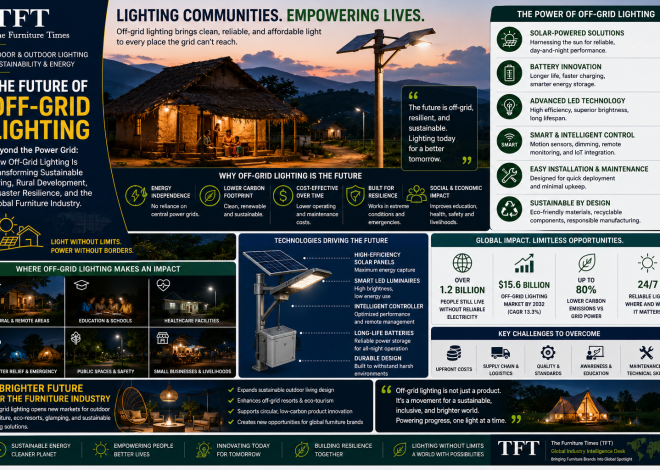
For generations, outdoor lighting has relied heavily on conventional electricity grids. Streets, parks, gardens, hotels, industrial facilities, commercial developments, and residential landscapes have traditionally depended on centralised power networks to illuminate outdoor spaces after sunset. While this approach has supported urban growth and economic development, it has also contributed to rising energy consumption, higher operating costs, and increased carbon emissions.
Today, the world is entering a new era.
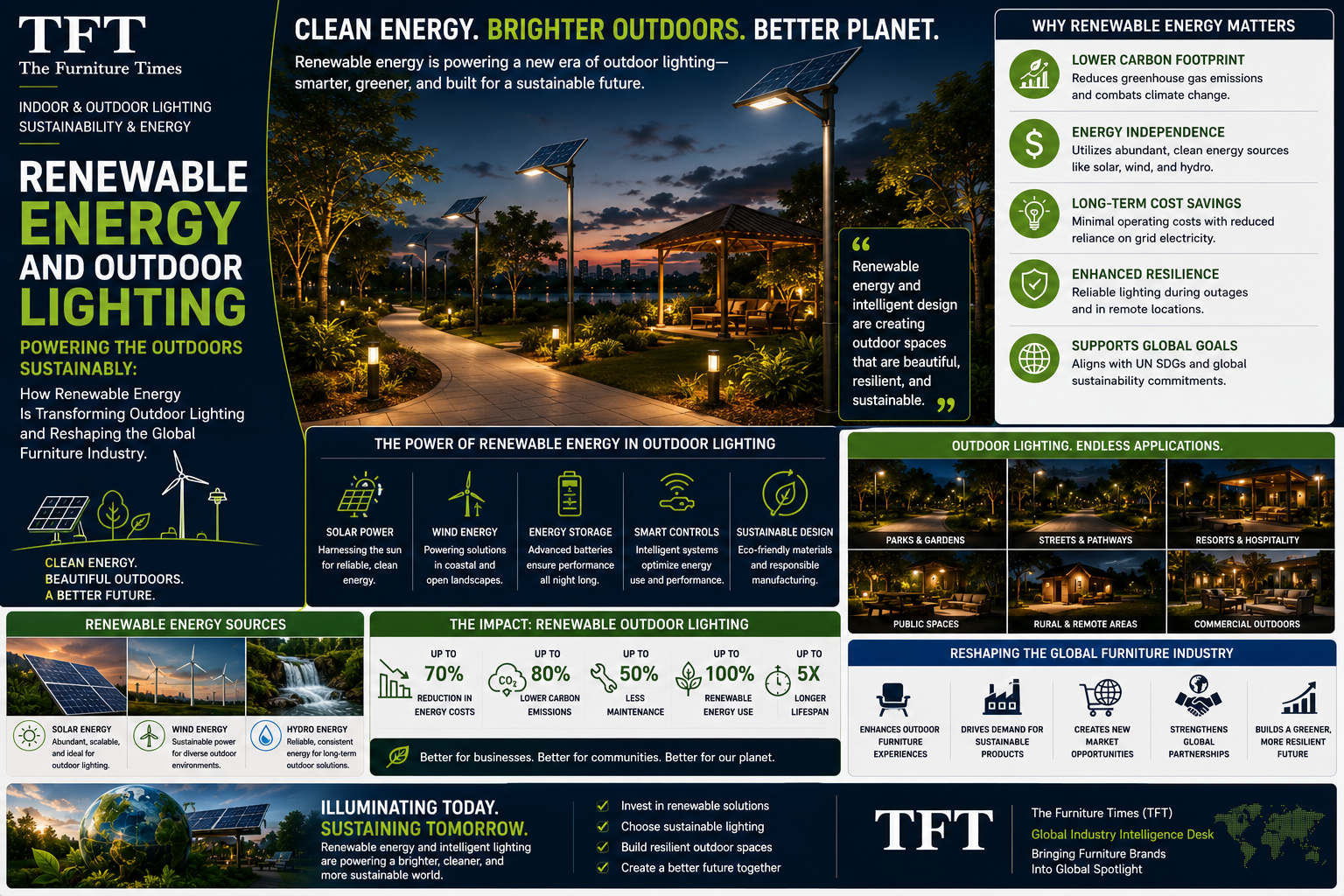
Renewable energy is fundamentally changing how outdoor spaces are illuminated. Solar photovoltaic systems, wind-assisted power generation, advanced battery storage, intelligent energy management, Artificial Intelligence (AI), and energy-efficient LED technologies are creating outdoor lighting systems that are cleaner, smarter, and more resilient than ever before.
This transformation extends far beyond energy savings. Renewable-powered outdoor lighting is supporting sustainable urban development, strengthening disaster resilience, improving public safety, reducing operating costs, and expanding access to reliable lighting in remote communities where traditional electrical infrastructure may be limited.
For the global furniture industry ecosystem, renewable energy is opening entirely new possibilities. Outdoor furniture manufacturers, lighting companies, architects, landscape designers, hospitality operators, urban planners, developers, and renewable energy innovators are working together to create integrated outdoor environments where furniture, lighting, clean energy, and intelligent technology operate as one sustainable ecosystem.
The future of outdoor lighting is no longer dependent solely on electricity from the grid.
It is increasingly powered by nature itself.
Renewable Energy Is Reshaping Outdoor Infrastructure
Countries worldwide are investing heavily in renewable energy to reduce dependence on fossil fuels, strengthen energy security, and achieve ambitious climate targets.
Outdoor lighting is one of the most practical sectors for renewable integration because it often operates independently from indoor electrical systems and can generate energy close to where it is consumed.
This decentralised approach improves both sustainability and operational resilience.
Solar Energy Leads the Transformation
Among all renewable technologies, solar power has become the dominant force in outdoor lighting.
Modern solar lighting systems combine:
- High-efficiency photovoltaic panels.
- Advanced LED fixtures.
- Rechargeable lithium battery storage.
- Intelligent charge controllers.
- Motion and occupancy sensors.
- AI-powered energy optimisation.
- Cloud monitoring.
- Wireless communication.
- Smart lighting controls.
- Predictive maintenance systems.
These technologies work together to deliver reliable lighting while consuming little or no conventional electricity.
Wind and Hybrid Renewable Systems Are Emerging
Although solar energy dominates the market, other renewable sources are gaining attention.
Hybrid outdoor lighting systems increasingly combine:
- Solar energy.
- Small-scale wind turbines.
- Battery storage.
- Smart microgrids.
- Renewable charging stations.
- AI energy balancing.
- Intelligent controllers.
- Backup energy systems.
- Cloud-based monitoring.
- Renewable infrastructure management.
Hybrid systems improve reliability in locations with varying weather conditions.
Public Spaces Are Becoming More Sustainable
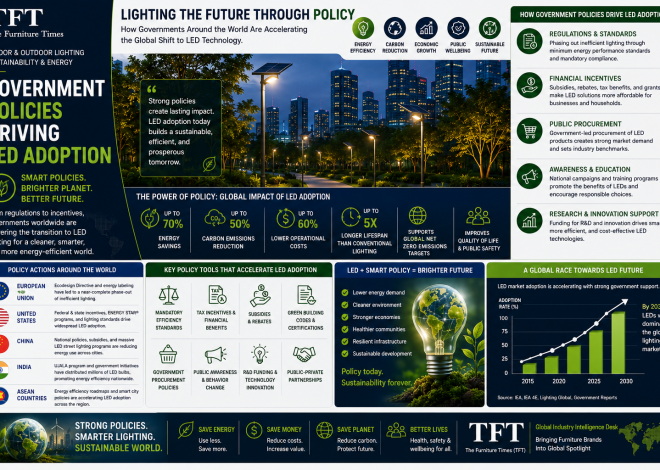
Municipalities around the world are replacing conventional outdoor lighting with renewable-powered alternatives.
Applications include:
- Public parks.
- Walking trails.
- Cycling paths.
- Public squares.
- Waterfront developments.
- Community centres.
- Sports facilities.
- Parking areas.
- Public transport terminals.
- Urban green spaces.
Renewable lighting reduces municipal energy costs while supporting environmental goals.
Hospitality Is Creating Greener Guest Experiences
Hotels, resorts, restaurants, and tourism destinations increasingly integrate renewable lighting into outdoor environments.
Renewable-powered lighting enhances:
- Resort gardens.
- Beachfront pathways.
- Rooftop lounges.
- Outdoor restaurants.
- Swimming pool landscapes.
- Wellness retreats.
- Eco-tourism facilities.
- Nature resorts.
- Luxury villas.
- Event venues.
Guests increasingly choose destinations that demonstrate measurable sustainability commitments.
Outdoor Furniture Is Becoming Energy Smart
The furniture industry is embracing renewable technologies as outdoor living spaces evolve.
Manufacturers now develop products featuring:
- Solar-powered benches.
- Illuminated dining tables.
- Smart pergolas.
- Landscape seating.
- Garden pavilions.
- Charging stations integrated into furniture.
- Public park installations.
- Hospitality lounge furniture.
- Modular outdoor workspaces.
- Recreational furniture with renewable lighting.
Outdoor furniture is becoming an active energy solution rather than simply a design feature.
Artificial Intelligence Maximises Renewable Performance
Artificial Intelligence is helping renewable lighting systems become increasingly efficient.
AI analyses environmental conditions and continuously adjusts system performance by:
- Predicting weather changes.
- Managing battery charging.
- Optimising brightness.
- Detecting equipment faults.
- Forecasting maintenance.
- Monitoring energy generation.
- Balancing stored energy.
- Reducing unnecessary consumption.
- Extending battery life.
- Improving long-term reliability.
Intelligent software ensures every watt of renewable energy is used effectively.
Renewable Lighting Supports Climate Goals
Governments and businesses are pursuing ambitious carbon reduction targets.
Renewable outdoor lighting contributes by:
- Lowering greenhouse gas emissions.
- Reducing electricity demand.
- Supporting net-zero strategies.
- Improving ESG performance.
- Reducing fossil fuel dependence.
- Conserving natural resources.
- Lowering operational costs.
- Encouraging sustainable development.
- Improving environmental resilience.
- Supporting clean energy transitions.
Lighting has become an important contributor to broader climate action initiatives.
Opportunities Across the Furniture Industry Ecosystem
The rapid growth of renewable lighting is creating opportunities for:
- Furniture manufacturers.
- Lighting manufacturers.
- Renewable energy providers.
- Architects.
- Landscape designers.
- Hospitality operators.
- Urban planners.
- Property developers.
- Outdoor lifestyle brands.
- Smart technology companies.
Businesses capable of integrating renewable energy with furniture, lighting, and intelligent design will have significant competitive advantages in future markets.
Challenges That Still Require Attention
Despite impressive technological progress, renewable outdoor lighting continues to face several challenges.
These include:
- Initial installation costs.
- Battery lifecycle management.
- Recycling requirements.
- Seasonal weather variations.
- Component quality differences.
- Maintenance in remote locations.
- Skilled workforce availability.
- Technology interoperability.
- Consumer awareness.
- Long-term infrastructure planning.
Continued innovation and investment will help overcome these barriers.
The Future Lies in Connected Renewable Ecosystems
The next generation of outdoor lighting will move beyond individual solar fixtures.
Future renewable ecosystems will integrate:
- AI-powered energy management.
- Smart microgrids.
- Digital twins.
- Environmental monitoring.
- Electric vehicle charging.
- Connected outdoor furniture.
- Renewable battery networks.
- Smart city infrastructure.
- Cloud-based analytics.
- Predictive maintenance platforms.
Outdoor lighting will become one interconnected component within broader renewable energy ecosystems.
The Outdoors Will Be Powered by Clean Energy
Renewable energy is no longer an emerging trend in outdoor lighting.
It is becoming the foundation for future public infrastructure, residential landscapes, hospitality environments, commercial developments, and sustainable urban planning.
For the global furniture industry ecosystem, this transformation creates remarkable opportunities to rethink how outdoor spaces are designed. Furniture, lighting, renewable energy, and intelligent technologies are converging to create environments that are more resilient, more efficient, and more environmentally responsible.
As nations accelerate investments in clean energy and consumers increasingly demand sustainable products, renewable-powered outdoor lighting will continue moving from innovative alternative to industry standard.
Because the future of outdoor lighting is not simply about brighter spaces.
It is about building cleaner communities, stronger economies, and a healthier planet—one renewable light at a time.
The Furniture Times (TFT) & Furniture Industry Search Engine (FISE)
“TFT tells their story. FISE helps the world find them.”
“FurniReviewology helps the world trust them.”
The furniture industry ecosystem is a $1 trillion industry ecosystem.