
#FurnitureCompliance

The Biggest Documentation Mistakes in Furniture BIS Applications
Furniture BIS certification depends on a traceable evidence chain connecting the declared model, approved drawing, bill of materials, physical sample, laboratory report and routine factory production. This report explains the most common documentation failures and provides practical controls for manufacturers preparing applications, testing and factory inspections.

Global Metal Furniture Market Set to Reach US$243.63 Billion by 2031 as Durable
Mordor Intelligence projects the global metal furniture market to expand at a 4.68% CAGR through 2031. Asia-Pacific leads both market share and growth, while upholstered metal furniture, aluminium, premium products and B2B project sales represent the fastest-growing segments. Steel and aluminium price volatility, costly reverse logistics, corrosion risks and EU carbon compliance remain major challenges.
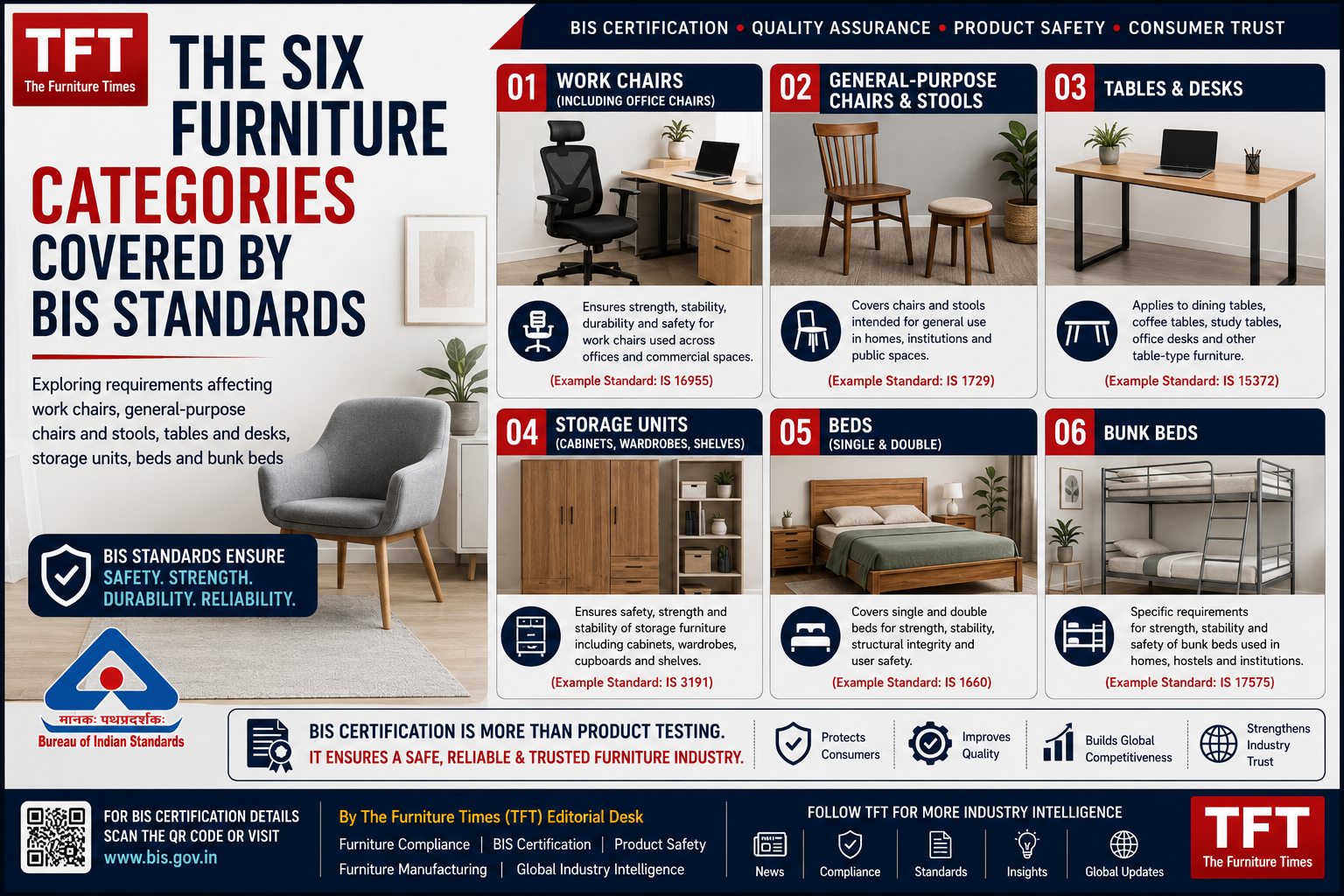
The Six Furniture Categories Covered by BIS Standards
A category-by-category guide to the six furniture groups covered by India’s Furniture Quality Control Order, explaining applicable BIS standards, product risks, classification issues, testing considerations and manufacturer responsibilities.
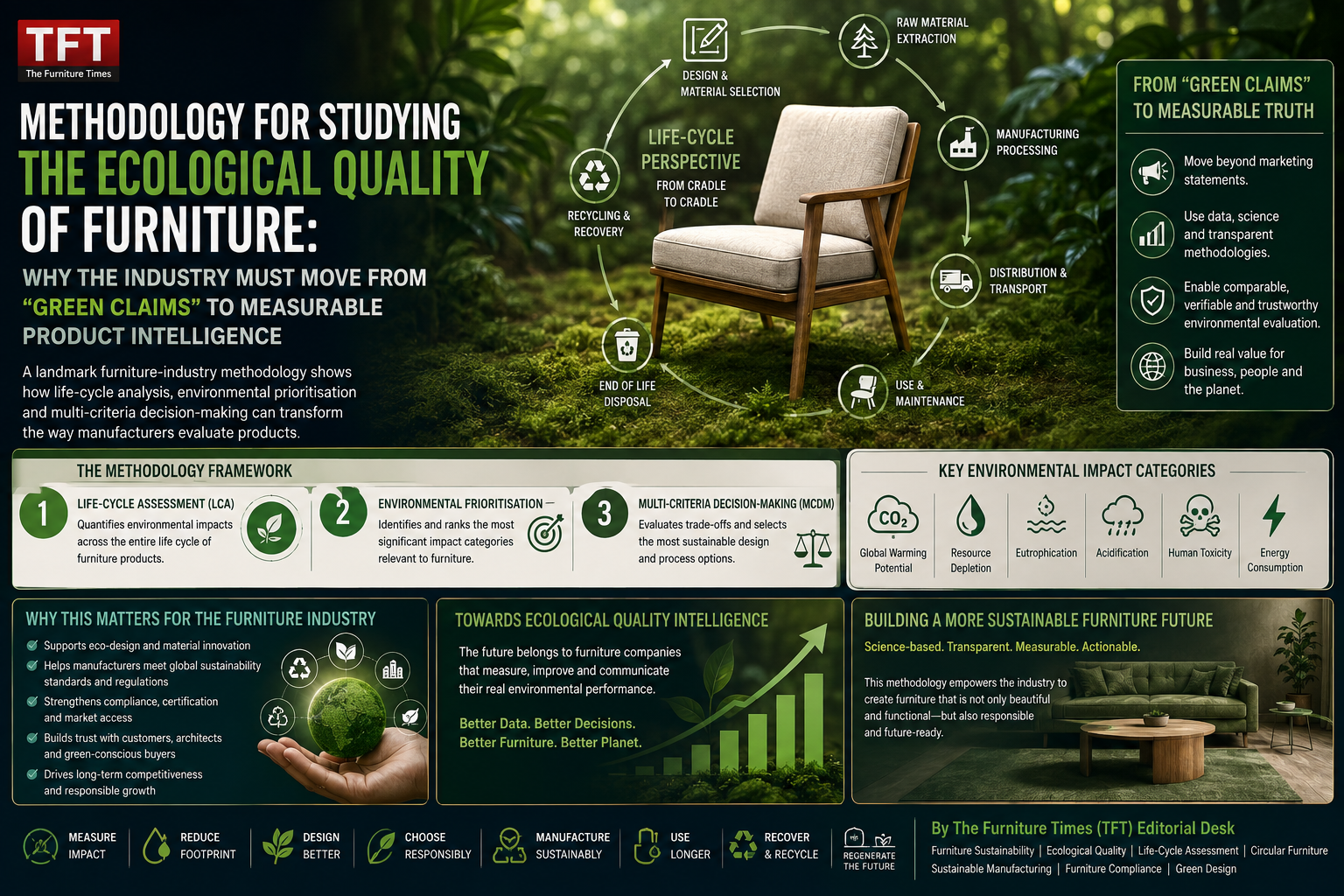
Methodology for Studying the Ecological Quality of Furniture
A 2011 research study on the ecological quality of furniture offers an increasingly relevant framework for today’s sustainability-driven industry. By combining life-cycle analysis, environmental ABC prioritisation and multi-criteria decision-making, the methodology demonstrated that products from the same furniture manufacturer can have significantly different environmental impacts. As global regulation moves toward durability, repairability, circularity and product-level information, furniture companies need to move from broad “green” claims toward measurable, traceable and verifiable ecological quality.

The Furniture Industry After the QR Code: Why Every Product Will Need a Permanent Digital Identity
Furniture can remain in use for decades, but its manuals, service records and component information frequently disappear. Product-level digital identities could give furniture a permanent memory—supporting repair, authenticity verification, customer reviews, resale and circularity.
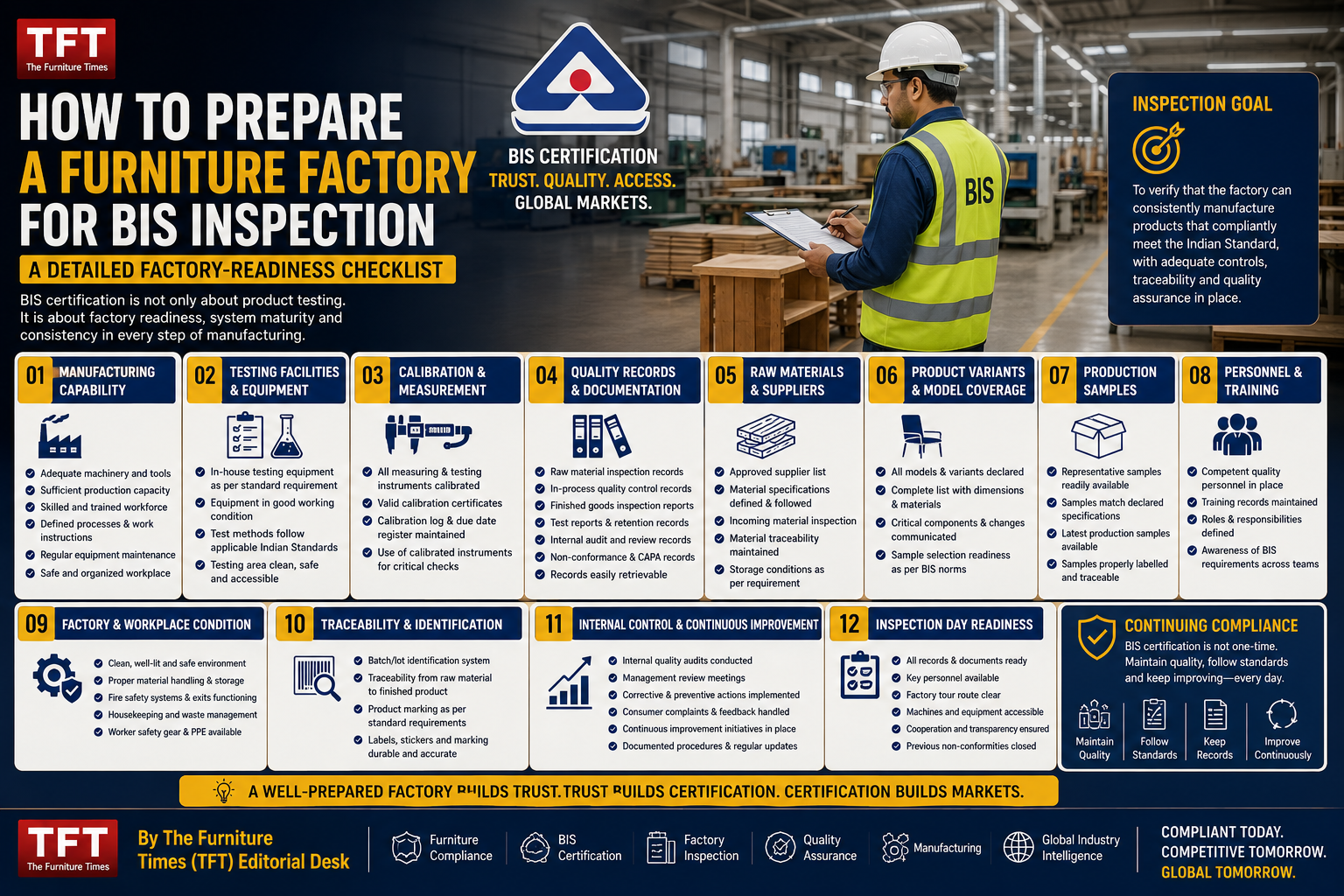
How to Prepare a Furniture Factory for BIS Inspection
Passing furniture testing is only one part of BIS certification. This factory-readiness guide explains how manufacturers should prepare machinery, laboratories, calibration, drawings, materials, personnel, records and representative production samples before BIS inspection.
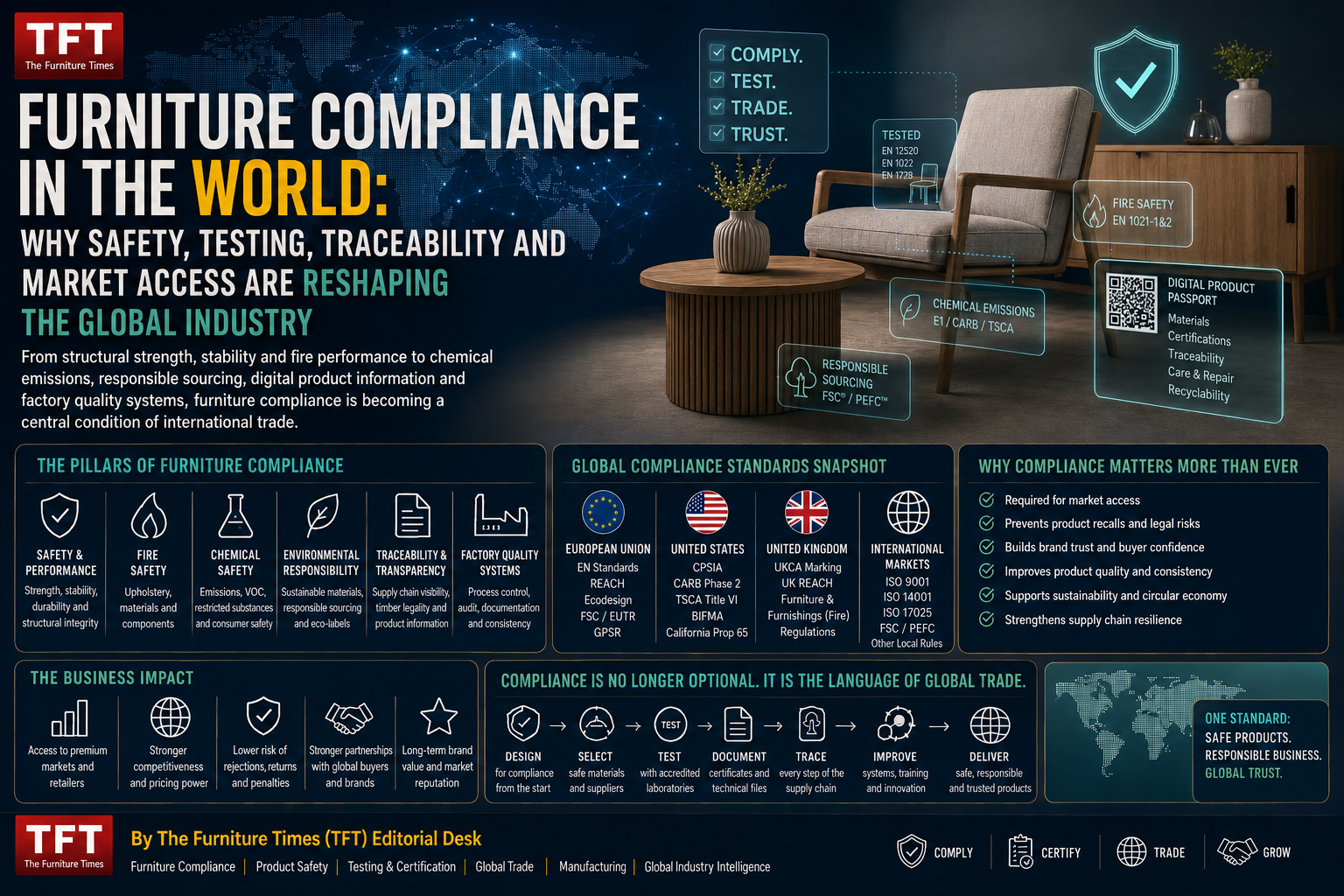
Furniture Compliance in the World
Furniture manufacturers can no longer rely on one certificate for every market. This global report examines how compliance requirements are changing across Europe, the United Kingdom, the United States, India, Australia, Canada, Asia and the Middle East—and why system readiness is becoming essential for market access.
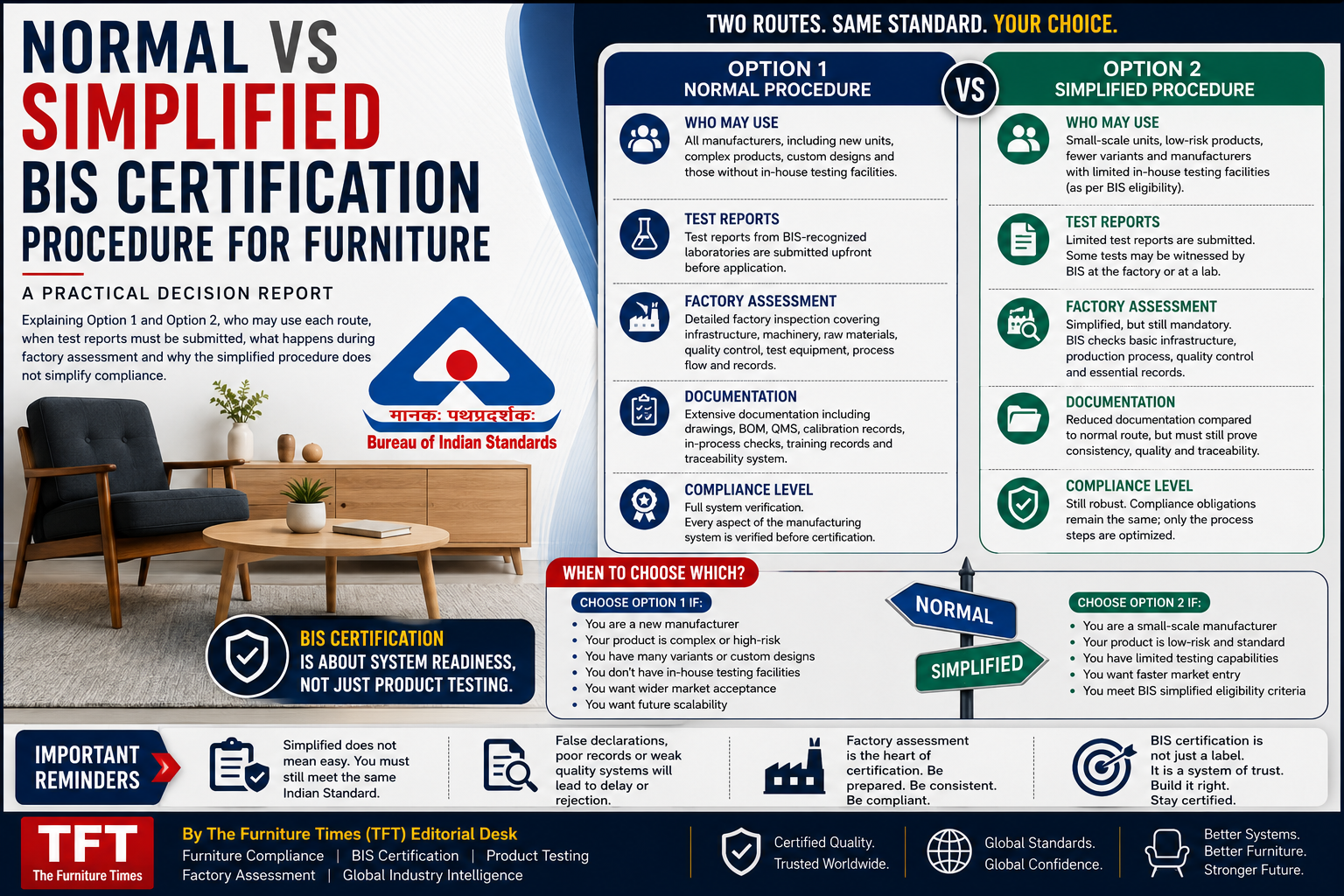
Normal vs Simplified BIS Certification Procedure for Furniture
The simplified BIS procedure is not a shortcut around compliance. Option 2 front-loads laboratory testing and may reduce processing time for eligible domestic manufacturers, while Option 1 generally relies on samples drawn during BIS factory assessment. This report explains the differences, risks and preparation requirements.
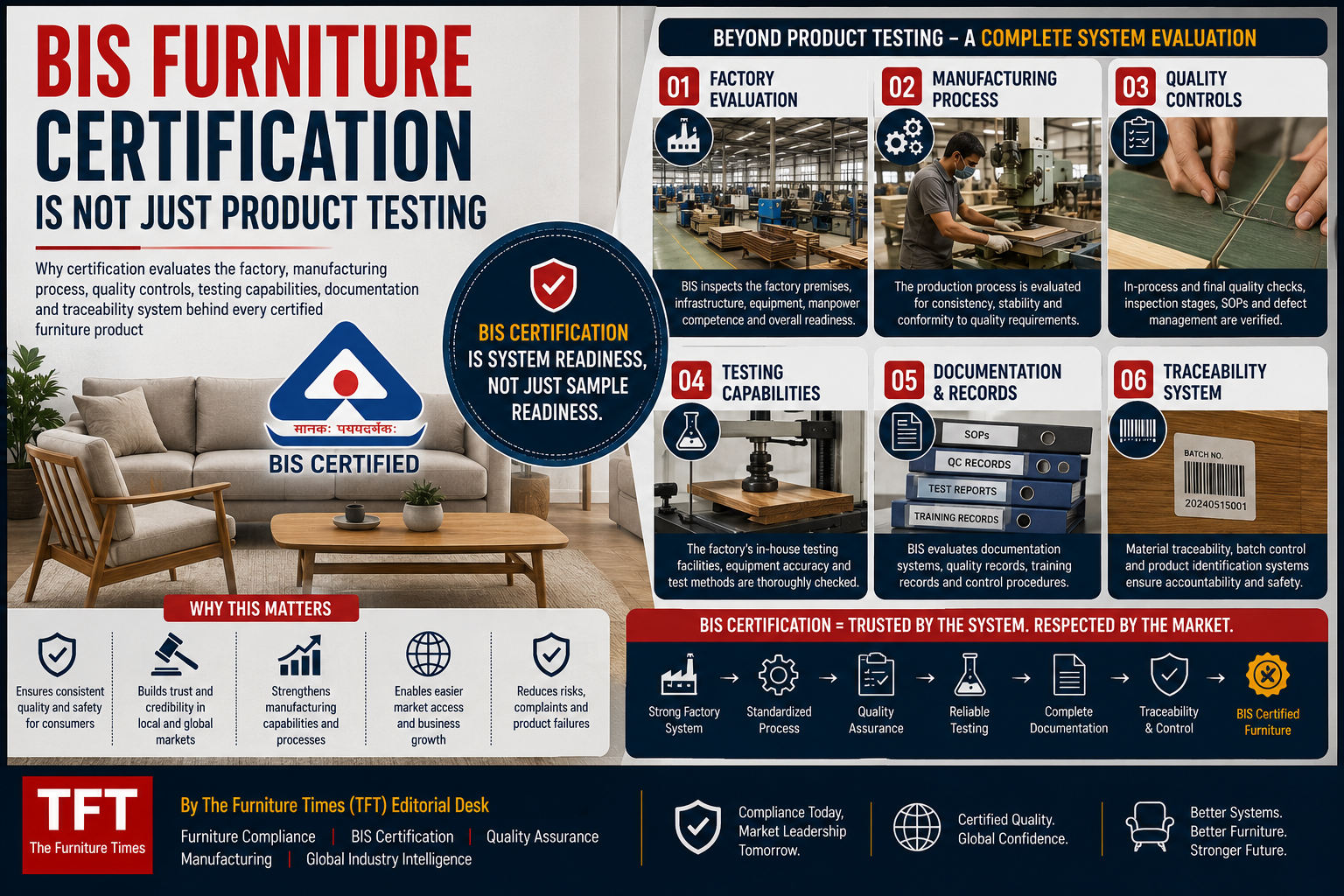
BIS Furniture Certification Is Not Just Product Testing
A furniture product can pass a laboratory test while the certification application still faces delays or rejection. BIS certification evaluates the manufacturing system behind the sample—including factory infrastructure, process controls, model scope, testing capability, calibration, records, marking and traceability.
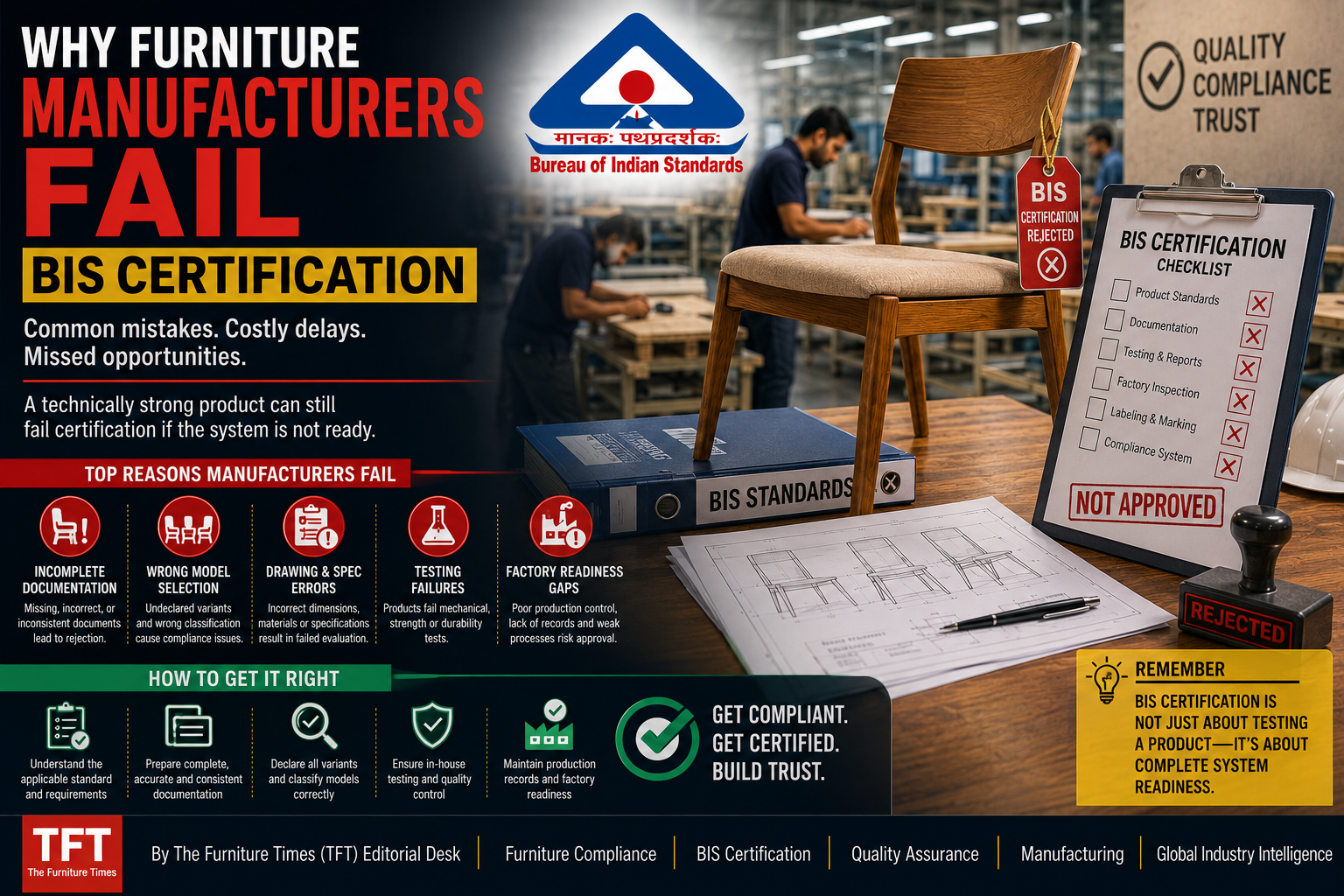
Why Furniture Manufacturers Fail BIS Certification,How incomplete preparation,
Why do technically strong furniture products still face BIS certification delays or failure? This detailed analysis examines incorrect classification, undeclared variants, unrepresentative samples, documentation inconsistencies, mechanical testing, factory readiness, marking errors and uncontrolled post-certification changes.