
#QualityControl
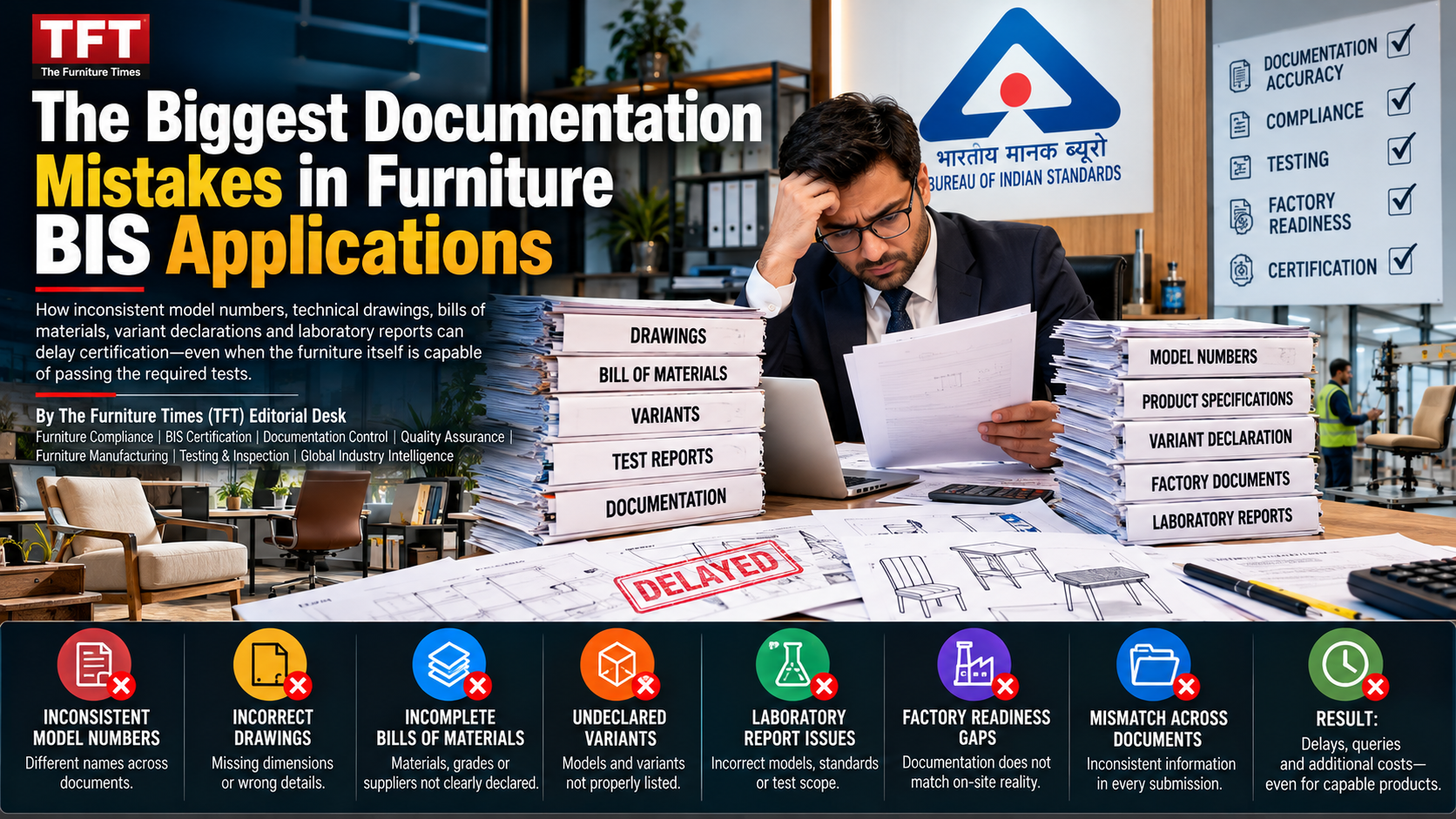
The Biggest Documentation Mistakes in Furniture BIS Applications
Furniture BIS certification depends on a traceable evidence chain connecting the declared model, approved drawing, bill of materials, physical sample, laboratory report and routine factory production. This report explains the most common documentation failures and provides practical controls for manufacturers preparing applications, testing and factory inspections.
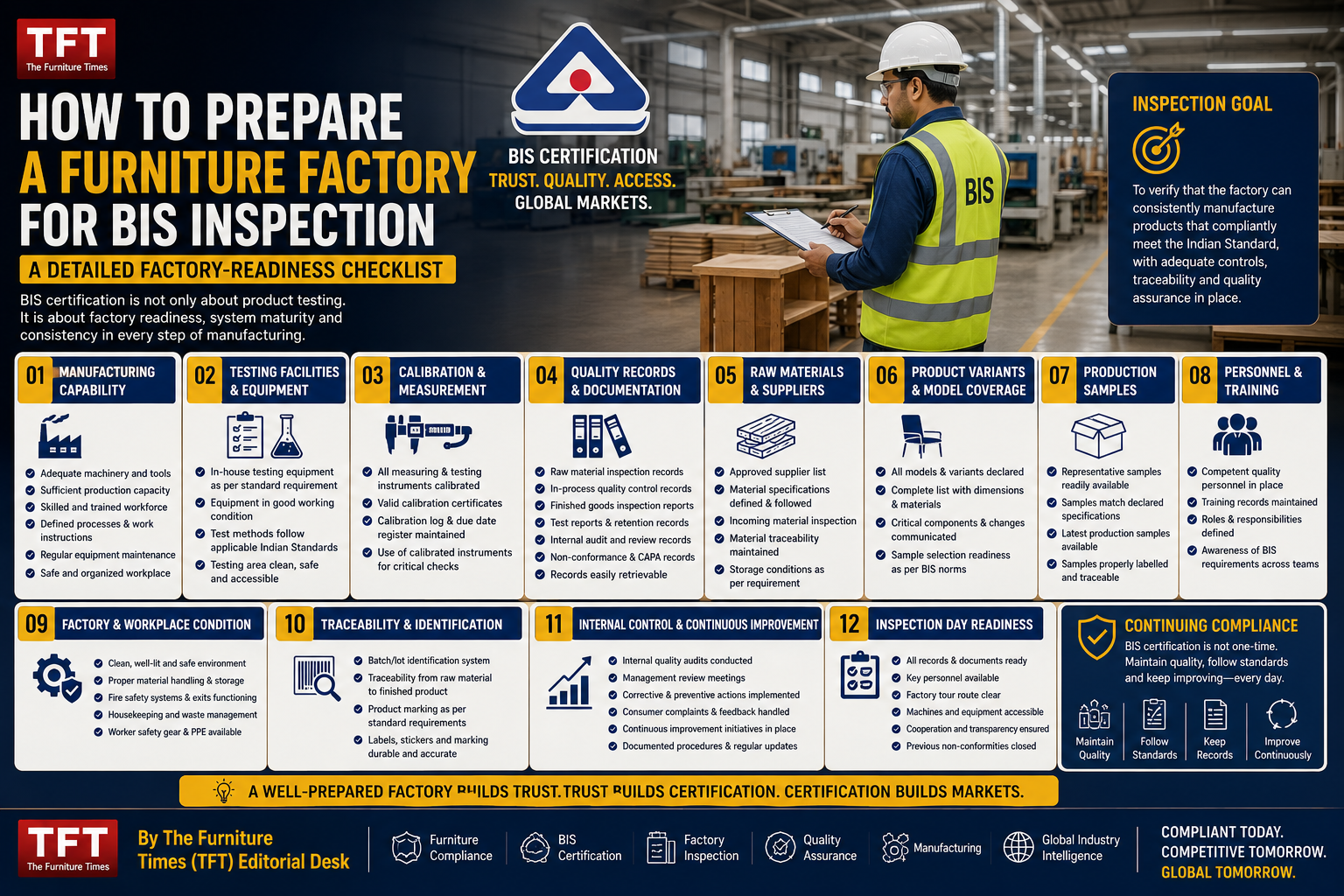
How to Prepare a Furniture Factory for BIS Inspection
Passing furniture testing is only one part of BIS certification. This factory-readiness guide explains how manufacturers should prepare machinery, laboratories, calibration, drawings, materials, personnel, records and representative production samples before BIS inspection.

Why Furniture Manufacturers Fail BIS Certification,How incomplete preparation,
Why do technically strong furniture products still face BIS certification delays or failure? This detailed analysis examines incorrect classification, undeclared variants, unrepresentative samples, documentation inconsistencies, mechanical testing, factory readiness, marking errors and uncontrolled post-certification changes.

BIS Certification for Furniture: A Complete Guide for Manufacturers
This complete guide explains BIS certification for furniture manufacturers, including the six notified furniture standards, product classification, model grouping, testing, application procedures, factory inspection, licensing, Standard Mark usage, surveillance and continuing compliance.

Why Furniture Manufacturers Fail BIS Certification
Many furniture manufacturers encounter BIS certification delays not because their products are inherently weak, but because their applications, variants, drawings, test samples and factory systems are not fully aligned. This detailed report explains the Normal and Simplified Procedures, common reasons for nonconformity and the practical steps manufacturers can take to reduce retesting, delays and rejection risks.

The Furniture Industry Needs a Failure Database
Furniture companies collect enormous quantities of information after products are sold, but much of it remains trapped inside warranty departments, service tickets, repair records and return systems. The Furniture Times examines why the industry needs structured failure intelligence—and how it could transform product quality, sourcing, insurance, repairability and AI-driven furniture discovery.

The Science of the Furniture Industry Ecosystem
From timber science and structural engineering to ergonomics, AI, sustainability, logistics, and consumer psychology, this detailed analysis explores the scientific forces shaping every part of the global furniture industry ecosystem.
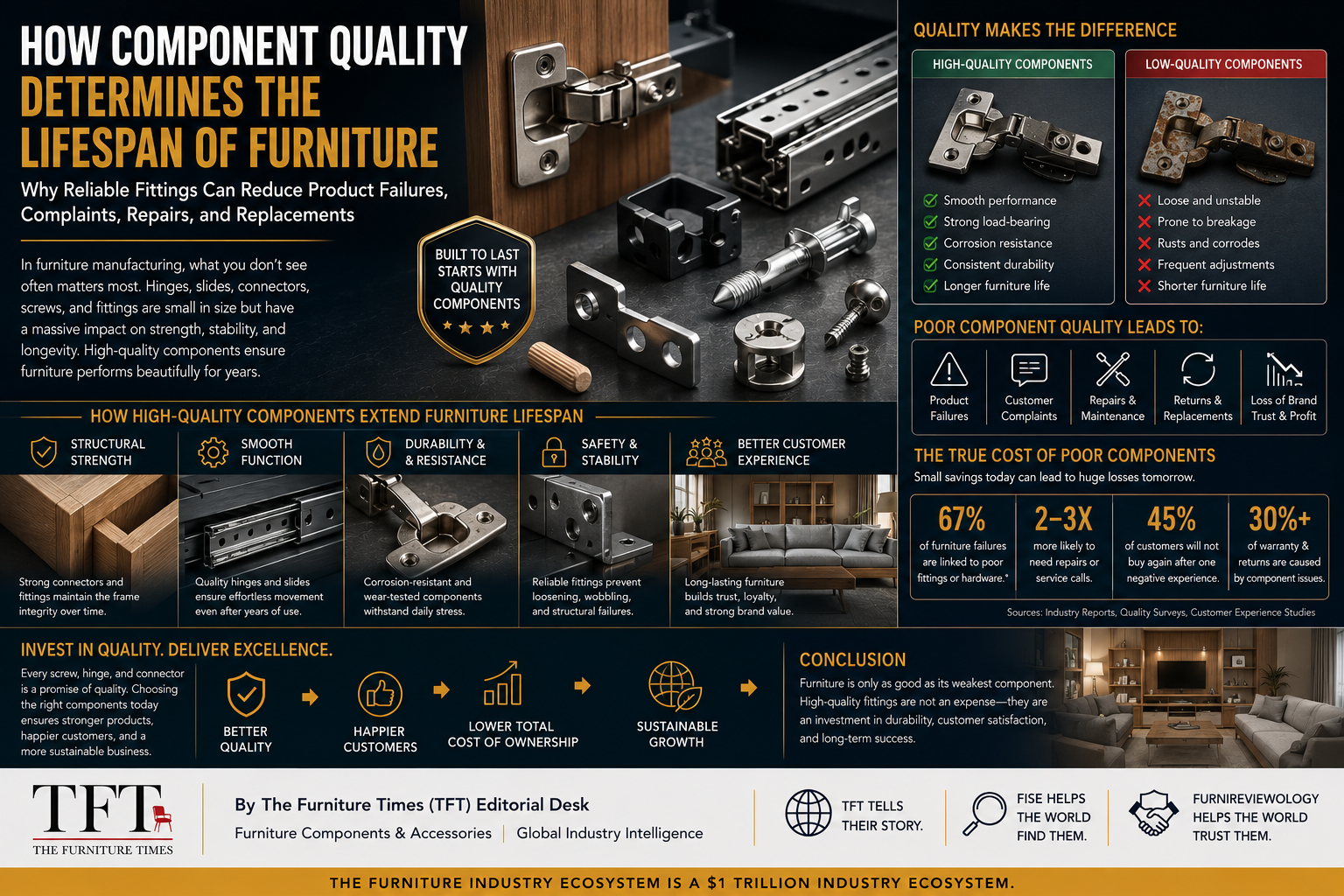
How Component Quality Determines the Lifespan of Furniture
Furniture durability depends on more than timber, metal, fabric, or external design. Component quality determines how furniture moves, carries weight, remains stable, preserves comfort, and performs over time. Better fittings can reduce warranty costs, extend product life, support repairability, and protect customer trust.

Oman Cracks Down on Illegal Furniture Manufacturing: A Wake-Up Call for the Global Furniture Industry
A recent enforcement action in Oman has highlighted the importance of quality standards, ethical manufacturing and consumer protection. This analysis explores what the incident means for furniture manufacturers, exporters, retailers and industry leaders worldwide, and why trust is becoming the industry’s most valuable competitive advantage.