
#CircularFurniture

The Biggest Forces Reshaping the Global Furniture Industry
Six structural forces are reshaping furniture design, manufacturing, retail and logistics. TFT examines how businesses must respond to smaller homes, older consumers, digital commerce, AI and the circular economy.

Global Metal Furniture Market Set to Reach US$243.63 Billion by 2031 as Durable
Mordor Intelligence projects the global metal furniture market to expand at a 4.68% CAGR through 2031. Asia-Pacific leads both market share and growth, while upholstered metal furniture, aluminium, premium products and B2B project sales represent the fastest-growing segments. Steel and aluminium price volatility, costly reverse logistics, corrosion risks and EU carbon compliance remain major challenges.

World Furniture Industry Health Check: Conflict, Energy and Shipping Risks Reshape the Global Market
TFT’s October 2026 global furniture-industry health check finds continuing demand and active manufacturing alongside severe geopolitical risk. Crude flows through the Strait of Hormuz have recovered, but tanker attacks, refinery disruption, diesel scarcity, record intra-Asian freight and renewed Red Sea and Black Sea insecurity are keeping costs high and delivery schedules uncertain.
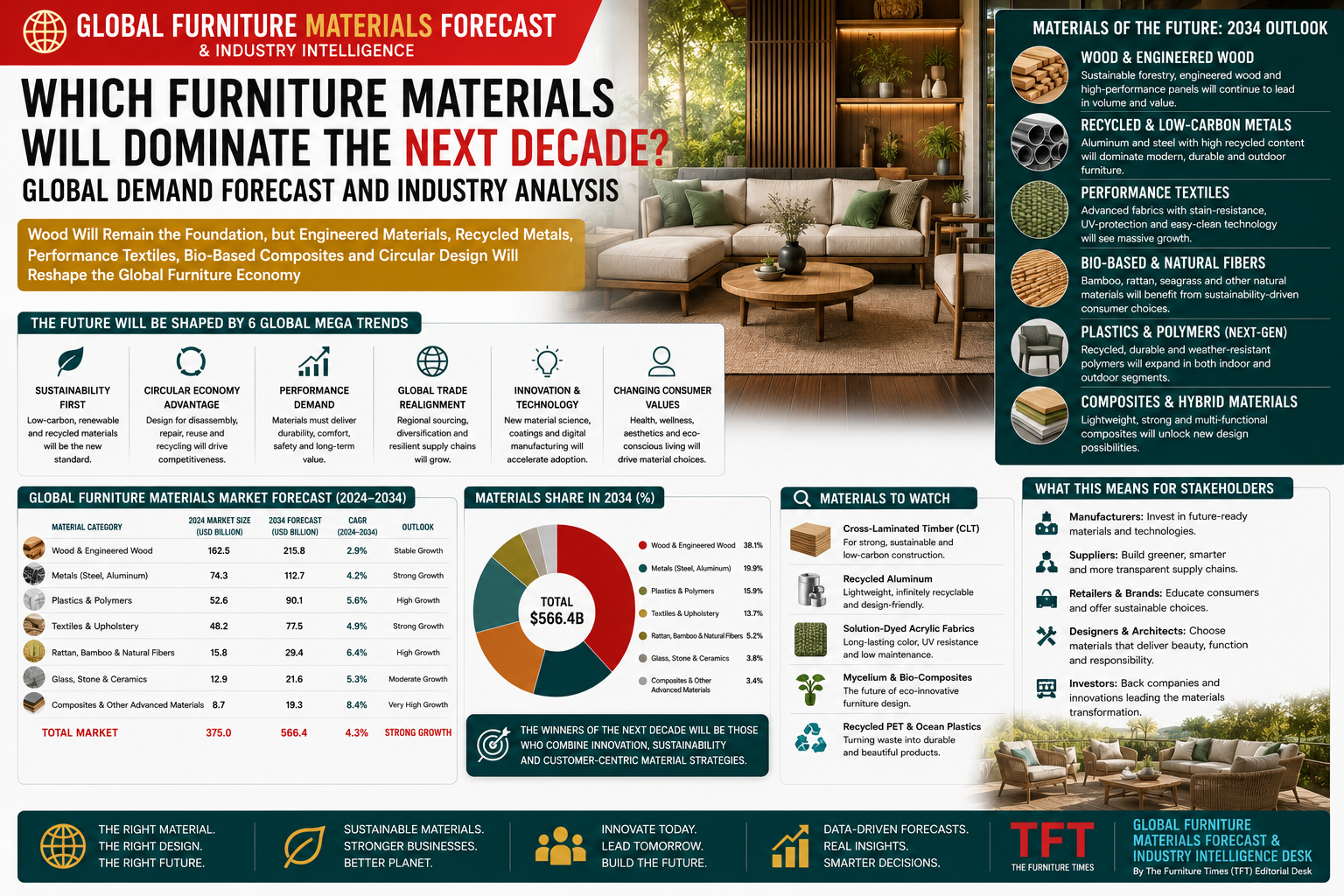
Which Furniture Materials Will Dominate the Next Decade? Global Demand Forecast and Industry Analysis
Wood will remain the foundation of the global furniture industry, but the next decade will bring rapid growth in aluminium, recycled polymers, performance textiles, bamboo, circular components and agricultural-waste composites. This report forecasts material demand by application, region and economic potential through 2035.
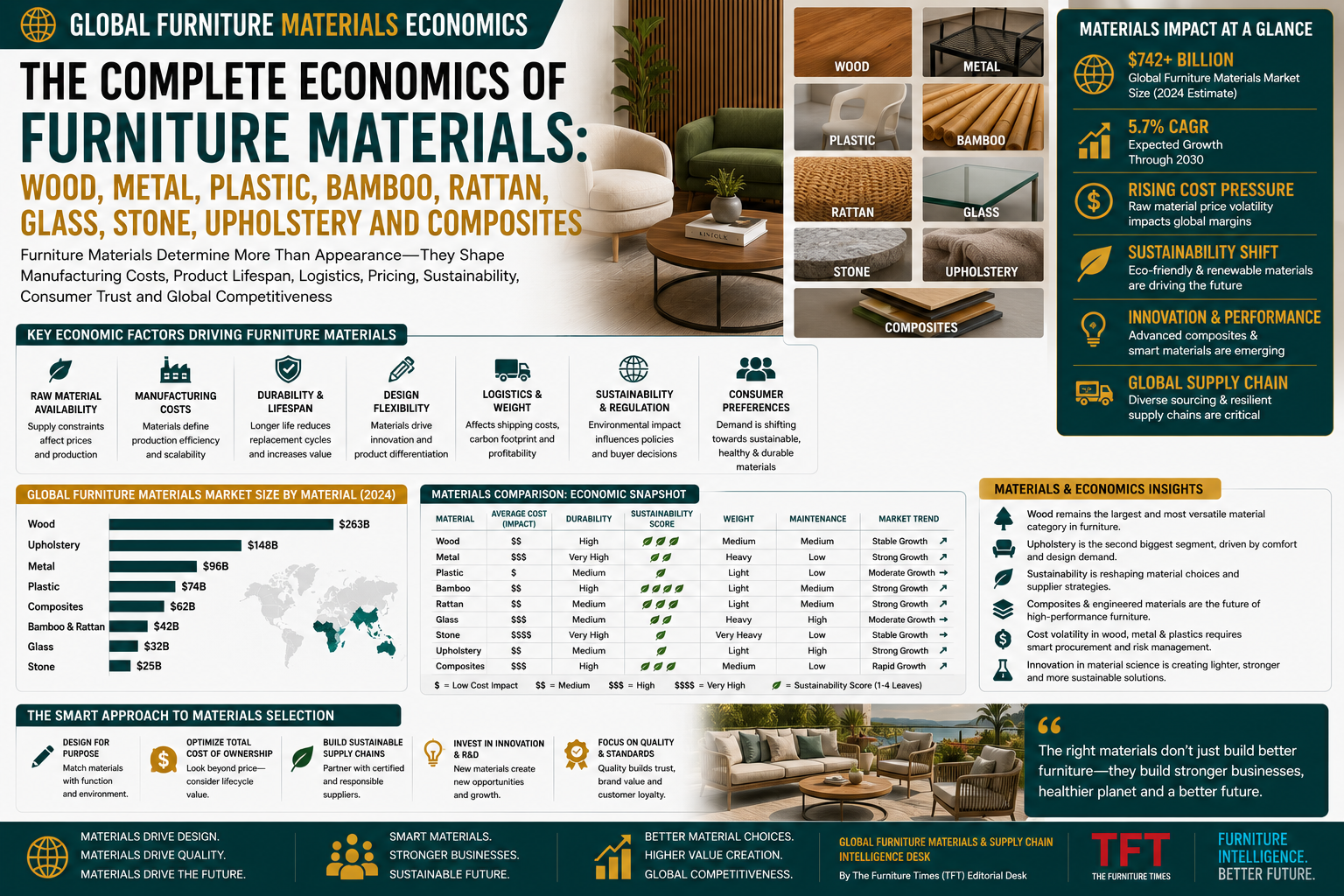
The Complete Economics of Furniture Materials: Wood, Metal, Plastic, Bamboo, Rattan, Glass, Stone, Upholstery and Composites
Furniture material choices determine far more than appearance. This comprehensive global report compares the economics of wood, metal, plastic, bamboo, rattan, glass, stone, upholstery and composite materials across sourcing, manufacturing, labour, logistics, durability, repairability and future circular-economy requirements.
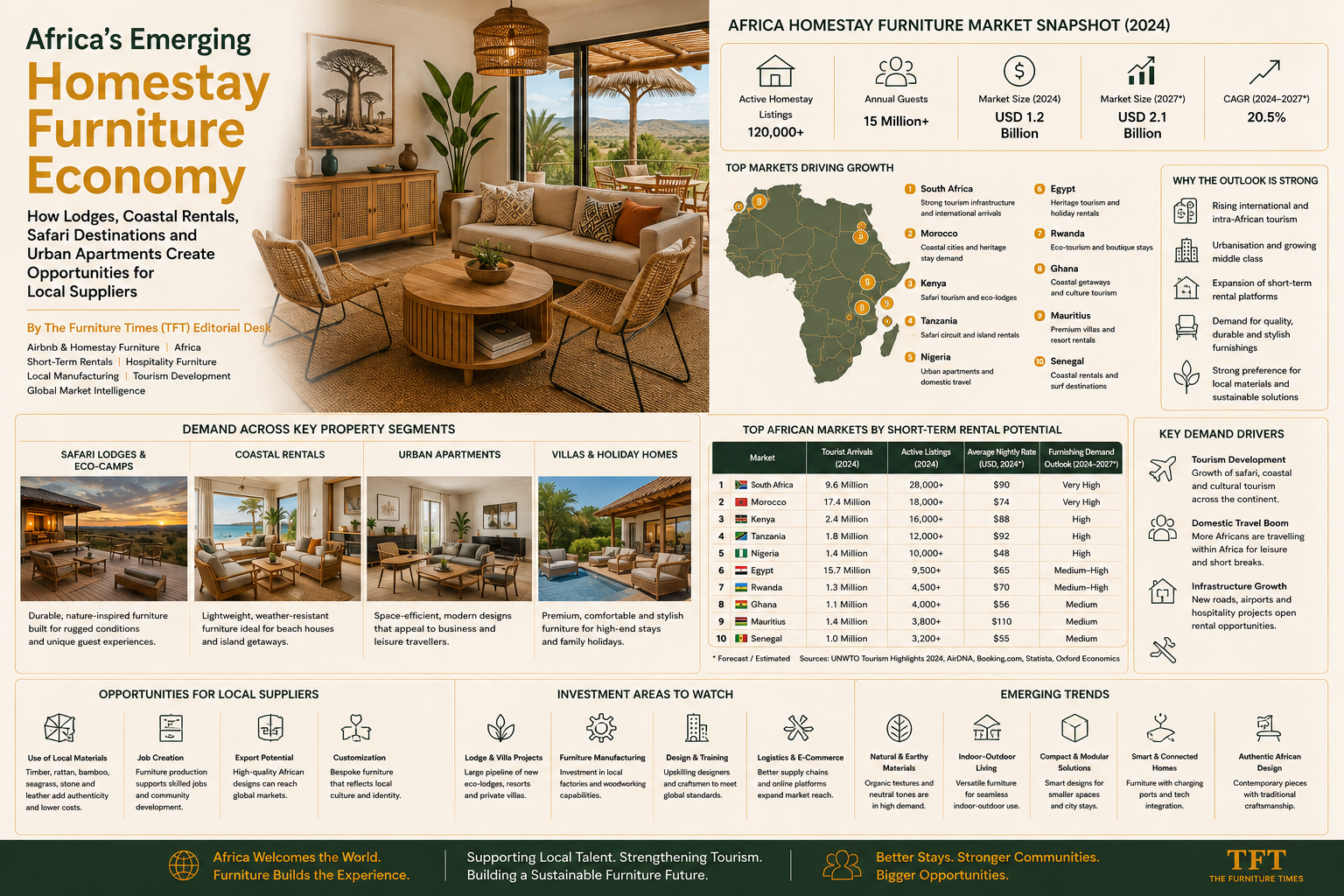
Africa’s Emerging Homestay Furniture Economy
Tourism growth across Africa is generating demand for durable, climate-appropriate and locally inspired furniture. By improving quality, standardisation, delivery and digital visibility, local suppliers can capture more value from urban rentals, safari lodges, coastal villas, heritage properties and community homestays.

Europe’s Homestay Furniture Market: Heritage Character Meets Modern Guest Expectations
With nearly 952 million EU guest nights booked through major accommodation platforms in 2025, Europe represents a major short-term-rental furniture economy. Hosts must balance heritage character with compact design, efficient cleaning, commercial durability and increasingly strict regulation.
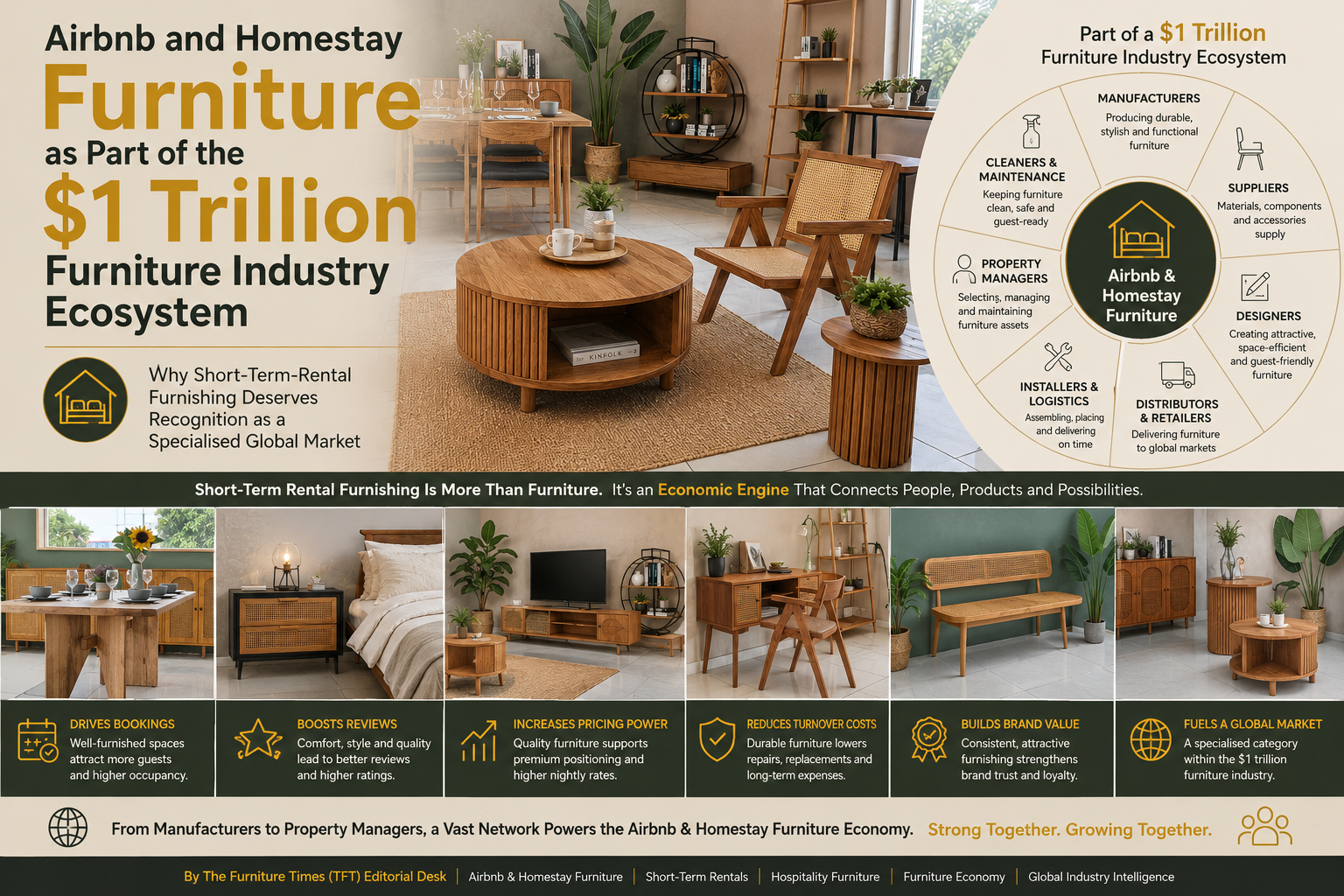
Airbnb and Homestay Furniture as Part of the $1 Trillion Furniture Industry Ecosystem
Millions of short-term-rental properties require durable, attractive and operationally efficient furniture. Yet this economic activity remains fragmented across residential, hospitality, contract and interior-furnishing categories. Recognising Airbnb and homestay furniture as a specialised global market could improve product development, data, supplier visibility, sustainability and investment.
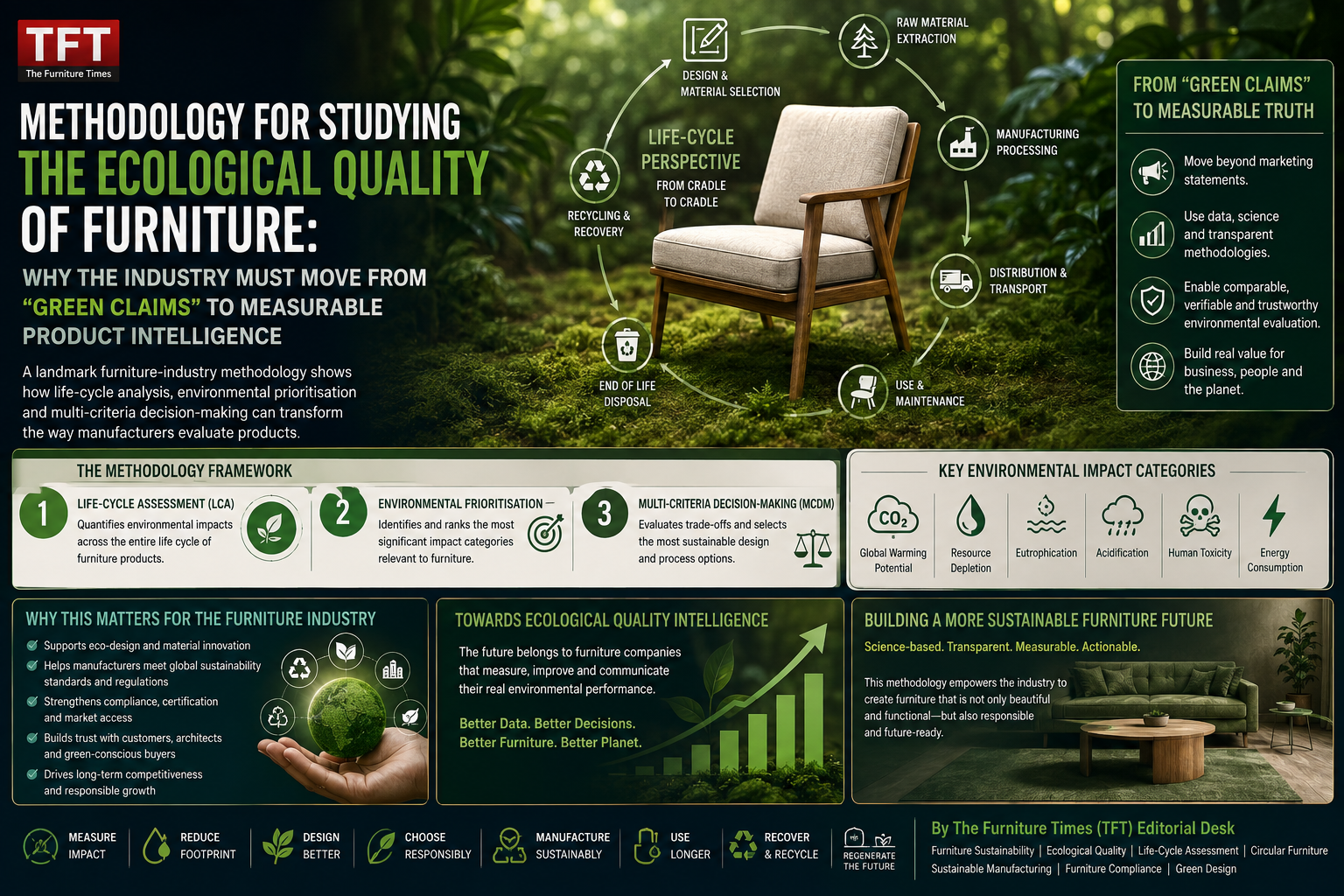
Methodology for Studying the Ecological Quality of Furniture
A 2011 research study on the ecological quality of furniture offers an increasingly relevant framework for today’s sustainability-driven industry. By combining life-cycle analysis, environmental ABC prioritisation and multi-criteria decision-making, the methodology demonstrated that products from the same furniture manufacturer can have significantly different environmental impacts. As global regulation moves toward durability, repairability, circularity and product-level information, furniture companies need to move from broad “green” claims toward measurable, traceable and verifiable ecological quality.

The Hidden Economy Behind Airbnb and Homestay Furnishing
Airbnb and homestay furnishing supports a wide hidden economy extending beyond furniture manufacturing. Designers, component suppliers, distributors, installers, logistics companies, photographers, cleaning teams, repairers, upholsterers, property managers, technology providers and refurbishers all contribute to the performance of short-term-rental properties.