
Malaysia furniture industry

World Furniture Industry Health Check: Conflict, Energy and Shipping Risks Reshape the Global Market
TFT’s October 2026 global furniture-industry health check finds continuing demand and active manufacturing alongside severe geopolitical risk. Crude flows through the Strait of Hormuz have recovered, but tanker attacks, refinery disruption, diesel scarcity, record intra-Asian freight and renewed Red Sea and Black Sea insecurity are keeping costs high and delivery schedules uncertain.
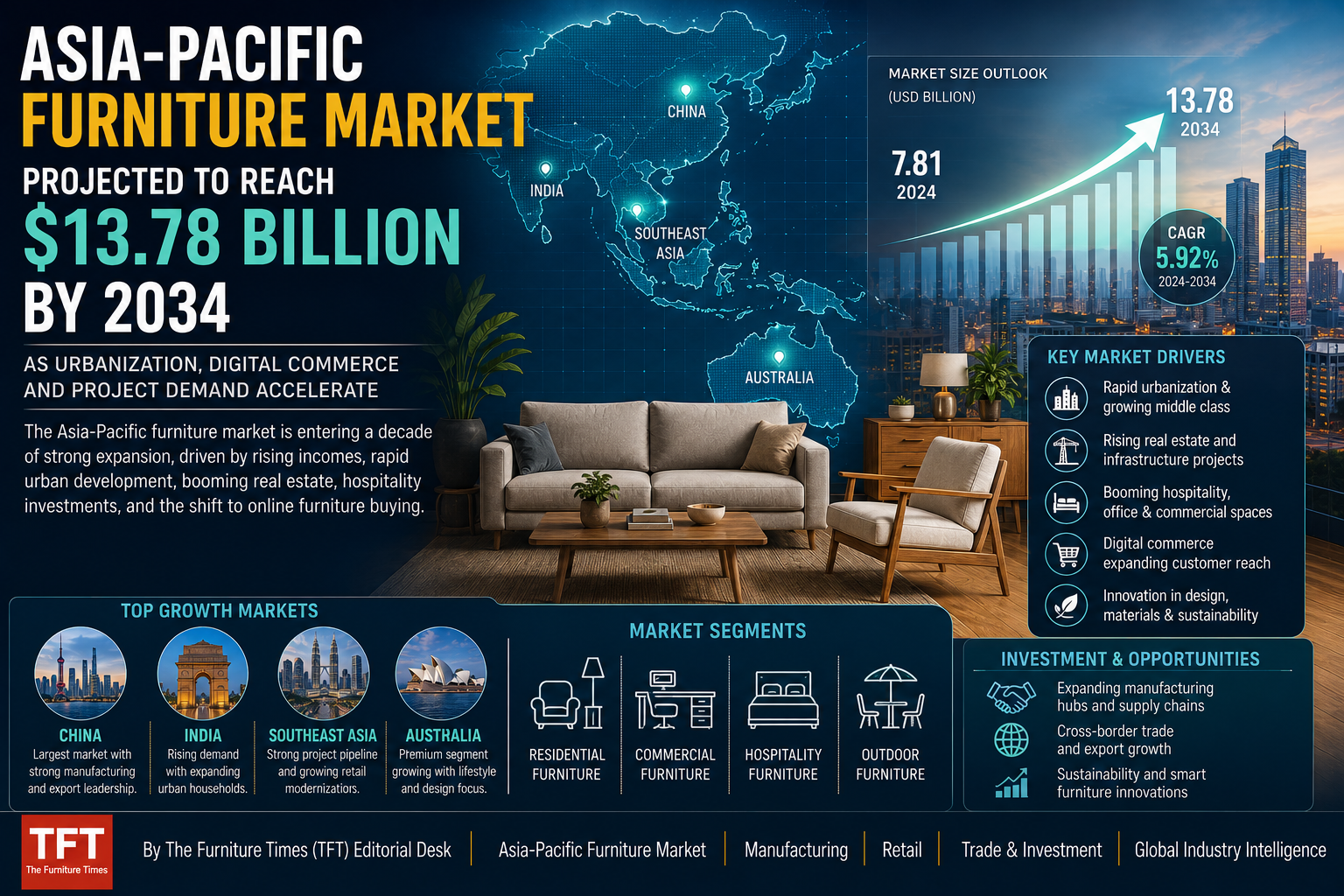
Asia-Pacific Furniture Market Projected to Reach $13.78 Billion by 2034 as Urbanization
Market Data Forecast estimates that the Asia-Pacific furniture market within its defined scope will grow from $7.26 billion in 2026 to $13.78 billion by 2034. This detailed analysis examines home, office, hospitality and educational furniture demand, country-level opportunities, materials, retail channels, digital commerce and the challenges facing manufacturers.
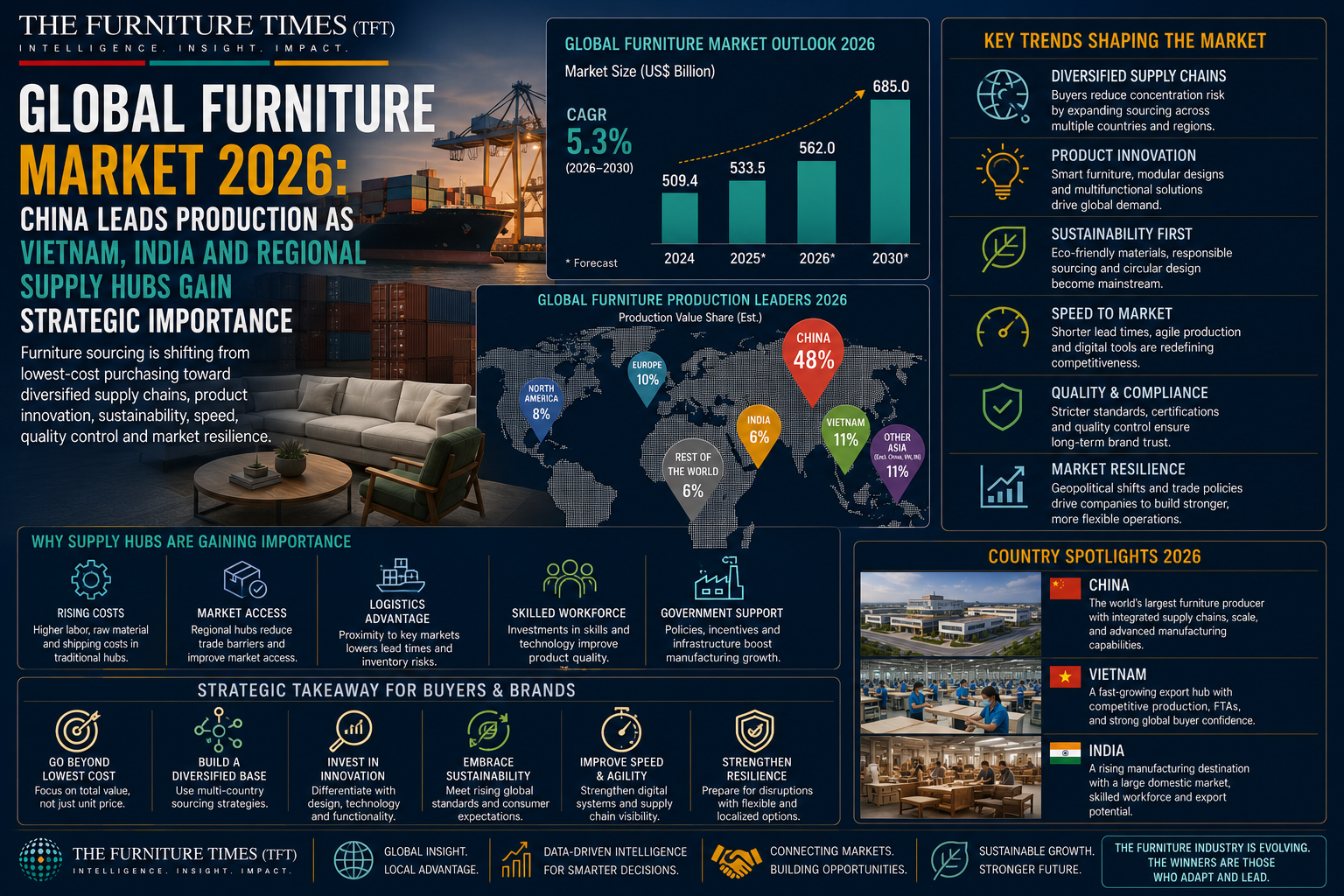
Global Furniture Market 2026
The global furniture market in 2026 is being reshaped by China’s manufacturing scale, Vietnam’s export growth, India’s emerging potential, regional nearshoring, tariff uncertainty, sustainability requirements and the movement toward diversified supply networks.
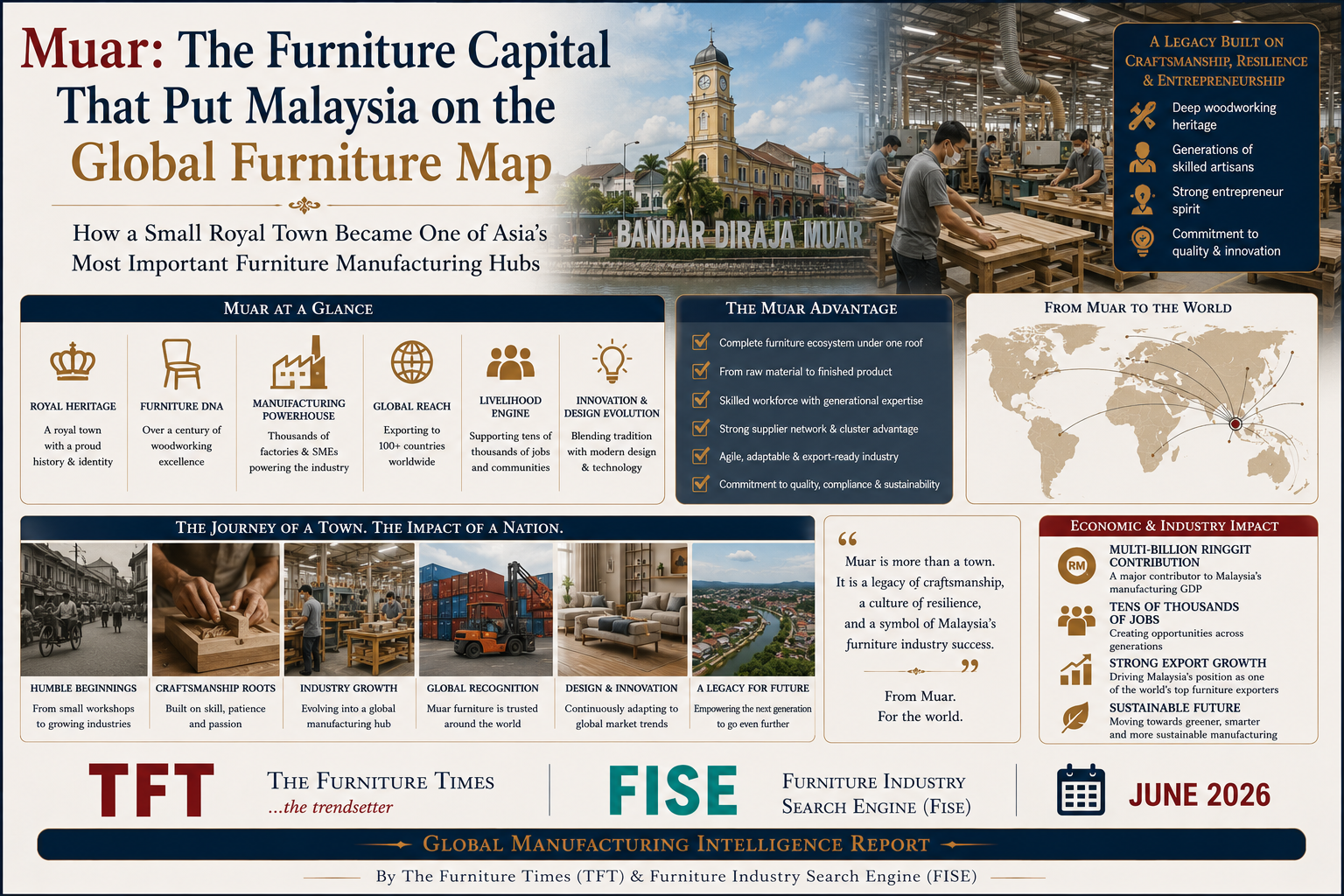
Muar: The Furniture Capital That Put Malaysia on the Global Furniture Map
Discover how Muar transformed from a town of small woodworking workshops into Malaysia’s leading furniture manufacturing hub, contributing over half of the country’s furniture exports while preparing for the next era of AI, branding, and global discoverability.
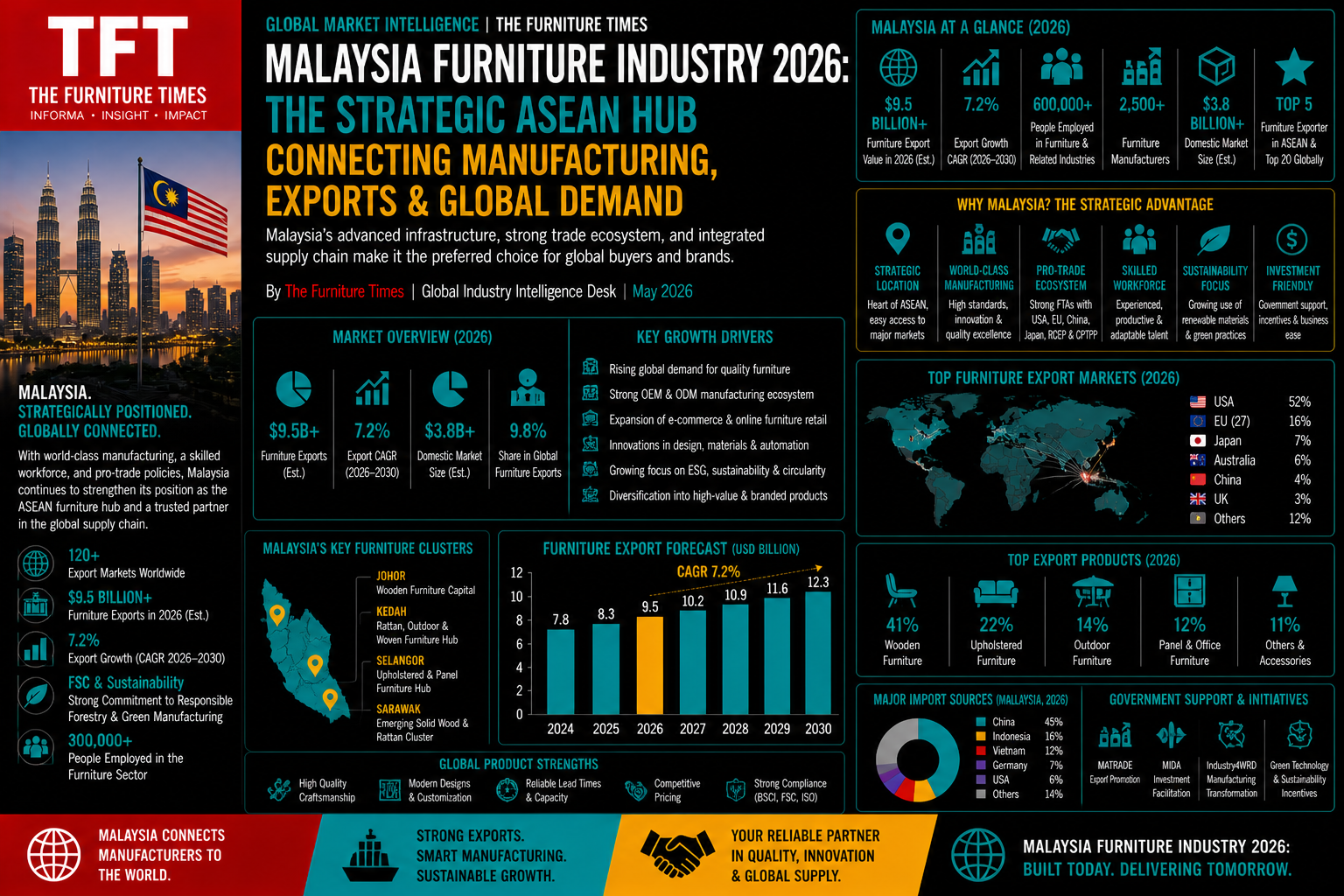
Malaysia Furniture Industry 2026: The Strategic ASEAN Hub Connecting Manufacturing, Exports & Global Demand
Malaysia’s furniture industry has strong production and export capability, but its next growth phase depends on digital visibility, structured discovery, and FISE-powered global access.
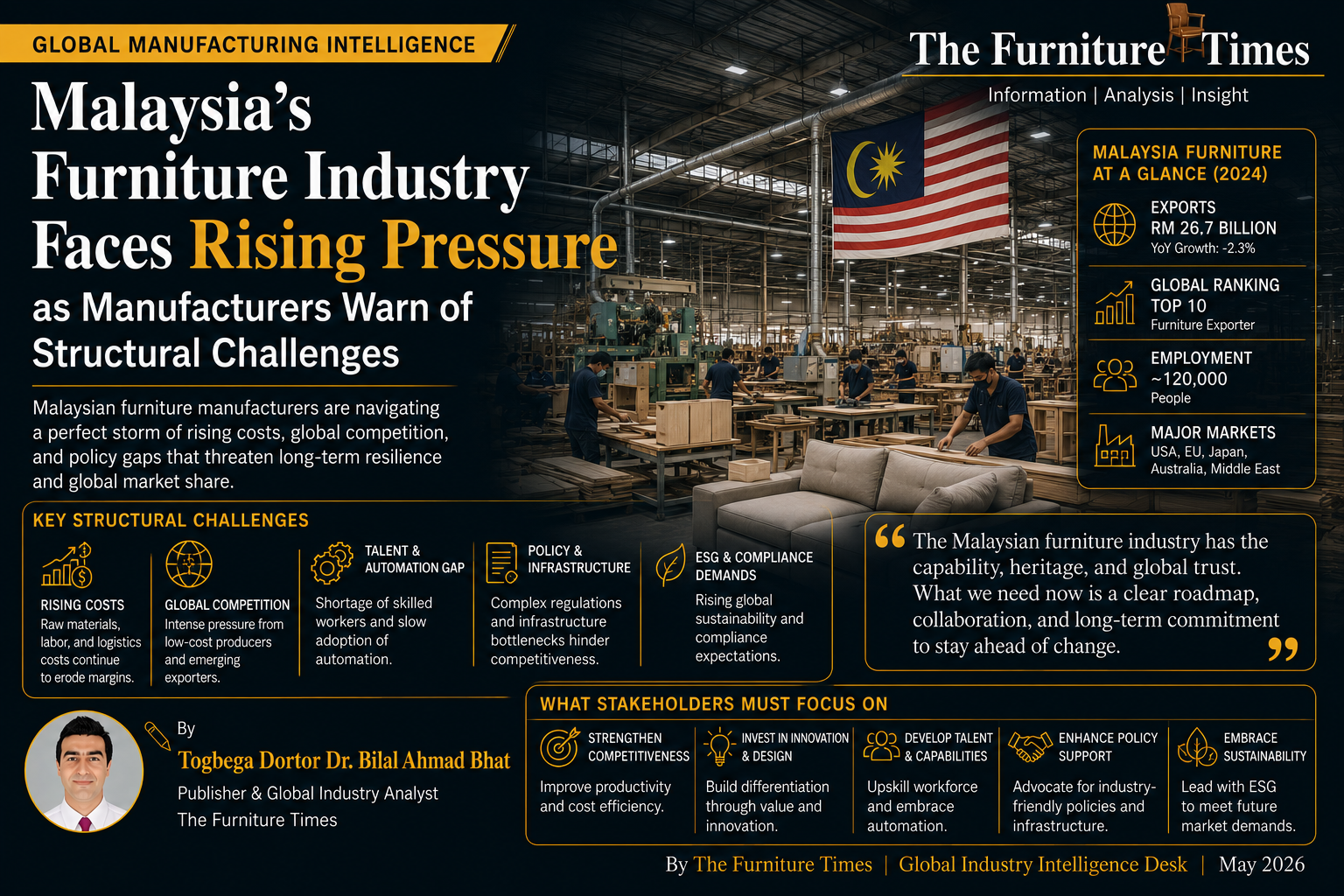
Malaysia’s Furniture Industry Faces Rising Pressure as Manufacturers Warn of Structural Challenges
Furniture manufacturers in Malaysia are warning about structural pressures affecting the industry, including labor costs, export competition, digital transformation, and changing consumer demand.
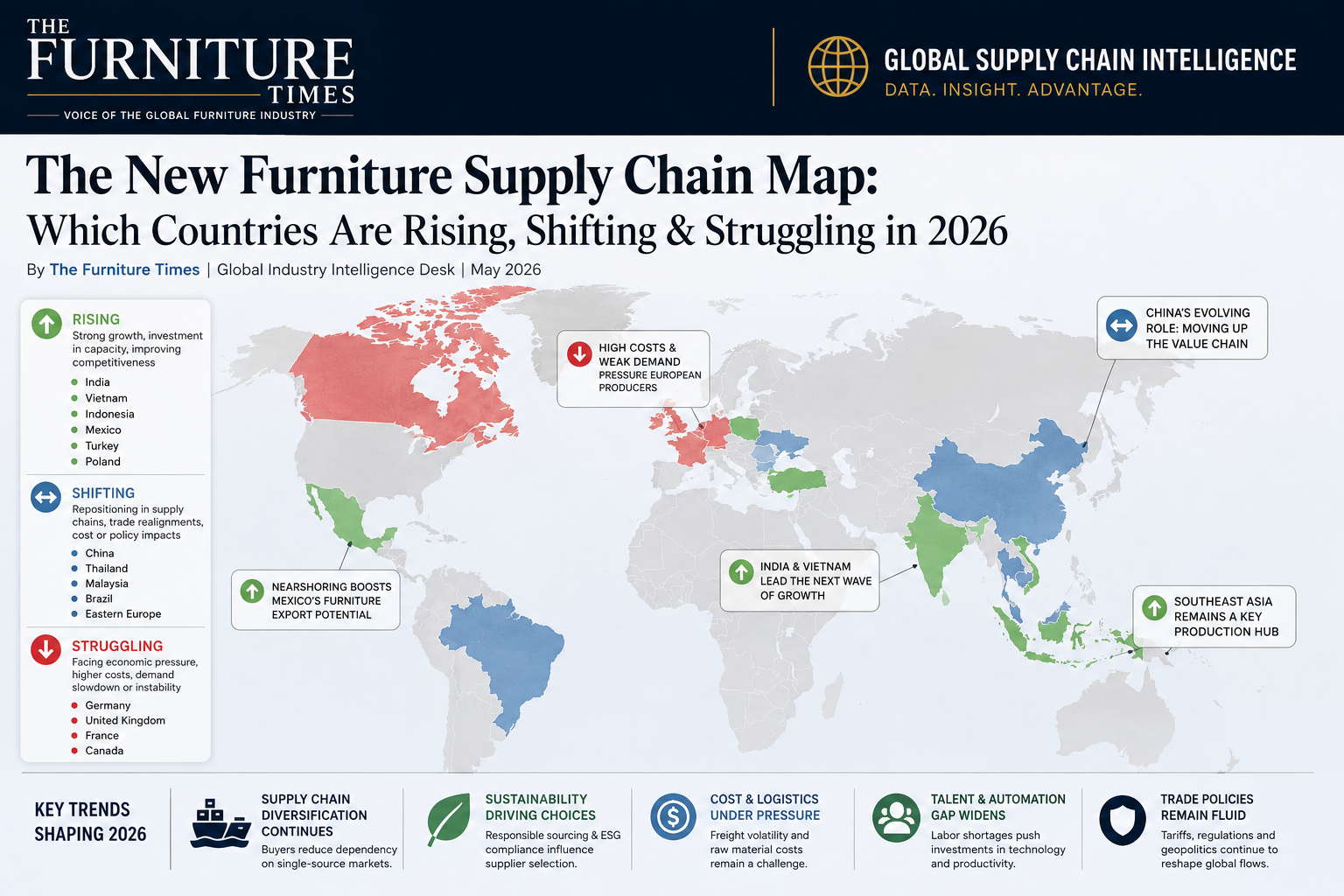
The New Furniture Supply Chain Map: Which Countries Are Rising, Shifting & Struggling in 2026
The Furniture Times explores the new global furniture supply-chain map and how rising regional hubs, geopolitical shifts, and digital transformation are reshaping manufacturing and exports in 2026.

Malaysia Strengthens Its Position in the Global Furniture Market
Malaysia continues to strengthen its standing in the global furniture market, ranking among the world’s top exporters and supplying furniture to more than 160 countries. With a strong focus on innovation, sustainability, and export-driven manufacturing, the country’s furniture industry remains a vital contributor to international trade and economic growth.
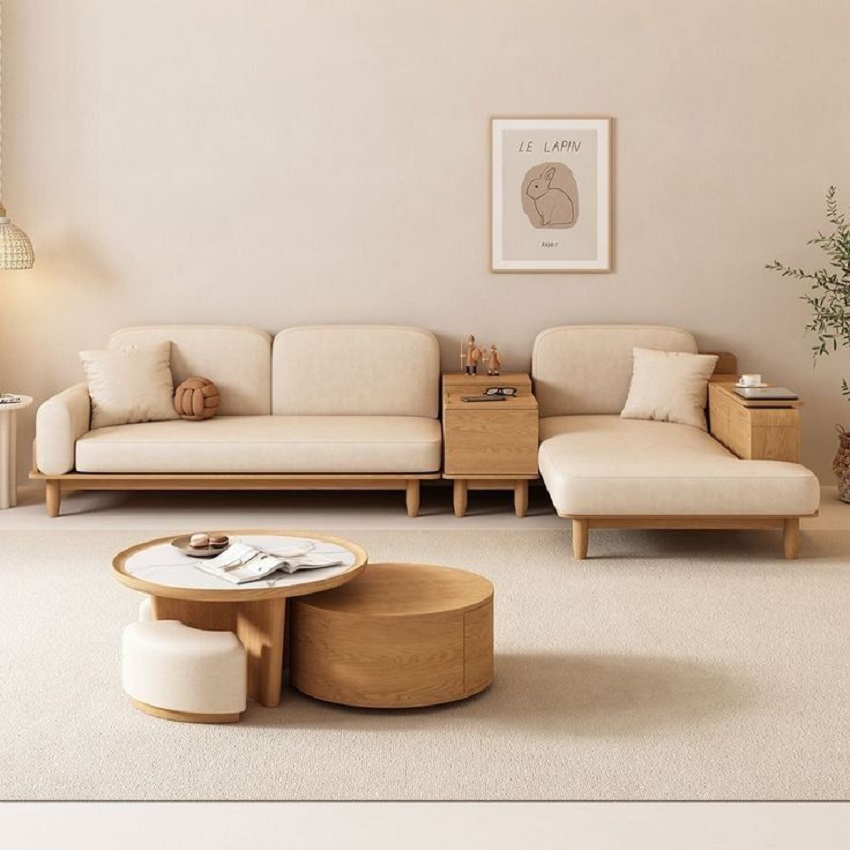
Malaysia’s Furniture & Furnishing Industry — Size, Opportunities, and Why Now Is the Time to Build
Malaysia’s furniture sector, valued at USD 5–6 billion, is ripe for innovation and startup growth. With strong manufacturing capabilities, rising e-commerce demand, sustainability trends and regional trade access, entrepreneurs have multiple pathways to scale both domestically and internationally.
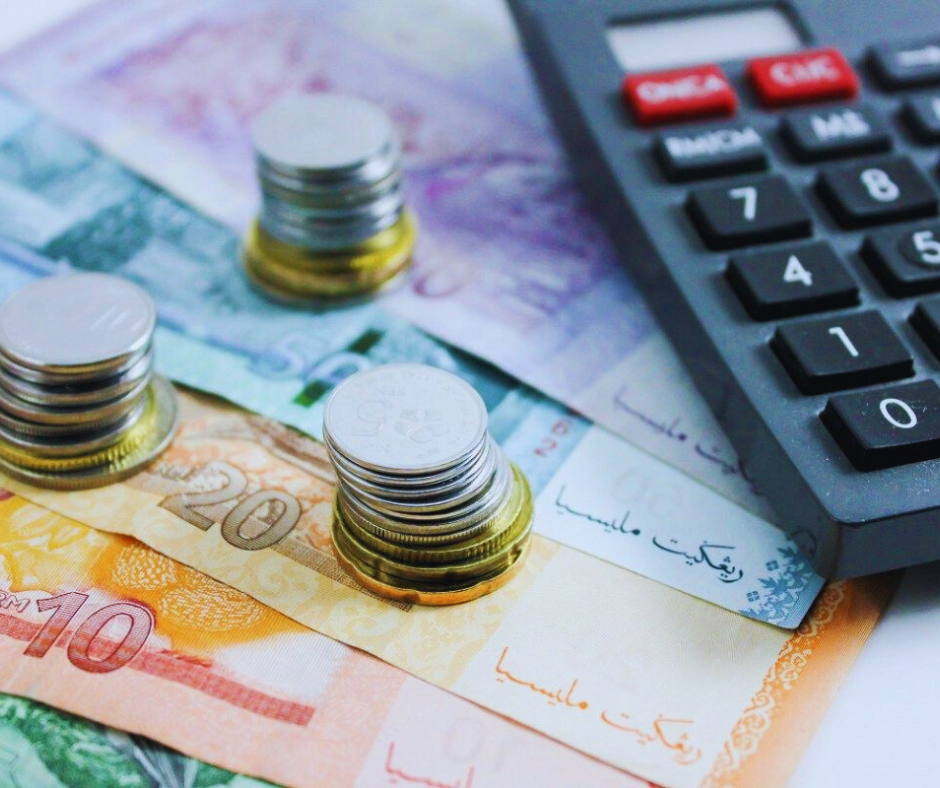
Malaysian Ringgit Hits Multi-Year High; Furniture Exporters Say Strong Currency Not Hitting Their Bottom Lines
Malaysian furniture exporters remain confident despite the ringgit strengthening against the US dollar. Industry players cite tariff advantages over China, resilient US demand, and cost efficiencies as key factors sustaining export performance.