
#FurnitureEcosystem

The Global Furniture Industry Is Huge — But Its Digital Reputation Infrastructure Remains Fragmented
Furniture is a vast global ecosystem, yet its digital reputation infrastructure remains fragmented. Explore how FISE, FurniReviewology and The Furniture Times can connect furniture search, company identity, customer reviews and industry intelligence while helping SMEs and MSMEs build stronger digital footprints.

The Global Furniture Industry Is Huge — But Its Digital Reputation Infrastructure Remains Fragmented
Furniture is a vast global ecosystem, yet its digital reputation infrastructure remains fragmented. Explore how FISE, FurniReviewology and The Furniture Times can connect furniture search, company identity, customer reviews and industry intelligence while helping SMEs and MSMEs build stronger digital footprints.
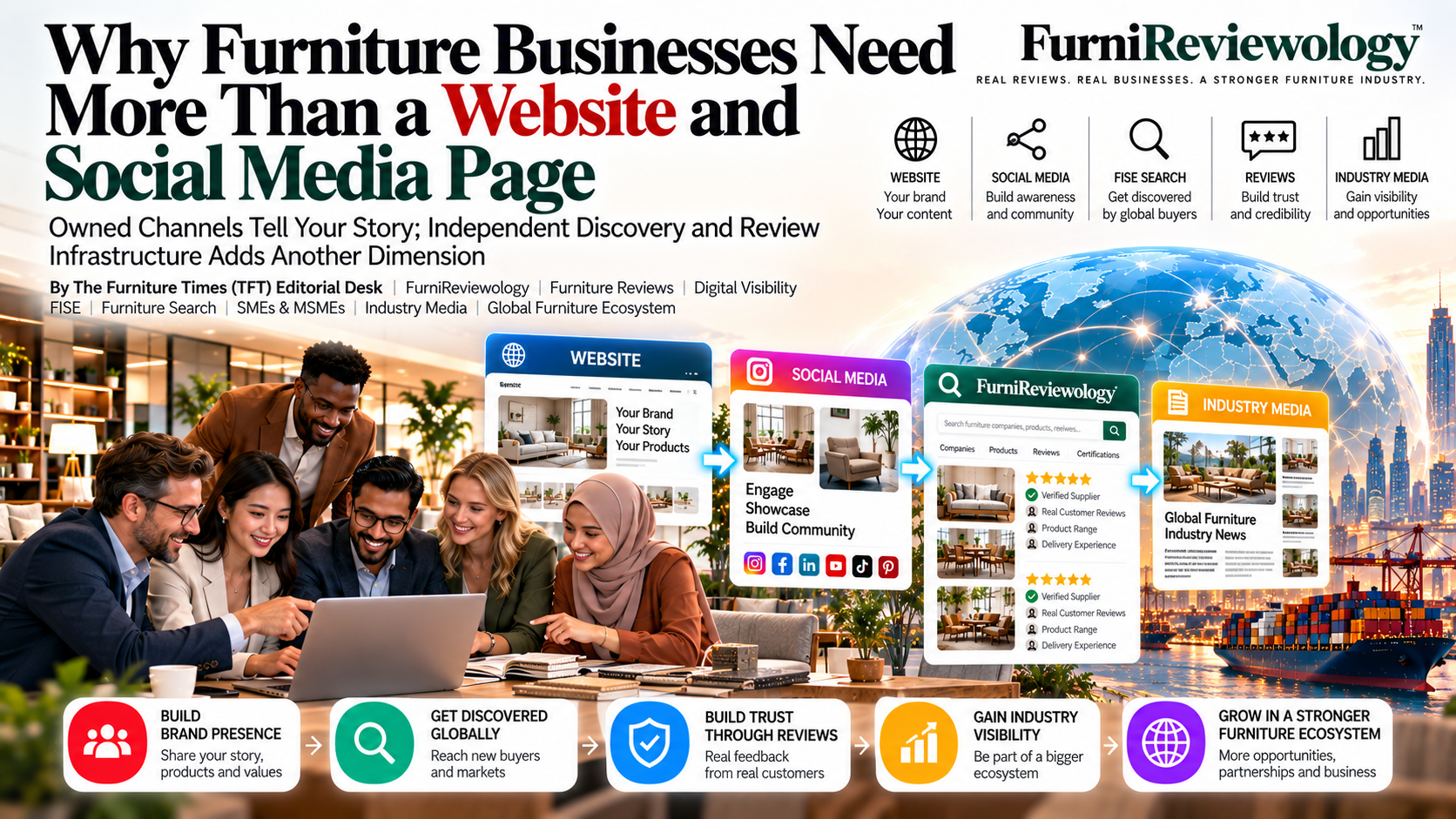
Why Furniture Businesses Need More Than a Website and Social Media Page
A website and social-media page are essential, but they are only part of a furniture company’s digital presence. Discover why independent search, FurniReviewology reviews, FISE visibility, TFT industry coverage and structured company information can add important new dimensions to furniture-business discoverability.

The Future of Furniture Buying Is Search + Reviews + Industry Intelligence
Furniture buying is evolving from isolated searches into a connected information journey. Explore why furniture search, genuine reviews and industry intelligence increasingly belong together—and how FISE, FurniReviewology and TFT can support discovery, research, reputation and better-informed decisions.

Verified, Genuine and Useful: What Should a Furniture Review Actually Tell Buyers?
What makes a furniture review genuinely useful? This guide explores the information buyers need—from quality and communication to delivery, durability, after-sales support and problem resolution—and why furniture reviews should provide meaningful context beyond star ratings.
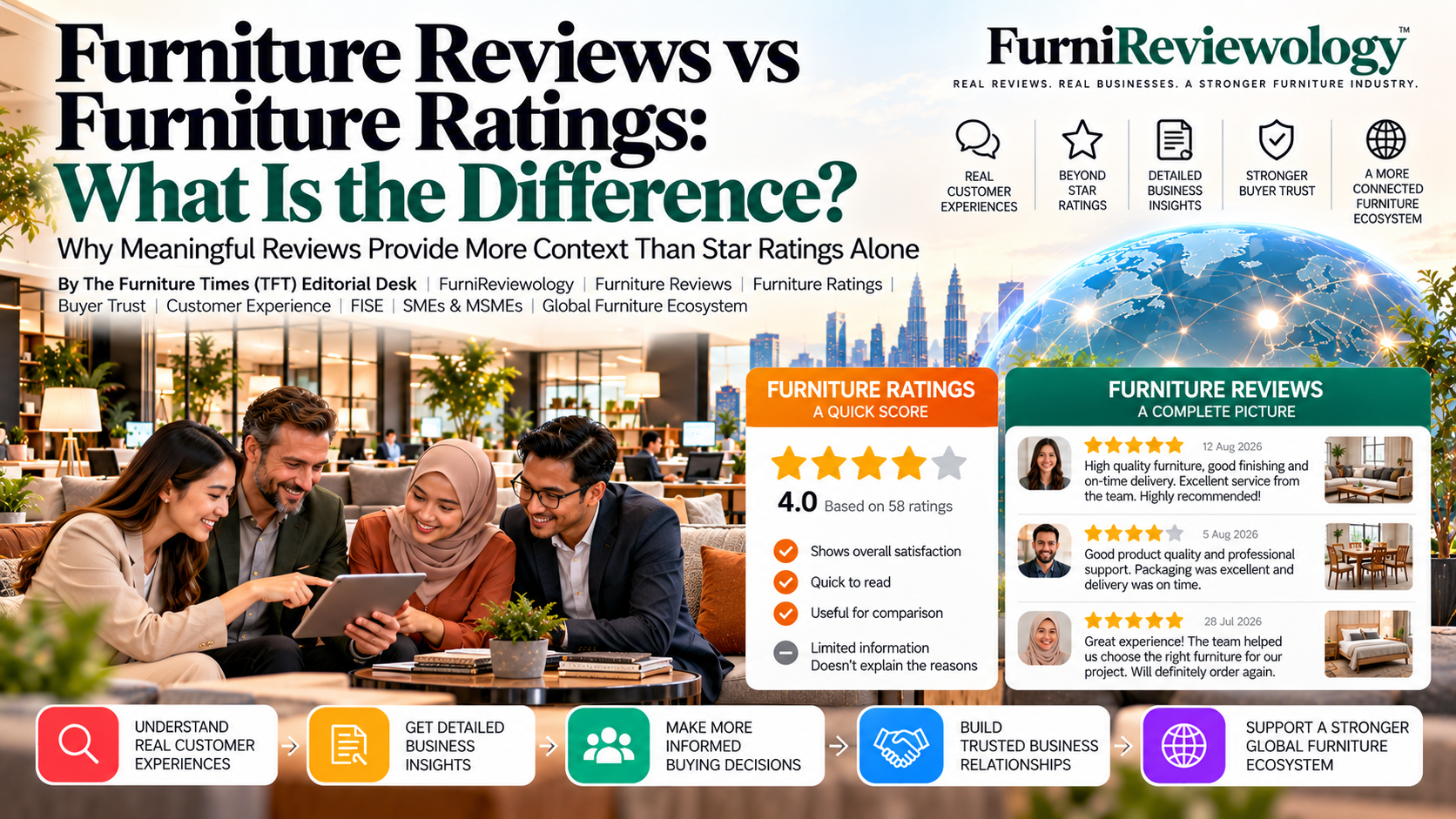
Furniture Reviews vs Furniture Ratings: What Is the Difference?
Furniture ratings provide quick signals, while meaningful reviews explain the customer experience behind those scores. Explore why context, recency, review quality, patterns and professional responses matter—and how FurniReviewology can help build a more useful furniture-specific reputation ecosystem.

Can Buyers Trust Your Furniture Business? Your Digital Footprint May Answer First
Furniture reputation increasingly begins before the first enquiry. Buyers can research manufacturers, brands, suppliers, retailers and SMEs without revealing themselves. Discover how FurniReviewology reviews, FISE search visibility, TFT industry coverage and accurate digital information can help create a stronger first impression.
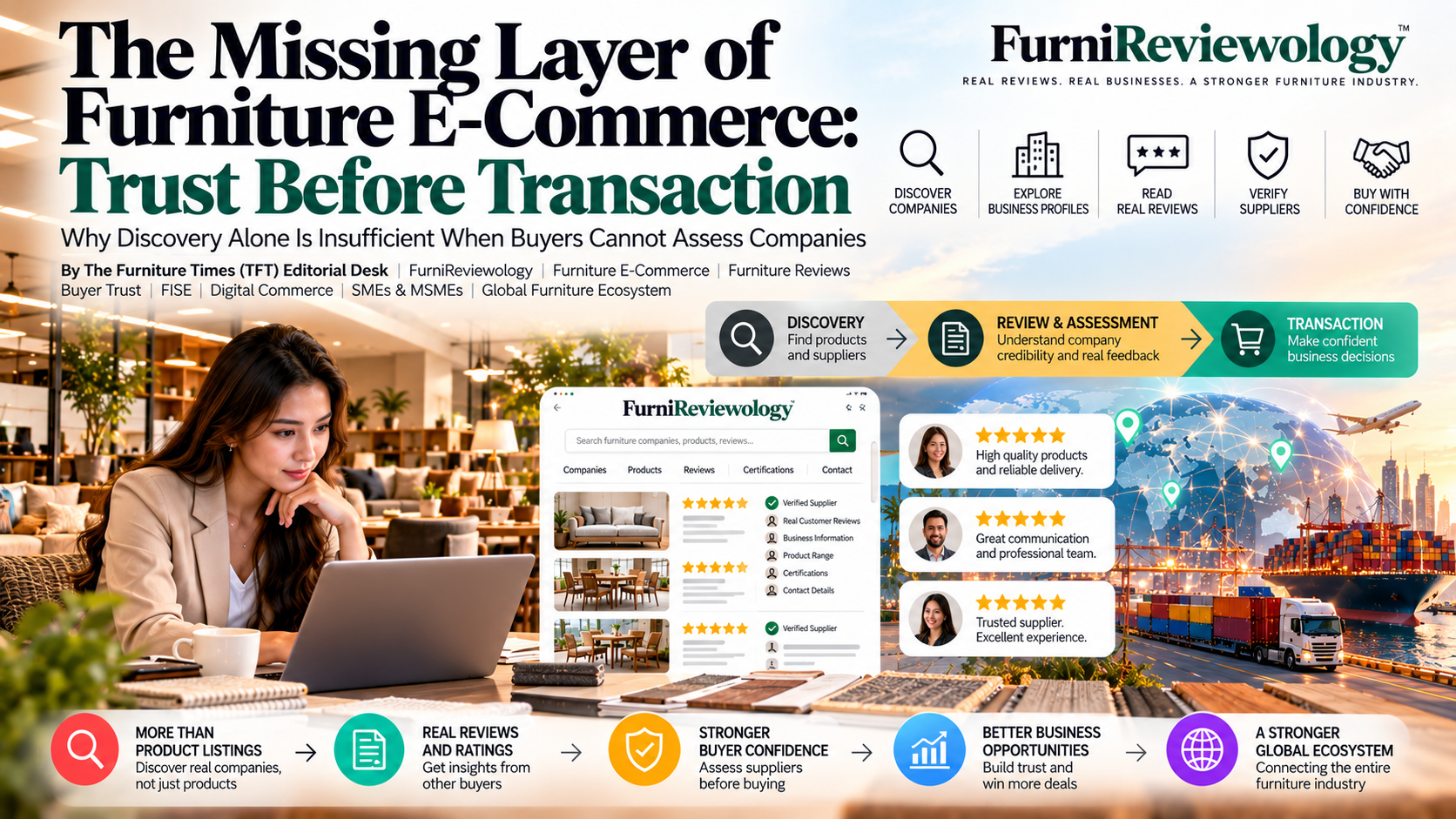
The Missing Layer of Furniture E-Commerce: Trust Before Transaction
The missing layer of furniture e-commerce is trust before transaction. Explore why product discovery alone is insufficient and how FurniReviewology, FISE and The Furniture Times can connect company discovery, reviews, reputation and industry context across the buyer journey.

Why Furniture Reviews Matter More Than Ever in a Crowded Global Market
Furniture buyers face more supplier choices than ever. Reviews and other trust signals can help manufacturers, brands, suppliers, SMEs and MSMEs become easier to research and shortlist. FurniReviewology, FISE and TFT connect reputation, discovery and industry visibility across the furniture ecosystem.
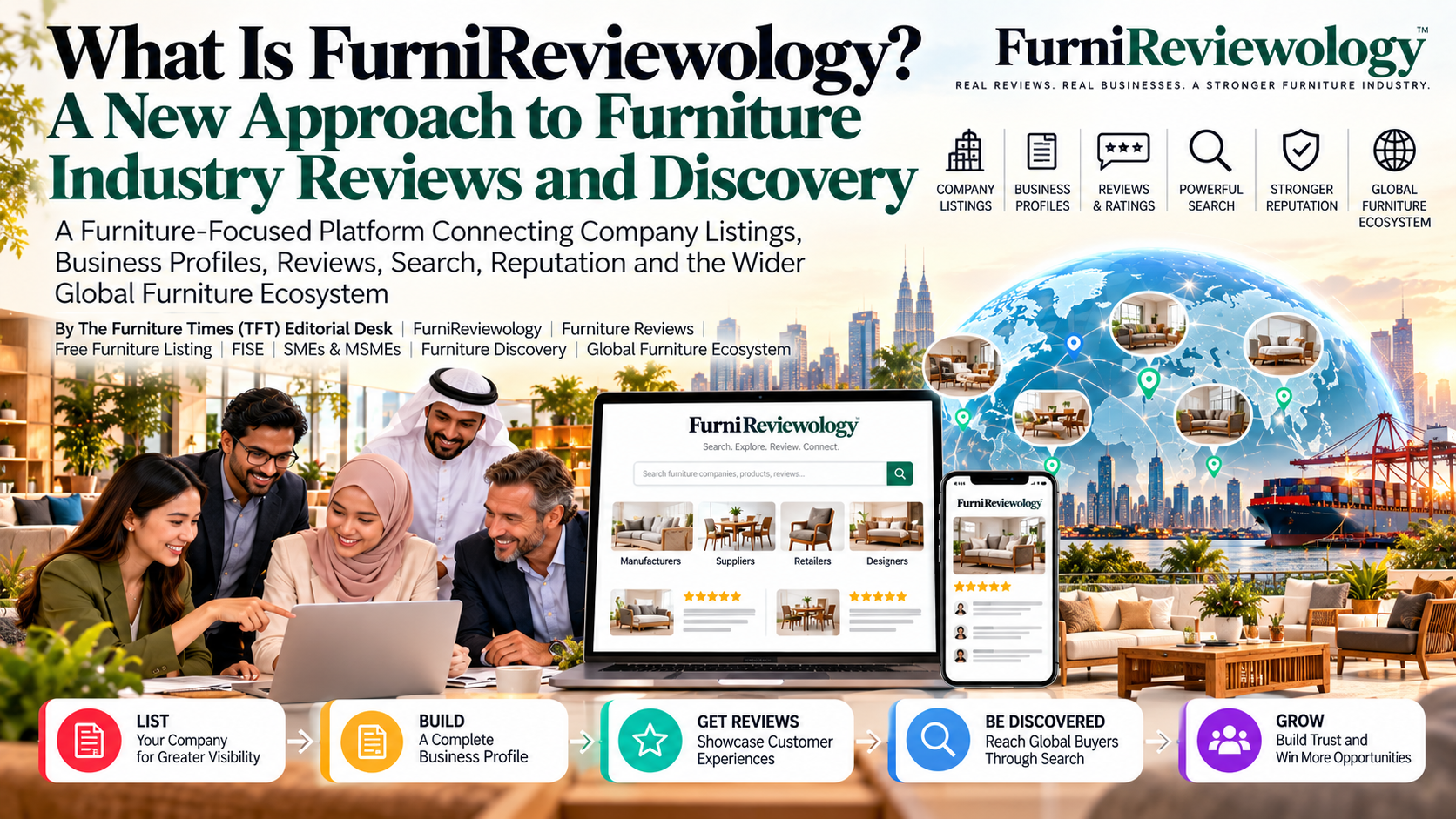
What Is FurniReviewology? A New Approach to Furniture Industry Reviews and Discovery
FurniReviewology brings furniture company listings, profiles, reviews and reputation into an industry-focused environment. Discover how free listings, genuine customer feedback, FISE search visibility and TFT industry coverage can connect furniture businesses with the wider global ecosystem.