
#FurnitureSMEs

One Furniture Industry. Thousands of Companies. One Growing Need for Trust.
The global furniture ecosystem needs more than scattered websites, star ratings and social profiles. This manifesto calls for structured furniture-industry reputation built around digital identity, discovery, genuine customer experiences, transparency, industry storytelling and responsible buyer due diligence.

The Global Furniture Industry Is Huge — But Its Digital Reputation Infrastructure Remains Fragmented
Furniture is a vast global ecosystem, yet its digital reputation infrastructure remains fragmented. Explore how FISE, FurniReviewology and The Furniture Times can connect furniture search, company identity, customer reviews and industry intelligence while helping SMEs and MSMEs build stronger digital footprints.

The Global Furniture Industry Is Huge — But Its Digital Reputation Infrastructure Remains Fragmented
Furniture is a vast global ecosystem, yet its digital reputation infrastructure remains fragmented. Explore how FISE, FurniReviewology and The Furniture Times can connect furniture search, company identity, customer reviews and industry intelligence while helping SMEs and MSMEs build stronger digital footprints.

Why Furniture Businesses Need More Than a Website and Social Media Page
A website and social-media page are essential, but they are only part of a furniture company’s digital presence. Discover why independent search, FurniReviewology reviews, FISE visibility, TFT industry coverage and structured company information can add important new dimensions to furniture-business discoverability.

The Future of Furniture Buying Is Search + Reviews + Industry Intelligence
Furniture buying is evolving from isolated searches into a connected information journey. Explore why furniture search, genuine reviews and industry intelligence increasingly belong together—and how FISE, FurniReviewology and TFT can support discovery, research, reputation and better-informed decisions.
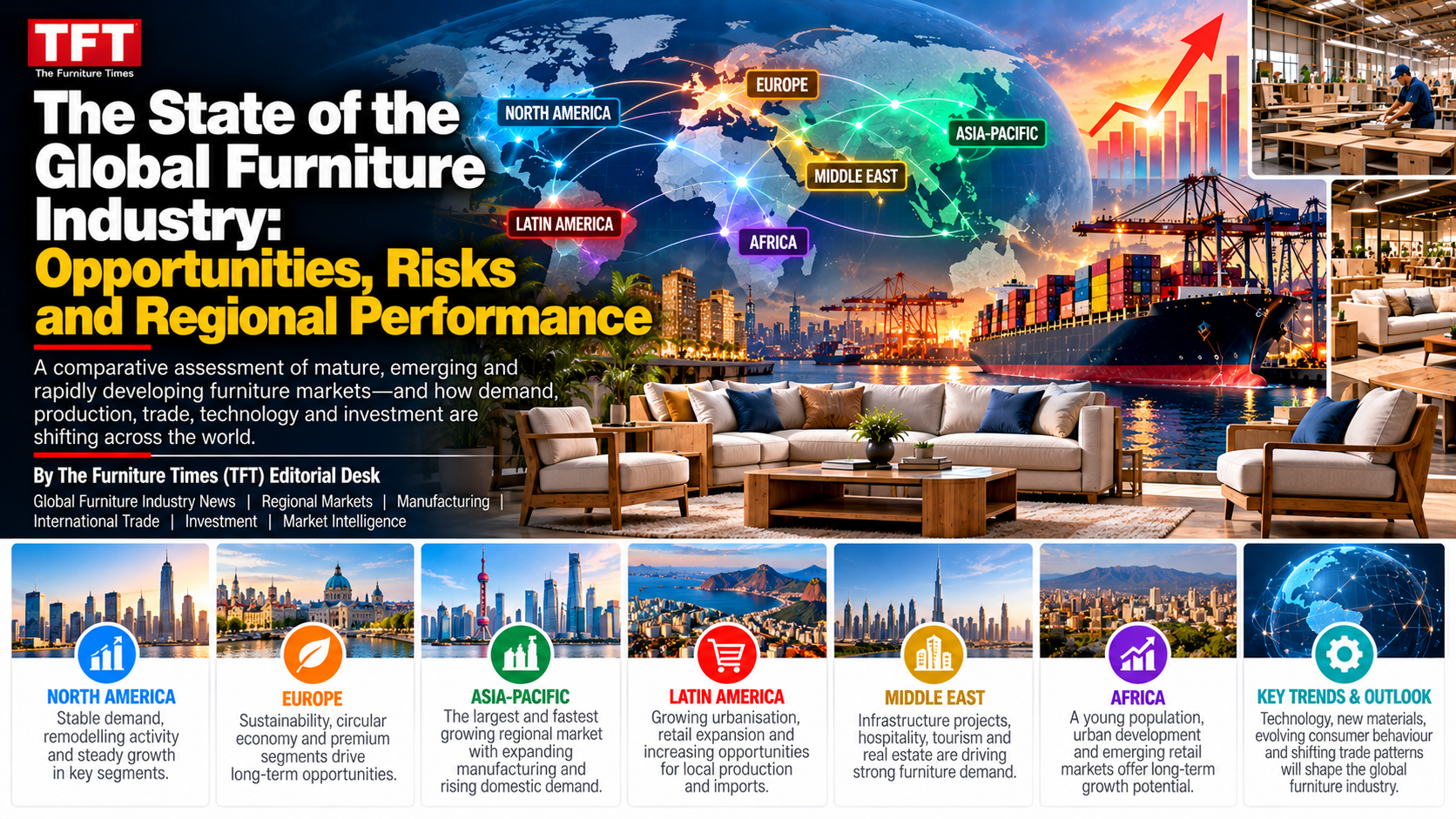
The State of the Global Furniture Industry
The Furniture Times compares global furniture markets across North America, Europe, China, India, Southeast Asia, the Gulf, Africa, Latin America and Central Asia, examining growth, production, trade and investment conditions.

Press Releases in Hard Times
When marketing budgets tighten, smaller businesses often stop communicating. This detailed TFT report explains how genuine press releases can provide an affordable, reusable foundation for credibility, branded search visibility, stakeholder confidence and AI discovery.

Global Furniture Industry Health Check: Is the Market Growing, Slowing or Restructuring?
Is the global furniture industry growing, slowing or restructuring? TFT assesses housing demand, consumer spending, factory capacity, freight rates, retail performance and business confidence.

Verified, Genuine and Useful: What Should a Furniture Review Actually Tell Buyers?
What makes a furniture review genuinely useful? This guide explores the information buyers need—from quality and communication to delivery, durability, after-sales support and problem resolution—and why furniture reviews should provide meaningful context beyond star ratings.

Global Furniture Industry Faces a Conflict-Economy Test as Wars Disrupt Energy
Qatar’s Emir has outlined the economic damage caused by the Iran conflict while reaffirming the country’s investment and mediation ambitions. TFT examines how worldwide conflicts are affecting furniture manufacturing, freight, materials, retail, hospitality projects, cash flow and responsible sourcing.