
#FurnitureMarketing
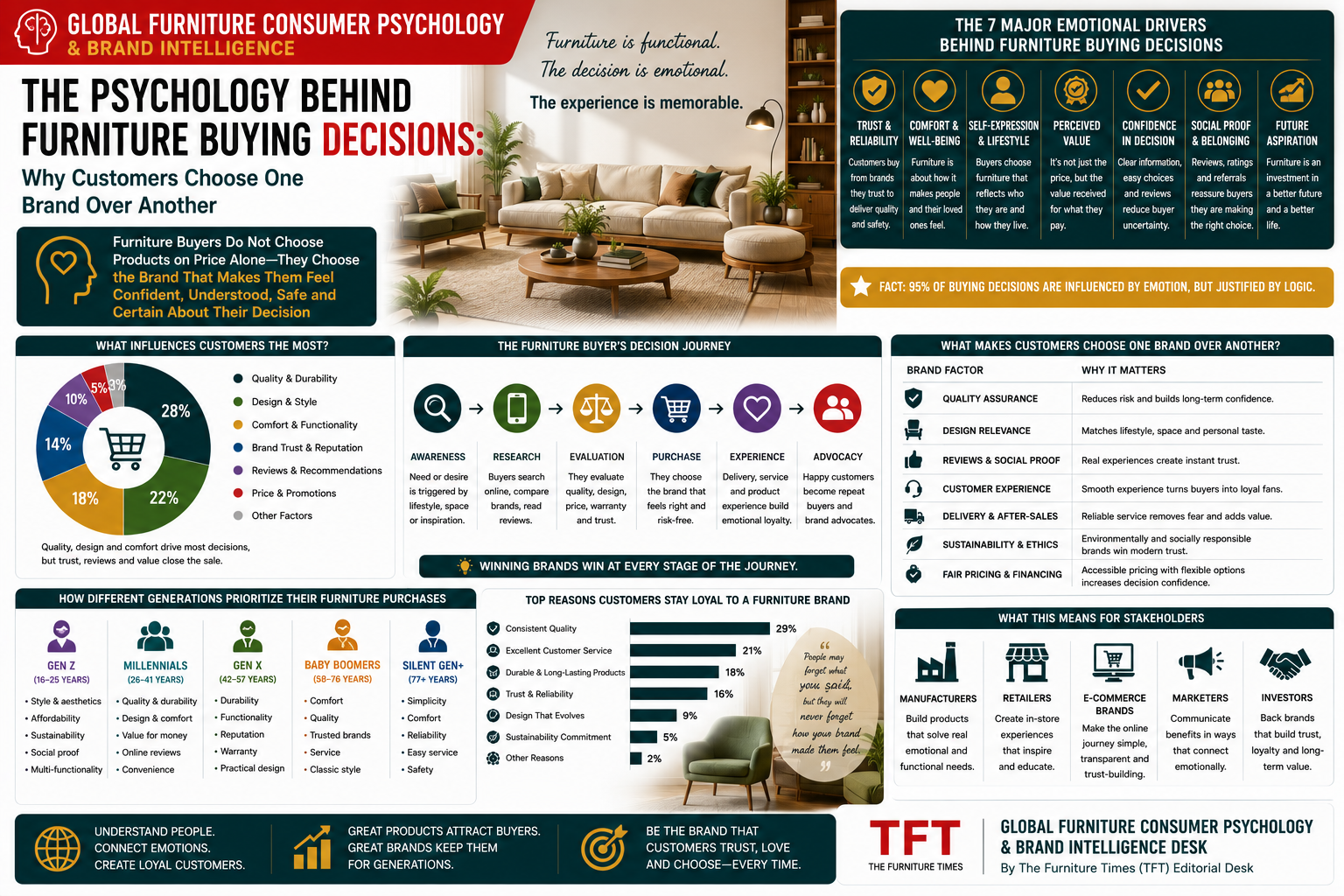
The Psychology Behind Furniture Buying Decisions: Why Customers Choose One Brand Over Another
Furniture buying is both emotional and practical. Customers choose brands that reduce uncertainty, communicate value, prove quality and make the desired home or commercial environment feel achievable. Discover the psychology behind furniture purchasing, brand trust, pricing, social proof and loyalty.
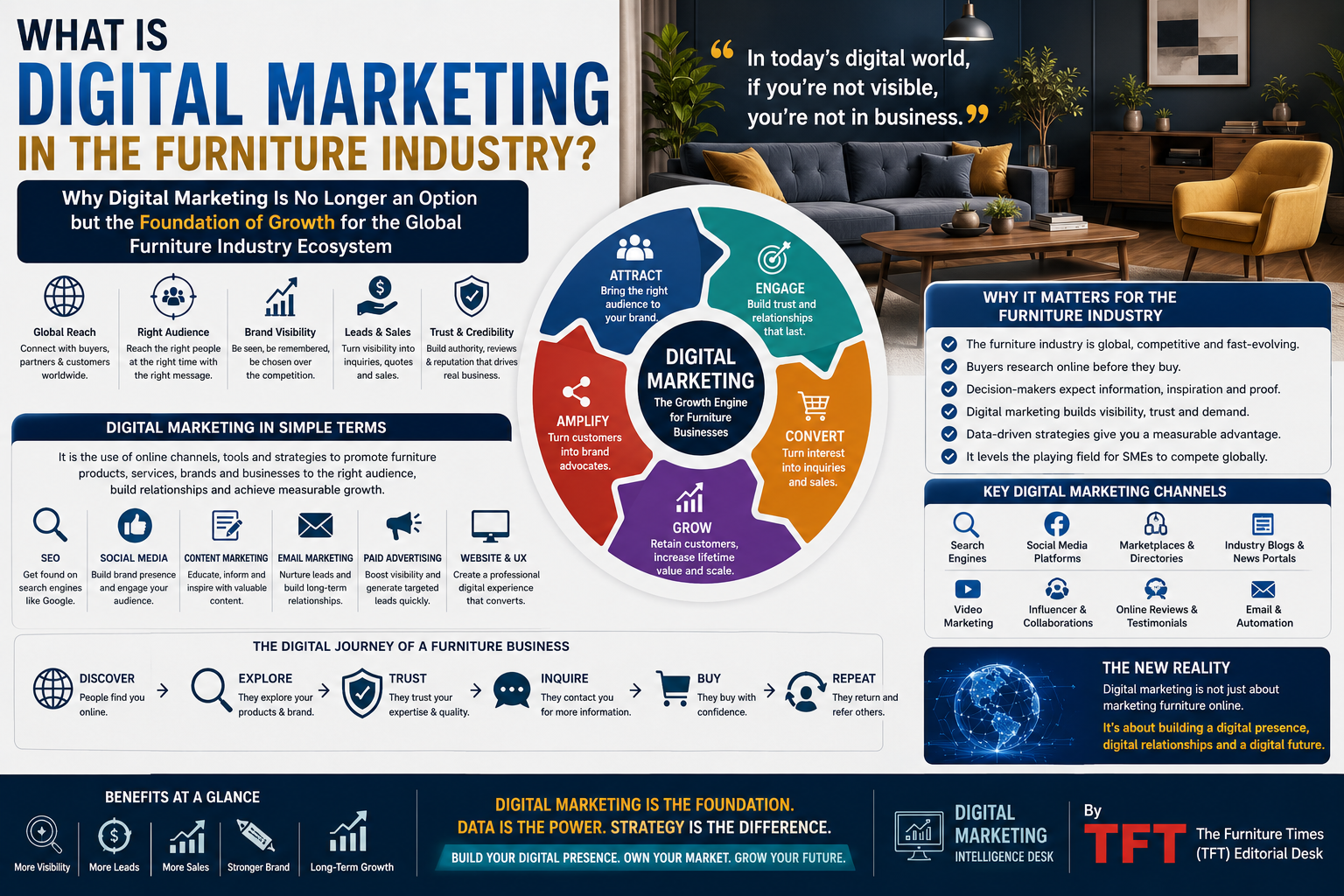
What Is Digital Marketing in the Furniture Industry?
What is digital marketing in the furniture industry? This comprehensive guide explains how SEO, content marketing, Google Ads, AI, social media, local SEO, reviews and e-commerce are transforming the way furniture manufacturers, retailers and suppliers connect with customers and grow their businesses.
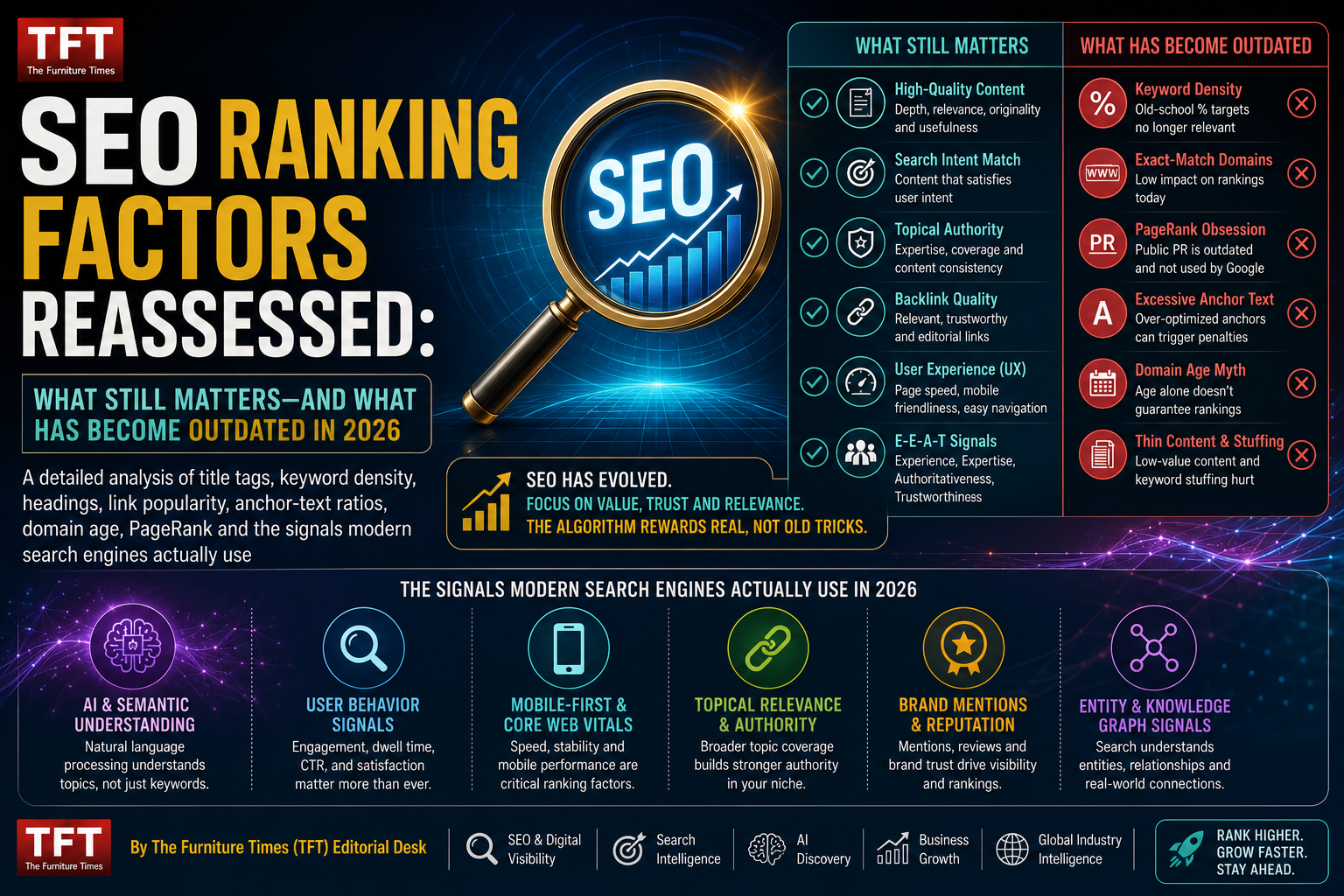
SEO Ranking Factors Reassessed: What Still Matters—and What Has Become Outdated in 2026
Title tags, headings and relevant links still matter, but many legacy SEO metrics are obsolete or misleading. This report explains which on-page and off-page factors remain useful in 2026 and introduces a more reliable audit framework.
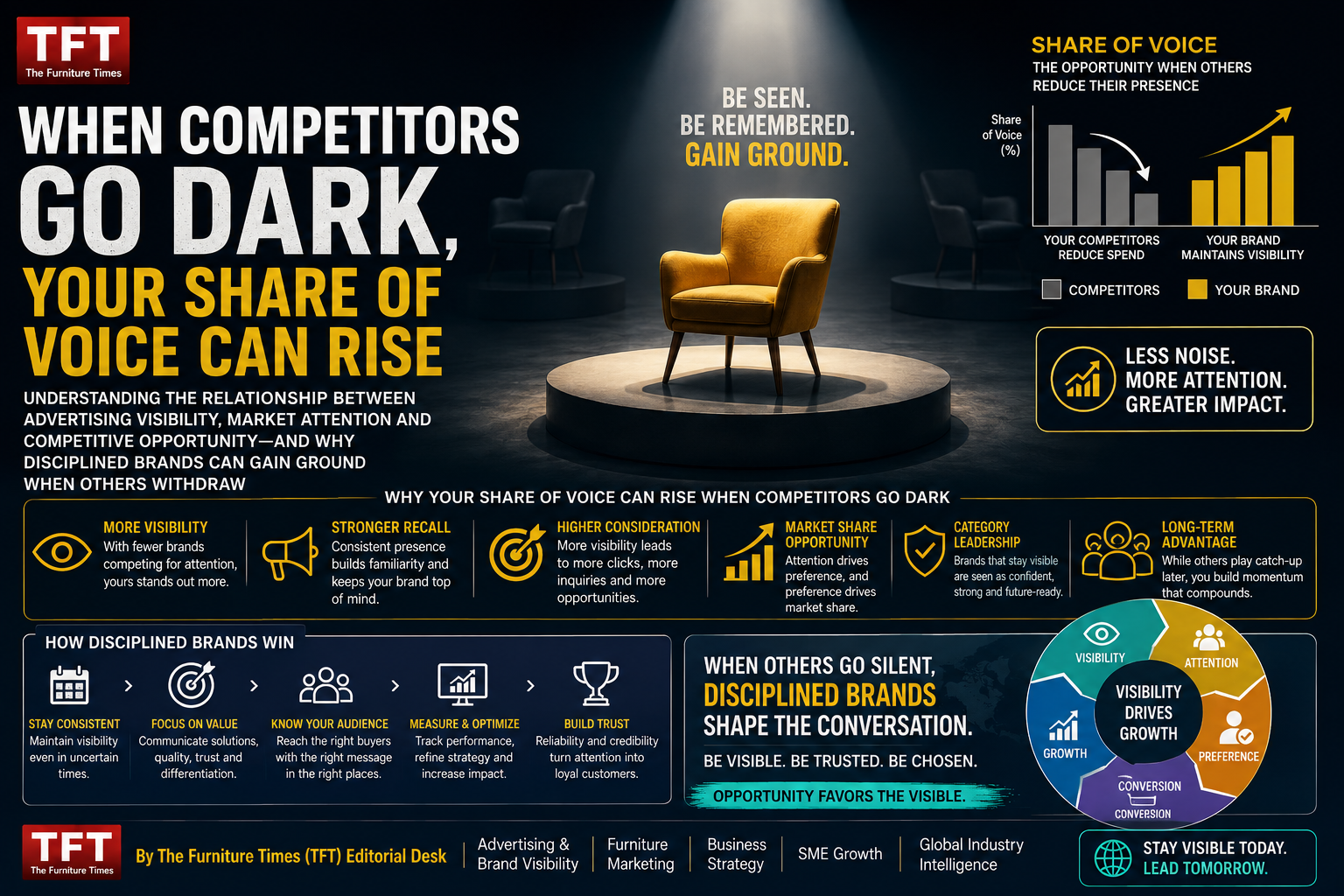
When Competitors Go Dark, Your Share of Voice Can Rise
Economic slowdowns often push companies to reduce marketing, but widespread silence creates an opening for active brands. This report examines how share of voice works, why visibility can signal stability and how furniture businesses can protect market attention without wasting money.
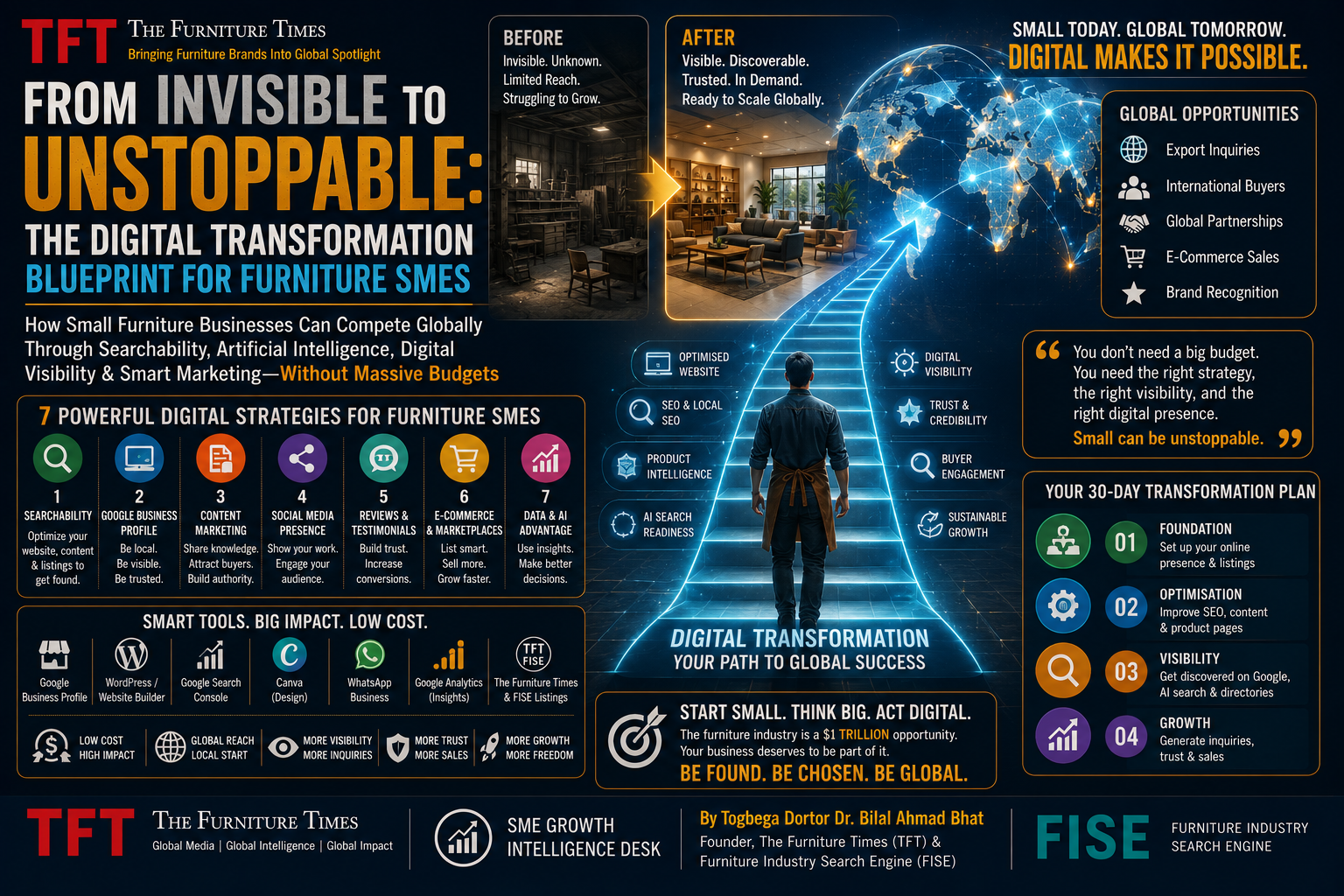
From Invisible to Unstoppable: The Digital Transformation Blueprint for Furniture SMEs
Discover the Digital Transformation Blueprint designed specifically for furniture SMEs. Learn how affordable SEO, Google Ads, content marketing, reviews, social media, Local SEO, industry listings and AI tools can help small furniture businesses become visible, trusted and globally competitive.
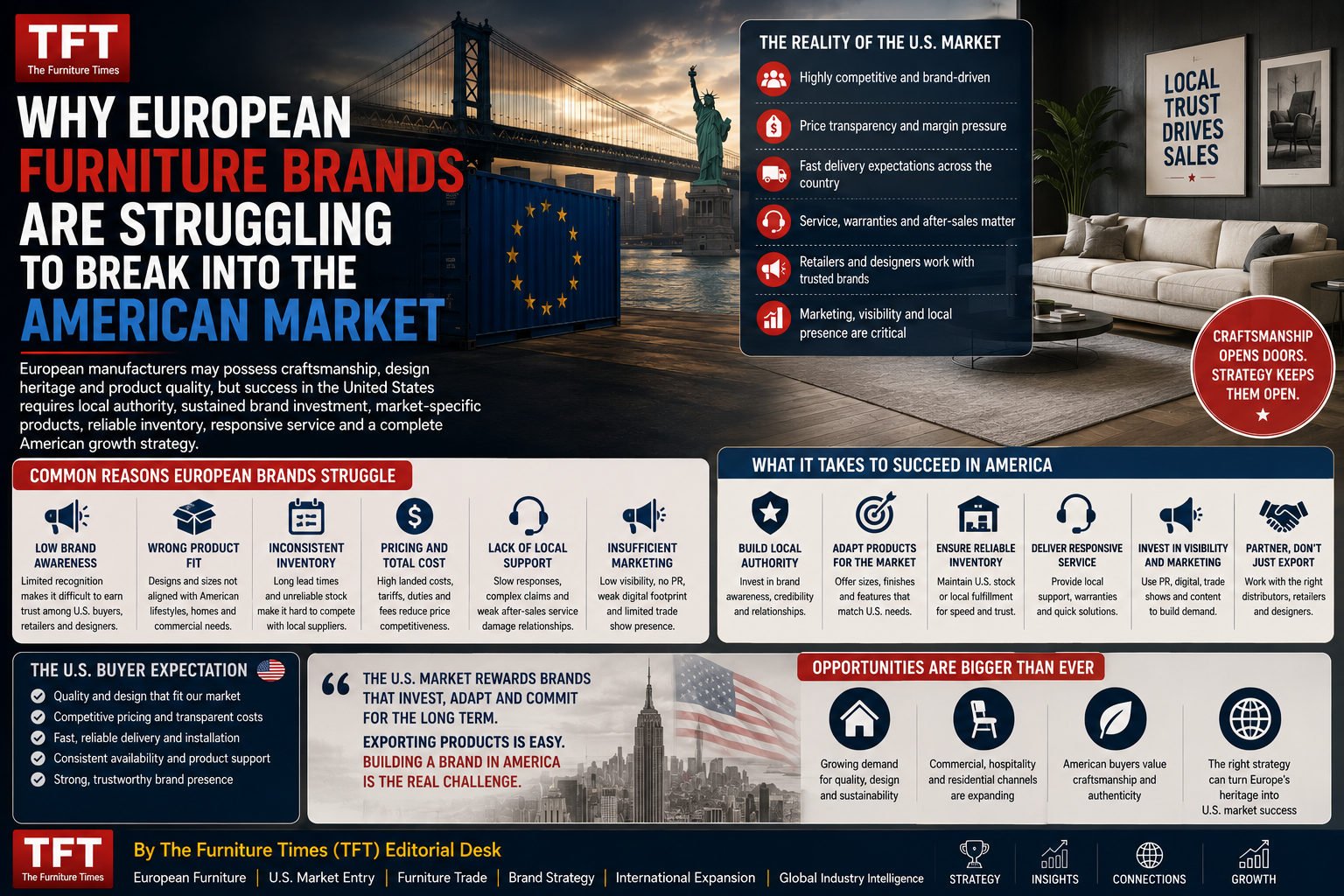
Why European Furniture Brands Are Struggling to Break Into the American Market
Why do respected European furniture companies struggle in the United States? This detailed TFT report examines centralised decision-making, weak brand awareness, product-market fit, pricing, logistics, compliance, dealer economics, customer service and the practical strategy required to build a sustainable American business.
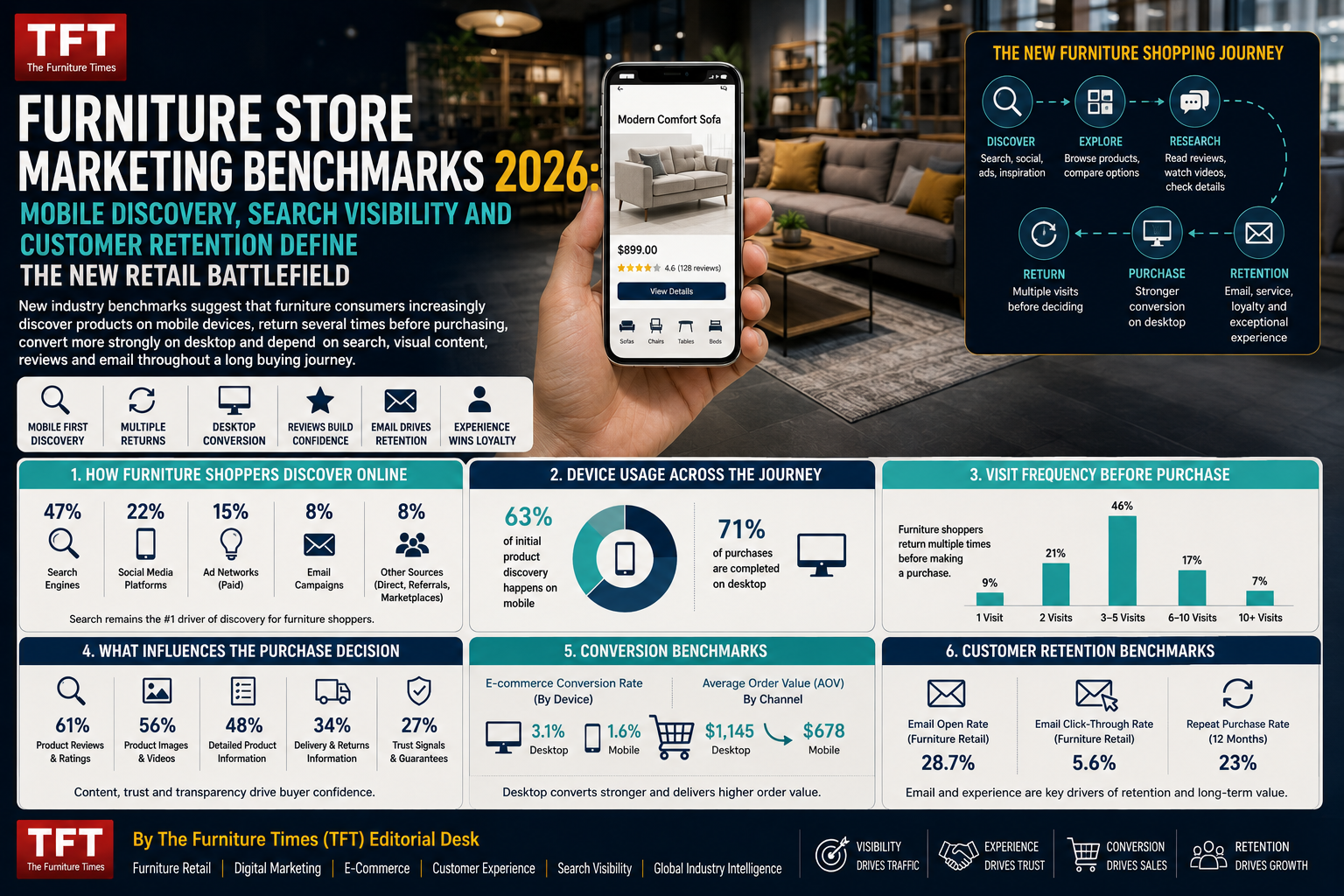
Furniture Store Marketing Benchmarks 2026
CUFinder’s 2026 furniture-store marketing benchmarks point to a multi-device retail market: mobile generates 72.5% of traffic, global website conversion averages 1.65%, organic search leads discovery and automated email remains a powerful recovery channel. TFT examines what the numbers mean for furniture retailers.

Your Competitors Are Getting Published. Why Aren’t You?
News coverage is no longer reserved for large corporations. Manufacturers, retailers, suppliers and artisans can use credible publishing to strengthen visibility, search authority, AI discovery, customer trust and sales. This TFT report explains why your competitors are getting published—and what you must do to catch up.
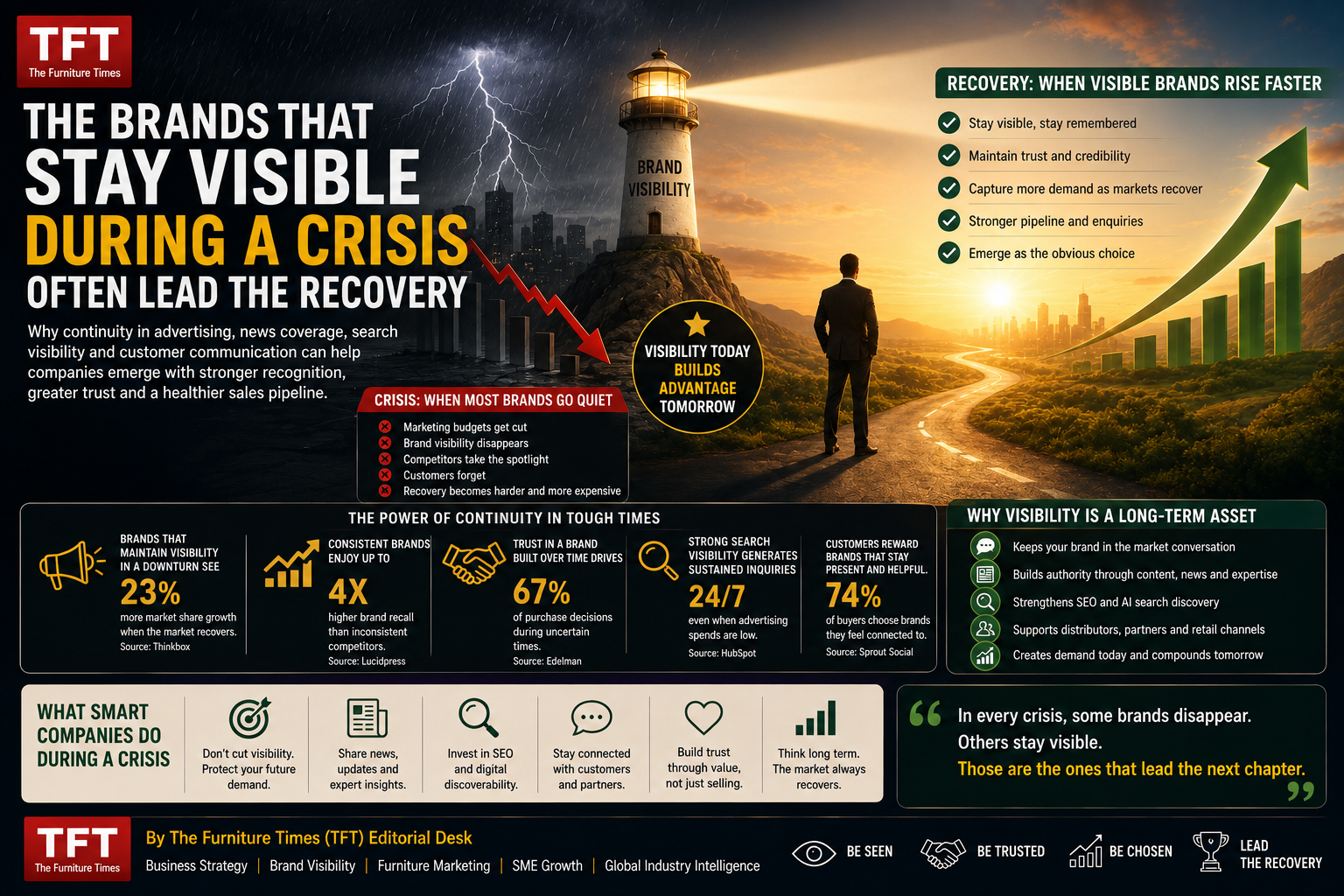
The Brands That Stay Visible During a Crisis Often Lead the Recovery
Economic uncertainty may reduce demand, but it does not stop customers from searching, comparing and forming opinions. This detailed TFT analysis explains why brands that maintain advertising, news coverage, search visibility and customer communication are often better positioned to lead the recovery.
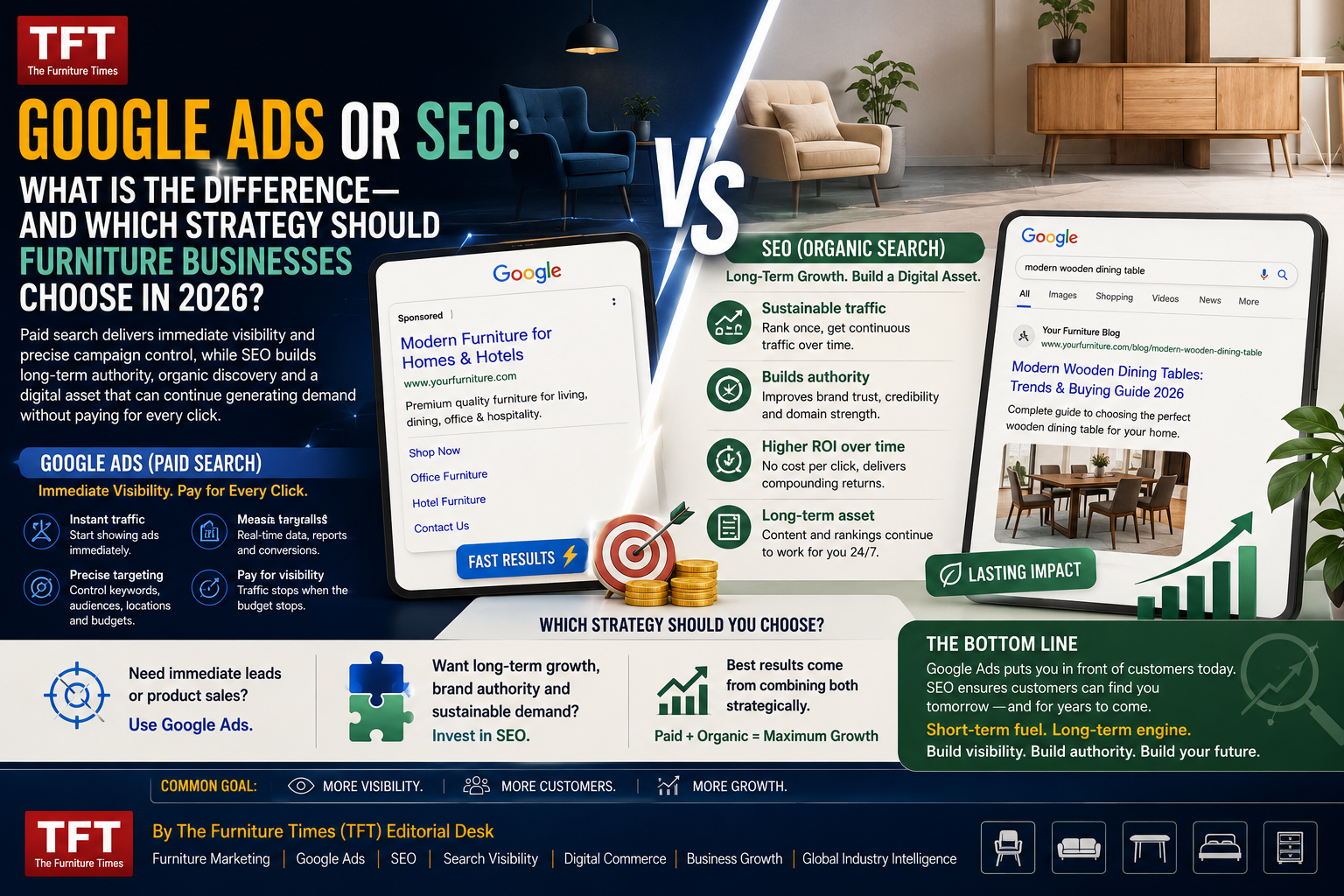
Google Ads or SEO: What Is the Difference
A detailed comparison of Google Ads and SEO for furniture manufacturers, retailers and suppliers, explaining speed, costs, targeting, sustainability, measurement, AI search and the advantages of using both channels together.