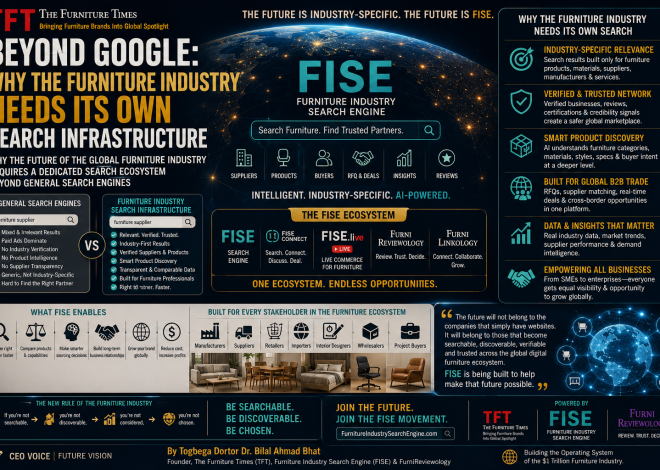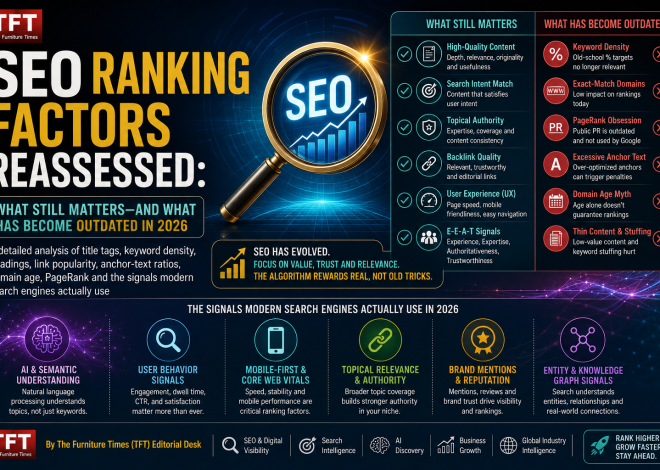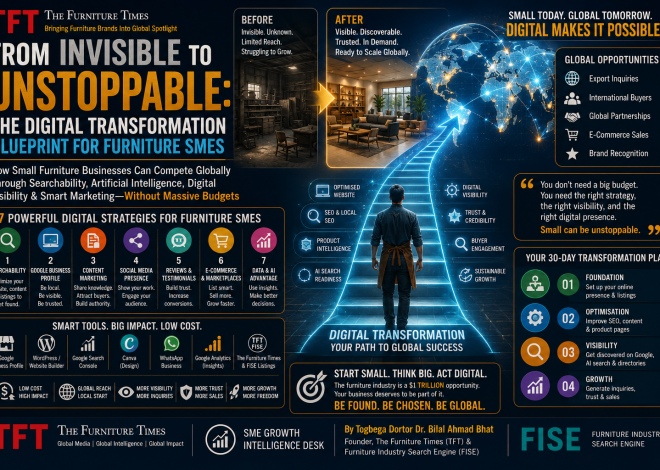
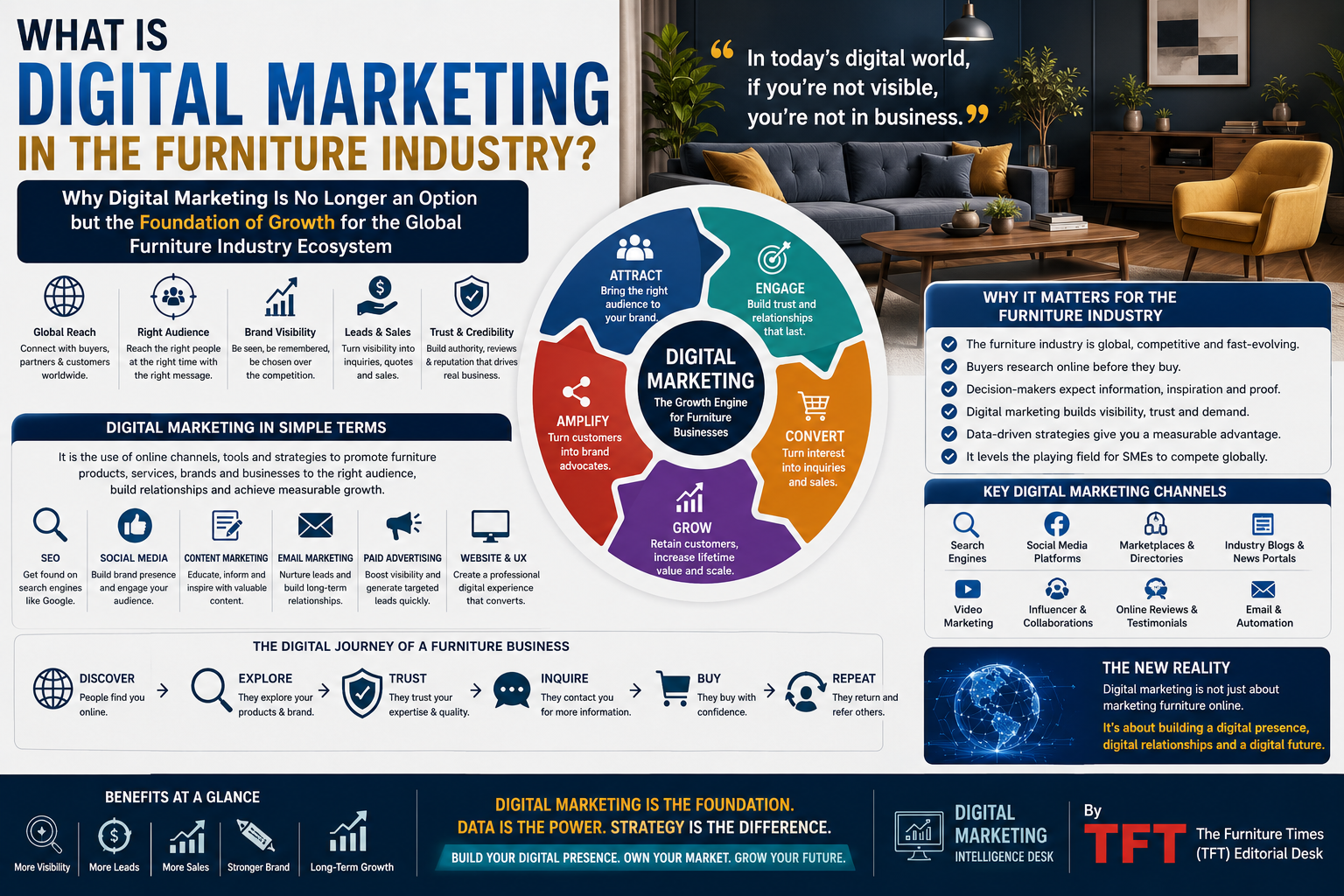
What Is Digital Marketing in the Furniture Industry?
Why Digital Marketing Is No Longer an Option but the Foundation of Growth for the Global Furniture Industry Ecosystem
Digital Marketing Intelligence Desk
By The Furniture Times (TFT) Editorial Desk
Executive Summary
The furniture industry has entered one of the most significant transformations in its history.
For decades, furniture businesses relied on:
- Physical showrooms
- Trade exhibitions
- Sales representatives
- Printed catalogues
- Newspaper advertisements
- Television commercials
- Word-of-mouth referrals
These traditional channels remain valuable, but they are no longer enough.
Today’s customers begin their buying journey differently.
They search on Google.
They ask Artificial Intelligence.
They watch videos.
They compare reviews.
They browse social media.
They visit websites.
They read buying guides.
They explore virtual showrooms.
By the time many customers contact a furniture company, they have already completed much of their research online.
This shift has transformed digital marketing from a promotional activity into a strategic business function.
According to The Furniture Times (TFT), digital marketing is no longer simply about attracting website visitors. It is about creating visibility, building trust, educating customers and making businesses discoverable in an increasingly AI-driven world.
Understanding Digital Marketing
Digital marketing is the process of promoting products, services and brands using digital technologies and online platforms to attract, engage and convert customers.
For the furniture industry, digital marketing includes every online activity that helps customers discover, evaluate and choose a furniture business.
It is no longer limited to advertising.
It encompasses education, storytelling, customer experience and long-term relationship building.
Why Digital Marketing Matters in the Furniture Industry
Furniture is a considered purchase.
Unlike everyday consumer goods, furniture buyers often spend days or weeks researching before making a decision.
Customers compare:
Materials.
Design.
Comfort.
Durability.
Price.
Warranty.
Delivery.
Installation.
Reviews.
Because the buying journey is longer, digital marketing becomes an essential tool for guiding customers through every stage of their decision-making process.
The Modern Furniture Customer Journey
A typical customer journey today looks like this:
A customer recognises a need.
↓
Searches Google or asks an AI assistant.
↓
Reads buying guides.
↓
Compares brands.
↓
Checks customer reviews.
↓
Visits company websites.
↓
Watches product videos.
↓
Requests quotations.
↓
Visits a showroom if needed.
↓
Makes a purchase.
Digital marketing influences every stage of this journey.
The Pillars of Digital Marketing in the Furniture Industry
Search Engine Optimization (SEO)
SEO helps furniture businesses appear in search results when customers search for:
Outdoor furniture.
Kitchen cabinets.
Hotel furniture suppliers.
Office furniture.
Dining tables.
Wardrobes.
SEO builds long-term visibility.
It allows businesses to be discovered naturally by customers.
Search Engine Advertising (SEA)
Paid advertising helps companies reach customers immediately.
Examples include:
Google Search Ads.
Google Shopping.
Display advertising.
Performance Max campaigns.
Remarketing.
Well-managed advertising accelerates growth while SEO builds long-term assets.
Content Marketing
Content is becoming one of the most powerful marketing tools.
Examples include:
Industry news.
Buying guides.
Furniture care tips.
Case studies.
Market reports.
Educational articles.
Videos.
Podcasts.
Content educates customers before they buy.
Knowledge creates trust.
Social Media Marketing
Social media enables businesses to showcase:
New products.
Completed projects.
Behind-the-scenes manufacturing.
Customer stories.
Design inspiration.
Industry events.
Rather than focusing only on selling, successful businesses use social media to build communities and relationships.
Video Marketing
Furniture is highly visual.
Videos help customers understand:
Materials.
Craftsmanship.
Manufacturing.
Assembly.
Installation.
Lifestyle applications.
Factory capabilities.
Video builds confidence faster than text alone.
Email Marketing
Email remains an effective way to nurture relationships.
Businesses can share:
New collections.
Industry updates.
Maintenance advice.
Promotions.
Educational content.
Repeat customers often become long-term advocates.
Local Digital Marketing
Many furniture purchases still happen locally.
Businesses should optimise:
Google Business Profile.
Maps.
Local SEO.
City landing pages.
Customer reviews.
Being highly visible in one city often becomes the foundation for national growth.
E-Commerce Marketing
Furniture e-commerce continues expanding worldwide.
Digital marketing supports online sales through:
Product optimisation.
Shopping feeds.
Conversion optimisation.
Customer reviews.
Fast checkout.
AI recommendations.
The digital showroom becomes as important as the physical showroom.
Artificial Intelligence Marketing
Artificial Intelligence is changing how businesses market themselves.
AI supports:
Content creation.
Customer service.
Product recommendations.
Translation.
Market analysis.
Personalisation.
Predictive analytics.
AI enhances efficiency rather than replacing human expertise.
Digital Marketing Is About Building Trust
Customers rarely buy furniture from businesses they do not trust.
Trust is built through:
Professional websites.
Authentic reviews.
Educational content.
Transparent pricing.
Project galleries.
Case studies.
Videos.
Consistent communication.
Trust converts interest into action.
Why Many Furniture Companies Struggle
Many businesses still believe digital marketing means:
Posting occasionally on social media.
Running advertisements.
Updating a website once a year.
Digital marketing is much broader.
It requires a strategy that connects visibility, education, reputation and customer experience.
Without that strategy, businesses often fail to achieve sustainable growth.
Digital Marketing Supports Every Type of Furniture Business
Whether a company is a:
Manufacturer.
Retailer.
Wholesaler.
Interior designer.
Architect.
Supplier.
Installer.
Furniture repair specialist.
Hospitality consultant.
Logistics provider.
Digital marketing increases opportunities.
Every participant benefits from greater discoverability.
The Role of Reviews
Customer reviews influence purchasing decisions.
Positive reviews improve:
Trust.
Search visibility.
Customer confidence.
Conversion rates.
Reputation management becomes an important part of digital marketing.
Why Storytelling Matters
Furniture is more than wood, fabric and metal.
It represents:
Comfort.
Family.
Work.
Creativity.
Hospitality.
Well-being.
Digital marketing should communicate these stories.
Customers remember stories longer than advertisements.
Measuring Success
Digital marketing should be measured using meaningful indicators.
Examples include:
Website traffic.
Qualified enquiries.
Conversion rates.
Search rankings.
Customer reviews.
Repeat purchases.
Lead quality.
Brand awareness.
The goal is not simply more visitors.
The goal is better business outcomes.
Common Mistakes
Many furniture businesses make avoidable mistakes.
Examples include:
Ignoring SEO.
Outdated websites.
Poor product descriptions.
Slow loading speeds.
No educational content.
No reviews.
Weak photography.
Inconsistent branding.
Lack of long-term planning.
These issues reduce visibility and customer confidence.
The Future of Digital Marketing
The next decade will be shaped by:
Artificial Intelligence.
Voice search.
Visual search.
Augmented Reality.
Virtual showrooms.
Personalised recommendations.
Conversational commerce.
Industry-specific search platforms.
Businesses that prepare today will be better positioned for tomorrow.
The Furniture Times Perspective
The furniture industry is more connected than ever before.
Digital marketing is no longer only about promoting products.
It is about creating an ecosystem where knowledge, visibility, discoverability and trust work together.
This is why digital transformation should be viewed as a strategic investment rather than a marketing expense.
Final Verdict
Digital marketing has fundamentally changed the furniture industry.
It has transformed how customers discover businesses.
How they compare products.
How they evaluate trust.
How they make purchasing decisions.
The companies that invest in digital marketing today are investing in long-term competitiveness.
Because the future furniture industry will not be led only by companies with the largest factories or the biggest showrooms.
It will be led by businesses that customers can easily find…
Clearly understand…
Confidently trust…
And willingly recommend.
Digital marketing is no longer simply about selling furniture.
It is about building relationships, educating the market and creating opportunities that extend far beyond the showroom.
By The Furniture Times (TFT) Editorial Desk
Digital Marketing Intelligence Desk | July 2026
“TFT tells their story. FISE helps the world find them.”
The furniture industry ecosystem is a $1 Trillion Dollar Industry.