
#FurnitureLogistics

Quarterly Global Furniture Industry Review
China’s manufacturing base remains powerful, India gains momentum, Vietnam faces slower exports, Australian furniture retail feels the housing downturn, and contract, hospitality and modular furniture emerge as leading opportunities.

Monthly Global Furniture Industry Report
Global trade is improving, but furniture businesses face weak housing activity, volatile freight, new tariffs and expanding traceability requirements. TFT’s monthly report explains the risks, opportunities and actions required across materials, manufacturing and retail.

Global Furniture Industry News Roundup
Global trade is improving, but furniture businesses still face tariffs, shipping risks, cautious consumers and rapidly expanding compliance requirements. The Furniture Times identifies the developments manufacturers, retailers, suppliers and service providers cannot ignore.

Middle East Furniture Industry News: Projects, Hospitality and Regional Risk
Saudi Arabia, the UAE, Qatar, Oman, Bahrain and Kuwait continue investing in hotels, branded residences, tourism destinations and mixed-use developments. This TFT regional report examines where furniture demand is emerging—and how conflict, Strait of Hormuz disruption, Red Sea risk, delayed projects and payment pressure are reshaping the market.

Global Furniture Industry Health Check: Is the Market Growing, Slowing or Restructuring?
Is the global furniture industry growing, slowing or restructuring? TFT assesses housing demand, consumer spending, factory capacity, freight rates, retail performance and business confidence.

Global Furniture Industry Faces a Conflict-Economy Test as Wars Disrupt Energy
Qatar’s Emir has outlined the economic damage caused by the Iran conflict while reaffirming the country’s investment and mediation ambitions. TFT examines how worldwide conflicts are affecting furniture manufacturing, freight, materials, retail, hospitality projects, cash flow and responsible sourcing.
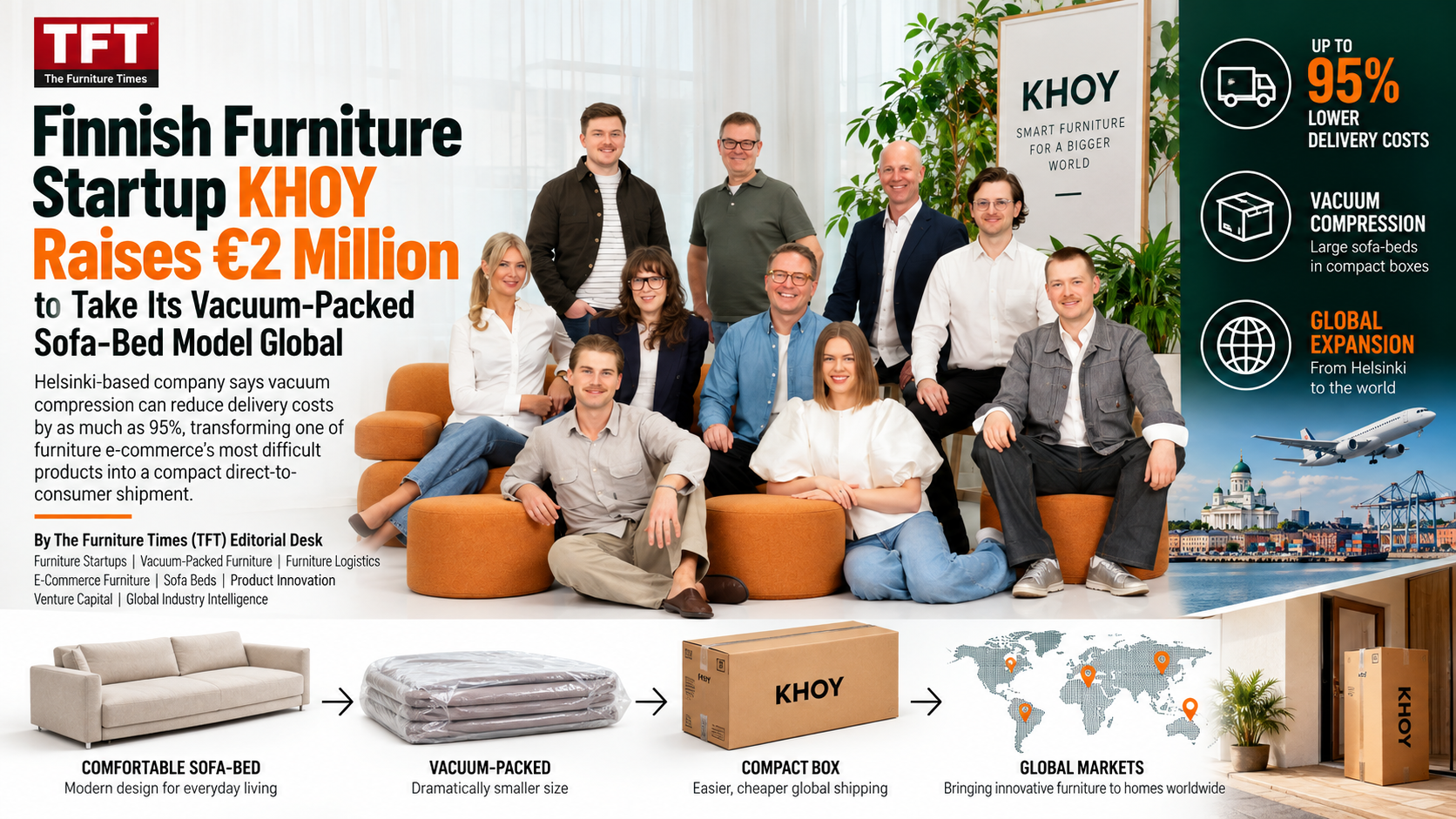
Finnish Furniture Startup KHOY Raises €2 Million to Take Its Vacuum-Packed Sofa-Bed Model Global
Helsinki-based KHOY Company has secured €2 million from a round led by Virta Equity, with Innovestor and angel investors participating. The direct-to-consumer company says vacuum compression can reduce delivery costs by as much as 95%. After reporting €4.3 million in 2025 revenue and generating more than 80% of sales through exports, KHOY plans to expand across Europe, Switzerland and the UK while accelerating its entry into the United States.

World Furniture Industry Health Check: Conflict, Energy and Shipping Risks Reshape the Global Market
TFT’s October 2026 global furniture-industry health check finds continuing demand and active manufacturing alongside severe geopolitical risk. Crude flows through the Strait of Hormuz have recovered, but tanker attacks, refinery disruption, diesel scarcity, record intra-Asian freight and renewed Red Sea and Black Sea insecurity are keeping costs high and delivery schedules uncertain.

From Empty Apartment to Guest-Ready Property: The Complete Furnishing Economy
An empty apartment becomes a bookable short-term rental only after designers, furniture manufacturers, procurement specialists, installers, appliance suppliers, cleaners, photographers, technology providers and property managers complete a highly coordinated process. This report maps the complete furnishing economy behind the journey from property handover to first booking.
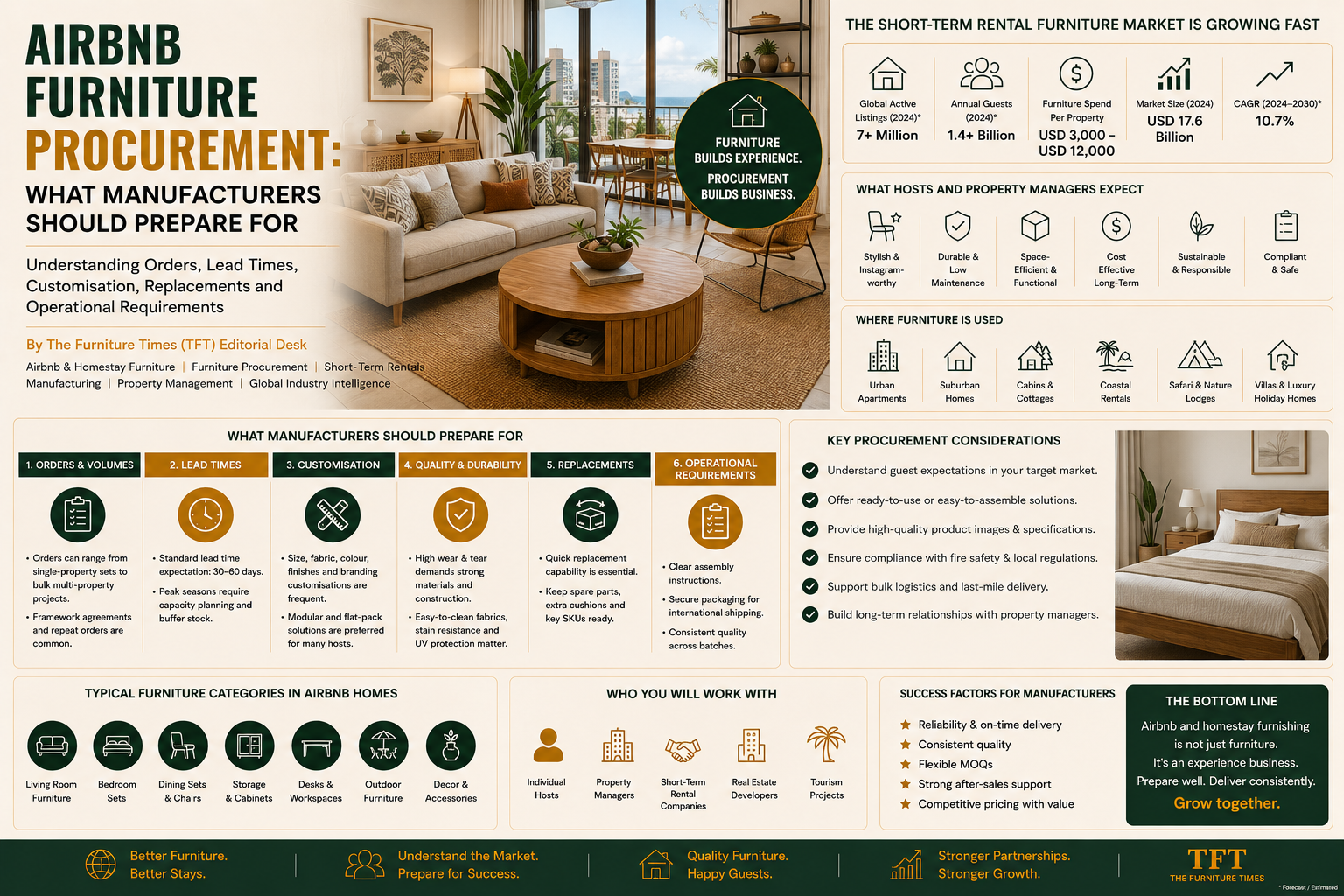
Airbnb Furniture Procurement: What Manufacturers Should Prepare For
Short-term-rental furniture orders often fall between residential retail and large hotel contracts. Manufacturers that offer complete property packages, flexible minimums, realistic lead times, spare parts, product continuity and rapid replacement can build recurring relationships with hosts, developers and professional property managers.