
Middle East furniture market
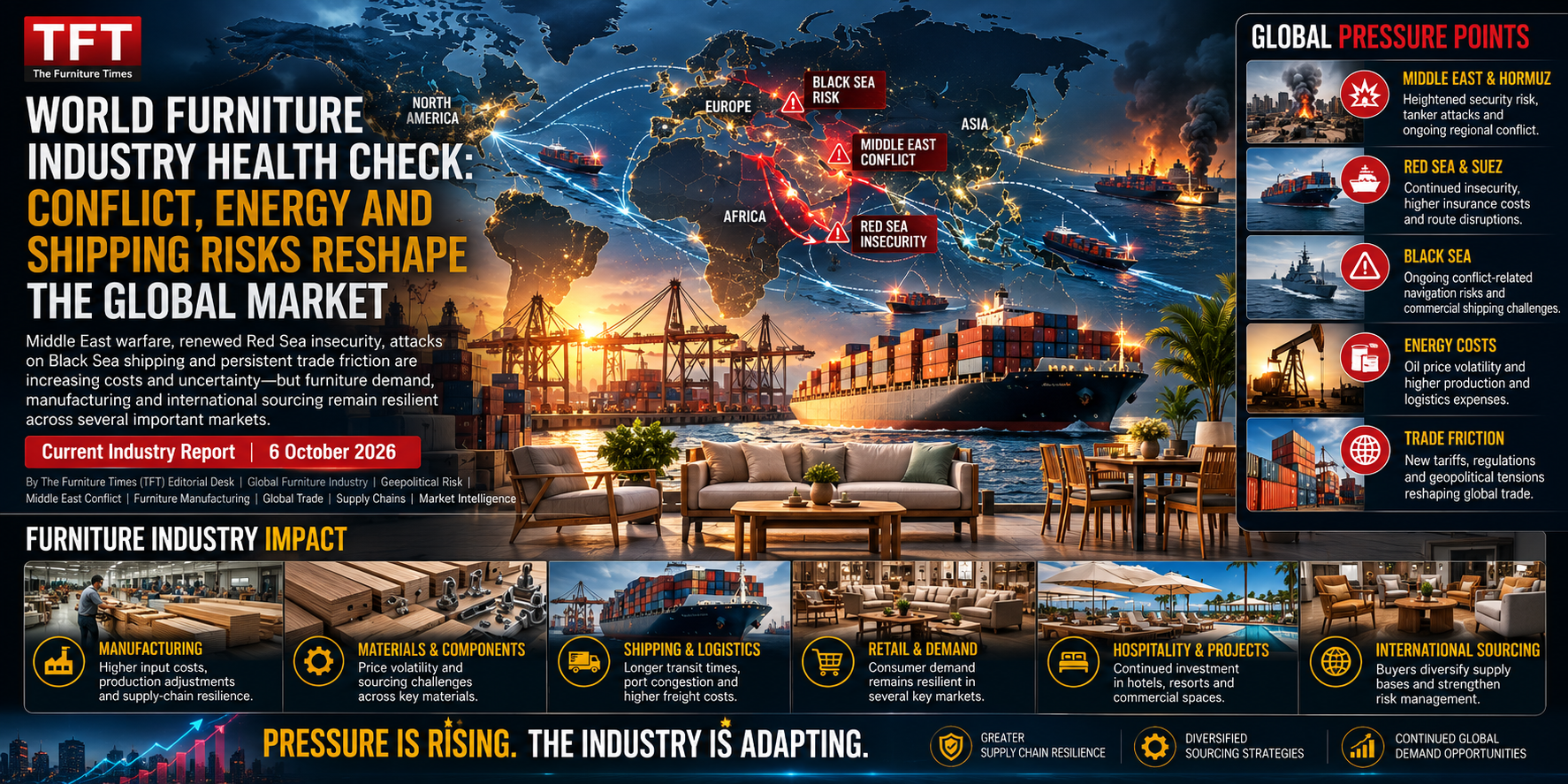
World Furniture Industry Health Check: Conflict, Energy and Shipping Risks Reshape the Global Market
TFT’s October 2026 global furniture-industry health check finds continuing demand and active manufacturing alongside severe geopolitical risk. Crude flows through the Strait of Hormuz have recovered, but tanker attacks, refinery disruption, diesel scarcity, record intra-Asian freight and renewed Red Sea and Black Sea insecurity are keeping costs high and delivery schedules uncertain.
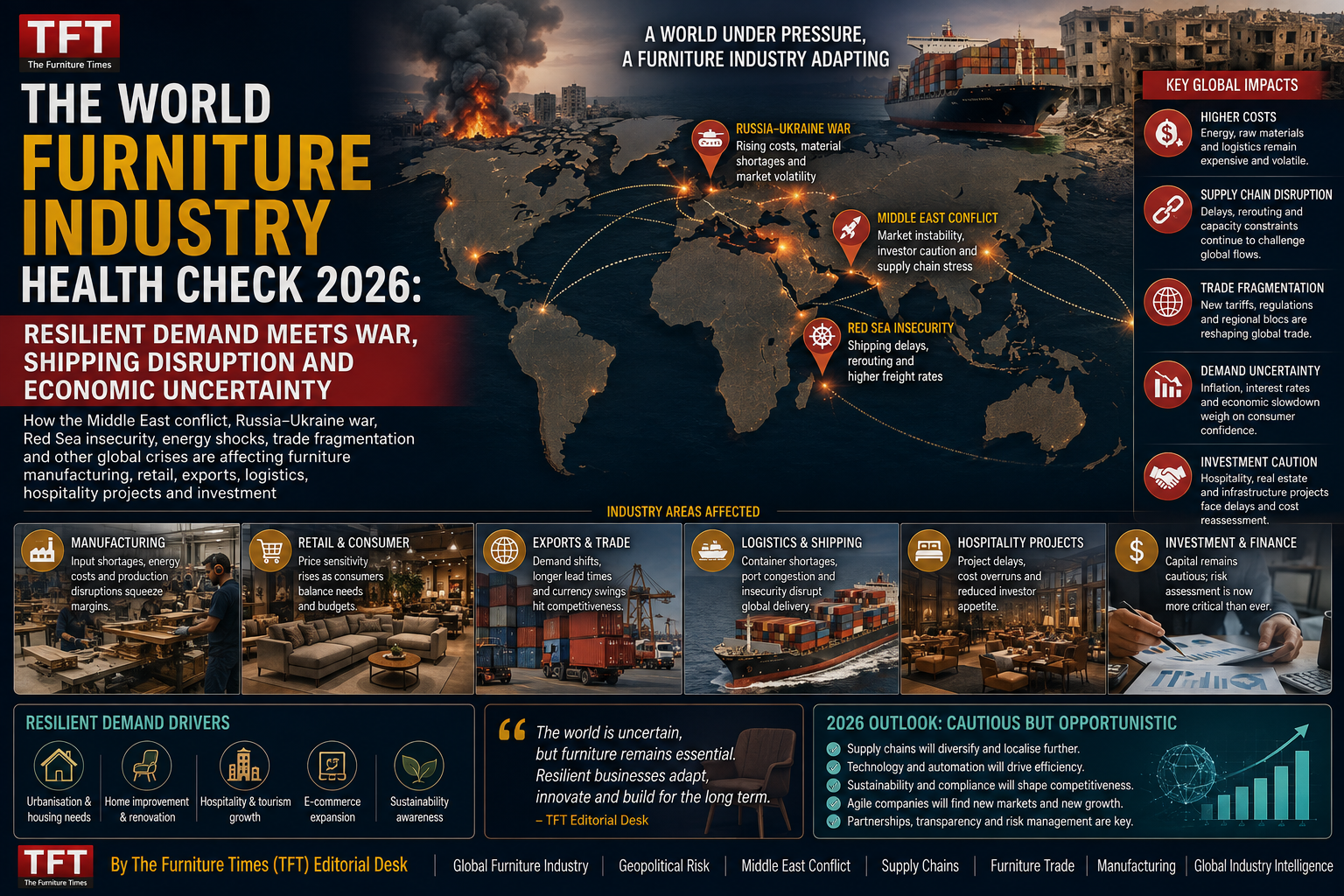
The World Furniture Industry Health Check 2026
TFT’s 2026 global furniture-industry health check finds a sector that is resilient but increasingly fragile. Demand continues across residential, hospitality, office and outdoor markets, yet war, energy inflation, shipping disruption, trade fragmentation and prolonged working-capital cycles are creating sharply different outcomes across regions and businesses.
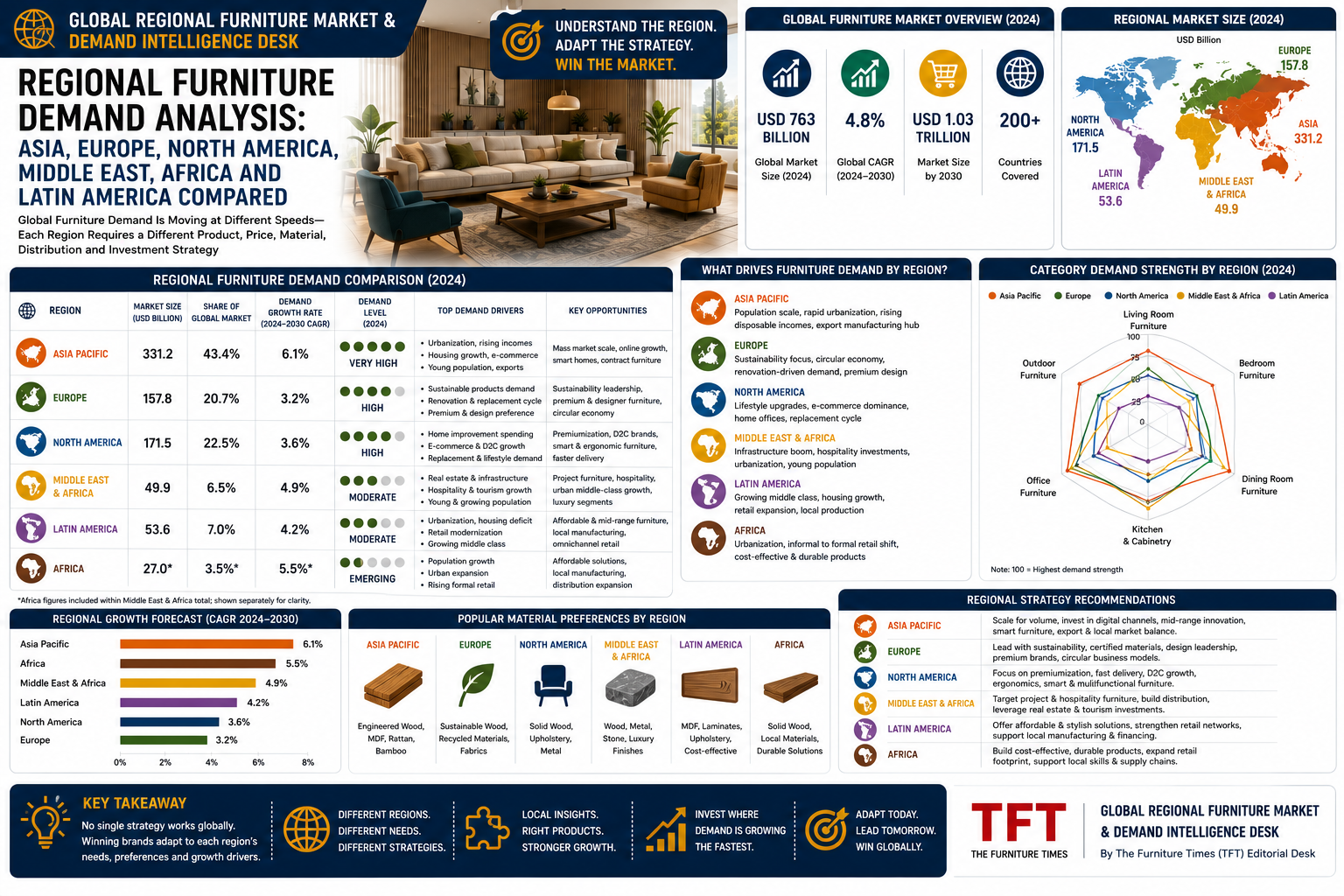
Regional Furniture Demand Analysis: Asia, Europe, North America, Middle East, Africa and Latin America Compared
Asia-Pacific leads furniture scale and manufacturing, North America leads purchasing power and imports, Europe shapes design and sustainability, the Middle East drives premium projects, Africa offers long-term household growth, and Latin America combines urban demand with regional production.