
#FurnitureSupplyChain
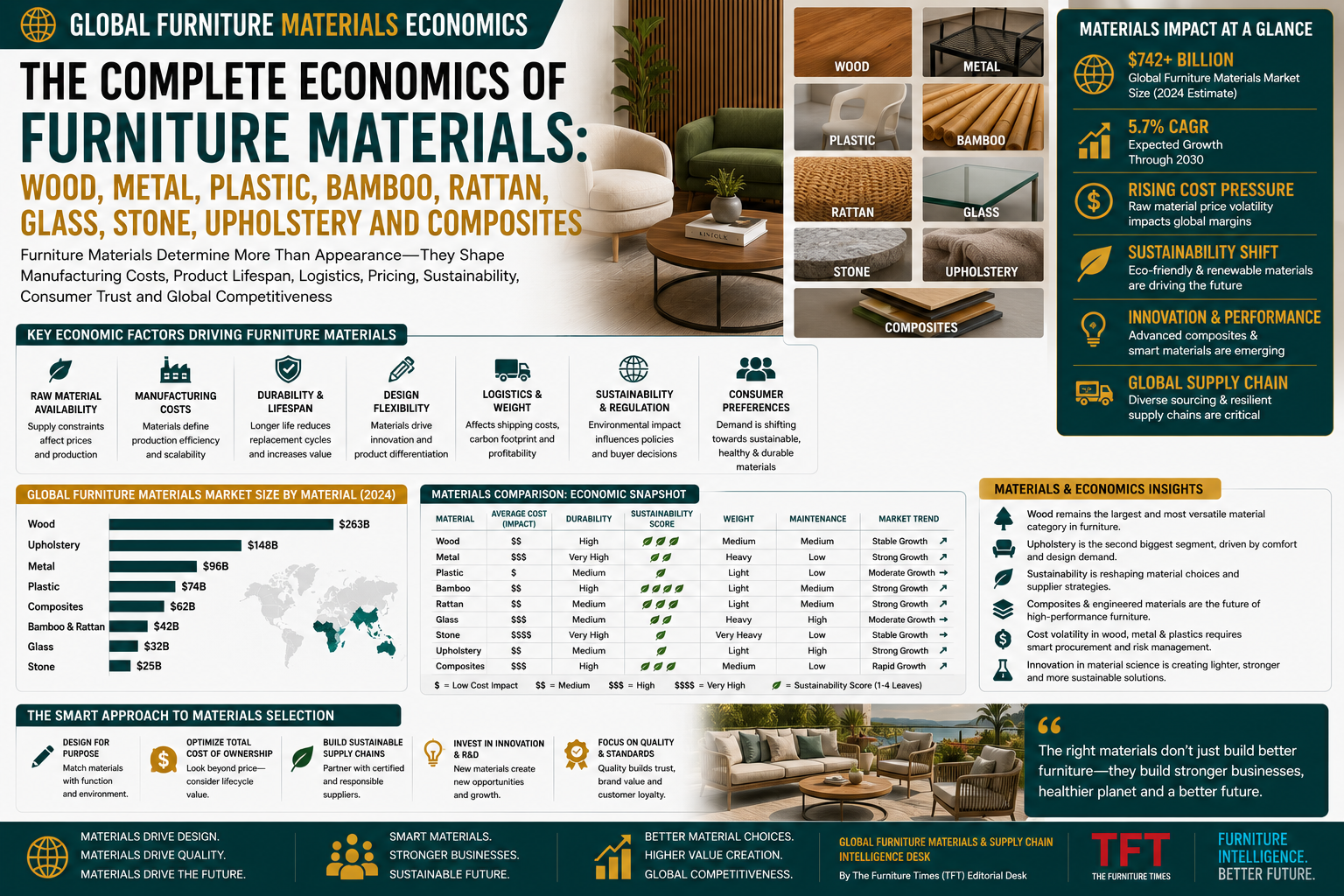
The Complete Economics of Furniture Materials: Wood, Metal, Plastic, Bamboo, Rattan, Glass, Stone, Upholstery and Composites
Furniture material choices determine far more than appearance. This comprehensive global report compares the economics of wood, metal, plastic, bamboo, rattan, glass, stone, upholstery and composite materials across sourcing, manufacturing, labour, logistics, durability, repairability and future circular-economy requirements.

The World Furniture Industry Health Check 2026
TFT’s 2026 global furniture-industry health check finds a sector that is resilient but increasingly fragile. Demand continues across residential, hospitality, office and outdoor markets, yet war, energy inflation, shipping disruption, trade fragmentation and prolonged working-capital cycles are creating sharply different outcomes across regions and businesses.
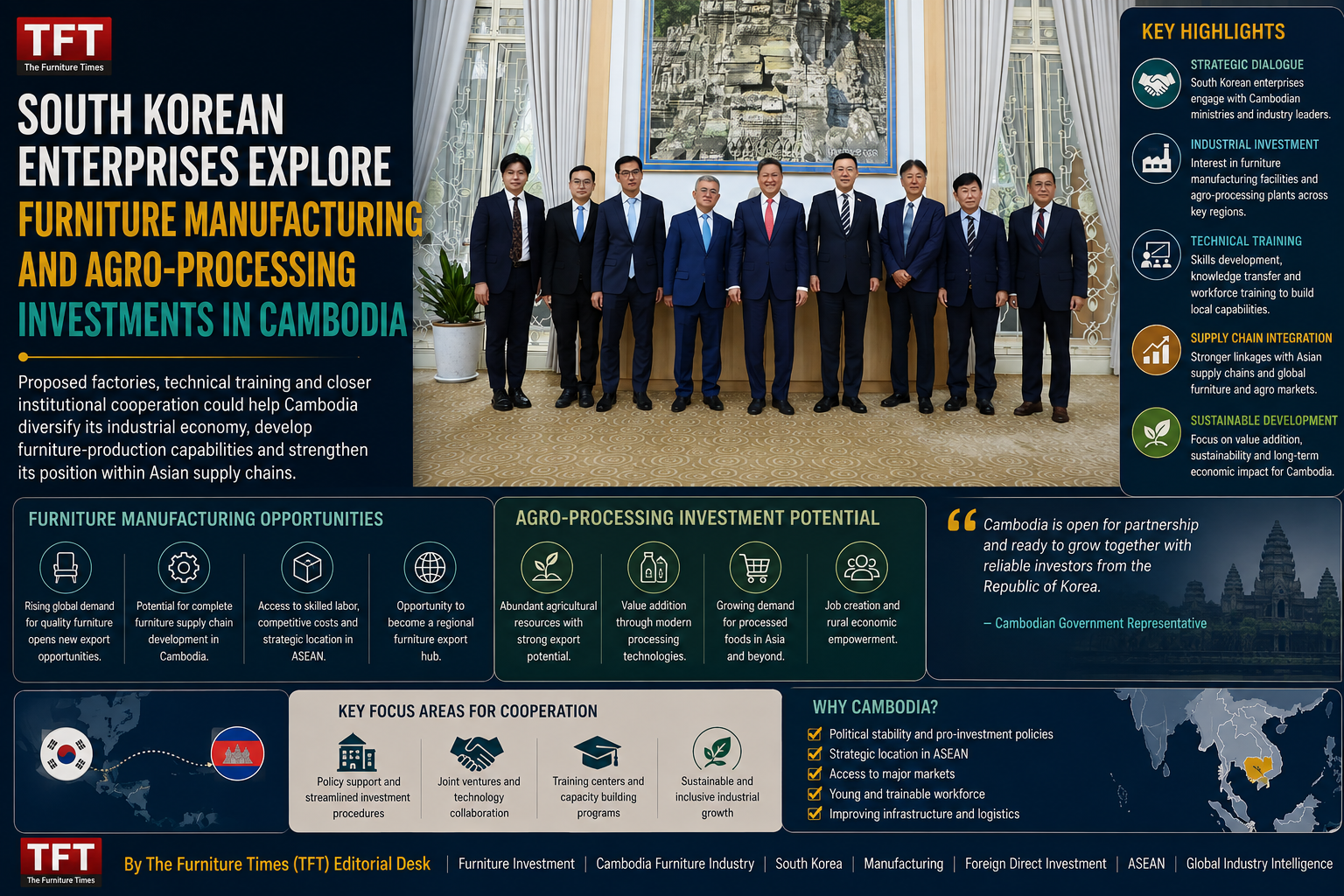
South Korean Enterprises Explore Furniture Manufacturing and Agro-Processing Investments in Cambodia
Discussions between Cambodia’s investment authorities and the Incheon Chamber of Commerce and Industry have placed furniture manufacturing among the sectors being examined by South Korean enterprises. A proposed technical training centre could help prepare Cambodian workers, but the opportunity will depend on confirmed projects, responsible sourcing, quality systems, logistics and long-term skills transfer.
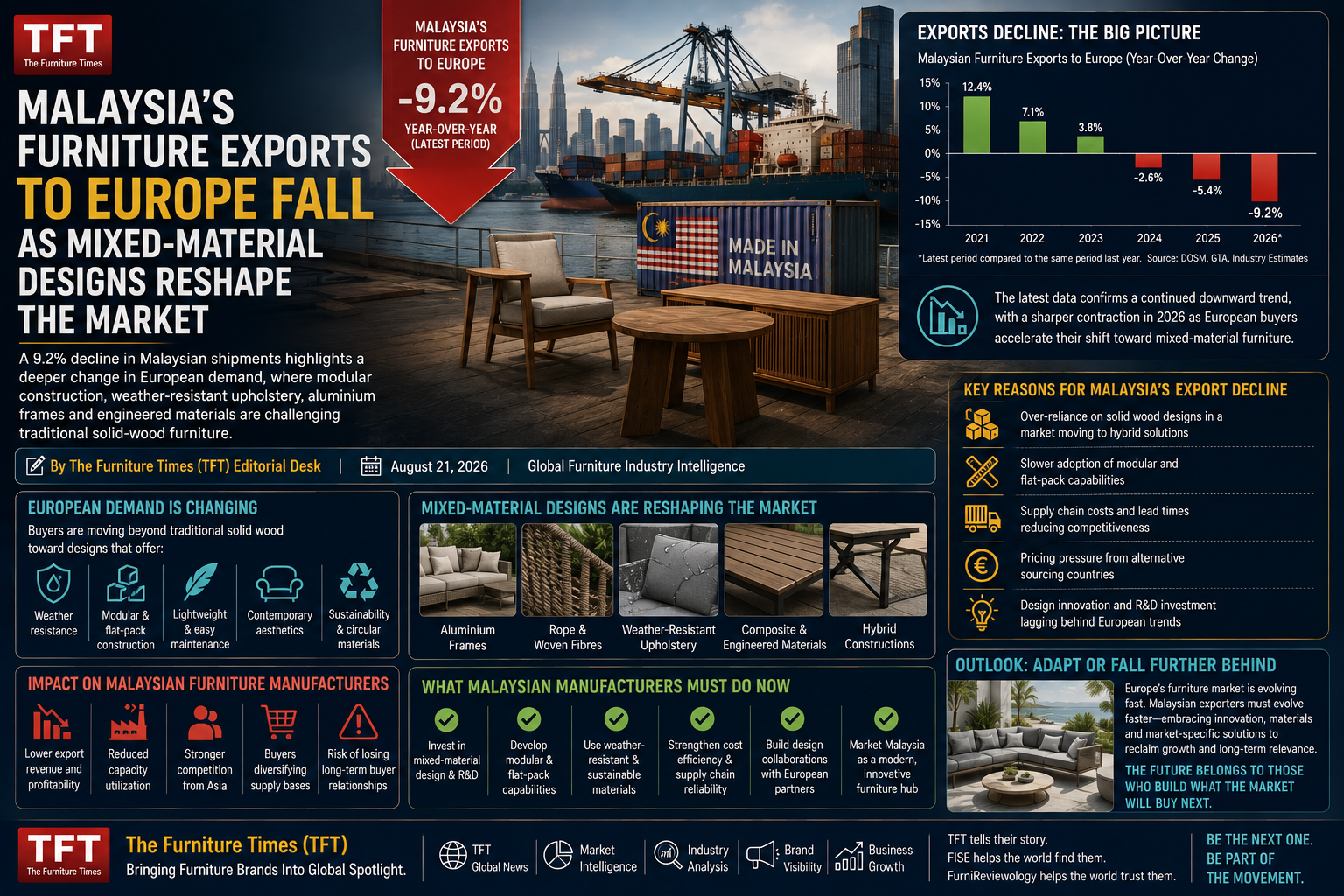
Malaysia’s Furniture Exports to Europe Fall as Mixed-Material Designs Reshape the Market
Malaysia’s tropical wooden furniture shipments to Europe fell 9.2% during the first four months of 2026. The decline reveals a wider transformation as European buyers increasingly seek modular, lightweight and mixed-material furniture combining wood with aluminium, upholstery, synthetic fibres and engineered composites.
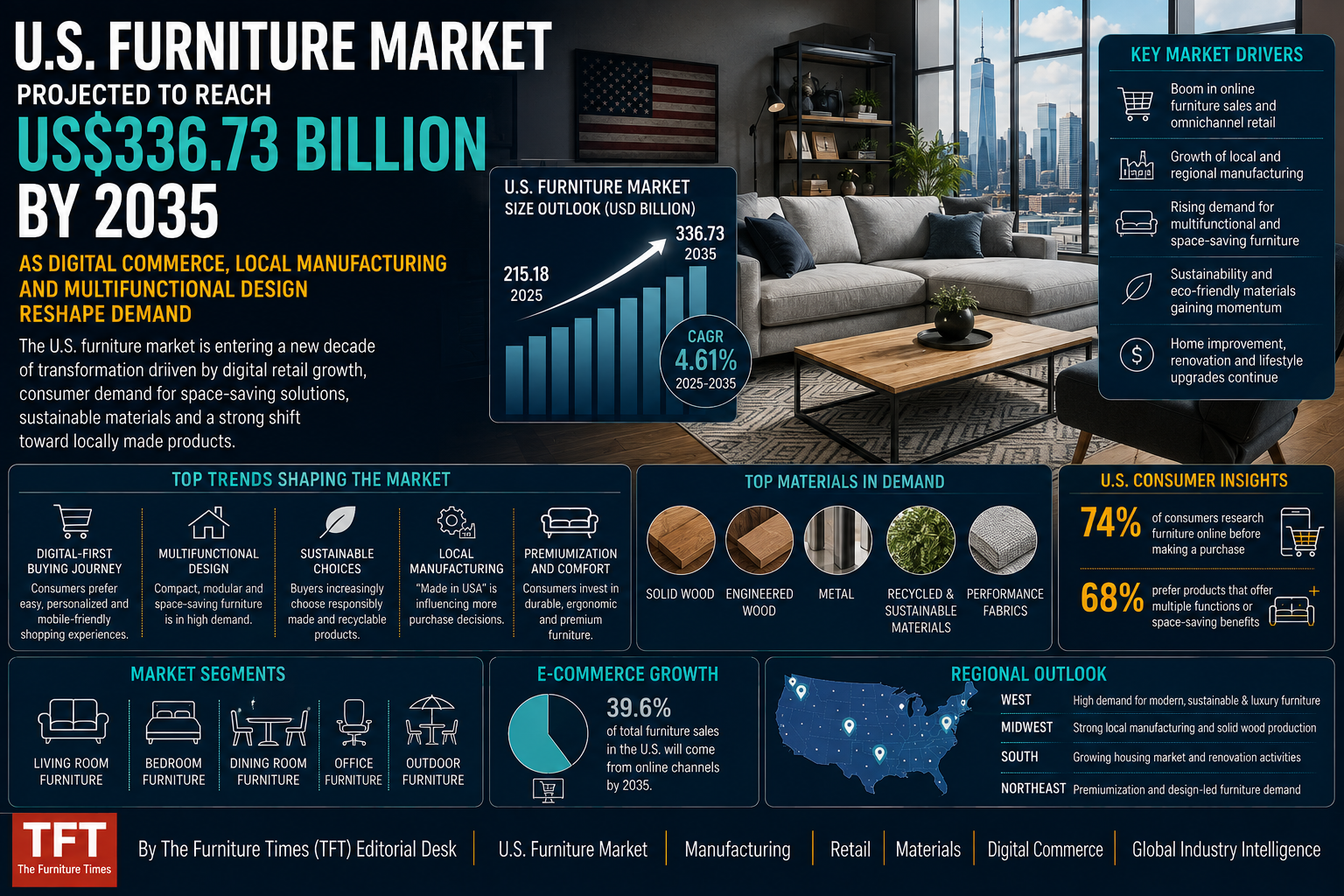
U.S. Furniture Market Projected to Reach US$336.73 Billion by 2035
A new Custom Market Insights report forecasts that the U.S. furniture market could reach US$336.73 billion by 2035. Bedroom furniture, wood products and residential demand currently lead, while storage furniture, plastic products and commercial applications are expected to grow faster.
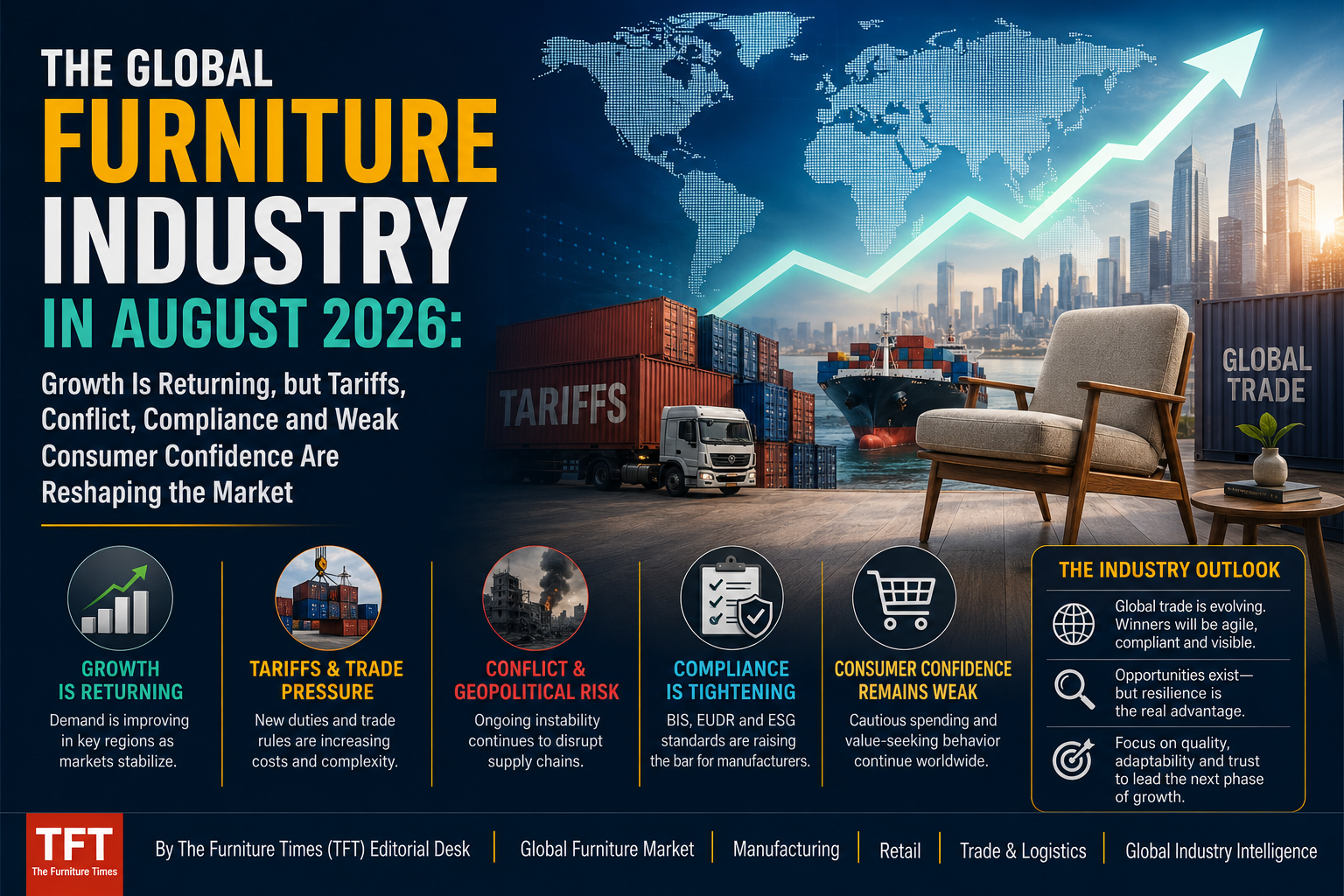
The Global Furniture Industry in August 2026
This August 2026 global furniture-industry report examines current demand, housing, retail, manufacturing, tariffs, Middle East shipping disruption, BIS certification, EUDR preparation, AI, sustainability and the strategic outlook for SMEs across major world markets.

The Furniture Insurance Economy: Who Pays When Furniture Fails?
The furniture industry talks constantly about design, manufacturing, materials, retail and market growth—but rarely about who pays when something goes wrong. The Furniture Times examines the hidden furniture insurance economy and the complex network of manufacturers, suppliers, logistics companies, installers, retailers, insurers and customers sharing billions of dollars in potential risk.

Global Drivers Analysis: How the Furniture Logistics Market Is Rapidly Evolving
The global furniture logistics market is projected to grow from US$115.27 billion in 2025 to US$155.44 billion by 2030 as e-commerce, final-mile delivery, smart warehousing and reverse logistics reshape the furniture supply chain.
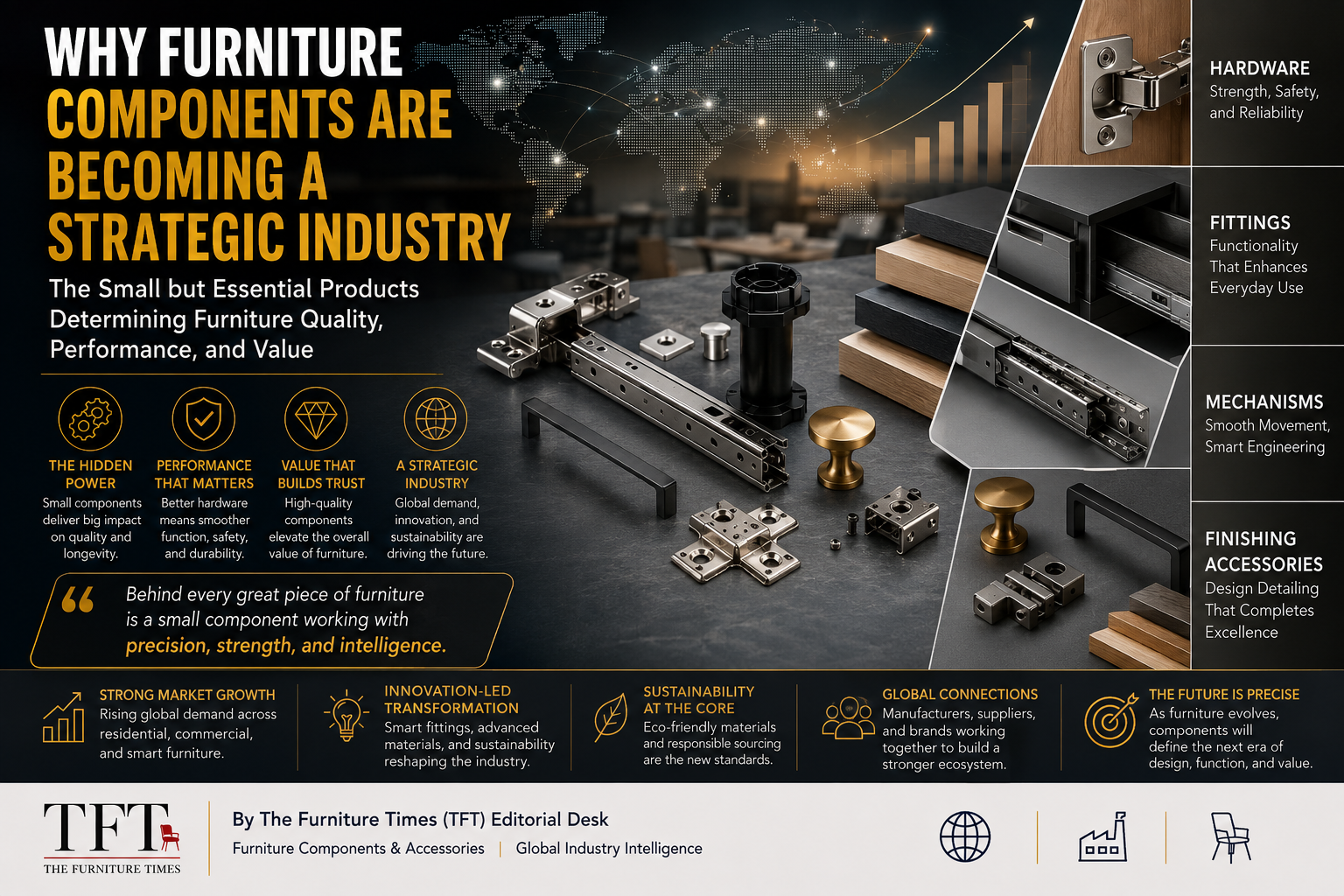
Why Furniture Components Are Becoming a Strategic Industry
Furniture components and accessories are evolving from basic purchasing items into a strategic global industry. These small but essential products influence manufacturing efficiency, product quality, smart functionality, sustainability, supply-chain resilience, repairability, customer satisfaction, and long-term brand value.
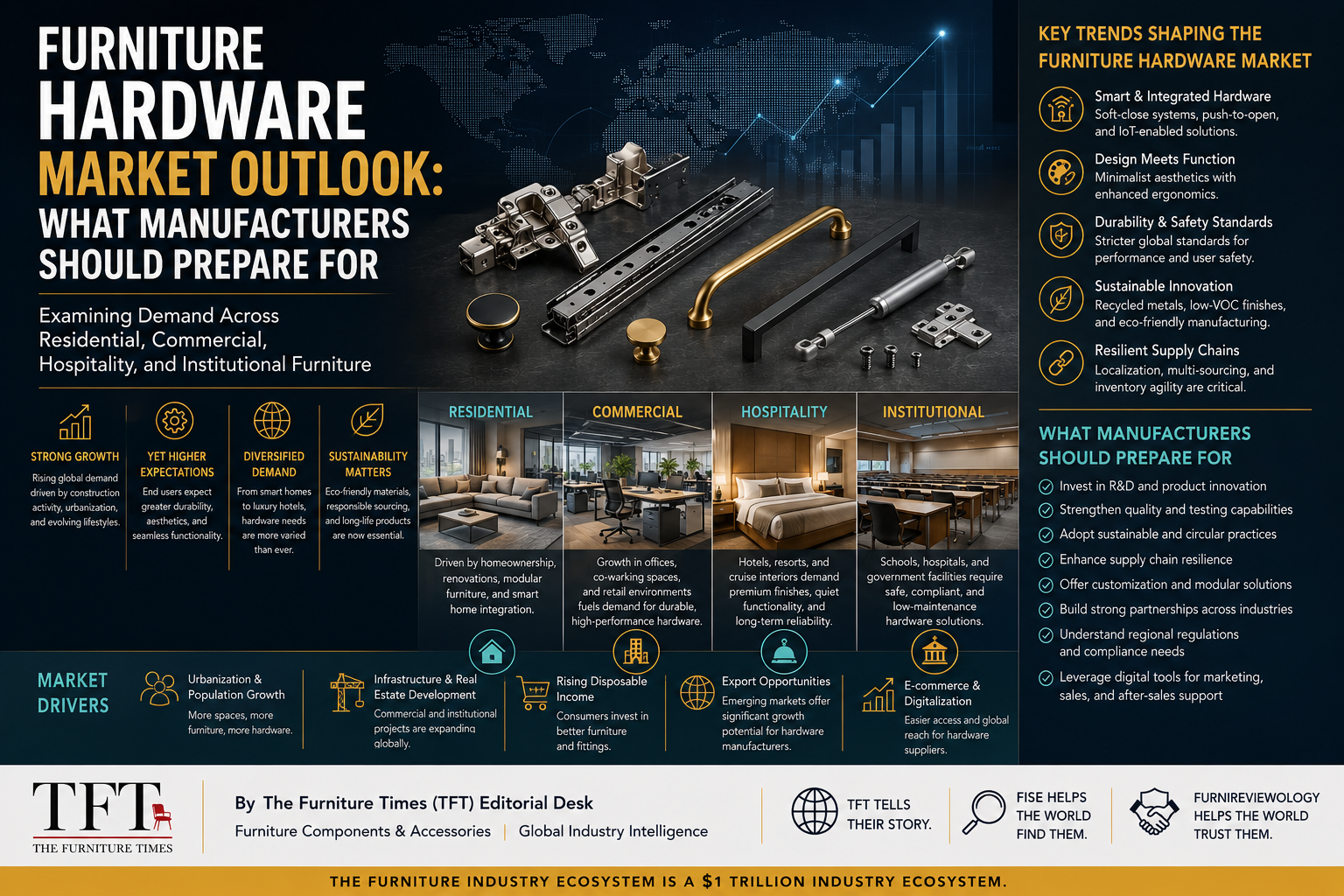
Furniture Hardware Market Outlook
The furniture hardware market is entering a strategic transformation. Manufacturers must prepare for stronger demand for soft-close systems, modular fittings, ergonomic mechanisms, smart components, hospitality-grade hardware, institutional compliance, replacement parts, circular design, and digitally documented supply chains.