
Furniture retail trends
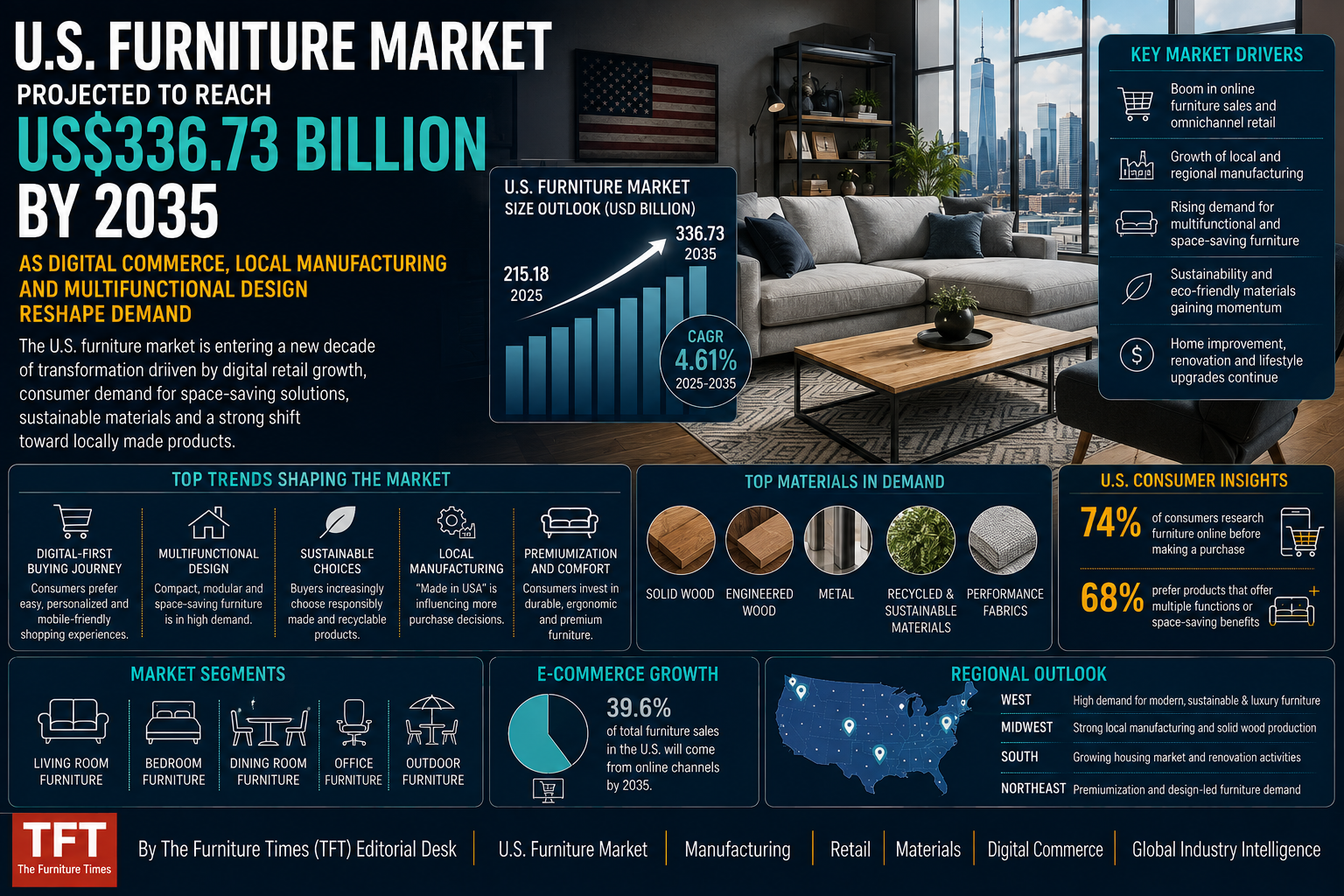
U.S. Furniture Market Projected to Reach US$336.73 Billion by 2035
A new Custom Market Insights report forecasts that the U.S. furniture market could reach US$336.73 billion by 2035. Bedroom furniture, wood products and residential demand currently lead, while storage furniture, plastic products and commercial applications are expected to grow faster.
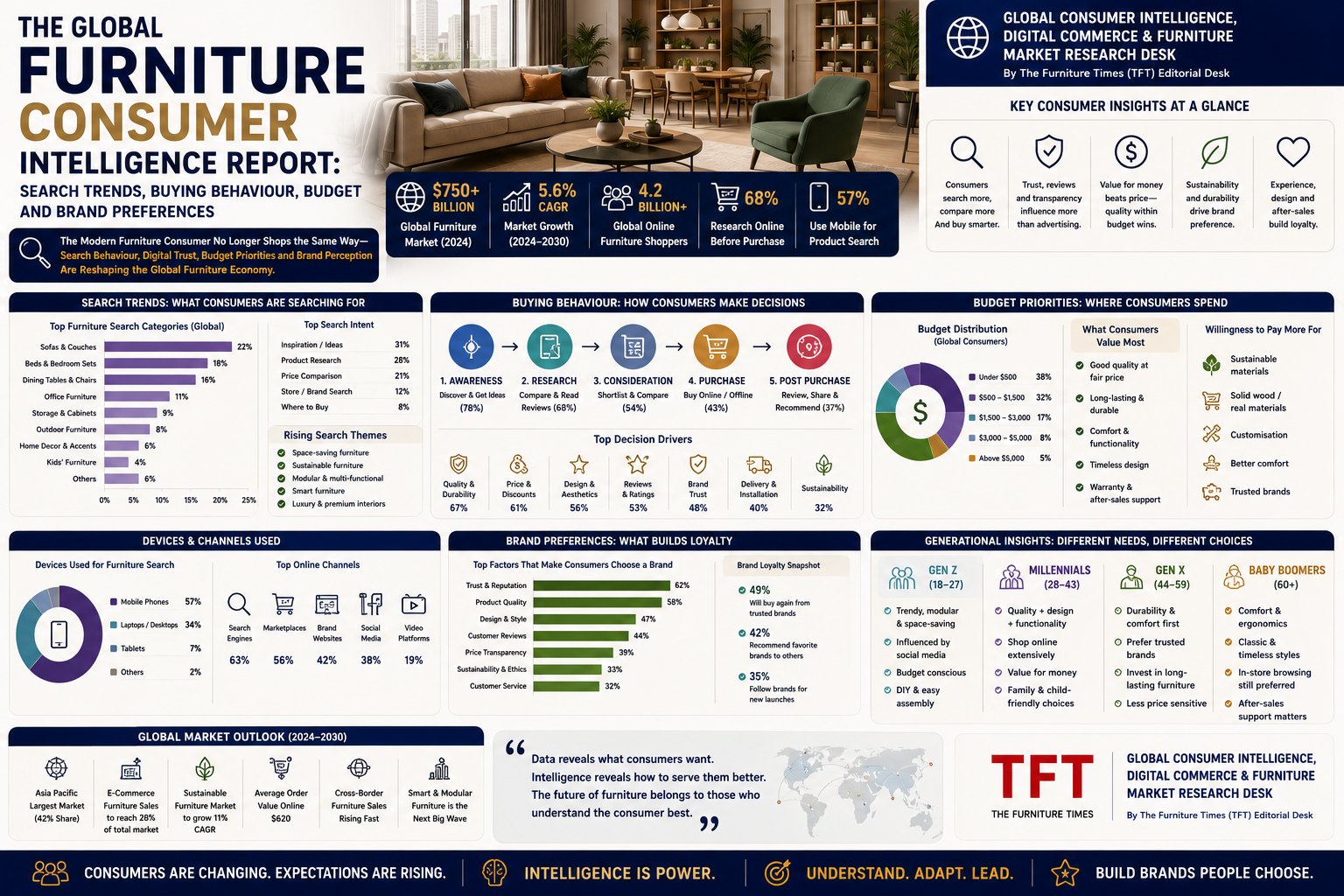
The Global Furniture Consumer Intelligence Report: Search Trends, Buying Behaviour, Budget and Brand Preferences
Today’s furniture consumers research extensively before making a purchase. This report examines global search trends, buying journeys, spending patterns, digital trust, sustainability, reviews, AI search and evolving brand preferences across residential and commercial markets.
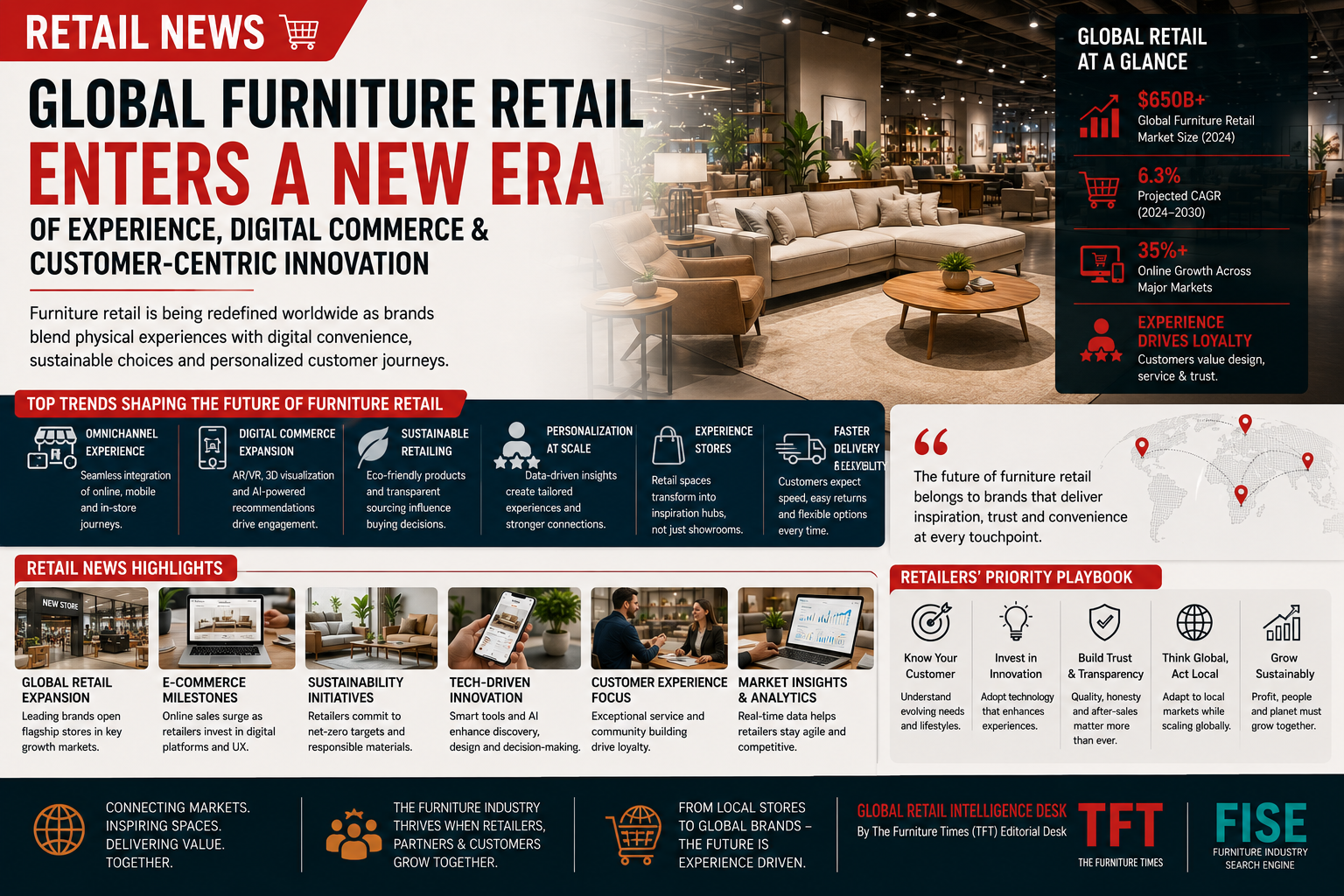
Global Furniture Retail Enters a New Era of Experience, Digital Commerce & Customer-Centric Innovation
Explore the latest developments in global furniture retail, including omnichannel commerce, AI-powered shopping, sustainability, customer experience, e-commerce growth and the future of furniture showrooms. Recent industry developments show retailers continuing to rebalance physical stores with stronger digital capabilities.
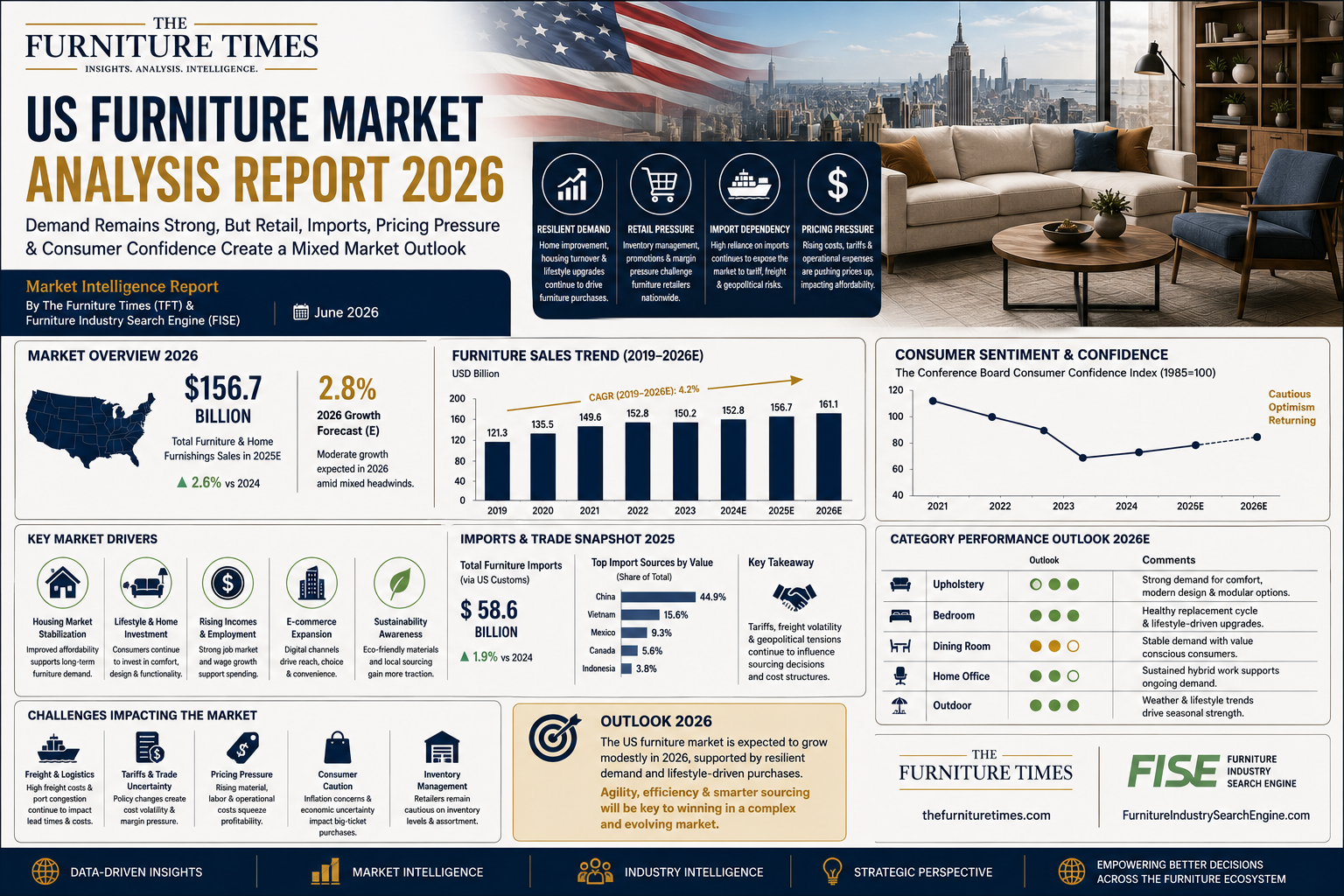
US Furniture Market Analysis Report 2026
The United States remains the world’s largest furniture market, valued at US$257.2 billion, but the outlook for 2026 is increasingly complex. While consumer demand, domestic production, and housing activity continue to support growth, rising producer costs, weak consumer confidence, and heavy reliance on imports are creating new challenges across the furniture ecosystem. This comprehensive TFT & FISE Market Intelligence Report examines the key trends, opportunities, risks, and strategic implications shaping the future of the US furniture industry.
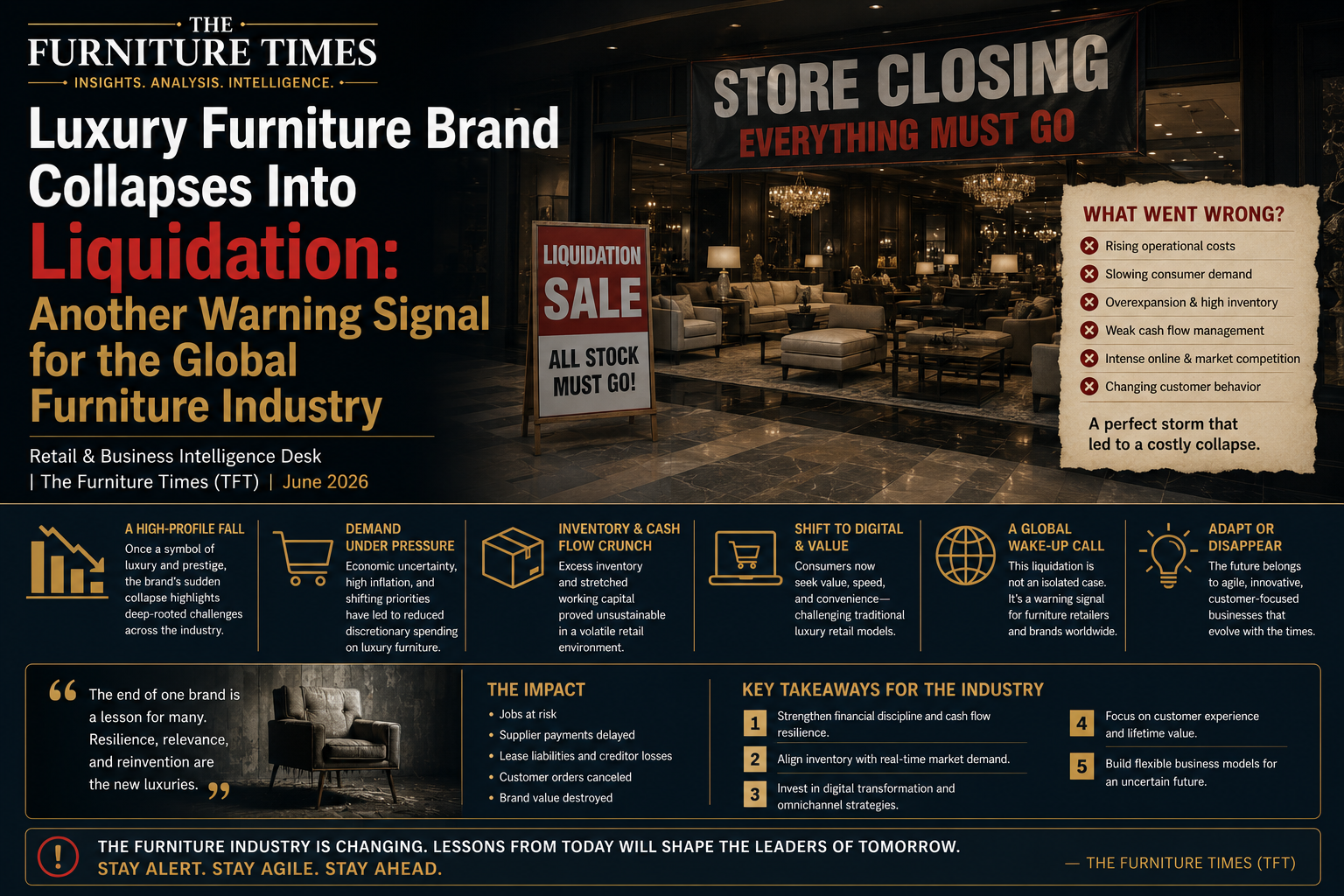
UK Luxury Furniture Brand Pure White Lines Collapses Into Liquidation Owing More Than £1.4 Million
Award-winning British luxury furniture company Pure White Lines has entered liquidation after 14 years in business. The collapse reflects broader pressures impacting furniture retailers globally, including rising costs, changing consumer behaviour, and increasing competition in the digital age.
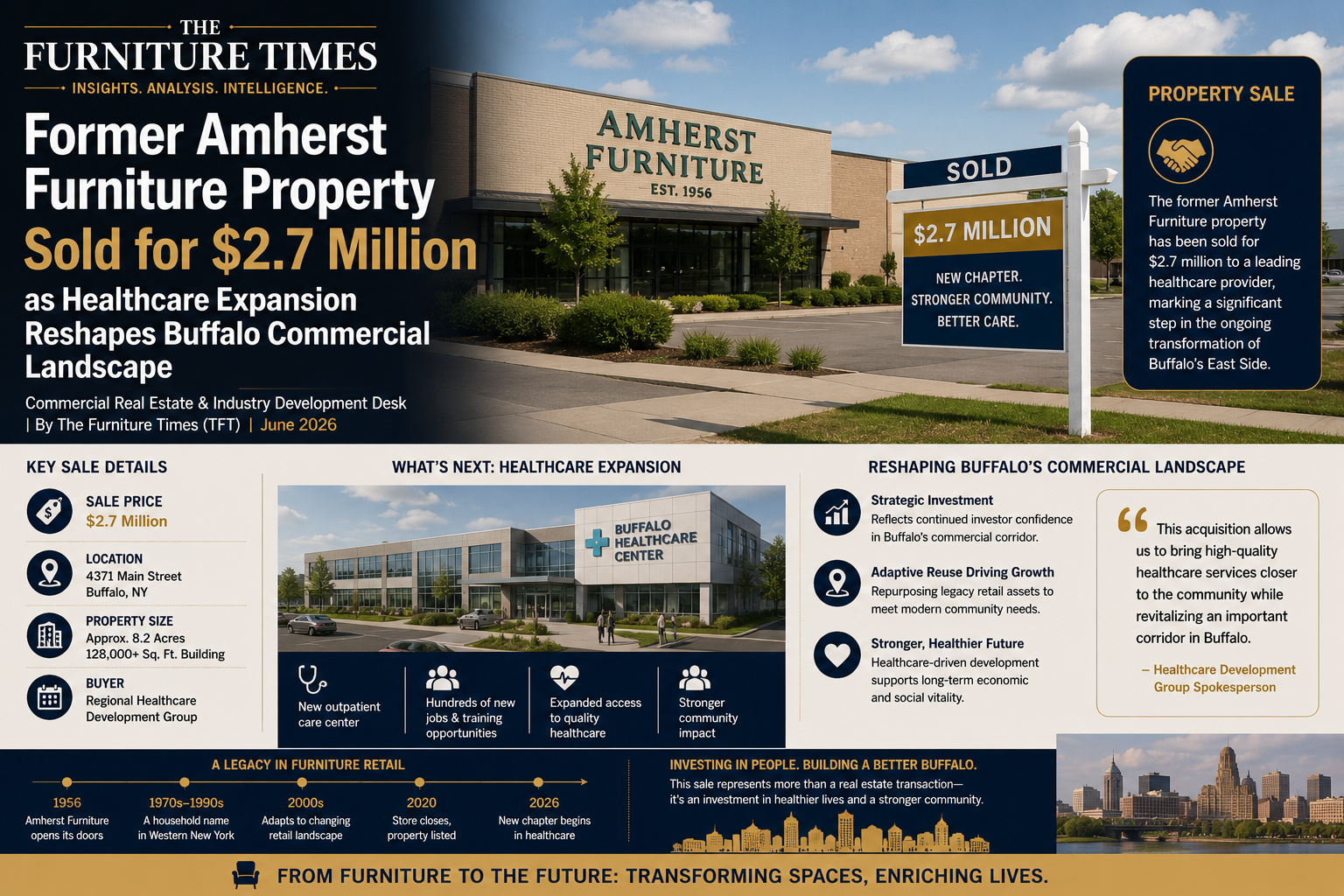
Former Amherst Furniture Property Sold for $2.7 Million as Healthcare Expansion Reshapes Buffalo Commercial Landscape
Excelsior Orthopaedics has acquired the former Amherst Furniture property for $2.7 million. The sale illustrates the transformation of commercial real estate as healthcare providers expand while traditional retail footprints continue to evolve.
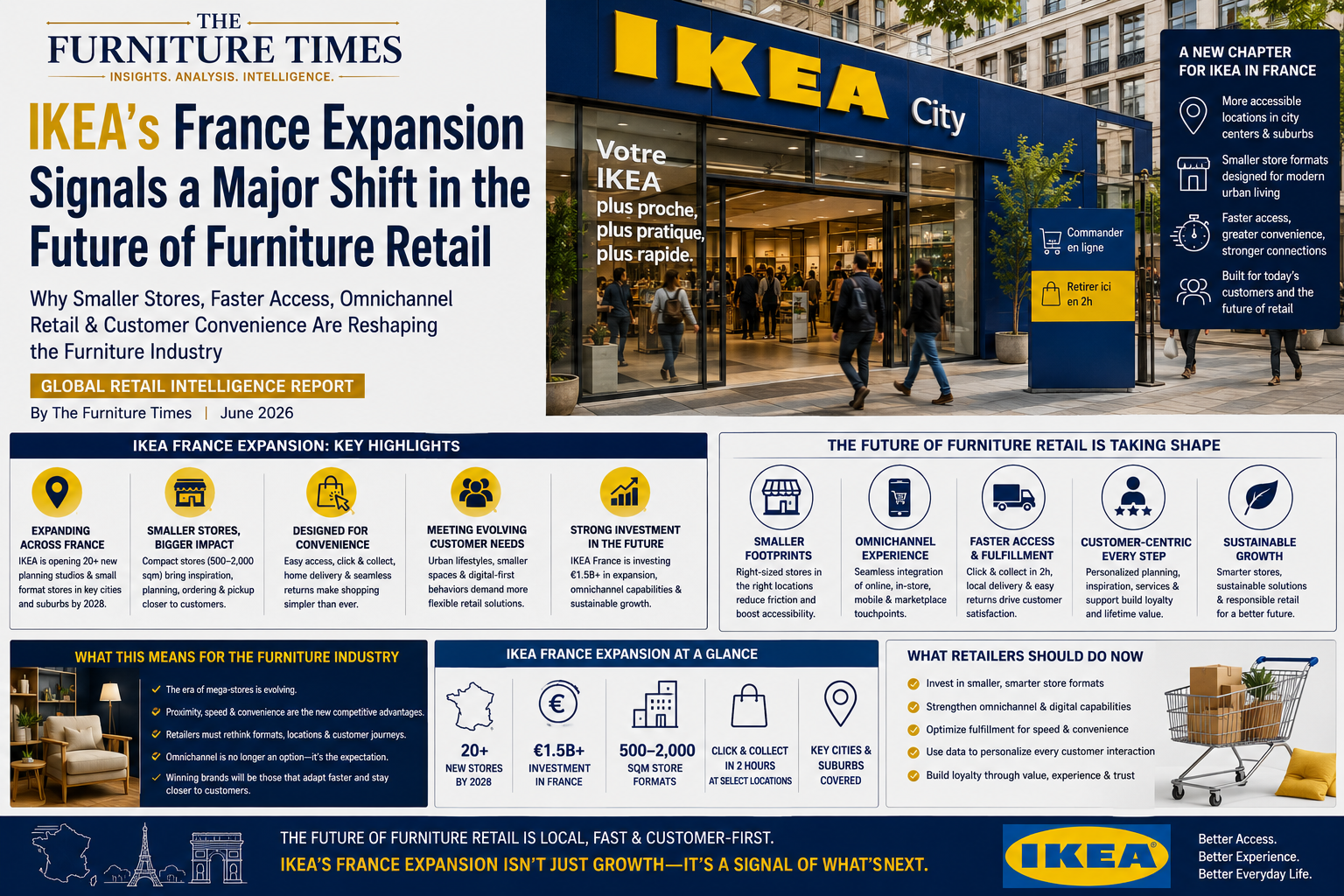
IKEA’s France Expansion Signals a Major Shift in the Future of Furniture Retail
IKEA’s latest France expansion strategy highlights a broader transformation across the furniture industry. Smaller stores, omnichannel experiences, and customer convenience are reshaping how furniture retailers compete in 2026 and beyond.
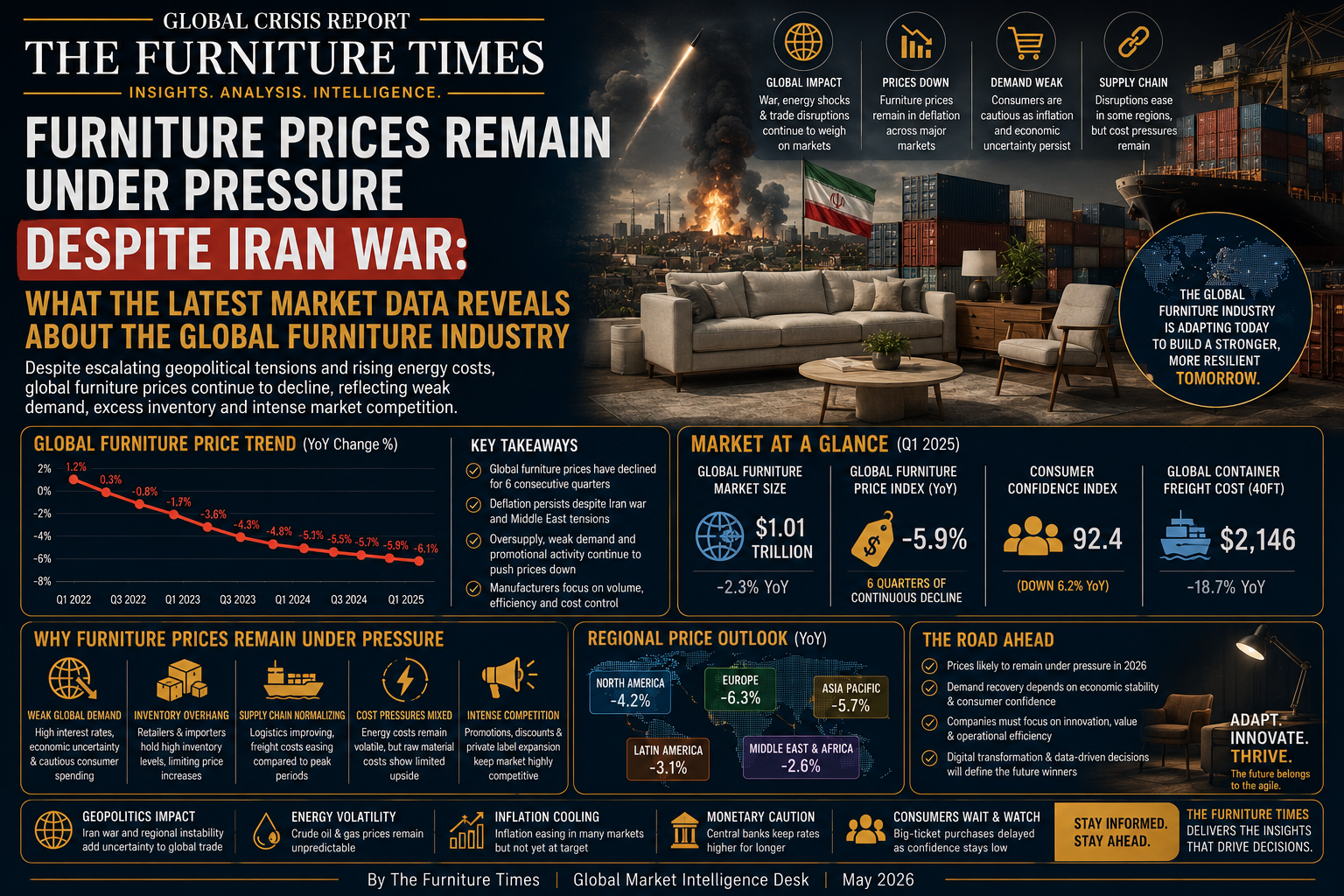
Furniture Prices Remain Under Pressure Despite Iran War: What the Latest Market Data Reveals About the Global Furniture Industry
A deep analysis of why furniture deflation has persisted despite geopolitical tensions, what it means for manufacturers and retailers, and how the global furniture industry can navigate the next phase of uncertainty.
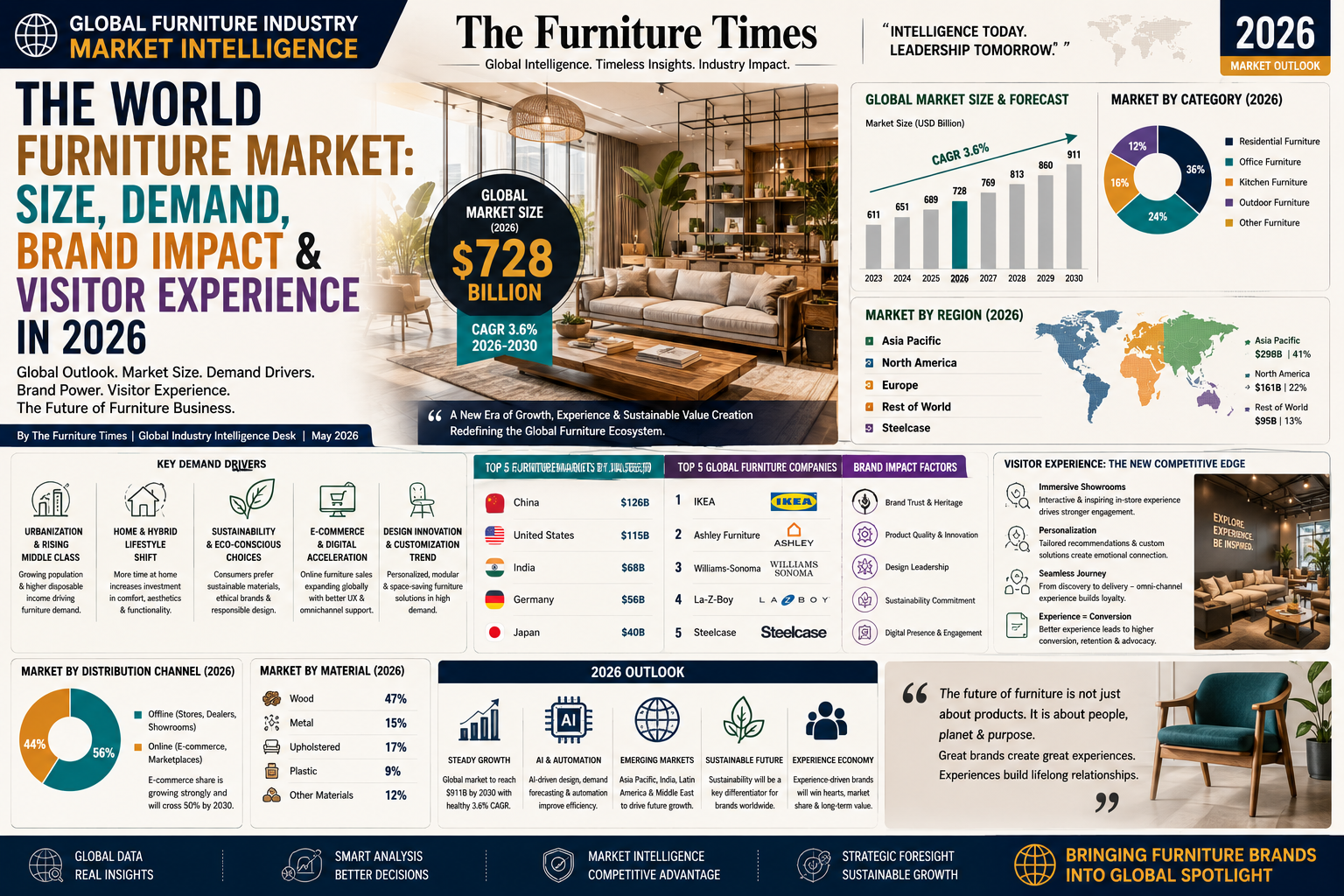
The World Furniture Market: Size, Demand, Brand Impact & Visitor Experience in 2026
From rising tariffs and sustainability pressure to AI-powered discoverability and changing visitor expectations, the global furniture industry is undergoing one of the biggest transformations in modern history. Brands are no longer competing only through manufacturing power, but through visibility, trust, digital infrastructure, and customer experience. As the industry moves from production-driven growth toward discoverability-driven ecosystems, the future increasingly belongs to businesses that can be found, trusted, and experienced globally.
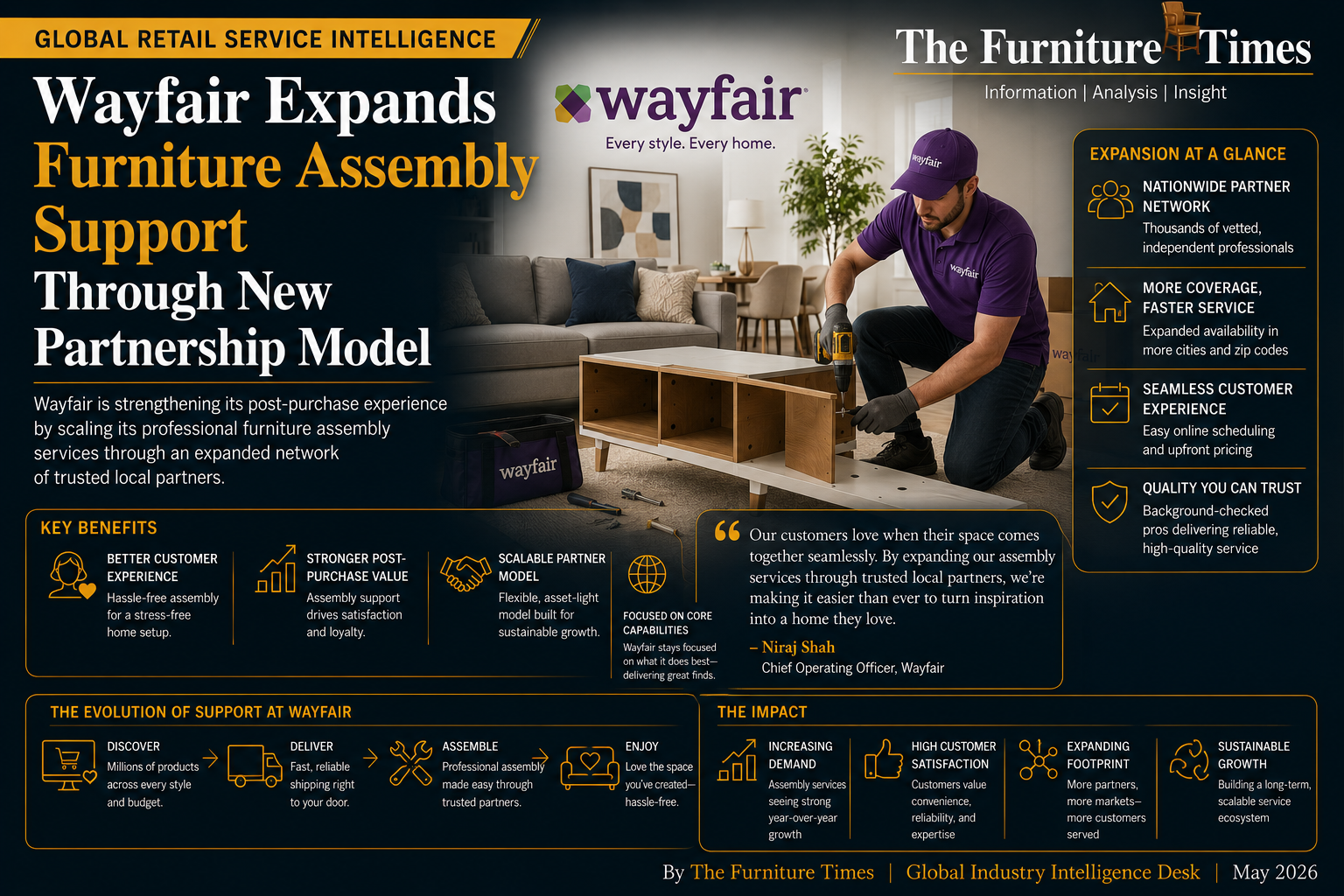
Wayfair Expands Furniture Assembly Support Through New Partnership Model
Wayfair has partnered with TaskRabbit to provide furniture assembly services across England and Wales, reflecting broader changes reshaping digital furniture retail and customer experience infrastructure.