The World Furniture Market: Size, Demand, Brand Impact & Visitor Experience in 2026
Global Furniture Industry Market Intelligence | The Furniture Times
The global furniture industry is no longer just a manufacturing sector. It is now a massive lifestyle, real estate, hospitality, retail, digital, and design ecosystem.
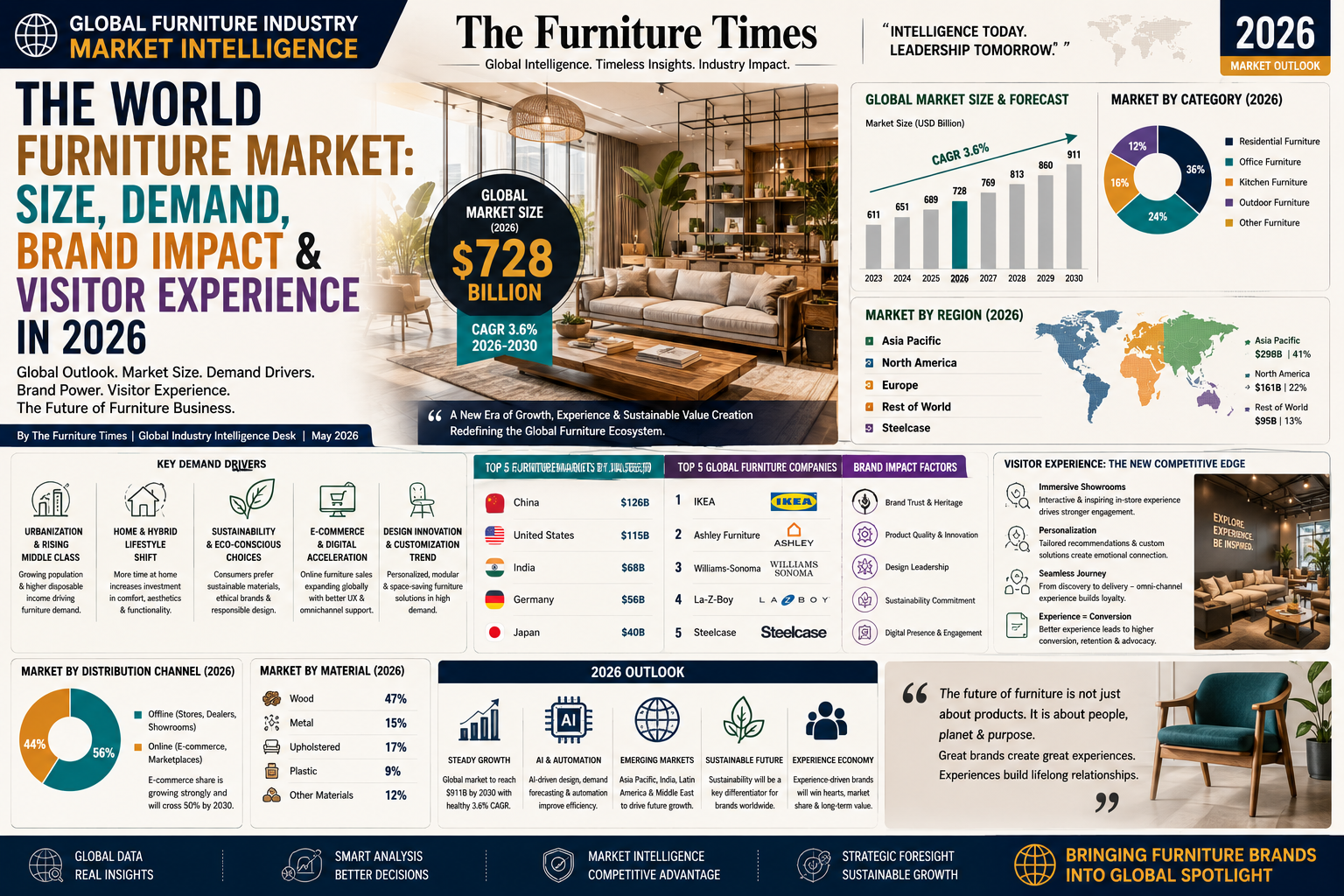
In 2026, the worldwide furniture market is estimated between US$629 billion and US$790 billion, depending on reporting methodology, with long-term forecasts projecting growth toward US$950 billion to more than US$1.3 trillion in the next decade. Major market reports show continued growth driven by urbanization, real estate expansion, home improvement, hybrid work, e-commerce, hospitality demand, and sustainability-focused buying.
The Global Market Size
The furniture market is being pulled by several powerful segments:
Residential furniture remains the largest demand engine as households continue investing in sofas, beds, dining sets, wardrobes, kitchens, storage systems, and home office furniture.
Commercial furniture is growing through offices, coworking spaces, hotels, restaurants, education, healthcare, and retail interiors.
Outdoor furniture is also expanding strongly, with the global outdoor furniture market estimated at US$16.9 billion in 2025 and projected to reach around US$27.7 billion by 2036, supported by garden living, resorts, rooftop dining, villas, and hospitality projects.
Why Demand Is Changing
The industry is moving from basic furniture buying toward experience-driven living.
Customers now demand:
comfort
durability
sustainability
customization
smart features
modular design
fast delivery
visual inspiration
digital discovery
The old question was:
“Where can I buy furniture?”
The new question is:
“Which brand understands my space, lifestyle, budget, identity, and experience?”
Impact on Global Brands
Global furniture brands are under intense pressure.
Tariffs, freight costs, supply chain disruption, and regional sourcing shifts are forcing major brands to rethink production. IKEA, for example, has been increasing U.S. production to reduce tariff and transport exposure, showing how global brands are moving closer to key consumer markets.
This means brands must now compete through:
local production
regional supply chains
sustainability
digital visibility
faster delivery
stronger online product experience
resilient sourcing
The brands that depend only on cheap global manufacturing may face pressure. The brands that build flexible, regional, digitally visible ecosystems will win.
Impact on Visitors & Buyers
Visitors — whether showroom visitors, website visitors, exhibition visitors, hotel procurement teams, or online shoppers — are also changing.
They no longer want to only “see furniture.”
They want to:
compare prices
understand materials
see dimensions
visualize products in real spaces
check reviews
verify suppliers
get fast responses
feel trust before purchase
This means every furniture brand must treat the visitor journey seriously.
A showroom visitor needs emotional experience.
A website visitor needs clarity and speed.
An exhibition visitor needs discovery and connection.
A B2B buyer needs verified supplier confidence.
Deep Industry Analysis
The global furniture industry is being reshaped by five major forces.
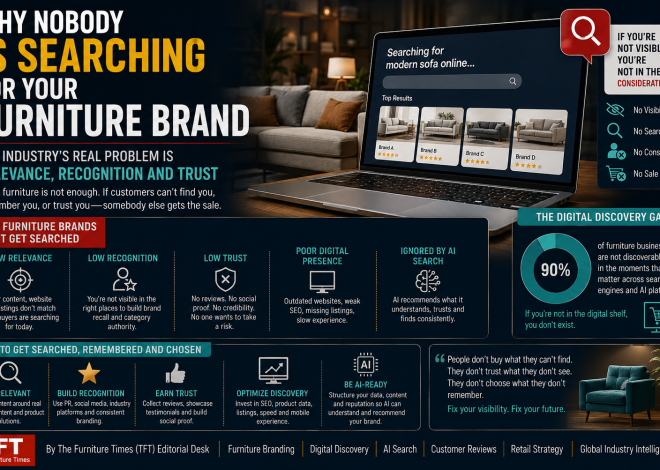
First, AI and search visibility are changing how customers discover brands. If a brand is not searchable, it may become invisible.
Second, tariffs and protectionism are pushing companies to localize or diversify production.
Third, sustainability is becoming a buying requirement, not a marketing slogan.
Fourth, supply chain resilience is now as important as design.
Fifth, visitor experience has become the new sales engine.
Furniture businesses can no longer rely only on production. They must build discoverability, trust, content, design experience, digital catalogs, live communication, and strong after-sales systems.
Final Thought
The global furniture industry is growing, but it is also becoming more demanding.
The future winners will not only be the biggest factories or the cheapest exporters.
They will be the most:
visible
trusted
searchable
sustainable
visitor-friendly
digitally connected
In 2026, the global furniture industry is not only about making furniture.
It is about being found, trusted, experienced, and remembered.