
The Return of Natural Workspaces: Why Indonesian Teakwood Writing Desks Are Becoming the Symbol of Calm, Functional & Timeless Modern Living
Global Home Office Furniture Intelligence Report | The Furniture Times
Deep Analysis of Teakwood Home Office Furniture, Scandinavian-Minimalist Design, Functional Craftsmanship & the Future of Natural Interior Ecosystems
By The Furniture Times | Global Industry Intelligence Desk | May 2026
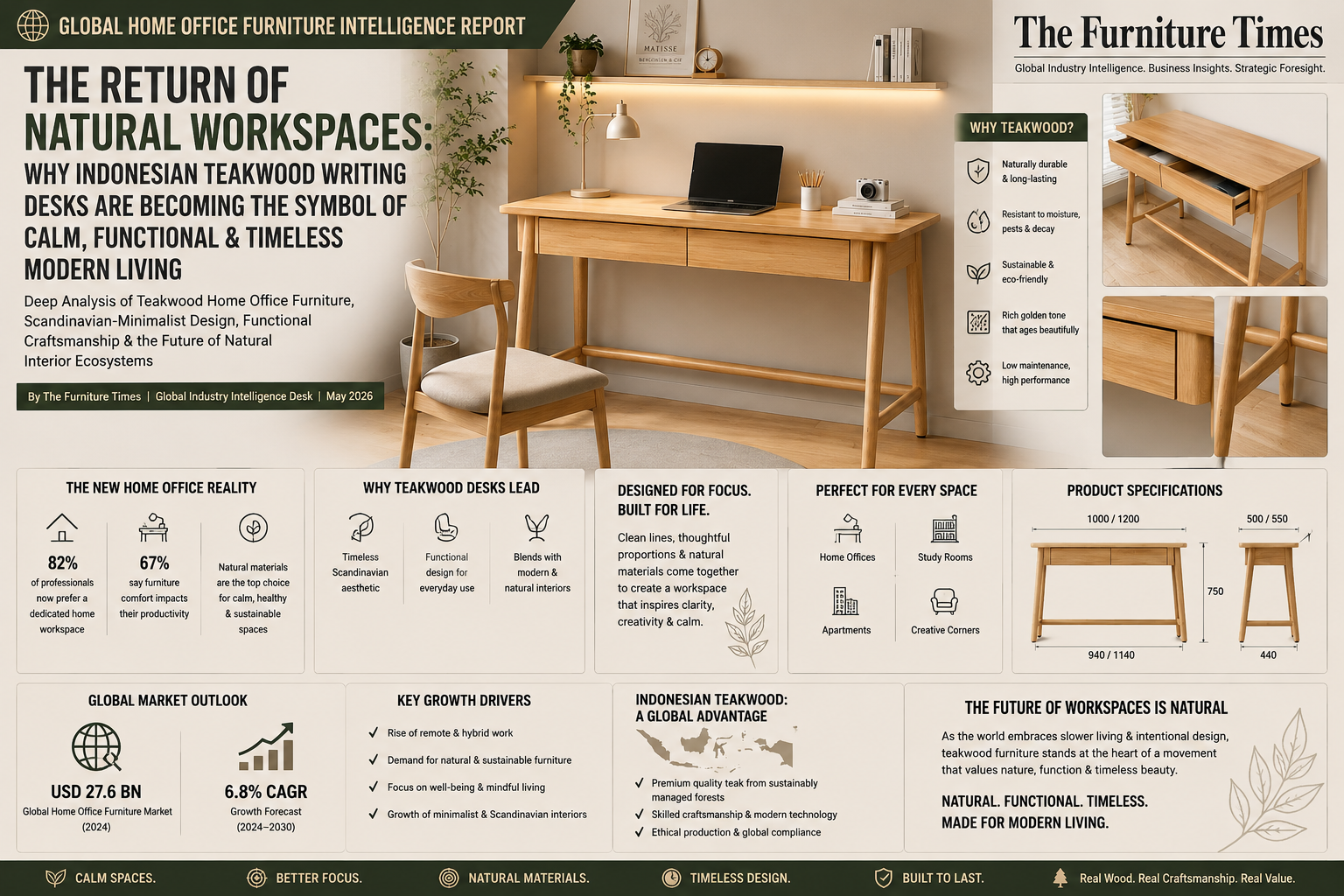
The uploaded image presents far more than a simple writing desk.
It represents one of the most important lifestyle transformations happening in the global furniture industry ecosystem:
the return of calm, natural, functional living.
The beautifully crafted desk shown in the image — made from Indonesian teakwood — reflects the growing global demand for:
natural materials
minimalist interiors
functional furniture
emotional comfort
warm living environments
timeless craftsmanship
Across the world, consumers are increasingly moving away from:
cold industrial interiors
heavy visual clutter
over-designed furniture systems
toward:
soft minimalism and human-centered living spaces.
The teakwood desk shown in the image perfectly captures this evolution.
The Rise of the Home Office Furniture Economy
One of the biggest global shifts after the pandemic era has been:
the explosion of home office culture.
Millions of people worldwide now:
work remotely
study from home
run businesses online
attend virtual meetings
build digital careers
This transformed desks from:
office equipment
into:
lifestyle furniture.
Consumers no longer want desks that simply “work.”
They increasingly seek desks that provide:
emotional calm
aesthetic balance
ergonomic comfort
natural texture
architectural harmony
The desk in the image reflects exactly this movement.
Why Teakwood Matters
The image clearly highlights:
natural teakwood craftsmanship.
Teakwood remains one of the world’s most respected furniture materials because of its:
durability
natural oils
grain beauty
resistance to moisture
structural stability
timeless appearance
Teak originates mainly from South and Southeast Asia, especially Indonesia, India, Myanmar, Malaysia, and Thailand.
Indonesia remains one of the world’s most important teakwood ecosystems and a major source for premium furniture production.
Indonesia’s Global Teakwood Legacy
Indonesia has built a strong international reputation for:
teakwood craftsmanship
woodworking heritage
hospitality furniture
handcrafted interiors
export-quality furniture manufacturing
The global teakwood furniture ecosystem strongly associates Indonesia with:
durability + craftsmanship + timeless natural aesthetics.
Many premium furniture suppliers worldwide specifically promote:
Indonesian plantation teak
solid teak construction
handcrafted Indonesian furniture systems.
The Desk Represents Scandinavian-Minimalist Philosophy
The design language shown in the image strongly reflects:
Scandinavian minimalism
Japanese simplicity
Nordic warmth
organic modernism
Key characteristics include:
clean lines
rounded edges
slim proportions
natural wood textures
visual lightness
uncluttered geometry
This style has become globally dominant because modern consumers increasingly seek:
visual calm.
Why Rounded Furniture Is Becoming Popular
One important detail visible in the image:
softened rounded edges.
Modern furniture increasingly avoids:
aggressive geometry
sharp visual lines
overly industrial forms
Rounded furniture creates:
emotional softness
visual comfort
safer interaction
calming interiors
This reflects:
psychological furniture design.
Functional Simplicity Is the New Luxury
The desk includes:
hidden drawer storage
clean structural support
compact proportions
efficient workspace organization
This demonstrates a major global trend:
simplicity itself is becoming luxury.
Consumers increasingly value:
clarity
functionality
calmness
intelligent space usage
over:
excessive ornamentation
complicated structures
visual overload
The Importance of Compact Proportions
The image shows dimensions optimized for:
apartments
compact homes
urban interiors
studio spaces
minimalist environments
Modern cities increasingly demand:
compact furniture intelligence.
As urban living spaces shrink globally,
furniture must increasingly become:
smaller
smarter
multifunctional
visually lighter
The desk shown perfectly reflects this shift.
Why Natural Wood Is Returning Strongly
After years dominated by:
plastics
laminates
synthetic finishes
industrial materials
consumers increasingly return to:
authentic wood textures.
Wood creates emotional associations with:
warmth
nature
comfort
grounding
longevity
Research increasingly explores how wood surfaces contribute positively to comfort and lifestyle environments.
The Emotional Psychology of Wooden Furniture
Natural wood furniture affects interior psychology differently than synthetic materials.
Wood creates feelings associated with:
relaxation
calmness
stability
authenticity
natural living
This is one major reason why teakwood furniture remains highly desirable globally.
Why Teakwood Is Premium
Teakwood is especially valued because it naturally contains:
protective oils
strong grain density
termite resistance
moisture durability
Teak furniture is globally recognized for:
longevity
outdoor durability
timeless quality
luxury positioning.
Many teak furniture products last for decades and are often treated as heirloom-quality furniture.
The Desk Reflects “Quiet Luxury”
The image strongly aligns with one of the fastest-growing global interior trends:
quiet luxury.
Quiet luxury focuses on:
craftsmanship
material quality
subtle elegance
timeless design
understated sophistication
instead of:
loud branding
excessive decoration
visual complexity
The desk shown reflects:
calm premium living.
Home Office Furniture Is Becoming Lifestyle Infrastructure
The global home office furniture market is evolving rapidly because desks are no longer only workstations.
They increasingly become:
creative zones
productivity spaces
emotional environments
learning ecosystems
digital business hubs
The workspace itself now influences:
productivity
mental focus
emotional wellbeing
work-life balance
The Integration of Furniture & Interior Harmony
The image beautifully integrates:
desk
chair
shelf
lighting
plant
natural tones
This reflects modern furniture philosophy:
furniture must belong to an ecosystem.
Consumers increasingly buy:
coordinated environments
instead of:
isolated products.
Sustainability & Plantation Teak
The future of teakwood furniture increasingly depends on:
sustainable sourcing.
Much commercially harvested teak today comes from plantation systems, especially in Indonesia.
Consumers increasingly care about:
responsible forestry
certified materials
sustainable furniture production
long-life furniture systems
Why Long-Life Furniture Matters
Cheap disposable furniture creates:
waste
short product cycles
environmental pressure
replacement culture
Teakwood furniture supports:
longevity
repairability
generational usage
sustainable ownership
This makes teakwood increasingly aligned with:
sustainable living philosophy.
Indonesia’s Furniture Ecosystem Opportunity
Indonesia remains one of the strongest countries globally for:
teakwood furniture
handcrafted interiors
hospitality furniture
premium natural furniture systems
The country’s woodworking ecosystem continues attracting:
international buyers
hospitality projects
luxury residential markets
eco-conscious consumers
The Jepara furniture cluster remains one of the world’s most recognized woodworking ecosystems.
The Future of Wooden Furniture
The future global furniture industry may increasingly prioritize:
authentic materials
timeless products
natural textures
emotional interiors
sustainable craftsmanship
Consumers are increasingly tired of:
disposable design
synthetic aesthetics
temporary furniture culture
The future may belong to:
furniture that emotionally connects with people.
TFT Philosophical Industry Insight
The uploaded image reveals something important about the future of living:
Modern consumers are no longer searching only for furniture.
They are searching for emotional environments.
The teakwood desk represents:
calmness
simplicity
warmth
clarity
timelessness
In an increasingly noisy digital world,
natural furniture may become:
emotional infrastructure for human wellbeing.
Final Thought
The Indonesian teakwood desk shown in the image is far more than a writing table.
It represents:
minimalist living philosophy
sustainable craftsmanship
emotional interior design
functional simplicity
natural material intelligence
timeless furniture culture
And as the world increasingly moves toward:
compact urban living
remote work culture
wellness-focused interiors
sustainable lifestyles
the demand for:
natural teakwood furniture
timeless craftsmanship
calm living environments
will continue growing strongly across the global furniture ecosystem.
Closing Insight
“The future of furniture may not belong to products that are simply modern.
It may belong to products that make people feel calm, grounded, productive, and emotionally connected to their living spaces.”
