
#SustainableFurniture
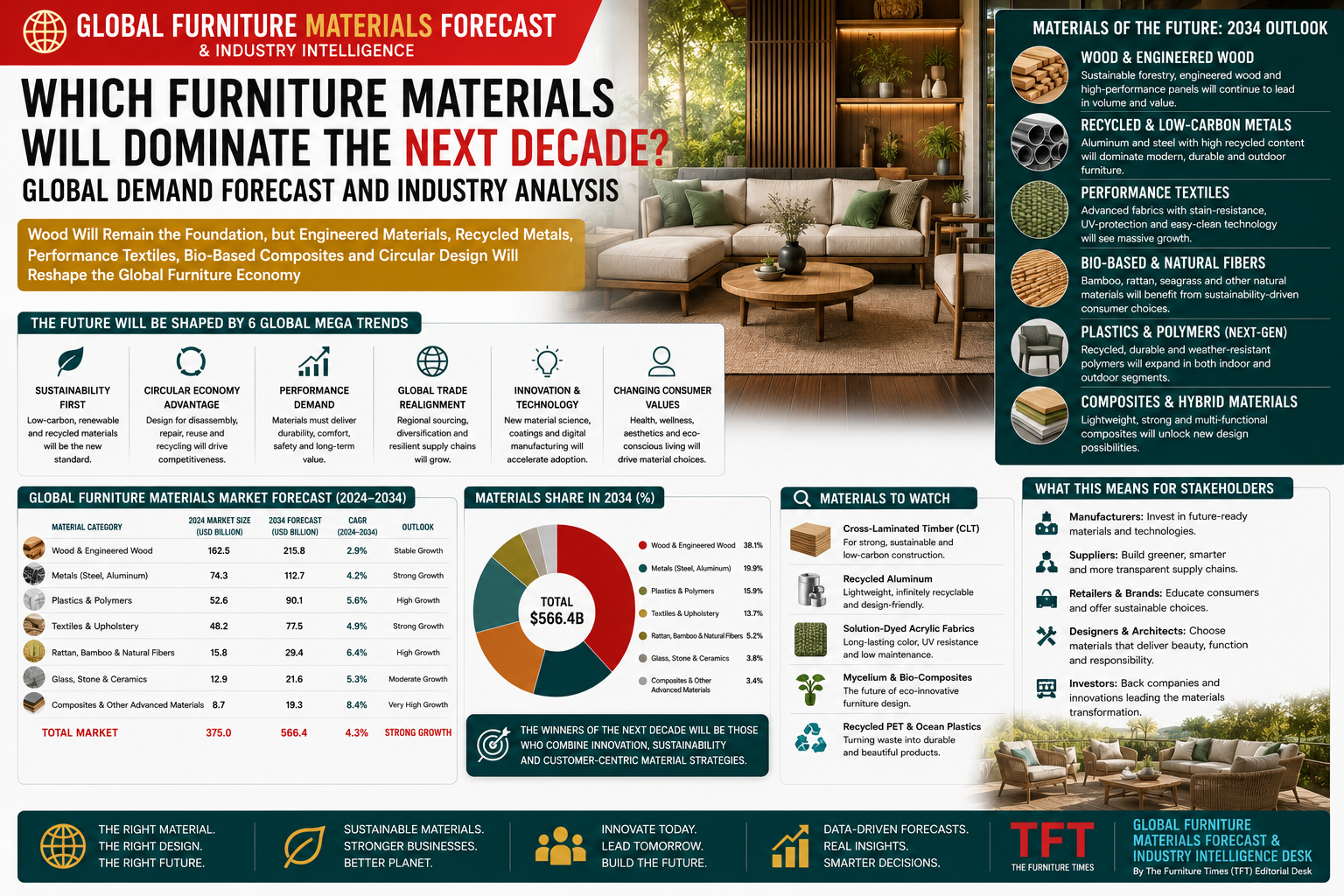
Which Furniture Materials Will Dominate the Next Decade? Global Demand Forecast and Industry Analysis
Wood will remain the foundation of the global furniture industry, but the next decade will bring rapid growth in aluminium, recycled polymers, performance textiles, bamboo, circular components and agricultural-waste composites. This report forecasts material demand by application, region and economic potential through 2035.
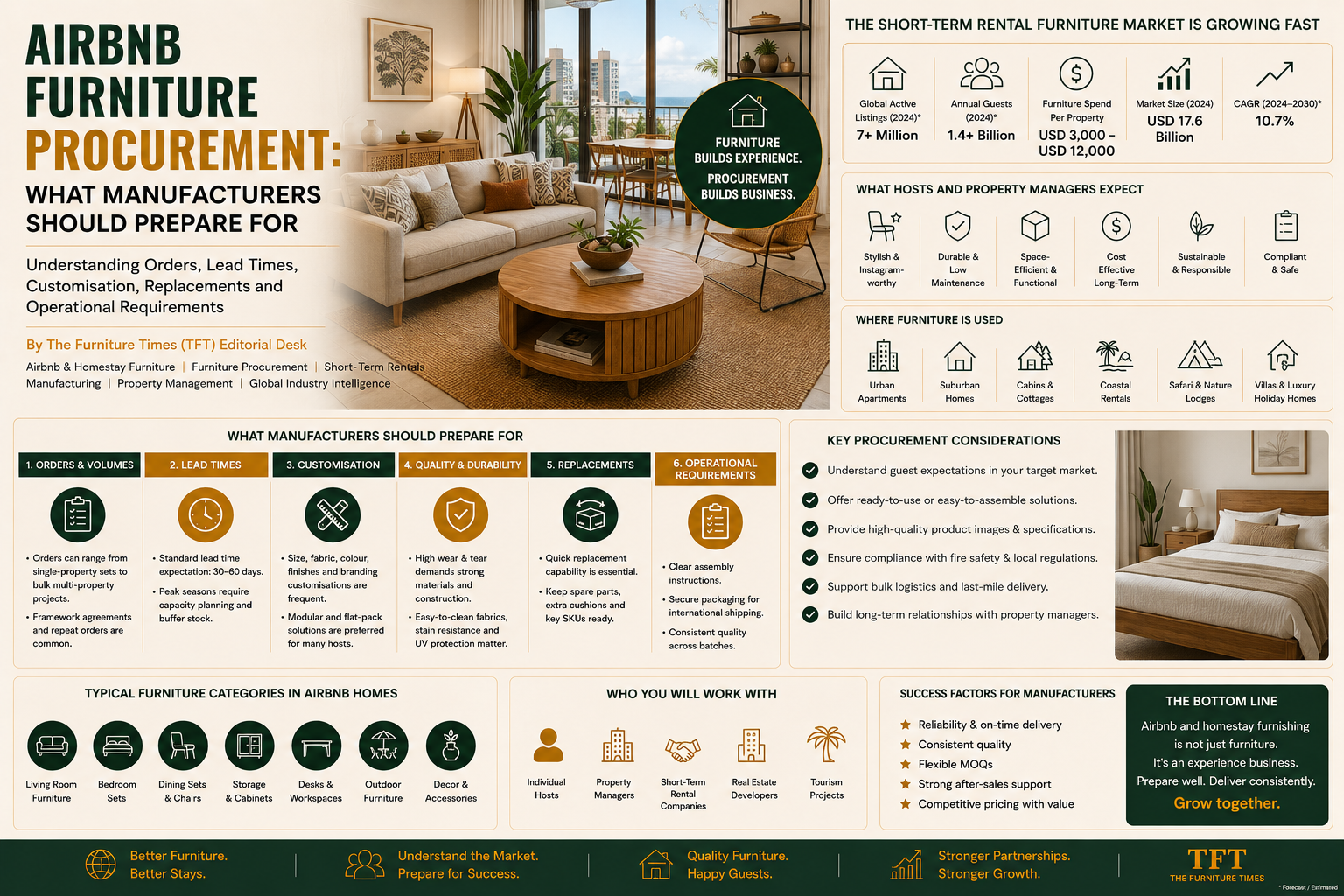
Airbnb Furniture Procurement: What Manufacturers Should Prepare For
Short-term-rental furniture orders often fall between residential retail and large hotel contracts. Manufacturers that offer complete property packages, flexible minimums, realistic lead times, spare parts, product continuity and rapid replacement can build recurring relationships with hosts, developers and professional property managers.
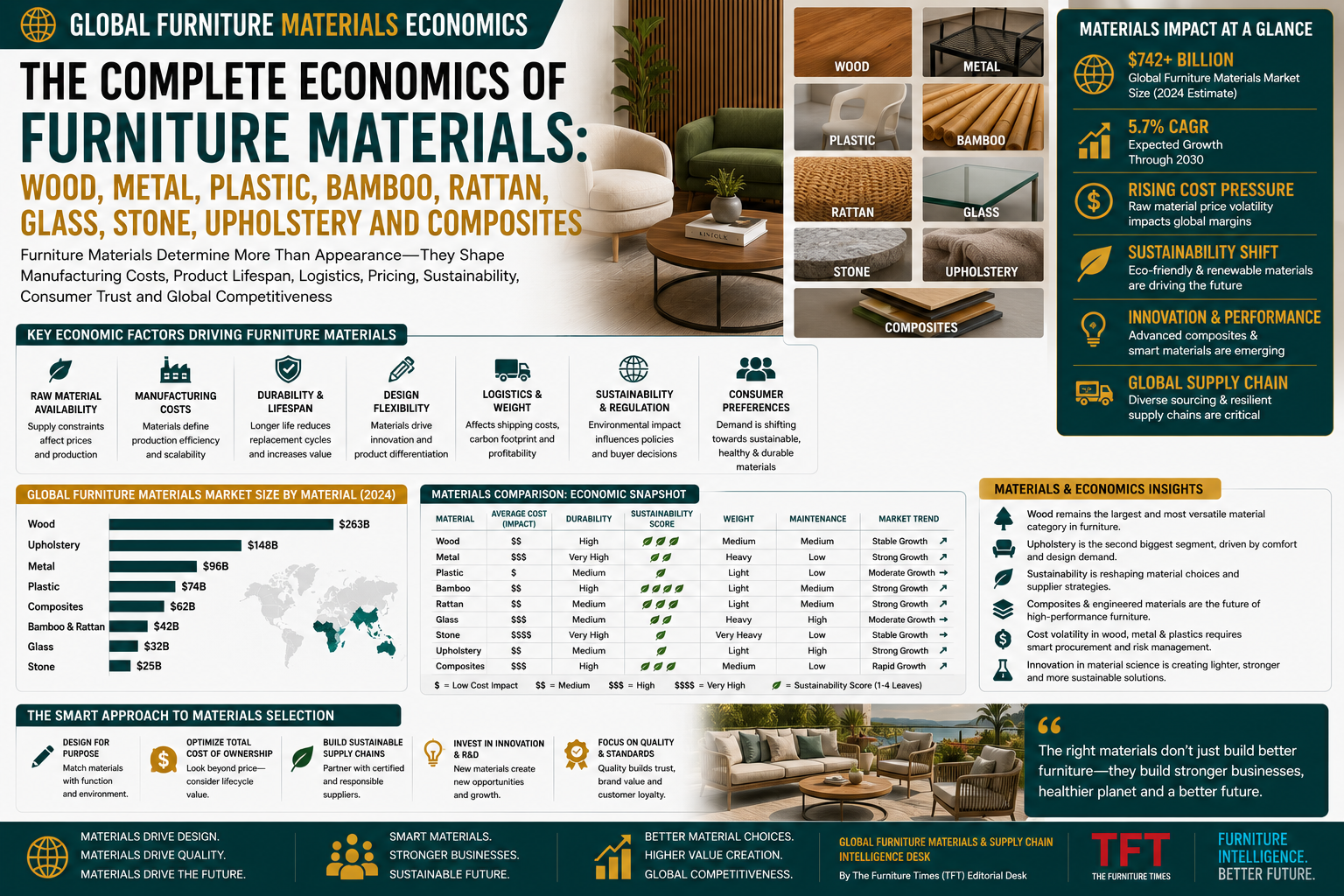
The Complete Economics of Furniture Materials: Wood, Metal, Plastic, Bamboo, Rattan, Glass, Stone, Upholstery and Composites
Furniture material choices determine far more than appearance. This comprehensive global report compares the economics of wood, metal, plastic, bamboo, rattan, glass, stone, upholstery and composite materials across sourcing, manufacturing, labour, logistics, durability, repairability and future circular-economy requirements.
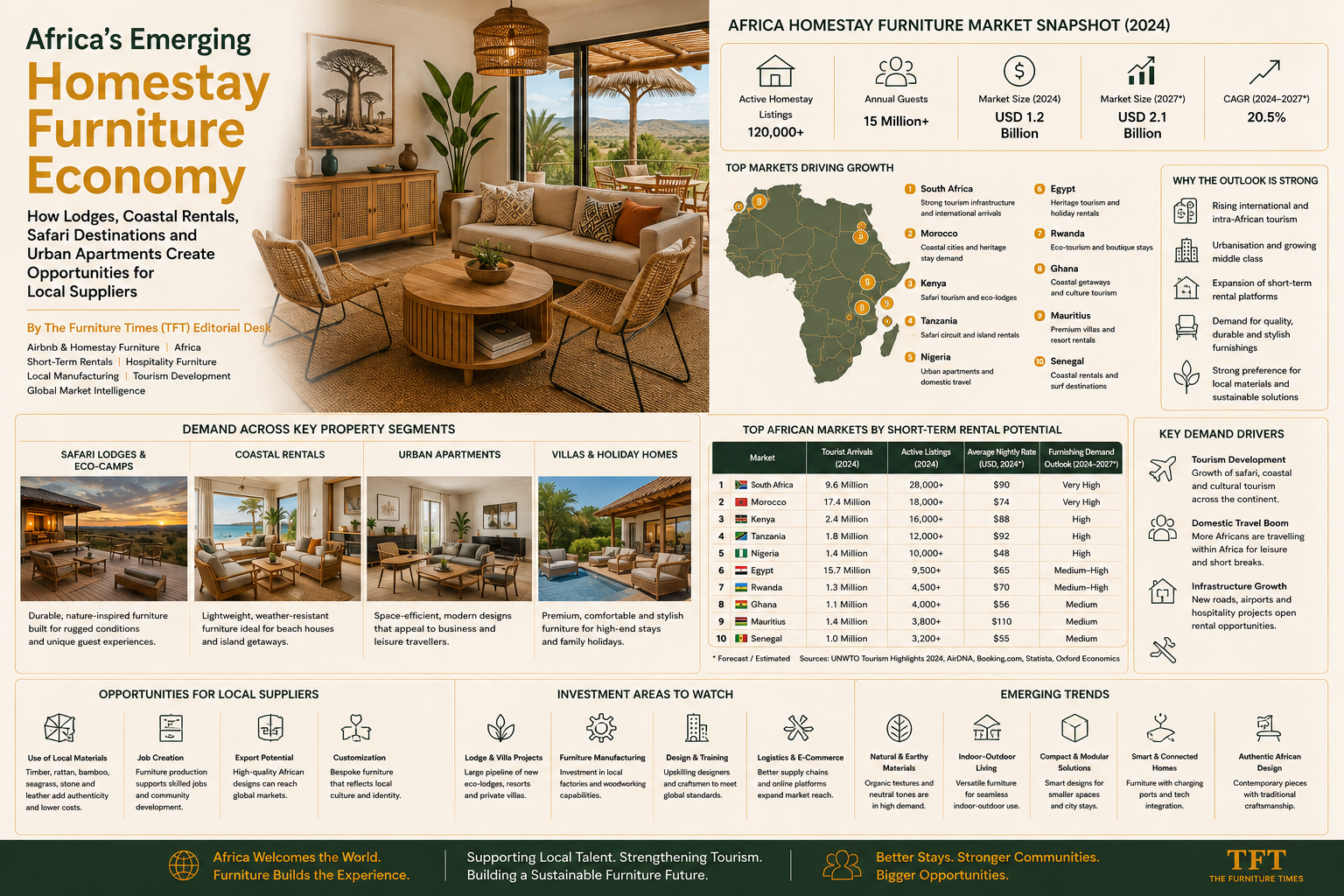
Africa’s Emerging Homestay Furniture Economy
Tourism growth across Africa is generating demand for durable, climate-appropriate and locally inspired furniture. By improving quality, standardisation, delivery and digital visibility, local suppliers can capture more value from urban rentals, safari lodges, coastal villas, heritage properties and community homestays.
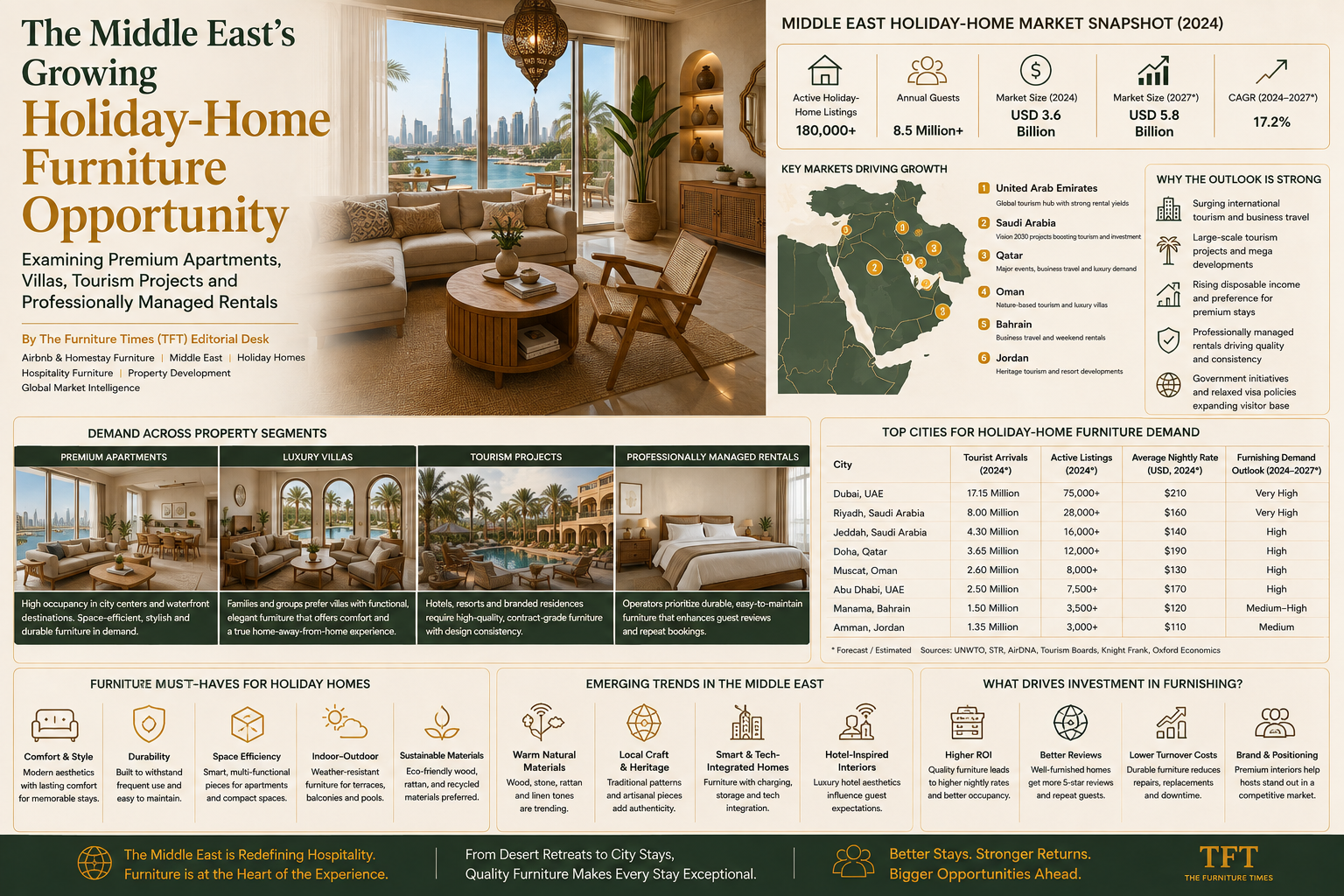
The Middle East’s Growing Holiday-Home Furniture Opportunity
The Middle East’s expanding tourism and property-development economy is generating demand for premium apartment packages, villa furniture, climate-resistant outdoor products and professionally managed furnishing services. Success will depend on regional design intelligence, durability, installation, compliance and long-term replacement support.
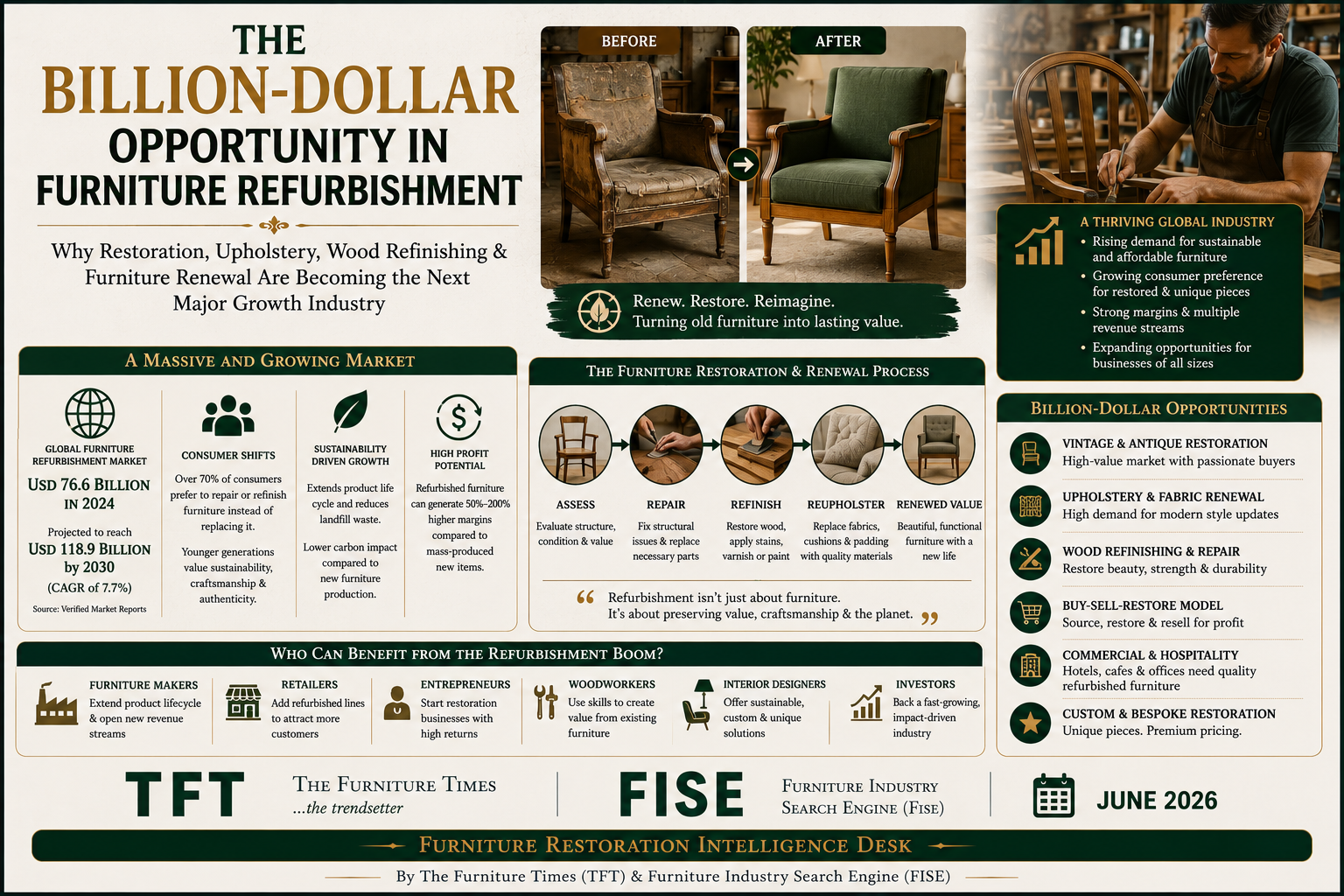
The Billion-Dollar Opportunity in Furniture Refurbishment
Discover why furniture refurbishment is evolving into a billion-dollar industry. This report explores restoration businesses, upholstery, wood refinishing, antique conservation, hospitality refurbishment, office furniture renewal, and why lifecycle management is becoming the next frontier of the furniture economy.

Europe’s Homestay Furniture Market: Heritage Character Meets Modern Guest Expectations
With nearly 952 million EU guest nights booked through major accommodation platforms in 2025, Europe represents a major short-term-rental furniture economy. Hosts must balance heritage character with compact design, efficient cleaning, commercial durability and increasingly strict regulation.
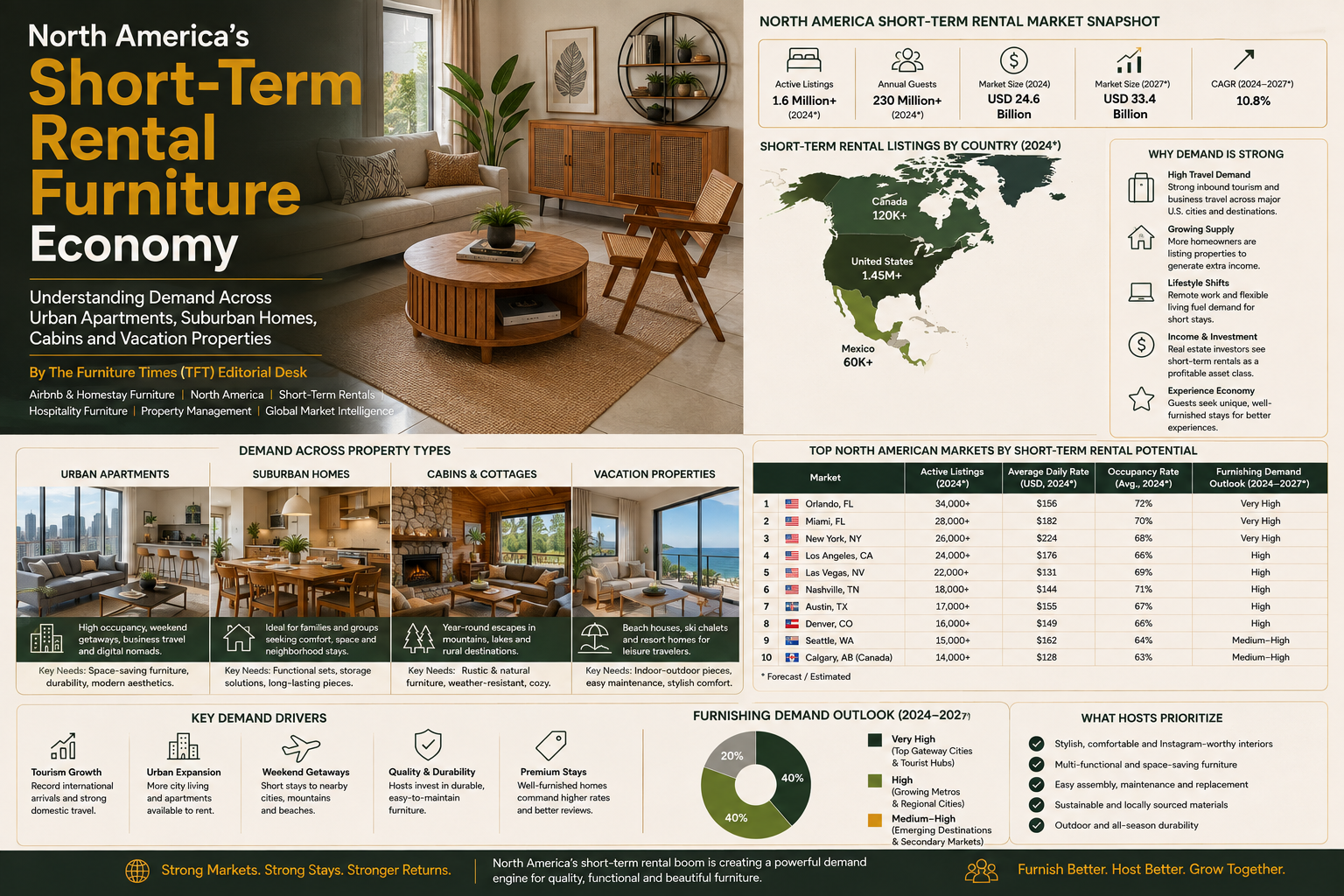
North America’s Short-Term Rental Furniture Economy
Strong domestic travel, professional property management and diverse accommodation types are creating recurring furniture demand across North America. The market requires compact urban products, family packages, cabin furniture, weather-resistant outdoor collections, rapid replacement and lifecycle-focused procurement.
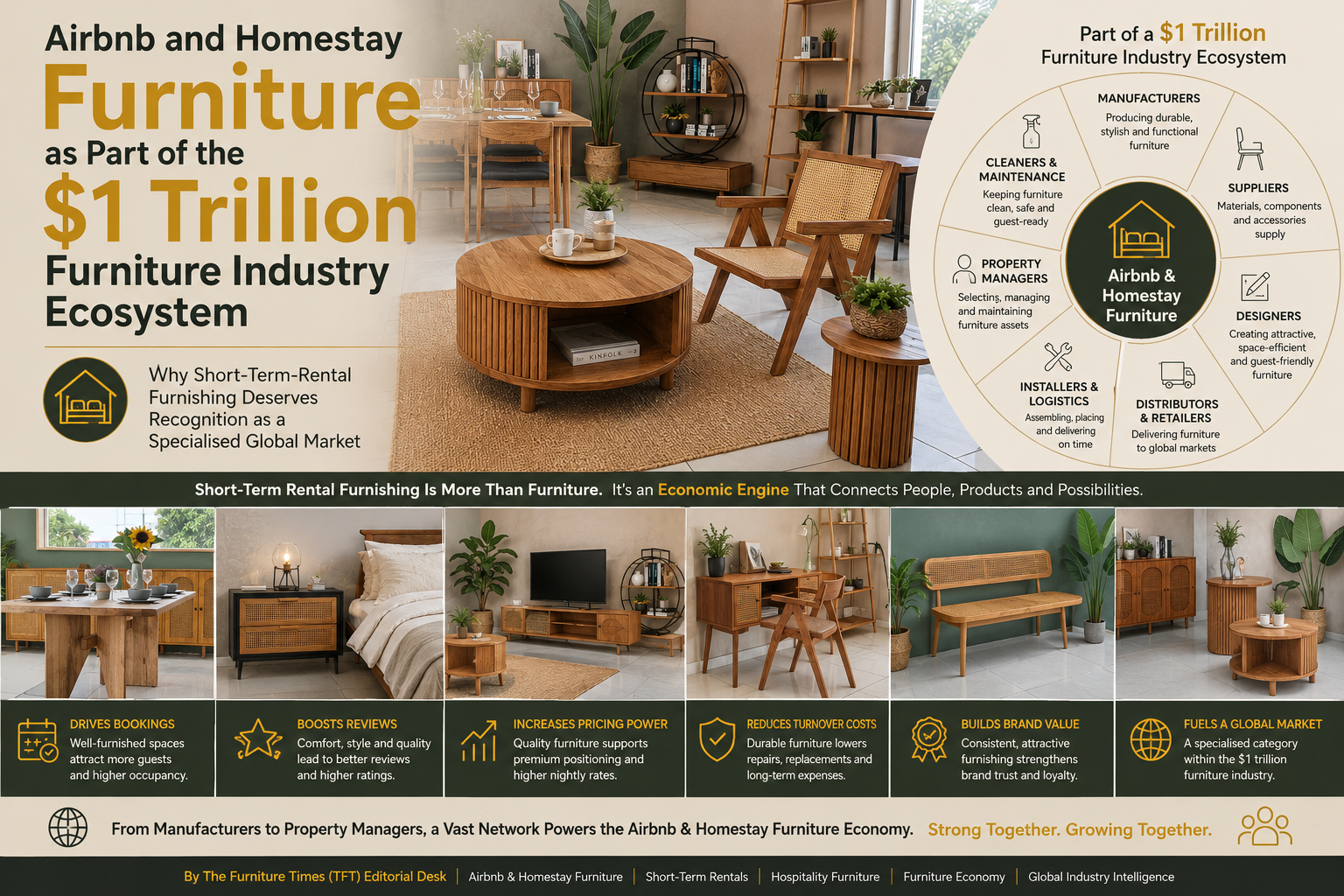
Airbnb and Homestay Furniture as Part of the $1 Trillion Furniture Industry Ecosystem
Millions of short-term-rental properties require durable, attractive and operationally efficient furniture. Yet this economic activity remains fragmented across residential, hospitality, contract and interior-furnishing categories. Recognising Airbnb and homestay furniture as a specialised global market could improve product development, data, supplier visibility, sustainability and investment.
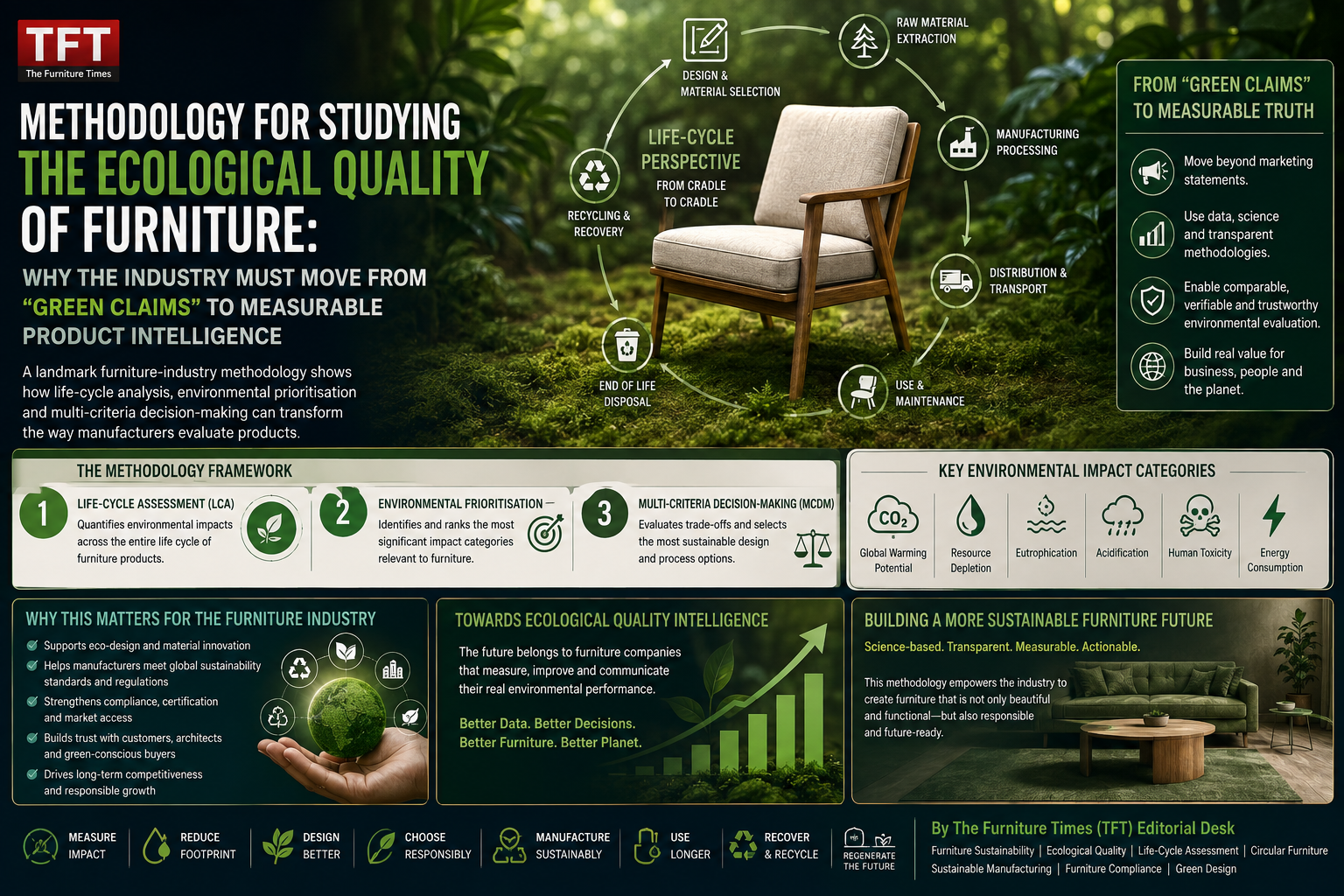
Methodology for Studying the Ecological Quality of Furniture
A 2011 research study on the ecological quality of furniture offers an increasingly relevant framework for today’s sustainability-driven industry. By combining life-cycle analysis, environmental ABC prioritisation and multi-criteria decision-making, the methodology demonstrated that products from the same furniture manufacturer can have significantly different environmental impacts. As global regulation moves toward durability, repairability, circularity and product-level information, furniture companies need to move from broad “green” claims toward measurable, traceable and verifiable ecological quality.