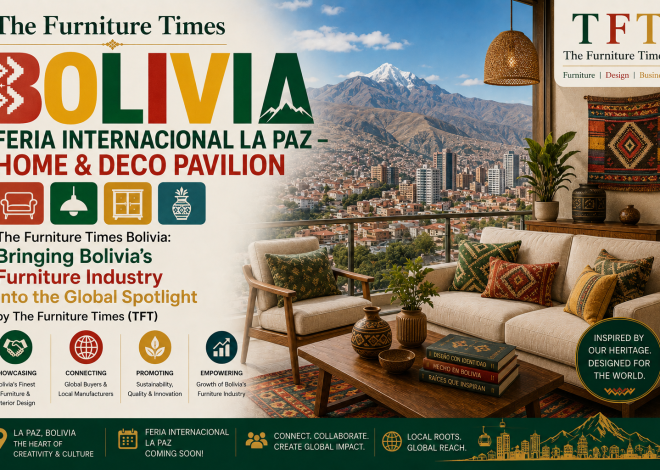
The Furniture Times Bolivia
Bolivia: South America’s Hidden Furniture Manufacturing, Craftsmanship & Sustainable Design Frontier
Bringing Bolivia’s Furniture Industry Into the Global Spotlight
By The Furniture Times (TFT) & Furniture Industry Search Engine (FISE)
“TFT tells their story. FISE helps the world find them.”
Bolivia: The Untapped Furniture Industry Opportunity at the Heart of South America
What if one of South America’s most resource-rich nations is quietly building the foundations of a powerful furniture industry ecosystem?
What if a country known for its cultural diversity, indigenous craftsmanship, natural resources, forestry potential, entrepreneurial spirit, and growing urban development is preparing to become one of the region’s most exciting furniture markets?
That country is Bolivia.
For decades, Bolivia has been recognized for its breathtaking landscapes, rich cultural heritage, mineral wealth, agricultural production, and traditional craftsmanship. Yet beyond these strengths lies a growing furniture industry ecosystem supported by urbanization, construction, tourism, hospitality, retail expansion, and a new generation of entrepreneurs.
The future of furniture is no longer limited to traditional manufacturing giants.
The next era belongs to countries that can combine:
- Craftsmanship
- Sustainability
- Local Resources
- Design Innovation
- Digital Visibility
- Entrepreneurial Energy
Bolivia possesses all of these ingredients.
The opportunity now is to connect them.
The world is searching for authentic products, responsible manufacturing, unique craftsmanship, and emerging suppliers.
Bolivia has the potential to become part of that global conversation.
Bolivia at a Glance
Official Name
Plurinational State of Bolivia
Constitutional Capital
Sucre
Administrative Capital
La Paz
Currency
Bolivian Boliviano (BOB)
Population
More than 12 million people
Geographic Location
Bolivia is located in the heart of South America.
It shares borders with:
- Brazil
- Argentina
- Chile
- Peru
- Paraguay
Although landlocked, Bolivia occupies a strategic position connecting multiple South American markets.
Its location provides access to:
- Andean Markets
- Mercosur Trade Networks
- Pacific Trade Corridors
- Atlantic Trade Corridors
- Regional Supply Chains
Bolivia’s geography makes it a natural connector between neighboring economies.
The People of Bolivia
Bolivia’s greatest asset is its people.
Bolivians are known for:
- Resilience
- Entrepreneurship
- Cultural Pride
- Craftsmanship
- Community Values
- Creativity
The country possesses a rich multicultural identity shaped by indigenous traditions, colonial influences, and modern economic development.
These diverse influences contribute to a unique design and furniture culture.
Language & Communication
Official Languages
Bolivia recognizes numerous official languages, including:
- Spanish
- Quechua
- Aymara
- Guaraní
Spanish remains the dominant language of business and commerce.
This multilingual environment reflects the country’s rich cultural heritage and creates opportunities for cultural design influences within the furniture sector.
Trade & Commerce
Bolivia’s economy is supported by:
Mining
Agriculture
Manufacturing
Construction
Tourism
Retail
Transportation
Services
Infrastructure Development
Every one of these sectors creates furniture demand.
As cities expand and new projects emerge, furniture becomes an essential component of economic growth.
Why Bolivia Matters to the Global Furniture Industry
Many countries have resources.
Many countries have labor.
Few countries possess:
Rich Forestry Potential
Authentic Craftsmanship
Growing Urban Markets
Expanding Construction Sector
Cultural Design Heritage
Entrepreneurial Talent
Regional Trade Connectivity
Tourism Growth
These strengths position Bolivia as an emerging opportunity within the South American furniture ecosystem.
The Furniture Industry Ecosystem of Bolivia
The furniture industry ecosystem extends far beyond manufacturing.
It includes every stakeholder involved in designing, producing, distributing, selling, specifying, installing, and maintaining furniture and interior environments.
Residential Furniture Sector
Growing urbanization continues driving demand for:
- Living Room Furniture
- Bedroom Furniture
- Dining Furniture
- Wardrobes
- Kitchen Furniture
- Storage Solutions
- Modular Furniture
The country’s expanding middle class creates long-term opportunities.
Commercial Furniture Sector
Business growth supports demand for:
- Office Furniture
- Executive Furniture
- Reception Systems
- Conference Solutions
- Co-Working Furniture
Modern workplaces increasingly require flexible and ergonomic furniture.
Hospitality Furniture Sector
Tourism creates significant opportunities for:
- Hotel Furniture
- Boutique Hotel Furnishings
- Eco-Lodge Furniture
- Restaurant Furniture
- Café Furniture
- Resort Interiors
Bolivia’s tourism sector continues attracting domestic and international visitors.
Educational Furniture Sector
Demand includes:
- School Furniture
- University Furniture
- Library Furniture
- Training Centre Solutions
Education remains an important market for furniture suppliers.
Healthcare Furniture Sector
Healthcare development supports demand for:
- Hospital Furniture
- Clinic Furniture
- Medical Facility Solutions
- Patient Care Furniture
Healthcare infrastructure investments continue creating opportunities.
Outdoor Furniture & Lifestyle Living
Demand continues growing for:
- Garden Furniture
- Patio Furniture
- Outdoor Hospitality Furniture
- Resort Furniture
- Public Space Furniture
- Parasols
Outdoor environments are becoming increasingly important in residential and hospitality projects.
Bolivia’s Forestry & Wood Resources
One of Bolivia’s greatest advantages lies in its forestry resources.
The country possesses access to:
Tropical Hardwoods
Sustainable Timber Resources
Wood Processing Potential
Furniture-Grade Timber
Value-Added Wood Products
When managed responsibly, these resources can support long-term furniture industry growth.
Furniture Manufacturing: A Sector with Significant Potential
Furniture manufacturing opportunities include:
Solid Wood Furniture
Residential Furniture
Hospitality Furniture
Educational Furniture
Office Furniture
Contract Furniture
Export-Oriented Furniture
Manufacturers that combine craftsmanship with modern production technologies will gain competitive advantages.
Raw Materials & Supply Chain Ecosystem
The furniture industry relies upon supporting sectors including:
Timber Suppliers
Sawmills
Wood Processors
MDF & Panel Suppliers
Hardware Companies
Textile Suppliers
Foam Manufacturers
Metal Fabricators
Glass Processors
Logistics Providers
A strong furniture industry requires a strong supporting ecosystem.
Craftsmanship: Bolivia’s Greatest Competitive Advantage
Machines can produce furniture.
Craftsmanship creates identity.
Bolivia has centuries-old traditions in:
Woodworking
Hand Carving
Joinery
Cabinet Making
Artisan Production
Decorative Arts
Indigenous Craft Techniques
Consumers around the world increasingly seek authenticity.
Bolivia can provide exactly that.
Skilled Workers: The Foundation of Growth
The furniture ecosystem depends upon:
Carpenters
Joiners
Upholsterers
Furniture Assemblers
CNC Operators
Designers
Engineers
Installers
Project Managers
Continuous workforce development remains essential for industry competitiveness.
Furniture Industry Entrepreneurs
The future of Bolivia’s furniture industry belongs to entrepreneurs.
Growth opportunities include:
Furniture Manufacturing
Interior Design Studios
Hospitality Procurement
Sustainable Furniture Brands
Furniture E-Commerce
Furniture Marketplaces
Smart Furniture Solutions
Furniture Export Businesses
AI-Powered Furniture Discovery
Furniture Rental Services
Tomorrow’s industry leaders will build ecosystems, not just companies.
Interior Designers: The Hidden Industry Influencers
Interior designers increasingly influence furniture purchasing decisions.
They shape:
- Homes
- Hotels
- Restaurants
- Offices
- Retail Spaces
Their recommendations determine:
- Product Selection
- Material Choices
- Design Concepts
- Supplier Decisions
Furniture businesses that build relationships with designers gain long-term advantages.
Architects & Property Developers
Every furniture opportunity begins with a project.
Architects influence:
- Space Planning
- Product Specifications
- Interior Concepts
- Material Selection
Developers create opportunities through:
- Residential Communities
- Commercial Buildings
- Hospitality Projects
- Mixed-Use Developments
They remain essential stakeholders within the ecosystem.
Retailers & Furniture Showrooms
Major furniture demand centres include:
- La Paz
- Santa Cruz de la Sierra
- Cochabamba
- Sucre
- Oruro
- Tarija
Future retailers increasingly require:
- Design Consultation
- Omnichannel Experiences
- Digital Catalogues
- Virtual Showrooms
- Project Services
The future retailer is both physical and digital.
E-Commerce & Digital Commerce
Consumer behaviour has changed permanently.
Today’s buyers:
- Search First
- Compare First
- Review First
- Verify First
Future opportunities include:
Furniture E-Commerce
Virtual Showrooms
AI Search Visibility
Marketplace Platforms
Digital Product Catalogues
Social Commerce
Visibility is becoming the new competitive advantage.
Logistics Infrastructure
Although Bolivia is landlocked, it possesses strategic logistics connections.
Road Transport
Road transportation remains the backbone of domestic logistics.
Road corridors connect:
- Major Cities
- Industrial Zones
- Border Crossings
- Regional Trade Routes
Road logistics support furniture distribution nationwide.
Rail Transport
Bolivia maintains railway networks supporting:
- Freight Transportation
- Industrial Logistics
- Mineral Exports
- Regional Trade
Rail remains an important logistics asset.
Air Freight
Major airports include:
El Alto International Airport
Viru Viru International Airport
Jorge Wilstermann International Airport
Air cargo supports:
- High-Value Shipments
- International Trade
- Business Operations
Port Access Through Neighboring Countries
Although Bolivia has no coastline, international trade is supported through agreements providing access to ports in neighboring countries.
Key trade gateways include:
Chilean Pacific Ports
Peruvian Ports
Brazilian River Systems
These routes connect Bolivia to global markets.
Inland Waterway Opportunities
Bolivia benefits from access to river systems connected to:
Paraguay-Paraná Waterway
Amazon Basin Networks
These waterways support regional trade opportunities.
Education, Research & Furniture Academies
The future furniture industry requires knowledge.
Growth opportunities include:
Furniture Design Academies
Interior Design Institutes
Architecture Schools
Wood Technology Centres
Furniture Entrepreneurship Programs
Sustainable Design Institutes
Hospitality Design Academies
AI & Digital Commerce Training
The strongest industries invest in education.
Sustainability & The Future of Furniture
Future opportunities include:
Sustainable Furniture
Responsible Forestry
Circular Economy Models
Eco-Friendly Manufacturing
Carbon-Conscious Production
Green Hospitality Design
Global buyers increasingly prioritize sustainability.
Bolivia has an opportunity to become a leader.
The Furniture Times Bolivia
The Furniture Times Bolivia exists to spotlight:
- Manufacturers
- Retailers
- Interior Designers
- Architects
- Developers
- Hospitality Projects
- Suppliers
- Craftsmen
- Entrepreneurs
- Educational Institutions
- Industry Innovators
Because visibility creates opportunity.
And opportunity creates growth.
Furniture Industry Search Engine (FISE)
Furniture Industry Search Engine (FISE) is building the world’s largest searchable furniture ecosystem.
Helping businesses become:
Discoverable
Searchable
Visible
Trusted
Verified
Connected
Because in today’s economy:
If You’re Not Searchable, You Don’t Exist.
A Call to Bolivia’s Furniture Industry Ecosystem
To every craftsman.
To every manufacturer.
To every entrepreneur.
To every retailer.
To every architect.
To every interior designer.
To every supplier.
To every educator.
The global furniture industry is changing.
South America is rising.
Construction is expanding.
Tourism is evolving.
Digital discovery is transforming business.
The next generation of success belongs to those who are visible.
Do not wait for opportunities.
Create them.
Join The Furniture Times Bolivia.
Join Furniture Industry Search Engine (FISE).
Tell your story.
Showcase your expertise.
Build credibility.
Increase visibility.
Create opportunities.
Connect globally.
Because Bolivia possesses the resources, craftsmanship, entrepreneurial spirit, cultural richness, sustainability potential, and regional connectivity to become one of South America’s most exciting furniture industry ecosystems.
The world is searching.
Make sure it finds you.
The Furniture Times (TFT)
Bringing Furniture Brands Into Global Spotlight
Furniture Industry Search Engine (FISE)
The Global Search & Discovery Platform for the $1 Trillion Furniture Industry
“Search Is the New Marketplace.”
“Visibility Is the New Currency.”
“If You’re Not Searchable, You Don’t Exist.”
The furniture industry ecosystem is a $1Trillion Dollar Industry.
TFT tells their story. FISE helps the world find them.