
#FurnitureRepair
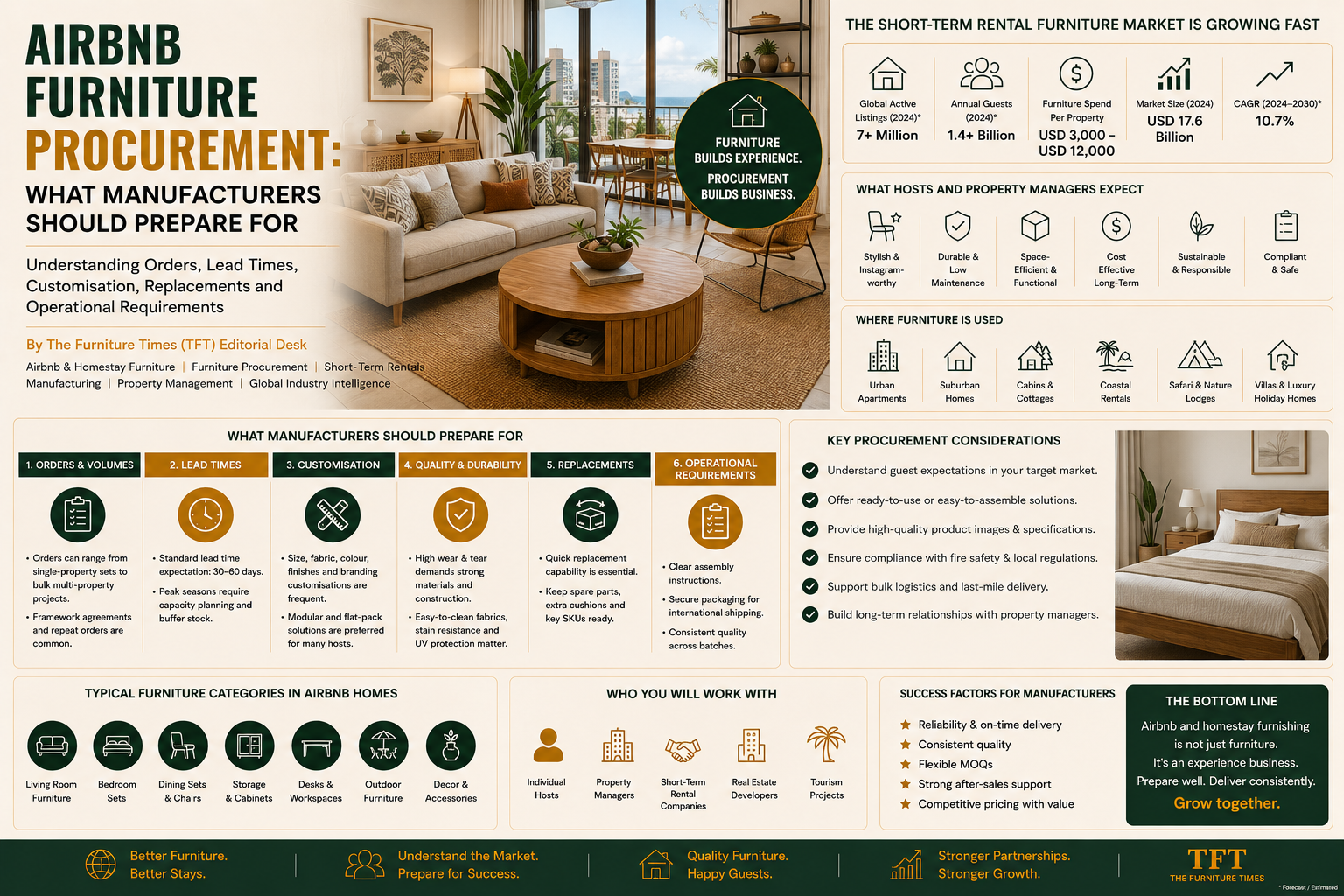
Airbnb Furniture Procurement: What Manufacturers Should Prepare For
Short-term-rental furniture orders often fall between residential retail and large hotel contracts. Manufacturers that offer complete property packages, flexible minimums, realistic lead times, spare parts, product continuity and rapid replacement can build recurring relationships with hosts, developers and professional property managers.
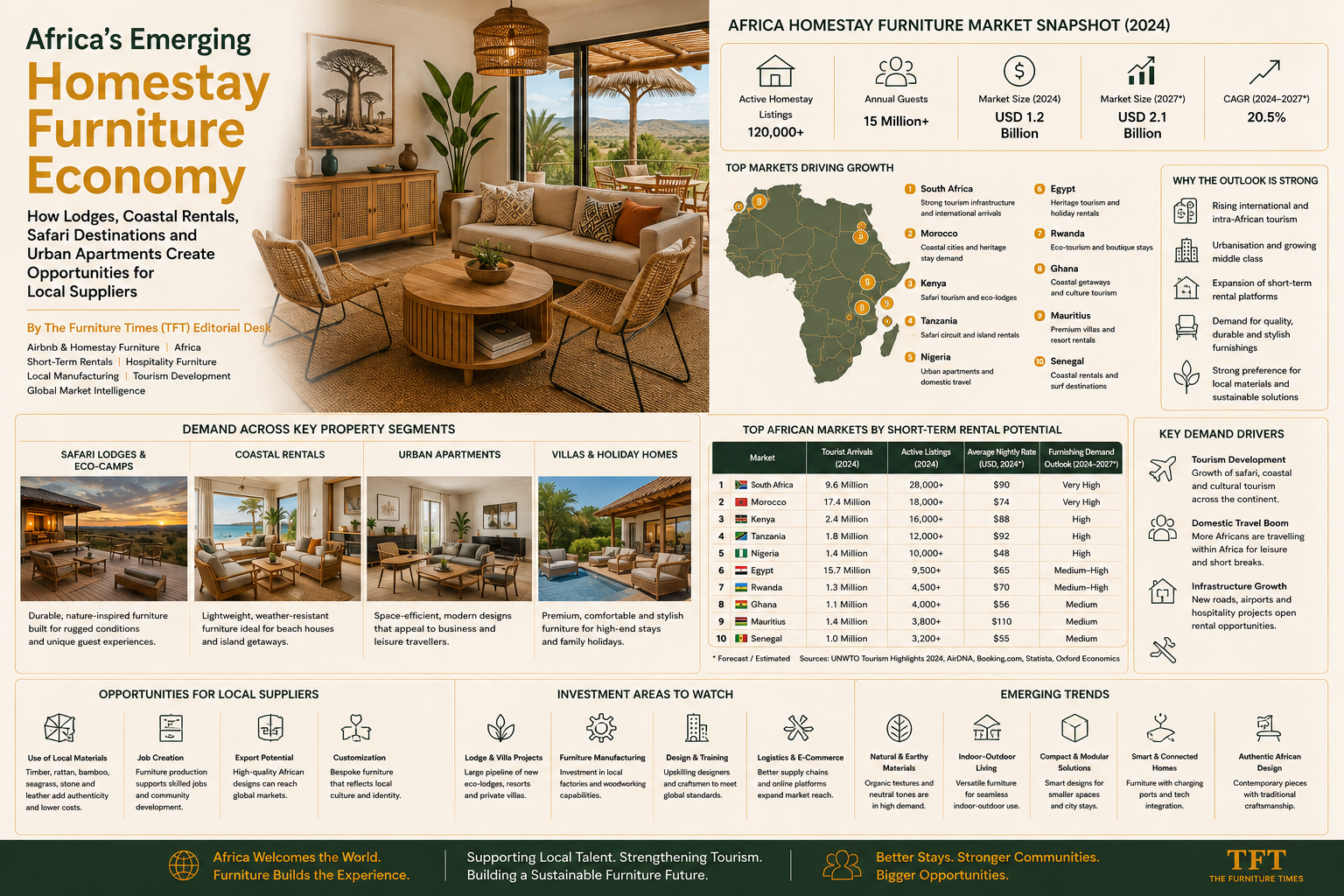
Africa’s Emerging Homestay Furniture Economy
Tourism growth across Africa is generating demand for durable, climate-appropriate and locally inspired furniture. By improving quality, standardisation, delivery and digital visibility, local suppliers can capture more value from urban rentals, safari lodges, coastal villas, heritage properties and community homestays.
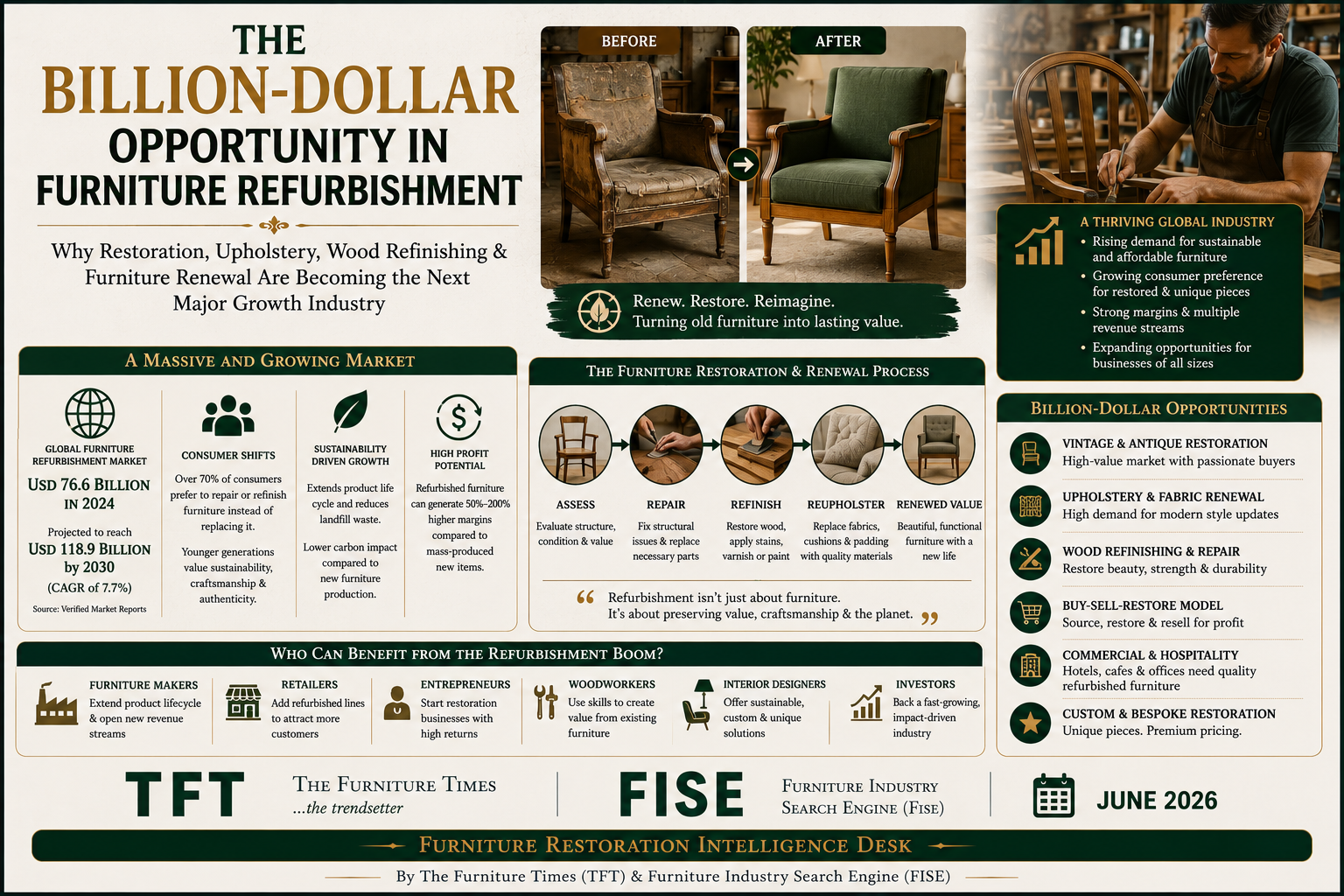
The Billion-Dollar Opportunity in Furniture Refurbishment
Discover why furniture refurbishment is evolving into a billion-dollar industry. This report explores restoration businesses, upholstery, wood refinishing, antique conservation, hospitality refurbishment, office furniture renewal, and why lifecycle management is becoming the next frontier of the furniture economy.
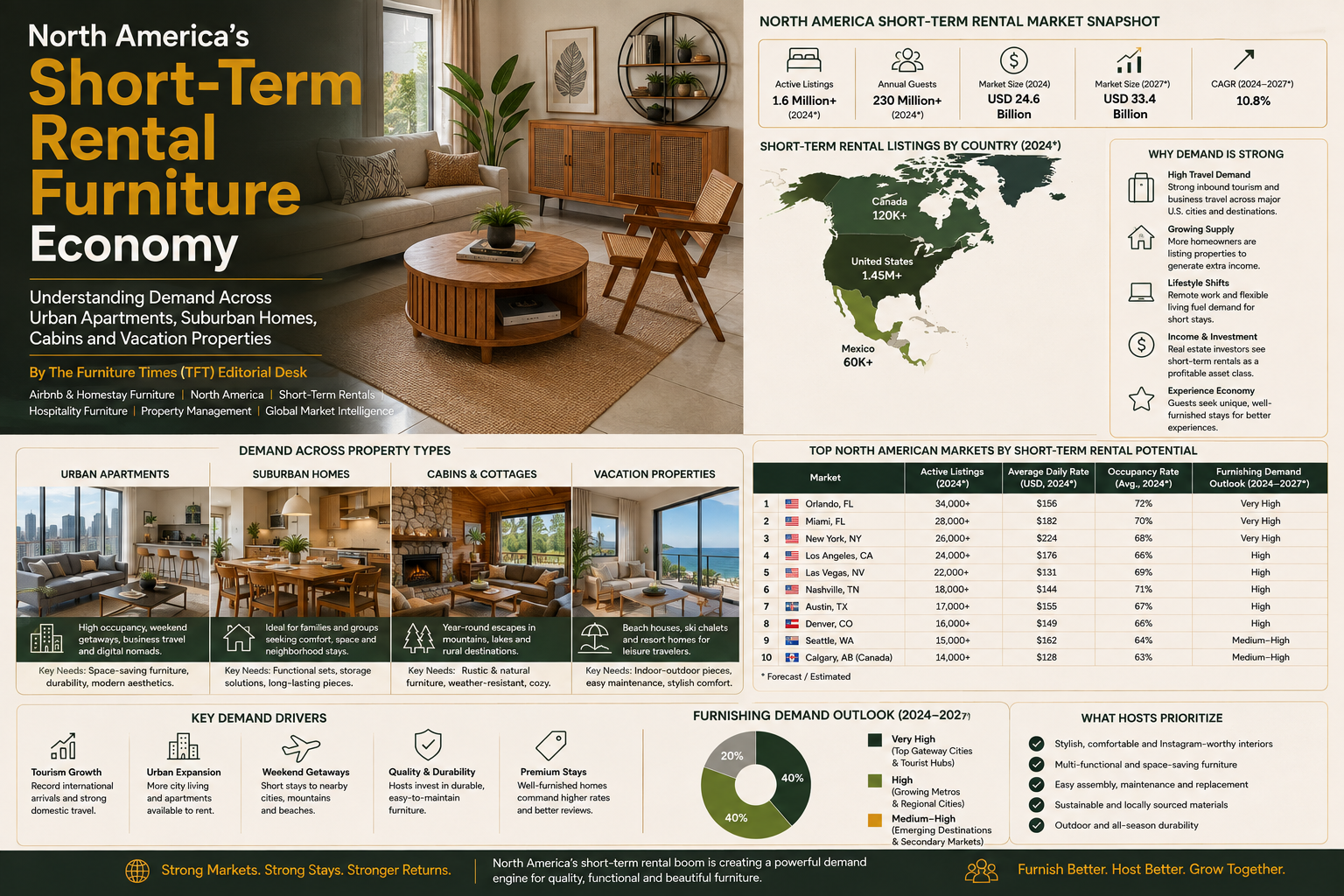
North America’s Short-Term Rental Furniture Economy
Strong domestic travel, professional property management and diverse accommodation types are creating recurring furniture demand across North America. The market requires compact urban products, family packages, cabin furniture, weather-resistant outdoor collections, rapid replacement and lifecycle-focused procurement.

The Hidden Economy Behind Airbnb and Homestay Furnishing
Airbnb and homestay furnishing supports a wide hidden economy extending beyond furniture manufacturing. Designers, component suppliers, distributors, installers, logistics companies, photographers, cleaning teams, repairers, upholsterers, property managers, technology providers and refurbishers all contribute to the performance of short-term-rental properties.
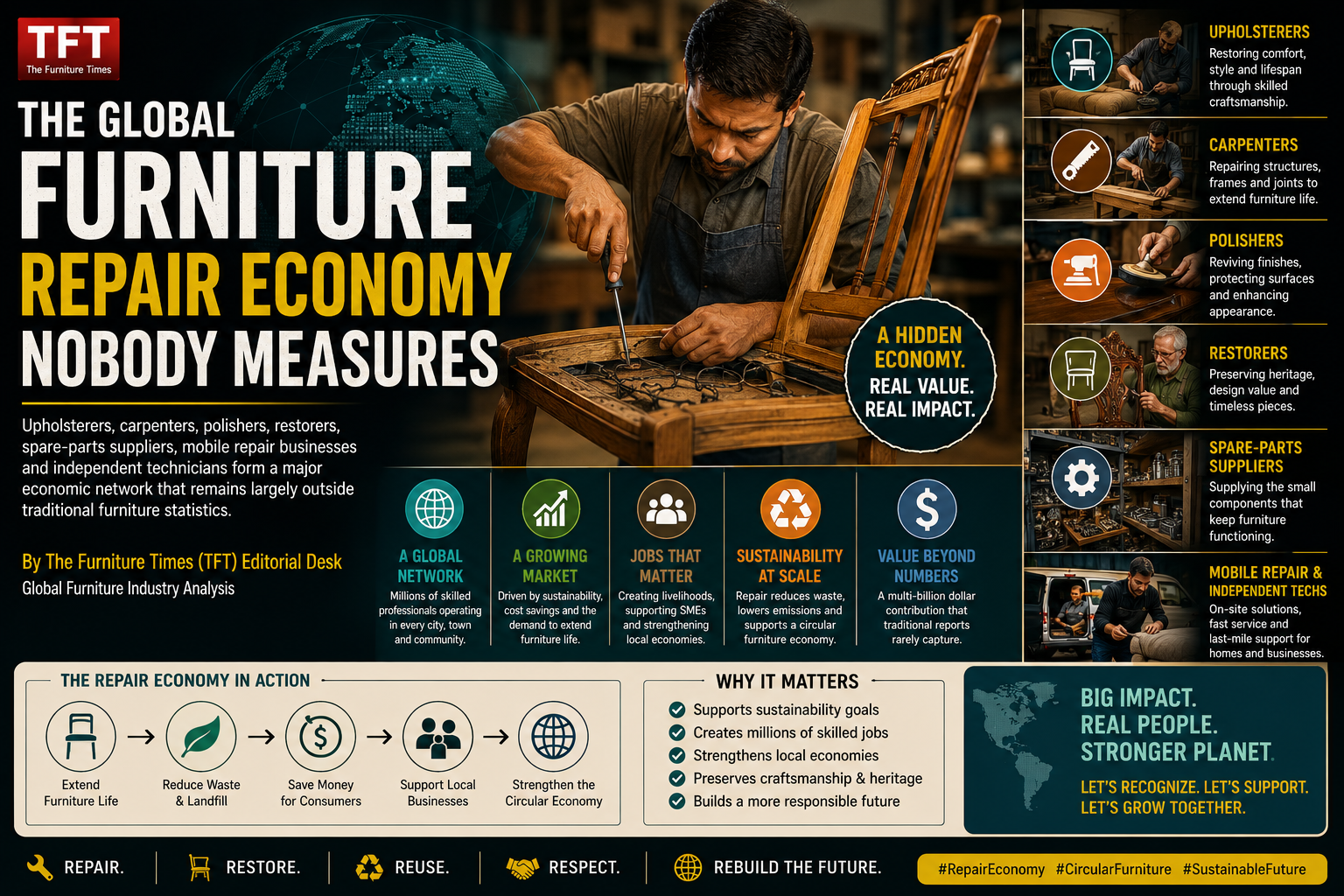
The Global Furniture Repair Economy Nobody Measures
Behind every repaired sofa, restored table and refurbished office chair is an extensive economic network. This TFT investigation examines why furniture repair remains undercounted, how it supports employment and circularity, and what the industry must do to make repair professionals visible, trusted and measurable.

The Furniture Industry After the QR Code: Why Every Product Will Need a Permanent Digital Identity
Furniture can remain in use for decades, but its manuals, service records and component information frequently disappear. Product-level digital identities could give furniture a permanent memory—supporting repair, authenticity verification, customer reviews, resale and circularity.
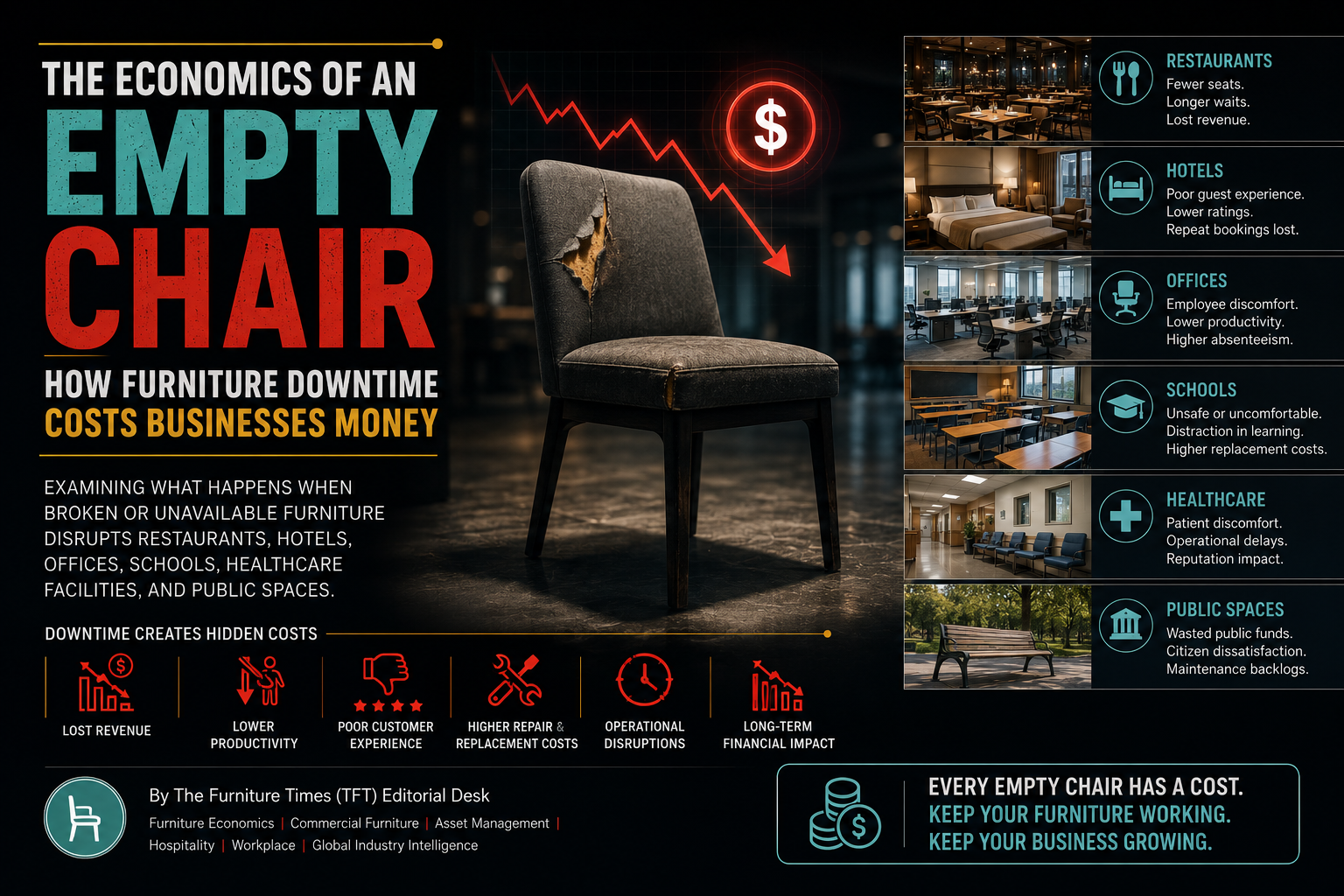
The Economics of an Empty Chair: How Furniture Downtime Costs Businesses Money
Commercial furniture is usually treated as a purchasing expense, but unusable furniture can create substantial hidden operational costs. The Furniture Times examines the economics of furniture downtime and why businesses should begin measuring uptime, repair speed, spare-parts availability and the real cost of lost usable capacity.
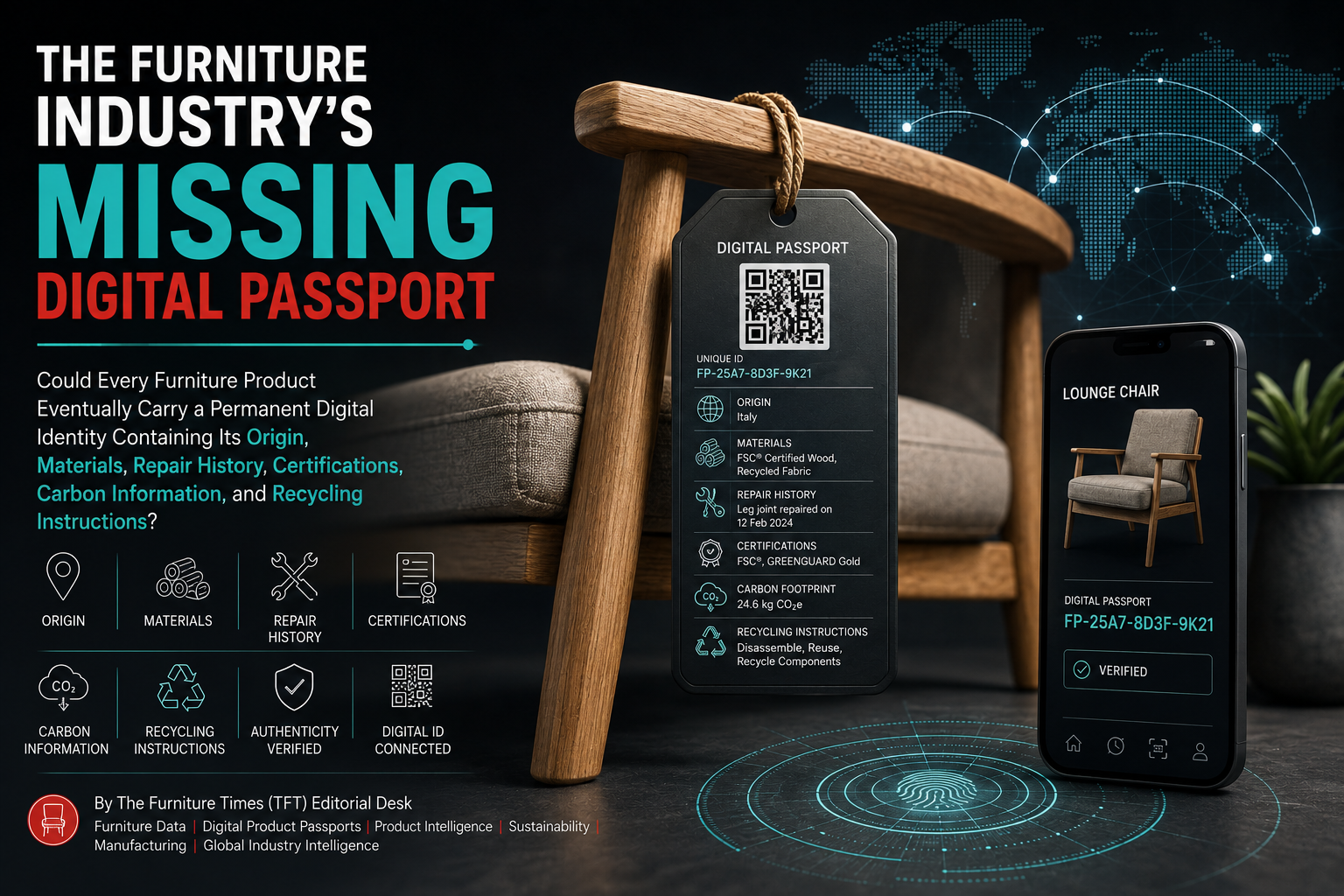
The Furniture Industry’s Missing Digital Passport
The furniture industry is moving toward a future where every product may need a permanent digital identity. The Furniture Times explores how digital product passports could transform furniture traceability, repairability, sustainability, resale, recalls, AI discovery and circularity.

The Furniture Industry Needs a Failure Database
Furniture companies collect enormous quantities of information after products are sold, but much of it remains trapped inside warranty departments, service tickets, repair records and return systems. The Furniture Times examines why the industry needs structured failure intelligence—and how it could transform product quality, sourcing, insurance, repairability and AI-driven furniture discovery.