
The Hidden Economy Behind Airbnb and Homestay Furnishing
Manufacturers, Designers, Installers, Photographers, Repairers, Cleaners and Property Managers Supporting the Sector
By The Furniture Times (TFT) Editorial Desk | Airbnb & Homestay Furniture | Short-Term Rentals | Hospitality Furniture | Property Management | Global Industry Intelligence
Behind every professionally presented Airbnb, homestay, vacation villa and serviced apartment is an economic network that most guests never see.
Travellers may notice a comfortable bed, an attractive dining area, a well-styled balcony or a memorable rattan lounge set. What they do not see are the manufacturers who produced the furniture, designers who planned the space, distributors who coordinated supply, installers who assembled the products, photographers who prepared the listing, cleaners who maintain the interior, repairers who keep furniture operational and property managers who monitor the entire guest experience.
This network forms the hidden economy behind short-term-rental furnishing.
It connects the global furniture industry with tourism, hospitality, real estate, interior design, logistics, technology, photography, cleaning, maintenance and local service businesses. It creates demand not only when a new property launches but throughout its operating life.
The scale of this opportunity is significant. As of May 2026, Airbnb reported more than 9 million active listings across over 150,000 cities and towns in more than 220 countries and regions. The platform also reported approximately 5.5 million hosts and more than 2.5 billion cumulative guest arrivals. Airbnb Newsroom
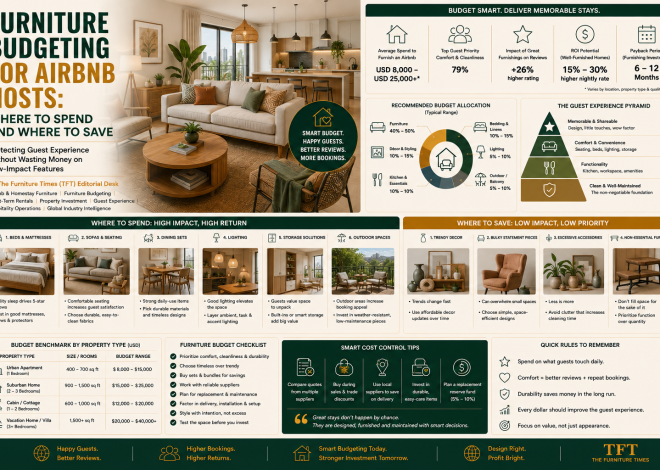
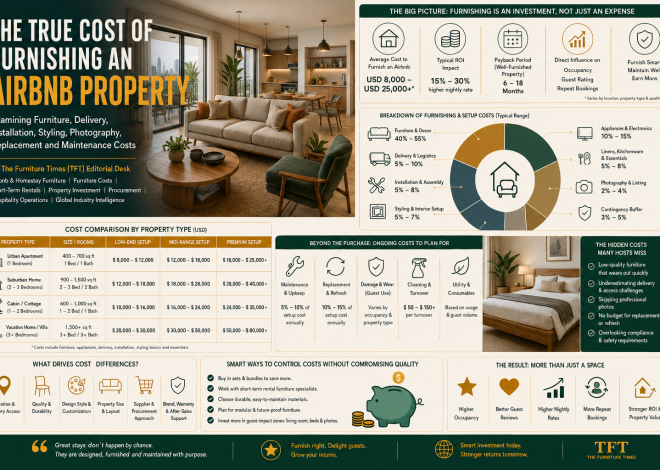
Each listing represents a physical accommodation environment requiring some combination of furniture, lighting, storage, textiles, accessories, maintenance, cleaning, photography and management.
Airbnb and homestay furnishing should therefore not be viewed as a small branch of residential retail. It is becoming an interconnected business ecosystem with its own supply chains, skills, operating requirements and future opportunities.
A Furnished Property Is the Product of Many Businesses
A guest normally sees one finished property.
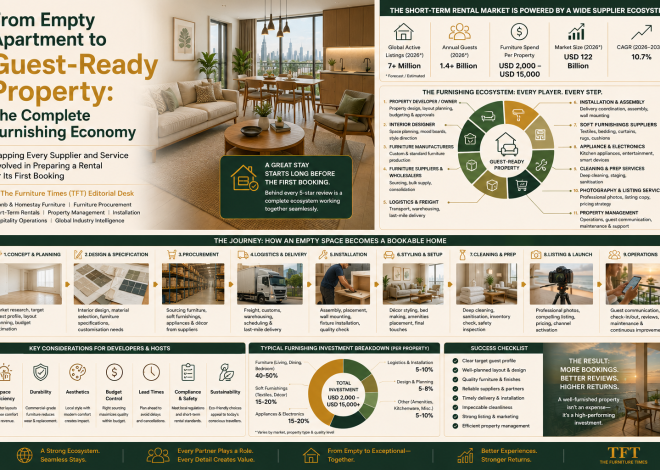
The industry sees a chain of commercial activities:
- A property owner or investor identifies an accommodation opportunity.
- A designer or furnishing consultant develops the interior concept.
- Manufacturers and suppliers provide furniture, mattresses, lighting and accessories.
- Logistics companies deliver the products.
- Installers assemble and position the furniture.
- Stylists prepare the property for photography.
- Photographers create the listing images.
- Property managers launch and operate the accommodation.
- Cleaners maintain the interior between stays.
- Repairers and maintenance teams address damage.
- Refurbishment companies extend furniture life.
- Resellers, recyclers or liquidators manage products when the property is upgraded or closed.
Each stage generates revenue and employment.
The value of the furnishing ecosystem therefore extends far beyond the factory selling a bed or the retailer supplying a sofa. It includes every business that helps transform an empty or outdated property into a functional, bookable and maintainable accommodation asset.
The Property Owner Starts the Economic Chain
The furnishing economy begins with the host, homeowner, landlord, developer or investor.
These buyers can have very different objectives.
An individual homeowner may furnish one spare room. A property investor may convert several apartments into short-term rentals. A developer may offer rental-ready units to buyers. A professional operator may manage hundreds of properties across several cities.
Their furnishing budgets and purchasing behaviour vary, but they share a common commercial objective: preparing the property to attract bookings and serve guests.
The owner must decide:
- Which type of guest the property will target
- How many guests it will accommodate
- Whether it will compete on price, design, location or experience
- How much to invest in furniture
- Which items require higher durability
- Whether to buy locally or import
- Whether to use retail or contract furniture
- How quickly the property must become operational
- Who will maintain and replace the products
- How often the interior should be refreshed
These decisions shape demand throughout the supply chain.
When owners treat furnishing as an afterthought, the result may be inconsistent products, operational problems and unplanned replacement expenses. When they treat it as part of the business strategy, they create opportunities for professional suppliers and service providers.
Furniture Manufacturers Form the Production Foundation
Manufacturers are at the centre of the hidden furnishing economy.
They produce the beds, headboards, sofas, chairs, tables, wardrobes, desks, benches, luggage racks, outdoor sets and storage systems used across short-term-rental properties.
However, products designed for ordinary residential use may not always meet the demands of guest accommodation. Short-term-rental furniture must often tolerate:
- Frequent guest turnover
- Unpredictable use
- Regular movement
- Repeated cleaning
- Luggage impact
- Food and drink spills
- Humidity and temperature changes
- Higher occupancy
- Faster visible wear
- Pressure for immediate replacement
This creates an opportunity for manufacturers to develop dedicated Airbnb and homestay collections combining residential appearance with commercial durability.
Suitable product features may include:
- Reinforced joints
- Replaceable components
- Washable cushion covers
- Scratch-resistant finishes
- Moisture-resistant materials
- Standardised hardware
- Easy assembly
- Modular construction
- Clearly stated weight capacities
- Space-efficient dimensions
- Flat-pack logistics where appropriate
- Stable long-term product availability
Manufacturers that understand property operations can become strategic partners rather than transactional suppliers.
Component Suppliers Are Part of the Hidden Infrastructure
The performance of short-term-rental furniture depends on many components that guests rarely notice.
These include:
- Hinges
- Drawer slides
- Connectors
- Fasteners
- Sofa mechanisms
- Bed hardware
- Glides and castors
- Upholstery foam
- Webbing and springs
- Mattress materials
- Fabrics
- Zippers
- Coatings
- Adhesives
- Furniture locks
- Charging units
- Lighting components
When one small component fails, an entire piece of furniture may become unusable.
A broken sofa-bed mechanism can remove sleeping capacity. A failed drawer slide can create a negative impression. Missing chair glides can damage flooring. A poor zipper can make an otherwise good cushion difficult to maintain.
Component manufacturers therefore support the reliability of the entire short-term-rental sector.
As professional operators begin tracking repairs and recurring failures, component quality may become an increasingly important procurement consideration.
Furniture Distributors Connect Supply With Local Demand
Many hosts do not purchase directly from factories. They depend on distributors, wholesalers, retailers and contract-furniture suppliers.
These businesses perform several important functions:
- Maintaining local inventory
- Providing product variety
- Coordinating multiple manufacturers
- Offering smaller quantities
- Arranging delivery
- Managing warranties
- Providing replacement products
- Supporting installation
- Advising buyers on suitable materials
- Consolidating complete property packages
Local availability is especially valuable when a critical product fails.
A host with reservations arriving in two days cannot always wait several weeks for an imported bed frame or custom dining chair. Distributors capable of providing immediate or rapid replacement can protect the property’s operational continuity.
This creates an opportunity for suppliers to establish dedicated short-term-rental product catalogues and emergency replacement services.
Interior Designers Translate Space Into Guest Experience
Interior designers are not merely selecting colours and decorative objects. In the short-term-rental economy, they connect property design with commercial performance.
A designer must consider:
- Listing photography
- Guest circulation
- Sleeping capacity
- Storage
- Cleaning access
- Furniture durability
- Target-market expectations
- Property identity
- Lighting
- Accessibility
- Maintenance
- Budget
- Replacement availability
A beautiful interior that cannot withstand repeated use is commercially weak. A durable interior that feels cold and uninviting may struggle to attract attention online.
The designer’s task is to balance both sides.
Short-term-rental designers must also understand how rooms appear through a camera. Furniture placement that works in person may not communicate space effectively in photographs. Designers therefore increasingly participate in the property’s marketing as well as its physical planning.
Furniture Stylists Create the Final Visual Layer
Between interior installation and professional photography, a stylist may prepare the property for presentation.
Styling can include:
- Arranging cushions and throws
- Preparing beds
- Positioning accessories
- Setting dining tables
- Balancing colours
- Removing visual clutter
- Creating lifestyle scenes
- Coordinating artwork
- Adding plants
- Improving visual flow
- Preparing outdoor areas
The stylist helps turn a furnished property into an aspirational accommodation experience.
However, the photographs must remain honest. Excessive styling that introduces items unavailable during the actual stay can create disappointment. The strongest presentation communicates the property’s real value clearly and attractively.
Stylists therefore operate at the intersection of interior design, marketing and guest expectations.
Installers Determine Whether the Design Works Safely
Furniture installation is one of the least visible but most important parts of the ecosystem.
A good product can fail because of poor assembly. Loose connections, incorrect fixings, unlevelled tables, unstable wardrobes and improperly installed headboards can create safety concerns and maintenance problems.
Professional installation may include:
- Furniture assembly
- Wall mounting
- Bed and headboard installation
- Wardrobe alignment
- Shelf installation
- Mirror fixing
- Lighting placement
- Outdoor-furniture setup
- Packaging removal
- Final inspection
- Correction of manufacturing or transit issues
Installers often become the final quality-control point before a property begins accepting guests.
They can identify missing parts, damaged surfaces, unstable products and layout conflicts. For multi-unit projects, experienced installation teams also improve consistency and reduce launch delays.
The growth of turnkey short-term-rental furnishing is likely to increase demand for specialised installation companies capable of handling complete property setups.
Logistics Companies Keep Projects Moving
Furniture is large, heavy and vulnerable to damage. Moving it from a factory or warehouse into apartments, villas and rural properties requires coordination.
The logistics chain may involve:
- Factory collection
- Export packing
- Container transport
- Customs clearance
- Warehousing
- Order consolidation
- Last-mile delivery
- Lift and access coordination
- Floor protection
- Assembly scheduling
- Packaging collection
- Returns management
Short-term-rental projects often operate under tight deadlines because every day a property remains unfinished may represent lost booking revenue.
Delayed delivery of a key bed, sofa or dining table can prevent the entire property from launching. This makes logistics reliability a commercial requirement.
Suppliers that provide accurate schedules, product tracking and coordinated installation can deliver greater value than companies offering furniture alone.
Photographers Convert Furniture Into Booking Assets
In short-term rentals, furniture must perform both physically and digitally.
Photographers translate the furnished space into images that guests use to evaluate the property. Their work can influence attention, click-through behaviour and booking confidence.
A specialised property photographer considers:
- Room proportions
- Furniture placement
- Natural light
- Artificial lighting
- Camera height
- Lens choice
- Colour accuracy
- Visual flow between rooms
- Hero images
- Detail photographs
- Outdoor areas
- The property’s defining features
Furniture gives the photographer the visual language through which the property’s experience is communicated.
A well-designed rattan lounge, distinctive headboard or outdoor dining set can become a central feature of the listing. Conversely, damaged, mismatched or poorly positioned furniture can weaken even technically excellent photography.
Photographers may also advise owners about visual problems that become more obvious through the camera than in person.
Cleaning Teams Protect the Furniture Investment
Cleaners are among the most important participants in short-term-rental operations.
They see the furniture more frequently than the owner, designer or manufacturer. Between stays, cleaning teams inspect surfaces, move chairs, change bedding, handle cushions and identify damage.
Their responsibilities may include:
- Removing stains
- Cleaning upholstery
- Inspecting mattresses
- Checking furniture stability
- Reporting scratches and breakages
- Repositioning products
- Resetting sofa beds
- Cleaning beneath furniture
- Preparing outdoor areas
- Identifying guest belongings
- Reporting maintenance needs
The relationship between furniture design and cleaning efficiency is substantial.
Furniture with difficult crevices, fragile finishes, heavy construction or permanently fixed covers can increase housekeeping time. Products with washable covers, accessible clearance and easy-clean surfaces can improve turnover efficiency.
For an operator managing many properties, even a small reduction in cleaning time per stay can create significant cumulative savings.
Cleaning professionals should therefore have a voice in furniture procurement. Their practical knowledge can reveal product weaknesses that are invisible in catalogues and showrooms.
Upholstery and Specialist Cleaning Create Recurring Demand
General cleaning does not address every problem. Short-term-rental properties also require specialist services such as:
- Upholstery extraction
- Mattress cleaning
- Stain removal
- Odour treatment
- Leather care
- Fabric protection
- Curtain cleaning
- Outdoor-cushion cleaning
- Mould treatment
- Pest management
These services help extend furniture life and preserve listing presentation.
A stained sofa may still be structurally sound. Specialist cleaning can prevent unnecessary replacement. Similarly, periodic mattress and upholstery treatment can support hygiene, presentation and guest confidence.
The expansion of short-term rentals therefore creates a recurring service market for specialist cleaning companies—not merely one-time demand for furniture products.
Repairers Protect Revenue and Property Uptime
Furniture repairers are critical when damage occurs between reservations.
A broken chair, loose bed frame or damaged sofa bed can quickly become an operational emergency. If the property cannot serve the number of guests advertised, the operator may face complaints, compensation or cancellations.
Repair services may include:
- Tightening structural joints
- Replacing hardware
- Repairing bed frames
- Correcting unstable chairs
- Fixing drawer slides
- Repairing sofa mechanisms
- Replacing furniture legs
- Restoring damaged surfaces
- Touching up finishes
- Repairing outdoor furniture
- Replacing rattan weaving
- Correcting water damage
Speed is often as important as technical ability.
A repair completed within hours can protect an upcoming reservation. The same repair completed weeks later may have little operational value.
This creates opportunities for mobile furniture-repair networks serving hosts, property managers, serviced apartments and vacation-rental portfolios.
Upholsterers Extend the Life of High-Use Products
Sofas, dining chairs, headboards and lounge furniture often experience visible wear before their internal structures fail.
Upholstery services can refresh these products through:
- Fabric replacement
- Foam renewal
- Cushion reconstruction
- Stitching repair
- Zip replacement
- Spring and webbing repair
- Stain-resistant fabric upgrades
- Colour changes
- Removable-cover conversion
Reupholstery can be especially valuable when a product is custom-sized or part of a standardised property portfolio.
Instead of replacing an entire sofa, the operator may restore its appearance and comfort at a lower environmental and financial cost. Upholsterers therefore play an important role in creating a more circular short-term-rental furniture economy.
Property Managers Coordinate the Entire System
Property managers sit at the centre of the operating ecosystem.
They connect the owner, guest, cleaner, maintenance team, supplier, photographer and booking platform. They must ensure that the property remains attractive, functional and available.
Furniture-related responsibilities may include:
- Creating furnishing budgets
- Selecting suppliers
- Coordinating installation
- Inspecting products
- Monitoring guest feedback
- Reporting damage
- Scheduling repairs
- Approving replacements
- Managing warranties
- Maintaining furniture inventories
- Planning refurbishment
- Standardising products across units
- Evaluating lifecycle costs
Professional property managers increasingly need furniture data.
They may want to know when an item was installed, how often it has been repaired, whether its warranty remains active and how quickly it can be replaced. This creates demand for digital furniture asset registers and maintenance systems.
As the sector professionalises, property managers may become one of the most influential furniture-buying groups.
Co-Hosts and Local Operators Expand the Service Economy
Not every property owner lives close to the accommodation. Many rely on co-hosts or local operators to manage daily responsibilities.
Airbnb’s Co-Host Network is one indication of the increasing professionalisation of local hosting services. Co-hosts may help with listing setup, reservations, guest communication, cleaning coordination and on-site support.
Their local knowledge also influences furniture decisions.
A co-host may understand:
- Which products fail frequently
- Which materials suit the climate
- Which local suppliers offer rapid replacement
- Which layouts guests prefer
- Which furniture creates cleaning difficulties
- Which products photograph well
- Which repairers respond quickly
These local operators help translate global platform demand into regional furniture and service demand.
Maintenance Technicians Support More Than Furniture
Furniture performance is connected to the broader condition of the property.
A maintenance technician may handle:
- Furniture repairs
- Wall damage
- Loose fixtures
- Lighting problems
- Plumbing leaks affecting cabinets
- Door and wardrobe alignment
- Outdoor-furniture anchoring
- Electrical connections within desks or nightstands
- Damage caused by humidity
- Safety inspections
A leak beneath a sink can damage cabinetry. Poor air circulation can affect timber furniture. Unsecured outdoor products can create hazards in strong winds.
Maintenance professionals therefore help protect furniture by addressing the building conditions around it.
Inventory Specialists Bring Control to Multi-Property Portfolios
As property portfolios grow, operators need to know what they own and where it is located.
Furniture inventory management may include:
- Product descriptions
- Photographs
- Serial or model numbers
- Supplier details
- Purchase prices
- Installation dates
- Warranty documents
- Property locations
- Condition reports
- Repair histories
- Replacement costs
- Disposal records
This information helps operators identify patterns.
If the same chair fails repeatedly across different apartments, the operator can stop purchasing it. If one sofa performs well for years, it can become part of the standard furniture package.
Inventory data can transform procurement from subjective decision-making into performance-based management.
Technology Companies Are Entering the Furnishing Chain
Technology already supports booking, pricing, access, communication and housekeeping. Furniture management is a natural next step.
Future systems could connect:
- Floor plans
- Furniture specifications
- Digital product passports
- Installation records
- Cleaning schedules
- Damage reports
- Guest-review analysis
- Warranty claims
- Repair requests
- Replacement orders
- Sustainability information
- End-of-life recovery
Artificial intelligence could identify repeated furniture complaints across reviews. Visual inspection tools may help detect damage from cleaning-team photographs. Digital twins could allow designers to test furniture layouts before purchasing.
These developments could make furniture more measurable within the operating performance of short-term accommodation.
Furniture Rental and Leasing Companies Create Flexible Alternatives
Not every host wants to purchase furniture outright.
Furniture rental or leasing may appeal to:
- New hosts testing a market
- Corporate accommodation providers
- Seasonal properties
- Developers launching multiple units
- Operators preserving working capital
- Properties requiring regular design refreshes
- Mid-term rental portfolios
- Temporary accommodation projects
A leasing provider may offer furniture, delivery, installation, maintenance, replacement and eventual removal under one agreement.
The challenge is developing pricing that reflects damage risk, transport cost and uncertain property occupancy. Nevertheless, as the market becomes more professional, furniture-as-a-service could become an important business model.
Refurbishers Support a Circular Furnishing Economy
Furniture removed from one property does not always need to become waste.
Refurbishment companies can:
- Refinish timber surfaces
- Reupholster seating
- Replace hardware
- Repair frames
- Repaint products
- Update colours
- Replace damaged panels
- Restore outdoor furniture
- Resell usable products
- Redeploy furniture across portfolios
An operator may move refurbished furniture from a premium property to a budget unit, staff accommodation or longer-term rental.
This creates a second life for furniture while reducing replacement costs and landfill waste.
Professional refurbishment networks could become increasingly valuable as environmental expectations and disposal costs rise.
Resellers and Liquidators Manage Furniture at the End of a Property Cycle
Short-term-rental properties can leave the market because of regulatory changes, ownership transfers, poor performance or conversion to long-term accommodation.
When that happens, the operator may need to remove an entire property’s furniture quickly.
Liquidators, auctioneers, resellers and second-hand platforms can help recover value from:
- Beds
- Tables
- Chairs
- Sofas
- Outdoor furniture
- Lighting
- Appliances
- Decorative accessories
- Mattresses where regulations permit resale
- Storage products
Without an organised recovery channel, usable furniture may be discarded simply because the owner lacks time or storage.
Creating more searchable secondary markets for short-term-rental furniture could reduce waste and improve asset recovery.
Insurance Companies and Claims Specialists Carry Hidden Risk
Furniture damage may involve more than ordinary wear.
Water leaks, fires, storms, guest misuse, theft and accidents can affect entire properties. Insurance providers, adjusters and restoration companies become part of the furnishing economy when serious damage occurs.
They may evaluate:
- Replacement value
- Depreciation
- Repair feasibility
- Policy coverage
- Documentation
- Product ownership
- Commercial-use exclusions
- Business interruption
- Liability risks
Hosts should understand whether their insurance covers furniture used in commercial short-term accommodation. Standard residential policies may not always address every hosting-related risk.
Accurate furniture inventories and purchase records can improve the claims process.
Safety and Compliance Specialists Support Responsible Furnishing
Furniture used in guest accommodation may be subject to fire, structural, electrical, accessibility and consumer-safety requirements depending on the jurisdiction.
Specialists may help operators evaluate:
- Upholstery flammability
- Mattress standards
- Bunk-bed safety
- Furniture stability
- Tip-over risks
- Electrical furniture components
- Child safety
- Accessible room layouts
- Outdoor-product anchoring
- Material documentation
- Product traceability
Short-term rentals often operate between residential and hospitality regulatory categories. This can create confusion about which standards apply.
Manufacturers and suppliers that provide clear testing and compliance documentation can strengthen buyer confidence and reduce risk.
Local Artisans Give Properties a Sense of Place
The hidden economy is not limited to large manufacturers.
Local craftspeople, woodworkers, weavers, metalworkers and artists can help properties create a distinctive identity. Their work may include:
- Rattan furniture
- Carved headboards
- Handcrafted tables
- Woven lighting
- Regional textiles
- Custom benches
- Ceramic accessories
- Locally inspired artwork
- Outdoor furniture
- Decorative screens
These products can help a homestay communicate the culture and character of its destination.
Local procurement may also reduce transport distances and keep more tourism spending within the community. However, artisans entering this market must consider consistency, durability, delivery schedules and repairability.
The opportunity is to combine authenticity with operational reliability.
Education and Training Will Become More Important
The sector needs professionals who understand both furniture and short-term-rental operations.
Training opportunities may emerge around:
- Furniture procurement
- Space planning
- Hospitality styling
- Property photography
- Installation
- Furniture inspection
- Upholstery care
- Damage reporting
- Lifecycle-cost analysis
- Sustainable refurbishment
- Portfolio standardisation
- Guest-experience design
Hosts also need education. Many enter the market without understanding material performance, contract furniture, warranty conditions or maintenance requirements.
Industry associations, manufacturers, design schools and accommodation platforms could help develop more structured knowledge for this growing category.
The Economic Multiplier Behind One Furnished Property
Consider what happens when an investor prepares one apartment for short-term rental.
The investor may purchase a bed, mattress, sofa, dining table, chairs, desk, wardrobe, bedside tables, lighting, curtains, outdoor furniture and accessories. Those purchases generate demand for materials, components, manufacturing, packaging and transportation.
A designer plans the space. Installers assemble the products. A photographer creates the listing. A property manager operates the unit. Cleaners maintain it. Repairers address damage. Upholsterers refresh worn furniture. Eventually, resellers or recyclers recover remaining value.
One furnished property can therefore support numerous economic activities over several years.
Multiply that activity across millions of global short-term-rental listings and the scale of the hidden economy becomes much more visible.
Major Opportunities for the Furniture Industry
The short-term-rental furnishing economy creates several strategic opportunities.
Dedicated Product Collections
Manufacturers can develop furniture specifically for intensive guest use, efficient cleaning and rapid replacement.
Turnkey Property Packages
Suppliers can provide complete furnishing solutions for studios, apartments, villas and homestays.
Regional Replacement Networks
Distributors can maintain local stock for urgent repairs and replacements.
Mobile Repair Services
Repairers can offer rapid-response services to protect upcoming reservations.
Furniture Asset Management
Technology providers can track product location, condition, warranty and repair history.
Cleaning-Friendly Product Design
Manufacturers can work with housekeeping teams to reduce cleaning time and improve hygiene.
Circular Furniture Services
Refurbishment, resale and take-back programmes can reduce waste and recover asset value.
Portfolio Standardisation
Professional operators can develop repeatable furniture specifications across multiple properties.
Local Craft Integration
Designers can incorporate regional craftsmanship into durable commercial interiors.
Furniture Leasing
Service providers can offer flexible furnishing models for new and expanding operators.
These opportunities require collaboration across the industry rather than isolated product sales.
What the Industry Must Improve
Despite its growth, the short-term-rental furnishing sector remains fragmented.
Hosts often struggle to find suppliers who understand their operating needs. Manufacturers may not provide sufficient performance information. Designers may focus heavily on appearance without considering maintenance. Repair services may be difficult to locate. Furniture inventories may not exist.
The industry needs:
- Clearer product specifications
- Better durability testing
- Faster replacement systems
- More repairable products
- Stronger supplier directories
- Greater price transparency
- Professional installation standards
- Better furniture asset records
- More circular recovery channels
- Closer cooperation with cleaners and property managers
- Improved training for hosts
- Better visibility for specialist suppliers
Searchability will also matter. A furniture manufacturer may offer the perfect product, but that opportunity has little value if property managers cannot find the company.
This is where industry platforms and specialised furniture search infrastructure can help connect manufacturers, designers, installers, repairers and accommodation operators.
Conclusion
The furniture inside an Airbnb or homestay represents only the visible surface of a much larger economy.
Behind it stands a network of manufacturers, component suppliers, distributors, interior designers, installers, logistics companies, stylists, photographers, cleaners, repairers, upholsterers, property managers, technology providers, insurers, refurbishers and resellers.
Together, they transform empty properties into bookable accommodation, protect the guest experience and keep the property operational.
As short-term rentals become more professional, this network will become more structured. Furniture will increasingly be selected according to durability, cleanability, replacement speed, lifecycle cost and measurable guest impact. Service providers will become specialised. Property portfolios will standardise their procurement, and technology will connect furniture with maintenance and review data.
The hidden economy behind Airbnb and homestay furnishing is therefore much larger than furniture sales alone. It is a global support ecosystem linking the furniture industry with hospitality, tourism, property investment and local employment.
Recognising this ecosystem is the first step toward developing better products, stronger services and more sustainable commercial opportunities across the entire sector.