
The True Cost of Furnishing an Airbnb Property
Examining Furniture, Delivery, Installation, Styling, Photography, Replacement and Maintenance Costs
By The Furniture Times (TFT) Editorial Desk | Airbnb & Homestay Furniture | Furniture Costs | Short-Term Rentals | Property Investment | Procurement | Hospitality Operations | Global Industry Intelligence
The cost of furnishing an Airbnb property is almost always greater than the price of the furniture.
An owner may begin with a straightforward shopping list: beds, mattresses, a sofa, dining furniture, wardrobes and bedside tables. But turning an empty apartment or holiday home into a guest-ready property requires a much wider investment.
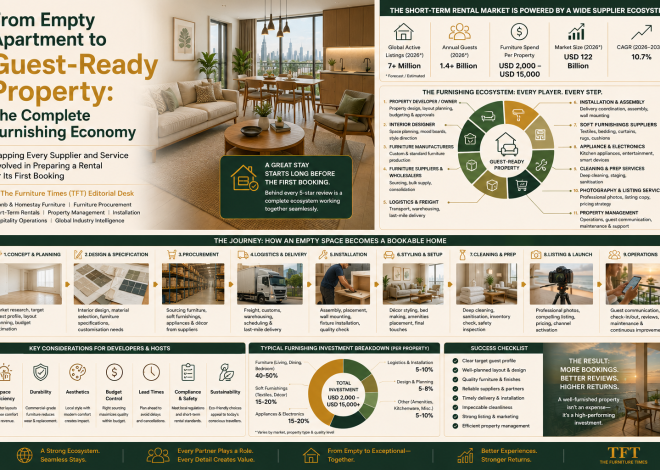
Furniture must be delivered, assembled and installed. Curtains and lighting must be fitted. Kitchens and bathrooms must be equipped. Linen, artwork and accessories must be purchased. The property must be cleaned, styled, photographed and prepared for digital listing.
After the first booking, a second category of costs begins. Furniture loosens, fabrics stain, kitchenware disappears, mattresses age, linen becomes damaged and appliances fail. Some items require repair. Others must be replaced immediately to prevent cancellations or negative reviews.
The true furnishing cost is therefore not one invoice. It is a lifecycle expense extending from initial planning to eventual refurbishment.
For hosts, property developers, investors and furniture suppliers, understanding this complete cost is essential. A property can be attractively furnished yet financially inefficient if products are difficult to clean, expensive to repair or impossible to replace.
There is no universal furnishing price
No single figure can accurately describe what it costs to furnish an Airbnb or homestay.
A compact studio in Kuala Lumpur, Bangkok or Istanbul cannot be compared directly with a three-bedroom apartment in London, a coastal villa in Bali, a mountain cabin in North America or a premium holiday home in Dubai.
The cost varies according to:
- Country and city
- Property size
- Number of bedrooms
- Advertised guest capacity
- Target nightly rate
- Local labour costs
- Import duties and freight
- Furniture quality
- Customisation
- Building-access conditions
- Availability of local suppliers
- Climate and material requirements
- Safety regulations
- Owner expectations
- Management model
- Speed of completion
A property intended for occasional budget stays may use a different specification from one targeting premium travellers throughout the year. A furnished apartment purchased directly from a developer may require only accessories and operating supplies, while an empty villa may need a complete interior, outdoor furniture and custom joinery.
Any furnishing estimate should therefore be treated as a project-specific calculation—not a universal promise.
The complete cost equation
The true cost can be expressed as:
True Furnishing Cost = Planning + Furniture + Furnishings + Equipment + Delivery + Installation + Styling + Photography + Contingency + Maintenance + Replacement + Downtime
Many first-time hosts calculate only the furniture and perhaps the appliances. The remaining categories appear later as unexpected expenses.
A more accurate budget separates costs into three stages:
- Initial capital cost: everything required to prepare and launch the property.
- Recurring operating cost: cleaning-related wear, repairs, linen replacement and maintenance.
- Future capital cost: major replacement, refurbishment and redesign.
All three affect the investment return.
1. Planning and professional advice
Before furniture is purchased, the property may require measurement, space planning, interior design and procurement advice.
These services can include:
- Site measurement
- Furniture layouts
- Mood boards
- Colour and material selection
- Furniture schedules
- Lighting plans
- Custom furniture drawings
- Supplier comparison
- Procurement management
- Delivery coordination
- Installation supervision
- Final inspection
Some owners avoid professional fees by purchasing everything themselves. That can work for a small and uncomplicated property, but errors may cost more than the advice saved.
Common mistakes include ordering furniture that does not fit through the entrance, selecting an oversized sofa, blocking electrical outlets, underestimating storage or choosing finishes that cannot tolerate repeated cleaning.
Professional planning is not valuable merely because it makes the property attractive. Its financial purpose is to reduce mistakes, delays, unsuitable purchases and inefficient use of space.
2. Core furniture costs
Furniture is normally the largest visible part of the setup budget.
A complete property may require:
Bedroom furniture
- Bed frames
- Headboards
- Mattresses
- Bedside tables
- Wardrobes
- Drawer units
- Dressing tables
- Mirrors
- Luggage benches
- Additional guest beds
Living-room furniture
- Sofa
- Sofa bed
- Lounge chairs
- Coffee table
- Side tables
- Television cabinet
- Console table
- Shelving
- Ottomans
Dining and workspace furniture
- Dining table
- Dining chairs
- Bar stools
- Desk
- Work chair
- Bench seating
Outdoor furniture
- Balcony set
- Outdoor dining furniture
- Sun loungers
- Daybeds
- Parasols
- Side tables
- Storage boxes
The advertised guest capacity has a direct influence on the furniture budget. A property claiming to accommodate six people should provide enough dining and living-room seating for that occupancy—not only enough places to sleep.
The cheapest furniture can reduce the initial invoice but increase future costs. Lightweight chairs, weak bed frames, thin table surfaces and non-replaceable upholstery may not withstand frequent guest use.
The mattress is not a decorative expense
A mattress is sometimes treated as a hidden product because it is covered by linen and contributes little to listing photography. Operationally, however, it is one of the most important purchases.
Poor sleep can influence reviews, while mattress failure is difficult to solve during an active booking schedule.
The sleep-system budget may include:
- Mattress
- Mattress base
- Bed frame
- Headboard
- Mattress protector
- Pillow protectors
- Pillows
- Duvet
- Linen sets
- Blackout curtains
- Bedside lighting
A protective cover is a relatively small additional expense that can extend mattress life. The owner should also consider whether the mattress size is widely available locally. An unusual size may create recurring difficulties when replacing linen, protectors or the mattress itself.
Sofa beds: extra revenue or extra maintenance?
A sofa bed can increase advertised occupancy without adding another bedroom. This may improve the apparent earning potential of a small apartment.
However, it introduces additional costs:
- More complex mechanisms
- Higher initial purchase price
- Increased mechanical failure risk
- Additional linen
- Longer housekeeping time
- Reduced living space when opened
- Possible guest discomfort
- More frequent upholstery wear
A sofa bed should not be added merely to increase the occupancy number. The room must remain usable when it is open, and the product must be suitable for the expected frequency of sleeping use.
3. Curtains, blinds and window treatments
Window treatments are often underestimated during initial budgeting.
The cost may include:
- Site measurement
- Curtain tracks or rods
- Sheer curtains
- Blackout curtains
- Blinds
- Custom sewing
- Delivery
- Installation
- Motorisation
- Future fabric replacement
Bedrooms generally require privacy and effective light control. Decorative curtains that do not block external light can lead to guest complaints and later replacement.
Large windows, double-height spaces and curved glazing can make window treatments a major project expense. Motorised systems add convenience and visual appeal but also introduce motors, controls and maintenance requirements.
4. Lighting and electrical adjustments
A property may be handed over with basic ceiling lights but still require hospitality-oriented lighting.
Possible costs include:
- Bedside lamps
- Reading lights
- Floor lamps
- Desk lights
- Pendant fixtures
- Mirror lighting
- Outdoor lighting
- Replacement bulbs
- Additional sockets
- USB charging
- Electrical labour
- Wall repairs after installation
Lighting contributes to functionality and photography. A dark apartment may require additional fixtures before it can be presented effectively online.
Product placement must be coordinated with electrical points. Extension cables and visible wiring can damage the appearance of the interior and create safety concerns.
5. Appliances and electronics
Appliances can represent a significant part of the furnishing budget, particularly in larger properties.
A full package may include:
- Refrigerator
- Hob
- Oven
- Microwave
- Washing machine
- Dryer
- Dishwasher
- Television
- Air conditioners
- Ceiling or portable fans
- Kettle
- Coffee machine
- Toaster
- Vacuum cleaner
- Iron
- Hairdryer
- Water heater
- Water filter
- Safe
- Smart-home devices
The invoice price is only one part of the cost. Delivery, installation, electrical work, plumbing connections, mounting brackets, warranty registration and future servicing must also be considered.
A lower-priced appliance without local after-sales support can become more expensive when it fails and the owner must replace it immediately.
6. Kitchenware and operating inventory
Many hosts remember the major appliances but underestimate the combined cost of smaller items.
A guest-ready kitchen may need:
- Plates
- Bowls
- Mugs
- Glasses
- Cutlery
- Pots and pans
- Cooking utensils
- Knives
- Cutting boards
- Serving dishes
- Food-storage containers
- Dish rack
- Waste bins
- Cleaning tools
- Bottle opener
- Can opener
- Trays
- Tea and coffee equipment
The cost of these items increases with guest capacity. A family property requires more inventory and often stronger products than a studio serving one or two travellers.
Breakage and disappearance should be expected. Standardised kitchenware is easier to replenish than unusual collections purchased as complete sets.
7. Linen, towels and laundry reserves
The cost of linen is not limited to the sets placed on beds for photography.
A property needs enough stock to continue operating while used linen is being cleaned. Professionally managed properties may keep multiple complete sets for each sleeping position.
The linen budget may include:
- Fitted and flat sheets
- Pillowcases
- Duvet covers
- Mattress protectors
- Pillow protectors
- Bath towels
- Hand towels
- Face towels
- Pool towels
- Bathmats
- Kitchen towels
- Spare blankets
If the property accommodates more guests through a sofa bed or folding bed, separate linen must be purchased and stored.
Replacement is inevitable. Stains, tears, lost items and laundering gradually reduce stock. Linen should therefore be treated as a recurring operating asset rather than a permanent furnishing.
8. Bathroom supplies and guest amenities
The bathroom setup may appear inexpensive item by item, but the total can be substantial.
Initial products can include:
- Towel rails
- Hooks
- Shelving
- Mirrors
- Shower curtains
- Soap dispensers
- Tissue holders
- Waste bins
- Toilet brushes
- Hairdryers
- Amenity trays
- First-aid supplies
Consumable products such as soap, shampoo and toilet tissue belong primarily to operating costs, but the first stock purchase must be included in the launch budget.
9. Smart locks, internet and property technology
A modern short-term rental may require a technology package before it can operate efficiently.
This can include:
- Smart lock
- Keypad
- Lockbox
- Intercom integration
- Wi-Fi router
- Mesh-network equipment
- Noise-monitoring devices
- Leak sensors
- Smart thermostat
- Energy controls
- Digital guest-guide subscription
- Property-management software
- Channel-management software
Installation may require a locksmith, electrician, internet technician or building-management approval.
Subscription fees convert some setup items into recurring costs. Batteries, replacement keypads and emergency lock support also need to be budgeted.
10. Safety and compliance expenses
Safety equipment should never be treated as an optional finishing accessory.
Depending on local laws and property characteristics, owners may need:
- Smoke alarms
- Carbon-monoxide alarms
- Fire extinguishers
- Fire blankets
- First-aid kits
- Emergency lighting
- Pool-safety equipment
- Window restrictors
- Furniture anchoring
- Electrical inspections
- Gas inspections
- Fire-safety certification
- Occupancy signage
- Emergency instructions
Airbnb’s safety guidance states that hosts must provide secure spaces, address known hazards and comply with applicable laws, including fire requirements and safe occupancy limits. Airbnb safety requirements
Compliance costs vary greatly between locations. Owners must investigate local planning, licensing, building-management, insurance and safety requirements rather than relying on a general platform checklist.
11. Delivery is a separate project cost
“Free delivery” is not always available, particularly for contract furniture, multiple suppliers or remote properties.
Delivery costs may include:
- Factory collection
- Freight
- Customs duties
- Port and handling charges
- Warehouse storage
- Local transport
- Building-delivery fees
- Lift booking
- Stair carry
- Protective materials
- Redelivery
- Packaging removal
Difficult access can increase costs significantly. A sofa that does not fit in the lift may require disassembly, specialist handling or replacement.
Owners furnishing several apartments may reduce unit costs through consolidated delivery, but they also need storage and inventory coordination.
12. Assembly and installation costs
Furniture delivery does not necessarily include assembly.
The installation budget may cover:
- Bed assembly
- Wardrobe assembly
- Headboard fixing
- Furniture anchoring
- Curtain installation
- Mirror hanging
- Artwork installation
- Television mounting
- Appliance connection
- Furniture positioning
- Touch-up work
- Defect correction
- Packaging disposal
Installation quality affects furniture life. A strong bed assembled incorrectly can loosen quickly. A tall cabinet that is not anchored may create a safety risk.
The owner should confirm whether installation, debris removal and snag correction are included before accepting a supplier quotation.
13. Styling and decoration costs
Styling helps a rental stand out in a highly visual marketplace.
The styling budget may include:
- Artwork
- Rugs
- Decorative cushions
- Throws
- Plants
- Mirrors
- Vases
- Books
- Trays
- Local crafts
- Wall decoration
- Outdoor accessories
These items can improve photography and create a sense of place, but excessive styling increases cleaning time and replacement risk.
The commercial question is not whether an accessory is attractive. It is whether it improves the property’s positioning enough to justify its purchase, cleaning and replacement cost.
Fragile, valuable and irreplaceable objects are usually unsuitable for high-turnover accommodation.
14. Professional photography costs
The property cannot generate bookings until guests can evaluate it online.
Photography should therefore be treated as part of the investment required to launch—not as an optional marketing expense.
Costs may include:
- Professional photographer
- Interior stylist
- Lighting equipment
- Image editing
- Drone photography where permitted
- Floor plans
- Video
- Virtual tours
- Travel charges
- Reshoots after major changes
Airbnb says high-quality photographs help guests imagine themselves in a property and can improve listing visibility. Its guidance recommends clear images that highlight important amenities while accurately showing what guests can expect. Airbnb hosting guidance, Airbnb photography guidance
Photography may need to be repeated after refurbishment, furniture replacement or significant amenity changes. Outdated photographs can create an accuracy problem if the physical property no longer matches the listing.
15. Initial cleaning and launch preparation
A newly furnished property normally requires a detailed post-installation clean.
Construction dust, packaging residue, fingerprints and textile fibres must be removed from:
- Floors
- Windows
- Cabinets
- Upholstery
- Appliances
- Bathrooms
- Balconies
- Furniture surfaces
- Areas beneath beds and sofas
The initial clean may cost more than a standard booking turnover because the team is dealing with installation residue and preparing every cabinet, utensil and textile for first use.
There may also be costs for:
- Pest control
- Odour removal
- Laundry
- Linen preparation
- Inventory counting
- Appliance testing
- Key duplication
- Guest-guide preparation
- Property inspection
16. Contingency: the budget most owners forget
Almost every furnishing project encounters an unexpected cost.
Typical problems include:
- A product arriving damaged
- A supplier missing the deadline
- Furniture not fitting
- Incorrect curtain measurements
- Extra electrical work
- Additional delivery attempts
- Installation damage
- Missing kitchenware
- Last-minute safety equipment
- Building-access fees
- Product discontinuation
- Currency movements
- Import charges
- Photography rescheduling
A contingency allowance should be reserved rather than using the entire budget for products. The appropriate amount depends on project complexity, location and reliance on imported or custom furniture.
An illustrative allocation—not a universal quotation
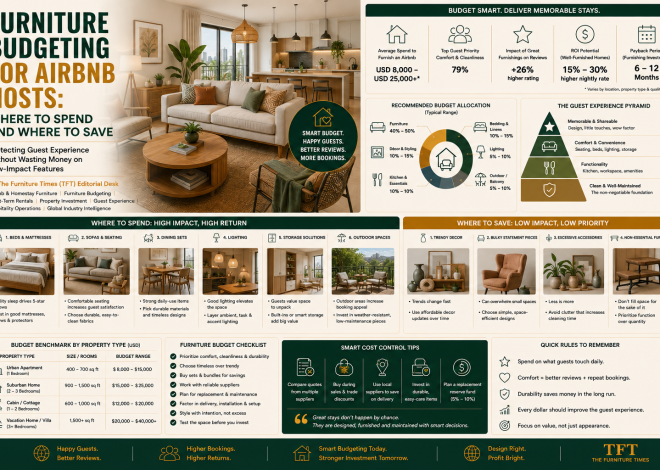
The following example shows how a host might distribute an initial furnishing budget. It does not represent a market price or recommended spending level.
| Cost category | Illustrative share |
|---|---|
| Core furniture and mattresses | 35% |
| Appliances and electronics | 15% |
| Curtains, lighting and textiles | 10% |
| Kitchen, bathroom and operating inventory | 8% |
| Delivery and warehousing | 7% |
| Assembly and installation | 7% |
| Design, procurement and project coordination | 6% |
| Styling and accessories | 4% |
| Photography and listing preparation | 3% |
| Safety and technology | 2% |
| Contingency | 3% |
| Total initial budget | 100% |
The actual proportions can differ dramatically. Imported furniture may increase freight costs. Custom interiors may increase design and joinery expenditure. A property already equipped with appliances may spend more on styling and outdoor furniture.
The table’s purpose is to demonstrate that the furniture invoice may represent only part of the launch cost.
Lifecycle cost matters more than purchase price
The most useful financial measure is not the initial price but the annualised cost of use.
A simple calculation is:
Annualised Furniture Cost = Purchase and Installation Cost ÷ Expected Useful Life
A more complete version is:
Lifecycle Cost = Purchase + Delivery + Installation + Maintenance + Repair + Replacement + Disposal + Downtime
Imagine two dining-chair options:
- Chair A has a low purchase price but loosens quickly, stains easily and cannot be repaired.
- Chair B costs more but has stronger joinery, replaceable components and a cleanable finish.
Chair A may appear economical at purchase while becoming more expensive over several operating years.
The same logic applies to beds, sofas, outdoor furniture, curtains and appliances.
Maintenance begins immediately
Furniture does not remain in showroom condition after opening.
Short-term rentals experience:
- Repeated luggage impact
- Frequent chair movement
- Regular bed stripping
- Intensive cleaning
- Spills and stains
- Unfamiliar guest behaviour
- Children and pets
- Sunlight exposure
- Humidity
- Outdoor weather
- Higher-than-expected occupancy
Maintenance costs can include:
- Tightening furniture joints
- Upholstery cleaning
- Fabric protection
- Touch-up painting
- Wood refinishing
- Mechanism repair
- Drawer and hinge replacement
- Curtain-track repair
- Mattress cleaning
- Rug cleaning
- Pest treatment
- Outdoor furniture care
Preventive maintenance usually costs less than emergency replacement. Property managers should inspect furniture between stays and record small defects before they become failures.
Normal wear is an owner’s cost
Hosts should not assume that all furniture deterioration will be paid for by guests or a platform-protection program.
Airbnb’s Host Damage Protection has conditions, exclusions and claim requirements. The company explicitly states that normal wear and tear is not covered. It also clarifies in its applicable terms that the protection is not a substitute for insurance. Airbnb Host Damage Protection, Host Damage Protection terms
The distinction matters:
- A guest breaking a table may constitute damage.
- A table surface gradually wearing after hundreds of stays is normal deterioration.
- A chair loosening due to age or insufficient maintenance may be an operating issue.
- Linen losing its colour through repeated laundering is expected consumption.
Hosts need replacement reserves because wear is part of the rental business model.
Replacement should be planned before purchase
The best time to consider replacement is before the original product is ordered.
Owners should ask:
- Will this model remain available?
- Can individual components be replaced?
- Is the upholstery fabric identifiable?
- Are spare covers available?
- Can the manufacturer supply another matching unit?
- Is the finish standard or custom?
- Is there a local repair service?
- Can the product be moved without specialist equipment?
- What is the commercial-use warranty?
- How long is the replacement lead time?
A discontinued chair can force the owner to replace an entire dining set. A custom sofa fabric may become impossible to match. A bed frame without spare slats can create unnecessary downtime.
Standardisation reduces these risks, particularly across multiple properties.
The cost of downtime
Furniture failure can create a cost much larger than the replacement product.
If the only bed becomes unusable, the property may be unable to accept guests. The financial impact can include:
- Cancelled reservations
- Refunds
- Relocation expenses
- Emergency delivery
- Contractor call-out charges
- Lost booking nights
- Negative reviews
- Platform penalties
- Management time
- Updated photography
This is the hidden cost of an unavailable furniture item.
A replacement costing $200 may create a total business loss several times higher if it takes a week to arrive during peak season.
Operators should identify operationally critical products:
- Beds
- Mattresses
- Dining chairs
- Sofa beds
- Locks
- Air conditioners
- Refrigerators
- Water heaters
- Curtains providing privacy
Critical items require faster replacement pathways than decorative accessories.
Cleaning cost is influenced by furniture design
Furniture affects the time and labour required for every turnover.
Deep buttoning, delicate fabrics, complex accessories and narrow floor gaps can slow housekeeping. Heavy furniture makes it difficult to clean underneath. Open shelves collect dust. Light-coloured upholstery exposes stains more visibly.
An inexpensive product that adds several minutes to each cleaning cycle creates a recurring labour cost.
Across dozens or hundreds of stays, those minutes accumulate.
Furniture should therefore be evaluated according to:
- Surface cleanability
- Access underneath
- Number of removable components
- Fabric stain resistance
- Drying time
- Ability to withstand cleaning chemicals
- Ease of resetting
- Visibility of damage
- Risk of trapping dust or hair
Housekeeping teams can provide valuable advice before products are selected.
Pet-friendly and family properties face additional costs
Properties accepting pets or targeting families may need different materials and replacement assumptions.
Potential costs include:
- Washable sofa covers
- Rug cleaning
- Scratch-resistant finishes
- Additional vacuuming
- Odour treatment
- Mattress protection
- Child-safety products
- High chairs
- Travel cots
- Furniture anchoring
- Stair gates
- Replacement cushions
Airbnb notes that pet fees can be used to address expected additional cleaning, such as removing fur from furniture, but normal wear and operational cleaning still require careful budgeting. Airbnb pet-hosting guidance
Outdoor furniture has its own replacement cycle
Outdoor products face environmental wear in addition to guest use.
The replacement rate is influenced by:
- UV exposure
- Rain
- Humidity
- Salt air
- Temperature variation
- Pool chemicals
- Wind
- Storage availability
- Frequency of cleaning
A low-cost residential patio set may not be suitable for a heavily booked coastal villa. Cushions may fade, metal may corrode and lightweight furniture may become unstable in wind.
Protective covers, off-season storage and replaceable cushions can extend useful life, but they also have costs. These should be included when comparing products.
Quality can affect commercial performance
Furniture does not determine bookings by itself. Location, price, service, cleanliness and listing accuracy remain central. However, furniture contributes to many aspects of the guest experience.
It affects:
- Photographic appeal
- Sleep quality
- Comfort
- Perceived cleanliness
- Workspace usability
- Dining capacity
- Storage
- Accessibility
- Noise
- Safety
- Value perception
Airbnb’s review categories include cleanliness, accuracy and value, while Guest Favorites are identified using ratings, reviews and reliability information. Airbnb review guidance
Better furnishings cannot rescue poor management, but unsuitable furniture can undermine an otherwise well-operated property.
When should furniture be replaced?
There is no fixed replacement schedule suitable for every rental.
Replacement should be based on condition, guest experience, safety, repairability and property positioning.
Signs that replacement may be necessary include:
- Structural instability
- Persistent stains or odours
- Excessive surface damage
- Uncomfortable mattresses
- Noisy bed frames
- Torn upholstery
- Broken mechanisms
- Visible fading
- Outdated appearance affecting positioning
- Products that can no longer be repaired
- Furniture no longer matching listing photographs
A budget property may tolerate cosmetic wear differently from a premium listing. However, safety defects should never be postponed regardless of price category.
Building a furnishing reserve
Professional operators should create a recurring reserve rather than waiting for failures.
The reserve may be funded as:
- A percentage of rental revenue
- A fixed amount per occupied night
- A fixed annual allowance
- A room-by-room replacement schedule
- A portfolio-level maintenance fund
The appropriate model depends on occupancy, property size, furniture quality and local replacement costs.
A useful reserve distinguishes between:
- Routine repairs
- Linen and kitchenware replacement
- Appliance replacement
- Furniture replacement
- Major refurbishment
- Emergency downtime
This allows the owner to see whether the property is generating sustainable profit after maintaining the asset—not merely producing gross booking income.
Five-year thinking changes procurement decisions
A host should evaluate how the property will look and operate after several years, not only on launch day.
Questions for five-year planning include:
- Which products will probably need replacement first?
- Can the design tolerate partial replacement?
- Will fabrics and finishes remain available?
- How often will photography need updating?
- Is the style likely to become dated quickly?
- Can furniture be repaired locally?
- What happens if the property changes to medium-term rental?
- Can furniture move to another unit?
- What is the likely disposal or resale value?
- Can materials be recycled or refurbished?
A highly fashionable interior may attract attention initially but require earlier redesign. A timeless foundation with replaceable accents may provide better long-term value.
What furniture suppliers should offer
The short-term-rental sector presents an opportunity for suppliers able to support lifecycle performance.
Manufacturers and distributors can strengthen their offering through:
- Durable product construction
- Commercial-use specifications
- Replaceable covers and components
- Spare-part availability
- Product continuity
- Fast replacement delivery
- Project installation
- Cleaning instructions
- Maintenance services
- Repair networks
- Digital product records
- Portfolio pricing
- Refurbishment and take-back programs
A supplier that helps an operator avoid downtime may be more valuable than one offering only a low initial price.
What investors should request in a furnishing quotation
A complete quotation should identify more than product prices.
Investors should request clarity on:
- Product dimensions
- Materials and finishes
- Quantities
- Delivery charges
- Installation charges
- Taxes and duties
- Lead times
- Warranty conditions
- Commercial-use limitations
- Replacement availability
- Customisation fees
- Storage charges
- Packaging removal
- Defect resolution
- Payment schedule
- Approved alternatives
Ambiguous quotations often create budget overruns when delivery, assembly or installation is added later.
The True Cost Checklist
Before approving a furnishing budget, the owner should confirm that it includes:
- Design and measurement
- Core furniture
- Mattresses and bedding
- Curtains and blinds
- Lighting
- Appliances
- Electronics
- Kitchen inventory
- Bathroom inventory
- Linen and towels
- Outdoor furniture
- Smart access
- Internet equipment
- Safety equipment
- Freight and duties
- Local delivery
- Assembly
- Installation
- Cleaning
- Styling
- Photography
- Listing preparation
- Initial consumables
- Spare inventory
- Contingency
- Repair reserve
- Replacement reserve
- Future photography
- Downtime risk
- Eventual refurbishment
If several of these categories are missing, the quoted furnishing cost is unlikely to represent the true investment required.
The Furniture Times Perspective
The true cost of furnishing an Airbnb property cannot be measured by adding the prices of a bed, sofa and dining table.
Furniture in a short-term rental is an operating asset. It must attract attention online, support the advertised number of guests, survive intensive use, tolerate frequent cleaning and remain replaceable when something fails.
The cheapest initial package may produce the highest long-term cost if it creates maintenance problems, slow housekeeping, repeated replacement and booking downtime. At the same time, excessive spending does not guarantee stronger returns. Luxury products that are fragile, difficult to clean or unsupported locally may be equally unsuitable.
The objective is not to buy the cheapest furniture or the most expensive furniture.
It is to build the most commercially appropriate furnishing system for the property, guest segment and operating model.
That means balancing:
Appearance, comfort, durability, cleanability, repairability, replacement speed and lifecycle cost.
As the Airbnb and homestay sector becomes more professional, furnishing budgets will increasingly be evaluated in the same way as hospitality capital expenditure. Owners will need product records, replacement schedules, maintenance reserves and procurement strategies.
Furniture manufacturers must also recognise that the opportunity extends beyond the first order. Every active rental generates continuing demand for repairs, replacement furniture, linen, refurbishment and operational support.
The real question is therefore not:
“How much will it cost to furnish this property?”
The better question is:
“How much will it cost to furnish, launch, operate, maintain and keep this property guest-ready throughout its commercial life?”
That is the true cost—and the real scale of the short-term-rental furnishing economy.