
#SustainableFurniture
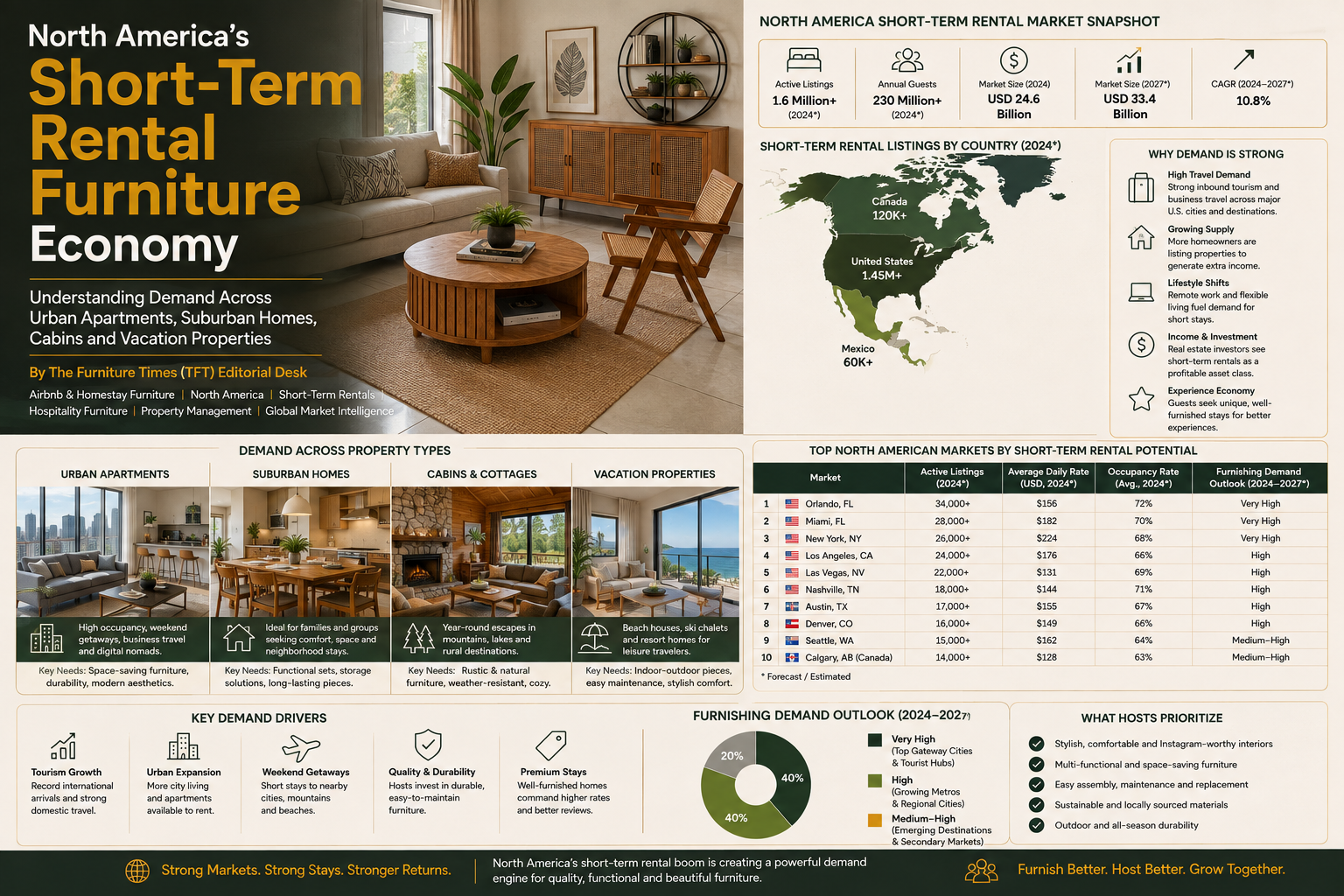
North America’s Short-Term Rental Furniture Economy
Strong domestic travel, professional property management and diverse accommodation types are creating recurring furniture demand across North America. The market requires compact urban products, family packages, cabin furniture, weather-resistant outdoor collections, rapid replacement and lifecycle-focused procurement.
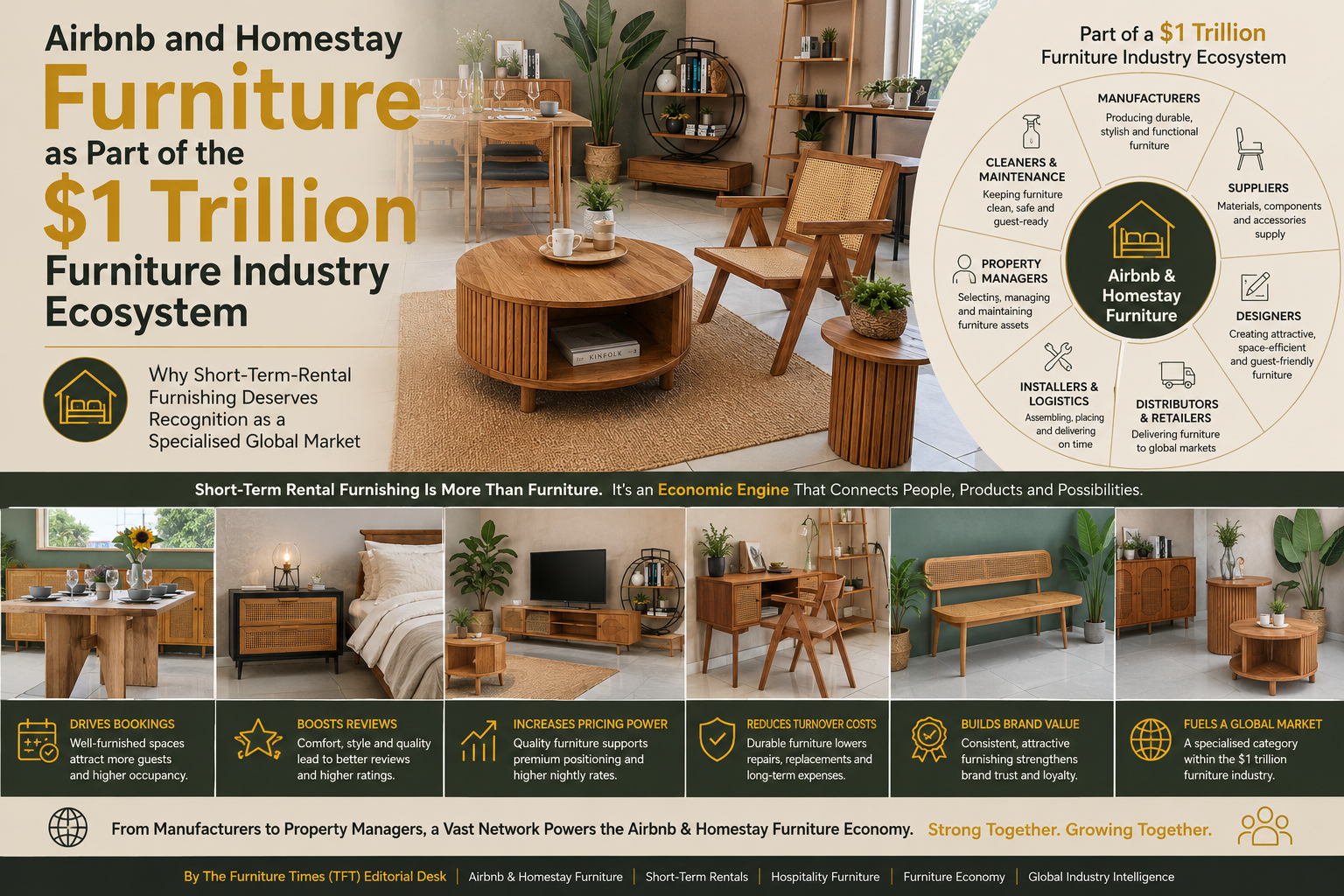
Airbnb and Homestay Furniture as Part of the $1 Trillion Furniture Industry Ecosystem
Millions of short-term-rental properties require durable, attractive and operationally efficient furniture. Yet this economic activity remains fragmented across residential, hospitality, contract and interior-furnishing categories. Recognising Airbnb and homestay furniture as a specialised global market could improve product development, data, supplier visibility, sustainability and investment.
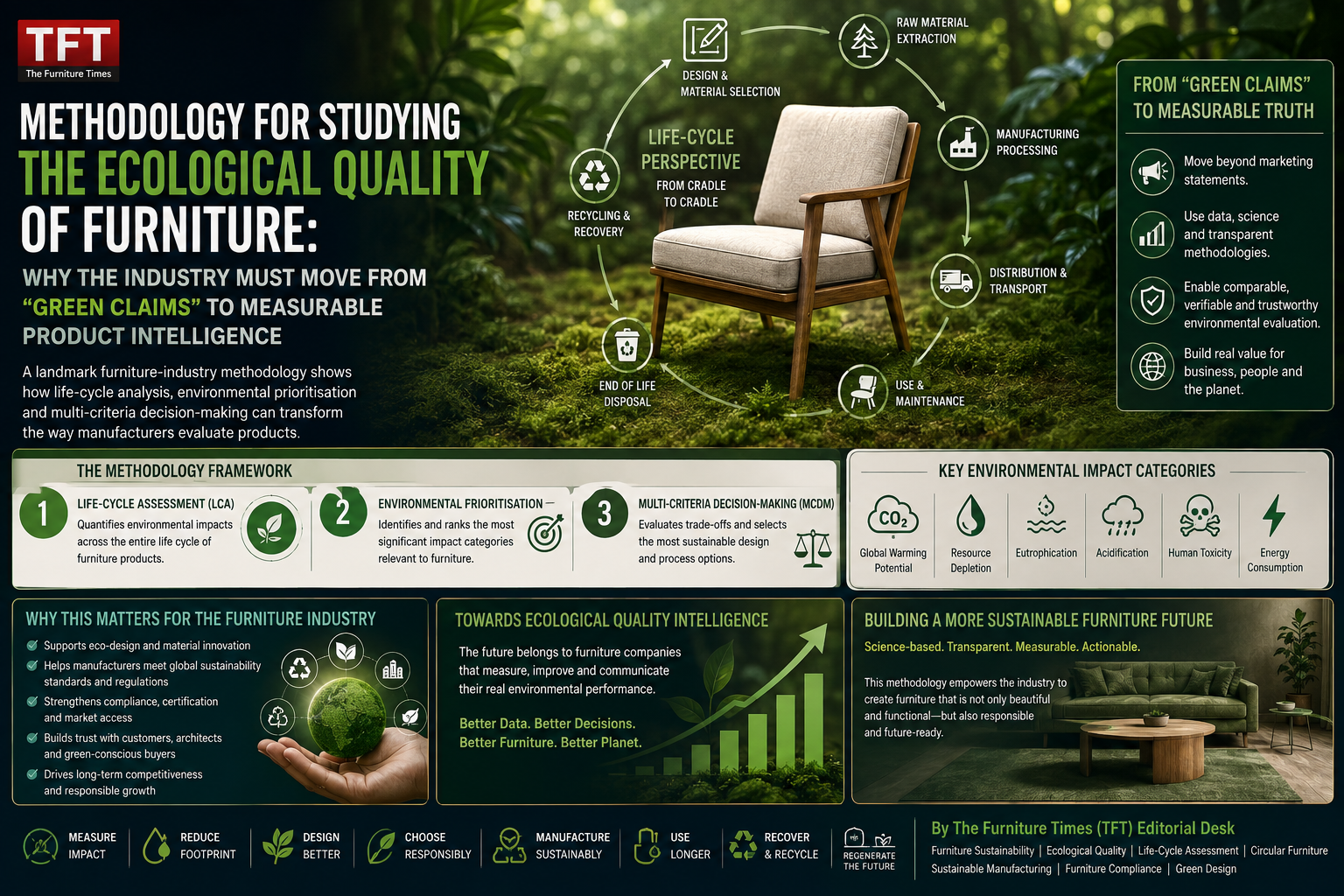
Methodology for Studying the Ecological Quality of Furniture
A 2011 research study on the ecological quality of furniture offers an increasingly relevant framework for today’s sustainability-driven industry. By combining life-cycle analysis, environmental ABC prioritisation and multi-criteria decision-making, the methodology demonstrated that products from the same furniture manufacturer can have significantly different environmental impacts. As global regulation moves toward durability, repairability, circularity and product-level information, furniture companies need to move from broad “green” claims toward measurable, traceable and verifiable ecological quality.

The Hidden Economy Behind Airbnb and Homestay Furnishing
Airbnb and homestay furnishing supports a wide hidden economy extending beyond furniture manufacturing. Designers, component suppliers, distributors, installers, logistics companies, photographers, cleaning teams, repairers, upholsterers, property managers, technology providers and refurbishers all contribute to the performance of short-term-rental properties.
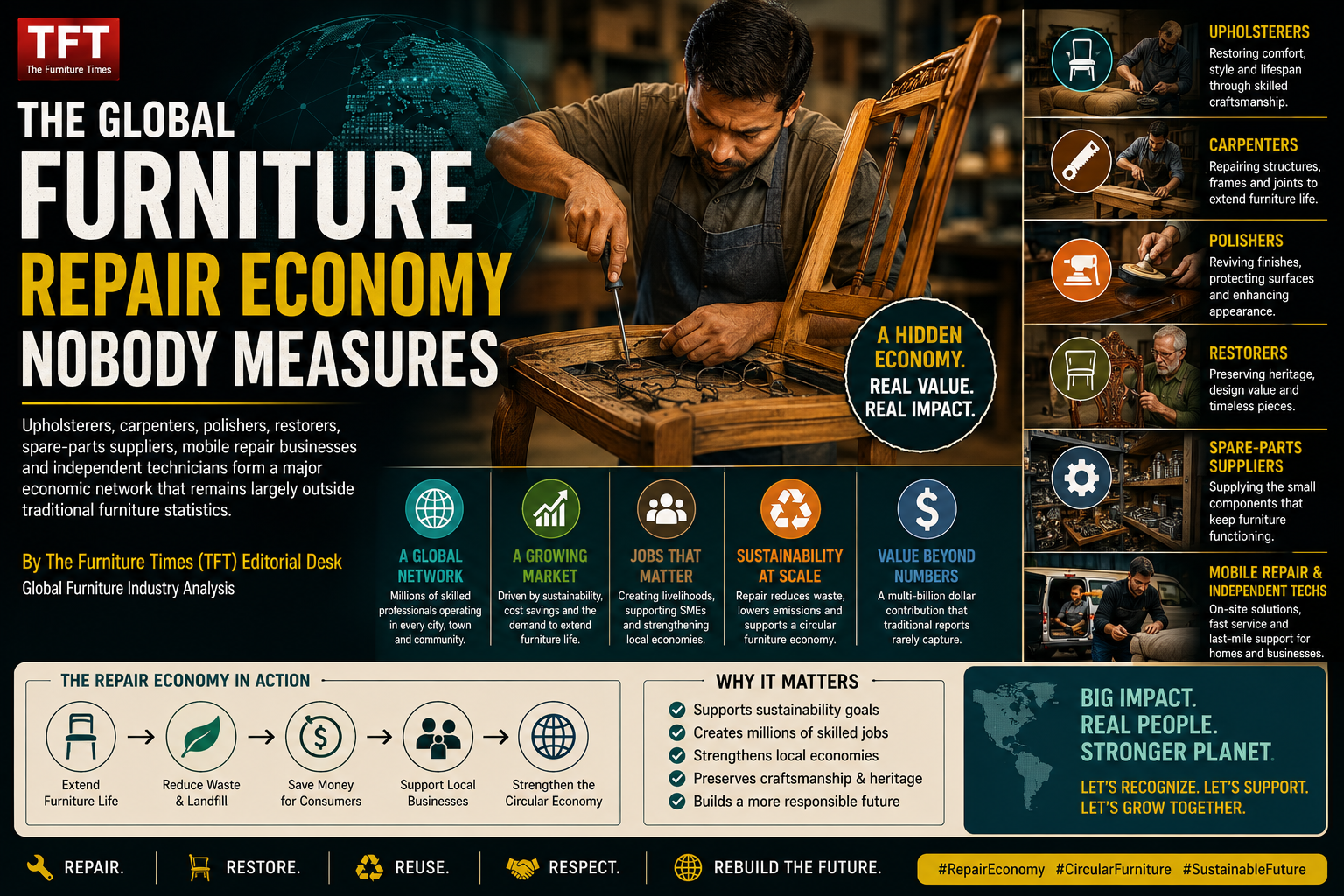
The Global Furniture Repair Economy Nobody Measures
Behind every repaired sofa, restored table and refurbished office chair is an extensive economic network. This TFT investigation examines why furniture repair remains undercounted, how it supports employment and circularity, and what the industry must do to make repair professionals visible, trusted and measurable.
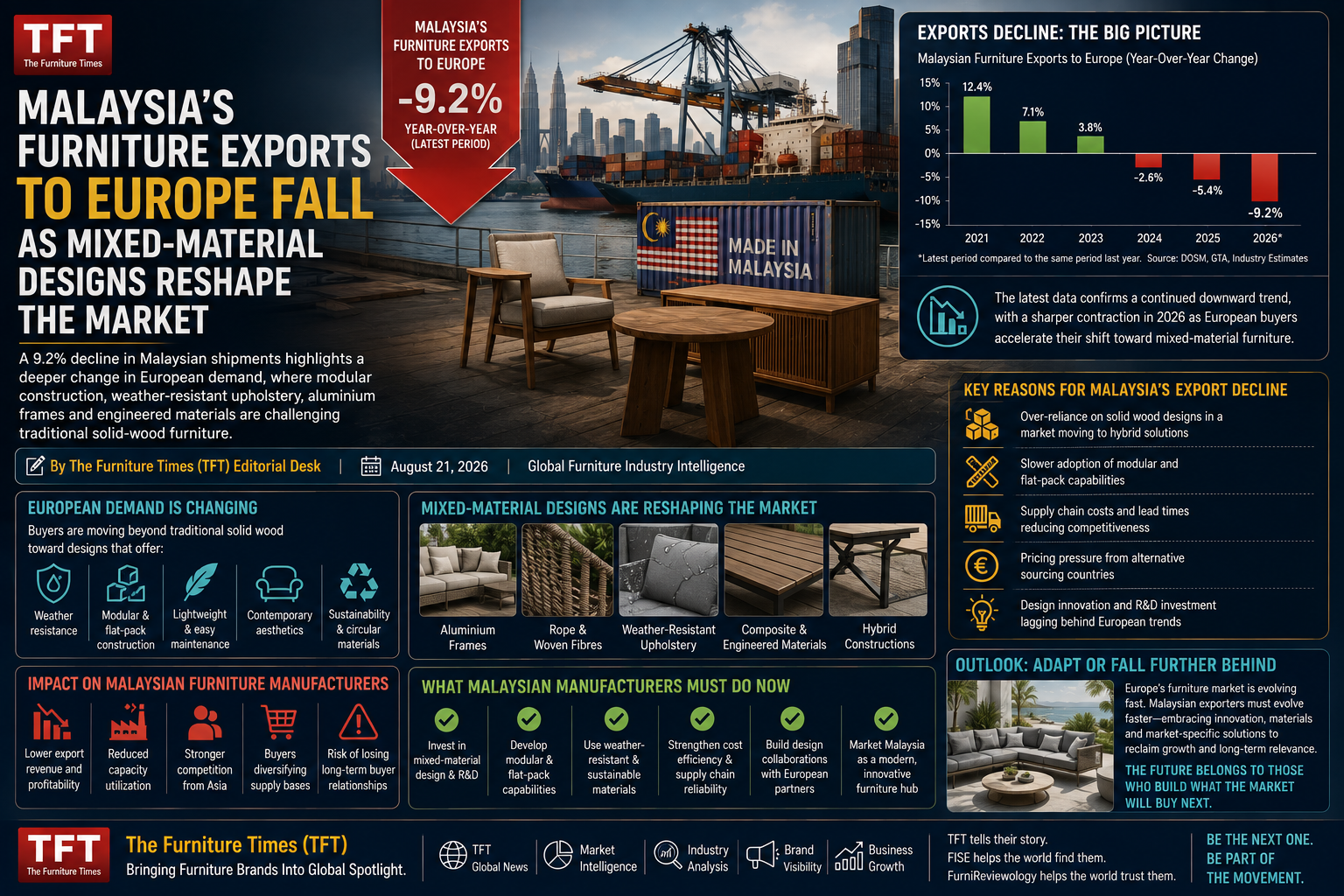
Malaysia’s Furniture Exports to Europe Fall as Mixed-Material Designs Reshape the Market
Malaysia’s tropical wooden furniture shipments to Europe fell 9.2% during the first four months of 2026. The decline reveals a wider transformation as European buyers increasingly seek modular, lightweight and mixed-material furniture combining wood with aluminium, upholstery, synthetic fibres and engineered composites.
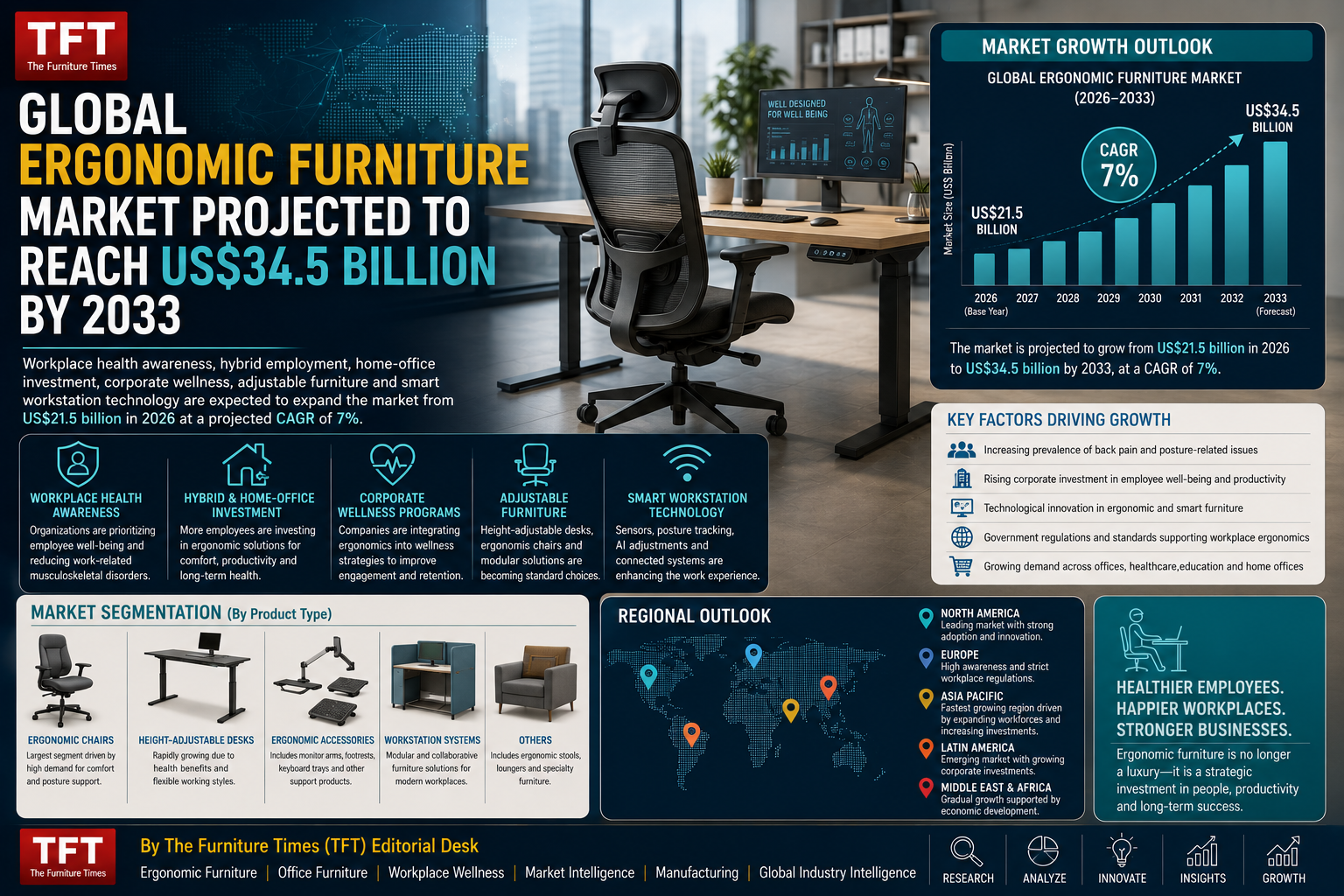
Global Ergonomic Furniture Market Projected to Reach US$34.5 Billion by 2033
Ergonomic furniture is moving beyond premium offices into homes, schools, healthcare, industry and hospitality. This TFT report examines the projected US$34.5 billion market, leading products, regional opportunities, materials, distribution trends and the strategies manufacturers should prepare for.
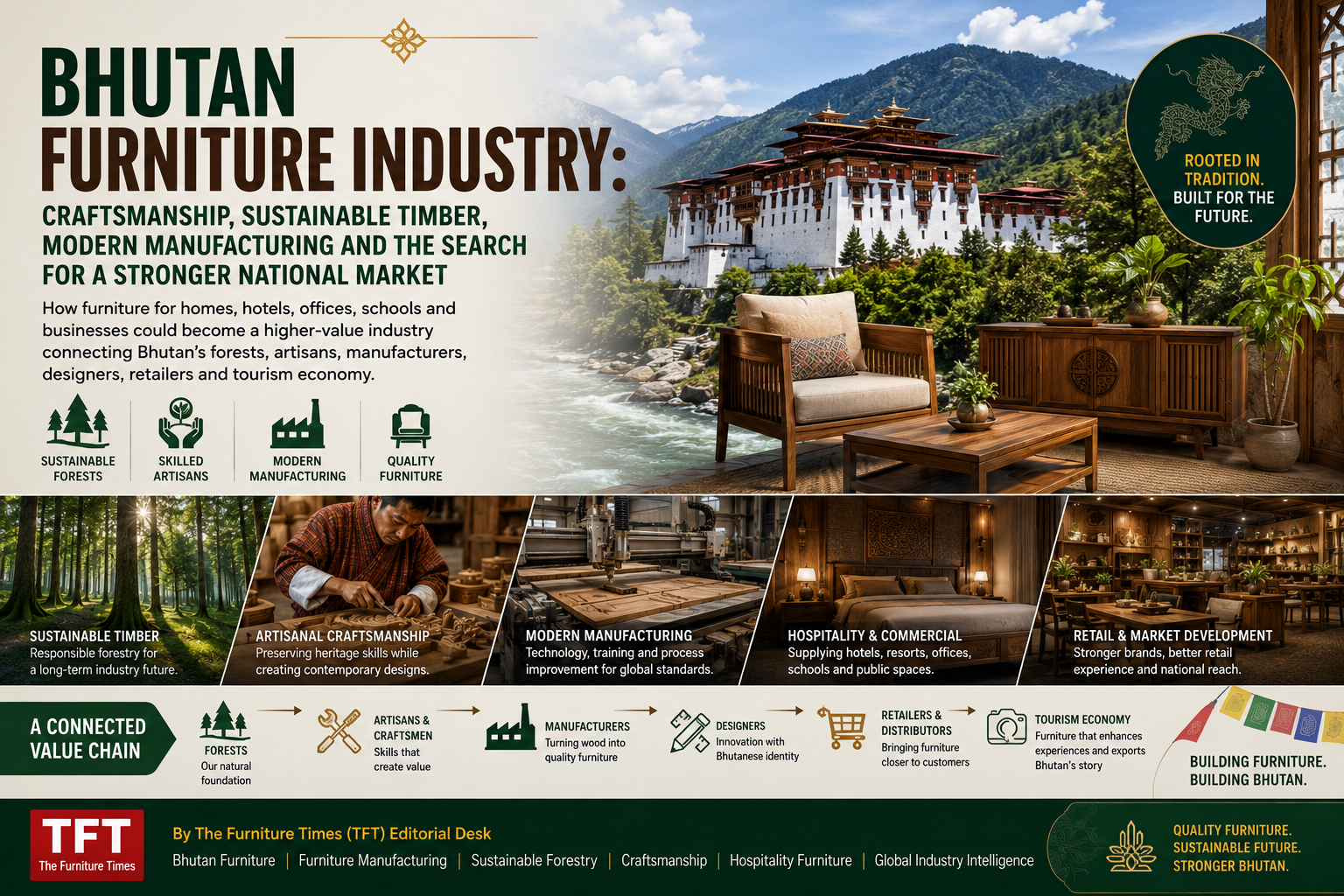
Bhutan Furniture Industry
: A detailed analysis of Bhutan Furniture, covering wood manufacturing, artisans, residential and institutional demand, hotels, upholstery, mattresses, CAD/CAM, training, sustainability, imports, exports and the need for a searchable national ecosystem.
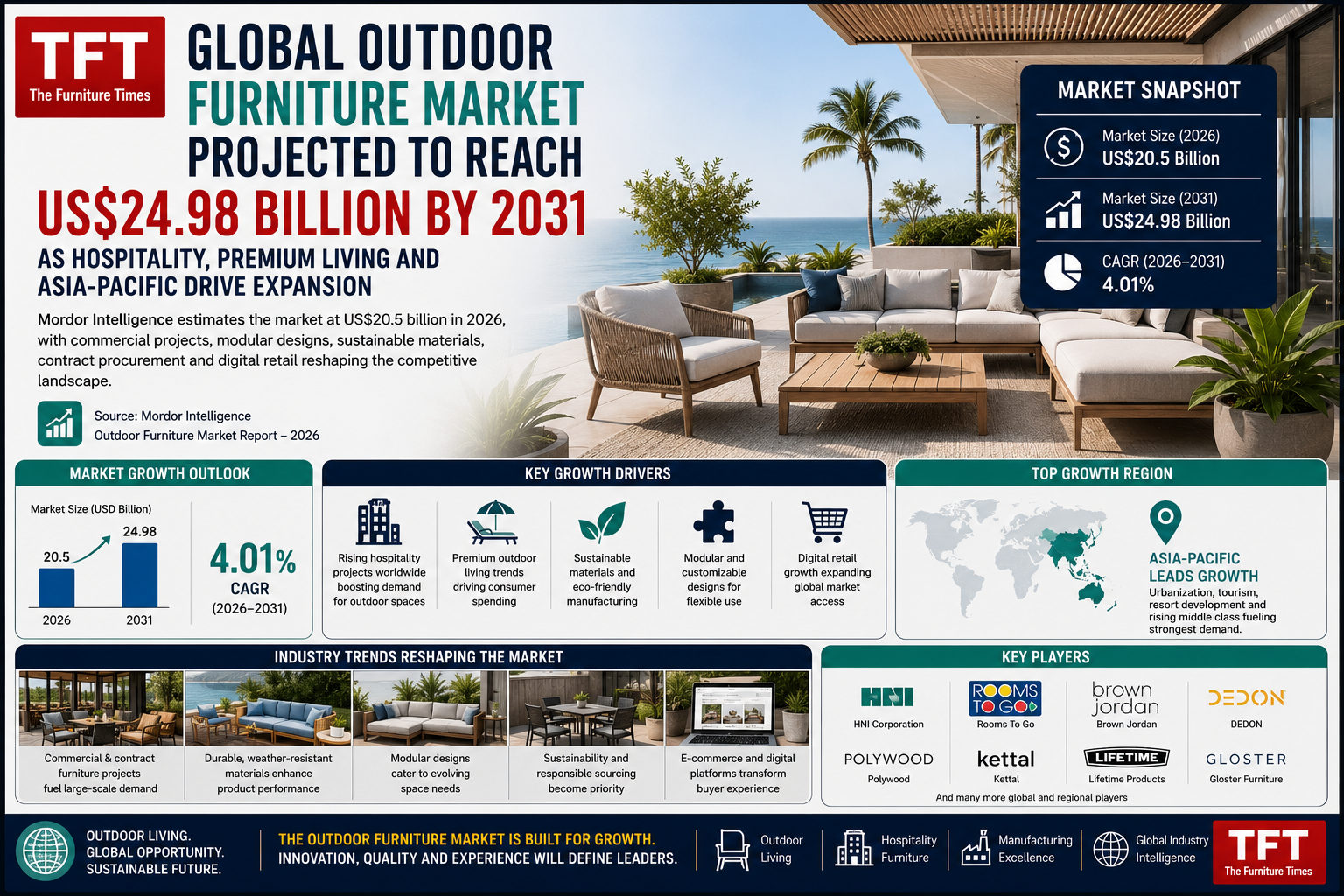
Global Outdoor Furniture Market Projected to Reach US$24.98 Billion by 2031 as Hospitality
Mordor Intelligence forecasts steady global outdoor furniture growth through 2031, with Asia-Pacific holding the leading regional position, commercial buyers controlling the largest end-user share and premium, modular and sustainable products creating new opportunities.
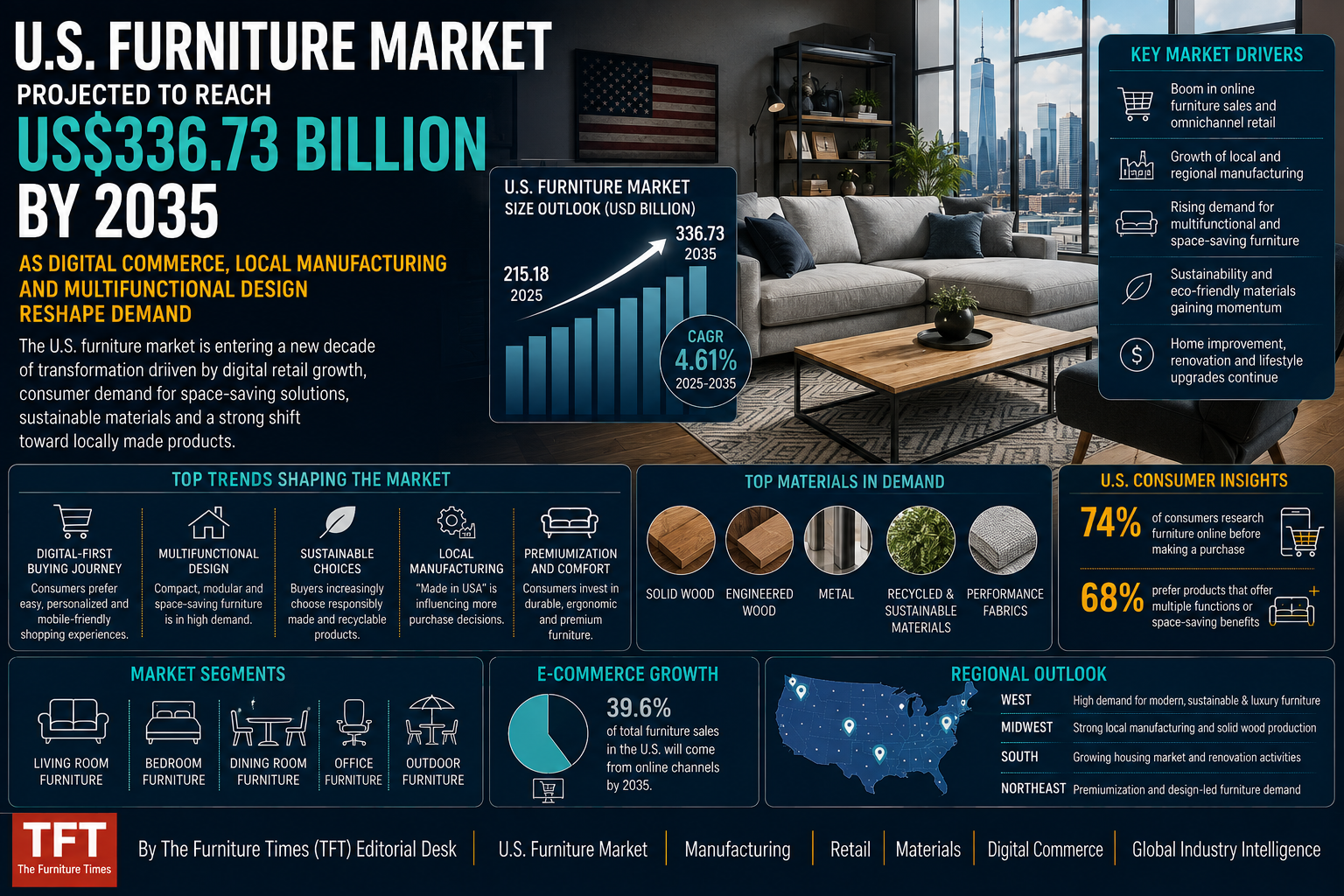
U.S. Furniture Market Projected to Reach US$336.73 Billion by 2035
A new Custom Market Insights report forecasts that the U.S. furniture market could reach US$336.73 billion by 2035. Bedroom furniture, wood products and residential demand currently lead, while storage furniture, plastic products and commercial applications are expected to grow faster.