
#RepairableFurniture
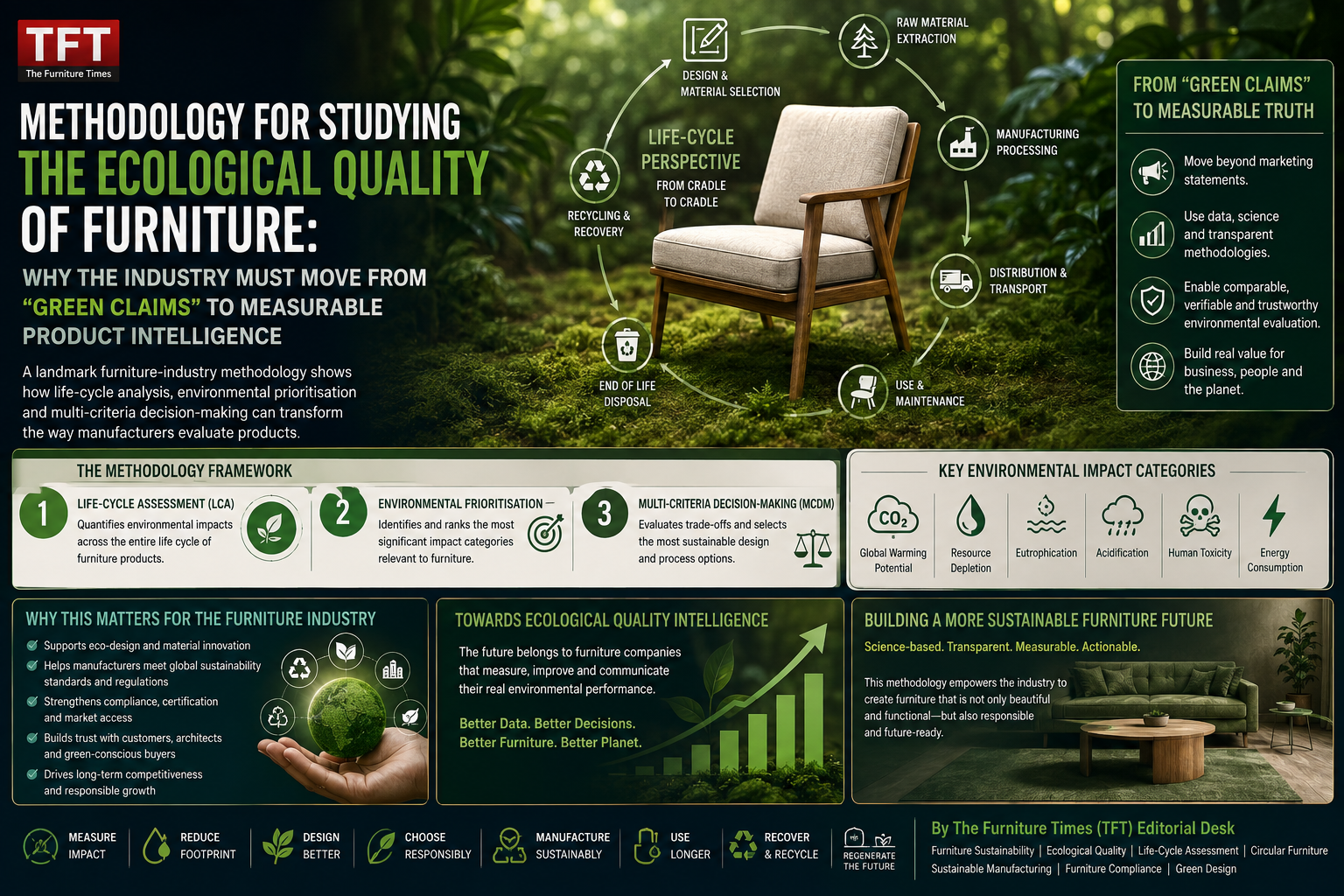
Methodology for Studying the Ecological Quality of Furniture
A 2011 research study on the ecological quality of furniture offers an increasingly relevant framework for today’s sustainability-driven industry. By combining life-cycle analysis, environmental ABC prioritisation and multi-criteria decision-making, the methodology demonstrated that products from the same furniture manufacturer can have significantly different environmental impacts. As global regulation moves toward durability, repairability, circularity and product-level information, furniture companies need to move from broad “green” claims toward measurable, traceable and verifiable ecological quality.
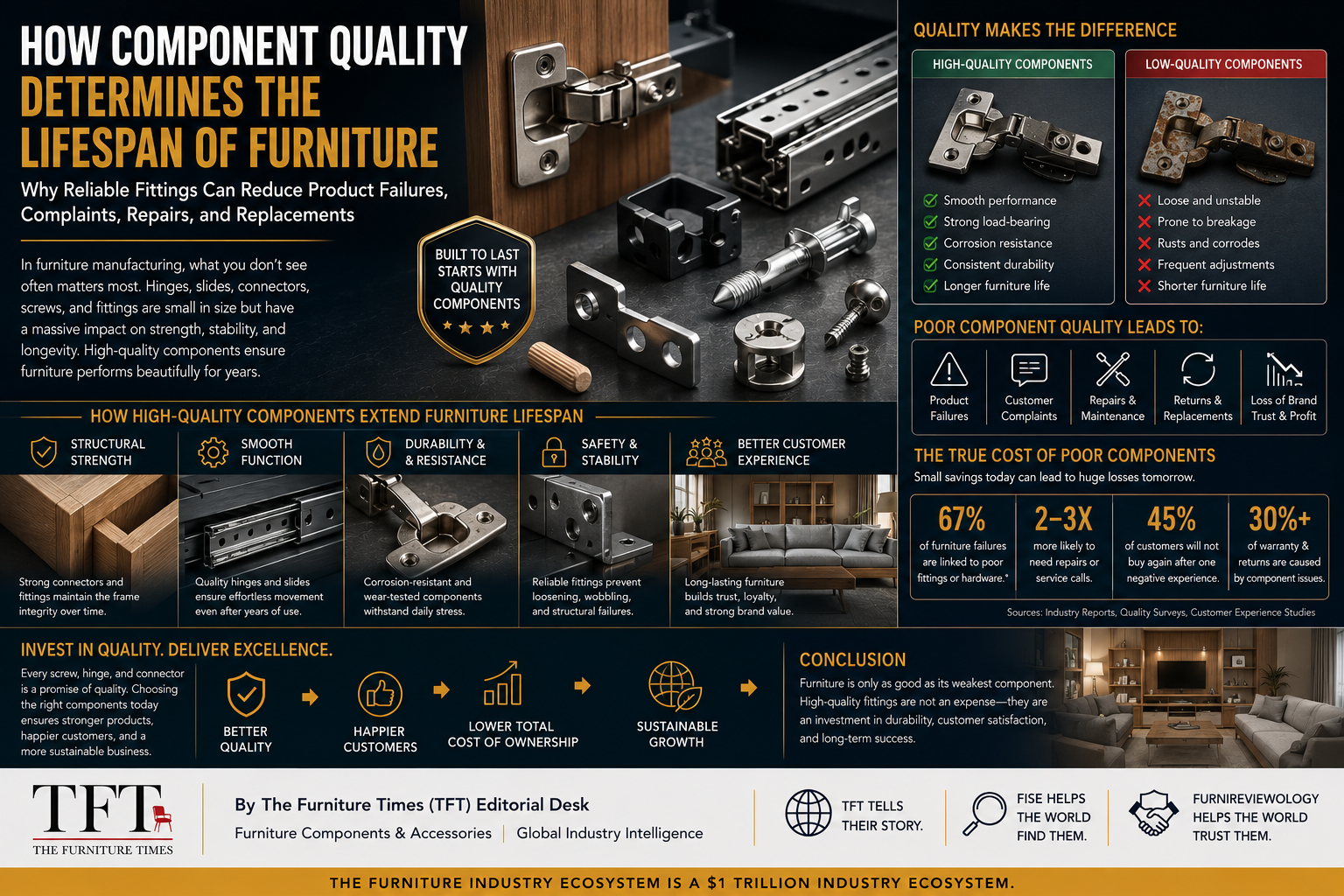
How Component Quality Determines the Lifespan of Furniture
Furniture durability depends on more than timber, metal, fabric, or external design. Component quality determines how furniture moves, carries weight, remains stable, preserves comfort, and performs over time. Better fittings can reduce warranty costs, extend product life, support repairability, and protect customer trust.

The Hidden Engineering Behind Modern Furniture
Modern furniture depends on technical components consumers rarely see. Hinges control alignment, slides manage moving loads, connectors provide structural stability, fasteners secure materials, and mechanisms enable folding, lifting, reclining, extending, and adjustment. Together, these hidden systems determine furniture quality, safety, durability, repairability, and value.