
#FurnitureEngineering

The Science of the Furniture Industry Ecosystem
From timber science and structural engineering to ergonomics, AI, sustainability, logistics, and consumer psychology, this detailed analysis explores the scientific forces shaping every part of the global furniture industry ecosystem.
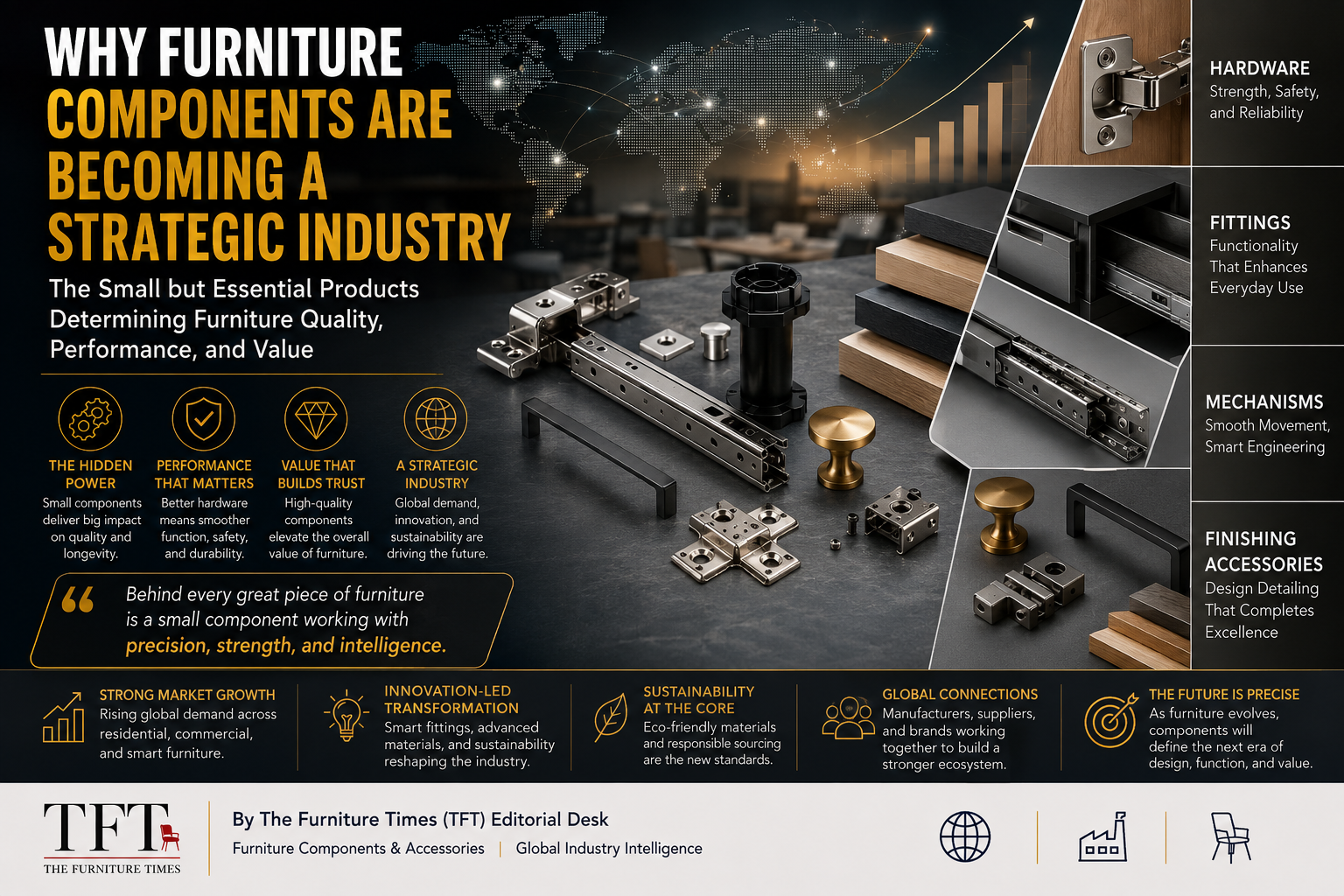
Why Furniture Components Are Becoming a Strategic Industry
Furniture components and accessories are evolving from basic purchasing items into a strategic global industry. These small but essential products influence manufacturing efficiency, product quality, smart functionality, sustainability, supply-chain resilience, repairability, customer satisfaction, and long-term brand value.
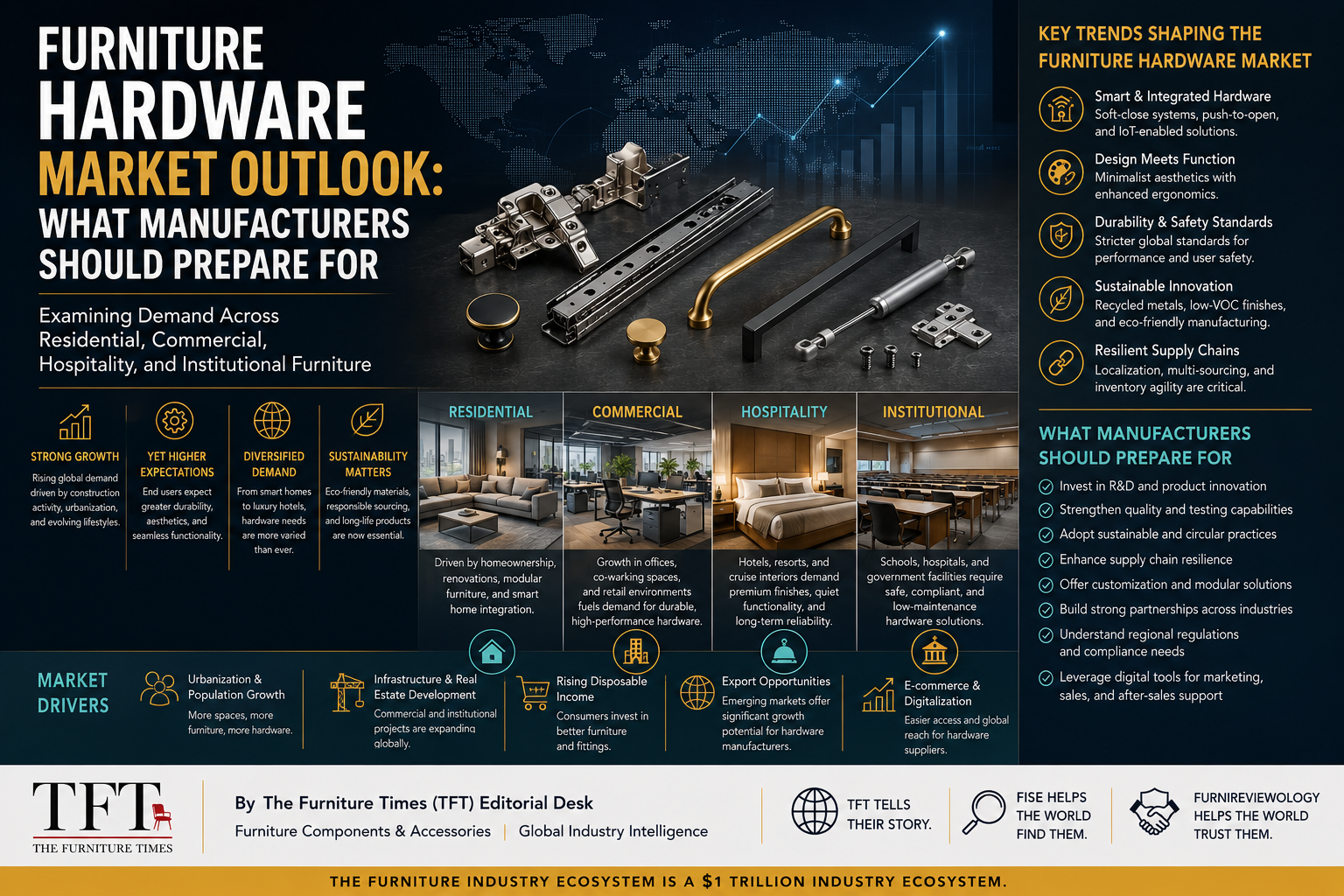
Furniture Hardware Market Outlook
The furniture hardware market is entering a strategic transformation. Manufacturers must prepare for stronger demand for soft-close systems, modular fittings, ergonomic mechanisms, smart components, hospitality-grade hardware, institutional compliance, replacement parts, circular design, and digitally documented supply chains.
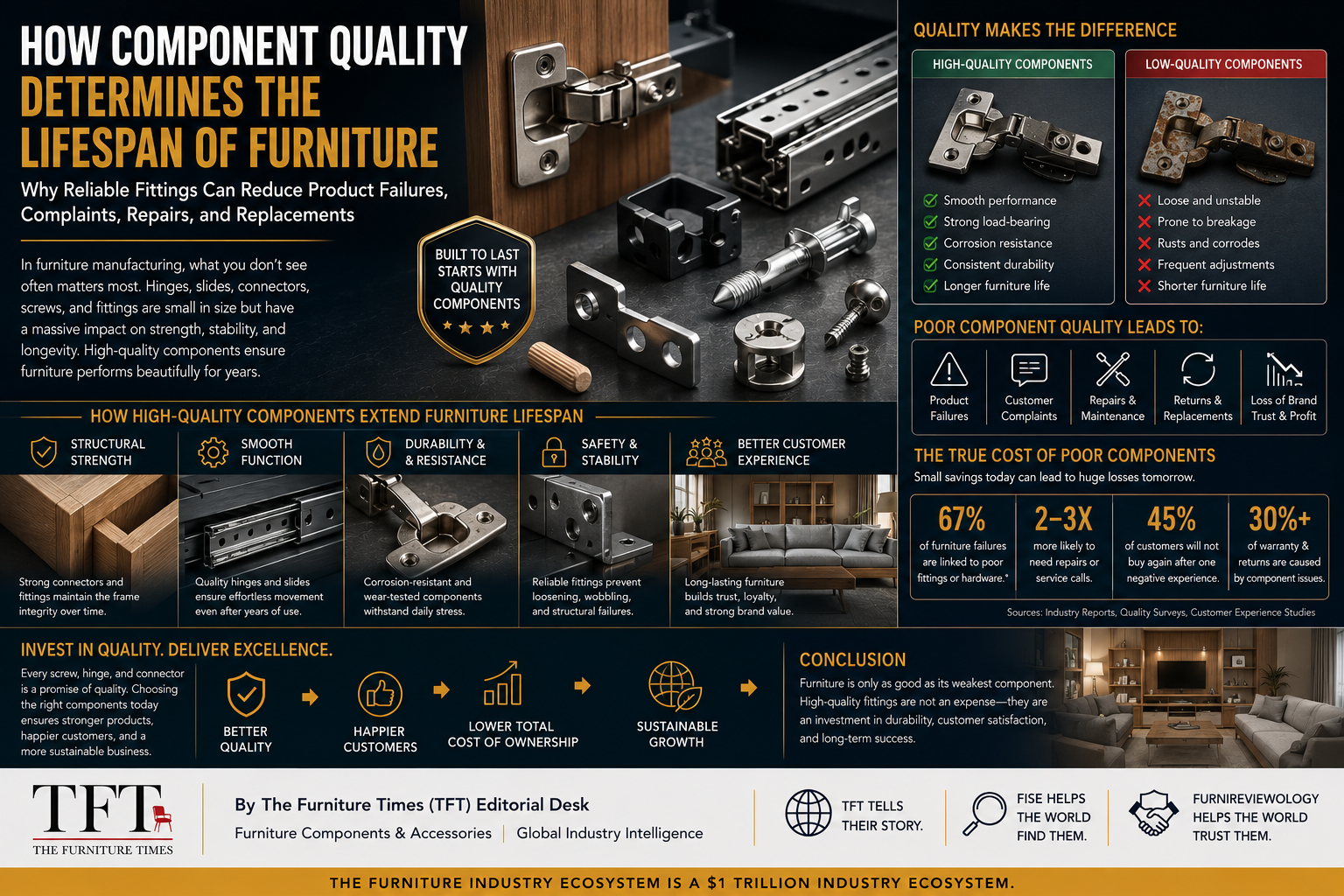
How Component Quality Determines the Lifespan of Furniture
Furniture durability depends on more than timber, metal, fabric, or external design. Component quality determines how furniture moves, carries weight, remains stable, preserves comfort, and performs over time. Better fittings can reduce warranty costs, extend product life, support repairability, and protect customer trust.

The Hidden Engineering Behind Modern Furniture
Modern furniture depends on technical components consumers rarely see. Hinges control alignment, slides manage moving loads, connectors provide structural stability, fasteners secure materials, and mechanisms enable folding, lifting, reclining, extending, and adjustment. Together, these hidden systems determine furniture quality, safety, durability, repairability, and value.
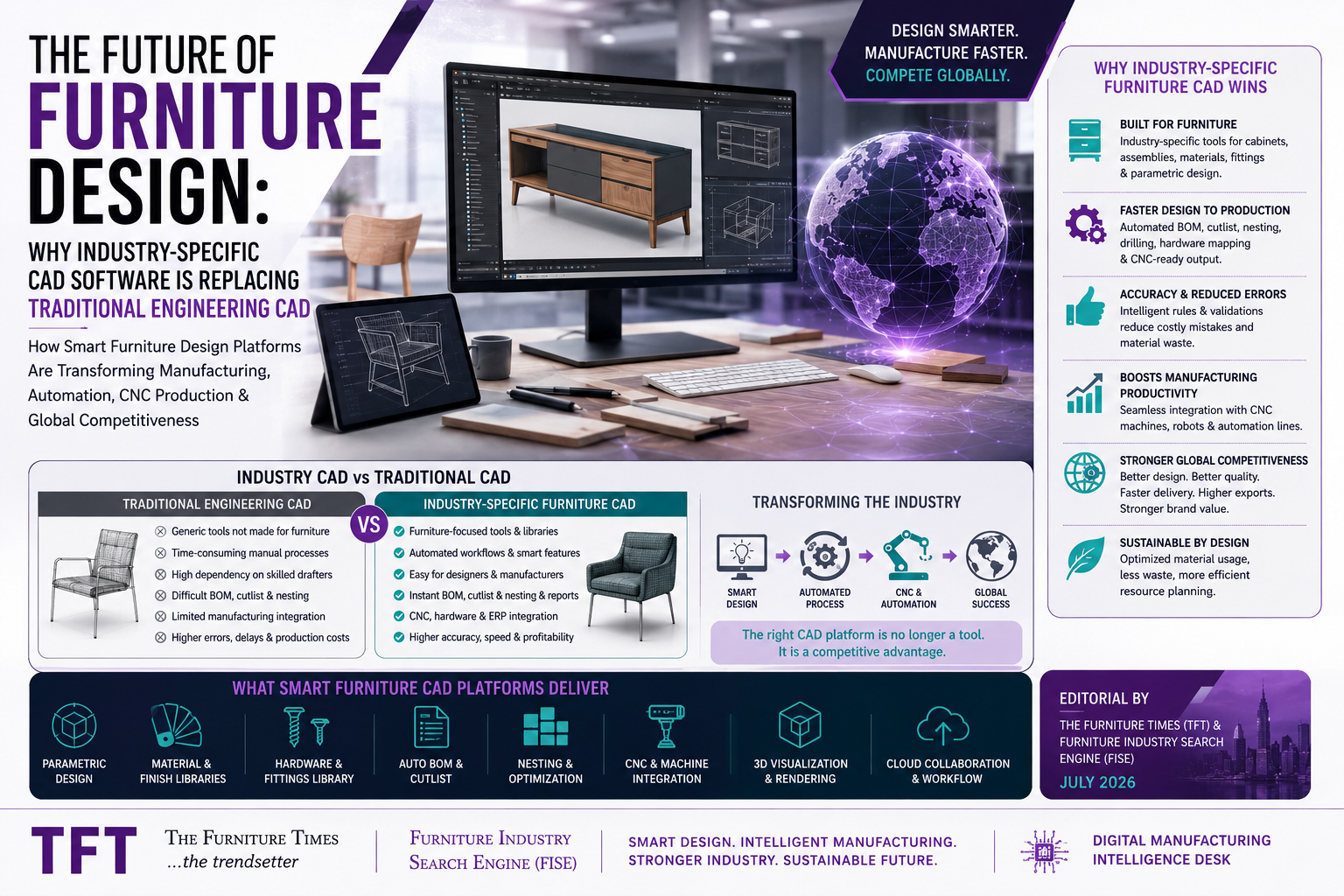
The Future of Furniture Design: Why Industry-Specific CAD Software Is Replacing Traditional Engineering CAD
Furniture manufacturing is undergoing a digital transformation. This report explores why industry-specific furniture design software is replacing traditional CAD workflows through automation, CNC integration, intelligent material management, AI and production-ready design capabilities.