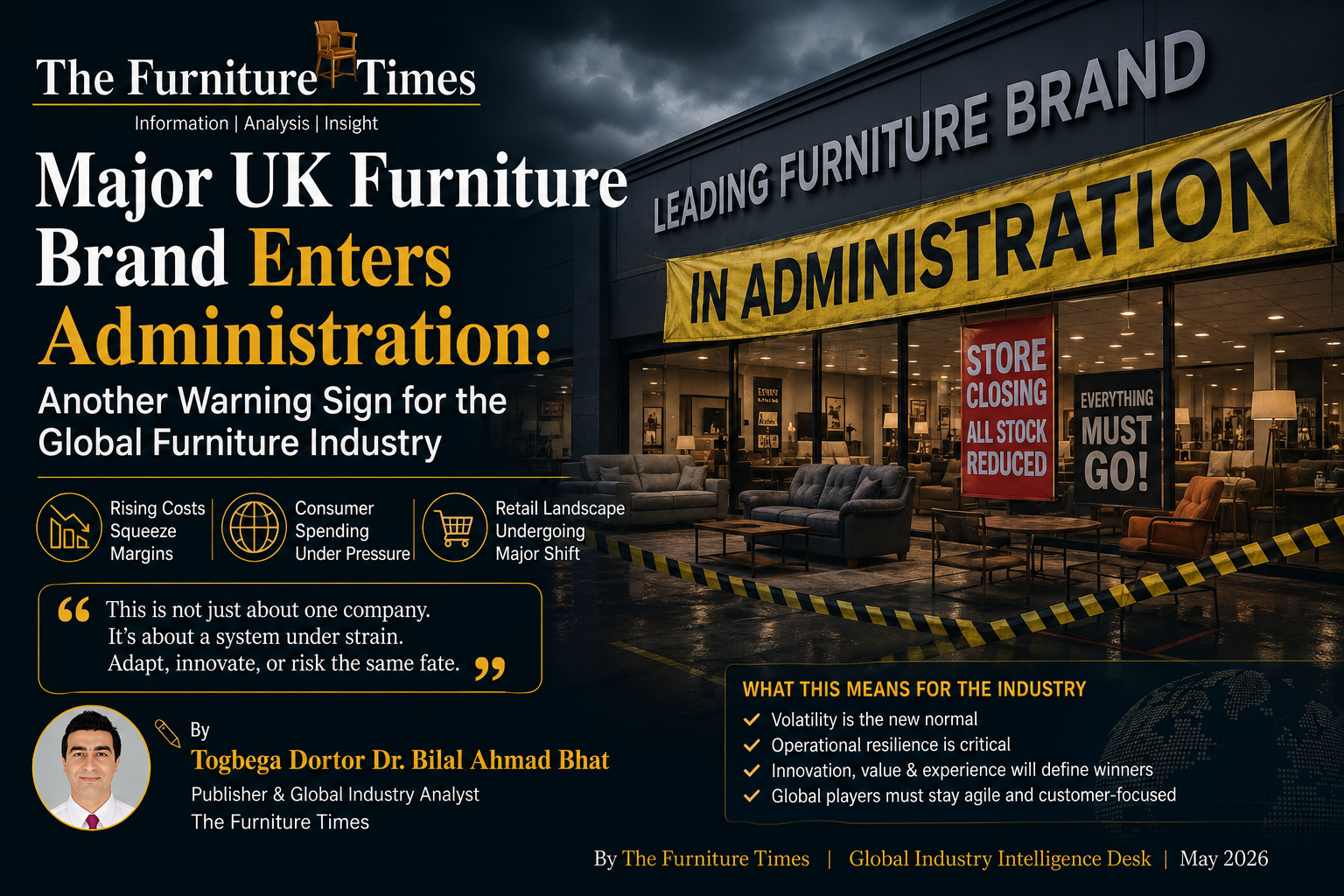
Major UK Furniture Brand Enters Administration: Another Warning Sign for the Global Furniture Industry
Global Retail Crisis Report | The Furniture Times
By The Furniture Times | Global Industry Intelligence Desk | May 2026
The collapse of another major British furniture business has once again highlighted the growing pressure facing the global furniture retail and manufacturing ecosystem.
According to recent reports, British furniture manufacturer Westbridge Furniture Limited, known for supplying products to major retailers including Marks & Spencer and John Lewis & Partners, has entered administration, resulting in nearly 300 job losses.
The development is not an isolated event.
It represents a much larger structural challenge affecting:
- furniture manufacturers
- retailers
- suppliers
- logistics providers
- workers
- consumers
across the global furniture industry ecosystem.
The Collapse of a Major Furniture Manufacturer
Westbridge Furniture Limited had built a reputation as a significant upholstered furniture supplier within the United Kingdom market.
However, mounting financial pressure, rising operational costs, and continued market uncertainty reportedly pushed the company into administration. Production ceased in April 2026, while administrators explored rescue options before eventually beginning the wind-down process.
Almost 300 employees were affected.
The company’s intellectual property and certain product lines are expected to continue under new ownership arrangements, demonstrating how valuable manufacturing capabilities are often absorbed even when original businesses fail.
The Bigger Crisis Behind the Headlines
This story is not simply about one company.
It reflects deeper issues currently reshaping the furniture industry worldwide.
1. Consumer Spending Pressure
Global inflation and economic uncertainty continue affecting household spending behavior.
Furniture purchases are increasingly being:
- delayed
- downsized
- reconsidered
Consumers are prioritizing:
- essentials
- affordability
- financing flexibility
rather than large discretionary purchases.
2. Supply Chain & Cost Pressures
Furniture businesses globally continue facing pressure from:
- shipping costs
- material inflation
- energy costs
- labor shortages
- warehousing expenses
Margins across manufacturing and retail have become increasingly compressed.
Even established furniture companies are struggling to maintain profitability in unstable market conditions.
3. Manufacturing Is Becoming Harder to Sustain
Furniture manufacturing is highly operationally intensive.
Factories must manage:
- machinery
- skilled labor
- inventory
- logistics
- quality control
- retailer expectations
At the same time, global competition is intensifying.
Countries such as:
- Vietnam
- China
- India
- Malaysia
continue expanding manufacturing capability and export competitiveness.
4. Retail Is Undergoing Structural Transformation
Traditional furniture retail models are rapidly changing.
The industry is shifting from:
- physical-first retail
to: - omnichannel ecosystems
- digital sourcing
- live commerce
- search-driven discovery
Many legacy businesses still depend heavily on:
- showroom traffic
- traditional wholesale relationships
- manual communication systems
But buyers increasingly expect:
- fast digital discovery
- instant communication
- live product experiences
- online quotations
The UK Furniture Sector Faces Growing Insolvency Pressure
The latest developments also come amid broader insolvency challenges affecting multiple furnishing and interiors businesses across the UK market.
Industry reports indicate significant financial stress across:
- furniture retail
- upholstery
- flooring
- mattress manufacturing
- home furnishings
with creditors facing millions of pounds in combined shortfalls.
This reflects wider instability within:
- consumer retail
- home improvement
- interiors sectors
across Europe and other mature markets.
The Industry’s Real Problem Is Bigger Than Sales
The deeper issue may not simply be declining sales.
It may be the industry’s lack of:
- connected infrastructure
- digital systems
- visibility
- communication efficiency
- modern lead generation ecosystems
Many furniture businesses still operate in fragmented environments:
- disconnected suppliers
- scattered communication
- weak digital presence
- limited discoverability
The Shift Toward Industry Infrastructure
The furniture industry is increasingly moving toward:
- search ecosystems
- communication infrastructure
- live commerce
- AI-assisted sourcing
- data-driven trade systems
This is why platforms focusing on:
- discoverability
- communication
- lead management
- ecosystem connectivity
are becoming increasingly important.
TFT Industry Insight
The collapse of legacy furniture businesses is not only a warning about economic pressure.
It is also a signal of industry transformation.
The future furniture ecosystem will likely favor companies that:
- adapt digitally
- respond faster
- build visibility
- create connected systems
- integrate communication and commerce
Final Thought
The furniture industry is not disappearing.
It is reorganizing around speed, systems, visibility, and connected infrastructure.
Businesses that continue relying only on old retail models may struggle to survive the next phase of global transformation.
But those that adapt to the new ecosystem economy may emerge stronger than ever.

Related Posts
Global Furniture Industry Shows Signs of Strategic Transformation Amid Economic Uncertainty
Why Core Values Will Become the New Competitive Advantage in the Furniture Industry