
#FurnitureSafety

Why Strong-Looking Furniture Can Still Fail Laboratory Testing
Visual inspection cannot reveal every structural weakness. This manufacturer-focused report explains why apparently strong chairs, tables, storage units, beds and bunk beds may fail BIS laboratory testing.

Why Undeclared Furniture Variants Can Put BIS Certification at Risk
An undeclared furniture variant can create a mismatch between the BIS application, laboratory report and product sold in the market. This report explains how structural and functional changes affect certification scope—and how manufacturers can control them.

Furniture Mechanical Testing Explained for Manufacturers
Mechanical testing is more than placing weight on furniture. This manufacturer-focused report explains strength, stability, durability, impact, deflection, structural integrity, representative sampling and production control under the BIS furniture-certification framework.
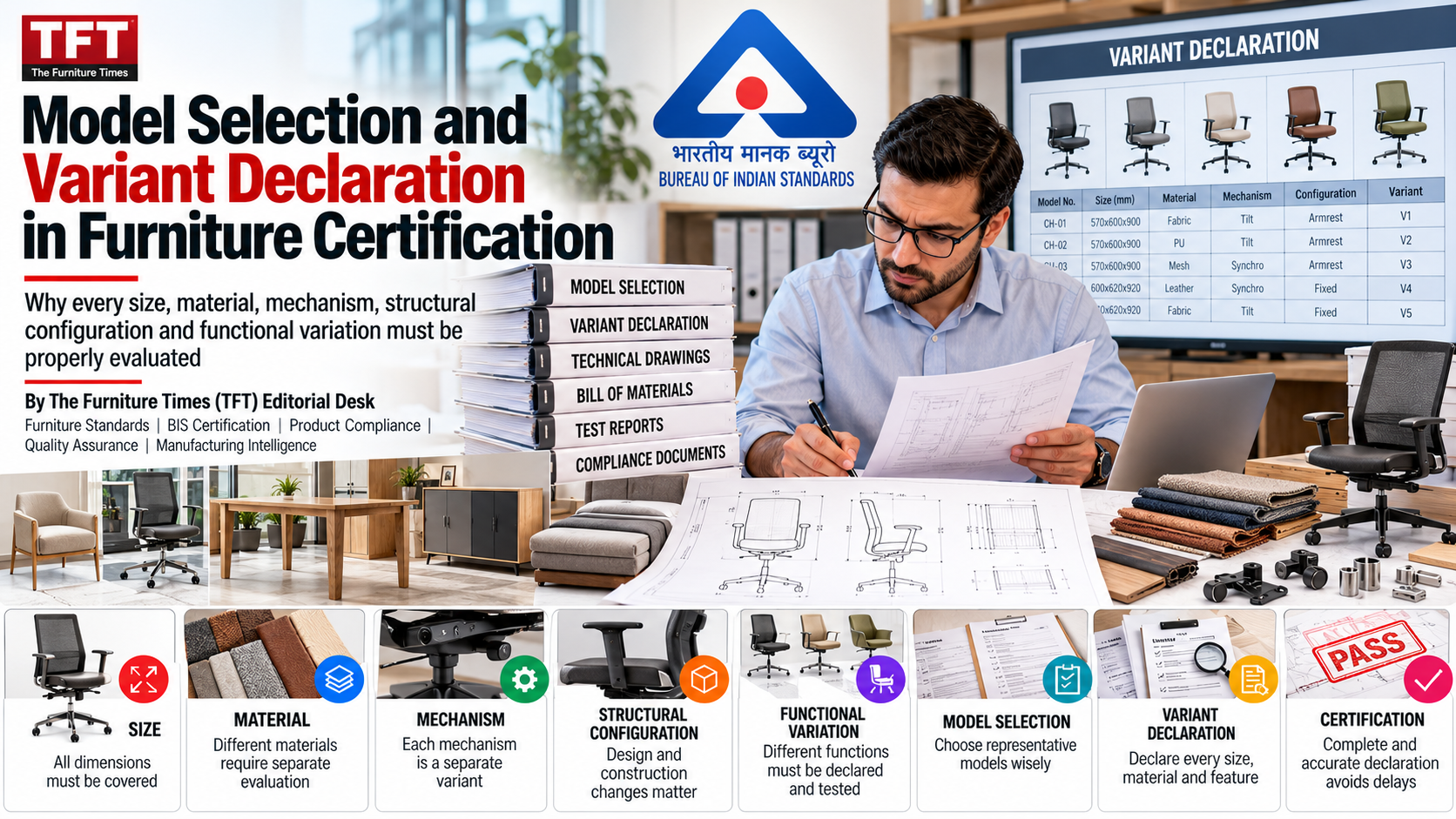
Model Selection and Variant Declaration in Furniture Certification
Model selection is one of the most important stages in furniture certification. This report explains why manufacturers must declare every relevant variant, identify technically representative samples and maintain alignment between models, drawings, bills of materials, laboratory reports and actual production.
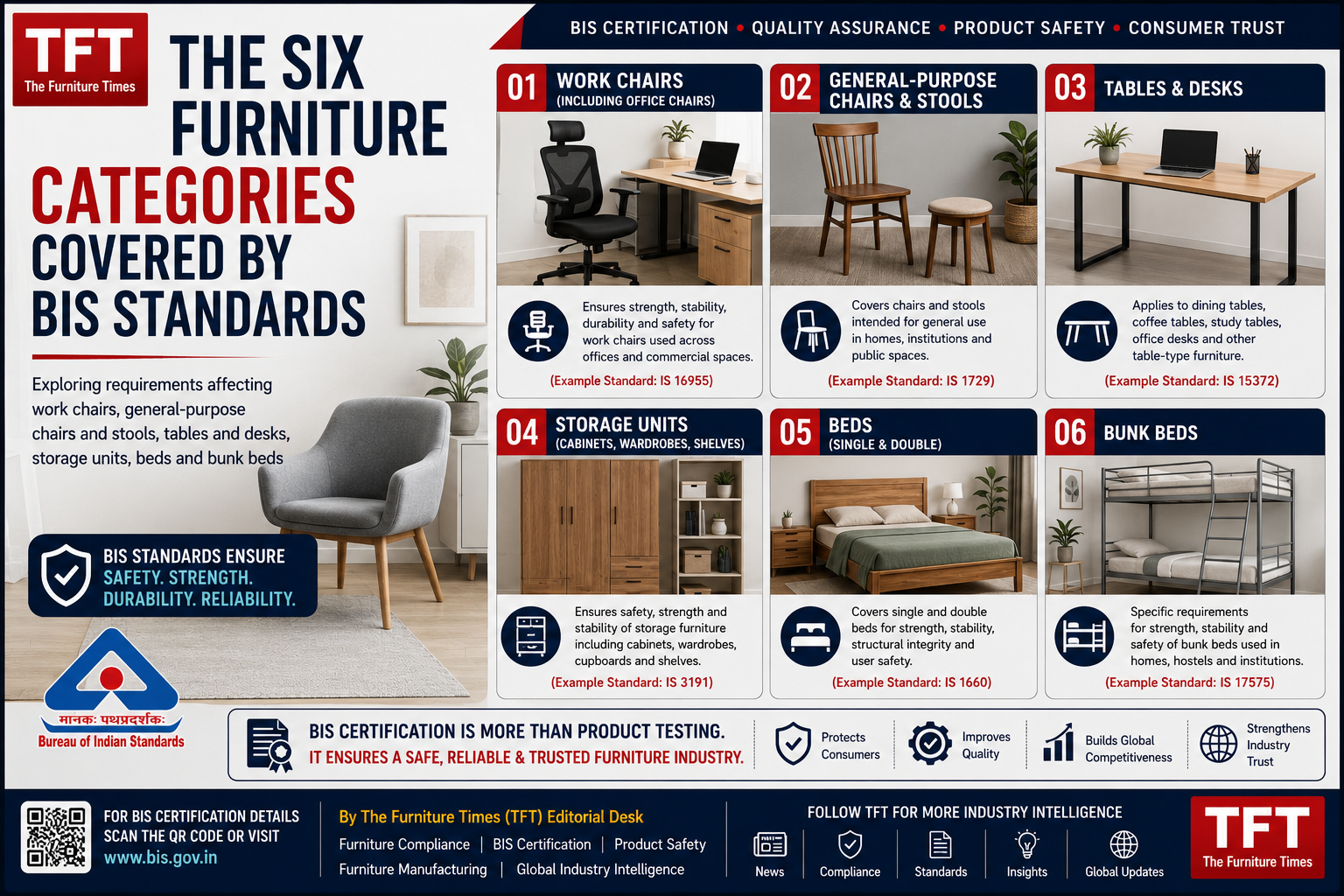
The Six Furniture Categories Covered by BIS Standards
A category-by-category guide to the six furniture groups covered by India’s Furniture Quality Control Order, explaining applicable BIS standards, product risks, classification issues, testing considerations and manufacturer responsibilities.
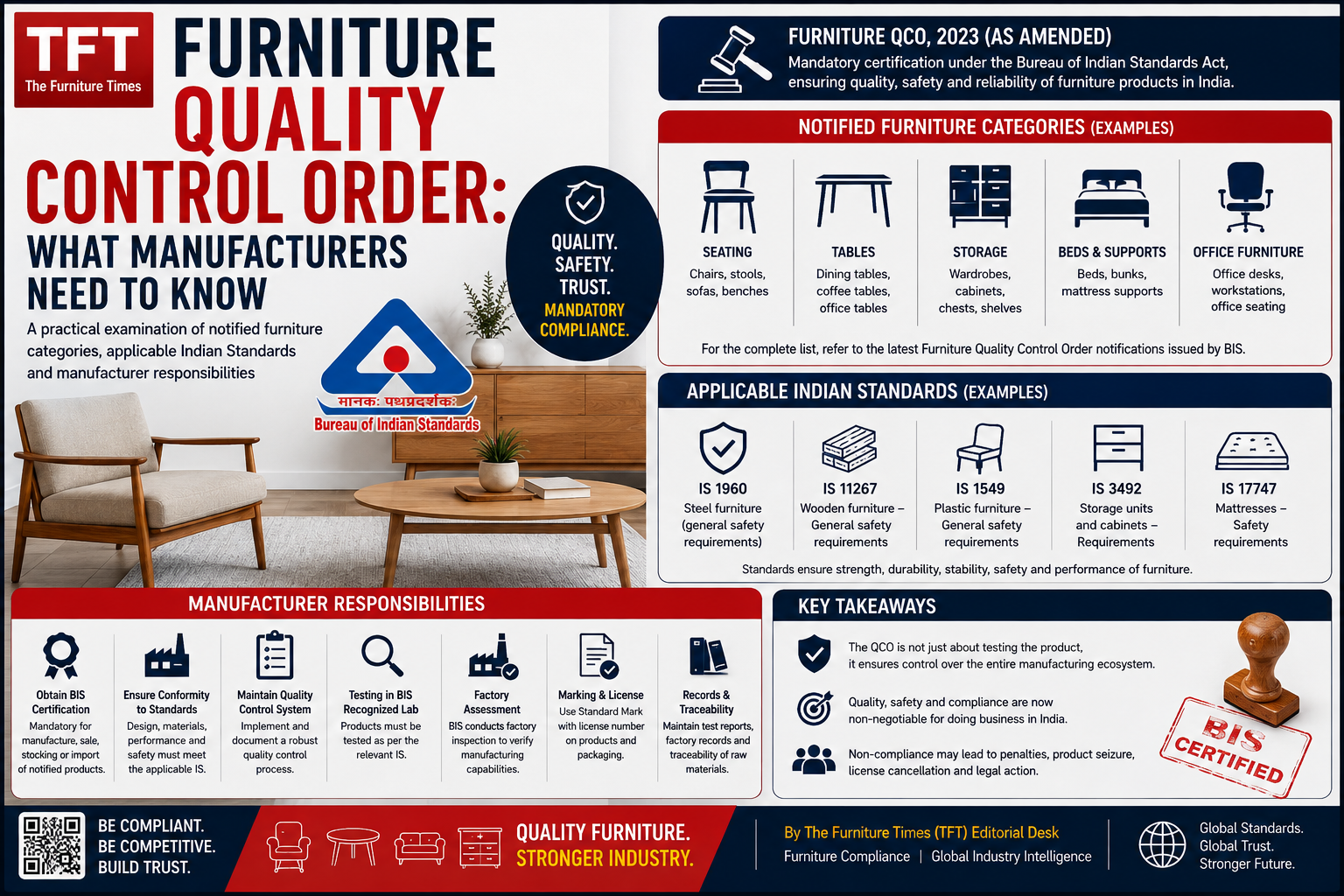
Furniture Quality Control Order: What Manufacturers Need to Know
A detailed examination of India’s Furniture Quality Control Order, covering notified furniture categories, applicable BIS standards, implementation provisions, exemptions and the continuing responsibilities of manufacturers, importers and furniture brands.

The Furniture Industry Needs a Failure Database
Furniture companies collect enormous quantities of information after products are sold, but much of it remains trapped inside warranty departments, service tickets, repair records and return systems. The Furniture Times examines why the industry needs structured failure intelligence—and how it could transform product quality, sourcing, insurance, repairability and AI-driven furniture discovery.

The Furniture Insurance Economy: Who Pays When Furniture Fails?
The furniture industry talks constantly about design, manufacturing, materials, retail and market growth—but rarely about who pays when something goes wrong. The Furniture Times examines the hidden furniture insurance economy and the complex network of manufacturers, suppliers, logistics companies, installers, retailers, insurers and customers sharing billions of dollars in potential risk.