Can Buyers Trust Your Furniture Business? Your Digital Footprint May Answer First
Reputation Increasingly Begins Before the First Phone Call or Enquiry
By The Furniture Times (TFT) Editorial Desk | FurniReviewology | Furniture Reviews | Digital Reputation | Buyer Trust | FISE | SMEs & MSMEs | Furniture Discovery | Global Furniture Ecosystem
The first conversation between a furniture company and a potential buyer may no longer happen on the telephone.
It may not happen by email.
It may not happen in a showroom.
It may not happen at a furniture exhibition.
And it may not involve your salesperson at all.
The first conversation may happen silently.
A buyer sees your company name.
They search for it.
They open your website.
They look for reviews.
They search for your products.
They check your company profile.
They look at social channels.
They search for news.
They compare your digital presence with competitors.
They may even ask an AI system what it can find about your company.
Then, without ever speaking to you, the buyer begins forming an opinion.
Does this company appear credible?
Does it appear active?
Can I understand what it does?
Can I find customer experiences?
Can I find independent information?
Does the business look established?
Should I contact it?
That means something fundamental is changing in the furniture industry:
Your Digital Footprint May Be Making Your First Impression Before You Do.
Reputation Now Begins Before Contact
Traditionally, businesses had greater control over first impressions.
A salesperson introduced the company.
A representative handed over a catalogue.
A showroom displayed the products.
A trade-show booth communicated the brand.
A mutual business contact made an introduction.
The company controlled much of the opening conversation.
Digital discovery has changed that.
Today, potential buyers can investigate businesses independently.
They can research you before revealing who they are.
This means your company may be undergoing an evaluation while your sales team knows absolutely nothing about it.
The buyer may already be deciding whether you deserve an enquiry.
The Buyer You Don’t Know May Already Know Something About You
Imagine an international retailer looking for a new furniture manufacturer.
Someone recommends your company.
You are excited about the potential opportunity.
But nobody contacts you.
Why?
Perhaps the buyer searched your company before reaching out.
Maybe they found:
an outdated website,
inconsistent contact information,
almost no reviews,
old social-media accounts,
little information about your manufacturing capabilities,
no meaningful company profile,
and very few independent references.
The buyer moves to another supplier.
Your company never receives an email.
There is no rejected quotation.
No unsuccessful negotiation.
No lost tender notification.
Nothing.
From your perspective, the opportunity never existed.
But in reality, you may have lost the opportunity during the digital research stage.
The Most Dangerous Lost Enquiry Is the One You Never Knew About
Furniture companies normally understand visible losses.
A buyer rejects a quotation.
A competitor offers a better price.
A sample fails.
The delivery timeline is too long.
A project specification changes.
Those losses can be analyzed.
But invisible losses are different.
You cannot easily measure:
the buyer who searched but never contacted you,
the architect who could not understand your capabilities,
the retailer who found more information about a competitor,
the importer who was uncertain about your company,
the hotel procurement manager who could not find relevant references,
or the consumer who abandoned the purchase after reading inconsistent information.
These potential buyers leave no obvious record.
That is why digital reputation deserves management attention.
What Exactly Is a Digital Footprint?
Your digital footprint is the collection of information that can be discovered about your business across digital channels.
It can include:
your company website,
search-engine results,
business listings,
customer reviews,
FurniReviewology profiles,
FISE listings and search presence,
TFT articles and industry coverage,
social-media profiles,
product catalogues,
marketplace listings,
trade-show references,
project information,
certifications,
videos,
images,
press releases,
leadership information,
and references from other websites.
The question is not merely whether these things exist.
The question is:
What story do they collectively tell?
Search Your Own Company Like a Stranger
Furniture business owners should conduct a simple exercise.
Search for your company as though you know absolutely nothing about it.
Do not search like the founder.
Do not search like an employee.
Do not search like an existing customer.
Search like a skeptical buyer.
Try:
your company name,
your brand name,
your company name + reviews,
your company name + furniture,
your company name + manufacturer,
your company name + supplier,
your company name + location,
your company name + products,
and relevant category searches.
Then look at the results.
Ask yourself:
Would I trust this company enough to investigate further?
The answer can be uncomfortable.
But it can also be extremely valuable.
A Factory Can Be Impressive Offline and Invisible Online
This is particularly common among traditional furniture manufacturers.
A company may have:
a large factory,
modern machinery,
skilled workers,
experienced management,
international customers,
strong quality-control systems,
decades of manufacturing knowledge,
and excellent products.
Yet online, the same company may appear almost nonexistent.
That creates a dangerous mismatch:
Strong Physical Business. Weak Digital Identity.
The buyer cannot see your factory unless they visit it.
They cannot meet your production team unless contact occurs.
They cannot understand your 25 years of experience unless somebody documents it.
They cannot know your satisfied customers unless those experiences become visible.
The digital footprint must begin reflecting the real business behind it.
Buyers Search for Evidence, Not Just Claims
Every company can say:
“We provide excellent quality.”
“We are a leading manufacturer.”
“We offer the best service.”
“We are customer focused.”
“We are reliable.”
“We have years of experience.”
These claims are common.
The modern buyer may look for supporting signals.
How long has the company operated?
What products does it actually manufacture?
Can the company be found elsewhere?
What do customers say?
Are there project references?
Has the business participated in the industry?
Are its details consistent?
Does the website appear current?
Can the company be connected to relevant categories?
Has anything been published about its activities?
The stronger the transaction, the more important this investigation can become.
Your Website Is Important — But It Is Your Own Voice
Every furniture business should take its website seriously.
It remains one of the most important digital assets a company controls.
But buyers understand that the website is created by the company.
This is why other information can add valuable context.
Your website says:
“This is who we say we are.”
A business listing can say:
“This company exists within this category.”
Customer reviews can say:
“This was our experience.”
Industry media can say:
“This is something the company has done.”
Search can connect these signals.
Together they create a broader digital identity.
Reviews Can Become Part of the First Impression
A buyer may read reviews before visiting a store.
Before requesting a quotation.
Before contacting a manufacturer.
Before ordering a product.
Before asking for a sample.
That changes the role of reviews.
Reviews are no longer simply feedback collected after a transaction.
They can become part of the information influencing the next transaction.
Today’s customer experience can affect tomorrow’s customer acquisition.
That means reputation is not solely a marketing responsibility.
It is created by the entire company.
Production Creates Reputation
For manufacturers, reputation begins on the factory floor.
Product consistency matters.
Materials matter.
Finishing matters.
Quality control matters.
Packaging matters.
Lead times matter.
Sales Creates Reputation
Accuracy matters.
Promises matter.
Communication matters.
Quotation clarity matters.
Expectation management matters.
Logistics Creates Reputation
Packaging matters.
Delivery timing matters.
Tracking matters.
Handling matters.
Installation coordination matters.
Customer Service Creates Reputation
Responsiveness matters.
Problem resolution matters.
Warranty support matters.
Replacement handling matters.
Professional communication matters.
Digital reputation is therefore the visible result of many operational decisions.
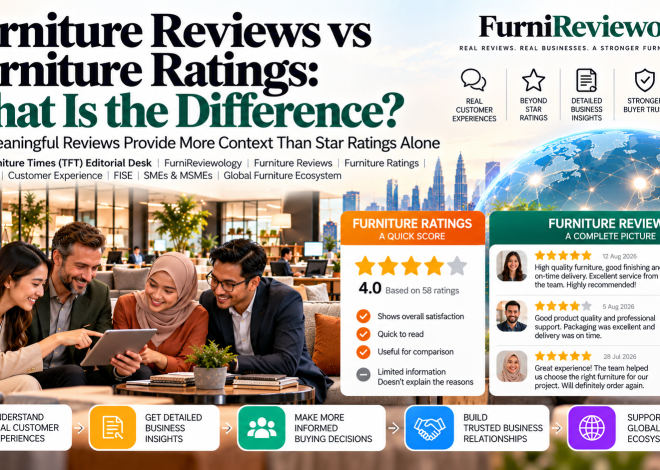
FurniReviewology: Giving Furniture Reputation a Dedicated Place
This is where FurniReviewology fits into the furniture industry’s evolving digital infrastructure.
FurniReviewology is focused specifically on furniture-industry:
listings,
company profiles,
reviews,
reputation,
and discovery context.
Furniture deserves a reputation environment that understands that its ecosystem extends far beyond retail furniture stores.
It includes manufacturers.
Suppliers.
Retailers.
Brands.
Wholesalers.
Exporters.
Importers.
Designers.
Component companies.
Material suppliers.
Hospitality furniture businesses.
Office furniture companies.
Outdoor furniture companies.
Artisans.
SMEs.
MSMEs.
And many other industry participants.
Start With a Free FurniReviewology Listing
For businesses with a limited digital footprint, the first objective should be simple:
Establish your identity.
A free FurniReviewology listing provides an opportunity to begin.
Make sure buyers can understand:
who you are,
where you operate,
what you do,
which categories you serve,
and how you fit into the furniture ecosystem.
Then build from there.
A listing is not the final destination.
It is the foundation.
Reviews Should Be Genuine — Not Manufactured
As digital reputation becomes more commercially important, businesses may feel pressure to accumulate positive reviews quickly.
That creates temptation.
Avoid it.
Fake reviews weaken trust.
Purchased reviews distort customer information.
Artificial testimonials can damage credibility.
The objective should not be to create the appearance of perfection.
The objective should be to build an authentic record of customer experience.
Ask genuine customers for genuine feedback.
Accept that not every experience will be perfect.
Respond professionally.
Learn from criticism.
Correct problems.
Build credibility slowly.
Trust Earned Slowly Is More Valuable Than Popularity Manufactured Overnight.
A Critical Review Does Not Automatically Destroy Trust
Businesses often fear negative reviews.
But buyers understand that companies are operated by humans.
Problems occur.
Products can be damaged.
Deliveries can be delayed.
Miscommunication happens.
What future buyers may also evaluate is:
How did the company respond?
Did it ignore the customer?
Did it become defensive?
Did it investigate?
Did it solve the problem?
Did it improve?
A professional response can itself become a trust signal.
Reputation management should therefore not mean deleting every uncomfortable conversation.
It should mean demonstrating how a responsible business handles customer experiences.
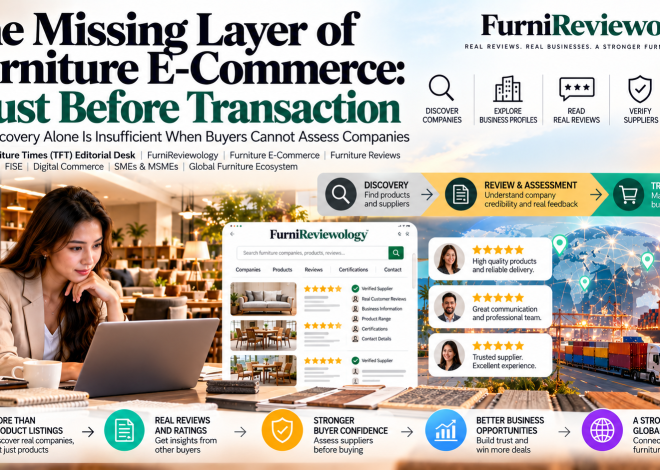
FISE Helps Buyers Discover the Company Behind the Reputation
A reputation cannot influence a buyer who never discovers the business.
That is where FISE — Furniture Industry Search Engine connects with FurniReviewology.
FISE addresses the discovery problem.
A buyer may need:
hotel furniture manufacturers,
office furniture suppliers,
outdoor furniture companies,
sofa manufacturers,
furniture hardware suppliers,
mattress companies,
wood furniture manufacturers,
contract furniture suppliers,
designers,
or other furniture-industry participants.
Industry-specific search can help connect demand with relevant companies.
Then the research process begins.
FurniReviewology Helps Add Reputation Context
Once a company is discovered, buyers may want to understand more.
Who is the company?
What does it do?
What information is available?
What experiences have customers shared?
This is where the review and reputation layer becomes important.
FISE helps answer:
“Who can I find?”
FurniReviewology helps buyers explore:
“What can I learn about this company and its customer experiences?”
TFT Helps Buyers See the Business in Motion
Then comes another dimension.
What is the company actually doing?
Has it launched something?
Expanded?
Entered a market?
Introduced new technology?
Completed a project?
Participated in an exhibition?
Developed a sustainable product?
Reached an important milestone?
The Furniture Times — TFT helps document relevant developments across the furniture ecosystem.
Over time, meaningful industry coverage can become part of a company’s searchable history.
That gives the ecosystem three distinct but connected functions:
FISE — Discovery
FurniReviewology — Reviews and Reputation
TFT — News, Visibility and Industry Storytelling
The Digital Footprint Is Becoming a Reputation Layer
Imagine a buyer searches your company and finds:
a clear website,
a complete FurniReviewology profile,
genuine customer reviews,
relevant FISE visibility,
TFT industry coverage,
active social channels,
accurate contact information,
consistent business descriptions,
and current product information.
No individual element guarantees that the company will be chosen.
But collectively they make the business easier to investigate.
Now imagine the opposite.
The website is outdated.
Contact details conflict.
No meaningful reviews exist.
Search results are weak.
Social accounts have not been updated for years.
Nobody can clearly understand whether the company manufactures, imports or retails furniture.
The buyer now has to work harder.
And buyers with many alternatives may simply move on.
SMEs and MSMEs Have the Most to Gain
Large brands already possess significant digital footprints.
Their products are discussed.
Customers search for them.
Retailers mention them.
Media covers them.
Social platforms contain years of activity.
SMEs and MSMEs often begin from a very different position.
They may be excellent businesses but almost digitally silent.
This makes structured industry participation especially valuable.
A small furniture manufacturer does not necessarily need millions of followers.
It needs the right buyer to find the right information at the right moment.
That is a much more achievable objective.
Your Digital Footprint Can Help Level the Visibility Gap
A smaller company may not be able to match a multinational advertising budget.
But it can still maintain:
accurate company information,
a professional website,
clear product categories,
a FurniReviewology listing,
genuine reviews,
FISE visibility,
TFT coverage of meaningful developments,
and consistent business information.
Digital visibility does not eliminate the advantages of scale.
But it gives smaller companies additional ways to compete for attention.
AI May Read Your Reputation Before the Buyer Does
There is another reason furniture companies need to act.
Buyers increasingly use AI-assisted search and research.
A procurement professional may ask:
“Find furniture manufacturers suitable for hospitality projects.”
A retailer may ask:
“Which outdoor furniture suppliers operate in Southeast Asia?”
A designer may ask:
“Find manufacturers specializing in custom furniture.”
The AI system attempts to understand available information.
If your business information is fragmented, inconsistent or almost nonexistent, there is less material available through which the company can be understood.
Your digital footprint therefore increasingly serves two audiences:
humans and machines.
That makes structured, accurate, searchable information increasingly important.
Consistency Is a Trust Signal Too
Consider something simple.
Your website shows one telephone number.
A directory shows another.
One profile lists an old address.
Another shows your previous company description.
A social-media page has not been updated for five years.
A product catalogue lists a website that no longer works.
Individually, these may seem like small issues.
Collectively, they create uncertainty.
Digital reputation requires maintenance.
Audit your information regularly.
Update outdated profiles.
Correct business details.
Keep product categories current.
Maintain working contact information.
Remove obsolete information where possible.
Consistency communicates professionalism.
Build a Digital Footprint That Reflects Your Real Business
Your digital identity should not exaggerate the company.
It should accurately represent it.
If you operate a small specialist workshop, say so proudly.
If you are an OEM manufacturer, explain it.
If you specialize in hospitality furniture, make that clear.
If you serve only one country, state it accurately.
If you export globally, document those capabilities responsibly.
If you have been in business for 30 years, tell that history.
If you have certifications, present them accurately.
If you complete significant projects, document them where appropriate.
The goal is not to appear bigger.
The goal is to become clearer.
Before the Buyer Calls, Answer the Questions They Are Already Asking
Your digital footprint should help answer:
Who are you?
What do you do?
Where are you?
What furniture categories do you serve?
What makes your company relevant?
What have customers experienced?
What has your company been doing?
How can I investigate further?
The easier these questions are to answer, the easier it becomes for a potential buyer to take the next step.
Your First Sales Meeting May Be a Google Search, FISE Search or AI Query
This is the mindset furniture companies need.
Do not think that selling begins when the phone rings.
The sales journey may have started days earlier.
The buyer searched.
Read.
Compared.
Checked.
Investigated.
Shortlisted.
Then called.
By the time your salesperson says:
“Good morning, how can I help you?”
the buyer may already have formed a substantial impression of the company.
Your digital footprint participated in the sales process before your salesperson did.
Don’t Wait Until Someone Questions Your Credibility
Build reputation before you need to defend it.
Build visibility before you urgently need enquiries.
Build company profiles before entering new markets.
Build customer reviews before launching major campaigns.
Build searchable history before international expansion.
Build FISE presence before buyers begin searching your category.
Build FurniReviewology presence while the ecosystem is developing.
Share relevant developments through TFT as they happen.
The strongest time to build trust is before you urgently need it.
Search Yourself Today
Every furniture business owner, director and marketing manager should do this.
Search your company.
Search your brand.
Search your products.
Search your reviews.
Search your executives where relevant.
Search your categories.
Ask AI what it understands about your business.
Then ask one uncomfortable but commercially important question:
“If I Were a Buyer Who Had Never Met This Company, Would the Digital Footprint Give Me Enough Confidence to Continue Investigating?”
If the answer is no, you have work to do.
That is not necessarily a crisis.
It is an opportunity.
Your Reputation May Speak Before You Do
The furniture industry remains built on relationships.
People still matter.
Salespeople matter.
Showrooms matter.
Factories matter.
Trade exhibitions matter.
Personal recommendations matter.
Face-to-face trust matters.
None of that is disappearing.
But something new now comes before many of those interactions:
digital reputation.
The buyer may meet your search results before meeting you.
The buyer may read customer experiences before speaking to your sales team.
The buyer may see your company profile before visiting your factory.
The buyer may read your news before requesting your catalogue.
The buyer may ask AI about you before sending an email.
So make sure the business they discover digitally reflects the business you have built physically.
Get listed.
Become searchable.
Complete your profile.
Encourage genuine reviews.
Tell your industry story.
Keep your information accurate.
Build a digital footprint worthy of your real-world reputation.
Because increasingly, your company does not get to make the first introduction.
Your Digital Footprint Does.
The Global Furniture Ecosystem
The Furniture Industry is a $1 Trillion USD Ecosystem in the world
Furniture Industry Search Engine – FISE helps the world find them.
The Furniture Times – TFT tells their story.
FurniReviewology helps the world trust them.