
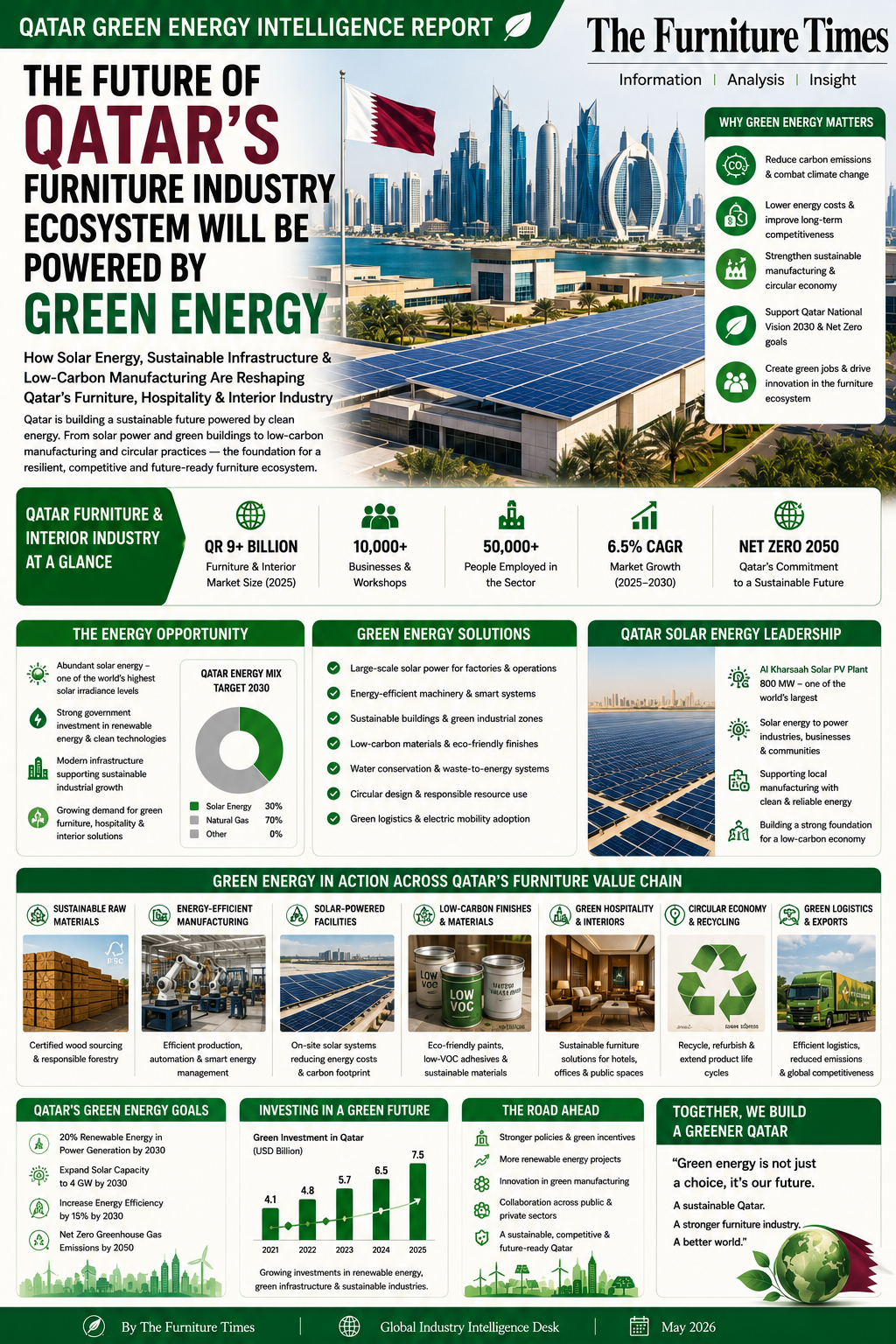
How Solar Energy, Sustainable Infrastructure & Low-Carbon Manufacturing Are Reshaping Qatar’s Furniture, Hospitality & Interior Industry
Qatar Green Energy Intelligence Report | The Furniture Times
“The Future of Qatar’s Furniture Industry Ecosystem Will Be Powered by Green Energy”
By The Furniture Times | Global Industry Intelligence Desk | May 2026
Qatar is entering a new industrial and environmental era.
For years, Qatar became globally recognized through:
energy wealth
infrastructure development
luxury hospitality
real estate expansion
mega projects
premium urban development
But now a deeper transformation is beginning:
the transition toward sustainability and green energy.
Across:
hospitality projects
luxury interiors
furniture procurement
commercial fit-outs
manufacturing infrastructure
smart cities
sustainable architecture
Qatar’s furniture industry ecosystem is gradually moving toward:
renewable energy
sustainable manufacturing
ESG-driven procurement
green hospitality systems
low-carbon construction
environmentally responsible interiors
And this transformation is not only environmental.
It is becoming:
strategic economic positioning.
🇶🇦 Qatar’s Furniture Ecosystem Is Closely Connected to Construction & Hospitality
Unlike some countries where furniture markets are mainly residential-driven, Qatar’s furniture ecosystem is deeply connected to:
hospitality
luxury real estate
infrastructure development
commercial interiors
tourism projects
office environments
public infrastructure
Furniture demand in Qatar is strongly influenced by:
hotels
resorts
restaurants
luxury villas
serviced apartments
airports
stadium infrastructure
government projects
This means sustainability trends in:
construction
hospitality
architecture
directly affect the furniture ecosystem.
Why Green Energy Matters to Qatar’s Furniture Industry
Qatar faces several major industrial realities:
extreme climate conditions
heavy cooling energy consumption
rising sustainability expectations
global ESG pressure
hospitality sustainability requirements
environmental reputation concerns
long-term economic diversification goals
At the same time, global buyers and hospitality operators increasingly demand:
sustainable interiors
environmentally responsible furniture
low-carbon supply chains
renewable-energy-supported operations
This means green energy is becoming important not only for:
factories
production systems
but also for:
brand reputation
hospitality competitiveness
global positioning
Qatar’s National Sustainability Direction
Qatar has increasingly emphasized:
sustainability
environmental responsibility
renewable energy
green urban development
especially through:
Qatar National Vision 2030
smart city development
sustainable infrastructure initiatives
Projects involving:
Lusail
Msheireb Downtown Doha
smart urban planning
green building systems
reflect broader environmental transformation goals.
This sustainability direction gradually influences:
furniture procurement and interior ecosystems.
Solar Energy: Qatar’s Greatest Green Opportunity
Qatar has one of the world’s strongest solar energy potentials because of:
intense sunlight
high solar exposure
desert climate conditions
This creates enormous opportunity for:
solar-powered facilities
green warehouses
energy-efficient showrooms
sustainable hospitality operations
future furniture manufacturing infrastructure
How Solar Can Benefit Qatar’s Furniture Ecosystem
Solar energy can help reduce energy dependency across:
furniture warehouses
showrooms
commercial interiors
hospitality operations
logistics hubs
industrial facilities
Potential benefits include:
lower electricity costs
improved sustainability branding
ESG alignment
reduced operational risk
long-term energy stability
For large hospitality projects and commercial facilities, these savings can become highly significant over time.
Qatar’s Furniture Market Is Becoming Sustainability-Driven
The furniture industry in Qatar is increasingly influenced by:
luxury hospitality expectations
green building certifications
environmentally conscious architecture
premium ESG-focused developments
Hotels, developers, and premium projects increasingly seek:
sustainable furniture
low-emission materials
environmentally responsible suppliers
recyclable components
energy-efficient interiors
This creates major opportunity for:
sustainable furniture suppliers.
Hospitality Is Driving the Green Shift
Qatar’s hospitality sector is one of the strongest drivers of sustainability transformation.
Luxury hotels and resorts increasingly market:
eco-conscious operations
sustainability initiatives
environmental responsibility
green tourism experiences
This affects furniture procurement decisions.
Hospitality operators increasingly prefer:
sustainable upholstery
FSC-certified wood
recyclable materials
energy-efficient manufacturing partners
low-carbon suppliers
The Rise of ESG in Qatar
ESG is becoming increasingly important in Qatar’s corporate and commercial sectors.
ESG means:
Environmental
Social
Governance
Large projects increasingly evaluate suppliers through:
environmental performance
sustainability practices
ethical operations
energy usage
carbon awareness
Furniture suppliers without sustainability positioning may eventually face:
weaker competitiveness
reduced project access
lower premium market opportunities
Green Buildings Need Green Furniture
Qatar’s smart and sustainable developments increasingly require:
green-certified materials
low-carbon interiors
sustainable furniture systems
Green buildings cannot fully succeed while using environmentally irresponsible interior systems.
This creates opportunity for:
sustainable sofas
low-emission panels
recyclable hospitality furniture
modular sustainable interiors
The Importance of Outdoor Furniture Sustainability
Qatar’s luxury outdoor culture is expanding rapidly through:
rooftop lounges
beach clubs
poolside hospitality
terrace dining
luxury villas
This increases demand for:
weather-resistant furniture
recyclable outdoor systems
UV-resistant materials
long-life hospitality seating
Green energy and sustainability increasingly affect:
outdoor furniture design and material selection.
Climate Conditions Create New Furniture Challenges
Qatar’s extreme climate creates operational pressure on:
upholstery
foam systems
adhesives
wood stability
outdoor furniture durability
This means sustainable innovation must also focus on:
heat-resistant materials
energy-efficient cooling systems
environmentally adaptive furniture engineering
Can Qatar Become a Green Hospitality Furniture Hub?
Qatar has strong opportunity to become:
“A Sustainable Luxury Hospitality Interior Market.”
Why?
Because Qatar combines:
premium hospitality growth
luxury real estate
ESG-focused development
smart-city investment
global tourism ambitions
This creates ideal conditions for:
sustainable hospitality furniture
green fit-outs
eco-conscious interiors
luxury low-carbon furnishing systems
Green Logistics & Qatar’s Furniture Industry
Furniture logistics remain energy-intensive because furniture products are:
bulky
heavy
container-dependent
warehouse-intensive
Future transformation may include:
electric logistics fleets
energy-efficient warehousing
solar-powered logistics hubs
smart inventory systems
This is especially relevant in Qatar’s large infrastructure and hospitality ecosystem.
Smart Showrooms & Green Retail Spaces
Future furniture showrooms in Qatar may increasingly integrate:
solar-powered systems
intelligent lighting
energy-efficient cooling
digital product experiences
low-carbon interior concepts
Because consumers increasingly associate:
sustainability with luxury.
Furniture Buyers Are Changing Psychologically
Modern consumers increasingly ask:
Is this furniture sustainable?
Was renewable energy used?
Is the wood certified?
Is the supplier environmentally responsible?
Does the product align with modern ESG values?
Luxury buyers especially increasingly prefer:
environmentally conscious prestige
instead of:
wasteful luxury.
The Cost Reality of Green Transition
One major challenge remains:
upfront cost.
Green transformation may require investment in:
solar systems
energy-efficient infrastructure
sustainable materials
ESG compliance systems
This can initially increase costs.
However, long-term benefits may include:
lower operational expenses
stronger hospitality partnerships
better international positioning
premium branding opportunities
SMEs & Sustainability Challenges
Small businesses inside Qatar’s furniture ecosystem may struggle with:
sustainability transition costs
green compliance pressure
premium material expenses
ESG adaptation requirements
This creates need for:
sustainability partnerships
financing support
green incentives
supplier education
The Environmental Importance of Green Energy
Furniture manufacturing and interiors depend heavily on:
wood
natural materials
industrial resources
transportation systems
Unsustainable industrial operations eventually damage:
ecosystems
climate stability
environmental resilience
And climate instability ultimately increases:
logistics risk
insurance costs
operational uncertainty
material disruptions
Green energy becomes part of:
long-term industrial survival.
The Future Furniture Ecosystem in Qatar
The future Qatar furniture ecosystem may increasingly include:
solar-powered showrooms
sustainable hospitality interiors
ESG-certified suppliers
low-carbon fit-outs
green logistics systems
environmentally responsible procurement
smart interior ecosystems
Suppliers may increasingly compete not only through:
design
pricing
luxury
but also through:
sustainability leadership.
Opportunity for Global Suppliers
Suppliers from:
Malaysia
Italy
Turkey
UAE
India
China
Vietnam
can strongly benefit if they provide:
sustainable materials
renewable manufacturing systems
ESG transparency
hospitality-grade sustainability
Qatar’s premium market increasingly values:
responsibility + luxury.
Role of TFT & FISE in Green Transformation
The furniture ecosystem increasingly needs:
sustainability visibility
green supplier discoverability
ESG communication systems
renewable manufacturing transparency
FISE can help buyers search suppliers by:
sustainability capability
green certification
hospitality suitability
renewable-energy adoption
FISE.live can showcase:
sustainable factories
eco-friendly furniture
green hospitality systems
live sustainability demonstrations
TFT can educate the industry about:
renewable transformation
ESG awareness
green manufacturing
environmental accountability
TFT Philosophical Industry Insight
The furniture industry exists because humans transform natural resources into human environments.
Therefore:
furniture manufacturing carries environmental responsibility.
Luxury without sustainability eventually becomes fragile.
The future furniture industry must combine:
comfort
hospitality
beauty
functionality
with:
environmental responsibility
energy intelligence
sustainability ethics
Final Thought
Qatar’s furniture ecosystem is entering a new era where:
luxury
hospitality
sustainability
energy intelligence
ESG accountability
will increasingly operate together.
The future winners will not only sell:
sofas
interiors
hospitality furniture
They will sell:
sustainable luxury
environmentally responsible living
future-ready hospitality ecosystems
Closing Insight
“The next generation of Qatar’s furniture and hospitality industry will not only be defined by luxury and architecture.
It will also be defined by how responsibly the ecosystem powers its future.”
