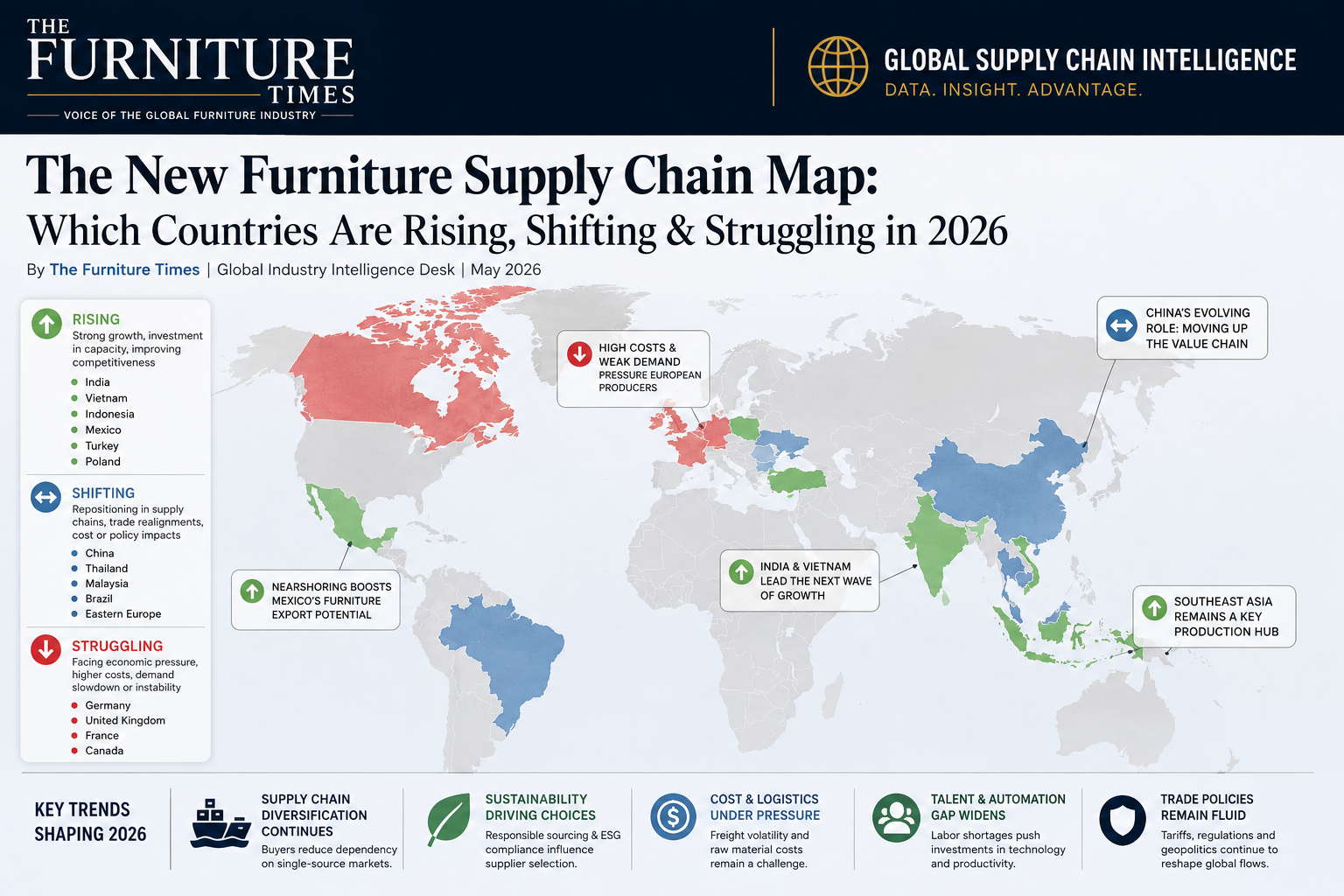
The New Furniture Supply Chain Map: Which Countries Are Rising, Shifting & Struggling in 2026
Global Supply Chain Intelligence | The Furniture Times
By The Furniture Times | Global Industry Intelligence Desk | May 2026
The global furniture supply chain is being redrawn.
What was once a relatively stable manufacturing and export ecosystem is now evolving rapidly under the pressure of:
- geopolitical tension
- tariffs
- logistics disruption
- rising labor costs
- digital transformation
- regional sourcing strategies
The result is a major shift in global furniture manufacturing power.
Some countries are rising.
Some are adapting.
Some are struggling to remain competitive.
The furniture industry is entering a new era where supply-chain intelligence may become more important than production scale alone.
The End of the Old Supply Chain Model
For years, the global furniture industry operated on one dominant model:
Manufacture in one region → export globally
That model is now changing.
Companies are increasingly seeking:
- diversified sourcing
- regional manufacturing hubs
- faster delivery systems
- lower geopolitical risk
- resilient supplier networks
This shift is creating a new global furniture supply-chain map.
🇻🇳 Vietnam: The Rising Export Powerhouse
Among the biggest winners of the global supply-chain shift is Vietnam.
Vietnam continues strengthening its position as one of the world’s most important furniture manufacturing and export hubs.
Why Vietnam Is Rising
1. Manufacturing Expansion
Vietnam has significantly expanded:
- factory capacity
- export infrastructure
- automation capability
2. China Plus One Strategy
Global buyers seeking alternatives to overdependence on China increasingly choose Vietnam for:
- wood furniture
- outdoor furniture
- OEM production
- export manufacturing
3. Competitive Labor & Trade Advantages
Vietnam benefits from:
- strong export agreements
- manufacturing efficiency
- growing industrial investment
Challenges Vietnam Still Faces
Despite rapid growth, Vietnam also faces:
- rising labor costs
- energy pressure
- sustainability compliance demands
- logistics vulnerability
Vietnam is no longer competing only on low cost.
It is competing on scale, speed, and manufacturing capability.
🇲🇾 Malaysia: The Strategic ASEAN Hub
Malaysia remains one of the most strategically positioned countries in the global furniture ecosystem.
While Vietnam dominates scale growth, Malaysia offers something different:
Flexibility, regional connectivity, and strategic positioning.
Why Malaysia Matters
1. ASEAN Gateway
Malaysia sits at the center of Southeast Asian trade routes and serves as:
- a regional export hub
- a logistics connector
- an ASEAN business gateway
2. Strong Furniture Manufacturing Base
Malaysia has built decades of expertise in:
- wooden furniture
- hospitality furniture
- outdoor furniture
- custom manufacturing
3. Political & Business Stability
Compared to many global regions facing instability, Malaysia offers:
- relatively stable business conditions
- export-friendly infrastructure
- strategic global connectivity
Malaysia’s Biggest Opportunity
Malaysia can position itself as:
- a regional sourcing alternative
- a flexible manufacturing hub
- a premium export partner
Especially in:
- hospitality furniture
- OEM manufacturing
- contract furniture
- export partnerships
Malaysia’s strength may not be size alone.
Its strength is strategic adaptability.
🇮🇳 India: The Scaling Giant
India is becoming one of the most important long-term furniture growth stories.
India combines:
- large domestic demand
- expanding manufacturing
- skilled labor
- rising export ambition
Why India Is Scaling
1. Massive Domestic Market
India’s growing middle class and urbanization continue driving:
- housing demand
- office expansion
- hospitality growth
- furniture consumption
2. Government Manufacturing Push
India continues encouraging:
- industrial expansion
- local manufacturing
- export competitiveness
3. Skilled Workforce
India has strong potential in:
- craftsmanship
- woodworking
- upholstery
- engineering capability
India’s Current Challenges
India still faces:
- fragmented supply chains
- logistics inefficiencies
- inconsistent infrastructure
- export scaling challenges
But the trajectory is clear.
India is moving from potential → toward industrial scale.
🇨🇳 China: Adapting, Not Disappearing
Despite global narratives around diversification, China remains the most powerful manufacturing ecosystem in the furniture industry.
However, China is evolving.
The Reality
China is not collapsing.
It is adapting.
China’s Strengths Remain Massive
1. Industrial Ecosystem Depth
China still dominates:
- machinery
- hardware
- supply-chain integration
- manufacturing scale
- industrial infrastructure
2. Automation & Smart Manufacturing
China is rapidly investing in:
- AI manufacturing
- robotics
- smart factories
- digital production systems
3. Supply-Chain Speed
China still offers:
- unmatched industrial efficiency
- massive supplier networks
- production flexibility
The Pressure China Faces
China must now navigate:
- tariff pressure
- geopolitical risk
- rising labor costs
- global diversification efforts
China’s New Direction
China is increasingly shifting toward:
- higher-value manufacturing
- technology integration
- advanced production
- automation-driven efficiency
China is not losing relevance.
It is repositioning itself.
🇦🇪 United Arab Emirates: The Global Trade Gateway
United Arab Emirates is emerging as one of the most strategically important trade and re-export hubs in the furniture ecosystem.
Why UAE Matters
1. Global Connectivity
The UAE connects:
- Asia
- Europe
- Africa
- Middle East markets
2. Hospitality & Luxury Demand
The region continues investing heavily in:
- hotels
- luxury real estate
- tourism
- commercial development
This creates strong furniture demand.
3. Trade Infrastructure
Dubai and surrounding logistics hubs offer:
- advanced ports
- warehousing
- global freight access
- business-friendly trade systems
UAE’s Strategic Role
The UAE is increasingly becoming:
- a sourcing gateway
- a distribution hub
- a regional showroom market
- a re-export center
The UAE may become one of the most important “connection economies” in furniture trade.
The Bigger Shift: From Globalization to Regional Resilience
The old furniture supply chain prioritized:
- lowest production cost
- centralized sourcing
- large-scale efficiency
The new supply-chain model prioritizes:
- resilience
- diversification
- regional flexibility
- geopolitical stability
- speed
The Industry Is Moving Toward:
Multi-country sourcing
instead of overdependence
Regional manufacturing hubs
instead of single-region concentration
Digital supplier discovery
instead of limited buyer networks
Faster communication systems
instead of fragmented communication
TFT Deep Industry Insight
The future furniture supply chain may no longer be controlled only by factories.
It may increasingly be controlled by:
- intelligence
- visibility
- logistics
- digital infrastructure
- trust
- communication systems
The next decade may belong to countries and businesses that can combine:
- manufacturing capability
- geopolitical stability
- digital infrastructure
- trade flexibility
- connected ecosystems
Strategic Outlook for 2026
Countries Rising
- Vietnam
- India
Countries Strategically Positioning
- Malaysia
- United Arab Emirates
Countries Adapting
- China
Final Thought
The global furniture supply chain is no longer static.
It is being redesigned in real time.
The next generation of furniture leaders will not only build products.
They will build resilient, intelligent, and globally connected supply-chain systems.

Related Posts
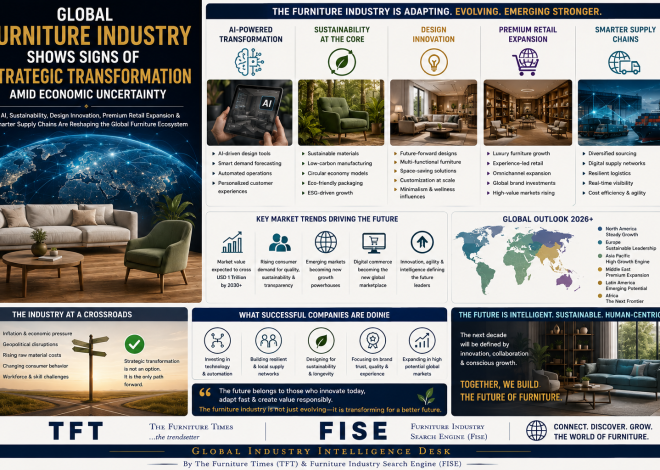
Global Furniture Industry Shows Signs of Strategic Transformation Amid Economic Uncertainty
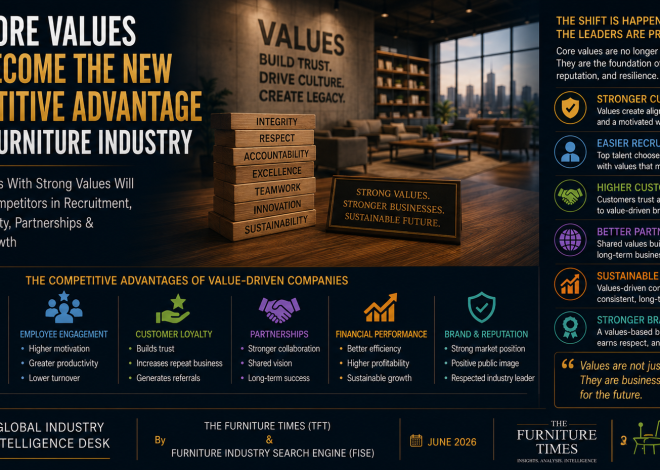
Why Core Values Will Become the New Competitive Advantage in the Furniture Industry