Furniture Cities Can Become the Next Global Business Destinations
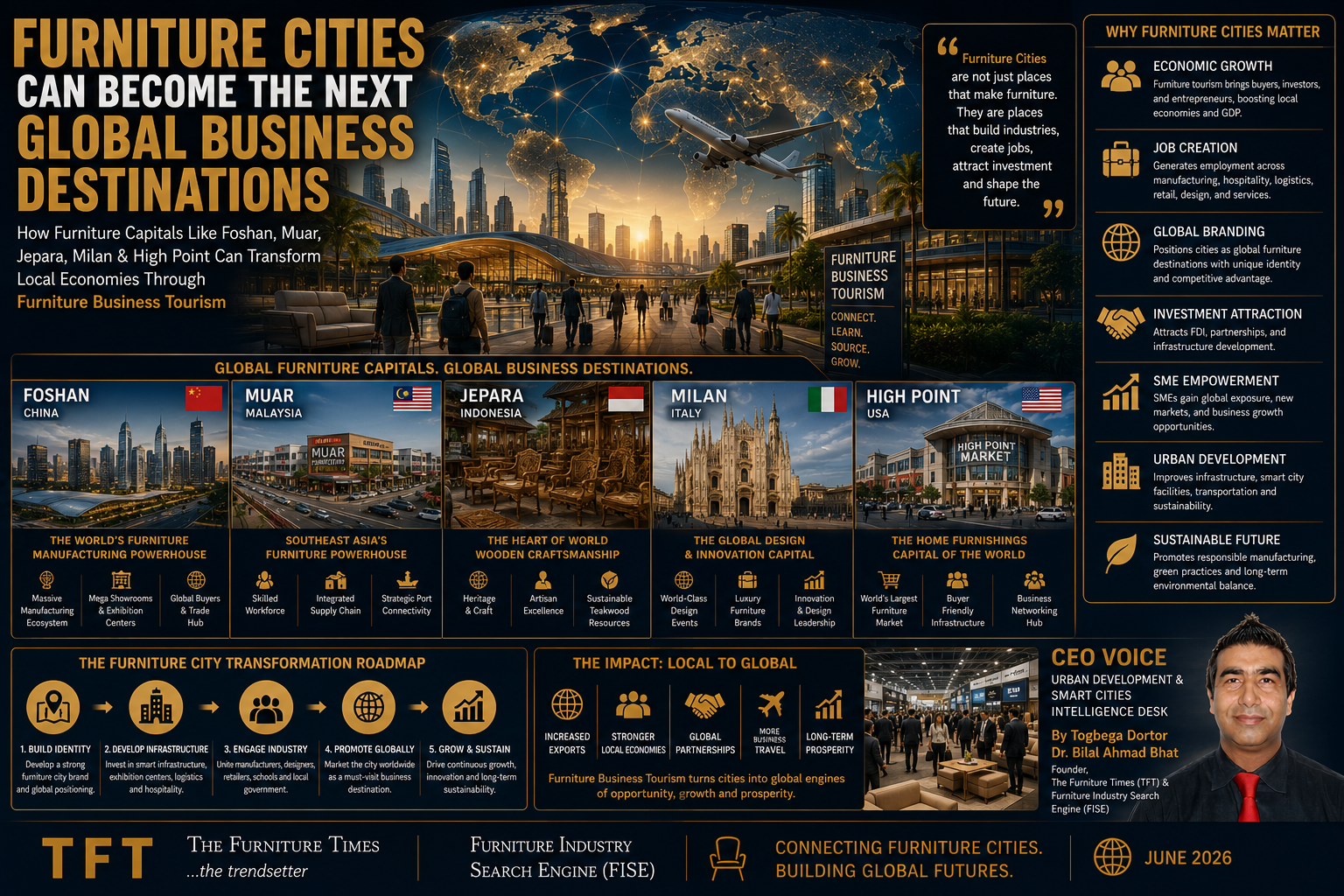
How Furniture Capitals Like Foshan, Muar, Jepara, Milan & High Point Can Transform Local Economies Through Furniture Business Tourism
Urban Development & Smart Cities Intelligence Desk
By The Furniture Times (TFT) & Furniture Industry Search Engine (FISE)
June 2026
Around the world, certain cities have become globally recognised for what they produce.
Some cities are known for automobiles.
Some for finance.
Some for fashion.
Some for technology.
Others for aviation.
These cities have successfully built international identities around their industries.
They attract investors.
Business travellers.
Students.
Researchers.
Entrepreneurs.
Tourists.
Media.
International conferences.
Global partnerships.
Yet another category of cities deserves similar global recognition.
Furniture Cities.
Cities that have spent decades building furniture manufacturing clusters have become economic powerhouses.
They are home to thousands of manufacturers, skilled craftsmen, exporters, designers, machinery suppliers, logistics companies and supporting industries.
Yet many remain recognised only by industry insiders.
The broader world rarely knows their story.
According to The Furniture Times (TFT), this is one of the greatest branding opportunities available to furniture-producing nations.
Furniture cities should no longer be viewed merely as industrial zones.
They should become Global Business Destinations.
The next chapter of urban development is not simply building smart cities.
It is building Smart Furniture Cities that combine manufacturing, tourism, education, technology and international business.
A Furniture City Is More Than a Manufacturing Hub
A furniture city is not defined only by factories.
It is an ecosystem.
Inside one furniture city may exist:
Furniture manufacturers.
OEM suppliers.
Interior designers.
Furniture retailers.
Furniture showrooms.
Hardware suppliers.
Foam manufacturers.
Textile producers.
Timber companies.
Packaging businesses.
Machinery manufacturers.
Logistics providers.
Export consultants.
Universities.
Training centres.
Banks.
Hotels.
Restaurants.
Conference venues.
Every participant contributes to one interconnected economy.
Furniture cities already function as complete industrial ecosystems.
The next step is making them internationally visible.
The World’s Leading Furniture Cities
Several cities have become internationally recognised within the furniture industry.
Each possesses unique strengths.
Foshan, China
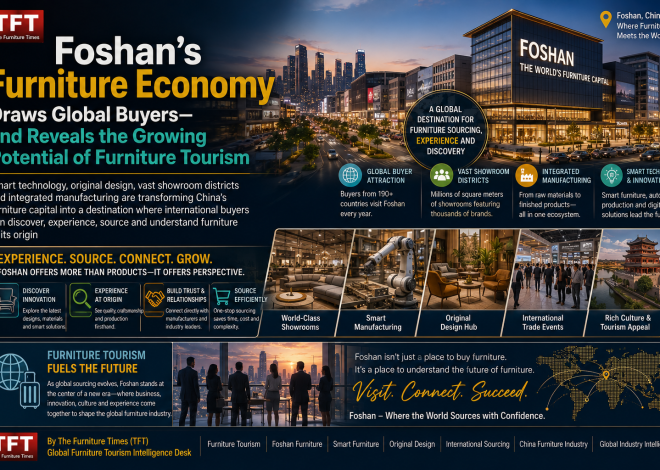
Foshan is one of the world’s largest furniture manufacturing ecosystems.
The city offers:
• Factory-direct sourcing
• Custom furniture
• OEM production
• Massive wholesale furniture centres
• International export capabilities
Thousands of international buyers travel to Foshan every year to source products, inspect factories and build supplier relationships.
Foshan demonstrates how manufacturing excellence can evolve into a business tourism destination.
Muar, Malaysia
Often recognised as Malaysia’s furniture capital, Muar has developed a globally respected reputation for:
Solid wood furniture.
Export manufacturing.
Bedroom furniture.
Dining furniture.
Hospitality furniture.
Skilled craftsmanship.
Muar has the potential to become one of Asia’s leading Furniture Business Tourism destinations.
Visitors could experience factory tours, woodworking demonstrations, design centres, export facilities and furniture innovation programmes.
Jepara, Indonesia
Jepara is globally famous for handcrafted teak furniture and traditional wood carving.
Its centuries-old craftsmanship attracts admiration worldwide.
Jepara represents more than manufacturing.
It represents cultural heritage.
Furniture Business Tourism could connect international visitors with artisans, carving workshops, furniture schools and sustainable timber practices.
Milan, Italy
Milan is synonymous with furniture design.
Every year it attracts architects, designers, manufacturers and media from around the world.
Design exhibitions, innovation, premium craftsmanship and luxury brands have positioned Milan as one of the world’s most influential furniture cities.
It demonstrates how furniture can become part of a city’s global identity.
High Point, North Carolina, USA
High Point has long been recognised as one of the world’s leading furniture trade destinations.
Its internationally renowned furniture market attracts buyers from numerous countries.
High Point proves that business visitors can generate enormous economic benefits for an entire city.
Hotels.
Restaurants.
Transportation.
Retail.
Professional services.
All benefit from furniture-related travel.
Why City Branding Matters
Cities compete globally.
Investment follows reputation.
Tourism follows identity.
Business follows visibility.
When a city becomes recognised for furniture excellence, it gains:
International attention.
Export credibility.
Investor confidence.
Media exposure.
Educational partnerships.
Business networking.
Furniture branding becomes city branding.
Furniture Cities Create Economic Clusters
Economic clusters are one of the strongest drivers of regional development.
Within a furniture cluster exist businesses supporting every stage of production.
Timber suppliers.
Hardware companies.
Textile manufacturers.
Chemical suppliers.
Machinery companies.
Packaging providers.
Freight companies.
Inspection agencies.
Training institutions.
Marketing firms.
Technology providers.
These businesses strengthen one another.
The success of one creates opportunities for many others.
Furniture Business Tourism allows international visitors to experience the complete ecosystem rather than individual factories.
Local Employment Extends Beyond Manufacturing
The impact of a successful furniture city extends well beyond factory jobs.
Furniture Business Tourism creates demand for:
Tour coordinators.
Business consultants.
Industry guides.
Professional translators.
Event organisers.
Hotel employees.
Restaurant staff.
Drivers.
Digital marketers.
Photographers.
Content creators.
Export advisors.
Quality inspectors.
Architects.
Interior designers.
The furniture industry becomes an employment multiplier.
Every visitor creates opportunities for multiple professions.
Tourism Infrastructure Must Evolve
To become international business destinations, furniture cities require modern infrastructure.
Including:
Business hotels.
Convention centres.
Airport connectivity.
Reliable transport.
Visitor information centres.
Factory tour programmes.
Furniture museums.
Design galleries.
Business lounges.
Digital visitor platforms.
Wayfinding systems.
Language support.
Professional logistics.
The better the visitor experience, the stronger the city’s international reputation.
Furniture Tourism Can Revitalise Secondary Cities
Many furniture capitals are not national capitals.
This creates a major opportunity.
Instead of concentrating tourism in major metropolitan areas, governments can promote regional economic growth.
Furniture Tourism distributes opportunity.
Visitors stay longer.
Spend locally.
Support regional businesses.
Strengthen local entrepreneurship.
This contributes to balanced national development.
Smart Furniture Cities
The future furniture city will integrate technology.
Artificial Intelligence.
Smart logistics.
Digital manufacturing.
Industry search platforms.
Virtual factory tours.
Augmented reality.
Interactive visitor centres.
Real-time translation.
Smart cities and furniture cities will increasingly become interconnected.
Technology improves both manufacturing and visitor experiences.
Universities Become Innovation Partners
Furniture cities should not rely only on factories.
Universities and vocational institutions play an equally important role.
Students gain:
Factory exposure.
Research opportunities.
Industry collaboration.
Entrepreneurship programmes.
Innovation challenges.
Furniture cities become learning cities.
Knowledge becomes another export.
Sustainability Strengthens City Identity
Modern buyers increasingly value responsible manufacturing.
Furniture cities can showcase:
Certified timber.
Circular economy practices.
Recycling.
Renewable materials.
Waste reduction.
Carbon management.
Responsible production strengthens both environmental performance and city reputation.
Why Searchability Matters
No city becomes a global destination if buyers cannot discover it.
Furniture cities require:
Digital identities.
Interactive maps.
Manufacturer directories.
Factory listings.
Business event calendars.
Tourism information.
AI-readable business profiles.
This is where Furniture Industry Search Engine (FISE) becomes essential.
FISE can help furniture cities become globally searchable.
Searchability is the first step toward international business tourism.
The Role of The Furniture Times
The Furniture Times believes furniture cities deserve the same global recognition as technology cities, fashion capitals and automotive centres.
Through Furniture Business Tourism, TFT aims to position furniture cities as destinations for:
Business.
Investment.
Education.
Innovation.
Culture.
Trade.
International collaboration.
This vision goes beyond journalism.
It contributes to city development.
TFT & FISE Analysis
Furniture cities already possess the assets required for international success.
Manufacturing.
People.
Knowledge.
Craftsmanship.
Infrastructure.
The missing element is coordinated visibility.
By combining city branding, tourism, searchability, export promotion and business networking, furniture cities can become global business destinations.
This creates value not only for manufacturers but for the entire local economy.
Final Verdict
The future belongs to cities that tell their industrial story.
Foshan did not become globally recognised overnight.
Neither did Milan.
Nor High Point.
Nor Jepara.
Nor Muar.
They built ecosystems.
The next step is building experiences.
Furniture Business Tourism transforms factories into destinations.
Manufacturing into storytelling.
Business into relationships.
Cities into global brands.
The Furniture Times believes the world’s leading furniture cities should become internationally recognised business destinations—not only for what they manufacture, but for the opportunities they create.
Because great cities are remembered not only by their skylines.
They are remembered by the industries that changed the world.
And furniture cities have already changed the way the world lives.
Now it is time for the world to discover them.
By The Furniture Times (TFT) & Furniture Industry Search Engine (FISE)
Urban Development & Smart Cities Intelligence Desk | June 2026
“TFT tells their story. FISE helps the world find them.”
The furniture industry ecosystem is a $1 Trillion Dollar Industry.