
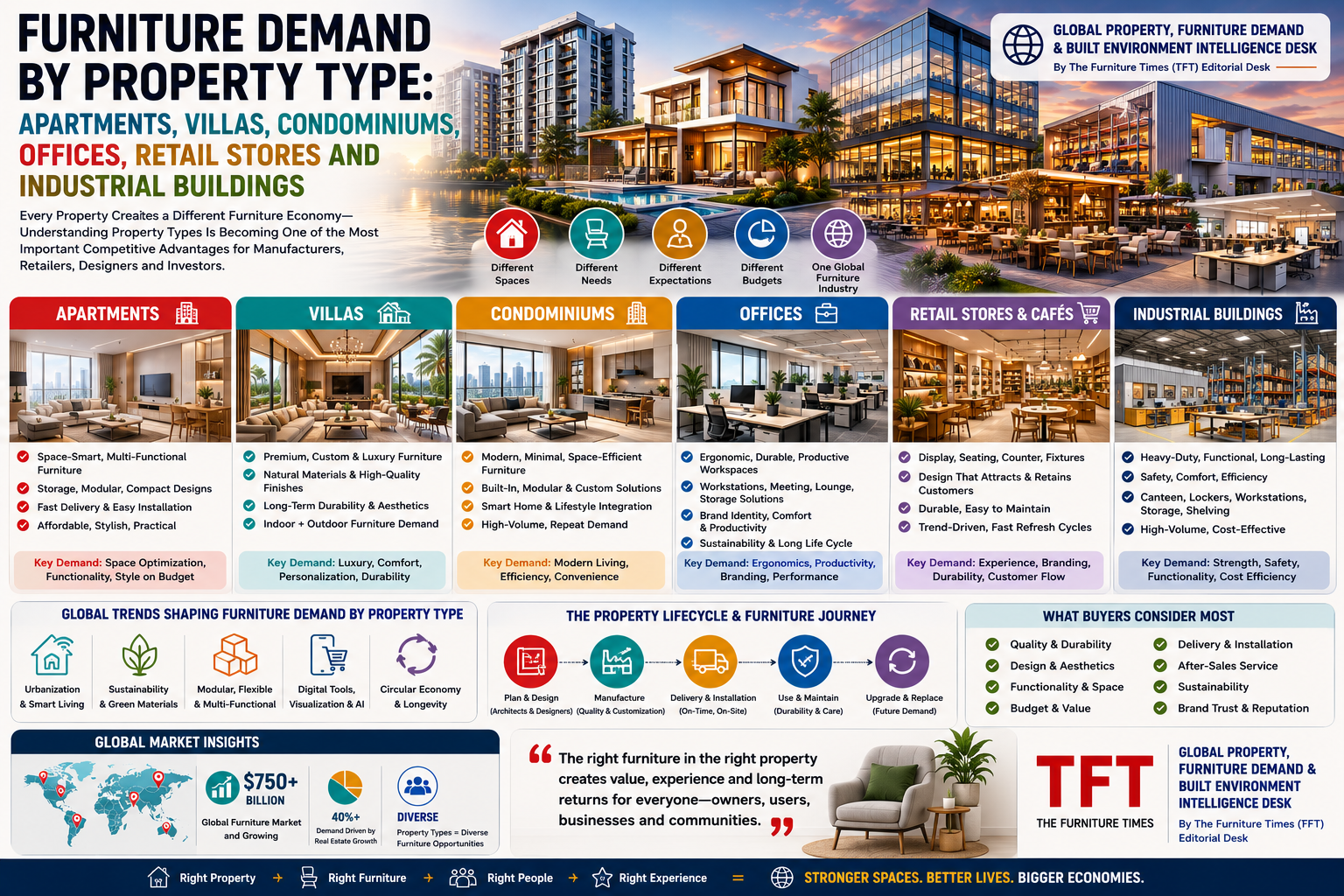
Furniture Demand by Property Type: Apartments, Villas, Condominiums, Offices, Retail Stores and Industrial Buildings
Every Property Creates a Different Furniture Economy—Understanding Property Types Is Becoming One of the Most Important Competitive Advantages for Furniture Manufacturers, Retailers, Designers and Investors
Global Property, Furniture Demand & Built Environment Intelligence Desk
By The Furniture Times (TFT) Editorial Desk
The global furniture industry has traditionally classified products according to rooms such as living rooms, bedrooms, dining areas, kitchens and offices.
While this approach remains useful, it no longer reflects how furniture demand is actually created.
Today’s furniture economy is increasingly driven by property development.
Every apartment completed, every condominium launched, every office tower opened, every retail store renovated, every hotel developed, every warehouse expanded and every industrial park constructed creates a new furniture demand cycle.
Property developers build the space.
Furniture manufacturers complete the experience.
The relationship between real estate and furniture is one of the strongest yet most underestimated economic connections in the global marketplace.
When urbanisation increases, apartment furniture demand rises.
When suburban housing expands, villa furniture grows.
When business parks are developed, commercial office furniture accelerates.
When shopping centres open, retail furniture follows.
When industrial facilities expand, workplace, cafeteria, reception, training-room and administrative furniture demand increases.
Furniture is therefore not simply purchased because consumers want new products.
Furniture is purchased because properties become occupied, renovated, repositioned, upgraded or repurposed.
According to the United Nations, approximately 68% of the world’s population is expected to live in urban areas by 2050, significantly increasing demand for urban housing and commercial buildings. This long-term urbanisation trend will continue to influence apartment, condominium and mixed-use furniture demand worldwide.
Understanding property development is becoming just as important as understanding furniture design.
The Property Economy Drives the Furniture Economy
Every property passes through several furniture-demand phases:
- Initial furnishing
- Occupancy
- Daily operation
- Renovation
- Tenant change
- Expansion
- Rebranding
- Refurbishment
- Redevelopment
Each stage creates new purchasing opportunities.
The furniture industry should therefore study buildings as carefully as it studies products.
Apartments: The World’s Largest Urban Furniture Market
Apartments represent one of the largest global furniture opportunities because of:
- Urbanisation
- Population growth
- Smaller households
- Rising land costs
- First-home buyers
- Rental markets
Apartment buyers typically prioritise:
- Space-saving furniture
- Modular storage
- Multifunctional products
- Affordable pricing
- Easy delivery
- Quick assembly
Common apartment furniture includes:
- Sofas
- Storage beds
- Dining sets
- Wardrobes
- TV cabinets
- Coffee tables
- Home office desks
- Balcony furniture
Small Spaces Create Innovation
Apartment living has accelerated demand for:
- Foldable tables
- Sofa beds
- Wall beds
- Expandable dining tables
- Modular shelving
- Stackable furniture
- Compact wardrobes
Every square metre becomes valuable.
Rental Apartments
Rental properties influence demand differently.
Landlords often prioritise:
- Durability
- Easy maintenance
- Affordable replacement
- Neutral design
- Standard dimensions
Tenants often seek:
- Portable furniture
- Easy assembly
- Budget-conscious products
- Flexible storage
Rental markets therefore generate recurring furniture replacement.
Condominiums
Condominiums combine apartment living with lifestyle expectations.
Furniture demand often emphasises:
- Contemporary design
- Premium finishes
- Balcony living
- Home offices
- Smart furniture
- Lifestyle branding
Residents frequently purchase complete furniture packages after collecting keys.
Developers increasingly use professionally furnished show units to influence purchasing decisions.
Villas: High-Value Furniture Demand
Villa owners generally purchase:
- Larger sofas
- Premium dining sets
- Outdoor furniture
- Luxury bedrooms
- Walk-in wardrobes
- Home libraries
- Home cinemas
- Pool furniture
- Garden furniture
Villa furniture spending is often significantly higher per property than apartment spending.
Luxury villas frequently require:
- Bespoke furniture
- Imported materials
- Custom joinery
- Interior design services
Outdoor Living Expands Villa Spending
Villa properties commonly include:
- Gardens
- Patios
- Pergolas
- Pools
- Outdoor kitchens
- Entertainment areas
These spaces create additional demand for:
- Outdoor lounges
- Dining collections
- Sun loungers
- Daybeds
- Parasols
- Firepit seating
Outdoor furniture becomes an extension of indoor living.
Townhouses and Landed Homes
Townhouses typically require:
- Compact family furniture
- Multi-level storage
- Family dining
- Children’s furniture
- Home office products
Furniture must balance affordability with long-term durability.
Offices
The office furniture economy has changed dramatically following hybrid work.
Modern offices require:
- Workstations
- Ergonomic chairs
- Meeting rooms
- Collaboration areas
- Focus booths
- Reception furniture
- Lounge seating
- Café furniture
The office is increasingly designed as a collaboration destination rather than simply a workstation.
Flexible Offices
Coworking and flexible workspaces create demand for:
- Modular furniture
- Mobile storage
- Shared desks
- Phone booths
- Collaborative seating
- Reconfigurable meeting rooms
Furniture flexibility has become a competitive advantage.
Executive Offices
Executive areas often include:
- Premium desks
- Meeting tables
- Lounge furniture
- Display cabinets
- Conference seating
These products reinforce corporate identity.
Retail Stores
Retail furniture influences:
- Customer movement
- Product display
- Brand identity
- Sales conversion
- Store flexibility
Common products include:
- Display shelving
- Checkout counters
- Display tables
- Product stands
- Seating
- Fitting-room furniture
- Waiting areas
Retail furniture is designed to support product sales rather than simply occupy space.
Pop-Up Retail
Temporary retail concepts require:
- Lightweight displays
- Modular shelving
- Easy transport
- Quick assembly
This creates demand for reusable commercial furniture.
Shopping Centres
Common-area furniture includes:
- Benches
- Lounge seating
- Food-court furniture
- Information counters
- Children’s seating
- Outdoor plazas
Shopping-centre renovations create recurring procurement opportunities.
Industrial Buildings
Industrial furniture demand is frequently overlooked.
Factories require:
- Reception furniture
- Administrative offices
- Cafeterias
- Meeting rooms
- Locker systems
- Training rooms
- Waiting areas
- Dormitory furniture
- Outdoor break areas
As manufacturing facilities become more employee-focused, furniture quality becomes increasingly important.
Logistics Warehouses
Modern logistics centres require:
- Dispatch offices
- Control rooms
- Staff lounges
- Training facilities
- Dining areas
- Visitor reception
Warehouse furniture supports operational efficiency.
Research and Innovation Centres
Innovation facilities require:
- Collaborative furniture
- Laboratory support furniture
- Flexible meeting rooms
- Idea spaces
- Presentation furniture
Knowledge-based workplaces require adaptable interiors.
Mixed-Use Developments
Mixed-use projects combine:
- Apartments
- Offices
- Retail
- Restaurants
- Hotels
- Public spaces
One development may generate furniture demand across multiple categories simultaneously.
Manufacturers capable of supplying several sectors gain commercial advantages.
Property Lifecycle Creates Replacement Demand
Furniture demand continues after initial occupancy.
Replacement occurs because of:
- Wear
- Renovation
- Tenant turnover
- Rebranding
- Technology changes
- Lifestyle changes
Replacement demand often exceeds initial demand over a building’s lifetime.
Property Developers Influence Furniture Sales
Developers affect furniture through:
- Show units
- Marketing suites
- Furnished apartments
- Package deals
- Interior partnerships
Many buyers purchase furniture similar to professionally staged show homes.
Interior Designers Connect Property and Furniture
Designers influence:
- Furniture specification
- Material selection
- Brand recommendations
- Procurement
- Custom manufacturing
Their role connects property development with furniture manufacturing.
Search Behaviour by Property Type
Apartment buyers search:
- Small apartment furniture
- Storage bed
- Compact dining table
- Balcony furniture
Villa buyers search:
- Luxury sofa
- Outdoor lounge
- Pool furniture
- Walk-in wardrobe
Office buyers search:
- Ergonomic chair
- Office workstation
- Meeting table
- Acoustic booth
Retail operators search:
- Shop display furniture
- Retail shelving
- Checkout counter
Industrial operators search:
- Factory office furniture
- Staff cafeteria furniture
- Training-room chairs
Search intent varies significantly according to property type.
AI Search Will Personalise Property Recommendations
Future AI systems may answer:
- Best furniture for 700-square-foot apartments
- Durable furniture for rental units
- Outdoor furniture for tropical villas
- Office furniture for hybrid teams
- Retail fixtures for fashion stores
Manufacturers should organise products according to property use, not only product category.
Regional Differences
Asia-Pacific
High apartment demand driven by urbanisation.
Europe
Strong renovation and apartment markets.
North America
Large suburban housing and office markets.
Middle East
Luxury villas, mixed-use developments and hospitality projects.
Africa
Rapid urban housing, offices and commercial expansion.
Latin America
Growing apartment living, retail and mixed-use developments.
Property type influences furniture demand differently in every region.
Sustainability by Property Type
Apartments benefit from:
- Space efficiency
- Modular systems
- Long-life furniture
Villas increasingly adopt:
- Sustainable outdoor materials
- Certified timber
Offices focus on:
- Circular furniture
- Refurbishment
- Modular workstations
Retail seeks:
- Reusable displays
- Flexible fixtures
Industrial facilities prioritise:
- Durable furniture
- Long replacement cycles
High-Growth Property Opportunities
Furniture companies should develop specialised collections for:
- Apartments
- Student housing
- Senior living
- Villas
- Coworking spaces
- Logistics parks
- Retail chains
- Healthcare
- Hospitality
- Mixed-use developments
Each property type requires different design, pricing and logistics strategies.
Strategic Recommendations
Furniture companies should:
- Segment products according to property type.
- Develop property-specific catalogues.
- Partner with developers.
- Build relationships with architects and designers.
- Create complete furniture packages.
- Support property show units.
- Expand customisation capabilities.
- Strengthen installation services.
- Improve replacement-part availability.
- Publish property-focused case studies.
Buildings Create Furniture Economies
The furniture industry should no longer think only in terms of sofas, beds and tables.
It should think in terms of:
- Apartments
- Villas
- Condominiums
- Offices
- Retail stores
- Industrial facilities
- Mixed-use developments
- Hospitality properties
Every building creates furniture demand.
Every renovation creates replacement demand.
Every new development creates manufacturing opportunities.
The companies that understand property economics will understand where tomorrow’s furniture demand will emerge before competitors do.
The future of the furniture industry will be built not only inside factories—but alongside the world’s expanding cities, homes, workplaces and commercial developments.
