
#FurnitureRetail
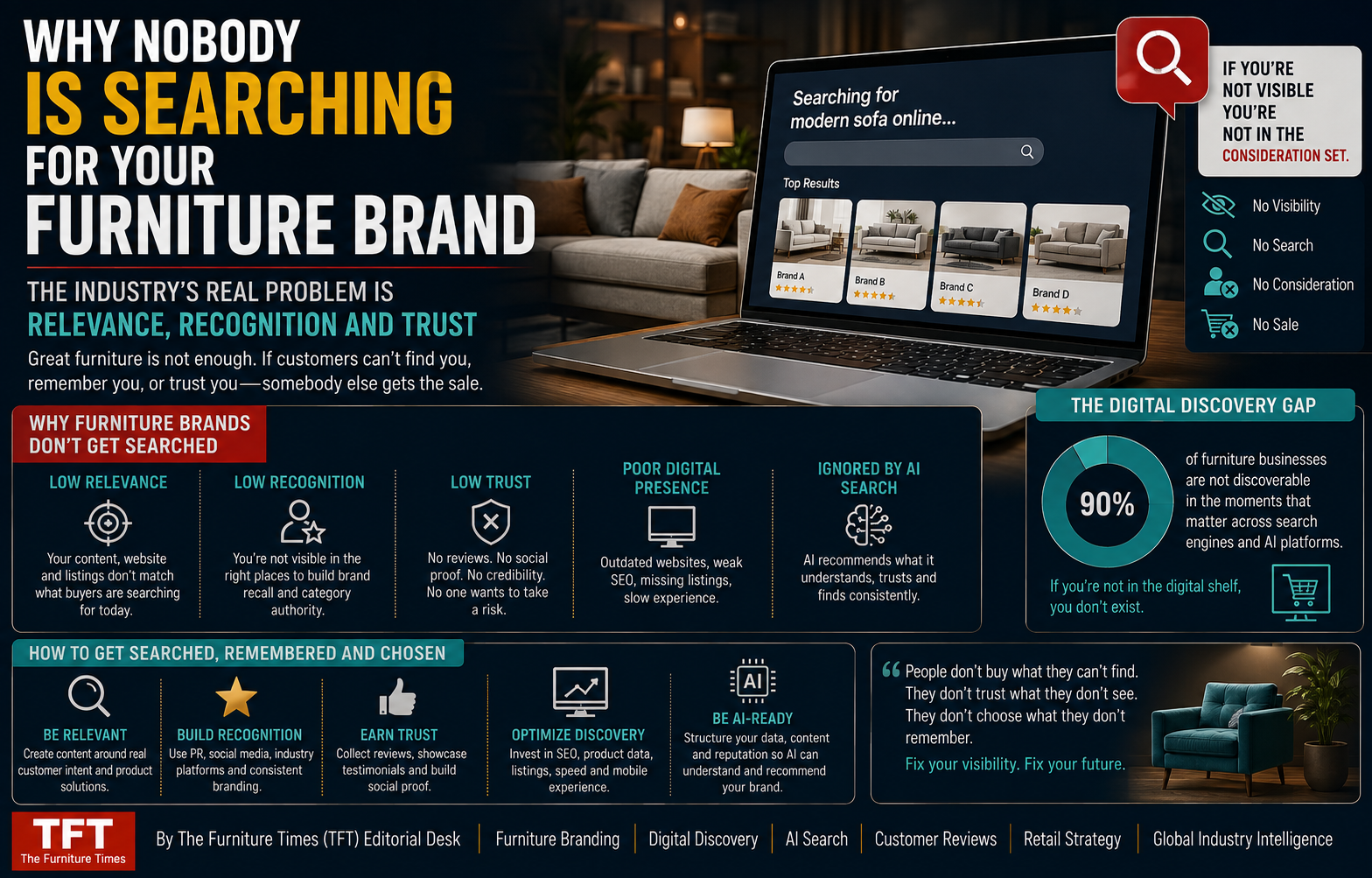
Why Nobody Is Searching for Your Furniture Brand
Furniture companies may offer excellent products, but customers cannot search for brands they do not remember—and AI cannot recommend businesses it cannot understand. This report examines the furniture industry’s relevance crisis and explains how TFT, FISE and FurniReviewology can connect visibility, discovery and trust.
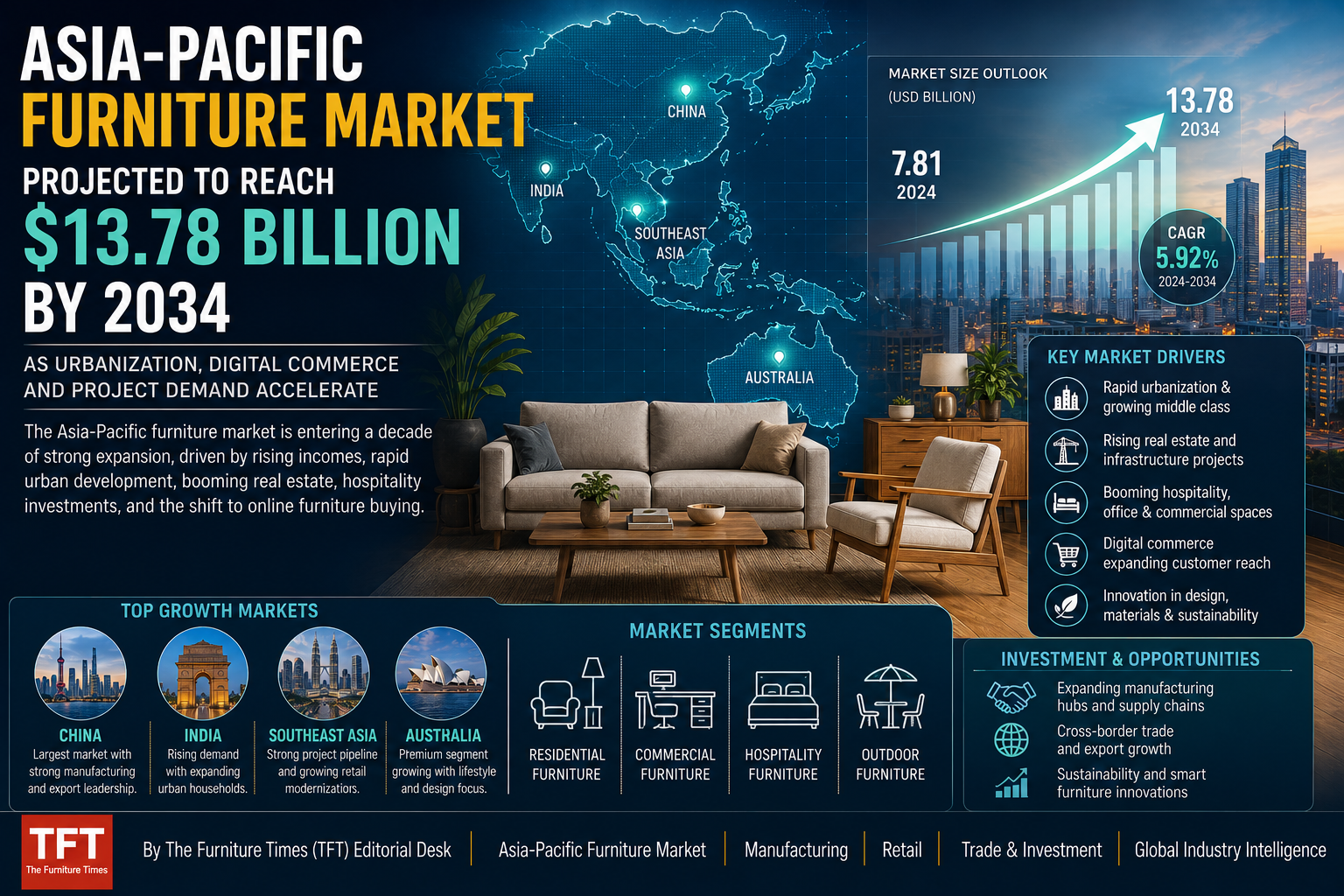
Asia-Pacific Furniture Market Projected to Reach $13.78 Billion by 2034 as Urbanization
Market Data Forecast estimates that the Asia-Pacific furniture market within its defined scope will grow from $7.26 billion in 2026 to $13.78 billion by 2034. This detailed analysis examines home, office, hospitality and educational furniture demand, country-level opportunities, materials, retail channels, digital commerce and the challenges facing manufacturers.
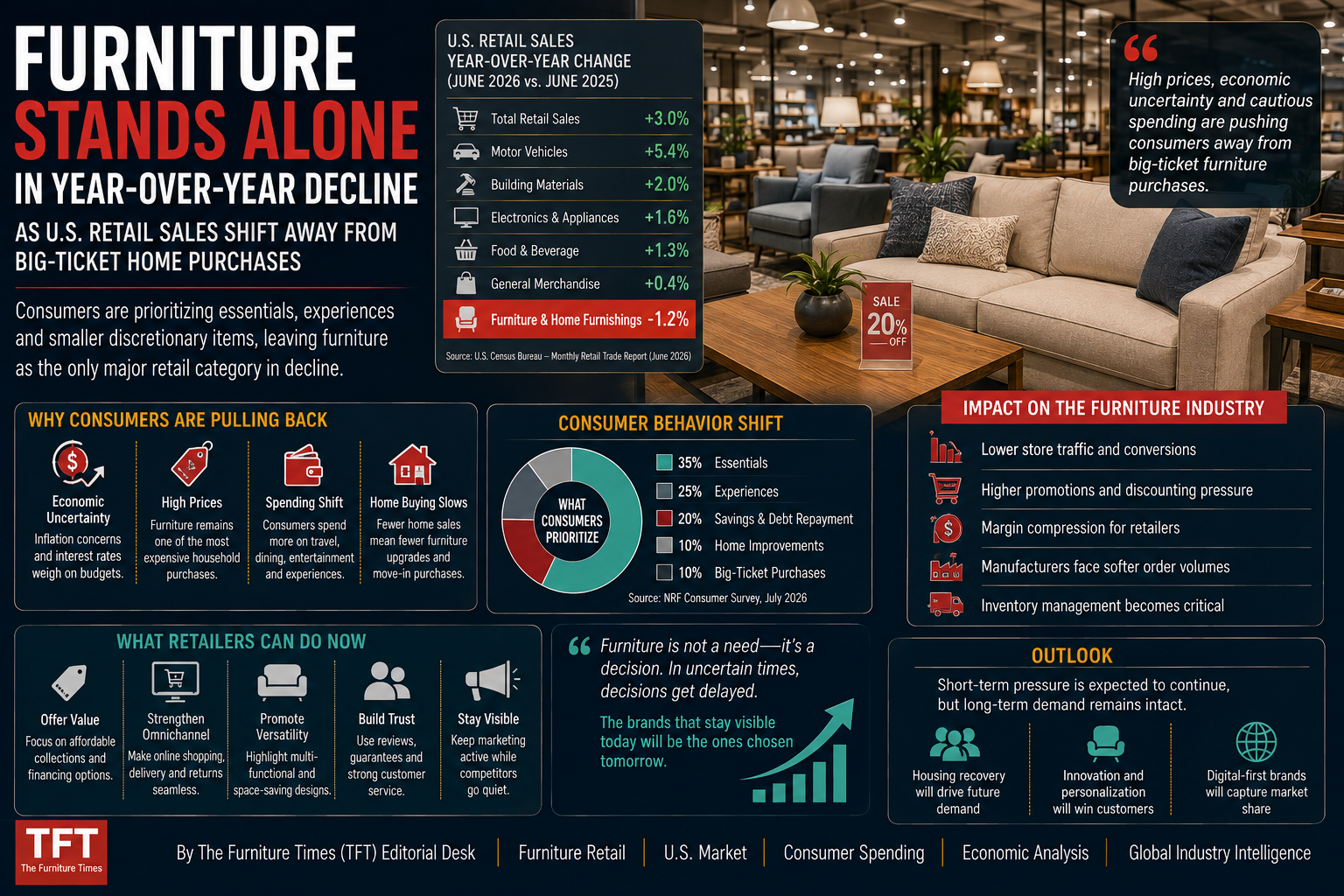
Furniture Stands Alone in Year-over-Year Decline as U.S. Retail Sales Shift Away From Big-Ticket Home Purchases
Furniture was reportedly the only major U.S. retail category to post a year-over-year decline in July 2026. Although store sales increased 0.3% from June, they remained approximately 2.7% below last year, highlighting continuing pressure from cautious consumers, weak housing-related demand and changing retail channels.

AI is becoming retail’s operating system
Artificial intelligence is becoming the operating system of modern retail. This detailed report examines how AI will coordinate furniture discovery, visualization, product data, merchandising, forecasting, inventory, pricing, stores, delivery, reviews and customer service—while creating new requirements for governance and human oversight.
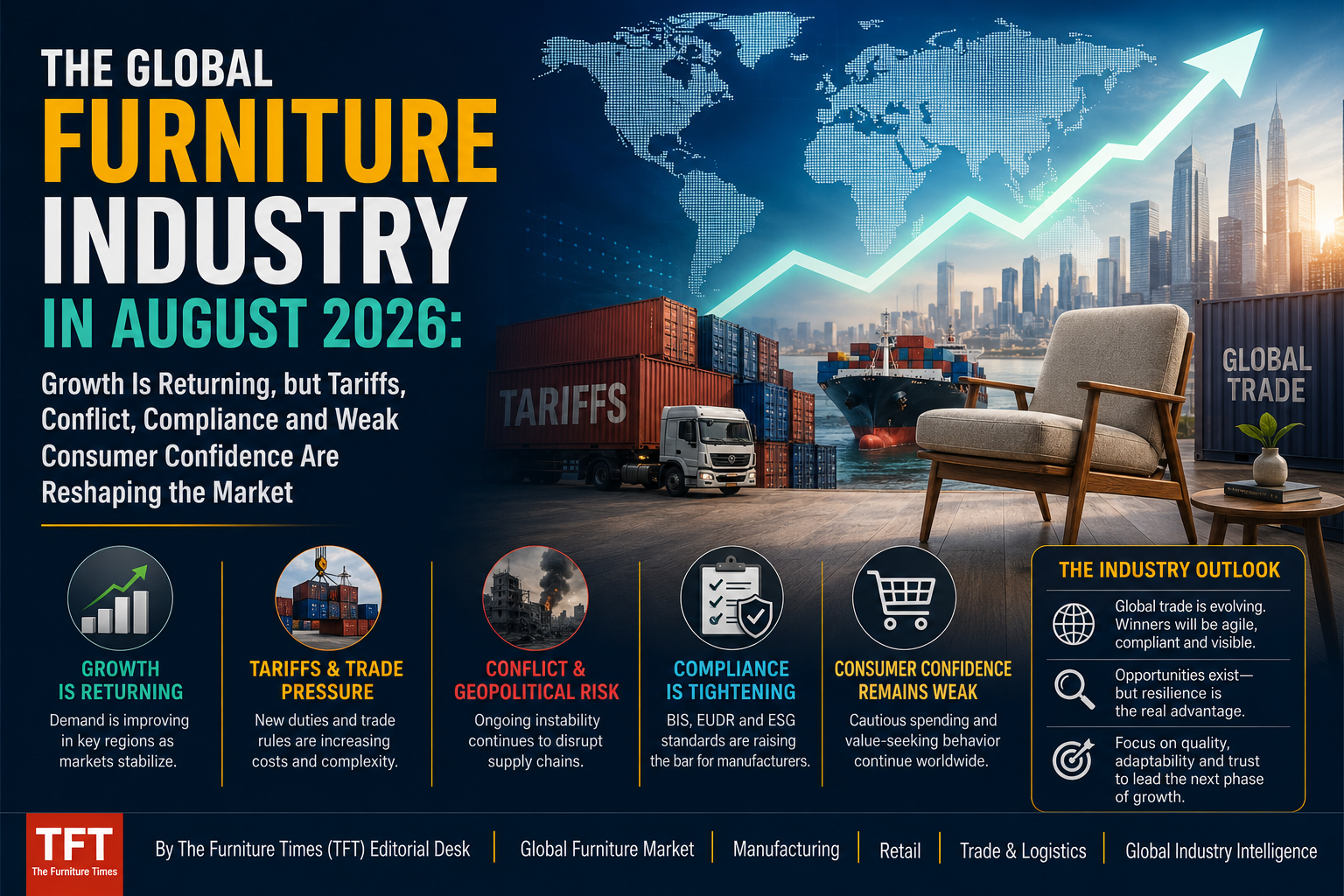
The Global Furniture Industry in August 2026
This August 2026 global furniture-industry report examines current demand, housing, retail, manufacturing, tariffs, Middle East shipping disruption, BIS certification, EUDR preparation, AI, sustainability and the strategic outlook for SMEs across major world markets.

Hard Times Do Not Eliminate Demand—They Redistribute It
Hard times may reduce overall spending, but they also redistribute demand across price points, products, channels, regions and suppliers. This deep analysis explains how visible, responsive and flexible furniture businesses can gain market share by capturing opportunities quieter competitors abandon.

The Furniture Industry Needs a Failure Database
Furniture companies collect enormous quantities of information after products are sold, but much of it remains trapped inside warranty departments, service tickets, repair records and return systems. The Furniture Times examines why the industry needs structured failure intelligence—and how it could transform product quality, sourcing, insurance, repairability and AI-driven furniture discovery.

The Furniture Insurance Economy: Who Pays When Furniture Fails?
The furniture industry talks constantly about design, manufacturing, materials, retail and market growth—but rarely about who pays when something goes wrong. The Furniture Times examines the hidden furniture insurance economy and the complex network of manufacturers, suppliers, logistics companies, installers, retailers, insurers and customers sharing billions of dollars in potential risk.
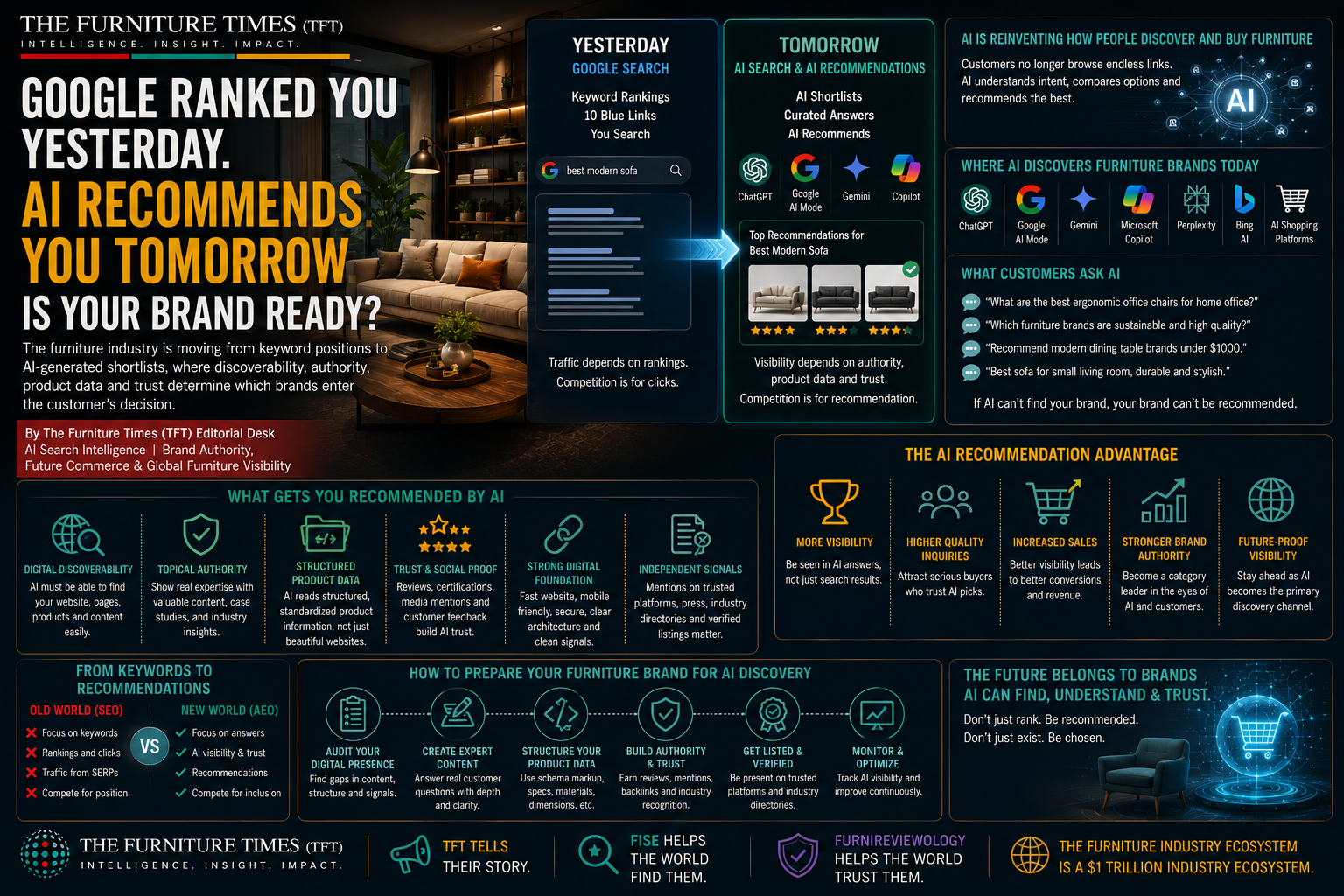
Google Ranked You Yesterday. AI Recommends You Tomorrow. Is Your Brand Ready?
A high Google ranking may no longer guarantee inclusion in AI-generated answers. This report explains how furniture brands can move from traditional search visibility to AI recommendation readiness through stronger product data, authority and trust.

Ethan Allen CEO Farooq Kathwari Defends Long-Term Leadership as Activist Challenge Revives Governance Debate
Ethan Allen’s veteran CEO Farooq Kathwari points to vertical integration, North American manufacturing, a debt-free balance sheet and dividends as evidence of resilience. TFT examines the activist challenge, softer sales, governance questions and what the company must prove next.