
#FurnitureManufacturing

Global Luxury Furniture Market Projected to Reach US$49.6 Billion by 2036 as Bespoke Design
Luxury furniture is entering a new growth phase driven by high-end property development, customised interiors, premium hospitality, digital discovery and sustainable sourcing. Europe led the market in 2025, while wood remained the largest material category.

The Biggest Documentation Mistakes in Furniture BIS Applications
Furniture BIS certification depends on a traceable evidence chain connecting the declared model, approved drawing, bill of materials, physical sample, laboratory report and routine factory production. This report explains the most common documentation failures and provides practical controls for manufacturers preparing applications, testing and factory inspections.

Global Metal Furniture Market Set to Reach US$243.63 Billion by 2031 as Durable
Mordor Intelligence projects the global metal furniture market to expand at a 4.68% CAGR through 2031. Asia-Pacific leads both market share and growth, while upholstered metal furniture, aluminium, premium products and B2B project sales represent the fastest-growing segments. Steel and aluminium price volatility, costly reverse logistics, corrosion risks and EU carbon compliance remain major challenges.

World Furniture Industry Health Check: Conflict, Energy and Shipping Risks Reshape the Global Market
TFT’s October 2026 global furniture-industry health check finds continuing demand and active manufacturing alongside severe geopolitical risk. Crude flows through the Strait of Hormuz have recovered, but tanker attacks, refinery disruption, diesel scarcity, record intra-Asian freight and renewed Red Sea and Black Sea insecurity are keeping costs high and delivery schedules uncertain.
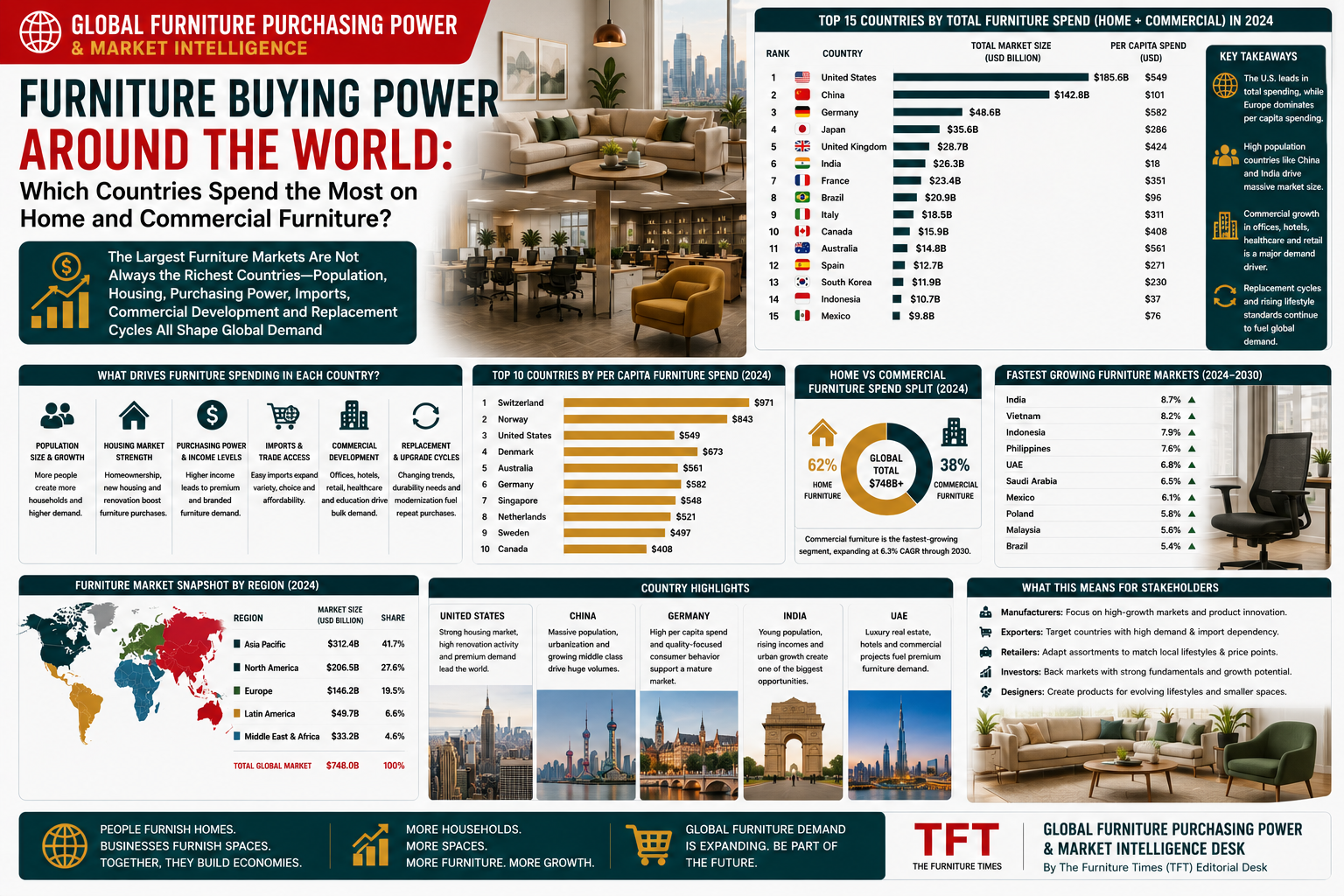
Furniture Buying Power Around the World: Which Countries Spend the Most on Home and Commercial Furniture?
The world’s biggest furniture markets are not always the countries with the highest income per person. This report examines total furniture consumption, household spending, import demand, commercial projects, property development and the emerging countries likely to reshape global furniture sales through 2035.
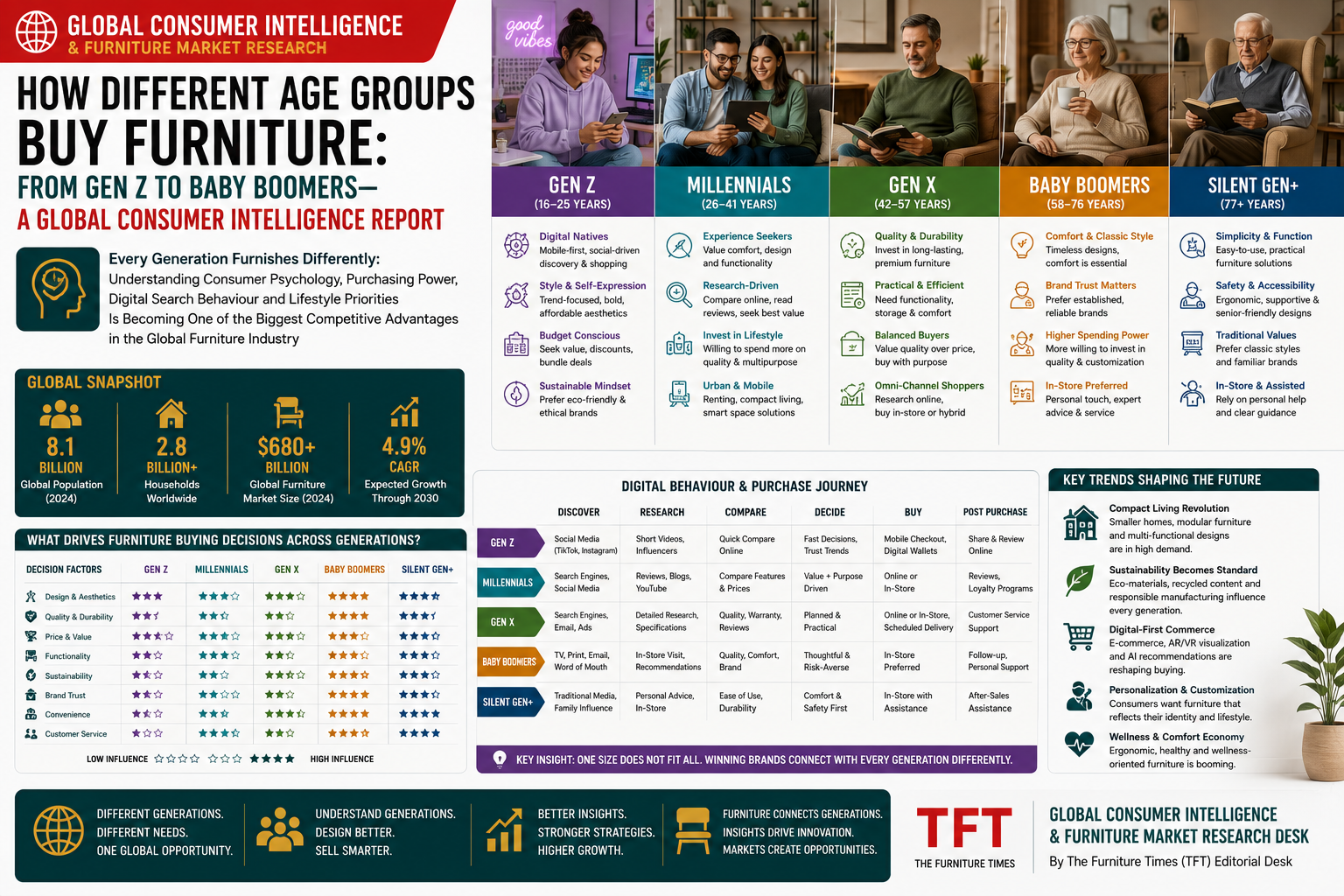
How Different Age Groups Buy Furniture: From Gen Z to Baby Boomers—A Global Consumer Intelligence Report
From first apartments to retirement living, furniture purchasing evolves with every life stage. This report explores how different age groups influence residential and commercial furniture markets, digital search behaviour, materials, spending patterns and future demand.
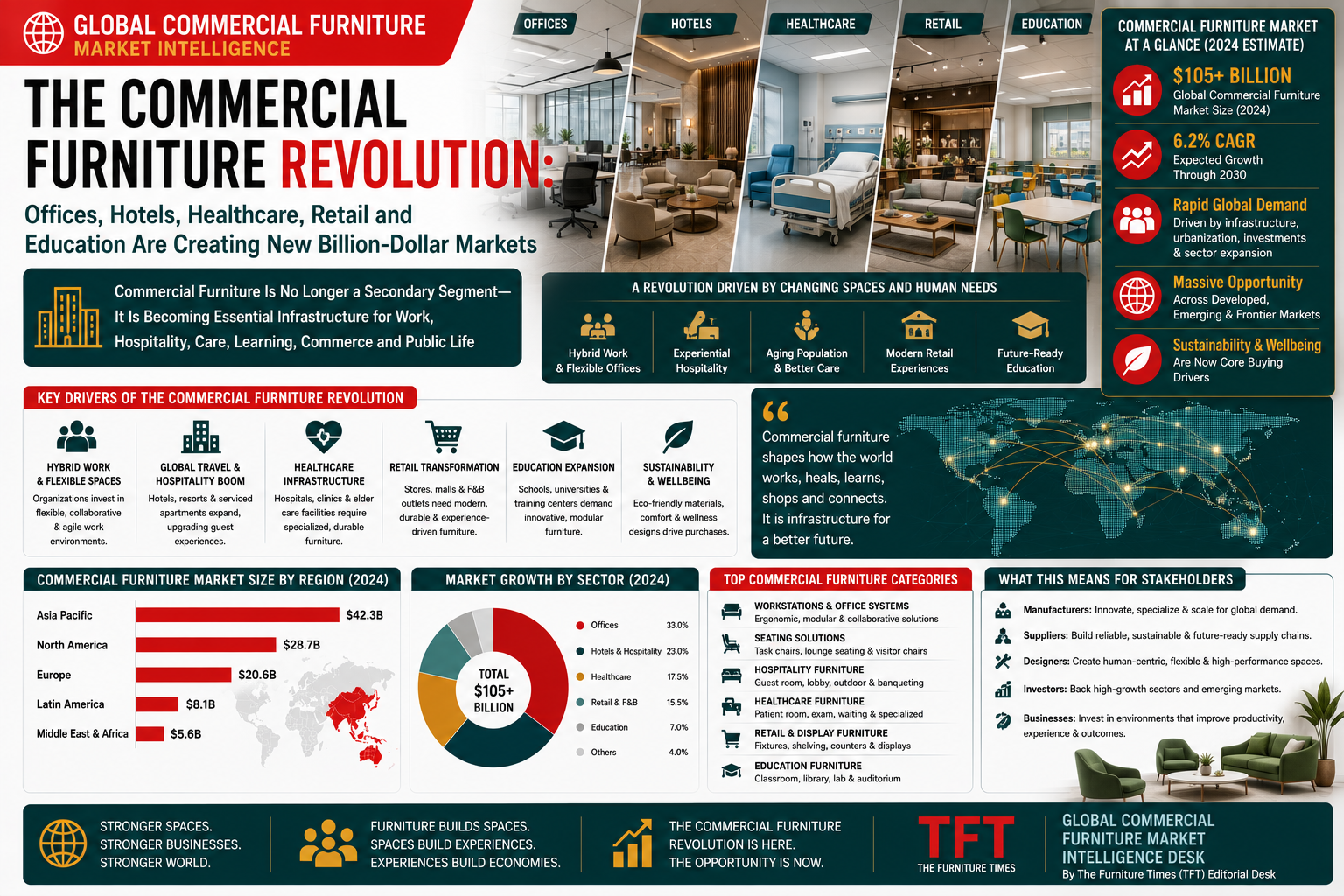
The Commercial Furniture Revolution: Offices, Hotels, Healthcare, Retail and Education Are Creating New Billion-Dollar Markets
Commercial furniture is becoming essential infrastructure for work, hospitality, healthcare, education and retail. This global report examines market size, workplace transformation, hotel FF&E, hospital furniture, flexible classrooms, retail experiences, professional procurement, materials, search behaviour and growth opportunities through 2035.

The Residential Furniture Economy: How Homeownership, Urban Living and Family Growth Drive Global Furniture Sales
The global home-furniture market is projected to exceed US$529 billion in 2026, but housing affordability, smaller urban properties and changing family structures are reshaping demand. Discover how homeowners, renters, families and different age groups drive residential furniture sales across every major region.

From Empty Apartment to Guest-Ready Property: The Complete Furnishing Economy
An empty apartment becomes a bookable short-term rental only after designers, furniture manufacturers, procurement specialists, installers, appliance suppliers, cleaners, photographers, technology providers and property managers complete a highly coordinated process. This report maps the complete furnishing economy behind the journey from property handover to first booking.
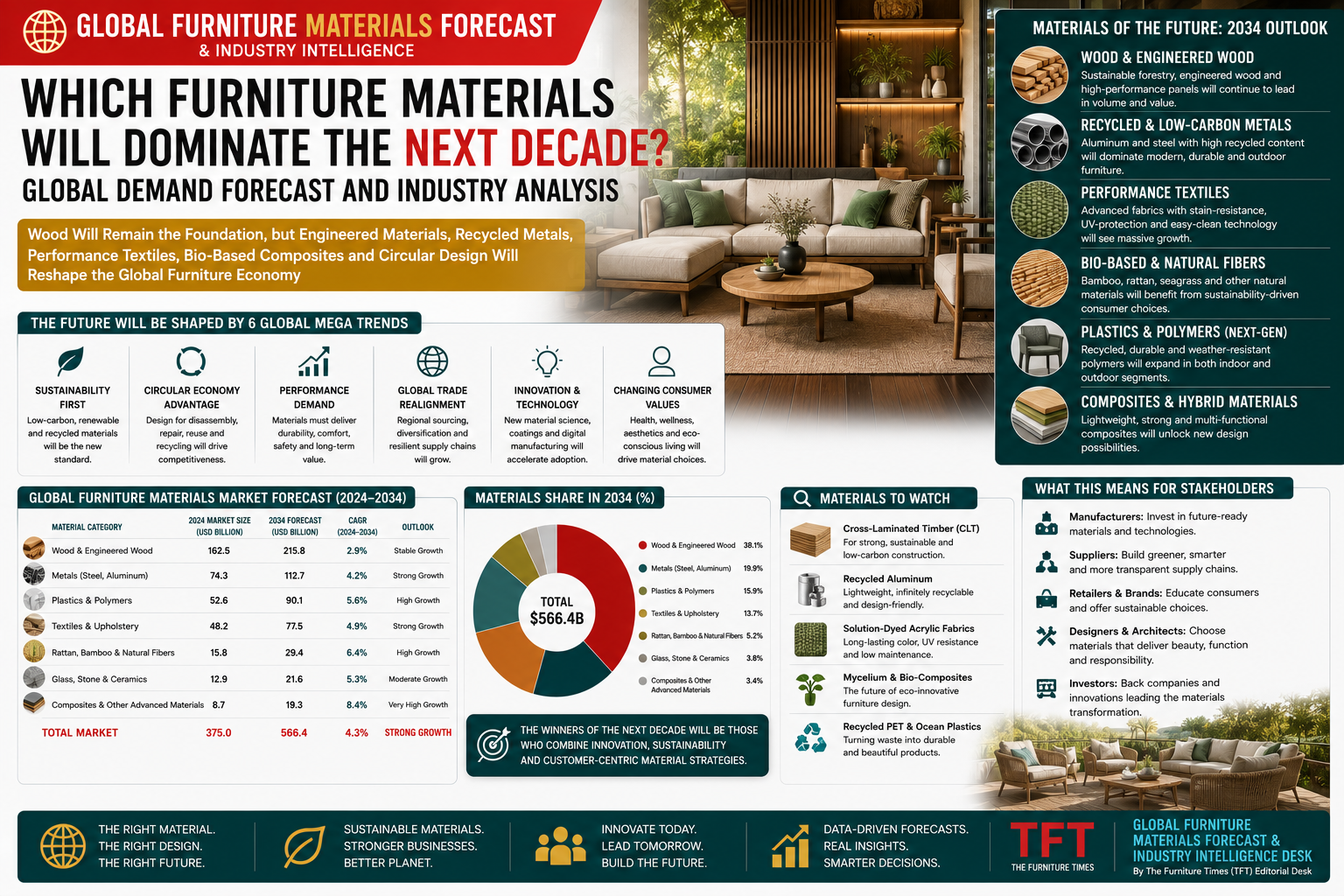
Which Furniture Materials Will Dominate the Next Decade? Global Demand Forecast and Industry Analysis
Wood will remain the foundation of the global furniture industry, but the next decade will bring rapid growth in aluminium, recycled polymers, performance textiles, bamboo, circular components and agricultural-waste composites. This report forecasts material demand by application, region and economic potential through 2035.