
#FurnitureManufacturing
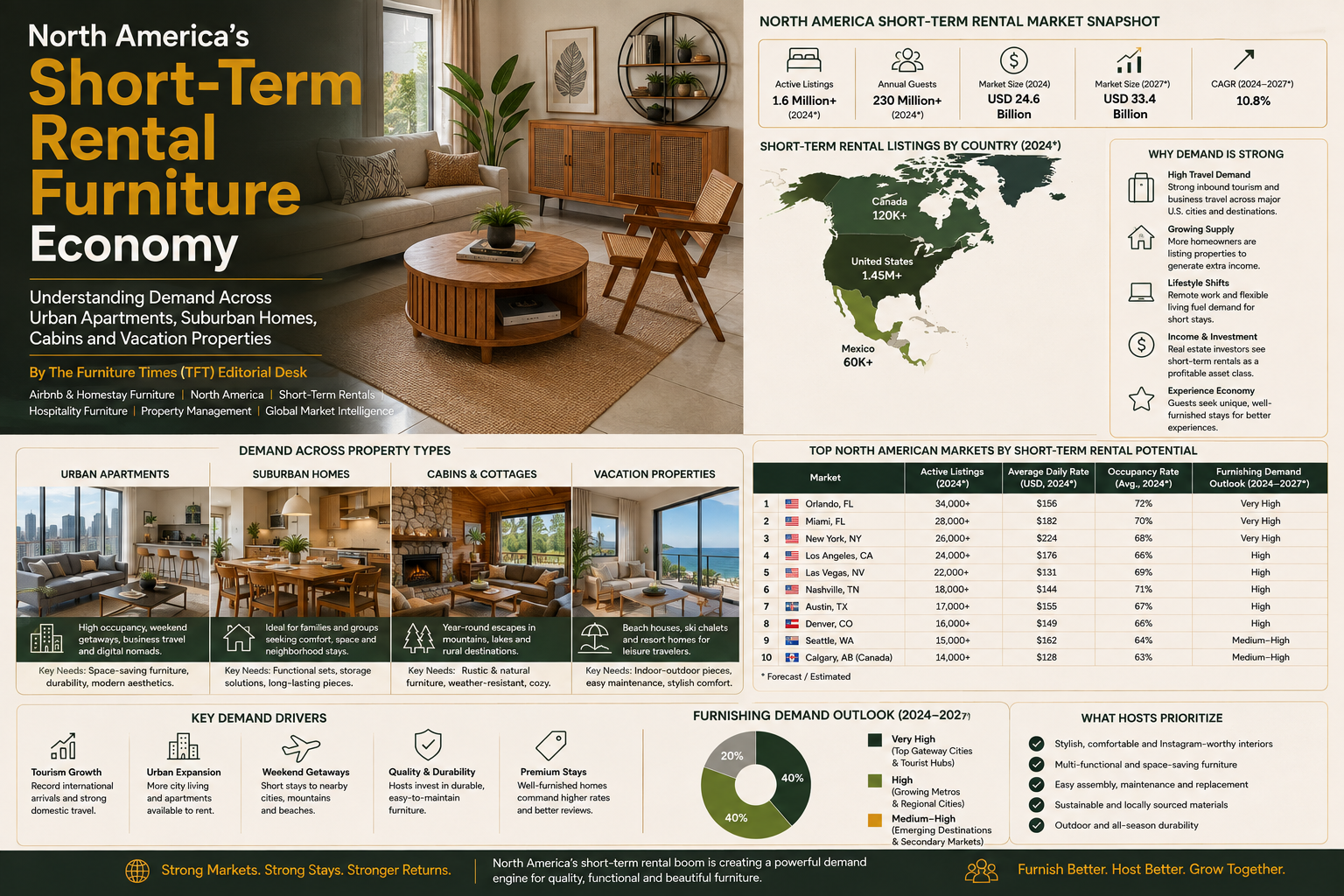
North America’s Short-Term Rental Furniture Economy
Strong domestic travel, professional property management and diverse accommodation types are creating recurring furniture demand across North America. The market requires compact urban products, family packages, cabin furniture, weather-resistant outdoor collections, rapid replacement and lifecycle-focused procurement.
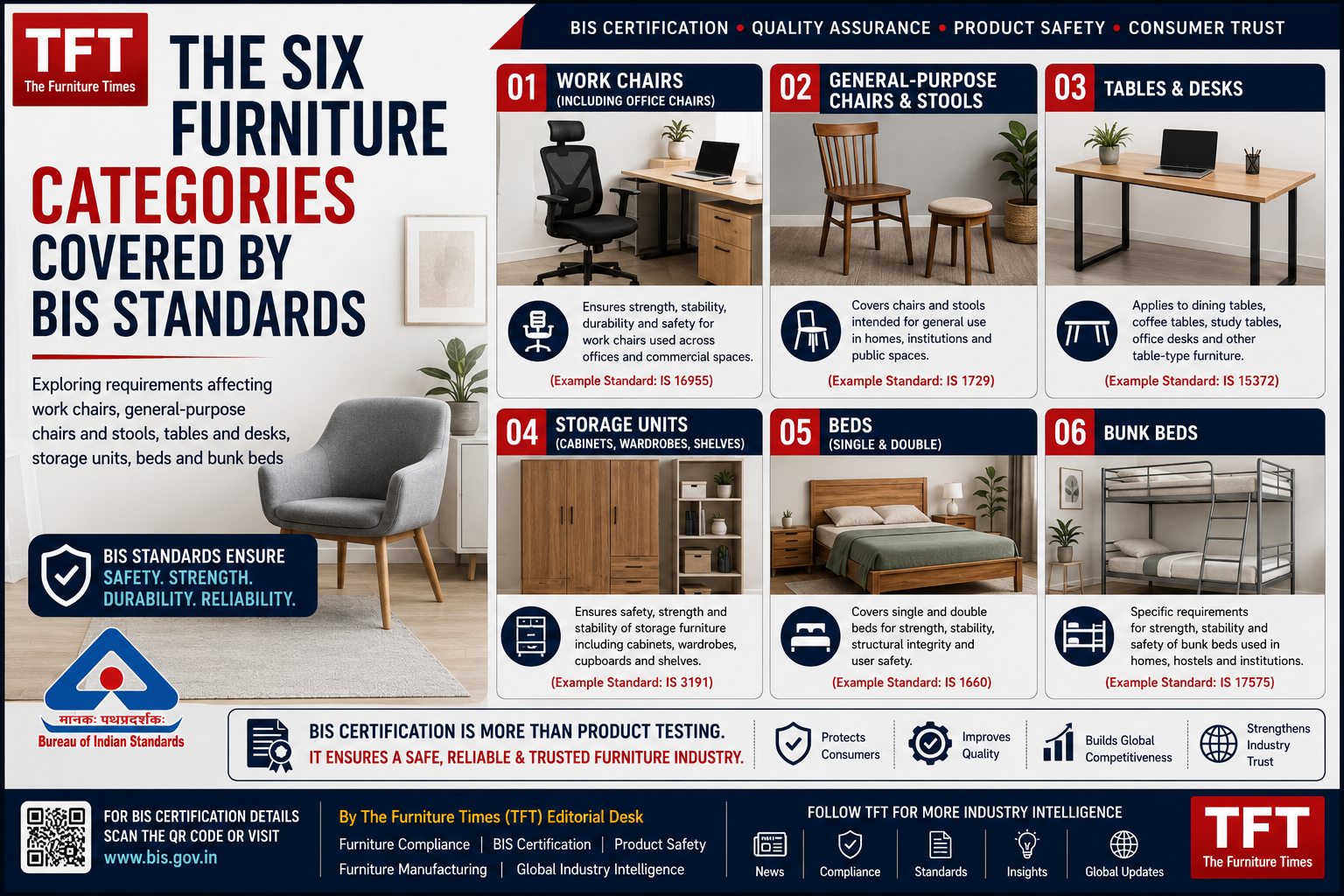
The Six Furniture Categories Covered by BIS Standards
A category-by-category guide to the six furniture groups covered by India’s Furniture Quality Control Order, explaining applicable BIS standards, product risks, classification issues, testing considerations and manufacturer responsibilities.
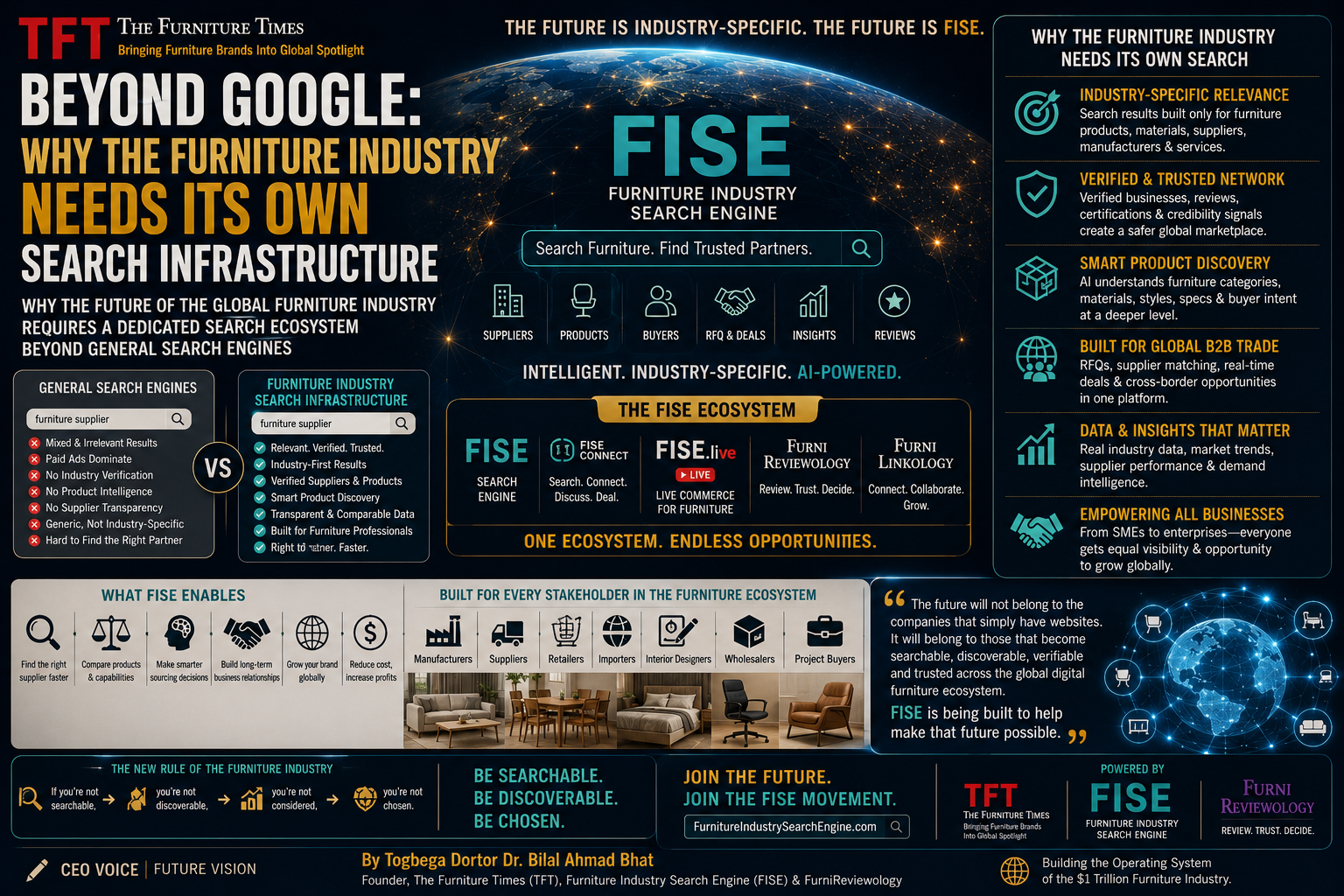
Beyond Google: Why the Furniture Industry Needs Its Own Search Infrastructure
Can a trillion-dollar industry rely only on general search engines? This CEO Vision report explores why the future of furniture search requires specialised infrastructure built around AI, verified suppliers, structured product databases, trusted reviews, B2B sourcing and industry-specific discovery through FISE and FurniReviewology.
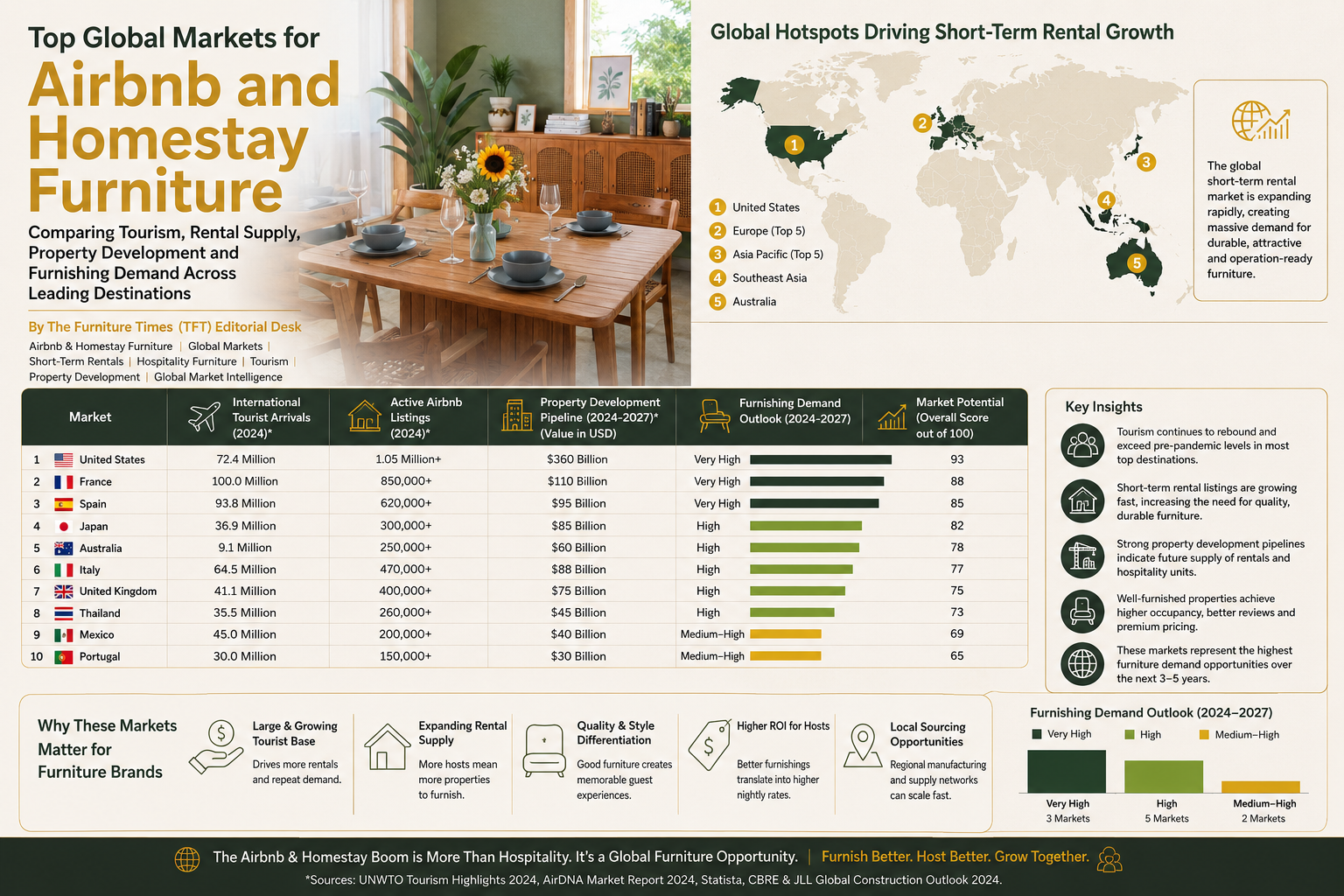
Top Global Markets for Airbnb and Homestay Furniture
The United States, France, Spain, Italy and the United Kingdom offer enormous existing short-term-rental inventories, while Brazil, India, Japan, Malaysia and other emerging markets present new growth opportunities. Furniture suppliers must evaluate tourism, regulation, property type, climate, replacement demand and local distribution before entering each destination.
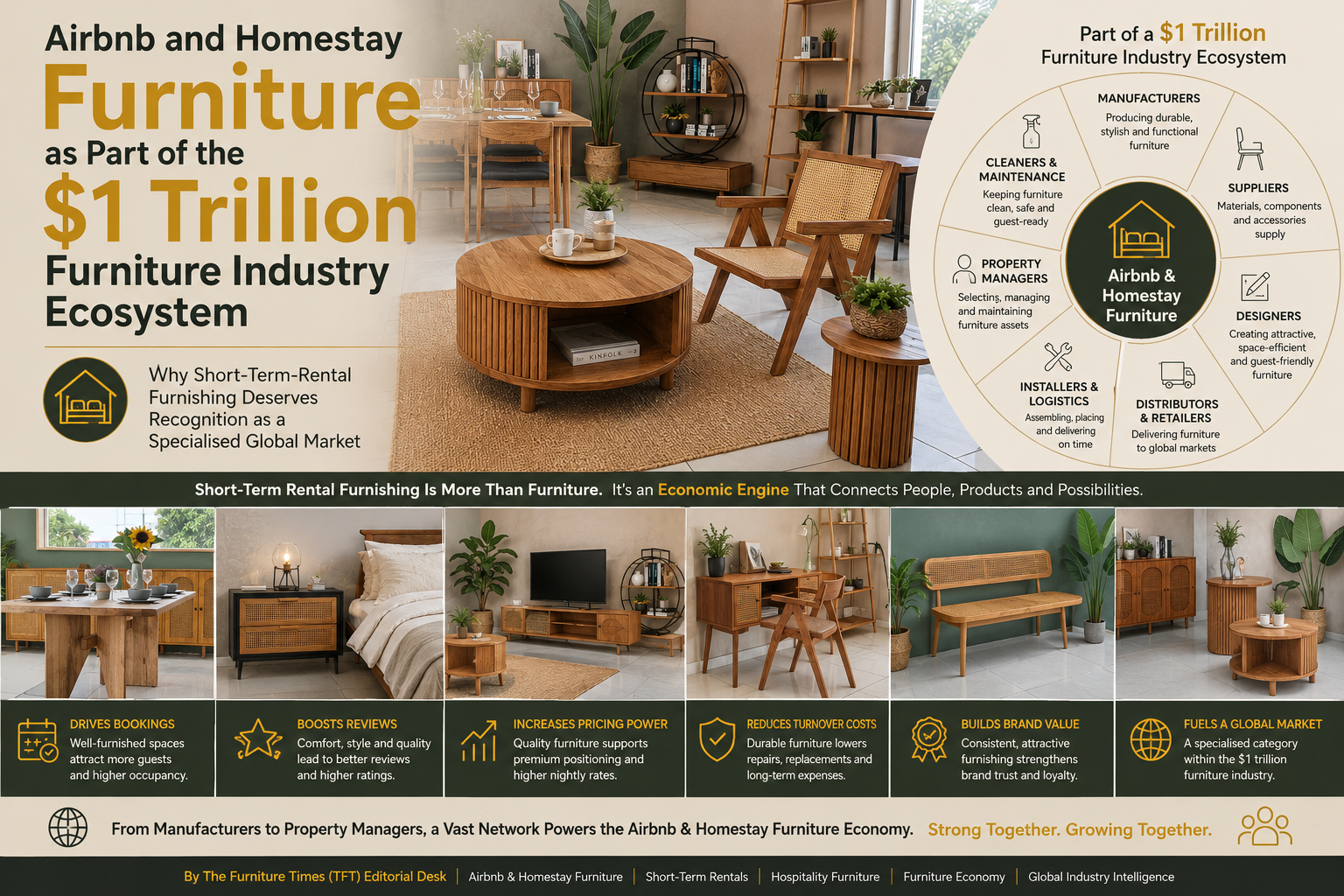
Airbnb and Homestay Furniture as Part of the $1 Trillion Furniture Industry Ecosystem
Millions of short-term-rental properties require durable, attractive and operationally efficient furniture. Yet this economic activity remains fragmented across residential, hospitality, contract and interior-furnishing categories. Recognising Airbnb and homestay furniture as a specialised global market could improve product development, data, supplier visibility, sustainability and investment.
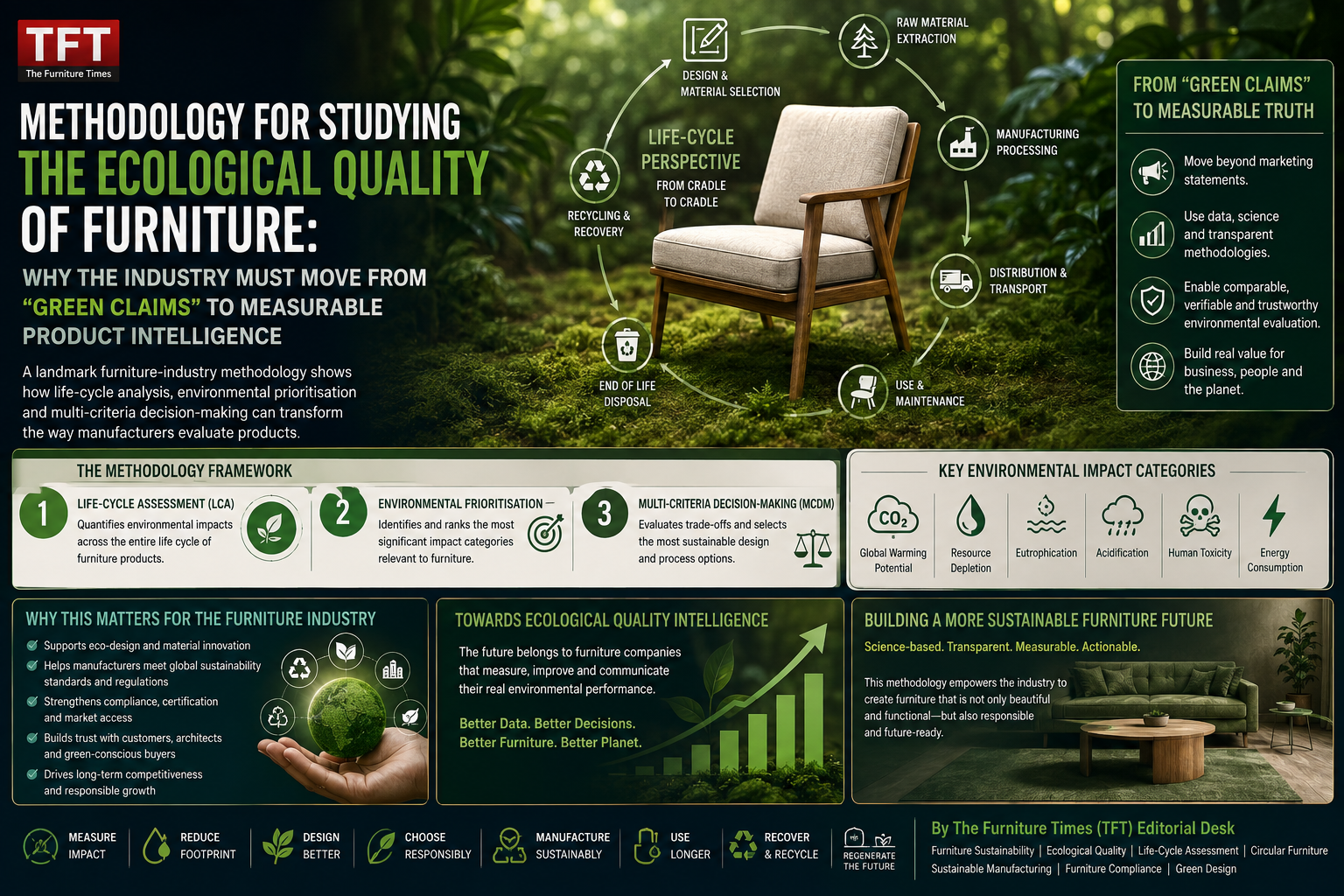
Methodology for Studying the Ecological Quality of Furniture
A 2011 research study on the ecological quality of furniture offers an increasingly relevant framework for today’s sustainability-driven industry. By combining life-cycle analysis, environmental ABC prioritisation and multi-criteria decision-making, the methodology demonstrated that products from the same furniture manufacturer can have significantly different environmental impacts. As global regulation moves toward durability, repairability, circularity and product-level information, furniture companies need to move from broad “green” claims toward measurable, traceable and verifiable ecological quality.

The World Furniture Industry Health Check 2026
TFT’s 2026 global furniture-industry health check finds a sector that is resilient but increasingly fragile. Demand continues across residential, hospitality, office and outdoor markets, yet war, energy inflation, shipping disruption, trade fragmentation and prolonged working-capital cycles are creating sharply different outcomes across regions and businesses.

The Hidden Economy Behind Airbnb and Homestay Furnishing
Airbnb and homestay furnishing supports a wide hidden economy extending beyond furniture manufacturing. Designers, component suppliers, distributors, installers, logistics companies, photographers, cleaning teams, repairers, upholsterers, property managers, technology providers and refurbishers all contribute to the performance of short-term-rental properties.
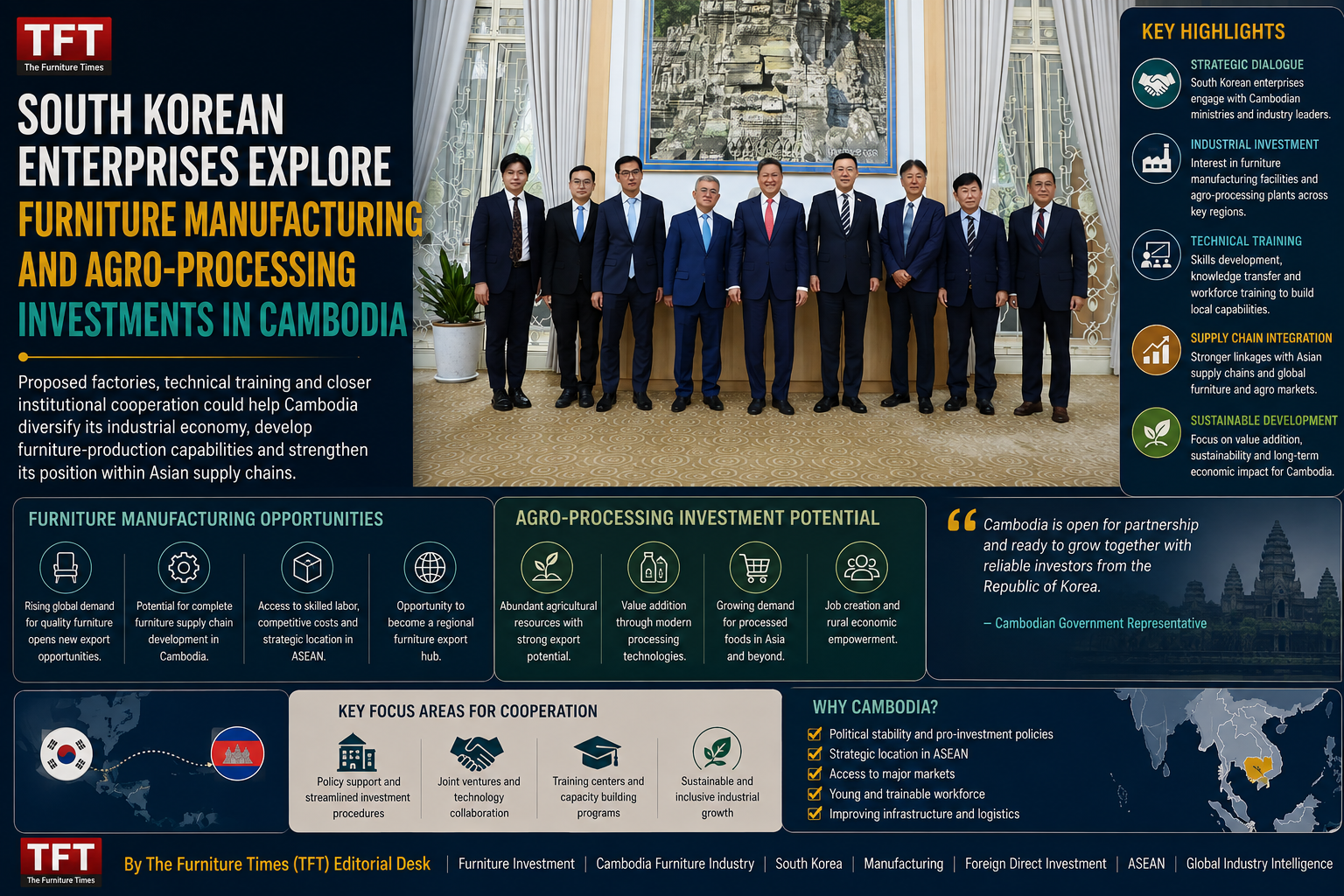
South Korean Enterprises Explore Furniture Manufacturing and Agro-Processing Investments in Cambodia
Discussions between Cambodia’s investment authorities and the Incheon Chamber of Commerce and Industry have placed furniture manufacturing among the sectors being examined by South Korean enterprises. A proposed technical training centre could help prepare Cambodian workers, but the opportunity will depend on confirmed projects, responsible sourcing, quality systems, logistics and long-term skills transfer.

Why Airbnb Furniture Is Becoming a Strategic Hospitality Category
As short-term rentals become more competitive, furniture is moving beyond decoration to become part of the property’s commercial infrastructure. Durable, attractive and operationally efficient products can strengthen bookings, guest satisfaction, reviews and pricing while reducing maintenance and replacement costs.