
Qatar Furniture Market Size (2026–2030): Growth, Investment Trends & Strategic Outlook
The Furniture Times Qatar
The Qatar furniture market is entering a transformative phase between 2026 and 2030, driven by rapid urbanization, luxury real estate expansion, hospitality investments, and government-led diversification initiatives under Qatar National Vision 2030.
Market Size & Growth Forecast
The furniture market in Qatar is projected to witness steady growth, with increasing demand across residential, commercial, and hospitality sectors.
- 2026 Estimated Market Size: USD 1.2 – 1.4 Billion
- 2030 Projected Market Size: USD 1.8 – 2.2 Billion
- CAGR (2026–2030): 6% – 8%
Growth is largely fueled by infrastructure development, tourism expansion, and rising disposable income among residents.
Key Growth Drivers
1. Hospitality & Tourism Boom
Qatar continues to invest heavily in hotels, resorts, and serviced apartments. The demand for premium furniture, outdoor furnishings, and customized interior solutions is rising significantly.
2. Luxury Real Estate Expansion
High-end residential developments in Doha and surrounding regions are pushing demand for imported luxury furniture brands and bespoke interior design solutions.
3. Government Vision & Investments
Qatar National Vision 2030 focuses on economic diversification, boosting construction, commercial spaces, and public infrastructure—all of which require furniture supply chains.
4. Retail & E-commerce Growth
The rise of online furniture platforms and omnichannel retail is transforming buying behavior, especially among younger consumers and expatriates.
Market Segmentation
- Residential Furniture: Largest segment driven by housing demand
- Office Furniture: Growing due to business hubs and corporate expansion
- Hospitality Furniture: High-margin segment with premium demand
- Outdoor & Leisure Furniture: Fastest-growing niche (resorts, cafes, beachfronts)
Import vs Local Production
Qatar remains highly dependent on imports for furniture supply, with major sourcing from:
- China
- Italy
- Turkey
- Malaysia
However, there is increasing opportunity for local manufacturing and assembly units, especially for customized and fast-delivery furniture solutions.
Opportunities for Industry Players
- Luxury & Custom Furniture Brands → High demand in premium projects
- Hospitality Furniture Suppliers → Strong pipeline of hotel developments
- E-commerce Platforms → Growing digital adoption
- Logistics & Installation Services → Critical gap in the market
- Sustainable Furniture Solutions → Emerging demand trend
Challenges & Risk Factors
- High dependency on imports
- Logistics and shipping costs
- Limited local manufacturing ecosystem
- Competitive pricing pressure from global suppliers
Strategic Outlook (2026–2030)
The Qatar furniture market is not just growing—it is evolving into a high-value, design-driven, and experience-focused ecosystem.
Companies that will dominate this market:
- Offer end-to-end solutions (design + supply + installation)
- Build strong digital presence and visibility
- Focus on premium branding and project-based sales
- Leverage platforms like FISE (Furniture Industry Search Engine) and The Furniture Times for global visibility
Conclusion
From a USD 1.2 billion market in 2026 to a projected USD 2+ billion opportunity by 2030, Qatar represents one of the most promising furniture markets in the Middle East.
For global and regional players, this is not just a market to enter—it is a market to strategically dominate through visibility, partnerships, and premium positioning.

Related Posts
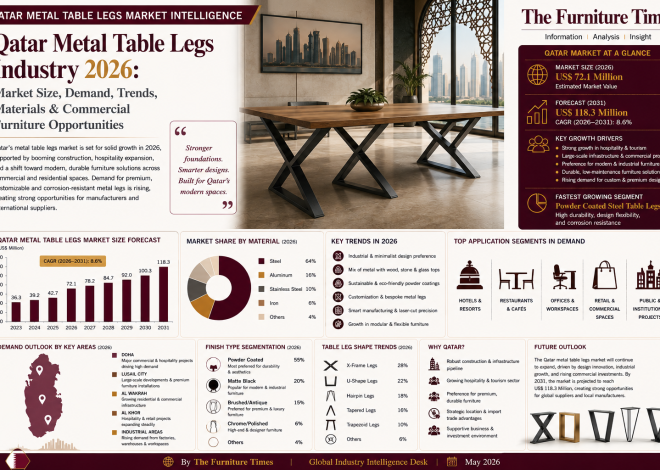
Qatar Metal Table Legs Industry 2026: Market Size, Demand, Trends, Materials & Commercial Furniture Opportunities

Developing Global News Analysis — The Furniture Industry in a Time of Conflict (2026)