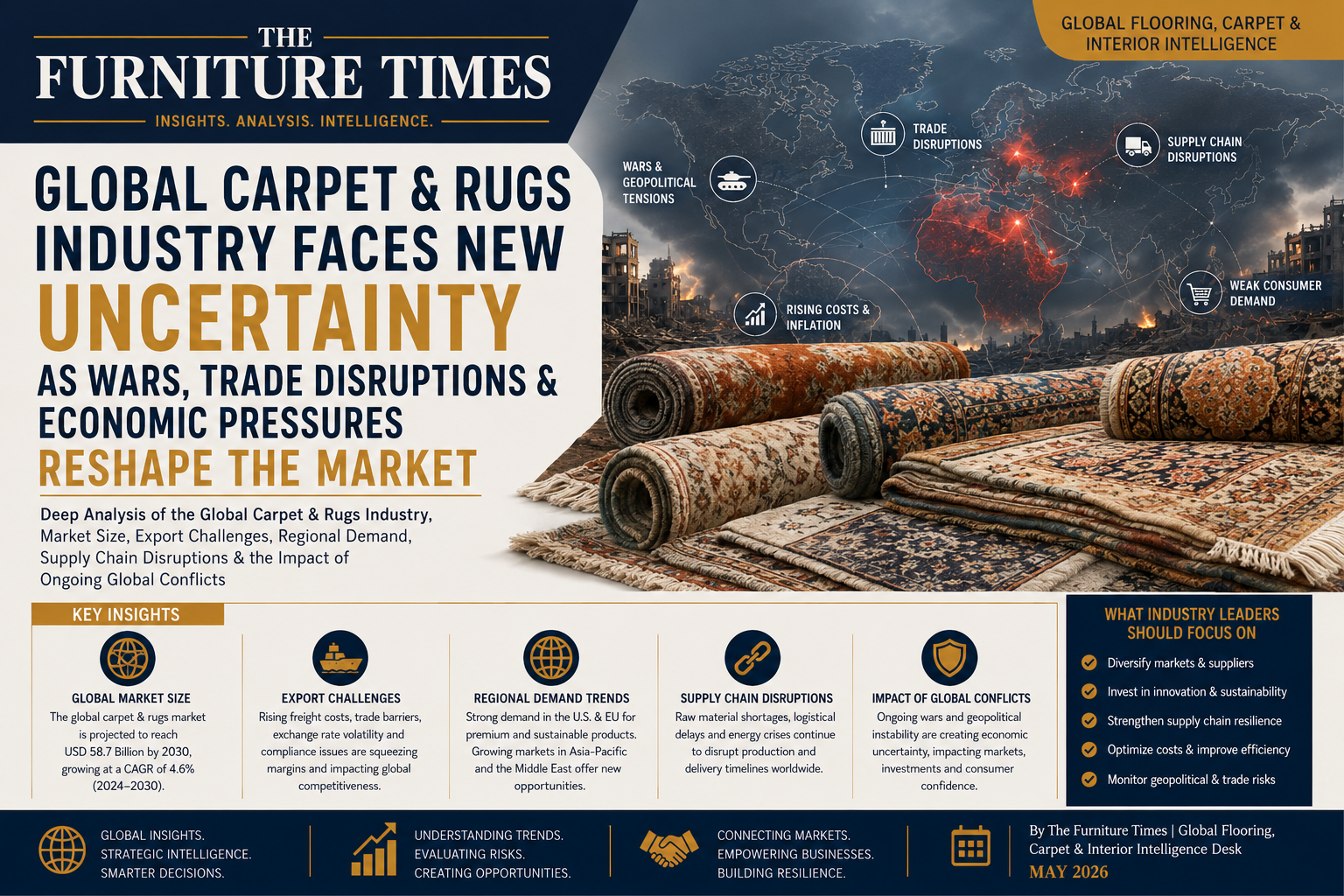
Global Carpet & Rugs Industry Faces New Uncertainty as Wars, Trade Disruptions & Economic Pressures Reshape the Market
Deep Analysis of the Global Carpet & Rugs Industry, Market Size, Export Challenges, Regional Demand, Supply Chain Disruptions & the Impact of Ongoing Global Conflicts
By The Furniture Times | Global Flooring, Carpet & Interior Intelligence Desk | May 2026
The global carpet and rugs industry is entering one of the most challenging and transformative periods in recent history.
For decades, carpets and rugs have remained deeply connected to:
culture
craftsmanship
interior design
hospitality
luxury living
construction ecosystems
Today, however, the industry faces a new reality.
Ongoing geopolitical conflicts across multiple regions, rising logistics costs, energy instability, trade disruptions, sanctions, inflation pressure, and shifting consumer spending patterns are reshaping the future of the global carpet and rugs market.
Despite these challenges, the sector remains a major global industry, with market estimates placing the global carpet and rugs market at approximately US$49 billion in 2026 and projecting continued long-term growth toward more than US$61 billion by 2031.
The industry is not collapsing.
It is transforming.
The Carpet & Rugs Industry Is Larger Than Many Realize
The global carpet and rugs ecosystem supports:
textile manufacturing
handicrafts
hospitality projects
residential interiors
commercial real estate
luxury home décor
tourism-related industries
The sector includes:
hand-knotted carpets
machine-made carpets
luxury rugs
hospitality flooring systems
commercial carpet tiles
decorative interior rugs
Demand remains strong across:
North America
Europe
Middle East
Asia-Pacific
emerging construction markets
However, the environment surrounding the industry has changed dramatically.
Ongoing Wars Are Creating Industry Uncertainty
One of the biggest concerns affecting the carpet and rugs ecosystem today is geopolitical instability.
The continuing effects of:
Middle East conflicts
Russia-Ukraine disruptions
regional trade tensions
shipping route uncertainty
are creating pressure across global supply chains.
Industry analysts warn that prolonged conflict-related disruptions increase:
freight costs
delivery times
insurance expenses
logistics risks
Importing regions across Asia and Africa are particularly vulnerable to supply disruptions connected to Middle East trade corridors.
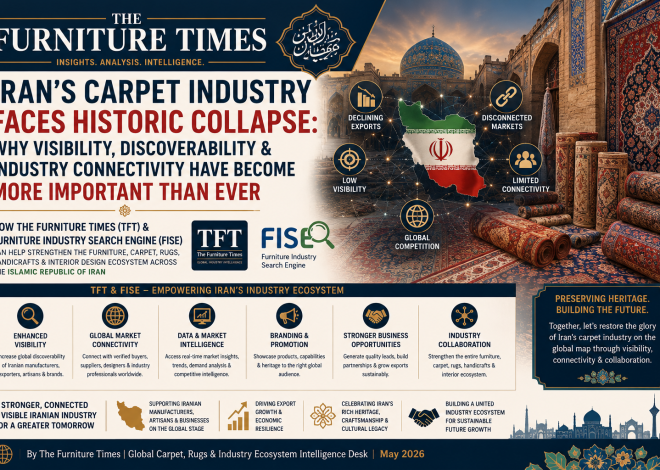
Iran’s Historic Carpet Industry Faces Severe Pressure
One of the most dramatic developments involves Iran’s historic handwoven carpet sector.
Once considered one of the world’s most iconic carpet-exporting nations, industry reports indicate that Iranian handwoven carpet exports have fallen dramatically.
According to industry officials, exports that once generated nearly US$2.5 billion annually have now almost stopped, falling below US$50 million in recent years.
Sanctions, reduced tourism activity, trade restrictions, and broader geopolitical challenges have heavily affected the sector.
This represents not only an economic challenge but also a cultural one, as Persian carpets remain among the most recognized handmade products in the world.
Europe Faces Cost Pressures
The broader economic effects of ongoing conflicts continue affecting European industries.
Energy costs, inflation concerns, and economic uncertainty influence:
construction activity
renovation spending
hospitality investments
interior decoration budgets
Research examining trade disruptions linked to war suggests that conflict increases trade friction, reroutes supply chains, and creates long-term uncertainty across affected regions.
For carpet manufacturers and distributors, this means greater pressure on:
sourcing
pricing
inventory planning
The Middle East Remains a Major Growth Market
Despite regional instability, the Middle East continues representing one of the most important carpet and flooring markets globally.
The Middle East flooring and carpet market is estimated at more than US$10 billion in 2026 and is projected to continue expanding strongly through the next decade.
Growth drivers include:
hospitality development
tourism projects
luxury real estate
commercial construction
infrastructure expansion
Countries such as:
Saudi Arabia
UAE
Qatar
continue investing heavily in:
hotels
resorts
commercial developments
premium residential projects
This supports strong demand for:
luxury rugs
hotel carpets
commercial flooring systems
Hospitality Demand Continues Supporting Growth
The hospitality sector remains one of the strongest drivers for carpets and rugs.
Hotels, resorts, convention centers, luxury residences, and commercial developments continue demanding:
decorative rugs
corridor carpets
ballroom flooring
luxury hospitality textiles
The recovery of international tourism continues supporting these segments.
Carpets remain an important component of:
luxury interior experience.
Asia-Pacific Is Emerging as the Growth Engine
Industry forecasts increasingly identify Asia-Pacific as one of the fastest-growing carpet and rugs markets globally.
Growth is supported by:
urbanization
housing expansion
middle-class consumption
interior design demand
hospitality growth
Countries such as:
India
China
Vietnam
Indonesia
continue seeing increased demand for:
residential rugs
decorative carpets
premium interior products
India’s Carpet Industry Faces Mixed Conditions
India remains one of the world’s largest producers of handmade carpets.
However, industry reports indicate exporters continue facing pressure from:
tariffs
trade uncertainty
export market dependence
Some exporters have reported severe disruptions affecting shipments to major markets.
This highlights the vulnerability of export-dependent industries during periods of geopolitical and economic uncertainty.
Consumer Trends Are Changing
Modern consumers increasingly seek:
sustainable materials
custom designs
luxury textures
eco-friendly products
premium home décor
Demand continues shifting toward:
aesthetic interiors
statement rugs
wellness-focused living environments
Consumers increasingly view rugs not only as floor coverings but as:
interior lifestyle products.
Sustainability Is Becoming a Competitive Advantage
The carpet and rugs industry is also facing growing environmental expectations.
Manufacturers increasingly invest in:
recycled fibers
sustainable production
low-emission materials
circular manufacturing systems
Global buyers increasingly prioritize:
durability
environmental responsibility
ethical sourcing
The future market may increasingly reward:
sustainable brands.
The Industry Is Entering a New Era
The carpet and rugs industry is no longer driven only by:
manufacturing
wholesale distribution
traditional retail
It is increasingly influenced by:
geopolitical stability
digital discoverability
sustainability
logistics resilience
global consumer psychology
The future winners may not simply be the largest manufacturers.
They may become the most:
adaptable
visible
trusted
resilient
The Furniture Times Industry Insight
The global carpet and rugs ecosystem reflects a larger truth affecting the entire furniture and interior industry:
Modern industries can no longer separate themselves from:
geopolitics
trade policy
logistics systems
energy markets
digital transformation
The industry now operates within a deeply interconnected global ecosystem.
When conflict affects:
shipping routes
energy costs
tourism
consumer confidence
the impact eventually reaches:
carpets, rugs, furniture, interiors, and home living markets.
Final Thought
The global carpet and rugs industry remains one of the most culturally rich and economically important sectors within the broader furniture and interior design ecosystem.
Yet the industry now faces a new generation of challenges:
wars
sanctions
trade disruptions
logistics instability
inflation pressure
changing consumer behavior
Despite these obstacles, long-term demand remains strong.
People continue investing in:
homes
hospitality
comfort
interior environments
The future of the carpet and rugs industry will increasingly depend on its ability to combine:
craftsmanship, resilience, sustainability, innovation, and global adaptability.
Because in a world facing uncertainty, the industries that survive are often the ones that learn how to evolve while protecting the heritage that made them valuable in the first place.

Related Posts
Global Carpet & Rugs Industry Report 2026

The Timeless Legacy of Iranian Carpets: A Journey Through History, Culture, Art & Civilization