

Why Furniture Manufacturers Fail BIS Certification
Many furniture manufacturers encounter BIS certification delays not because their products are inherently weak, but because their applications, variants, drawings, test samples and factory systems are not fully aligned. This detailed report explains the Normal and Simplified Procedures, common reasons for nonconformity and the practical steps manufacturers can take to reduce retesting, delays and rejection risks.

Chandigarh Heritage Group Seeks Vice-President’s Intervention to Halt U.S. Auction of Panjab University Furniture
The proposed American auction of Panjab University heritage furniture has renewed demands for official intervention, provenance verification and stronger protection for Pierre Jeanneret-designed objects linked to Chandigarh’s public institutions.

The Furniture Industry Needs a Failure Database
Furniture companies collect enormous quantities of information after products are sold, but much of it remains trapped inside warranty departments, service tickets, repair records and return systems. The Furniture Times examines why the industry needs structured failure intelligence—and how it could transform product quality, sourcing, insurance, repairability and AI-driven furniture discovery.

The Furniture Insurance Economy: Who Pays When Furniture Fails?
The furniture industry talks constantly about design, manufacturing, materials, retail and market growth—but rarely about who pays when something goes wrong. The Furniture Times examines the hidden furniture insurance economy and the complex network of manufacturers, suppliers, logistics companies, installers, retailers, insurers and customers sharing billions of dollars in potential risk.

Google Ranked You Yesterday. AI Recommends You Tomorrow. Is Your Brand Ready?
A high Google ranking may no longer guarantee inclusion in AI-generated answers. This report explains how furniture brands can move from traditional search visibility to AI recommendation readiness through stronger product data, authority and trust.
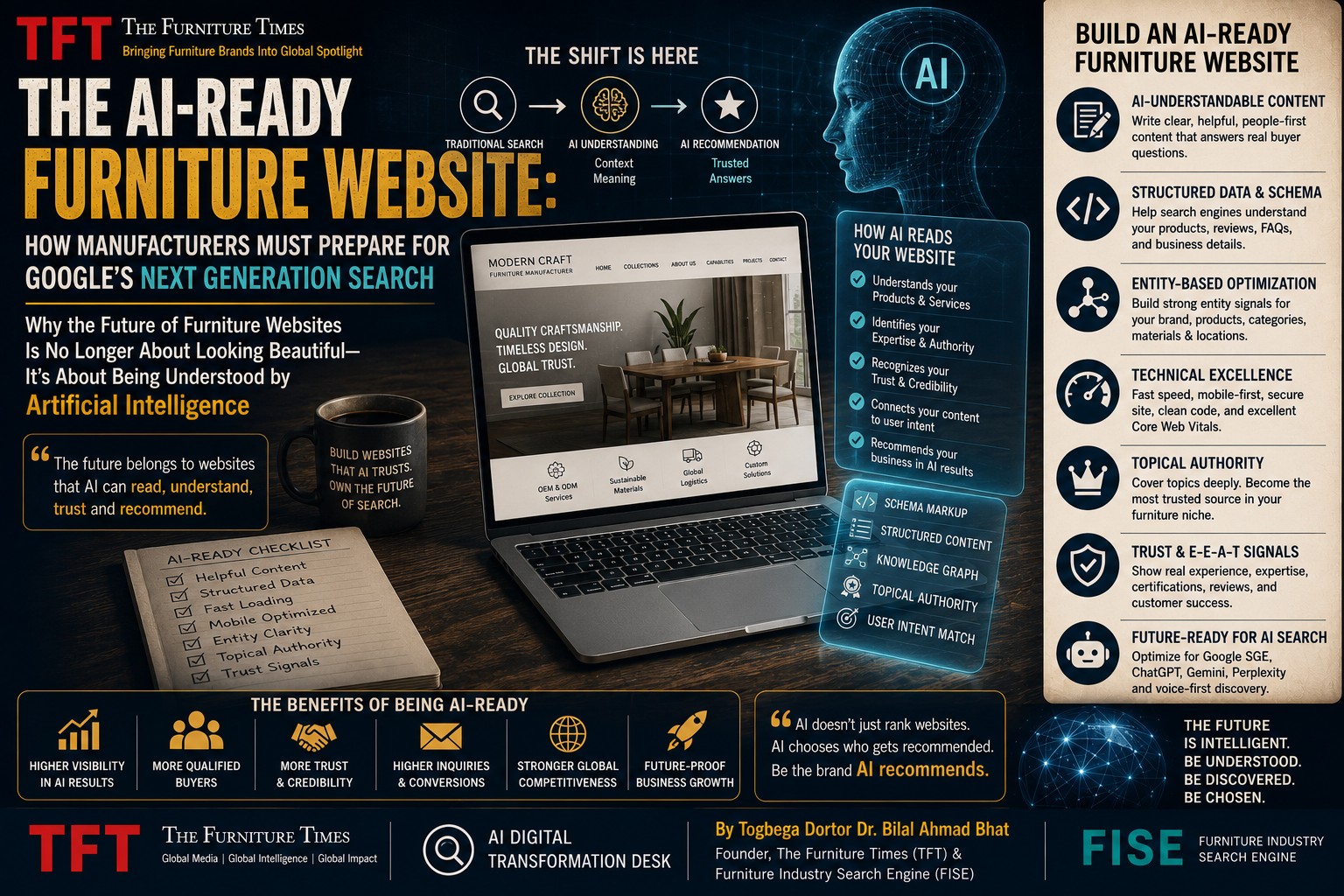
The AI-Ready Furniture Website: How Manufacturers Must Prepare for Google’s Next Generation Search
Artificial Intelligence is changing how websites are discovered, understood and recommended. This report explains how furniture manufacturers can prepare for Google’s next generation of search through structured data, schema markup, semantic SEO, entity optimisation, Core Web Vitals and AI-ready website architecture.
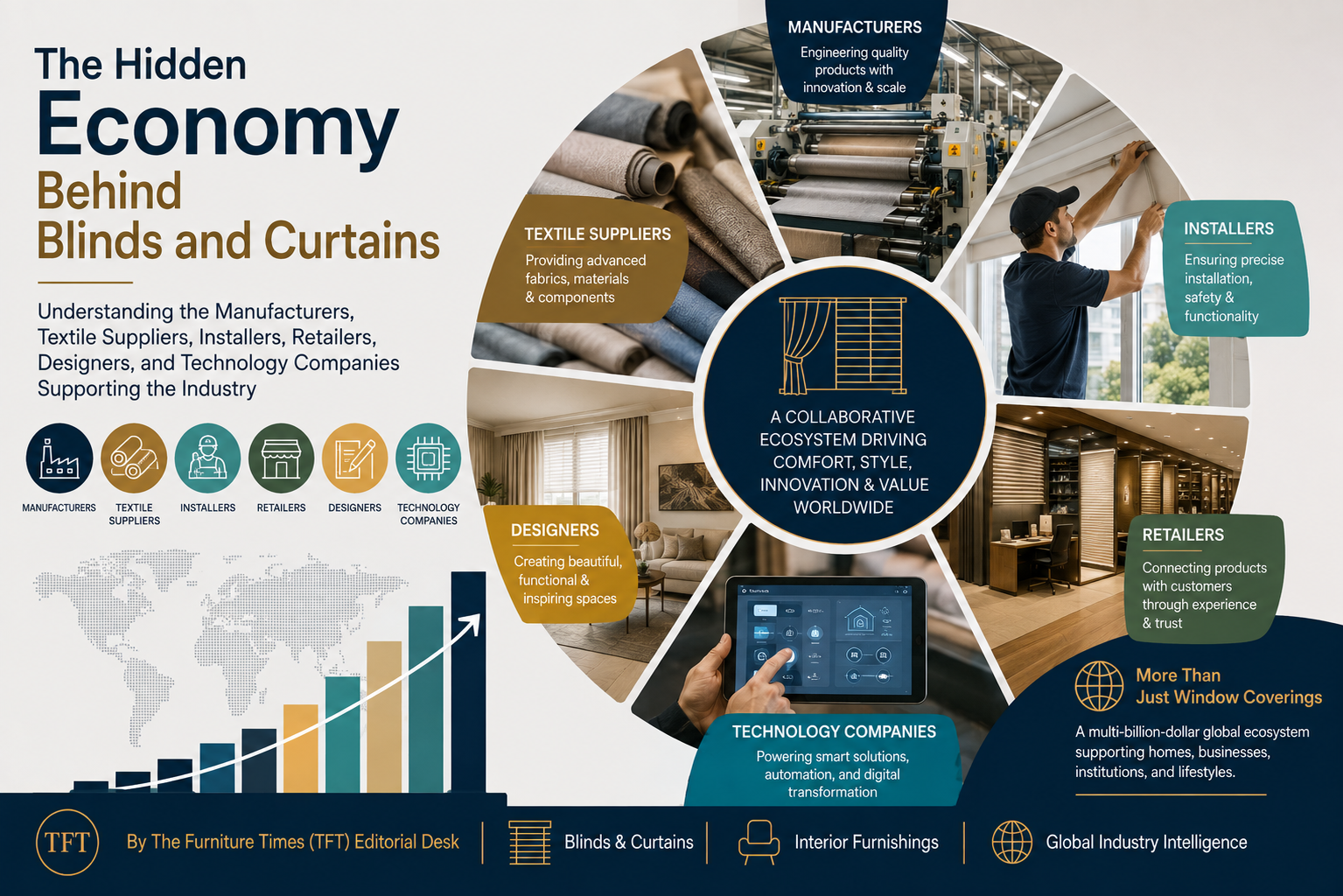
The Hidden Economy Behind Blinds and Curtains
The blinds and curtains industry reaches far beyond the finished product. This detailed report maps the hidden value chain supporting window coverings—from fibre and fabric production to hardware, automation, design, retail, installation, maintenance, and recycling.
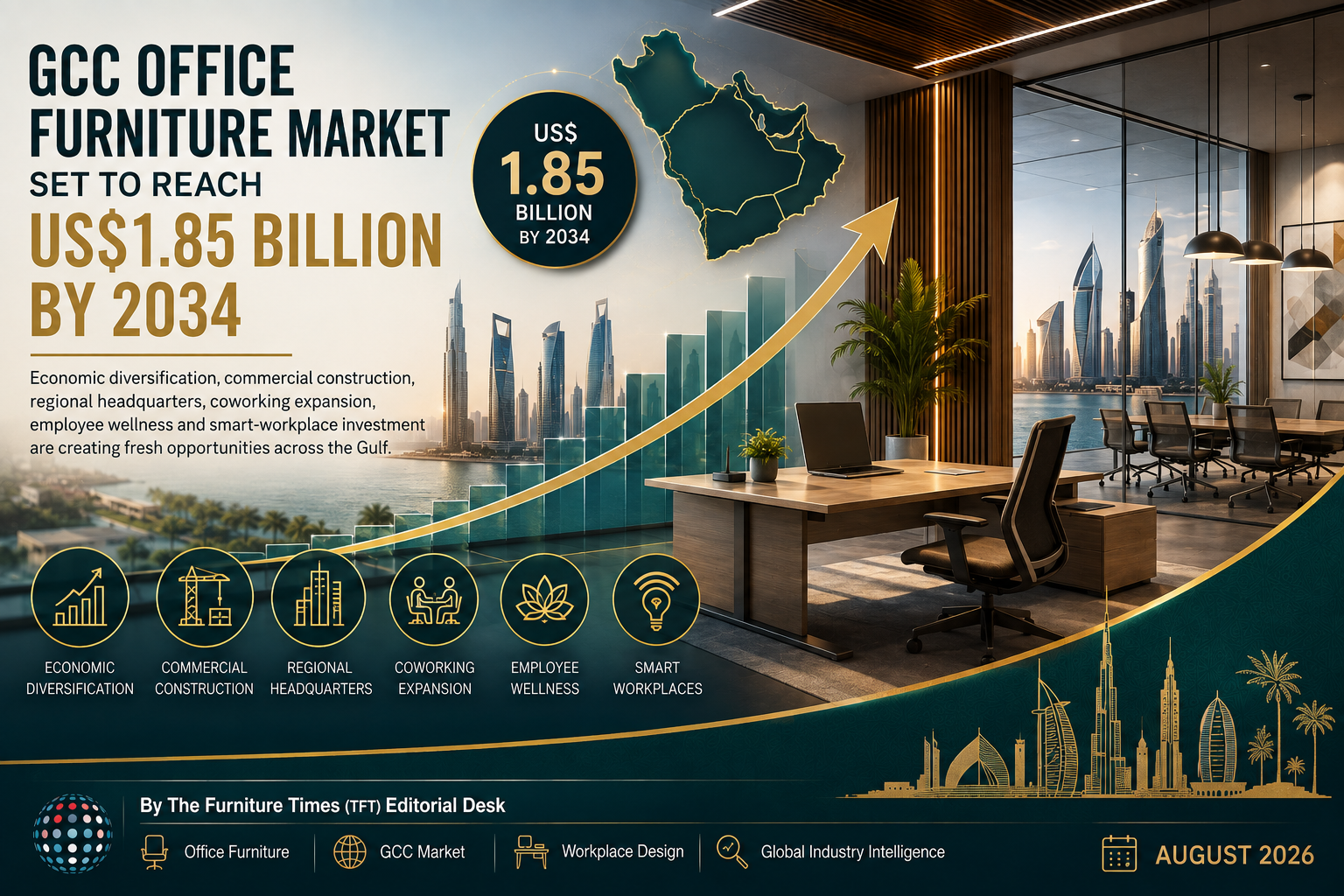
GCC Office Furniture Market Set to Reach US$1.85 Billion by 2034 as Gulf Workplaces Enter a New Era
The GCC office-furniture market could grow from US$1.31 billion in 2025 to US$1.85 billion by 2034. TFT examines the forces driving demand across Saudi Arabia, the UAE, Qatar, Kuwait, Oman and Bahrain—and the opportunities for manufacturers, suppliers and service providers.
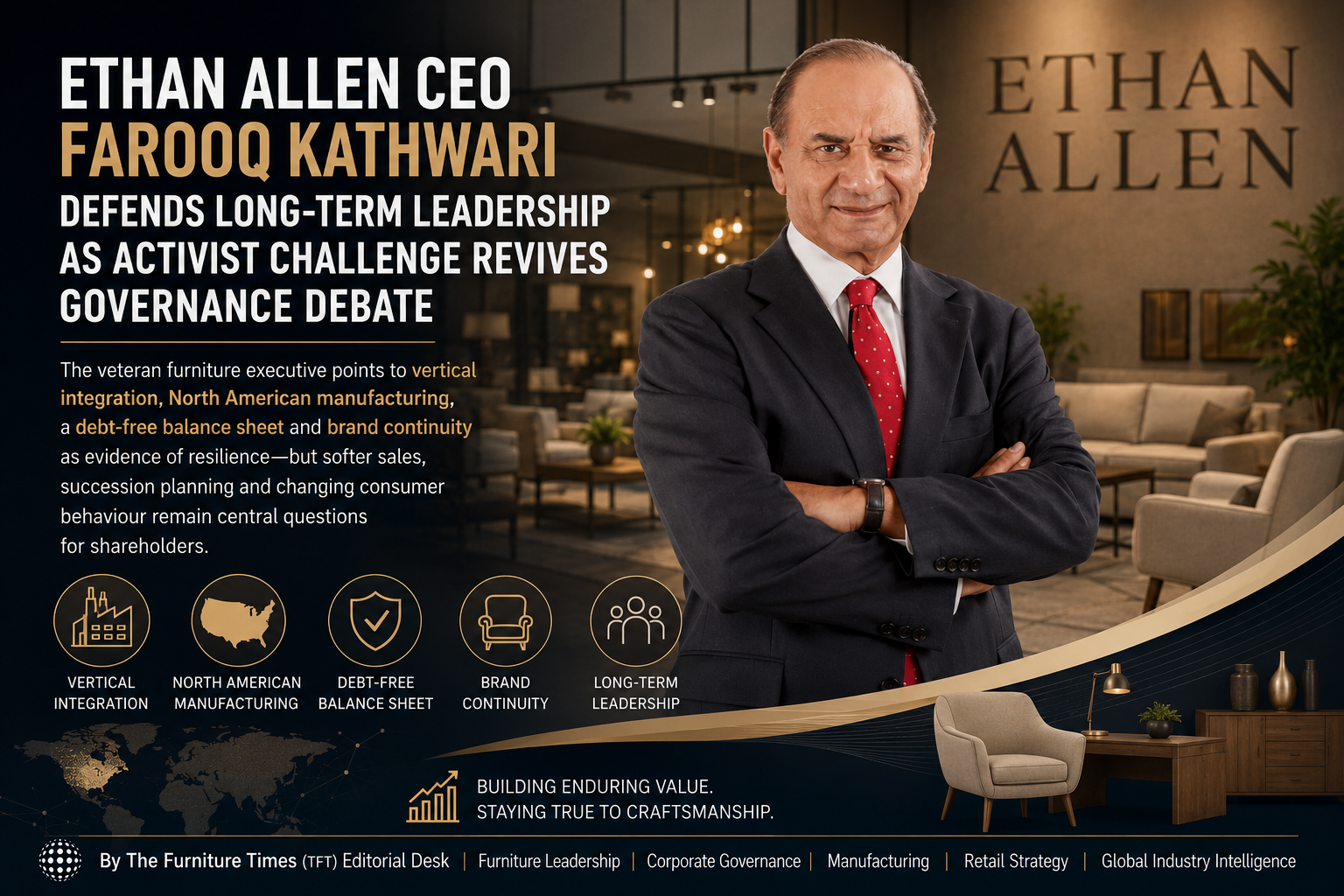
Ethan Allen CEO Farooq Kathwari Defends Long-Term Leadership as Activist Challenge Revives Governance Debate
Ethan Allen’s veteran CEO Farooq Kathwari points to vertical integration, North American manufacturing, a debt-free balance sheet and dividends as evidence of resilience. TFT examines the activist challenge, softer sales, governance questions and what the company must prove next.
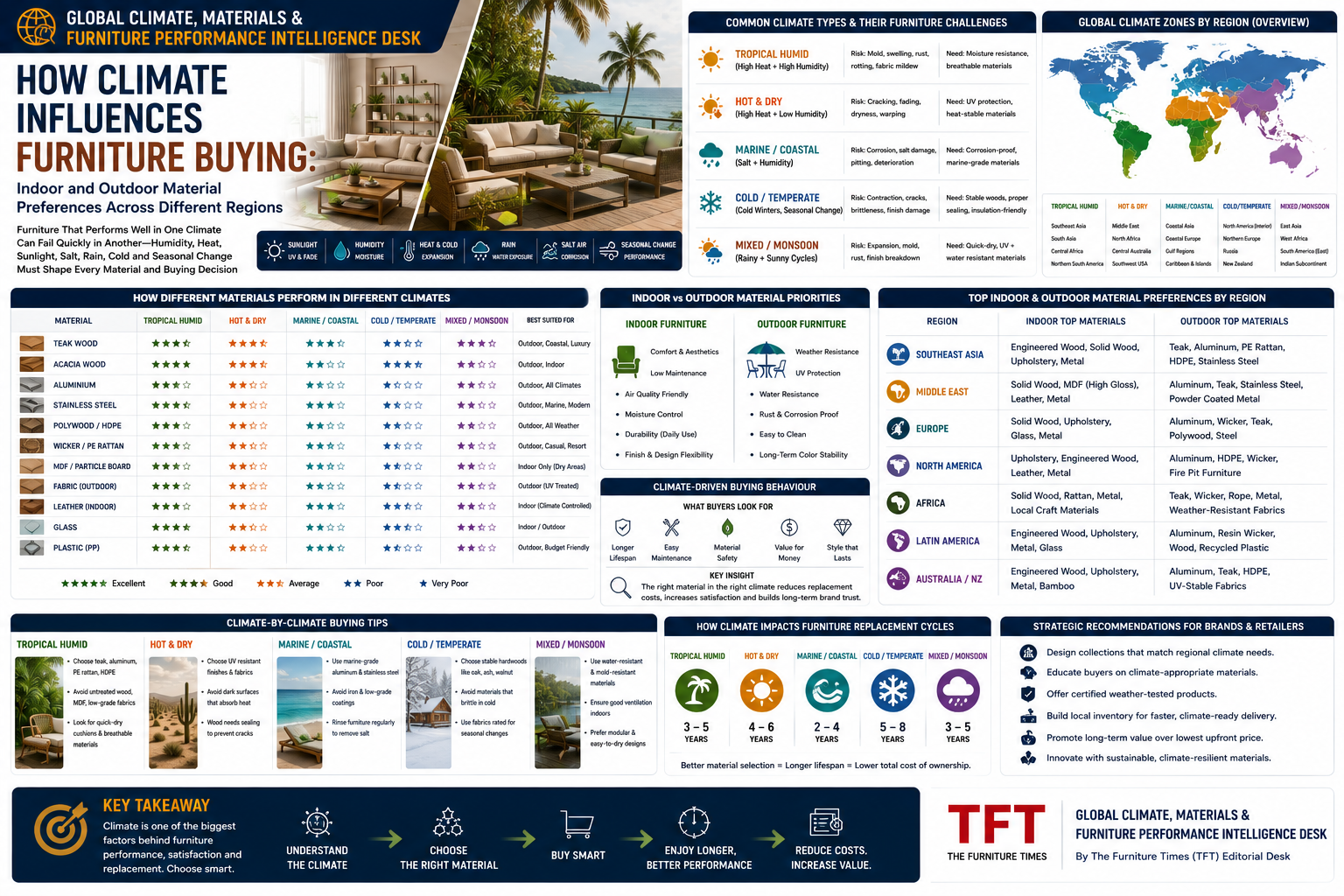
How Climate Influences Furniture Buying: Indoor and Outdoor Material Preferences Across Different Regions
Furniture that performs well in one climate may fail quickly in another. Discover how regional humidity, temperature, sunlight, salt exposure, rainfall and seasonal change influence consumer choices across wood, metal, panels, upholstery, rattan, plastics and outdoor materials.