
#TheFurnitureTimes
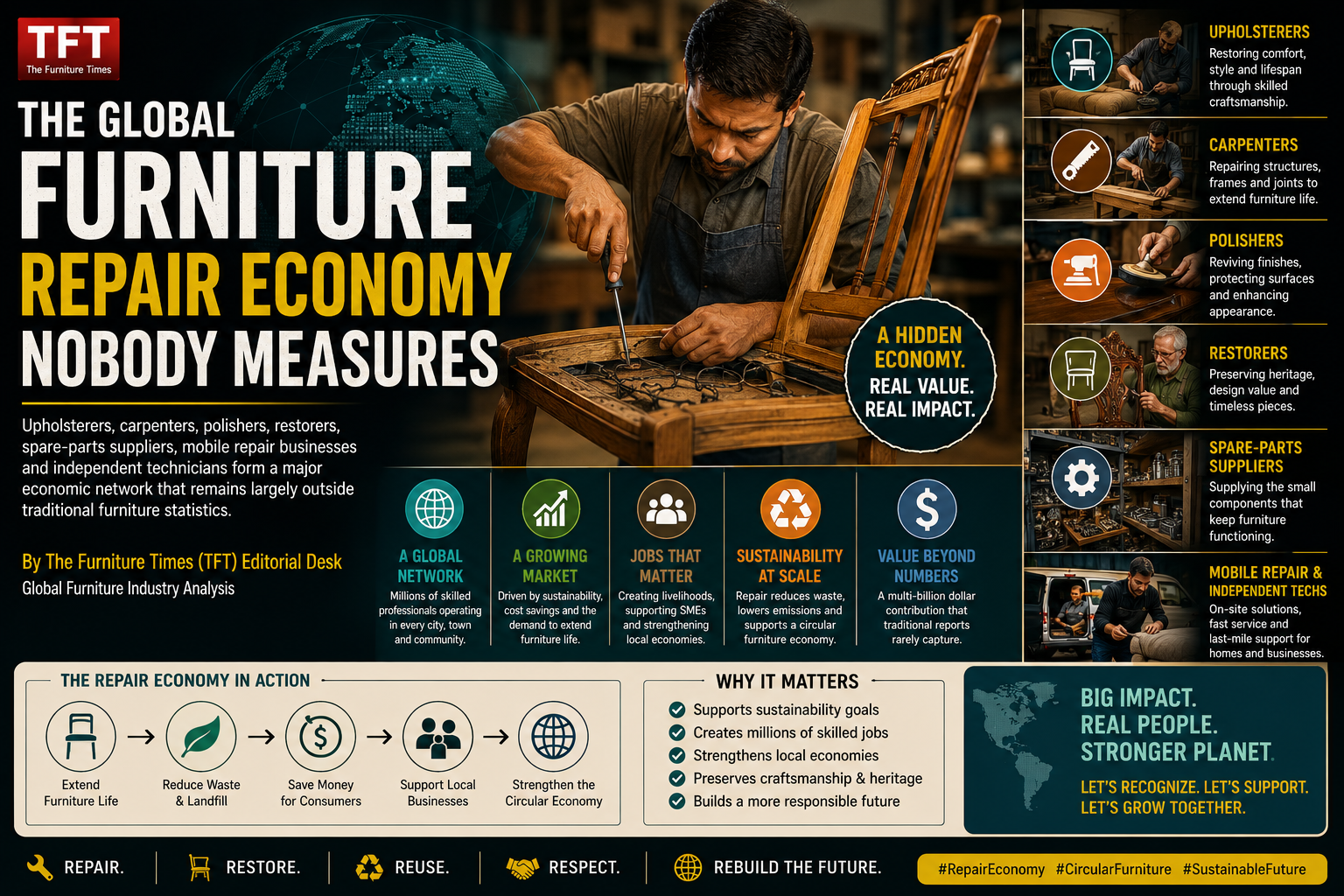
The Global Furniture Repair Economy Nobody Measures
Behind every repaired sofa, restored table and refurbished office chair is an extensive economic network. This TFT investigation examines why furniture repair remains undercounted, how it supports employment and circularity, and what the industry must do to make repair professionals visible, trusted and measurable.
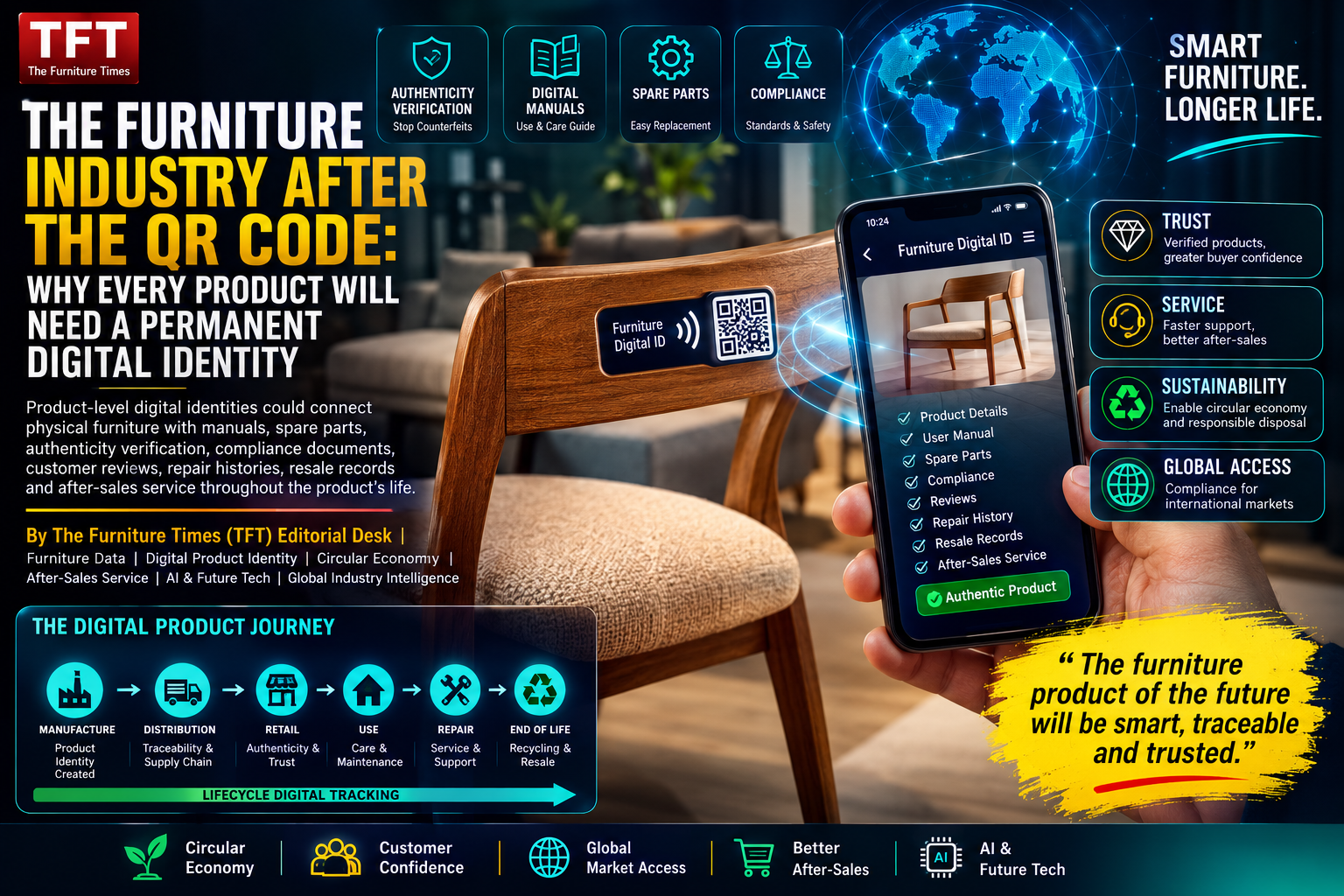
The Furniture Industry After the QR Code: Why Every Product Will Need a Permanent Digital Identity
Furniture can remain in use for decades, but its manuals, service records and component information frequently disappear. Product-level digital identities could give furniture a permanent memory—supporting repair, authenticity verification, customer reviews, resale and circularity.
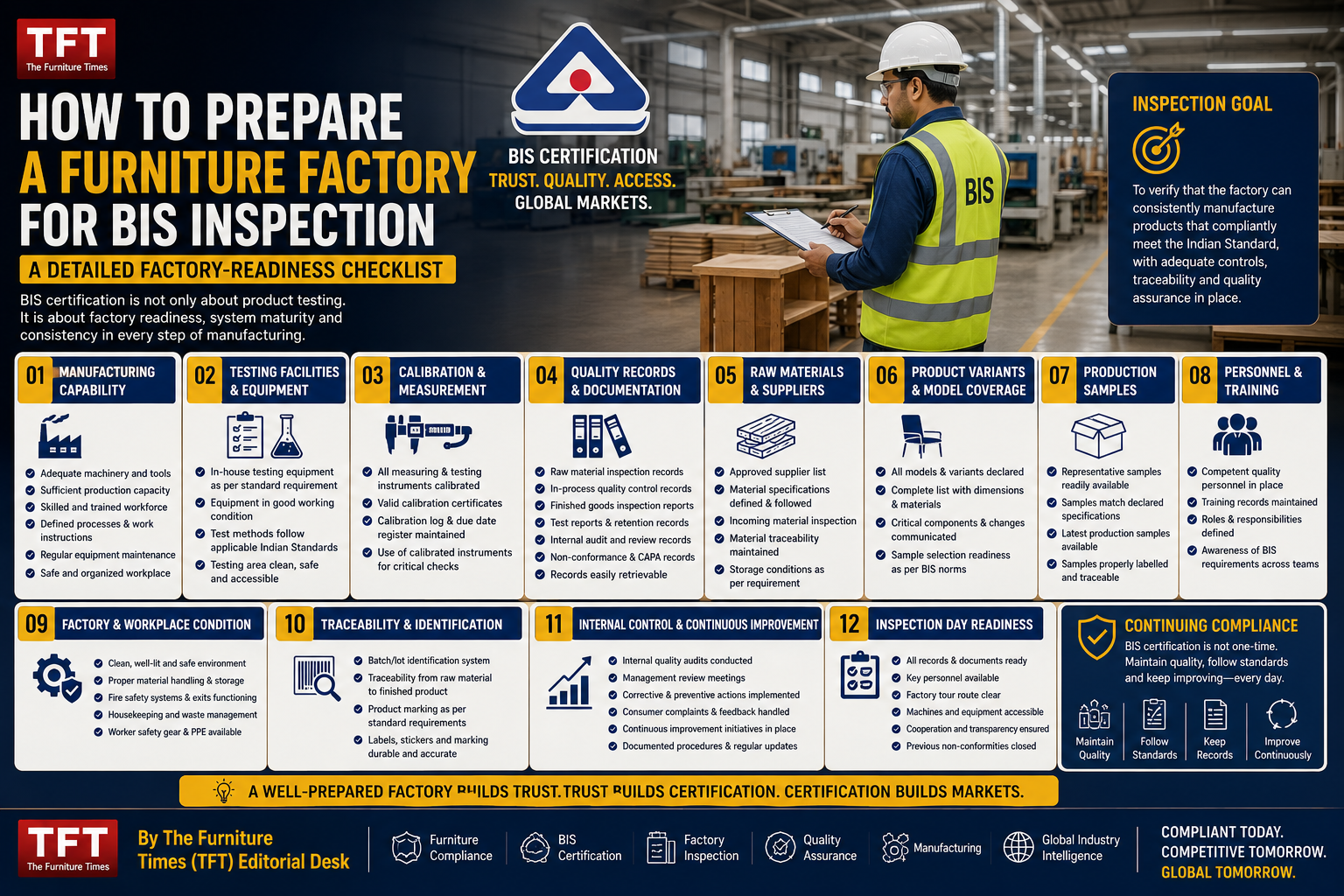
How to Prepare a Furniture Factory for BIS Inspection
Passing furniture testing is only one part of BIS certification. This factory-readiness guide explains how manufacturers should prepare machinery, laboratories, calibration, drawings, materials, personnel, records and representative production samples before BIS inspection.
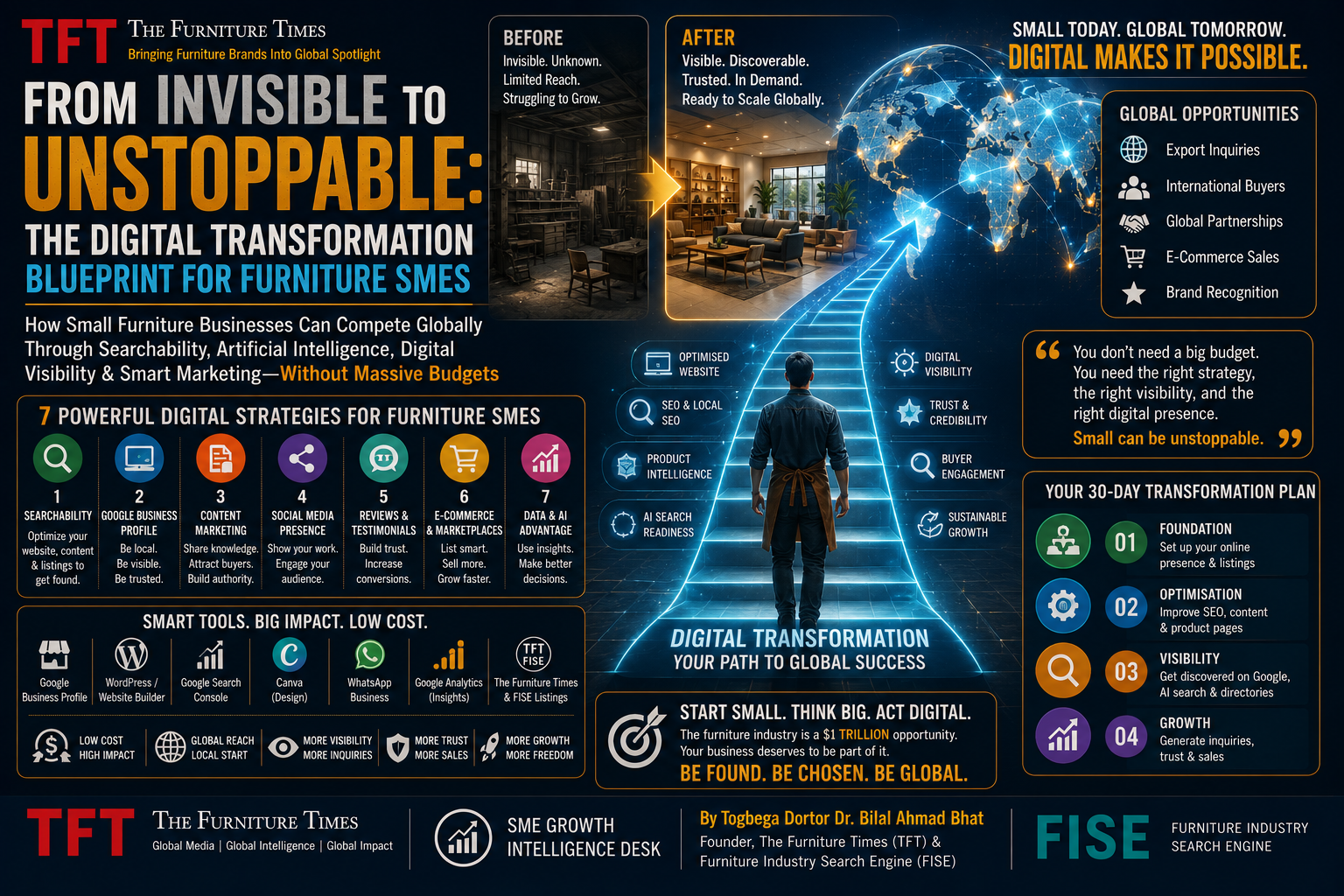
From Invisible to Unstoppable: The Digital Transformation Blueprint for Furniture SMEs
Discover the Digital Transformation Blueprint designed specifically for furniture SMEs. Learn how affordable SEO, Google Ads, content marketing, reviews, social media, Local SEO, industry listings and AI tools can help small furniture businesses become visible, trusted and globally competitive.
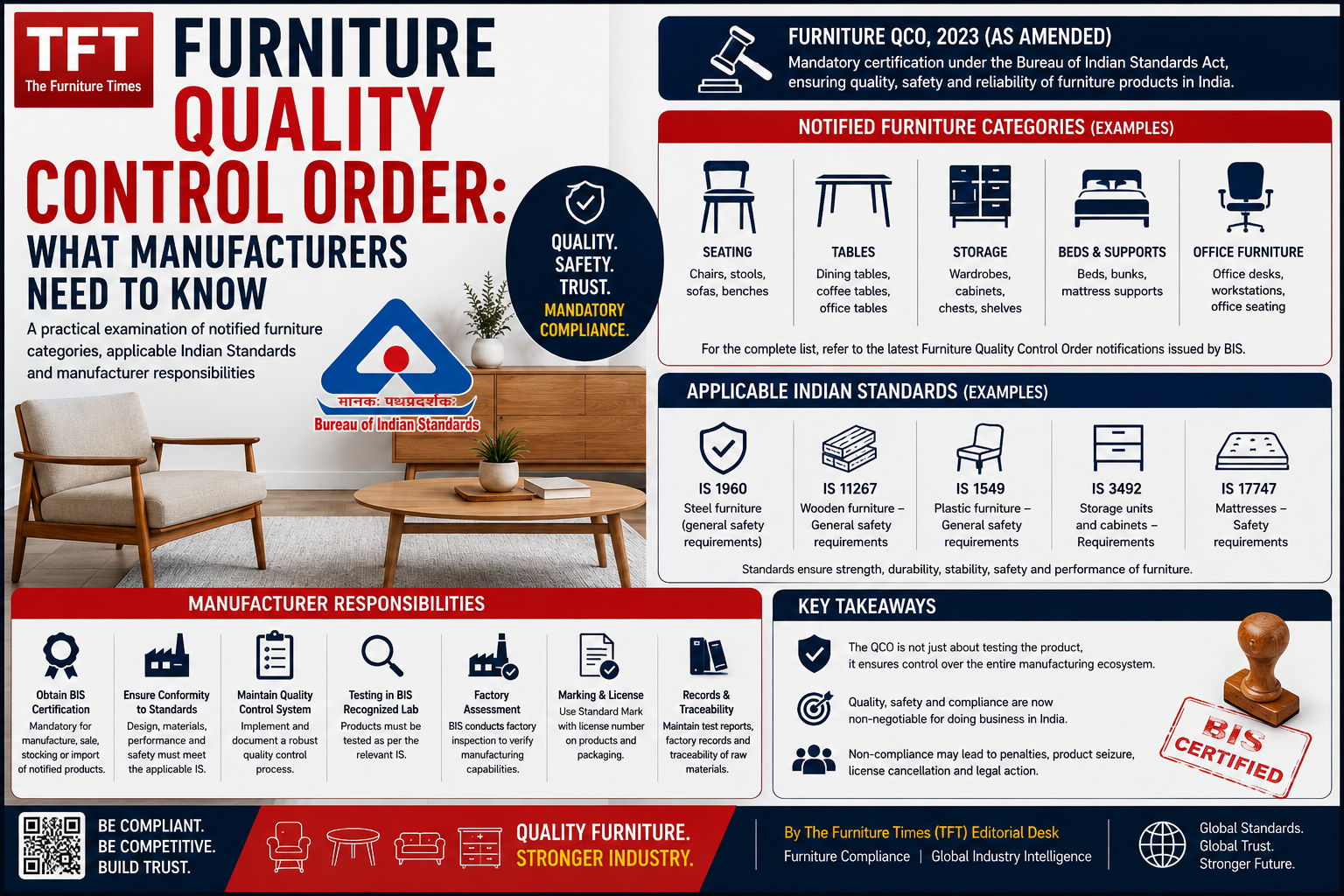
Furniture Quality Control Order: What Manufacturers Need to Know
A detailed examination of India’s Furniture Quality Control Order, covering notified furniture categories, applicable BIS standards, implementation provisions, exemptions and the continuing responsibilities of manufacturers, importers and furniture brands.

The Digital Transformation of the Furniture Industry
The furniture industry’s digital transformation extends far beyond e-commerce. AI, AR, VR, 3D configuration, CNC machinery, cloud production, RFID and IoT are connecting the complete value chain—but success depends on accurate data, workforce readiness, cybersecurity and clear commercial objectives.

Why European Furniture Brands Are Struggling to Break Into the American Market
Why do respected European furniture companies struggle in the United States? This detailed TFT report examines centralised decision-making, weak brand awareness, product-market fit, pricing, logistics, compliance, dealer economics, customer service and the practical strategy required to build a sustainable American business.
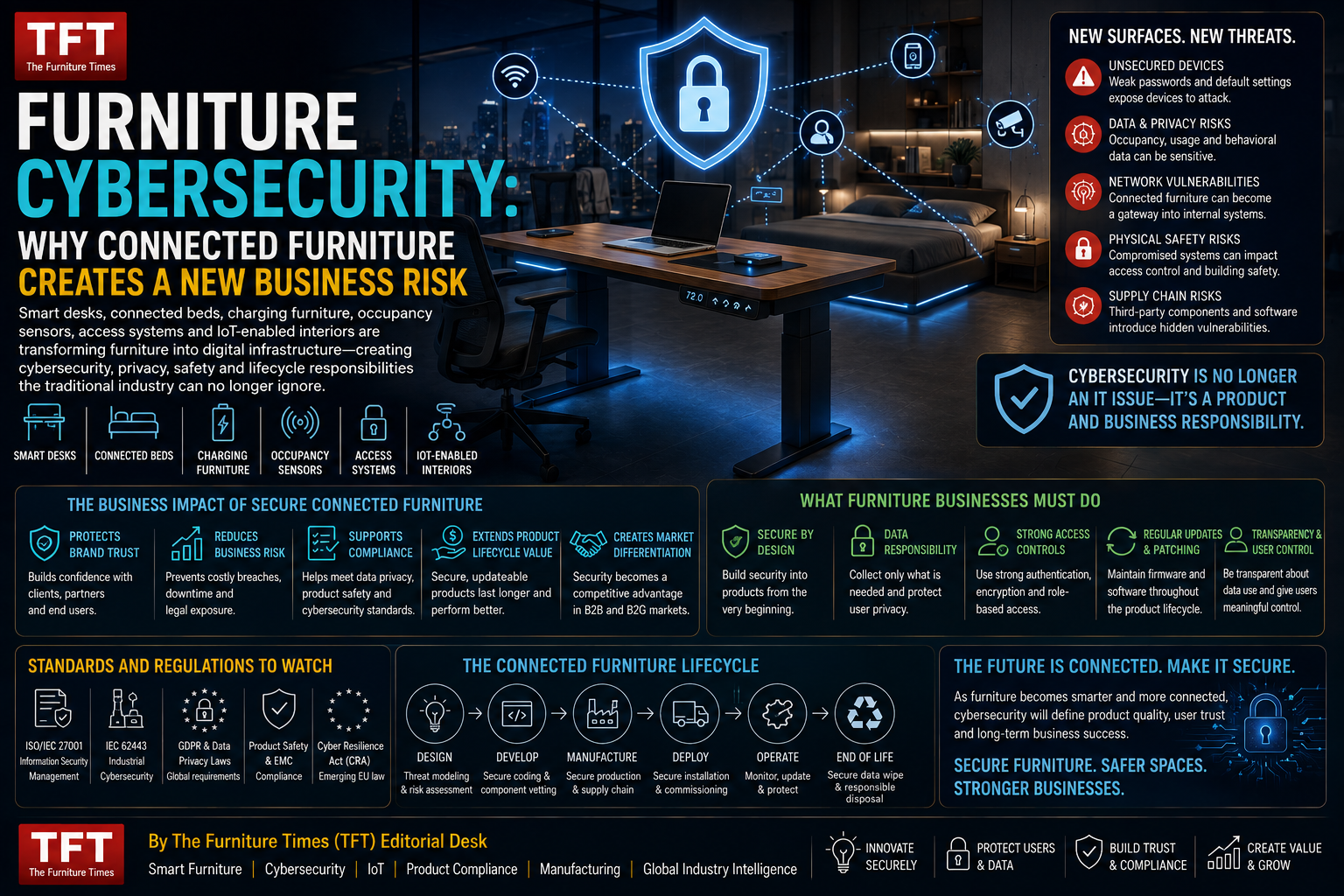
Furniture Cybersecurity: Why Connected Furniture Creates a New Business Risk
Smart desks, connected beds, charging furniture, occupancy sensors and access-controlled storage are turning furniture into networked infrastructure. This detailed TFT report investigates vulnerabilities, data risks, EU requirements, U.S. labelling developments, supplier responsibilities and the practical steps manufacturers and buyers must take.
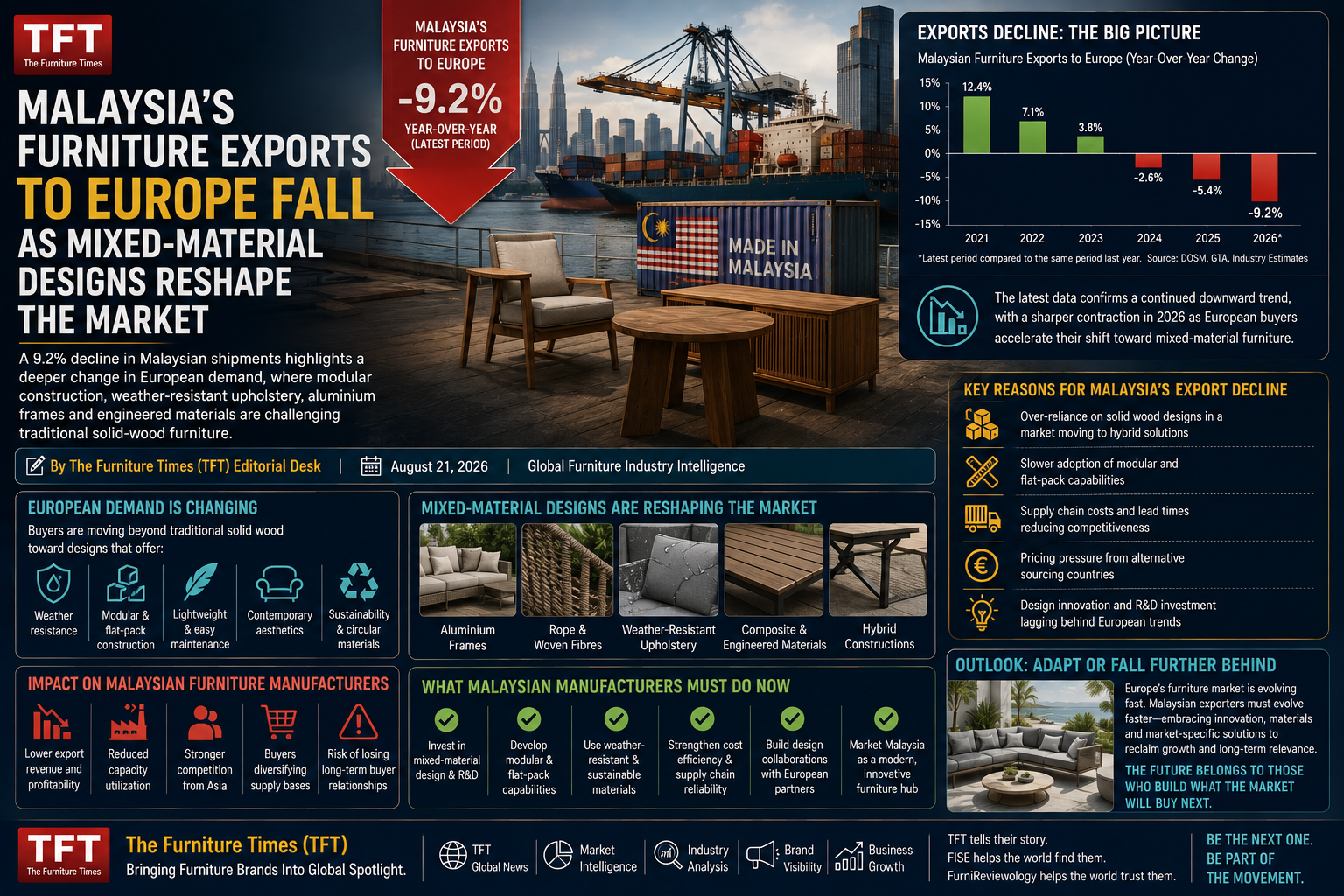
Malaysia’s Furniture Exports to Europe Fall as Mixed-Material Designs Reshape the Market
Malaysia’s tropical wooden furniture shipments to Europe fell 9.2% during the first four months of 2026. The decline reveals a wider transformation as European buyers increasingly seek modular, lightweight and mixed-material furniture combining wood with aluminium, upholstery, synthetic fibres and engineered composites.
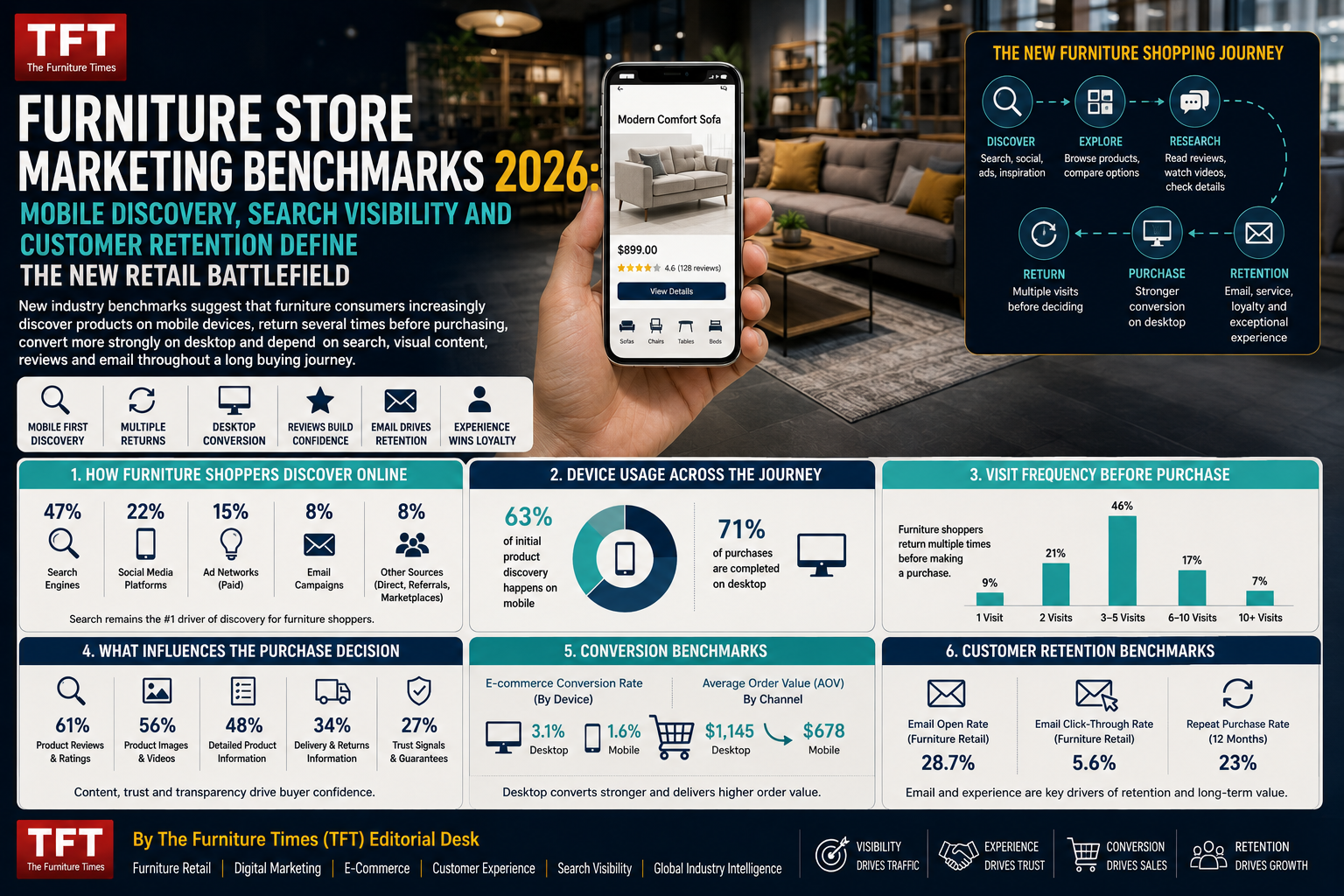
Furniture Store Marketing Benchmarks 2026
CUFinder’s 2026 furniture-store marketing benchmarks point to a multi-device retail market: mobile generates 72.5% of traffic, global website conversion averages 1.65%, organic search leads discovery and automated email remains a powerful recovery channel. TFT examines what the numbers mean for furniture retailers.