
#HospitalityFurniture
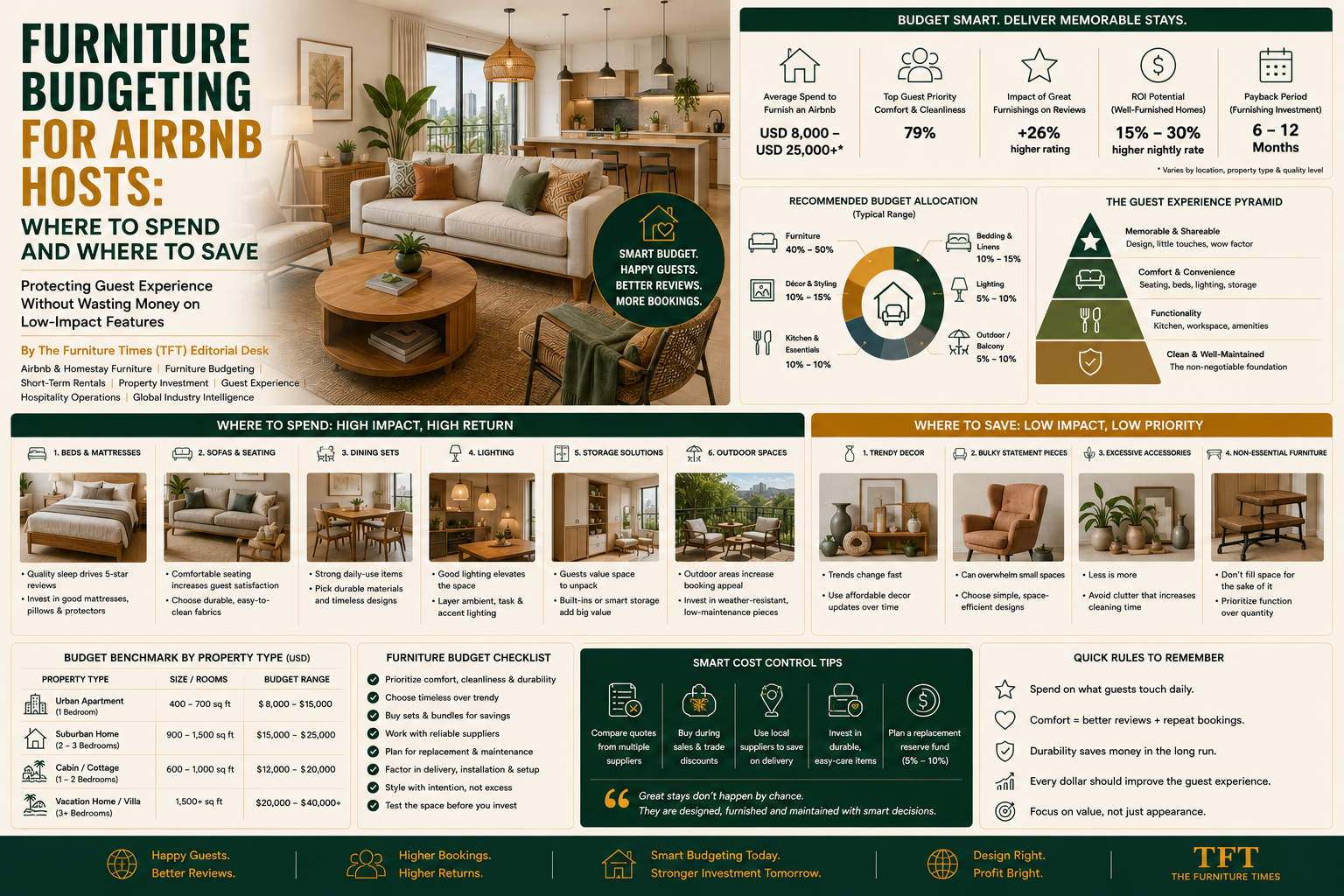
Furniture Budgeting for Airbnb Hosts: Where to Spend and Where to Save
Airbnb hosts do not need to buy the cheapest furniture or spend heavily on every room. They need to invest in products that protect sleep, comfort, safety, cleanliness and operational reliability. This detailed guide explains where hosts should spend, where they can save and how lifecycle costs should influence every purchasing decision.

The True Cost of Furnishing an Airbnb Property
Furnishing an Airbnb or homestay is not a one-time furniture purchase. Owners must account for design, delivery, installation, appliances, linen, styling, photography, repairs, replacement and lost income when essential items fail. This detailed report explains how to calculate the complete lifecycle cost of a guest-ready rental property.

From Empty Apartment to Guest-Ready Property: The Complete Furnishing Economy
An empty apartment becomes a bookable short-term rental only after designers, furniture manufacturers, procurement specialists, installers, appliance suppliers, cleaners, photographers, technology providers and property managers complete a highly coordinated process. This report maps the complete furnishing economy behind the journey from property handover to first booking.
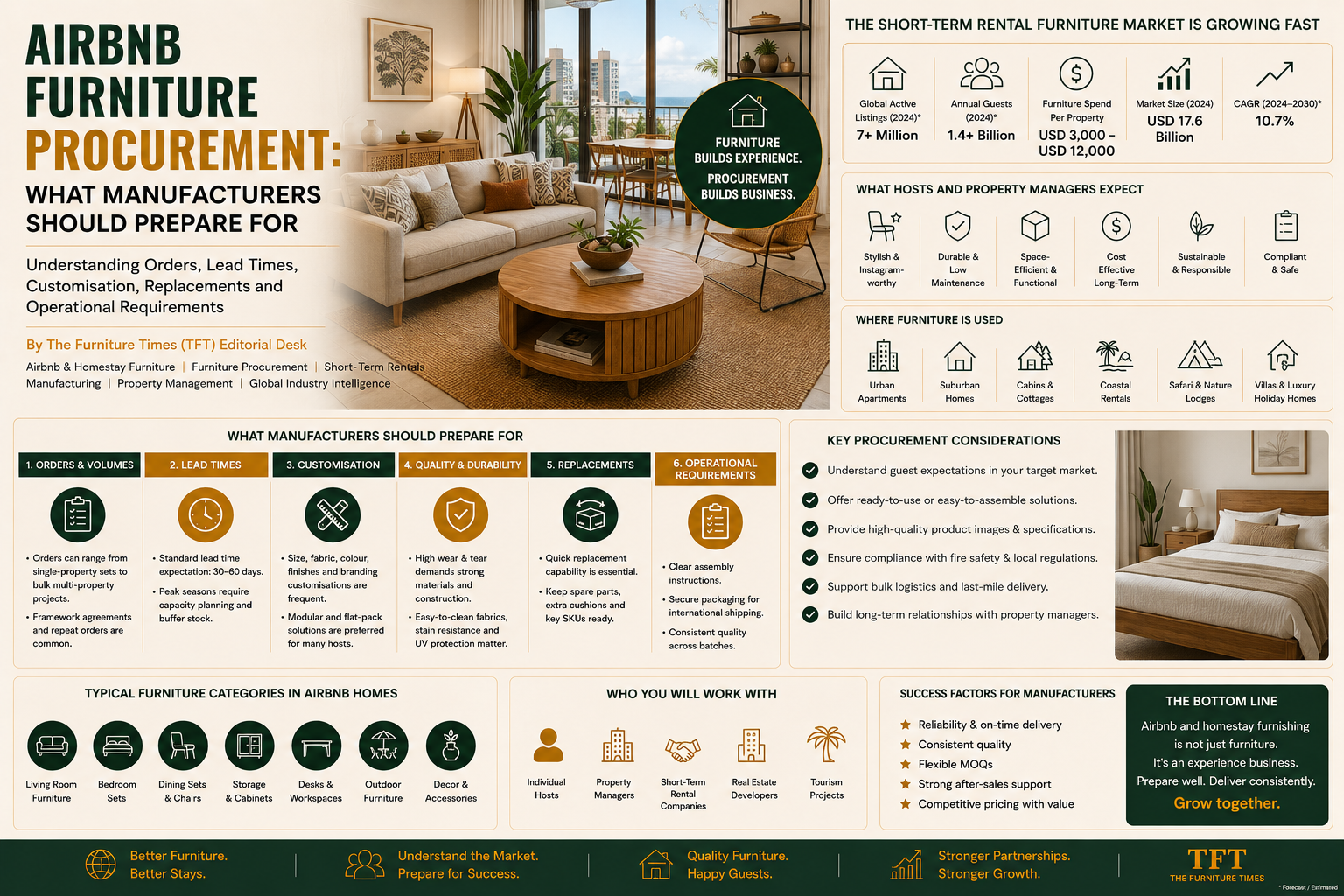
Airbnb Furniture Procurement: What Manufacturers Should Prepare For
Short-term-rental furniture orders often fall between residential retail and large hotel contracts. Manufacturers that offer complete property packages, flexible minimums, realistic lead times, spare parts, product continuity and rapid replacement can build recurring relationships with hosts, developers and professional property managers.
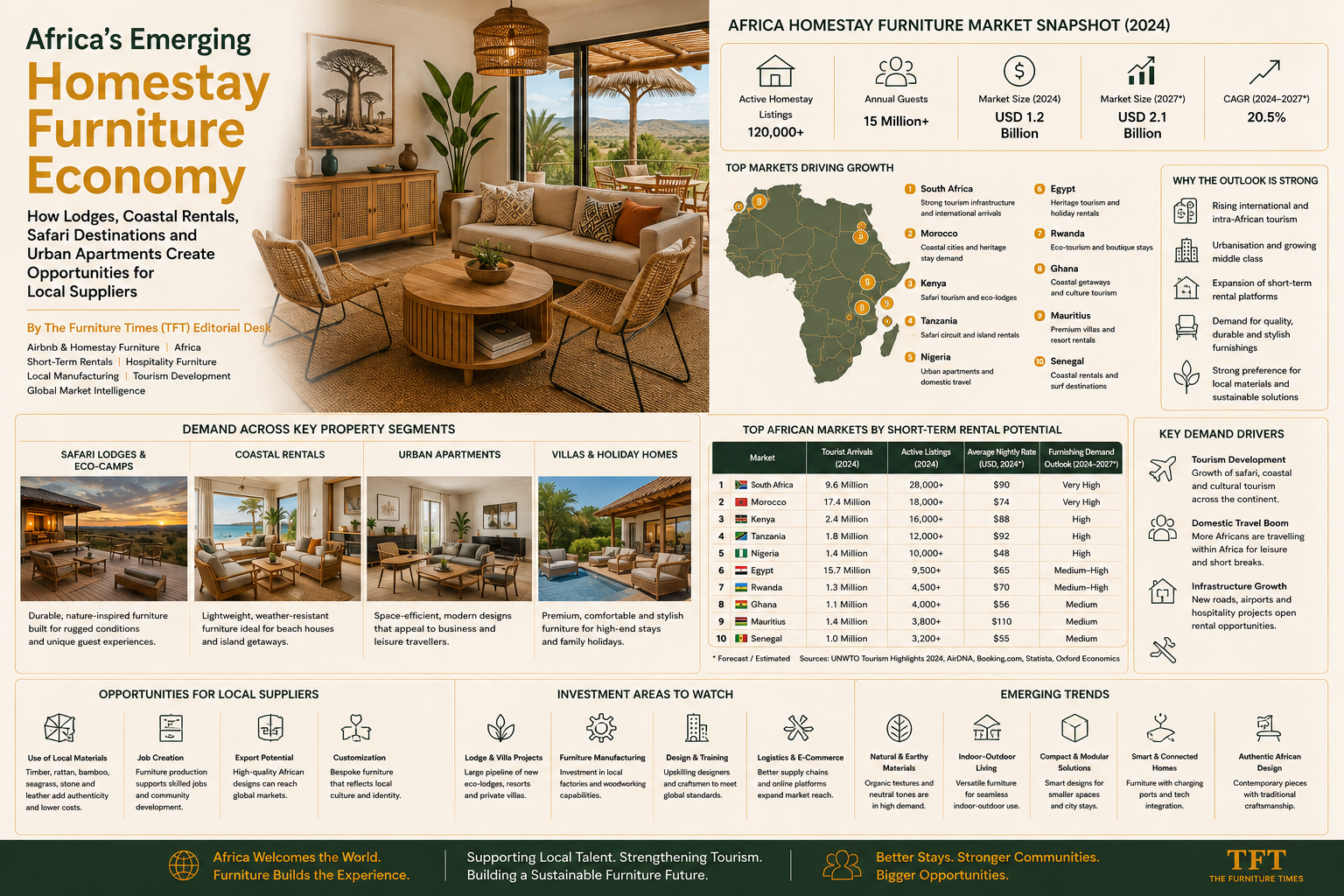
Africa’s Emerging Homestay Furniture Economy
Tourism growth across Africa is generating demand for durable, climate-appropriate and locally inspired furniture. By improving quality, standardisation, delivery and digital visibility, local suppliers can capture more value from urban rentals, safari lodges, coastal villas, heritage properties and community homestays.
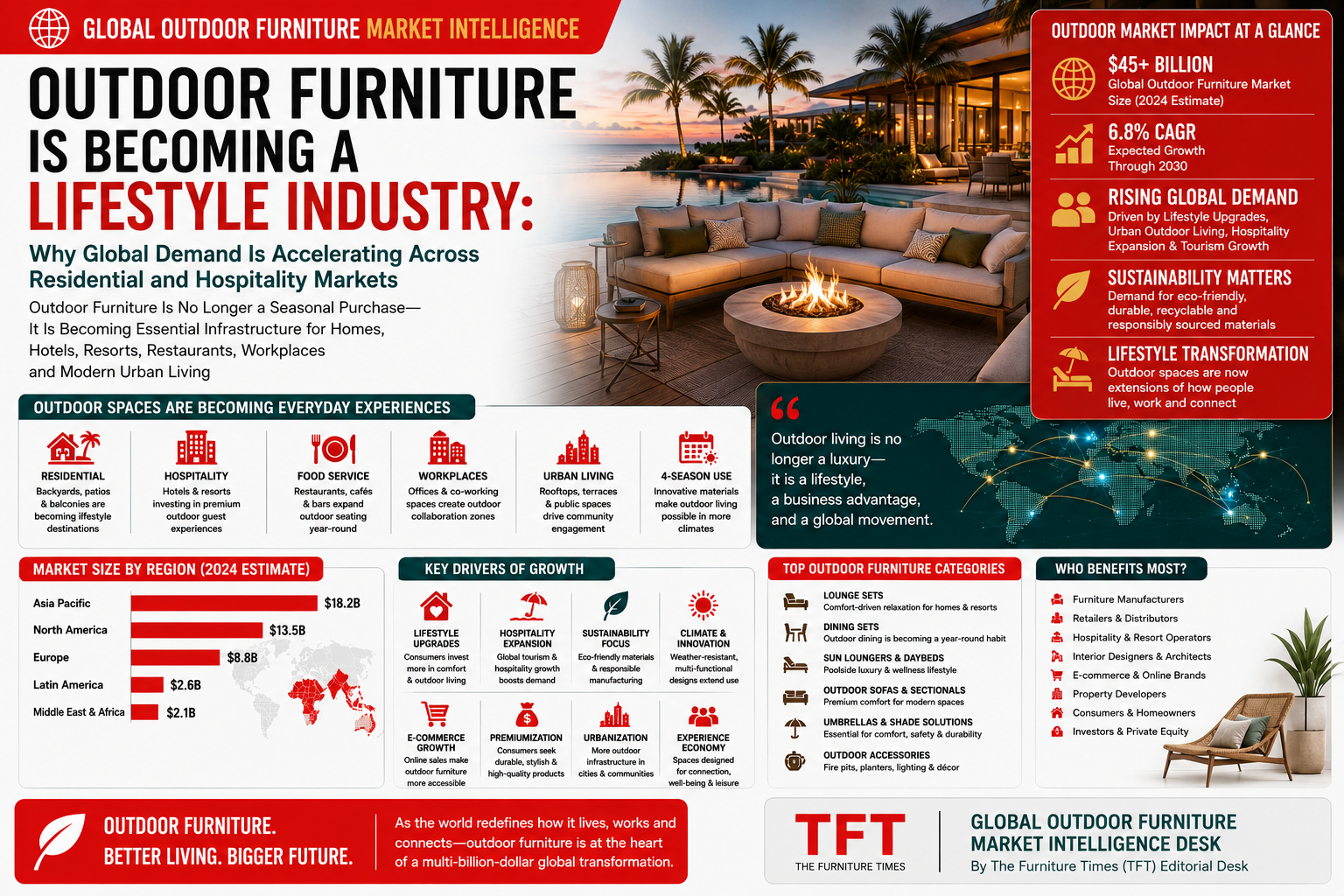
Outdoor Furniture Is Becoming a Lifestyle Industry: Why Global Demand Is Accelerating Across Residential and Hospitality Markets
The global outdoor furniture economy is expanding as homes, hotels, resorts, restaurants and commercial properties turn balconies, gardens, rooftops, terraces and pool areas into functional lifestyle environments. This report examines market size, materials, regional demand, customer age groups, hospitality procurement, search behaviour and future growth opportunities.
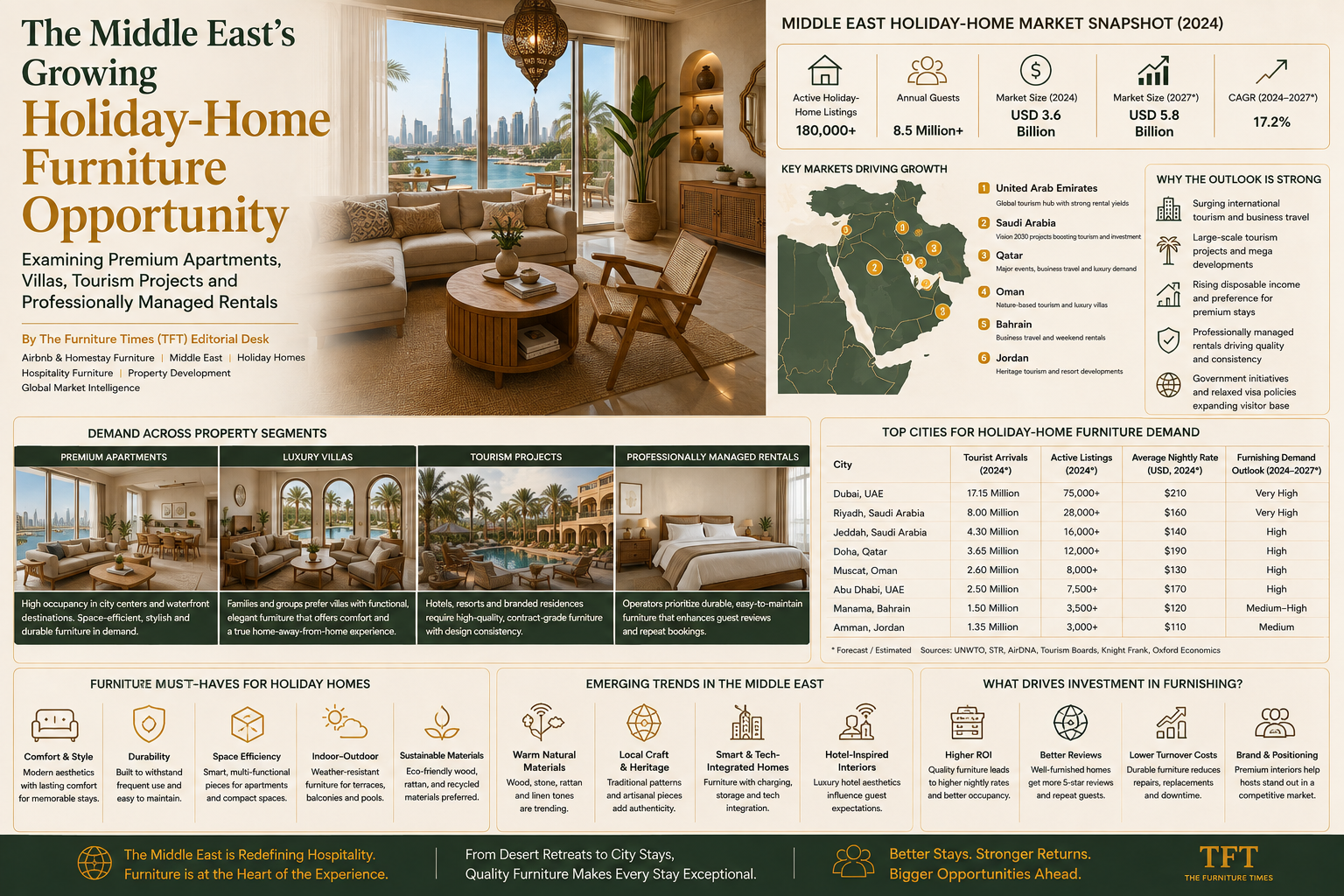
The Middle East’s Growing Holiday-Home Furniture Opportunity
The Middle East’s expanding tourism and property-development economy is generating demand for premium apartment packages, villa furniture, climate-resistant outdoor products and professionally managed furnishing services. Success will depend on regional design intelligence, durability, installation, compliance and long-term replacement support.
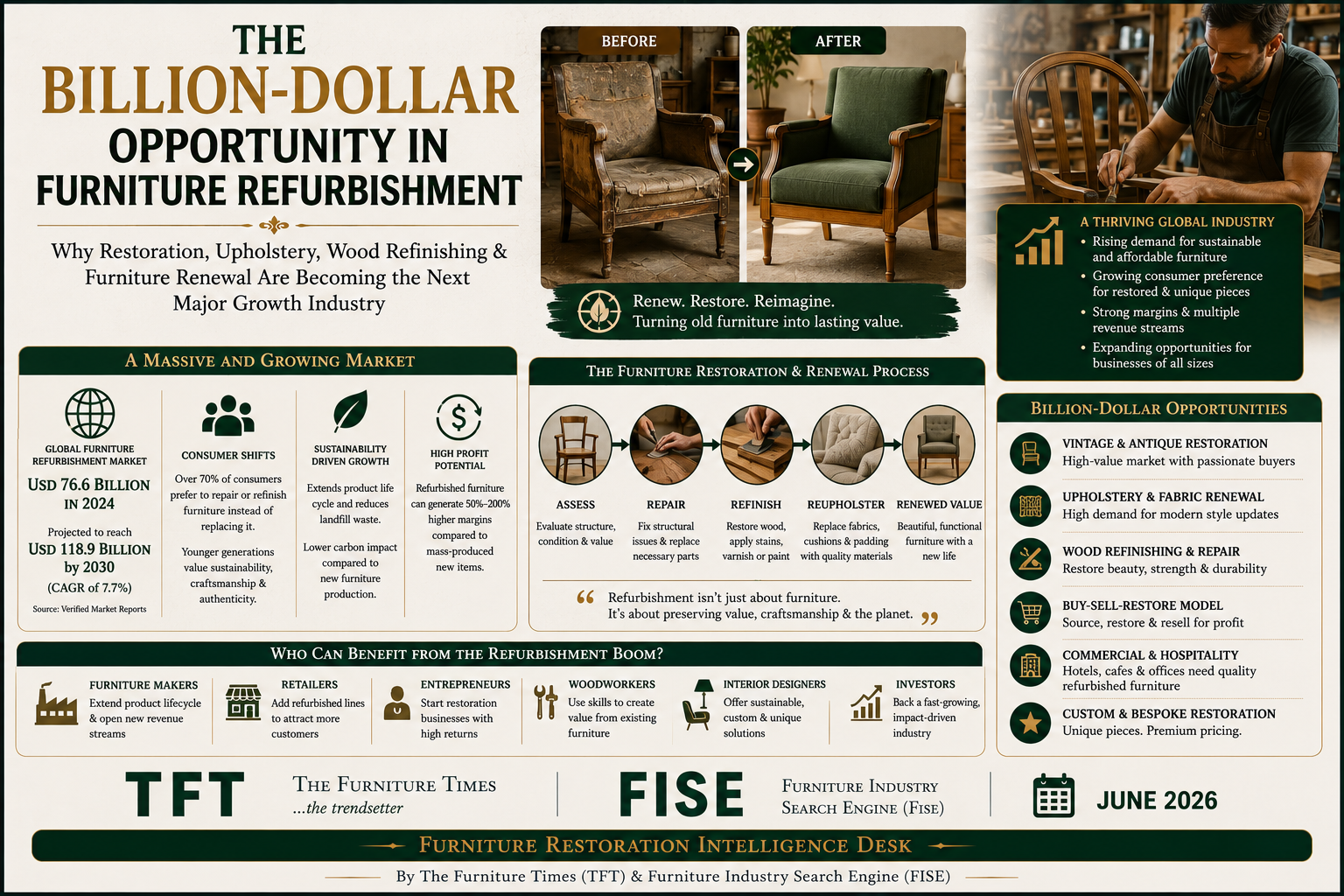
The Billion-Dollar Opportunity in Furniture Refurbishment
Discover why furniture refurbishment is evolving into a billion-dollar industry. This report explores restoration businesses, upholstery, wood refinishing, antique conservation, hospitality refurbishment, office furniture renewal, and why lifecycle management is becoming the next frontier of the furniture economy.

Europe’s Homestay Furniture Market: Heritage Character Meets Modern Guest Expectations
With nearly 952 million EU guest nights booked through major accommodation platforms in 2025, Europe represents a major short-term-rental furniture economy. Hosts must balance heritage character with compact design, efficient cleaning, commercial durability and increasingly strict regulation.
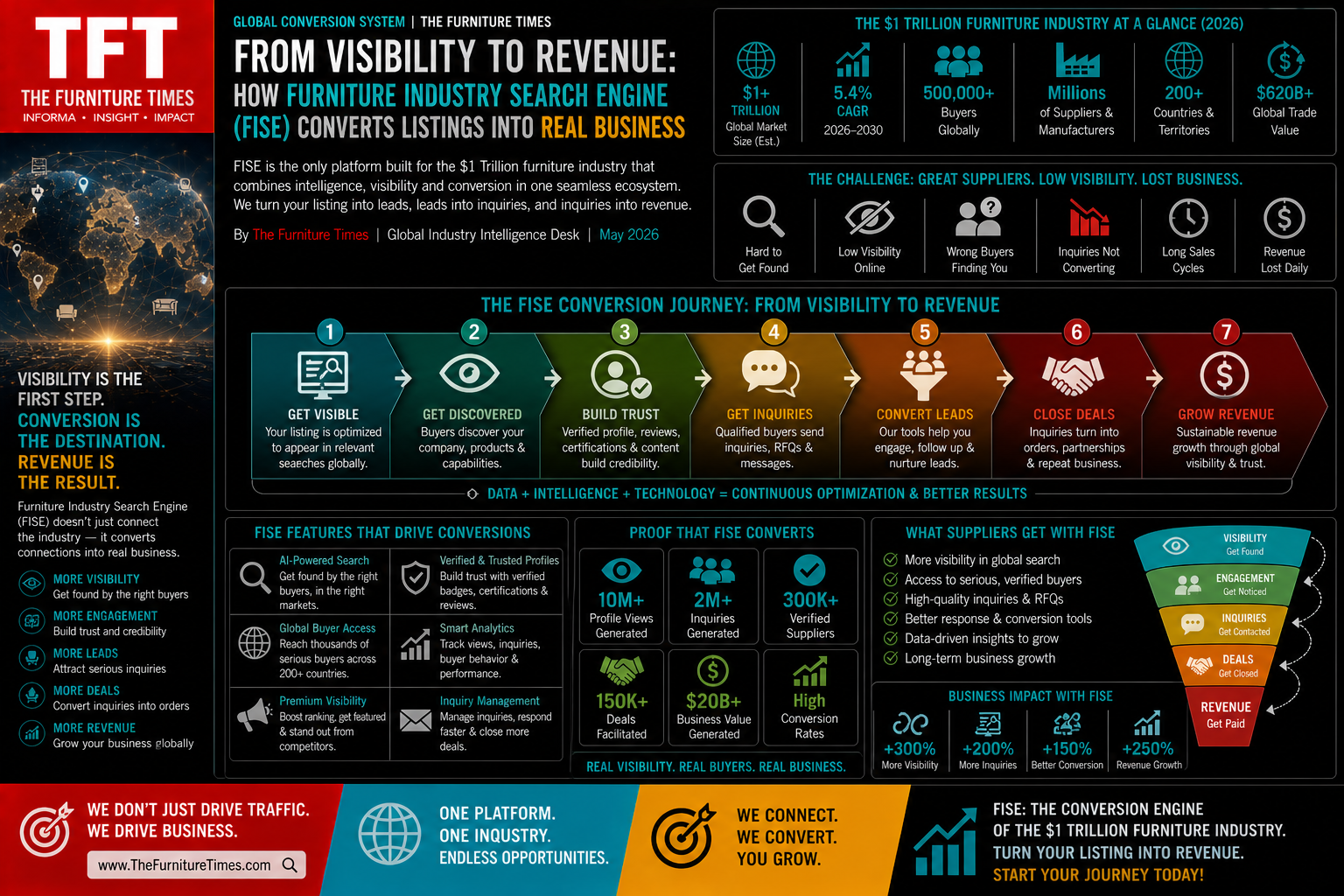
From Visibility to Revenue: How Furniture Industry Search Engine Converts Listings into Real Business
A deep dive into how structured listings, trust-building, and conversion systems turn visibility into measurable revenue in the furniture industry.