The Future Furniture Marketplace: New, Used, Refurbished & AI-Powered Commerce Will Exist Together
The Next Generation of the Furniture Industry Will Not Be Built Around One Business Model—It Will Be Built Around an Entire Furniture Lifecycle
Digital Commerce Intelligence Desk
By The Furniture Times (TFT) & Furniture Industry Search Engine (FISE)
June 2026
For more than a century, the furniture industry has operated under a straightforward business model.
Manufacture.
Distribute.
Sell.
Deliver.
Repeat.
Whether it was a family-owned furniture workshop, a multinational manufacturer, or a luxury furniture retailer, success was largely measured by one thing—how many new products were sold.
But the global marketplace is changing faster than ever before.
Artificial Intelligence is reshaping commerce.
Consumers are changing how they buy.
Sustainability is becoming a purchasing priority.
The Circular Economy is influencing government policies.
Digital commerce is evolving beyond traditional e-commerce.
Ownership itself is being redefined.
The future of the furniture industry will not belong exclusively to manufacturers.
Nor will it belong only to second-hand marketplaces.
It will not be dominated solely by rental companies, refurbishment specialists, or AI-powered shopping platforms.
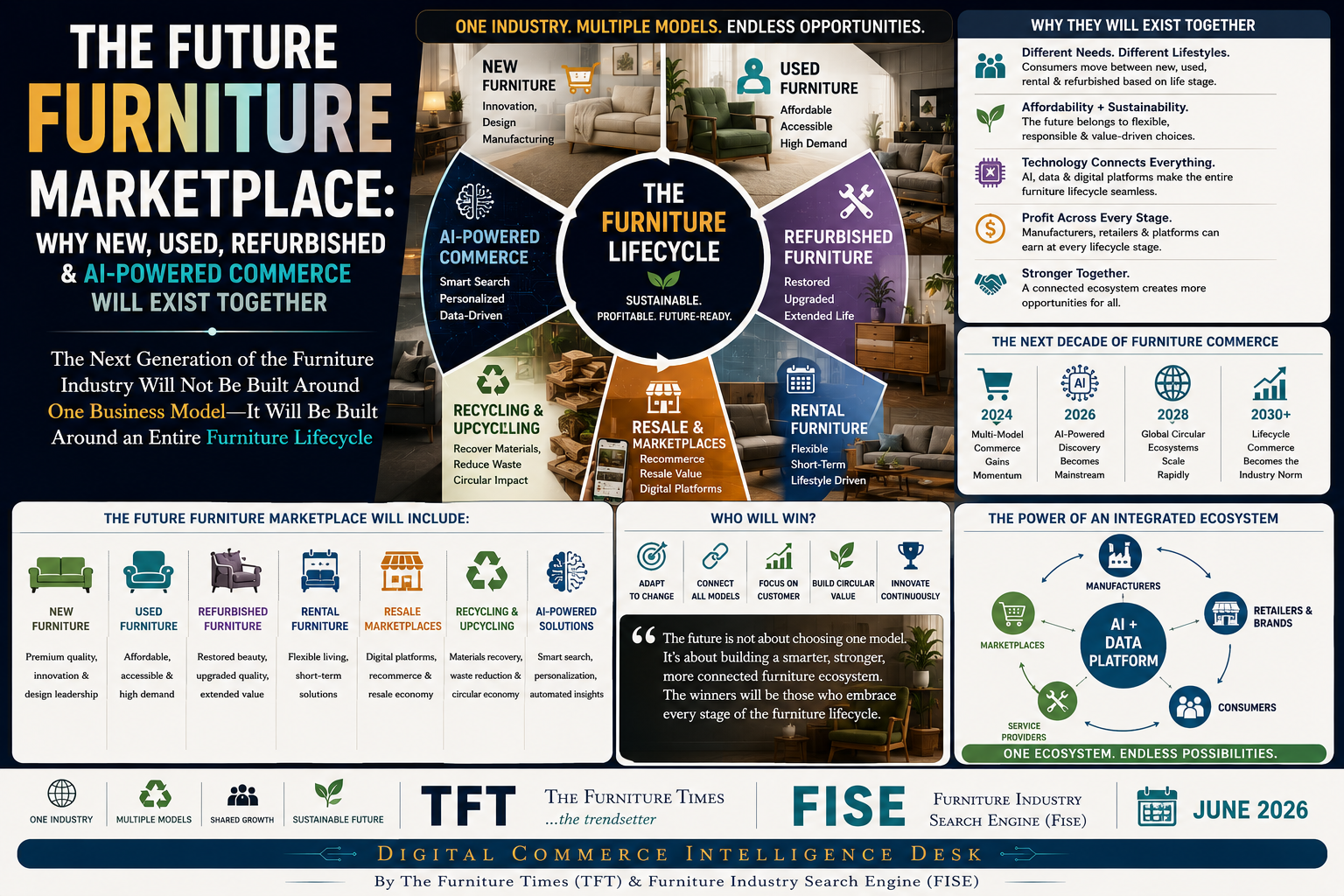
Instead, the future belongs to an integrated marketplace where every stage of a furniture product’s lifecycle creates value.
The winners will not choose one business model.
They will embrace them all.
The End of the Traditional Furniture Marketplace
For decades, furniture commerce followed a linear journey.
Raw materials became products.
Products entered showrooms.
Customers purchased them.
Eventually they were discarded.
The relationship between manufacturer and customer often ended after delivery.
Tomorrow’s marketplace will look entirely different.
Furniture will move through multiple commercial stages.
Manufacture.
Ownership.
Rental.
Trade-in.
Refurbishment.
Certified resale.
Subscription.
Recycling.
Each stage creates additional value.
The furniture economy is becoming continuous rather than transactional.
New Furniture Will Always Drive Innovation
New furniture remains the foundation of the industry.
Consumers will continue demanding:
- Better designs
- Higher quality
- Improved comfort
- Smarter functionality
- Sustainable materials
- Innovative technology
Manufacturers will continue investing in research and development.
Interior designers will continue creating trends.
Architects will continue shaping living environments.
New furniture will always remain essential.
But it will no longer represent the industry’s only source of revenue.
Premium Furniture Is Becoming a Lifetime Investment
Luxury furniture is evolving.
Consumers increasingly expect premium furniture to:
- Last for decades
- Be repairable
- Retain resale value
- Include spare parts
- Be professionally refurbished
- Receive warranty support
Premium furniture is becoming similar to luxury automobiles and fine watches.
Its value extends beyond first ownership.
Manufacturers that support products throughout their lifecycle will build stronger customer loyalty.
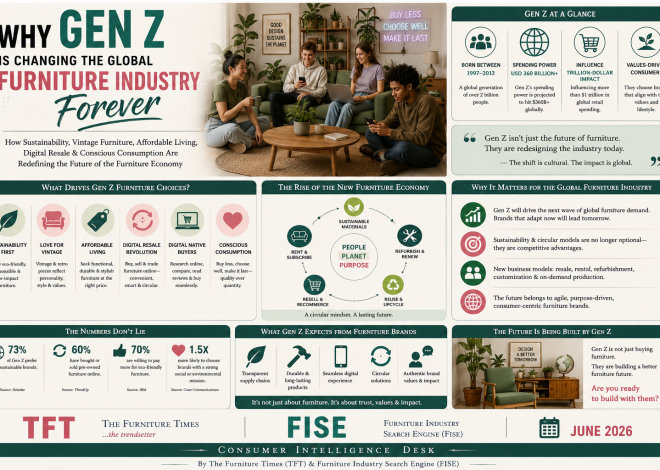
Second-Hand Furniture Is Becoming Mainstream
The perception of used furniture has changed dramatically.
Previously associated with limited budgets, second-hand furniture is now driven by:
- Sustainability
- Smart spending
- Vintage appreciation
- Circular economy
- Environmental responsibility
Consumers increasingly recognise that quality furniture often remains valuable long after its first owner.
The second-hand market is becoming a structured commercial sector rather than an informal alternative.
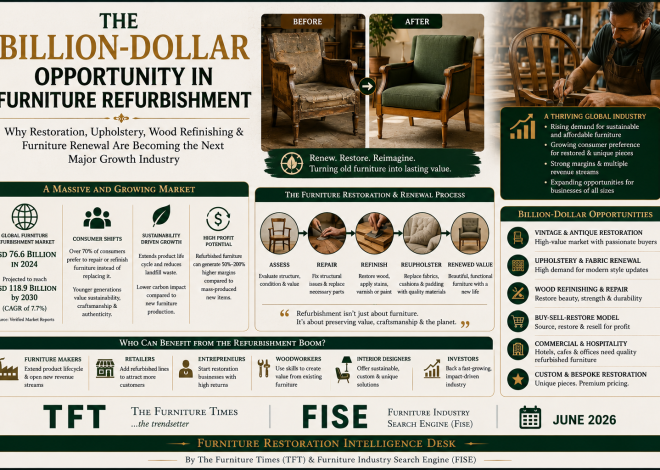
Refurbished Furniture Is Creating New Business Models
Refurbishment is no longer simply about repairs.
It has become a strategic business opportunity.
Professional refurbishment includes:
- Upholstery replacement
- Wood refinishing
- Structural restoration
- Hardware upgrades
- Modern finishes
- Certified inspections
Hotels.
Corporate offices.
Restaurants.
Educational institutions.
Healthcare facilities.
Residential customers.
All are increasingly choosing refurbishment over replacement.
Refurbishment extends product life while generating new revenue streams.
Furniture Rental Will Continue Growing
Ownership is no longer the only solution.
Student housing.
Corporate accommodation.
Hospitality.
Serviced apartments.
Digital nomads.
Expatriate communities.
These markets increasingly value flexibility.
Furniture rental allows customers to enjoy high-quality furniture without long-term ownership commitments.
Rental providers generate recurring revenue while extending product lifecycles.
This model complements rather than replaces traditional ownership.
Furniture Subscriptions Will Transform Customer Relationships
Subscription-based furniture services are becoming increasingly attractive.
Instead of purchasing furniture outright, customers pay predictable monthly fees.
Subscriptions may include:
- Delivery
- Installation
- Maintenance
- Repairs
- Product upgrades
- Replacement
- Collection
Manufacturers evolve from product suppliers into long-term service providers.
Recurring revenue strengthens business stability while improving customer satisfaction.
Upcycled Furniture Creates Creative Value
Upcycling goes beyond restoration.
It transforms existing furniture into entirely new products.
Old doors become dining tables.
Industrial timber becomes shelving.
Vintage cabinets become contemporary statement pieces.
Upcycling combines:
- Sustainability
- Creativity
- Design
- Entrepreneurship
Consumers increasingly value uniqueness over mass production.
This creates opportunities for designers, craftsmen, and artisans worldwide.
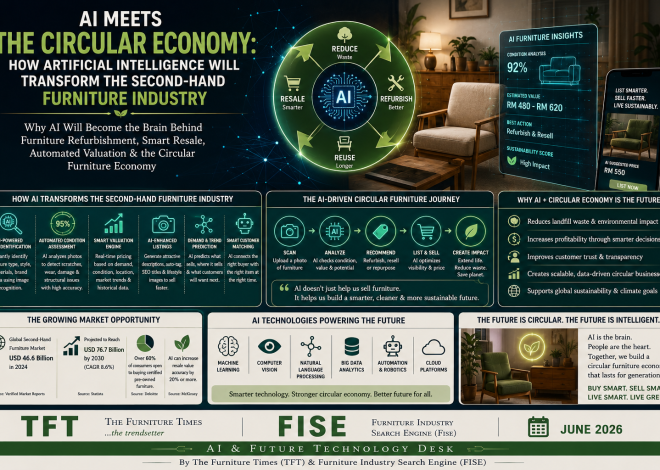
Artificial Intelligence Will Become Every Customer’s Shopping Assistant
The furniture buying process is changing fundamentally.
Customers increasingly rely on AI to answer questions like:
“Which dining table suits my apartment?”
“Recommend sustainable furniture within my budget.”
“Find refurbished hotel furniture suppliers.”
Artificial Intelligence analyses:
- Product specifications
- Customer reviews
- Sustainability
- Design compatibility
- Budget
- Delivery options
- User preferences
Shopping becomes personalised.
AI becomes the first salesperson many customers interact with.
Industry Search Platforms Will Replace Generic Discovery
General search engines serve billions of websites.
The furniture industry requires specialised discovery.
Future buyers will increasingly search for:
- Manufacturers
- Retailers
- Designers
- Refurbishment centres
- Rental companies
- Certified furniture
- Hospitality suppliers
- Antique restoration specialists
- Spare parts providers
Industry-specific search platforms will become essential infrastructure.
They help buyers find trusted suppliers faster while increasing visibility for businesses.
Digital Trust Will Become the New Currency
Tomorrow’s marketplace will reward businesses that build trust.
Consumers increasingly expect:
- Reviews
- Certifications
- Product history
- Sustainability information
- Warranty programmes
- Verified businesses
- Professional content
Trust is no longer created only through face-to-face relationships.
It is built digitally.
Businesses that communicate consistently earn greater customer confidence.
The Circular Economy Connects Every Business Model
The future marketplace is not divided between new and used furniture.
Everything becomes connected.
Manufacturing.
Ownership.
Rental.
Refurbishment.
Certified resale.
Recycling.
Each stage extends product value.
Circular thinking creates opportunities for manufacturers, retailers, designers, restoration specialists, logistics companies, technology providers, and consumers alike.
Every participant becomes part of one integrated ecosystem.
Why Searchability Will Decide the Winners
Excellent products alone are no longer enough.
The world’s finest furniture cannot be purchased if customers cannot discover it.
Future businesses require:
- AI discoverability
- Structured product data
- Digital catalogues
- Local SEO
- Reviews
- Industry listings
- Product transparency
Visibility has become commercial infrastructure.
Searchability is becoming one of the most valuable competitive advantages.
The Role of The Furniture Times & FISE
The Furniture Times believes the future furniture marketplace extends far beyond manufacturing.
It encompasses the entire furniture lifecycle.
Furniture Industry Search Engine (FISE) supports this vision by helping businesses across every segment become discoverable.
Whether companies specialise in:
- Manufacturing
- Retail
- Rental
- Refurbishment
- Restoration
- Circular economy
- AI-powered commerce
- Hospitality
- Commercial furniture
FISE connects them with buyers.
TFT educates the industry.
Together they are helping build a more connected, transparent, intelligent, and sustainable furniture ecosystem.
TFT & FISE Analysis
The furniture industry is entering one of the biggest transformations in its history.
The future marketplace will not replace one business model with another.
Instead, it will integrate every business model into one intelligent ecosystem.
Manufacturers will become service providers.
Retailers will become digital experience platforms.
Refurbishment businesses will become strategic partners.
Artificial Intelligence will simplify buying decisions.
Search platforms will become critical infrastructure.
Businesses that embrace every stage of the furniture lifecycle will outperform those focused solely on manufacturing new products.
Final Verdict
The future furniture marketplace is not a competition between:
New or used.
Ownership or rental.
Manufacturing or refurbishment.
Technology or craftsmanship.
The future belongs to businesses that understand they all work together.
Tomorrow’s furniture leaders will combine:
New furniture.
Premium collections.
Second-hand furniture.
Certified pre-owned programmes.
Rental solutions.
Subscription services.
Refurbishment.
Artificial Intelligence.
Circular manufacturing.
Industry search.
The companies that adapt to this integrated marketplace will build stronger brands, stronger customer relationships, and stronger long-term profitability.
Because the future of furniture is no longer built around a single transaction.
It is built around an entire product lifecycle.
And those who embrace every stage of that journey will define the next generation of the global furniture industry.
By The Furniture Times (TFT) & Furniture Industry Search Engine (FISE)
Digital Commerce Intelligence Desk | June 2026
“TFT tells their story. FISE helps the world find them.”
The furniture industry ecosystem is a $1 Trillion Dollar Industry.