The Future of Furniture Buying Is Search + Reviews + Industry Intelligence
Why These Three Information Layers Increasingly Belong Together
By The Furniture Times (TFT) Editorial Desk | Furniture Industry Search | FurniReviewology | Furniture Reviews | Industry Intelligence | FISE | Buyer Discovery | SMEs & MSMEs | Global Furniture Ecosystem
The furniture buyer of yesterday often began with a familiar question:
“Who do you know?”
A retailer asked another retailer for a manufacturer.
A hotel owner asked an industry contact for a supplier.
An importer worked through an agent.
A homeowner visited familiar stores.
An architect relied on existing supplier relationships.
A distributor attended trade exhibitions to identify factories.
These networks remain important.
Furniture is still a relationship-driven industry.
But the information journey surrounding those relationships is changing rapidly.
Today’s buyer can search.
Compare.
Read reviews.
Investigate company profiles.
Examine products.
Research markets.
Read industry news.
Study trends.
Check project references.
Compare suppliers across countries.
And increasingly, ask AI to help make sense of all of it.
The result is a new furniture buying environment in which three information layers are becoming increasingly interconnected:
Search + Reviews + Industry Intelligence
Search helps buyers discover.
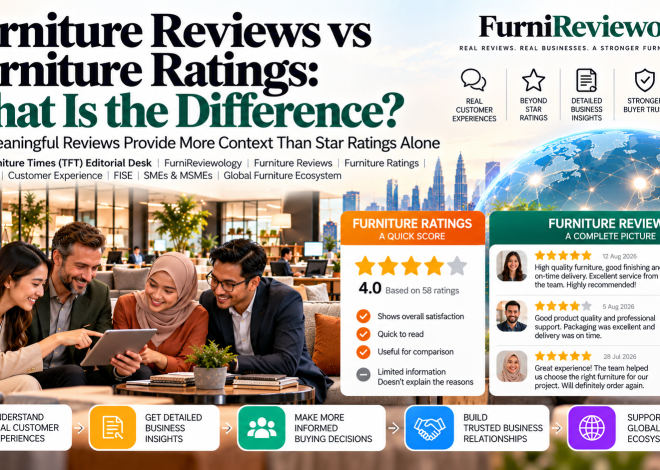
Reviews help buyers evaluate experiences and reputation.
Industry intelligence helps buyers understand context.
Individually, each is useful.
Together, they can create a much more informed furniture buying journey.
Layer One: Search — Who Can I Find?
Every buying journey begins with a need.
A hotel needs outdoor furniture.
A retailer needs sofa manufacturers.
An importer needs dining furniture suppliers.
An office project needs ergonomic seating.
A homeowner needs a bedroom set.
A manufacturer needs hardware.
A designer needs a specialist supplier.
The first problem is discovery.
Who Can Supply What I Need?
Historically, answering this question could require:
trade fairs,
agents,
directories,
personal recommendations,
showroom visits,
industry contacts,
or extensive manual research.
Digital search has changed the equation.
A buyer can now begin exploring the global furniture ecosystem within seconds.
But general search creates another challenge.
There is too much information.
More Search Results Do Not Automatically Mean Better Discovery
A search for furniture suppliers may produce:
advertisements,
marketplaces,
retailers,
manufacturers,
directories,
blogs,
social profiles,
old websites,
irrelevant businesses,
and companies from entirely different furniture segments.
The buyer still needs to determine:
Which company is actually relevant?
Is it a manufacturer or trader?
Does it serve B2B buyers?
Does it export?
Does it specialize in the required category?
Where is it located?
Does it serve the required market?
Search has made information abundant.
The next challenge is making discovery more relevant and structured.
FISE: Search Built Around the Furniture Ecosystem
This is the opportunity behind FISE — Furniture Industry Search Engine.
Furniture deserves a discovery environment designed around the structure of its own industry.
A buyer may need to search across:
manufacturers,
brands,
retailers,
suppliers,
wholesalers,
distributors,
exporters,
importers,
designers,
materials,
components,
machinery,
services,
and specialized furniture categories.
FISE focuses on helping make this ecosystem searchable.
Its role can be summarized simply:
FISE Helps the World Find Them.
But discovery is only the first layer.
Once a company has been found, another question immediately appears.
Layer Two: Reviews — What Have Others Experienced?
Imagine a buyer discovers ten potentially suitable furniture suppliers.
Now what?
The buyer may visit their websites.
Compare products.
Look at company information.
Then the buyer may ask:
“What have other customers experienced?”
This is where reviews enter the journey.
Reviews can provide another perspective on:
product quality,
service,
communication,
delivery,
packaging,
installation,
durability,
after-sales support,
and problem resolution.
For B2B transactions, reviews or customer experiences may also provide context around:
production consistency,
customization,
lead times,
quality control,
documentation,
project execution,
and supplier communication.
Reviews therefore add something search cannot provide by itself:
Experience.
Search Can Tell You a Company Exists — It Cannot Tell You the Whole Experience
A company appearing in search results means it has been discovered.
It does not automatically mean:
the company is right for the buyer,
the products will meet requirements,
the service will be satisfactory,
the supplier will communicate well,
or the transaction will succeed.
Search answers:
“Who is there?”
Reviews can help answer:
“What happened when others dealt with them?”
Those are different questions.
And buyers increasingly need both answers.
FurniReviewology: The Reputation and Customer-Experience Layer
This is where FurniReviewology fits into the emerging furniture information ecosystem.
FurniReviewology focuses on:
furniture company listings,
company profiles,
customer reviews,
reputation,
and furniture-specific business context.
The goal is not simply to accumulate stars.
A furniture-focused review environment can help buyers understand the experience behind the rating.
Was the furniture good?
Was delivery professional?
Was communication clear?
Did the product perform over time?
How was after-sales support?
How did the business respond when something went wrong?
These details can help buyers research companies more intelligently.
But Search + Reviews Still Do Not Tell the Whole Story
Suppose a buyer discovers a furniture company.
The company has positive customer feedback.
That is useful.
But the buyer may still need broader context.
What is happening in the company’s market?
Is the business expanding?
Has it introduced new technology?
Is the product category growing?
Are regulations changing?
What materials are becoming important?
What is happening with trade?
Are shipping conditions changing?
Which markets are emerging?
What trends are affecting consumer demand?
What new standards should procurement teams understand?
This leads to the third layer.
Layer Three: Industry Intelligence — What Is Happening Around the Decision?
Furniture purchasing does not happen in isolation.
A procurement decision may be affected by:
economic conditions,
trade policies,
tariffs,
shipping costs,
energy prices,
raw-material availability,
currency movements,
consumer behavior,
technology,
sustainability requirements,
certification,
regulations,
design trends,
housing markets,
tourism development,
office transformation,
e-commerce,
and geopolitical events.
A company may be excellent.
But market conditions can still affect the transaction.
This is why buyers increasingly need more than supplier information.
They need industry intelligence.
TFT: The Industry Intelligence and Storytelling Layer
This is where The Furniture Times — TFT fits.
TFT focuses on furniture-industry:
news,
market intelligence,
business developments,
company stories,
technology,
trade,
manufacturing,
policy,
sustainability,
consumer trends,
digital commerce,
AI,
materials,
design,
and the wider global furniture ecosystem.
TFT helps answer questions such as:
What is changing?
Which markets are growing?
What pressures are manufacturers facing?
Which categories are emerging?
What are companies doing?
Where are investments happening?
How is technology changing furniture?
What should businesses watch next?
This provides another level of context around the buying decision.
The Furniture Times Tells Their Story — And Helps the Industry Understand the Environment Around It.
Three Layers, Three Questions
The emerging model can therefore be simplified into three questions.
1. Search
Who can I find?
FISE
2. Reviews
What can I learn from customer experiences and reputation?
FurniReviewology
3. Industry Intelligence
What broader information should I understand?
The Furniture Times — TFT
This creates a more connected information journey:
Discover → Research → Understand → Shortlist → Verify → Decide
Imagine a Hotel Buyer Furnishing a New Resort
A resort developer needs furniture for a new coastal property.
Requirements include:
guest-room furniture,
outdoor dining,
pool loungers,
parasols,
restaurant seating,
lobby furniture,
and outdoor sofas.
Traditionally, procurement might rely heavily on known suppliers and referrals.
Now imagine a more connected digital journey.
Step One: Search
The buyer searches for relevant furniture manufacturers and suppliers.
FISE helps surface companies by industry category.
Several potential suppliers are identified.
Step Two: Company Research
The buyer examines:
business profiles,
products,
locations,
specializations,
websites,
and company information.
The original list becomes smaller.
Step Three: Reviews
The buyer investigates customer experiences.
FurniReviewology and other credible review sources provide additional context.
The buyer looks for comments about:
quality,
communication,
delivery,
project execution,
durability,
and after-sales support.
Several companies become more interesting.
Others may require further investigation.
Step Four: Industry Intelligence
The buyer researches broader questions through TFT and other credible industry sources.
What materials perform well outdoors?
What is happening in hospitality furniture?
Which manufacturing markets are competitive?
What supply-chain risks exist?
What sustainability expectations are emerging?
What new outdoor furniture trends matter?
Now the buyer understands not only the companies but also the category and market environment.
Step Five: Shortlist
A smaller group of suppliers receives:
RFQs,
sample requests,
technical discussions,
or project enquiries.
Step Six: Due Diligence
The buyer performs appropriate verification.
Factory visits.
Samples.
References.
Certifications.
Product testing.
Commercial agreements.
Quality-control procedures.
Financial and legal checks where appropriate.
Reviews and search have supported the journey.
They have not replaced professional due diligence.
Step Seven: Decision
The buyer now makes a more informed commercial decision.
This is the future opportunity:
information layers working together rather than existing as isolated digital islands.
The Buyer Does Not Think in Platforms
This is important.
A buyer does not wake up thinking:
“Today I need a search platform.”
Tomorrow:
“Today I need a review platform.”
Next week:
“Today I need an industry news platform.”
The buyer has a problem:
“I Need to Make a Better Decision.”
The information journey naturally crosses multiple sources.
That is why the future belongs increasingly to connected information ecosystems.
Discovery Without Reputation Is Incomplete
Imagine finding a manufacturer but being unable to learn anything meaningful about it.
You have discovery.
But limited confidence.
Reputation Without Discovery Is Hidden
Imagine a small manufacturer with excellent customer relationships but almost no searchable presence.
It may have trust.
But buyers cannot easily find it.
Search and Reviews Without Industry Context Can Still Leave Blind Spots
Imagine finding a highly rated supplier but knowing nothing about:
new regulations,
material risks,
market conditions,
shipping disruption,
or relevant industry changes.
You have company-level information.
But limited market context.
This is why the three layers increasingly belong together.
Search + Reviews + Intelligence Can Reduce Information Friction
Furniture transactions contain uncertainty.
Buyers may ask:
Who supplies this?
Which companies are credible enough to investigate?
What do customers say?
What does the company specialize in?
What is happening in the market?
Which trends matter?
What risks should I understand?
When information is scattered across dozens of disconnected sources, research becomes slow.
A more connected ecosystem can reduce that friction.
Not by making decisions for buyers.
But by helping them find better information faster.
SMEs and MSMEs Could Benefit Enormously
This connected model is especially important for smaller businesses.
Large brands already have strong discovery infrastructure.
Search engines recognize them.
Consumers discuss them.
Media covers them.
Retailers carry them.
Industry professionals know them.
SMEs and MSMEs often face the opposite problem.
They may have:
excellent products,
decades of experience,
loyal customers,
specialized manufacturing,
and competitive capabilities,
but very little digital visibility.
The combination of search, reviews and industry storytelling can give these businesses more opportunities to become visible.
A Small Factory Can Become Part of a Much Bigger Information Network
Imagine a 30-person furniture manufacturer.
It cannot outspend a multinational company.
But it can:
create a free FurniReviewology listing,
maintain accurate business information,
become searchable through FISE,
encourage genuine customers to share experiences,
document its products,
share important company developments,
and participate in TFT’s wider furniture-industry information environment.
That creates a digital footprint.
Not overnight fame.
Not guaranteed orders.
But discoverability.
And discoverability is the beginning of opportunity.
Free Listing Is an Entry Point Into the Ecosystem
This is why furniture companies should not underestimate the importance of simply being listed.
A free FurniReviewology listing can help establish:
company identity,
business category,
industry presence,
and a foundation for reputation.
From there, the business can build.
Complete the profile.
Maintain accurate information.
Encourage genuine reviews.
Become searchable.
Share meaningful developments.
Connect products with relevant categories.
Build the digital footprint over time.
Industry Intelligence Can Also Help Companies Become Better Suppliers
The benefits do not flow only to buyers.
Manufacturers and suppliers themselves need intelligence.
A furniture manufacturer needs to know:
which markets are changing,
what buyers are demanding,
what competitors are doing,
which technologies are emerging,
which materials are gaining attention,
what regulations are changing,
how consumer behavior is evolving,
and where future opportunities may appear.
TFT’s intelligence role therefore supports both sides of the ecosystem.
Buyers need better suppliers.
Suppliers need better market understanding.
Information helps both.
Reviews Can Become Industry Intelligence Too
There is another important connection.
When reviews are analyzed responsibly at scale, customer feedback can reveal broader patterns.
Customers repeatedly discussing:
delivery,
durability,
comfort,
assembly,
packaging,
after-sales service,
or product quality
can reveal changing expectations.
That means customer experience itself can eventually contribute to industry understanding.
Reviews are not merely reputation signals.
They can become feedback intelligence.
Search Data Can Reveal Market Demand
Search behavior can also become informative.
What are buyers searching for?
Which categories are gaining attention?
Which countries are generating interest?
Which materials are being investigated?
Which furniture types are emerging?
Search activity can potentially reveal demand signals.
Again, the layers begin to connect.
Search tells us what people want.
Reviews tell us what people experience.
Industry intelligence tells us what the broader market means.
That combination can become extremely powerful.
AI Will Accelerate the Convergence
Artificial intelligence is likely to make these information layers even more interconnected.
A buyer may eventually ask one question:
“Find reliable outdoor furniture manufacturers suitable for a luxury resort project, compare their market presence and help me identify what I should verify before contacting them.”
That single request contains:
search,
reputation research,
comparison,
and industry intelligence.
AI does not respect the traditional boundaries between directories, reviews, media and search engines.
It tries to synthesize information.
That means furniture businesses need their information to be:
accurate,
structured,
consistent,
searchable,
current,
and available across credible digital environments.
The Future Buyer May Never Browse the Internet the Way We Do Today
Today’s buyer may open ten tabs.
Tomorrow’s buyer may ask an AI assistant one complex question.
Instead of:
searching for manufacturers,
then searching reviews,
then reading news,
then comparing markets,
the buyer may expect technology to help combine these activities.
Furniture businesses need to prepare for that future.
Your company must be understandable not only to people.
It increasingly needs to be understandable to digital systems.
Digital Identity Is Becoming Business Infrastructure
For years, many furniture companies treated digital presence as marketing.
Website.
Social media.
Advertising.
Today, digital identity is becoming something broader.
It affects:
discovery,
reputation,
buyer research,
AI visibility,
supplier shortlisting,
industry credibility,
and market access.
That makes digital identity part of business infrastructure.
A company should know:
what information exists about it,
where it is listed,
how its products are categorized,
what customers are saying,
what industry stories exist,
and whether information is consistent.
The Three-Layer Furniture Information Model
The future can be understood simply.
Search Layer
Find the company.
Review Layer
Understand customer experiences.
Intelligence Layer
Understand the company and market in context.
Then:
Verification Layer
Perform appropriate due diligence.
Then:
Commercial Layer
Enquire, negotiate and transact.
Each layer supports the next.
Search Does Not Replace Reviews
Finding a company does not tell you everything about it.
Reviews Do Not Replace Industry Intelligence
Customer experiences do not explain the entire market.
Industry Intelligence Does Not Replace Due Diligence
Reading about a company or market does not verify a commercial transaction.
Due Diligence Does Not Replace Good Business Judgment
Ultimately, buyers remain responsible for their decisions.
The goal of the ecosystem is not to remove judgment.
It is to improve the information available before judgment is exercised.
Furniture Companies Should Prepare for This New Buying Journey Now
Manufacturers, brands, suppliers, retailers, designers, SMEs and MSMEs should ask:
Can buyers find us?
Can buyers understand us?
Can buyers find genuine customer experiences?
Can buyers discover our company developments?
Is our information current?
Are our categories accurate?
Does our website explain what we actually do?
Are we building a searchable history?
Can AI systems understand our business?
If the answer to several of these questions is no, the digital footprint needs work.
Don’t Build These Layers Only When Sales Slow Down
Visibility should not be an emergency project.
Reputation should not begin when a complaint appears.
Industry storytelling should not begin only when a company desperately needs publicity.
Searchability should not become important only when entering a new market.
Build continuously.
Get listed.
Become searchable.
Maintain your profile.
Encourage genuine reviews.
Share meaningful developments.
Follow industry intelligence.
Keep learning.
Keep improving.
From “Who Do You Know?” to “What Can I Discover?”
Relationships will remain central to furniture.
But relationships are increasingly being supported by information.
A referral may introduce the company.
Search helps investigate it.
Reviews provide customer context.
Industry intelligence adds market understanding.
Due diligence verifies the opportunity.
Human relationships then take the transaction forward.
The old world and the new world do not have to compete.
They can complement one another.
The Future Is Not Search Alone
Nor is it reviews alone.
Nor is it media alone.
The opportunity is the connection between them.
A furniture industry in which:
companies are easier to find,
customer experiences are easier to understand,
industry developments are easier to follow,
SMEs are easier to discover,
buyers are better informed,
and businesses have better market intelligence.
That is the direction in which the digital furniture ecosystem can evolve.
And the model can be expressed in three simple words:
Search + Reviews + Intelligence.
FISE provides the discovery layer.
FurniReviewology develops the review and reputation layer.
The Furniture Times provides the storytelling and industry-intelligence layer.
Three different functions.
One interconnected furniture ecosystem.
And one increasingly important objective:
Help the Right Buyer Discover, Understand and Research the Right Furniture Business at the Right Time.
The Global Furniture Ecosystem
The Furniture Industry is a $1 Trillion USD Ecosystem in the world
Furniture Industry Search Engine – FISE helps the world find them.
The Furniture Times – TFT tells their story.
FurniReviewology helps the world trust them.