
#FurnitureIndustry
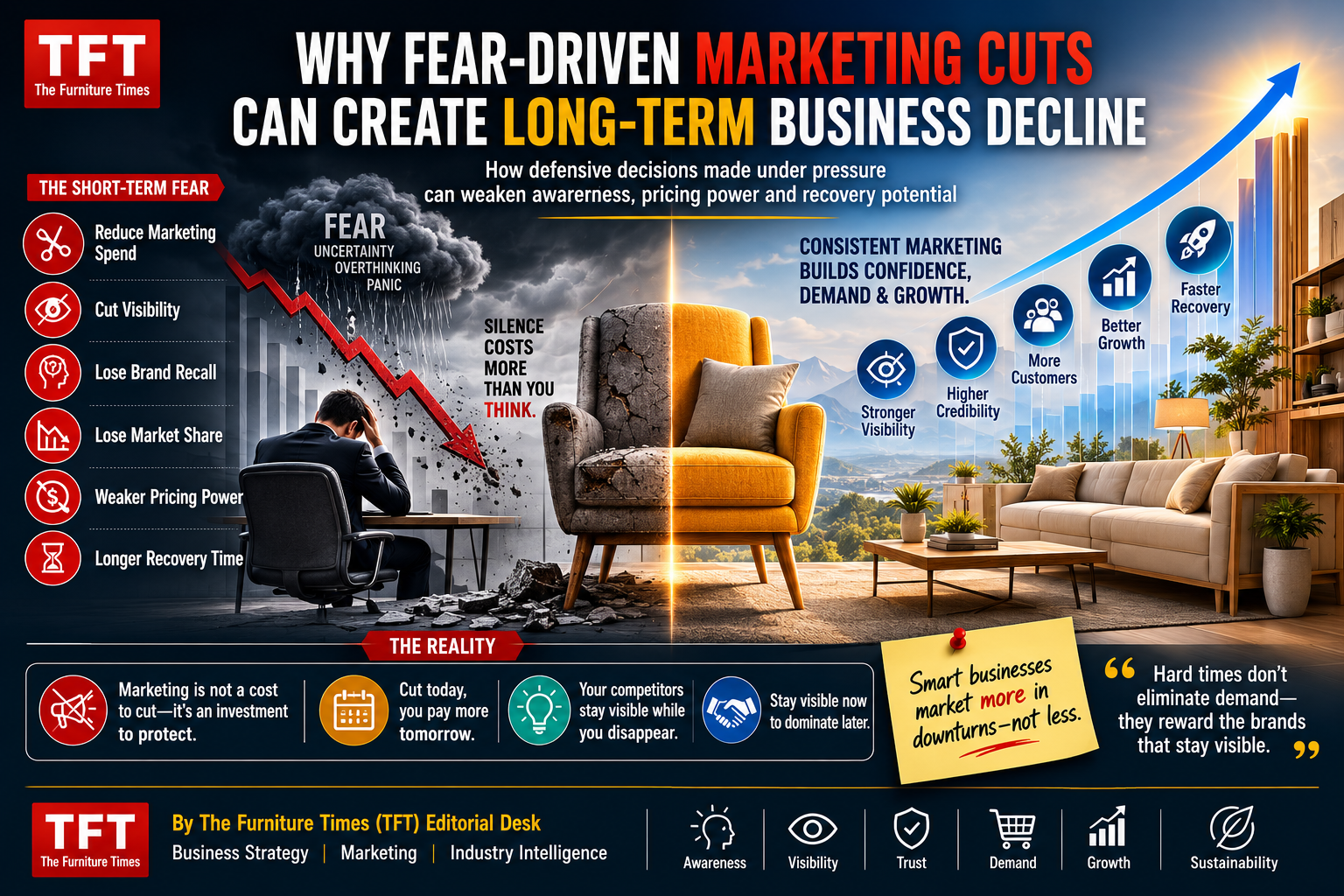
Why Fear-Driven Marketing Cuts Can Create Long-Term Business Decline
When businesses stop advertising under pressure, they do more than reduce expenditure—they surrender visibility, customer attention and future demand. This detailed analysis explains why disciplined brands remain present during uncertainty and how companies can cut costs without disappearing from the market.
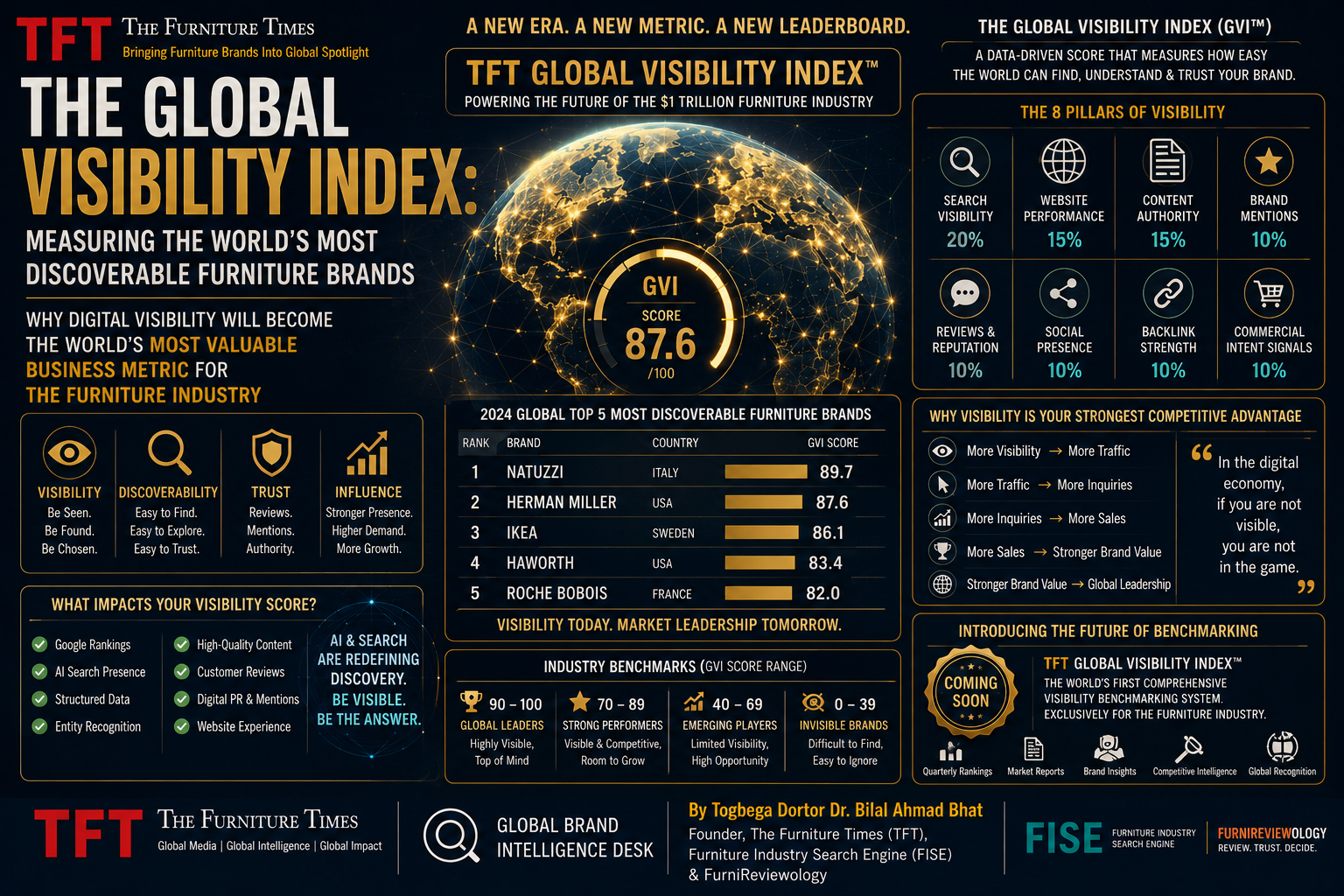
The Global Visibility Index: Measuring the World’s Most Discoverable Furniture Brands
How do you measure a furniture brand’s true digital influence? This report introduces the vision for the TFT Global Visibility Index, a future framework that evaluates search visibility, SEO authority, AI citations, reviews, media coverage, digital footprint and brand trust across the global furniture industry.

Marketing Is Not an Expense—It Is the Infrastructure of Future Demand
Advertising, content, news coverage, search visibility and customer reviews are not optional promotional costs. Together, they create the long-term demand infrastructure that helps businesses become discoverable, credible and commercially resilient.
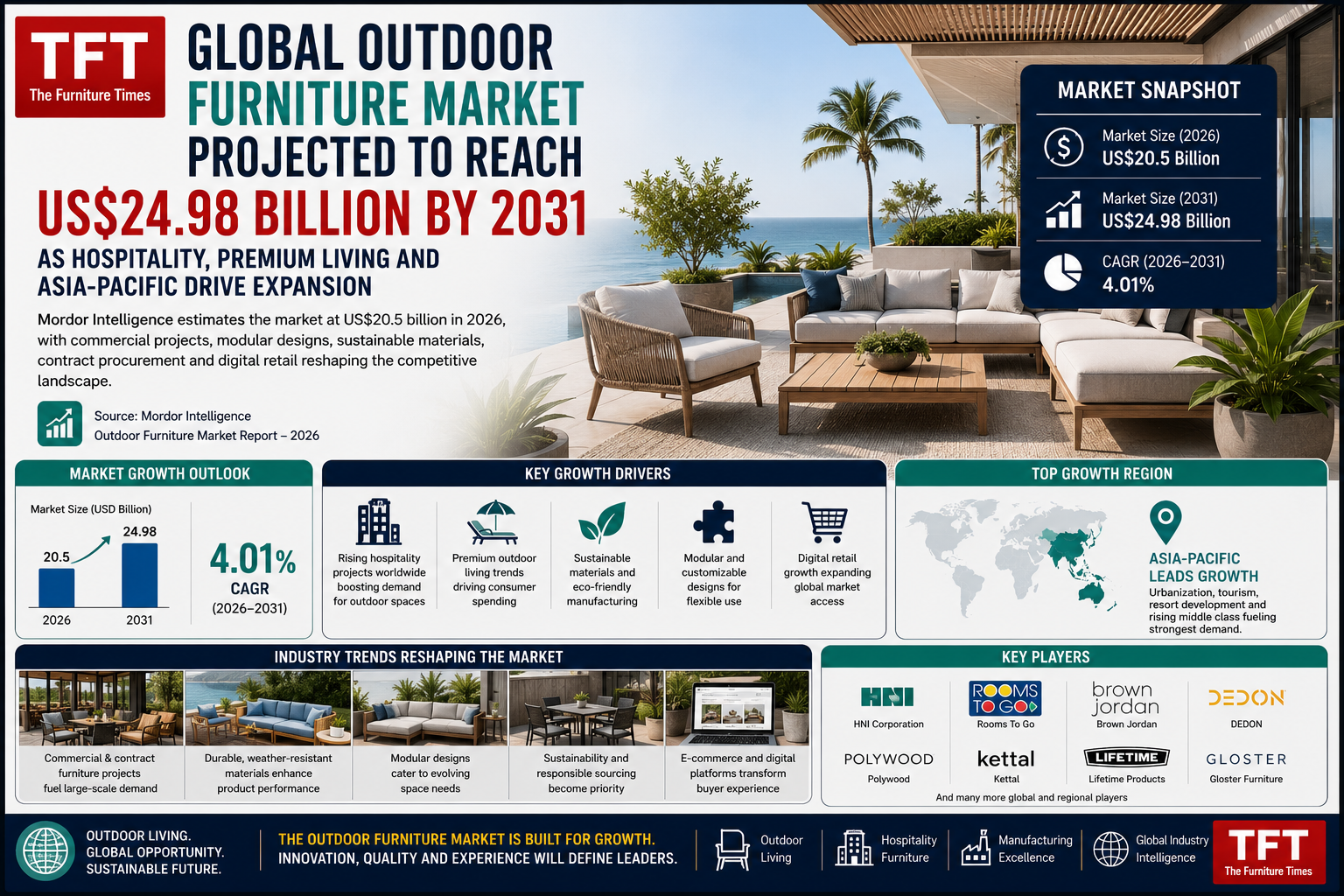
Global Outdoor Furniture Market Projected to Reach US$24.98 Billion by 2031 as Hospitality
Mordor Intelligence forecasts steady global outdoor furniture growth through 2031, with Asia-Pacific holding the leading regional position, commercial buyers controlling the largest end-user share and premium, modular and sustainable products creating new opportunities.

MATECIA 2026 Set to Open at Yashobhoomi
The upcoming MATECIA National Event will connect manufacturers, furniture brands, hardware suppliers, architects, designers, retailers, developers and procurement leaders through four days of exhibitions, conferences, presentations and business networking.
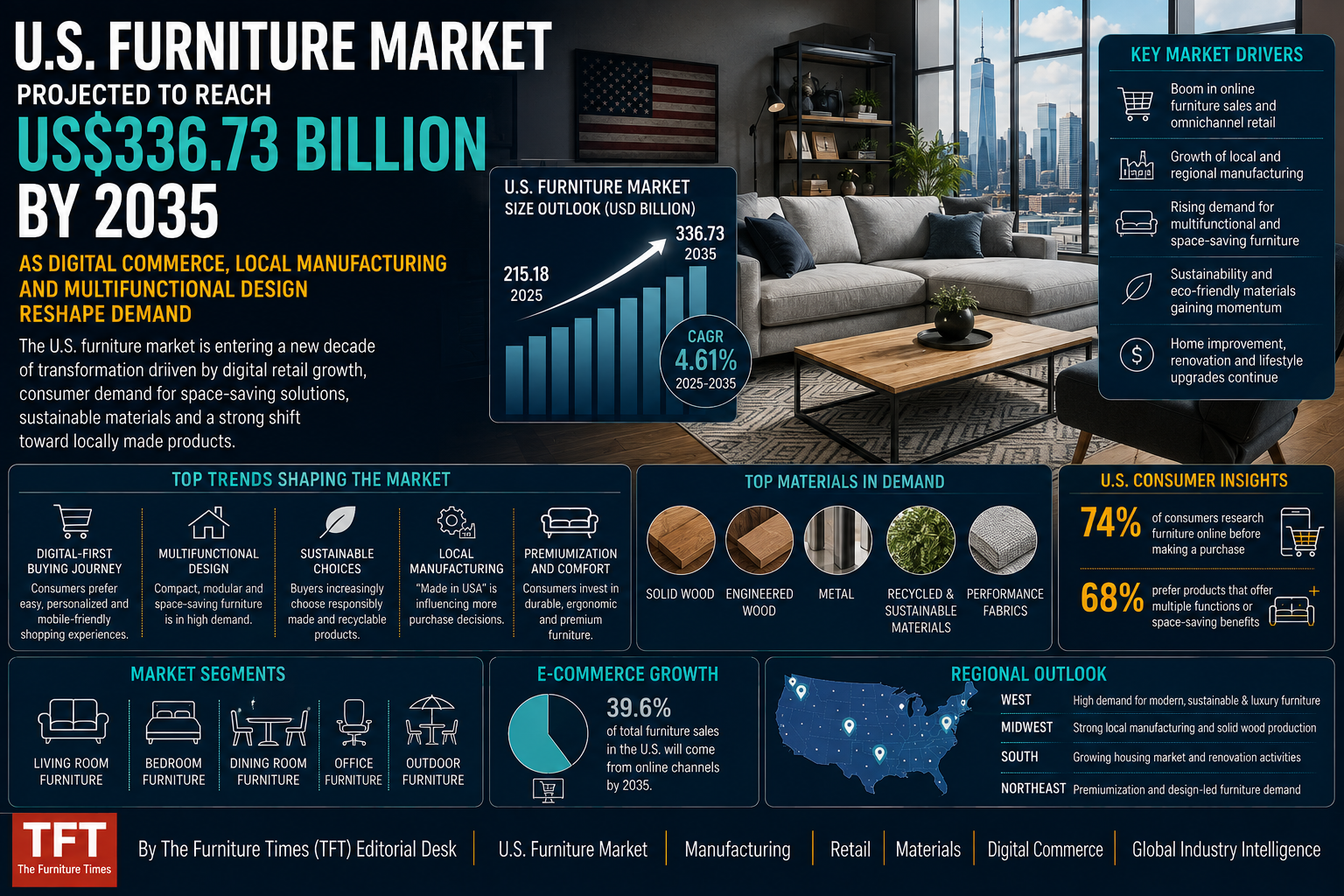
U.S. Furniture Market Projected to Reach US$336.73 Billion by 2035
A new Custom Market Insights report forecasts that the U.S. furniture market could reach US$336.73 billion by 2035. Bedroom furniture, wood products and residential demand currently lead, while storage furniture, plastic products and commercial applications are expected to grow faster.
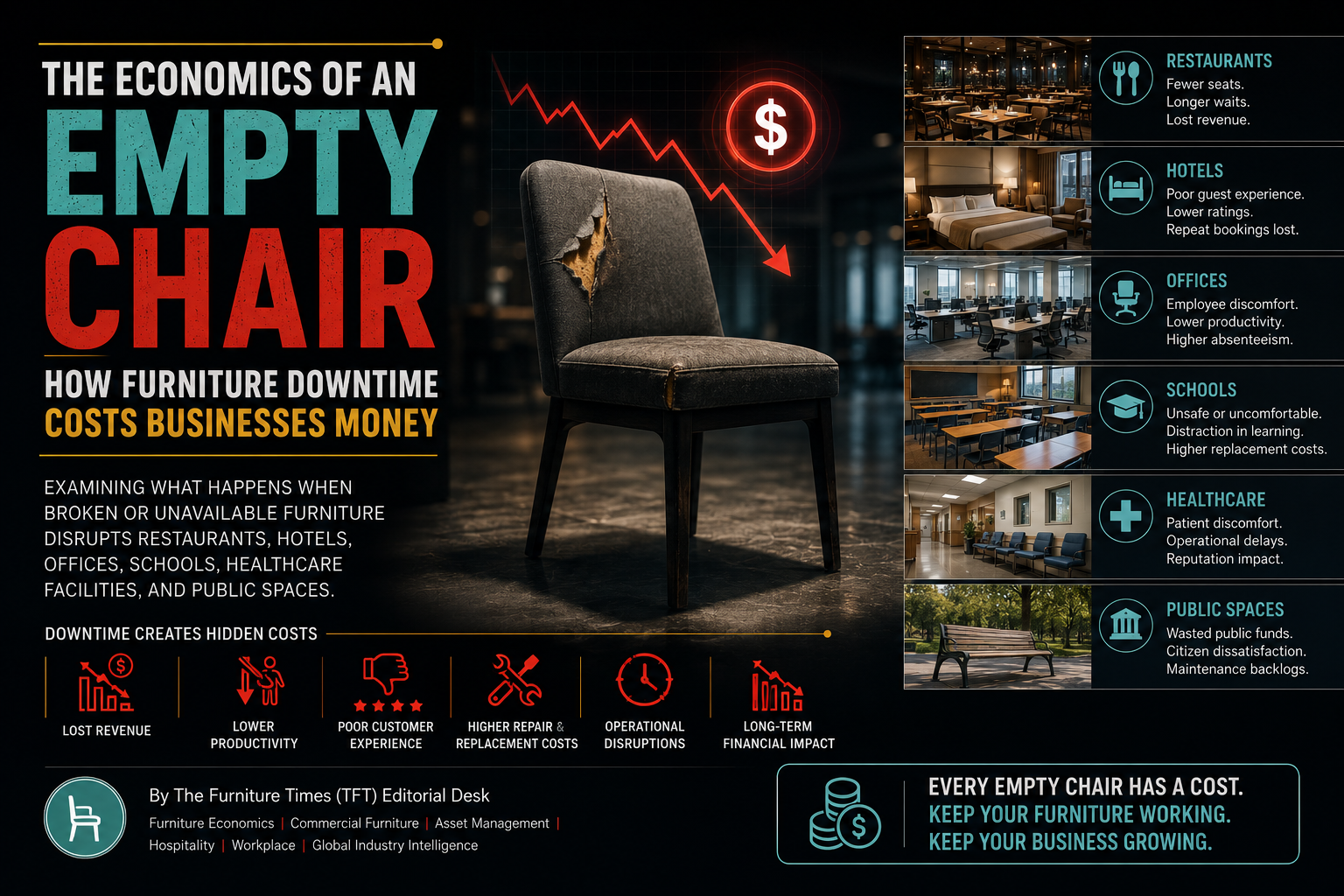
The Economics of an Empty Chair: How Furniture Downtime Costs Businesses Money
Commercial furniture is usually treated as a purchasing expense, but unusable furniture can create substantial hidden operational costs. The Furniture Times examines the economics of furniture downtime and why businesses should begin measuring uptime, repair speed, spare-parts availability and the real cost of lost usable capacity.

Global Online Furniture Market Could Reach US$507.71 Billion by 2035 as Digital Retail Reshapes the Industry
The online furniture market is entering a decade of rapid expansion. A new industry forecast projects a value of US$507.71 billion by 2035, driven by AI personalization, augmented-reality visualization, mobile commerce, sustainable products and improving fulfilment infrastructure.
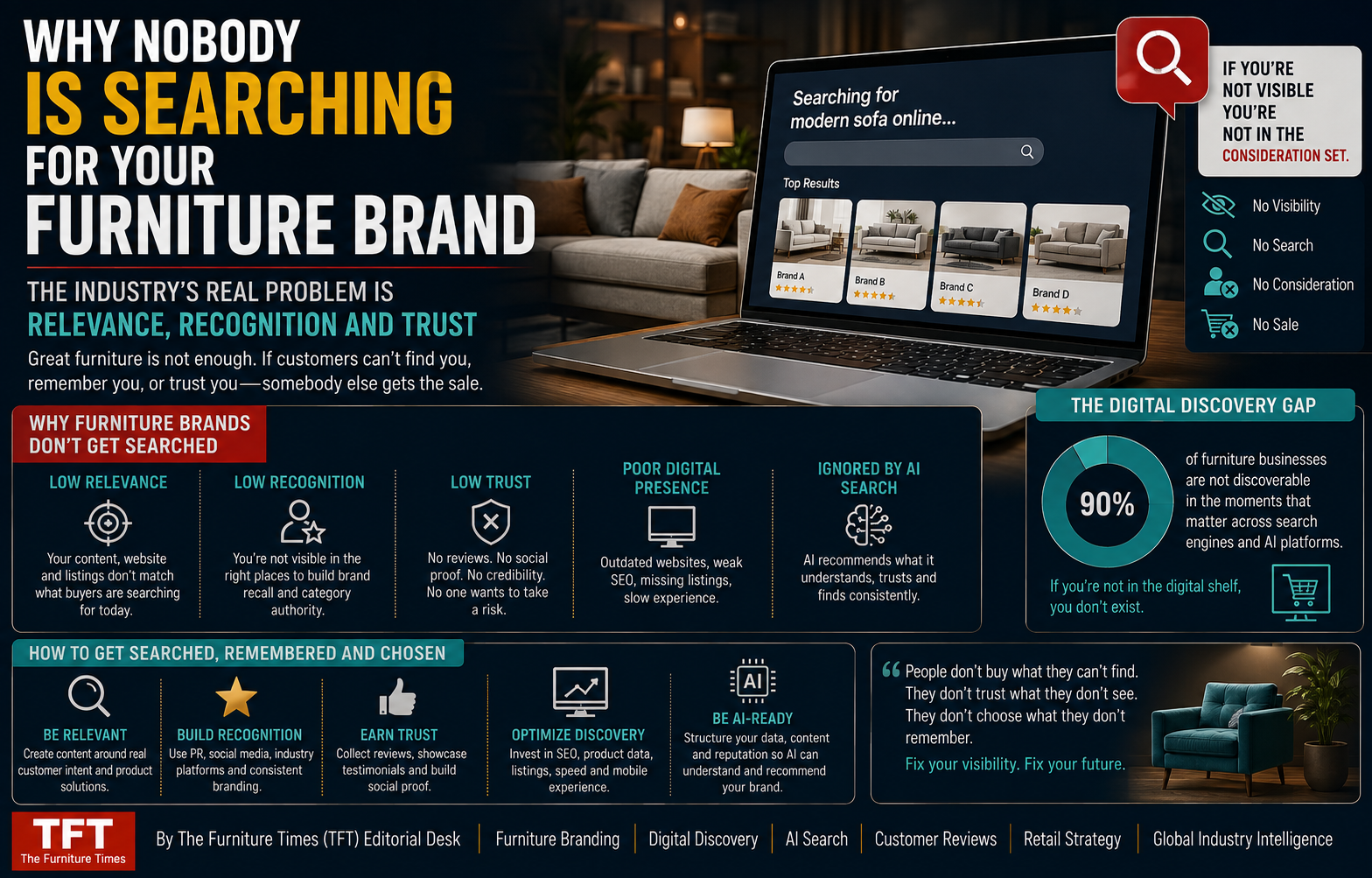
Why Nobody Is Searching for Your Furniture Brand
Furniture companies may offer excellent products, but customers cannot search for brands they do not remember—and AI cannot recommend businesses it cannot understand. This report examines the furniture industry’s relevance crisis and explains how TFT, FISE and FurniReviewology can connect visibility, discovery and trust.
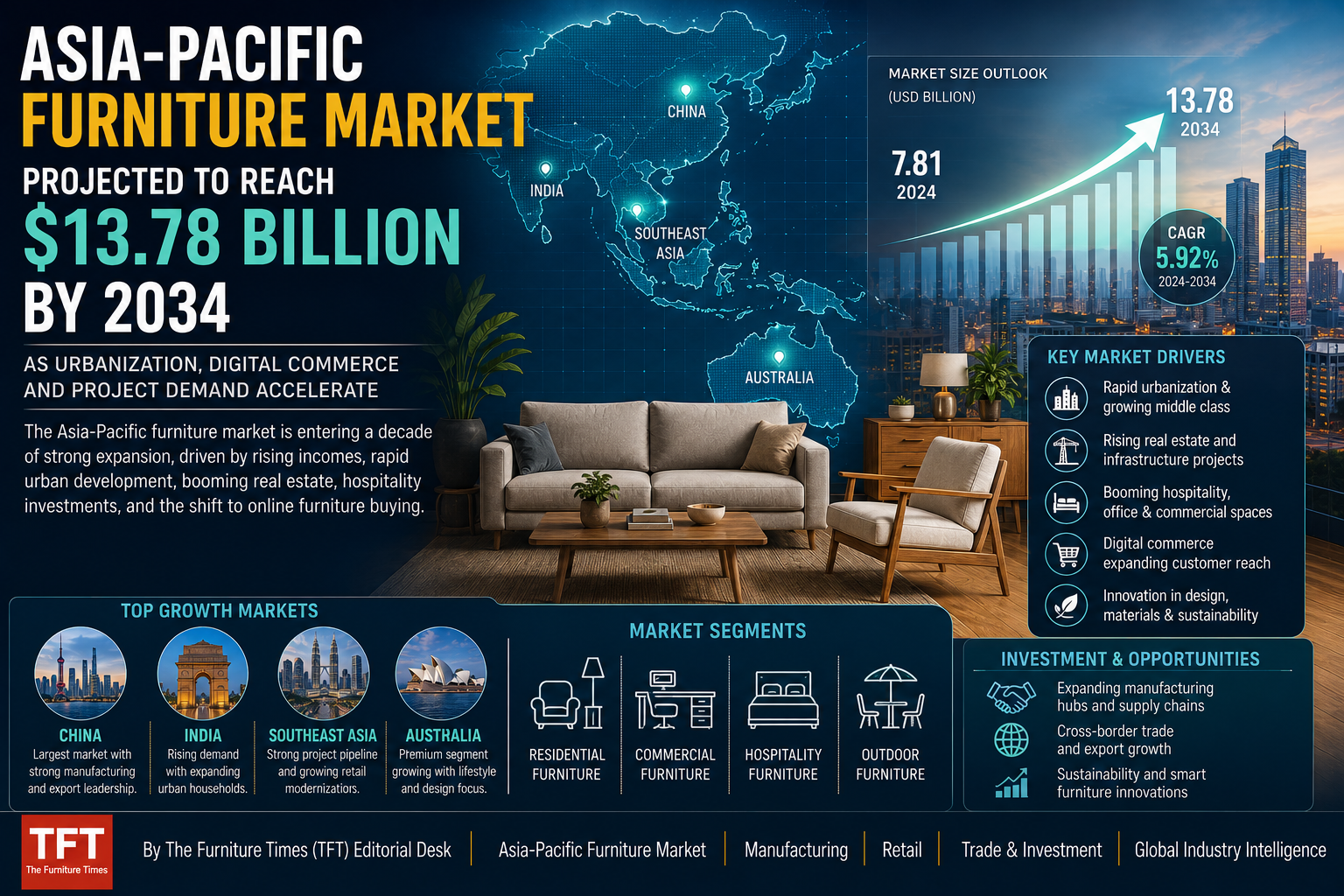
Asia-Pacific Furniture Market Projected to Reach $13.78 Billion by 2034 as Urbanization
Market Data Forecast estimates that the Asia-Pacific furniture market within its defined scope will grow from $7.26 billion in 2026 to $13.78 billion by 2034. This detailed analysis examines home, office, hospitality and educational furniture demand, country-level opportunities, materials, retail channels, digital commerce and the challenges facing manufacturers.