AI-Powered Lighting Systems: The Next Revolution
By The Furniture Times (TFT) | Indoor & Outdoor Lighting | Smart Lighting & AI
How Artificial Intelligence Is Revolutionising Lighting Systems, Smart Buildings, Furniture Design, Energy Management, Manufacturing, and the Future of the Global Furniture Industry Ecosystem
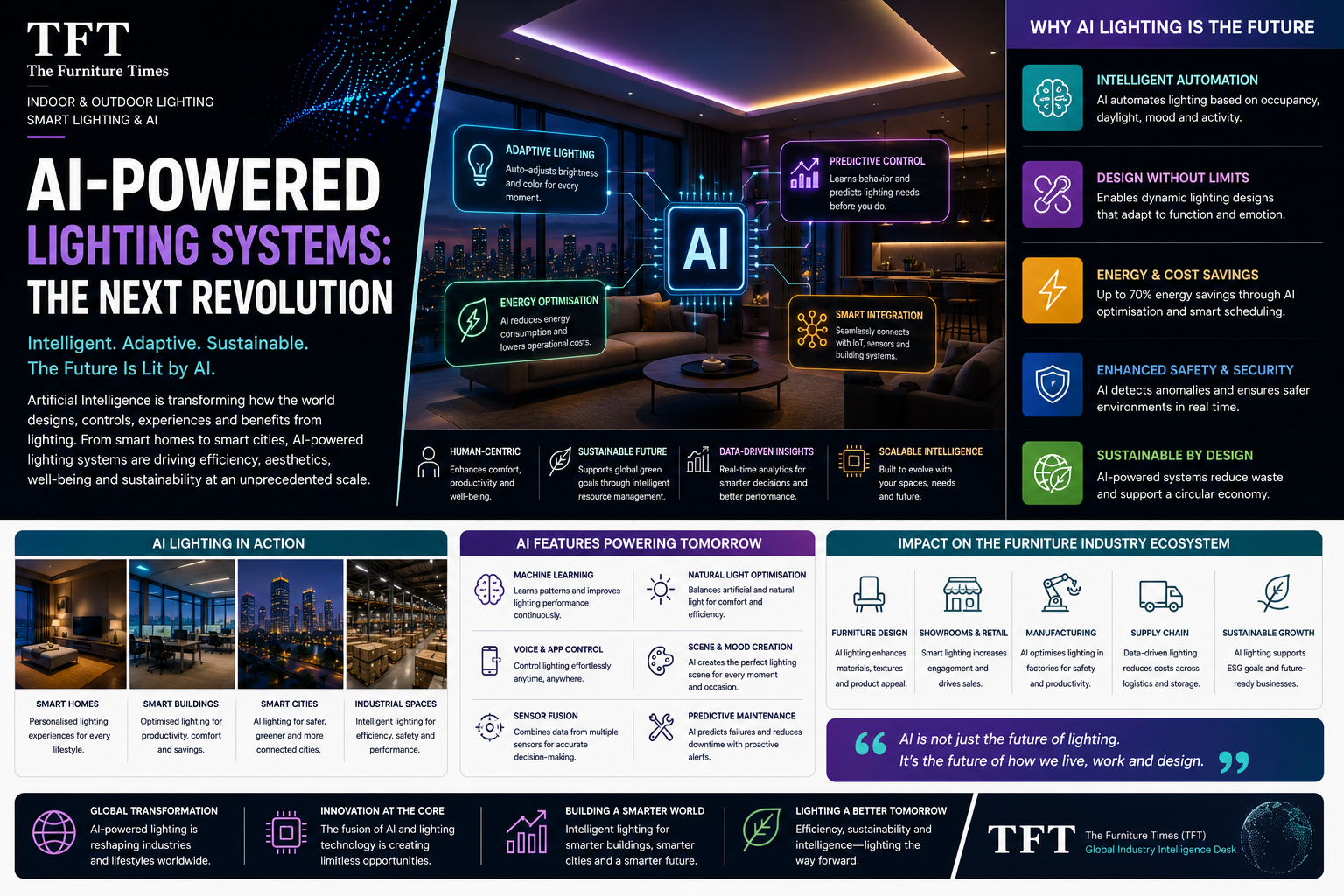
Artificial Intelligence is rapidly becoming one of the most transformative technologies of the 21st century. From healthcare and manufacturing to transportation, finance, education, hospitality, retail, and construction, AI is redefining how industries operate, make decisions, optimise resources, and serve customers. One sector experiencing remarkable transformation is the global lighting industry, where AI-powered lighting systems are changing how homes, offices, hotels, factories, retail stores, public infrastructure, and smart cities are illuminated.
Lighting has traditionally been viewed as a basic utility that provides visibility after dark. Today, AI has elevated lighting into an intelligent ecosystem capable of learning user behaviour, responding to environmental changes, improving energy efficiency, enhancing human wellbeing, supporting sustainability, strengthening security, and integrating seamlessly with smart homes, connected furniture, and digital building management systems.
For the global furniture industry ecosystem, this evolution represents far more than technological progress. It opens new opportunities for manufacturers, lighting companies, furniture designers, architects, interior designers, hospitality operators, commercial developers, retailers, distributors, technology providers, and consumers to rethink how living and working environments are designed and experienced.
As the world moves towards intelligent buildings and connected lifestyles, AI-powered lighting is emerging as one of the defining innovations shaping the future of the built environment.
Artificial Intelligence Is Transforming the Purpose of Lighting
Traditional lighting systems operate using fixed schedules or manual controls.
AI-powered lighting introduces intelligence by enabling systems to:
- Learn user habits
- Analyse occupancy patterns
- Optimise energy consumption
- Respond to daylight conditions
- Adjust brightness automatically
- Change colour temperatures
- Detect unusual activities
- Support predictive maintenance
- Improve operational efficiency
- Integrate with other smart devices
Instead of simply turning lights on or off, AI allows lighting systems to continuously adapt to the needs of people and spaces.
The Evolution from Illumination to Intelligence
Modern lighting has evolved through several generations:
First Generation
Basic incandescent and fluorescent lighting focused solely on illumination.
Second Generation
Energy-efficient LED technology significantly reduced electricity consumption while improving performance.
Third Generation
Smart lighting introduced mobile applications, scheduling, remote controls, and connected devices.
Fourth Generation
AI-powered lighting now creates self-learning systems capable of making intelligent decisions without constant human intervention.
This evolution marks one of the most significant technological shifts in the lighting industry.
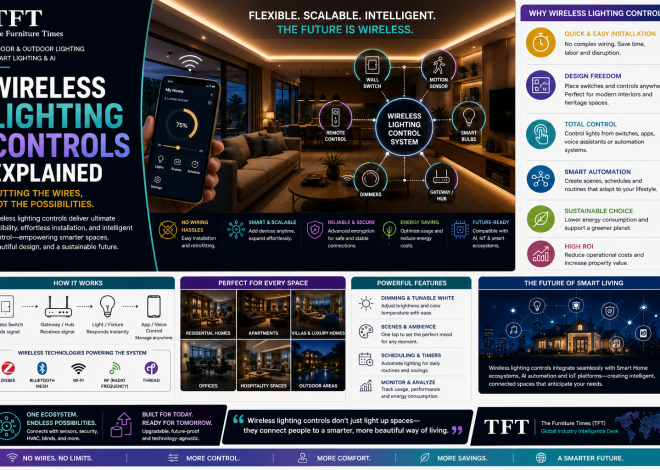
AI Is Redefining Residential Living
Modern homeowners increasingly expect intelligent environments that improve comfort, convenience, and efficiency.
AI-powered lighting enables homes to:
- Wake occupants gradually with adaptive lighting
- Automatically dim lights during evenings
- Adjust lighting according to weather
- Respond to occupancy
- Support home security
- Create personalised lighting scenes
- Coordinate with entertainment systems
- Enhance sleep quality
- Improve energy management
- Integrate with voice assistants
Lighting is becoming an active participant in everyday life rather than a passive utility.
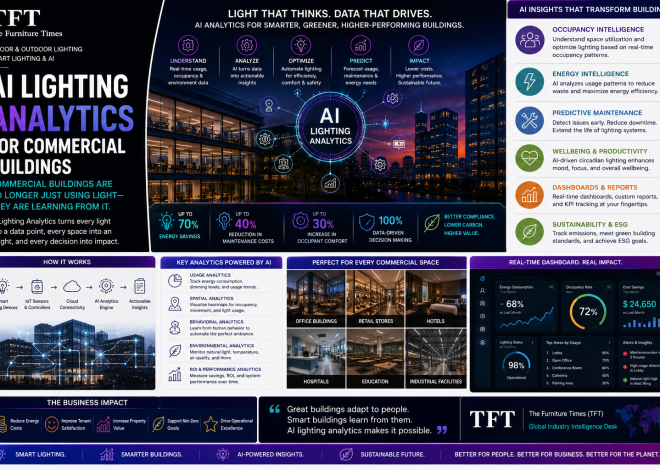
Commercial Buildings Are Becoming Smarter
Corporate offices increasingly rely on intelligent lighting to improve productivity and operational efficiency.
AI systems help organisations:
- Reduce electricity costs
- Monitor occupancy
- Optimise workspace utilisation
- Improve employee comfort
- Enhance meeting room management
- Support hybrid working environments
- Reduce maintenance requirements
- Improve building sustainability
- Increase operational visibility
- Strengthen workplace wellbeing
Lighting has become an important contributor to intelligent workplace management.
AI Supports Hospitality Excellence
Hotels, resorts, restaurants, and entertainment venues increasingly use AI-powered lighting to personalise guest experiences.
Applications include:
- Automated guest room lighting
- Dynamic restaurant ambience
- Event lighting automation
- Wellness environments
- Luxury spa experiences
- Poolside lighting
- Outdoor landscape illumination
- Conference facilities
- Smart energy management
- Guest satisfaction enhancement
Hospitality operators recognise that lighting directly influences customer experiences and brand perception.
Retail Lighting Is Becoming Customer Intelligence
Retail stores increasingly use AI-powered lighting to enhance shopping experiences.
Smart lighting supports:
- Product highlighting
- Customer navigation
- Personalised promotions
- Seasonal displays
- Queue management
- Shopper behaviour analysis
- Energy optimisation
- Brand identity
- Visual merchandising
- Customer satisfaction
Lighting has become part of retail strategy rather than simple store infrastructure.
AI Is Revolutionising Furniture Design
The integration of intelligent lighting into furniture is opening entirely new product categories.
Furniture manufacturers are developing:
- Smart wardrobes
- Illuminated shelving
- Adaptive workstations
- Intelligent dining tables
- Connected bedside furniture
- LED-integrated sofas
- Smart mirrors
- Modular lighting systems
- Kitchen cabinetry
- Multifunctional home office furniture
The future of furniture lies in intelligent products that combine design, technology, comfort, and functionality.
Manufacturing Is Entering the AI Era
Lighting manufacturers increasingly use Artificial Intelligence to optimise production.
AI supports:
- Predictive maintenance
- Automated quality inspection
- Supply chain optimisation
- Inventory forecasting
- Robotics integration
- Production scheduling
- Waste reduction
- Product testing
- Factory safety
- Continuous process improvement
Smart manufacturing improves productivity while lowering operational costs.
Smart Cities Depend on Intelligent Lighting
Municipal governments worldwide are investing in AI-powered lighting infrastructure.
Applications include:
- Street lighting
- Public parks
- Airports
- Railway stations
- Hospitals
- Educational campuses
- Smart intersections
- Coastal infrastructure
- Tourism districts
- Community safety
Connected lighting improves urban management while reducing energy consumption.
Sustainability Drives AI Lighting Innovation
Environmental responsibility is accelerating investment in intelligent lighting systems.
AI contributes by:
- Optimising electricity use
- Reducing carbon emissions
- Extending product lifespan
- Supporting renewable energy
- Minimising maintenance
- Reducing waste
- Improving resource efficiency
- Monitoring environmental conditions
- Supporting green buildings
- Enhancing ESG performance
Sustainability has become one of the strongest drivers of AI adoption.
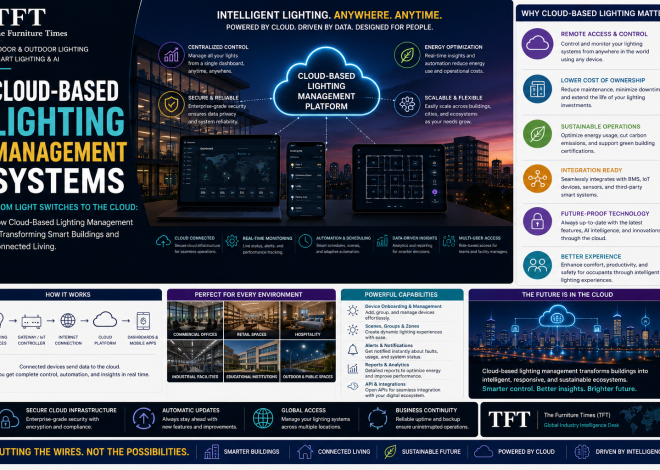
AI and IoT Create Connected Ecosystems
The combination of Artificial Intelligence and the Internet of Things enables lighting systems to communicate with:
- Smart furniture
- Security systems
- HVAC systems
- Building management platforms
- Solar power systems
- Energy storage
- Smart appliances
- Autonomous cleaning robots
- Electric vehicle charging stations
- Digital twins
Lighting becomes one component within a fully connected intelligent environment.
The Furniture Industry Has a Historic Opportunity
The furniture industry ecosystem is entering one of its most important transformation periods.
AI-powered lighting creates opportunities for:
- Furniture manufacturers
- Lighting companies
- Interior designers
- Architects
- Hospitality operators
- Retailers
- E-commerce platforms
- Technology startups
- Property developers
- Smart home providers
Companies that embrace AI-driven innovation will be better positioned to compete in increasingly digital global markets.
Challenges That Must Be Addressed
Despite significant progress, AI-powered lighting still faces several challenges:
- High implementation costs
- Cybersecurity risks
- Data privacy concerns
- Product interoperability
- Skilled workforce shortages
- Consumer awareness
- Legacy infrastructure
- Standardisation
- Regulatory compliance
- Technology adoption
Addressing these issues will require collaboration across industries, governments, research institutions, and technology providers.
The Future of AI-Powered Lighting
Over the next decade, AI-powered lighting is expected to become increasingly autonomous.
Future systems may:
- Predict user needs before commands are given.
- Coordinate entire smart buildings.
- Respond to health indicators.
- Optimise workplace productivity.
- Improve elderly care.
- Support autonomous cities.
- Integrate with wearable devices.
- Enhance disaster management.
- Enable predictive sustainability management.
- Operate as intelligent digital infrastructure.
Lighting will become one of the most valuable sources of operational intelligence across residential, commercial, industrial, and public environments.
Lighting the Future of the Furniture Industry Ecosystem
Artificial Intelligence is no longer a vision of the future—it is rapidly becoming the foundation of the next generation of lighting innovation.
AI-powered lighting systems are transforming how people live, work, shop, travel, manufacture, and interact with the built environment. They are making homes smarter, offices more productive, cities safer, hospitality experiences more personalised, manufacturing more efficient, and furniture more intelligent than ever before.
For the global furniture industry ecosystem, AI-powered lighting represents a significant opportunity to innovate, differentiate products, improve sustainability, create higher-value customer experiences, and unlock entirely new business models.
Manufacturers, designers, architects, retailers, technology providers, and policymakers who invest in AI today will help shape the intelligent buildings, connected furniture, and smart cities of tomorrow.
The future of lighting is no longer defined simply by brightness or energy efficiency.
It is defined by intelligence, adaptability, sustainability, connectivity, and the ability to improve every interaction between people and the spaces they inhabit.
The Furniture Times (TFT) & Furniture Industry Search Engine (FISE)
“TFT tells their story. FISE helps the world find them.”
FurniReviewology – Review. Trust. Decide.
The furniture industry ecosystem is a $1 trillion industry.