Why Searchability Will Decide Who Wins the Second-Hand Furniture Economy
In the AI Era, Great Furniture Is No Longer Enough—If Buyers Can’t Find You, You Don’t Exist
Global Visibility Intelligence Desk
By The Furniture Times (TFT) & Furniture Industry Search Engine (FISE)
June 2026
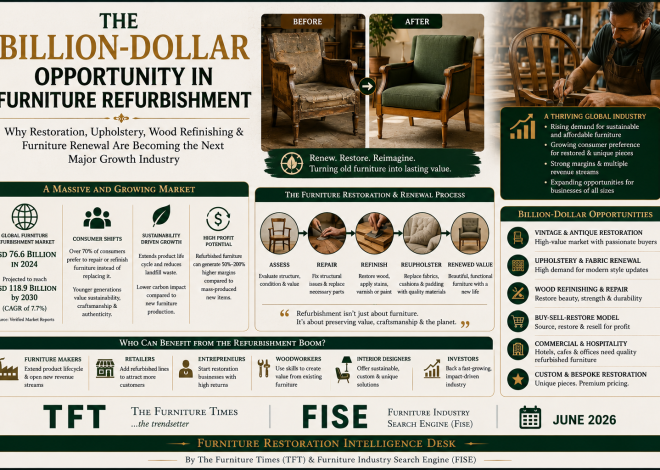
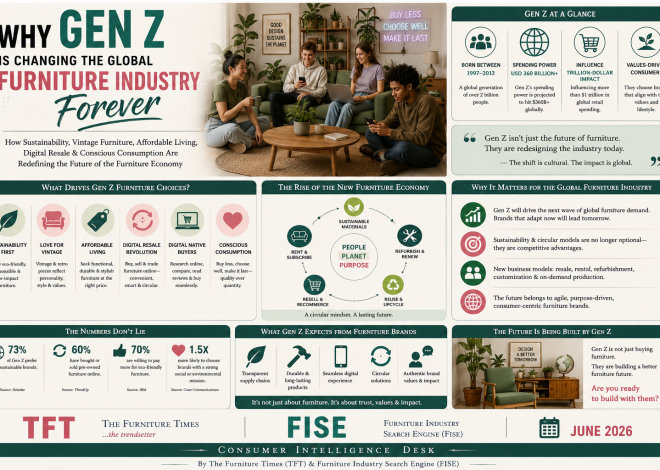
The second-hand furniture economy is entering a remarkable period of growth.
Around the world, consumers are embracing pre-owned furniture because it is more affordable, environmentally responsible, and increasingly available through digital platforms.
Furniture refurbishment businesses are expanding.
Vintage furniture dealers are attracting new audiences.
Certified pre-owned programmes are beginning to emerge.
Furniture rental companies are growing.
Circular economy initiatives are becoming mainstream.
Yet behind this exciting transformation lies one challenge that very few businesses are discussing.
Visibility.
Thousands of outstanding second-hand furniture businesses remain invisible.
Thousands of skilled furniture restorers cannot be found.
Thousands of quality products never reach potential buyers.
Not because the products lack quality.
Not because the businesses lack expertise.
But because customers simply cannot find them.
The second-hand furniture industry is entering an era where searchability will become more valuable than inventory.
The future belongs to businesses that are not only trusted—but also searchable.
The Invisible Furniture Economy
Every city has hidden businesses.
A workshop restoring antique furniture.
A family business specialising in upholstery.
A warehouse full of quality office furniture.
A dealer selling premium second-hand hotel furniture.
A craftsman restoring teak dining tables.
The problem is not that these businesses do not exist.
The problem is that the digital world often does not know they exist.
Meanwhile, customers search every day for:
- Used office furniture
- Refurbished sofas
- Vintage dining tables
- Antique cabinets
- Second-hand wardrobes
- Hotel furniture
- Restaurant furniture
- Sustainable furniture
When businesses cannot be found during these searches, they lose opportunities before conversations even begin.
The Furniture Industry Has a Visibility Problem
Unlike fashion or electronics, the furniture industry remains highly fragmented.
Millions of businesses operate independently.
Small workshops.
Family businesses.
Local refurbishers.
Independent restorers.
Regional retailers.
Most rely on:
- Word-of-mouth
- Walk-in customers
- Social media
- Classified advertisements
Very few invest in long-term digital discoverability.
This creates a serious competitive disadvantage.
Search Is the New Showroom
Twenty years ago customers drove from showroom to showroom.
Today they search.
Tomorrow they will ask Artificial Intelligence.
The buying journey has fundamentally changed.
Instead of visiting industrial areas, customers increasingly search:
“Best refurbished office furniture near me.”
“Vintage teak dining table.”
“Certified second-hand furniture.”
“Used hotel furniture supplier.”
The first impression no longer happens inside a showroom.
It happens on a search result.
Businesses that fail to appear simply lose the opportunity to compete.
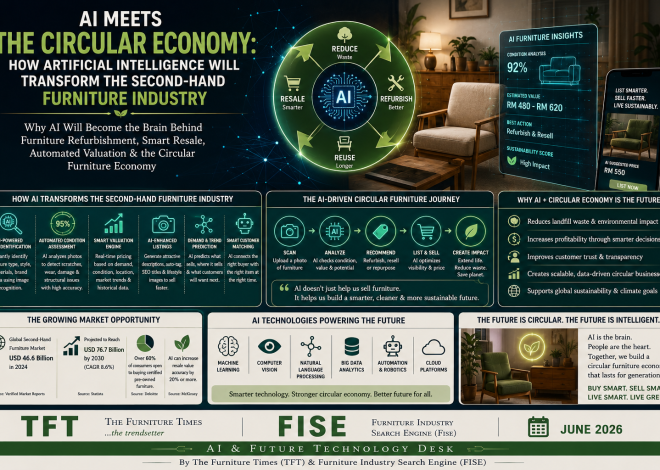
Artificial Intelligence Is Changing Discoverability
Search engines are evolving.
Customers increasingly rely on AI assistants rather than typing traditional keywords.
They ask:
“Recommend sustainable second-hand furniture near me.”
“Find reliable refurbished office furniture suppliers.”
“Who restores antique wooden furniture?”
Artificial Intelligence searches differently.
It evaluates:
- Business information
- Product descriptions
- Reviews
- Authority
- Website quality
- Structured data
- Digital reputation
Businesses must therefore become understandable not only to people—but also to machines.
Searchability Is Becoming a Competitive Advantage
Many business owners still believe search is optional.
It is not.
Searchability has become business infrastructure.
Just as manufacturers invest in machinery…
Retailers invest in showrooms…
Exporters invest in logistics…
Every business must now invest in discoverability.
Because customers cannot purchase products they never discover.
Digital Listings Are Becoming Business Assets
Many second-hand furniture businesses still lack:
- Professional business profiles
- Industry listings
- Complete contact information
- Updated product catalogues
- Google Business Profiles
- Marketplace visibility
Every missing listing reduces discoverability.
Digital listings are no longer administrative tasks.
They are revenue-generating assets.
The more places a business appears accurately, the more opportunities it creates.
Structured Product Data Is the Language of AI
Artificial Intelligence cannot recommend products it does not understand.
Many furniture listings include only:
“Dining Table”
“Good Condition”
“Call for Price”
That information is insufficient.
Future-ready businesses describe products with:
- Materials
- Dimensions
- Style
- Wood species
- Upholstery type
- Manufacturing details
- Restoration history
- Product condition
- Sustainability information
- Delivery options
Structured product data allows search engines and AI systems to understand exactly what businesses offer.
The better the information, the greater the visibility.
Reviews Build Digital Trust
In traditional commerce, reputation spread through conversation.
Today it spreads through reviews.
Customers increasingly evaluate:
- Google Reviews
- Marketplace ratings
- Customer testimonials
- Before-and-after restoration projects
- Case studies
- Business credibility
Every positive review becomes part of the company’s digital reputation.
Search engines increasingly consider trust signals when determining visibility.
Reviews are no longer simply customer feedback.
They are discoverability signals.
Local SEO Matters More Than Ever
Many second-hand furniture purchases remain local.
Customers search for businesses nearby.
Examples include:
- Used furniture Shah Alam
- Refurbished office chairs Kuala Lumpur
- Antique furniture restoration Johor
- Upholstery services Penang
- Vintage furniture Singapore
Businesses that optimise for local search dramatically improve their chances of attracting nearby buyers.
Local SEO is especially valuable for SMEs because it allows them to compete effectively within their service areas.
Visibility During Slow Markets Creates Long-Term Growth
One of the biggest mistakes businesses make is reducing visibility during slow periods.
When business declines, many owners stop:
- Publishing content
- Updating websites
- Improving SEO
- Advertising
- Posting projects
- Issuing press releases
Large companies often do the opposite.
They remain visible.
The second-hand furniture market is no different.
Businesses that continue communicating during slow markets build trust while competitors disappear.
Why FISE Is Becoming Increasingly Important
The Furniture Industry Search Engine (FISE) was created because the furniture industry has a discoverability problem.
General search engines serve every industry.
FISE focuses exclusively on furniture.
Imagine searching specifically for:
- Certified refurbished furniture
- Hotel furniture liquidation
- Office furniture renewal
- Antique restoration specialists
- Furniture refurbishment centres
- Used furniture exporters
- Sustainable furniture suppliers
Instead of searching through millions of unrelated results, buyers can search within a dedicated furniture ecosystem.
That is the future of industry-specific search.
Why TFT Matters
Visibility is not created by search engines alone.
It is also created through storytelling.
Every business has a story.
Every restoration project has a story.
Every manufacturer has a journey.
Every craftsman has expertise worth sharing.
The Furniture Times helps businesses tell those stories.
Because businesses that educate the market become trusted by the market.
The Future Belongs to Searchable Businesses
The next decade will reward businesses that combine:
- Quality products
- Digital trust
- Structured data
- AI readiness
- Reviews
- Local SEO
- Industry listings
- Educational content
- Press releases
- Thought leadership
Furniture quality remains essential.
But visibility determines whether customers ever discover that quality.
TFT & FISE Analysis
The second-hand furniture economy is growing rapidly.
However, the businesses that benefit most will not necessarily have the largest inventories.
They will have the greatest discoverability.
Visibility creates inquiries.
Inquiries create conversations.
Conversations create relationships.
Relationships create sales.
Searchability has become the foundation of modern commerce.
Businesses that invest in digital visibility today will lead tomorrow’s circular economy.
Final Verdict
The second-hand furniture industry is no longer competing only on price.
It is competing on discoverability.
The future belongs to businesses that are:
Searchable.
Trusted.
Verified.
Structured.
AI-ready.
Visible.
Because outstanding products hidden inside warehouses create no value.
Outstanding businesses hidden from search create no opportunities.
In the new circular economy, visibility is no longer a marketing activity.
It is a business strategy.
And as Artificial Intelligence becomes the first point of product discovery, businesses must prepare for a world where machines help customers choose suppliers.
The companies that invest in searchability today will become tomorrow’s market leaders.
Because in the future furniture economy:
If buyers can’t find your used furniture business, your inventory might as well not exist.
By The Furniture Times (TFT) & Furniture Industry Search Engine (FISE)
Global Visibility Intelligence Desk | June 2026
“TFT tells their story. FISE helps the world find them.”
The furniture industry ecosystem is a $1 Trillion Dollar Industry.