Restaurant Lighting Psychology and Customer Behavior
By The Furniture Times (TFT) | Indoor & Outdoor Lighting | Commercial & Hospitality Lighting
How Restaurant Lighting Influences Customer Psychology, Dining Behavior, Brand Perception, and Business Performance
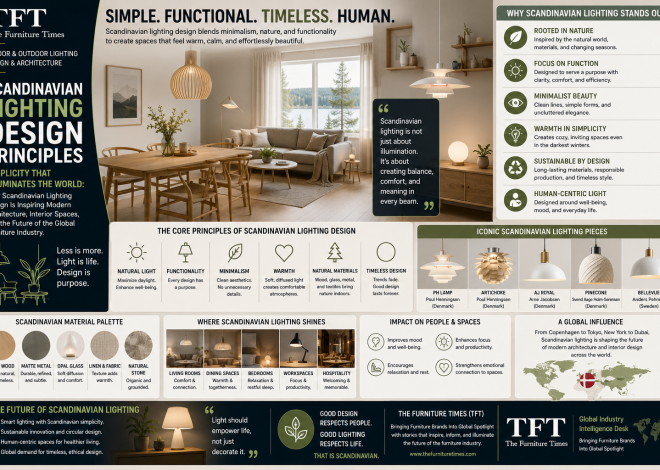
The restaurant industry has become far more competitive than ever before. While exceptional cuisine and outstanding service remain essential, today’s diners expect more than simply a good meal. They seek memorable experiences, inviting atmospheres, emotional connections, visually appealing interiors, and environments that encourage them to stay longer, spend more, and share their experiences with others.
One of the most influential factors shaping these experiences is lighting.
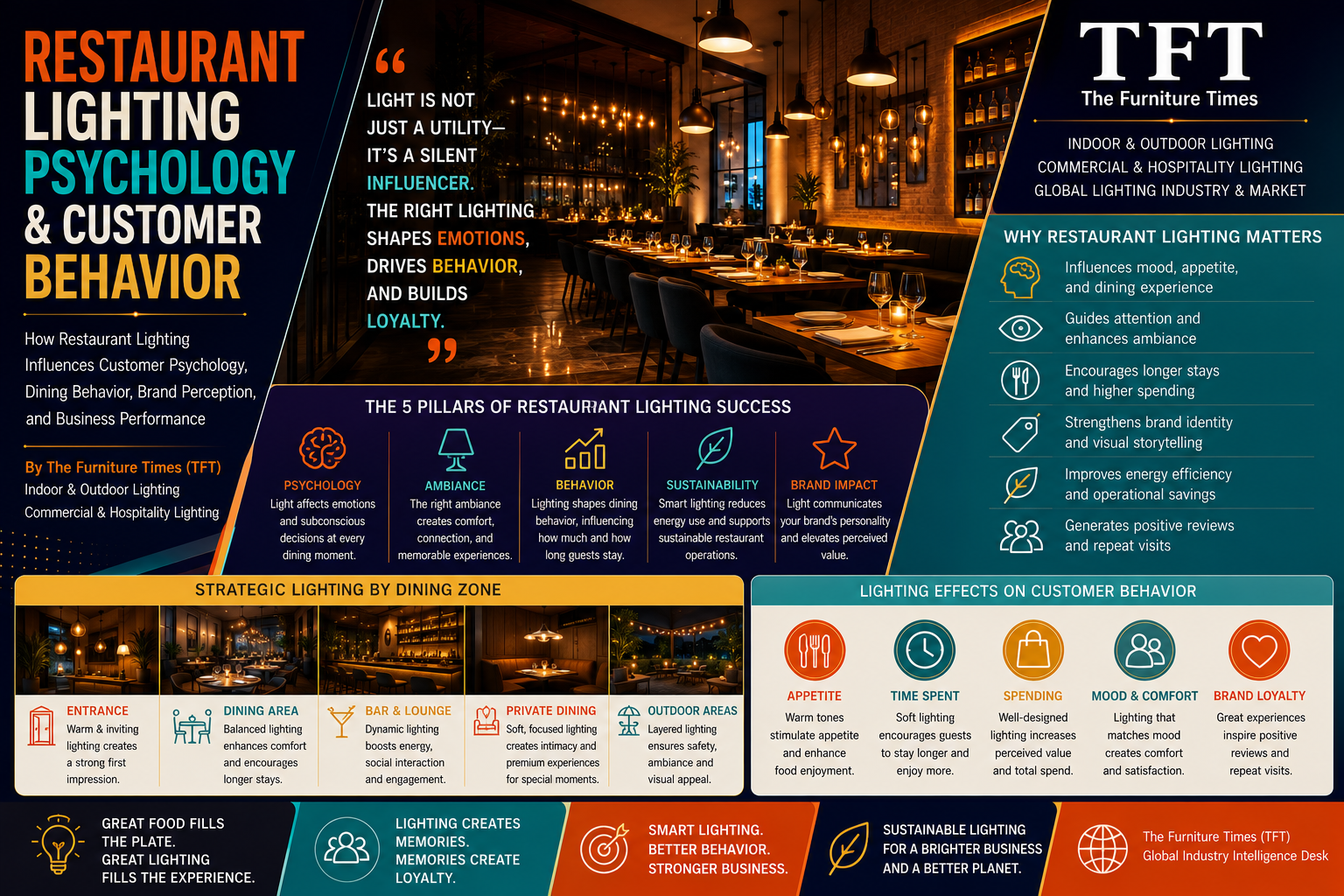
Restaurant lighting has evolved from a basic operational necessity into a powerful business strategy that directly affects customer psychology, purchasing behavior, dining comfort, social interaction, brand identity, and overall profitability. Whether in fine dining establishments, cafés, fast-casual restaurants, luxury hotels, rooftop bars, family restaurants, food courts, or independent eateries, lighting influences how customers perceive food, evaluate service, and remember their visit.
Advancements in LED technology, Artificial Intelligence (AI), Internet of Things (IoT), human-centric lighting, smart controls, sustainable design, and architectural lighting are enabling restaurant owners to create highly personalized dining environments that adapt to different customer expectations and business objectives.
For restaurant owners, hospitality operators, architects, interior designers, lighting manufacturers, furniture companies, technology providers, hospitality consultants, and commercial property developers, understanding the psychology of lighting has become essential for building successful food and beverage businesses.
The Psychology of Light in Hospitality
Human emotions are deeply influenced by lighting.
Brightness, colour temperature, shadows, contrast, and lighting placement all affect how customers feel when entering a restaurant.
Proper lighting can create feelings of:
- Warmth
- Comfort
- Trust
- Excitement
- Relaxation
- Luxury
- Romance
- Energy
- Exclusivity
- Happiness
Poor lighting, however, may lead to discomfort, reduced appetite, shorter visits, and weaker emotional connections with the brand.
Lighting is therefore not merely decorative—it is a strategic tool for influencing behaviour.
First Impressions Begin Before the First Bite
Customers often make decisions about a restaurant within seconds of entering.
Lighting shapes perceptions of:
- Cleanliness
- Quality
- Luxury
- Professionalism
- Comfort
- Safety
- Hospitality
- Brand personality
- Attention to detail
- Overall dining expectations
A thoughtfully illuminated entrance and dining area immediately establish confidence and encourage guests to relax.
Different Restaurant Concepts Require Different Lighting
Every restaurant concept has unique lighting requirements.
Fine Dining
Luxury restaurants typically use:
- Warm ambient lighting
- Decorative chandeliers
- Soft pendant lighting
- Candle-inspired illumination
- Architectural accent lighting
- Private table lighting
- Dimmable LED systems
- Premium wall sconces
- Indirect ceiling lighting
- Elegant decorative fixtures
These environments encourage guests to relax, enjoy longer meals, and celebrate special occasions.
Casual Dining
Casual restaurants often favour:
- Comfortable brightness
- Balanced ambient lighting
- Family-friendly illumination
- Decorative pendant lighting
- Flexible lighting scenes
- Warm colour temperatures
- Energy-efficient LEDs
- Comfortable visual environments
- Open layouts
- Inviting atmospheres
The objective is to create spaces suitable for families, groups, and everyday dining.
Quick-Service Restaurants
Fast-food establishments generally use:
- Brighter lighting
- High visibility
- Uniform illumination
- Efficient layouts
- Strong colour rendering
- Easy navigation
- Fast customer movement
- Functional task lighting
- Durable fixtures
- Low-maintenance systems
Lighting supports operational efficiency while encouraging faster customer turnover.
Colour Temperature Influences Appetite and Mood
Lighting colour significantly affects customer emotions and dining behaviour.
Warm lighting generally promotes:
- Relaxation
- Comfort
- Longer dining times
- Romantic atmospheres
- Premium experiences
- Richer food presentation
- Emotional warmth
- Social interaction
- Higher perceived quality
- Customer satisfaction
Cooler lighting is often preferred for:
- Breakfast cafés
- Fast-casual restaurants
- Modern food halls
- Contemporary concepts
- Healthy dining brands
- Productivity-focused spaces
Selecting the appropriate colour temperature is a strategic design decision.
Food Presentation Depends on Lighting
Lighting directly affects how food appears.
Well-designed lighting enhances:
- Natural food colours
- Freshness perception
- Texture visibility
- Plate presentation
- Beverage appearance
- Dessert displays
- Premium ingredients
- Culinary craftsmanship
- Photography quality
- Customer satisfaction
Restaurants increasingly optimise lighting to improve both in-person experiences and social media sharing.
Social Media Is Changing Restaurant Lighting
Today’s diners frequently photograph and share their meals online.
Lighting has become essential for creating:
- Instagram-worthy interiors
- Attractive food photography
- Memorable visual moments
- Brand recognition
- Customer-generated content
- Digital marketing opportunities
- Viral experiences
- Stronger customer engagement
- Online reviews
- Global brand visibility
Restaurants increasingly design lighting with both physical and digital experiences in mind.
Layered Lighting Creates Better Dining Experiences
Professional hospitality designers rely on layered lighting.
Ambient Lighting
Ambient lighting establishes overall comfort.
Applications include:
- Dining rooms
- Reception areas
- Waiting lounges
- Corridors
- Private dining rooms
- Outdoor terraces
- Bar seating
- Café interiors
- Rooftop spaces
- Event areas
Task Lighting
Task lighting supports restaurant operations.
Applications include:
- Service stations
- Kitchen preparation
- Reception desks
- POS systems
- Buffet counters
- Beverage stations
- Cashier areas
- Chef tables
- Food displays
- Wine service
Accent Lighting
Accent lighting enhances atmosphere.
Applications include:
- Artwork
- Wine displays
- Decorative shelving
- Premium furniture
- Architectural walls
- Indoor gardens
- Sculptures
- Feature ceilings
- Open kitchens
- Branding elements
Layered lighting creates depth, elegance, and flexibility.
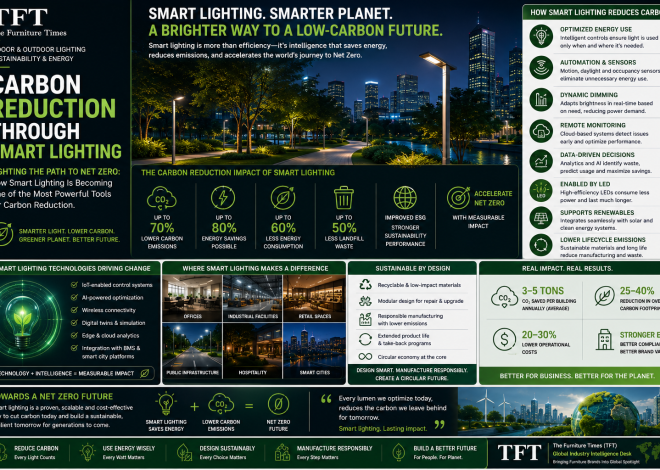
Smart Lighting Improves Restaurant Operations
Artificial Intelligence and IoT technologies are transforming restaurant management.
Smart lighting systems enable operators to:
- Adjust lighting automatically.
- Schedule lighting scenes.
- Monitor energy usage.
- Detect occupancy.
- Coordinate with reservations.
- Integrate with music systems.
- Personalize event lighting.
- Improve maintenance.
- Reduce operating costs.
- Enhance customer comfort.
Lighting has become part of intelligent restaurant management systems.
Furniture and Lighting Work Together
Commercial furniture increasingly incorporates integrated lighting.
Applications include:
- Bar counters
- Display shelving
- Wine cabinets
- Booth seating
- Reception counters
- Buffet stations
- Outdoor dining furniture
- Lounge seating
- Decorative partitions
- VIP dining areas
Lighting highlights furniture craftsmanship while strengthening overall brand identity.
Furniture manufacturers and lighting companies continue developing integrated hospitality solutions.
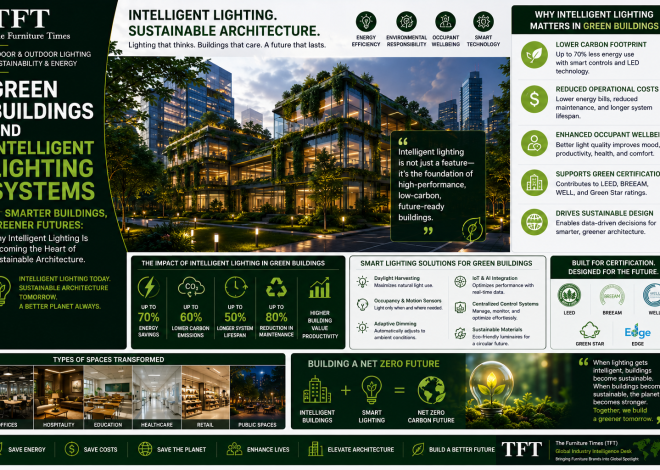
Sustainability Shapes Restaurant Investment
Restaurant operators increasingly prioritise environmentally responsible lighting.
Key initiatives include:
- Energy-efficient LEDs
- Smart occupancy sensors
- Renewable energy compatibility
- Long-lasting fixtures
- Recyclable materials
- Sustainable manufacturing
- Intelligent energy monitoring
- Green certifications
- Carbon footprint reduction
- Responsible sourcing
Sustainability benefits both operational efficiency and brand reputation.
Outdoor Dining Requires Specialized Lighting
Outdoor dining continues growing globally.
Lighting enhances:
- Patios
- Rooftop restaurants
- Garden cafés
- Waterfront dining
- Sidewalk seating
- Courtyards
- Resort restaurants
- Poolside dining
- Event terraces
- Open-air lounges
Proper lighting extends operating hours while creating attractive evening destinations.
Artificial Intelligence Will Personalize Dining Experiences
Future restaurant lighting systems may automatically:
- Recognize returning guests.
- Adapt to reservation times.
- Adjust lighting for weather conditions.
- Synchronize with meal courses.
- Personalize dining scenes.
- Support accessibility.
- Predict maintenance.
- Optimize energy efficiency.
- Coordinate with digital menus.
- Integrate with complete hospitality ecosystems.
AI will make dining experiences more responsive and personalized.
Opportunities Across the Industry
Growing demand for experiential dining creates opportunities for:
- Restaurant operators
- Lighting manufacturers
- Furniture companies
- Architects
- Interior designers
- Hospitality consultants
- Smart technology providers
- Commercial developers
- Sustainable product manufacturers
- Tourism businesses
Businesses that combine psychology, technology, sustainability, and exceptional design will continue leading market growth.
Challenges Facing Restaurant Lighting
Despite ongoing innovation, several challenges remain.
The industry continues addressing:
- Rising energy costs
- Smart system interoperability
- Installation complexity
- Consumer expectations
- Cybersecurity
- Product standardisation
- Maintenance planning
- Skilled workforce shortages
- Sustainability compliance
- Long-term operational efficiency
Addressing these challenges will strengthen future hospitality development.
Lighting the Future of Dining
Restaurant lighting has become one of the most powerful influences on customer behaviour and commercial success.
It shapes emotions, strengthens brand identity, enhances food presentation, supports operational efficiency, improves sustainability, and creates memorable dining experiences that keep customers returning.
From AI-powered automation and human-centric wellness to architectural lighting, integrated furniture illumination, intelligent LED systems, and immersive hospitality environments, lighting continues transforming restaurants across every market.
For restaurant owners, architects, furniture manufacturers, lighting companies, hospitality operators, developers, and technology innovators, the opportunity lies in designing dining environments where every lighting decision contributes to guest satisfaction and long-term business growth.
The restaurants of tomorrow will not simply serve exceptional food.
They will deliver intelligent, emotionally engaging, and visually unforgettable experiences that connect with customers long after the meal has ended.
As the global commercial and hospitality lighting industry continues evolving, one reality has become undeniable: great restaurants are remembered not only for what people eat—but also for how they feel, and lighting is one of the most powerful elements that creates that feeling.